
LEO Round Table, April 8, 2026

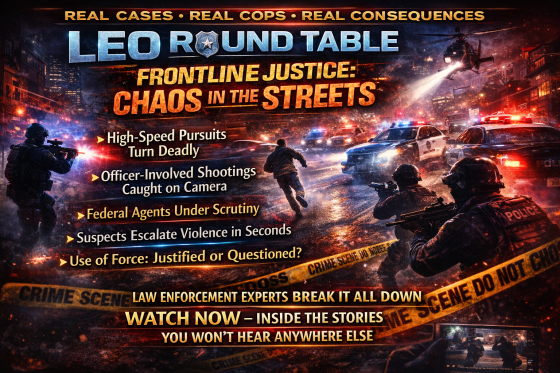

LEO Round Table with Chip DeBlock
S11E068, Last Pilot Saved In Iran Mountains Thanks To Precise And Swift Operation!
Last pilot saved in Iran mountains thanks to precise and swift operation. Police critic found guilty of doxing police officer. Domestic disturbance suspect fatally shot during tense encounter with officers. Suspect who stabbed security officer multiple times shot dead by responding cops.
Mission Success: The Heroic Rescue of U.S. Pilots in Iran and National LEO Updates
LEO Round Table: Iran Rescue Brief
Strategic summary of the April 2026 F-15 recovery & domestic law enforcement updates.
🛡️Operation "Smoke & Mirrors"
- CIA Deception: Leaked false intel claiming pilots were already extracted to divert Iranian ground assets.
- The Recovery: Pilot 1 saved Friday; Pilot 2 (Colonel) found Sunday in rugged SW Iran mountains with leg injuries.
- Ultimatum: Trump threatens "Power Plant & Bridge Day" if Strait of Hormuz isn't reopened by Monday.
Expert Insight: Scott Stire (Delta Force)
"The CSAR mission is our Super Bowl. The planning was the hero here—using specialized beacons and diversionary schemes to pinpoint a pilot in hostile terrain."
LEO Updates
Reagan Benson found guilty in first conviction under CO anti-doxing law.
Suspect Daniel Rodriguez fatally shot after pulling gun during DV call.
Crisis center suspect fatally shot after stabbing security officer multiple times.
This episode of the LEO Roundtable features host Chip DeBlock and former Delta Force operative Scott Stiert discussing the high-stakes rescue of two U.S. pilots behind enemy lines in Iran. The panel also analyzes a landmark doxing conviction in Denver and reviews recent officer-involved shootings in Jacksonville and Des Moines. The discussion provides a unique law enforcement and special operations perspective on global military actions and domestic policing challenges.
The Iran Rescue: A Masterclass in Deception and CSAR
The centerpiece of the discussion was the successful recovery of two U.S. service members whose F-15 Strike Eagle was downed over Iran on April 2nd, 2026. While the pilot was rescued shortly after the crash, the second crew member—a highly respected Colonel and Weapon Systems Officer (WSO)—remained missing in the rugged southwestern mountains for 48 hours. Intelligence suggests the aircraft may have been brought down by a Russian-made shoulder-mounted missile recently procured by Iran. The rescue was finalized on Easter Sunday morning following an intense 48-hour manhunt and a significant gunfight.
Rescue Mission Timeline: Iran 2026
Operation supported by CIA deception and A-10 Thunderbolt air cover.
The operation's success was largely attributed to a sophisticated CIA "intelligence theater" campaign. To divert Iranian assets, the agency leaked false information suggesting the Americans had already been captured and were being transported across land. This allowed specialized Combat Search and Rescue (CSAR) teams to pinpoint the Colonel’s coordinates and extract him while Iranian forces were looking elsewhere. Scott Stiert highlighted the immense difficulty of such missions, noting that the planning and execution by specialized Air Force units represent the "Super Bowl" of military operations.
Domestic Legal Precedents and Tactical Reviews
In a significant legal development, a Denver jury found activist Reagan Benson guilty of doxing a police commander. This marks the first conviction under Colorado’s anti-doxing statute, which was designed to protect public employees from having their personal information, such as home addresses, shared maliciously online. The panel debated the boundaries of the First Amendment, arguing that targeting an officer's private residence and family crosses the line of legitimate civil protest.
Critical Incident Analysis
- 📍 Denver: Landmark doxing conviction against anti-police activist.
- 📍 Jacksonville: Suspect fatally shot after pulling a gun during a DV call.
- 📍 Des Moines: Knife-wielding suspect shot after stabbing a security guard.
The roundtable also reviewed body camera footage from two recent shootings. In Jacksonville, officers responded to a domestic violence call where the suspect pulled a handgun from his waistband, leading to a fatal exchange. In Des Moines, a suspect who had just stabbed a security guard at a crisis center was shot after charging at police with a knife. Stiert and DeBlock critiqued the tactical responses, emphasizing the importance of situational awareness, the use of vehicles as cover, and the "switched on" mindset required to survive high-stress encounters.
Key Data
- Rescue Duration: 48-hour manhunt for the second crew member.
- Bounty: Iranian officials had offered a $60,000 reward for the American pilot's capture.
- Social Media Reach: The Denver activist had approximately 24,000 followers on YouTube.
- Tactical Deployment: Compliant Technologies' "The Glove" has seen over 250,000 deployments with zero injuries or deaths.
To-Do / Next Steps
- Monitor the status of the Strait of Hormuz following President Trump’s 48-hour ultimatum to Iranian leadership.
- Track the sentencing of Reagan Benson in Denver, currently scheduled for May.
- Await further intelligence reports regarding the specific Russian weaponry used to down the F-15.
- Observe potential retaliatory strikes against Iranian power plants and bridges ("Power Plant Day") if the Strait remains closed.
Conclusion
The successful recovery of the U.S. pilots in Iran stands as a testament to the synergy between intelligence agencies and elite military units. Domestically, the Denver doxing conviction sets a vital precedent for officer safety in the digital age. While the geopolitical situation remains volatile, the "LEO Roundtable" emphasizes that professional training, strategic planning, and unwavering support for those on the front lines remain the ultimate safeguards for national and local security.
LEO Round Table


LEO Round Table is a nationally syndicated law enforcement satellite radio talk show discussing today's news and issues from a law enforcement perspective. They also have components on TV, Podcasts, and Social Media. Their panelists are among a Who's Who of law enforcement professionals and attorneys from around the country.
https://leoroundtable.com/how-to-become-a-panelist/
[00:00] Speaker 1: (upbeat music) Welcome to Leo Roundtable at leoroundtable.com, the law enforcement talk show. My name is Chip DeBlock, and I'm your host for a group of law enforcement professionals to talk about today's news and issues, but we do it from a law enforcement perspective. We've got, yes, he, he, he's gonna be perfect for today's show. Scott Stire, uh, former Green Beret Delta Force operative, and we are covering some stuff on Iran's... Great news that happened over the, uh, the Easter, uh, holiday weekend. I cannot wait to talk about it. Uh, so thanks so much for being on the, uh, on the show, uh, Scott. And, you know, he's also with Aero Precision at aeroprecisionusa.com as well. If you guys like arms, uh, you, you, that's all I need to say. You guys should be very familiar with them, and their, and their fantastic products. Hey, also a shout-out to our sponsors. Guys, please support our sponsors. They go to great lengths to bring this good quality content to you.
[00:59] Speaker 1: You know, our title sponsor was Gulls at gulls.com. Don't forget that, that discount code they have, Radio 15, in order to get 15% off your next order. We have compliantetechnologies.com, our satellite sponsor, also gunlearn.com, mymedicare.live, safeguardrecruiting.com, our streaming sponsor, and yes, during the live show right now we're streaming, um, to around a million followers on social media. Uh, we have Safeguard Recruiting, that's the streaming sponsor. 2bellas.com, they built a new online store at leoroundtable.com. If you want cool gear like the coffee mug behind me, go to leoroundtable.com and go to the online store in the upper right-hand corner and check it out. Also, a shout-out to Brian Burns for the Tampa Free Press at tampafp.com. Thanks for carrying our content, Brian, and getting it on MSN. Also, Ray Dietrich with formerlawman.com, and Travis Yates with lawofficer.com. Thanks to all those entities for helping make this show happen.
[01:47] Speaker 1: And now, what in the world are we talking about today? This is... Why am I so excited? Rescue behind enemy lines. Pilots, that is plural, ladies and gentlemen, saved as the US hammers the crap out of the Iranian, uh, command centers. I love it. Um, then we got Denver jury finds police critic guilty of doxing a cop, and the DA says that she's crossed the line. Wait till you hear what happens. Uh, and then we got the Louisville Metro Police Department, they have a body cam, uh, showing a police shooting, uh, fatally shooting a woman that's holding a glass object during a mental health crisis in the, uh, bathroom. And yeah, that's, there, there's some inter-... And the firefighters got involved in it too. There's some interesting critiques there. Security officer stabbed, uh, resulting in the death of a suspect in, uh, Des Moines and, um, we've got a suspended Massachusetts troopers, they plead not guilty to manslaughter charges in a recruit training's death.
[02:39] Speaker 1: We've covered that before, but that's just latest update. Jacksonville cops fatally shoot a domestic disturbance suspect when he pulled out a gun. Scott wants to cover that one. An Illinois mom faces felony charges after she opened fires to stop an attack on her son. Brings up some very interesting points, legal points. So, um, look, let's get this party started and, uh, wow, I'm, I'm, I'm so excited. Well, I'll read. You know, this is from the Tampa Free Press at tampafp.com. We have six articles, uh, talking about this Iran thing. Uh, let me just start off by saying, you know, over the weekend it was, you know, Easter Sunday, a holiday weekend, Good Friday, you know, where we, uh, where we celebrate the, the, the death of our, of our Lord and Savior Jesus Christ. Everybody says, "Well, good f-"... Why do they say... You know, a lot of people say, "Why is it Good Friday when you're celebrating the death of somebody?" Right?
[03:27] Speaker 1: But of course, it wouldn't, it would be meaningless if it wasn't, if you didn't celebrate the resurrection on Easter, you know, on, on the third day. So, that's what really makes it the greatest thing because the, the, the death would have been nothing without the resurrection, and the resurrection that are never gonna happen without the death, so... Um, and so, I wake up on Easter Sunday morning and first thing I do, a- as you guys know, I read Copying COVID by attorney Jeff Childers who's in Gainesville, Florida because I subscribe and I, I just give $50 a month to, uh, to him, and it, it, it helps, it helps reimburse him for all the man-hours. He has a staff that helps him put this newsletter together on a daily basis, so because of that I get the Sunday edition. Had I not been that paying subscriber, I, I, I wouldn't have got the Sunday version, but oh my gosh, there were three words: "We got him." And I saw that, and of course I had been, not worried sick, but I had been very...
[04:20] Speaker 1: I felt a lot of weight on my sh-... uh, you know, on my shoulders, well, uh, in my mind at least, uh, about this guy, this missing pilot or, or, or navigator, the number two seat in the F-15, uh, Eagle and, um, you know, it's the holidays, we're getting ready to bomb the crap out of Iran and we have a missing pilot and it's been what? 48... Uh, it's been like over a day, and so they finally got him and I just, it was just such relief, uh, knowing that. Uh, Scott, when, when you heard the news, a- when, when did you hear the news? How did you hear it? Was it, was it on Easter Sunday or?
[04:54] Speaker 2: Yeah, yeah. I, I heard it on Easter Day.
[04:56] Speaker 1: Were you buddies, were you buddies in the m- in the, in the middle of it calling, "Scott, you never believe what's going on." (laughs)
[05:00] Speaker 2: Oh, no. I, I, I... Yeah. I, I, I... They don't, they wouldn't tell me anyhow because they're not allowed to, but, um, I, I, I don't... It was... Yeah. I heard it. I was actually looking 'cause I, I kept like, you know, you would say, you, you know, with, um, you don't know what you hear or should half the time, so I'm like looking, I'm like waiting for a reliable source to say, "Yep, we, we ended up finding this guy." So I was like on my phone checking and checking and checking, so when I woke up is when I, yeah, I found out-
[05:26] Speaker 1: Oh.
[05:27] Speaker 2: ... and all over the news, so, yeah, it was, it was, it was amazing because, you know, the first thing that kind o- comes to mind is like i- in, in that situation it's the family, you know. Like can you imagine, um, a father, you know, he was a, he was a colonel, so he probably, you know, if he has kids, they're definitely of the age that they, uh, understand what's going on, where their, where their father's at, of course the wife and the, and, and the family. You could just imagine just like knowing that he's missing. And I think that even though they didn't mention the name, they kind of know, you know. There's, there, there's the, uh, the wife net- network out there.
[06:02] Speaker 1: ... the wives get together, they talk, y- y- you're gonna know stuff like this, especially when it's all over the news, okay? So, you know, just, I was so pleased to hear that, and I'm just so glad that, you know, also I- r- Iran didn't find them, and then- Ugh. ... you know, the- the- the- the chance... I mean, obviously there's gonna be some torture involved, they're gonna, you know, use him as a pawn, um, it just would muddy the water. It would make already this- this complicated, you know, huge beat even worse, and, um, so it was just a- a- a huge, huge win, huge, huge victory, huge moral victory as well. Wow. Um, and it's just, uh, yeah, amazing. The mental, the mental play on this is great. Yeah. Let me read these. We got six articles, and I'm not gonna read all six, I'm gonna read the headlines to some of them, but let me, for the people who just, who just don't know, and look, there- there is... This is a, a, this is gonna be a huge movie blockbuster.
[06:55] Speaker 1: This is gonna be, when we, and when we get all the information out on this, it's just gonna be fascinating. But, um, so Tampa Free Press at tampab.com, I got six articles, uh, and they kind of describe the... Guys, there's so much stuff involving the CIA and so much stuff going on in this thing, uh, and we just have, uh, snippets of the information. "Rescue Behind Enemy Lines: Pilots," plural, "Saved as U.S. Hammers Iranian Command Center." So American search and rescue teams successfully extracted two U.S. service members from Iranian territory on April the 4th, concluding the high-stakes recovery operation that started when their F-15, uh, Strike Eagle was shot down two days earlier. The fighter jet was down on April the 2nd, so two days earlier, while conducting a combat mission over the country.
[07:38] Speaker 1: Um, and I had read from another source that I don't have here that they believe it was a shoulder-mounted, uh, missile from Russia that they had just procured from Russia, which kind of ticks me off a little bit, um, and that- that's what brought them down. They have, they have intelligence on that supposedly, but, um, also the next, the next, uh, article, "We Got Him," which is what Trump released at about 4:06 or 4:07 in the morning on Easter Sunday, and that's what he, what he put out on Truth Social, we... And- and Trump was getting no sleep, him and Hedseth and these guys, man, I was told that they were working around the clock. You know, Trump didn't go to Mar-a-Lago, uh, yeah, so can you imagine, I mean, you know, there were... Like Biden would have been checked out.
[08:21] Speaker 1: He would have been sleeping and somebody else was running the country anyhow, but could you imag- I mean, I just know Trump is so worried about this, and this is the way he operates, and I know he doesn't need a lot of sleep, but still, it's the holiday, he's got Melania, she's probably back at Mar-a-Lago and he's pro- there's probably things that they want to do and the brunch and all that stuff and- and- and- and maybe church and... But no, he's- he's doing the- the right thing and he's hanging... And he- he's in charge. He's watching all this intel going down. In a dramatic turnaround after a 48-hour manhunt, the missing American crew member from the downed F-15E Strike Eagle was rescued Sunday morning u- by U.S. forces. President Trump confirmed the success of the mission on Truth Social, I think it was about 4:07 in the morning, marking the end of a high-stakes search and rescue operation that had the world on edge, and it was supposedly a heck of a gunfight.
[09:07] Speaker 1: The rescued service member identified by the president as a highly respected colonel, just like you said, Scott. He was the second of a two-person crew to be recovered from Iranian territory. The fighter jet's pilot had been rescued on Friday shortly after the aircraft was downed by Iranian fire, but the second officer, this is the guy we were worried about, a weapon systems off- officer, remained missing in the rugged mountainous terrain of southwestern Iran. He supposedly had a leg injury and he went up to a- to a high mountainous area.
[09:34] Speaker 1: Ah- ah- it must have been a struggle just to get up there where he was hiding, and there were apparently dudes, well, I'm su- you know, everybody carries, you know, AK-47 there anyhow, but they were, they were, there was, they were incentivizing to the public to find this guy and turn him over, and Trump says, "My fellow Americans, over the past several hours, the United States military pulled off one of the most daring search and rescue operations in U.S. history," Trump wrote on S- this on Sunday morning. He stated, "The officer is safe and sound," uh, noted that the colonel sustained injuries during the ordeal, uh, but he'll be just fine. I saw a beautiful picture of him s- s- you know, being surrounded and hugged by the (laughs) guys that rescued him. Everybody had... They had bigger smiles on their faces than he did. I think that they were happier. Um, previous reports indicated that search helicopters and the A-10 Thunderbolt, which I love those things, um- Mm-hmm ...
[10:19] Speaker 1: they targ- they were, had also been targeted by the Iranian air defenses during the mission's earlier phases. We said we lost that A-10 as well. The successful recovery comes as a- as a- at a critical moment in the 36-day conflict. And on Saturday, Trump issued the 48-hour ultimatum to open the Strait of Hormuz or face hell, and that deadline expires today, Monday. And Iranian officials have previously offered a $60,000 reward for the capture of the American, you know, the second pilot. U.S. officials now say both crew members are back in friendly hands. I saw an article where o- one of the U- one of the Olympic athletes from Iran, not- not the female soccer players, it was a dude offering his- his medals to whoever grabbed the pilot and turned him... a- and turned him over. Next headline, New York Rep, uh, Lawler, um, hails incredible Iran rescue as War Powers Act debate heats up, and then smoke and mirrors, how the CIA deception op masked the daring mountain rescue of a U.S.
[11:15] Speaker 1: airman (laughs) . This is just like Great Scott. A high-stakes game of intelligence theater allowed U.S. forces to pull a missing, uh, weapons system officer from Iranian territory under the cover of a CIA-led deception campaign, this according to senior administration officials. Before the cue member was ev- the crew member was even located, CIA leaking false information within Iran, claiming that American forces had already grabbed them and that they were transporting them across the land for, uh, to get them out of there, to extract them, and while Iranian assets were diverted by the false information, the agency used specialized tracking capabilities to find this guy. Man, we're 12 seconds out. Guys, we're going to a commercial break, um, I'm exc- I'm too excited to notice the break's coming up, sorry, uh, stick with us, we'll be right back.
[11:57] Speaker 1: (instrumental music plays)
[11:59] Speaker 2: My family only cares about one thing, that I come home safe.
[12:04] Speaker 3: At Gulls, every order begins with a promise.
[12:09] Speaker 4: Made with purpose. Stitched for support. Back with pride. Answered by dedicated hands. Delivering the standard you have sworn to uphold. We serve more than the mission, we serve the person. Each piece is engineered to help get our first responders through the shift and back home safe.
[12:57] Speaker 1: Welcome back. Leo Roundtable at leoroundtable.com, the law enforcement talk show. My name is Chip The Block and I'm your host. We're joined by former Green Beret Delta Force operative, Scott Steiert, and we are absolutely killing it. I say we're killing it, uh, I think, I think we are. We're talking about the rescue behind enemy lines, pilots, plurals, yes, saved. Uh, US is hammering the Iranian command centers and, uh, we got them is the, uh, i- is the, um, the, I guess, the... I was gonna say the tweet, but it was the, uh... Uh, he wouldn't like that. The Truth Social post that went out about 4:07 in the morning on, on Easter Sunday, uh, announcing that, you know, we got our pilot that's been missing for about 48 hours.
[13:34] Speaker 1: It says, before he was even located, the CIA intentionally leaked false information within Iran claiming that they'd already, you know, found him and that they were in the process of extracting him out of the country and stuff, and sending forces in a, in another area of the country and, uh, I've even read articles talking about how they've got this network with friendly Iranians that are assisting us in spreading the misinformation. It's just a fascinating op story involving the CIA that helped save this pilot's life. He was armed, you know, just with a pistol and hiding in the mountainous terrain. Um, once the agency pinpointed the exact coordinates, the data was funneled directly to the Pentagon and to the White House. Remember, I said that Trump and Hegseth, Hegseth are, are... They're, like, they're, like, awake all night, right? And, um, so these guys get involved.
[14:18] Speaker 1: Trump reportedly spent the day in the Oval Office receiving constant updates from the Secretary of Defense, Pete Hegseth, um, and they ordered the immediate extractions. So, the CIA maintained the realtime intelligence feed throughout the mission and they were guiding the teams, you know, on the ground. And then we've got, uh, th- I, I can't say all the words in this 'cause of FCC guidelines, but then I've got a couple quotes from Trump, a couple of headlines. "You crazy..." uh, i- i- i- it's, it's, it's... The word, the end of the word is tards and it starts with a B. Uh, "Trump issues final ultimatum to Iranian, uh, to Iran, following the high stakes pilot rescue." And he gives them a blistering ultimatum, uh, to the leadership on Sunday, threatening the total destruction of the nation's infrastructure, usually off limits unless the Strait of Hormuz is, uh, immediately re-open.
[15:02] Speaker 1: In a series of statements posted to Truth Social, and I love the fact that he uses his own, you know, Truth Soc- or his own social media network. The president warned that Tuesday, tomorrow, would be Power Plant Day and Bridge Day for Iran, suggesting a massive coordinated strike against the country's power grid and transportation (laughs) networks. I can't wait. "Open the effing strait, you crazy tards, and, or you'll be living in hell. Just watch." And then there's another title, it's about the same thing, uh, and, and it's got words in there, I can't say it. Uh, so anyhow, with all this additional information, uh, that we have... And also, um, we talked about before, you know, before we went live, that this morning we found out that Iran has, um, bombed some infrastructure in Israel, um, this morning. And so I don't even know if Trump's gonna wait until tomorrow. They may just, like, say, "Let's take out the bridges and the, uh, and the power plants now." I, I don't know.
[15:57] Speaker 1: Uh, Scott, were you... W- with all this new information, the CIA, and I don't know how much you were, you can say, or how much you've w- done with the, the capabilities of the CIA. I'm always impressed by them and some of the other three-letter agencies, but, um, any, any new thoughts on this?
[16:11] Speaker 2: Well, I mean, (sighs) it, it, the, it from the time I was in, everything's changed already. Um, so, I mean, I wouldn't have any of, uh, the latest and greatest, but I will say this. You know, i- i- it's just pretty common, like, you, the, the, uh, the pilots, they're gonna have beacons on 'em. They're gonna have, you know, specialized radios and stuff like that. So i- it was interesting. It must have been where, where the plane went down that, that caused it to take so, so much time, and, and the situation on the ground. Because, you know, we, we have a general idea where the plane went down, um, based on where the first pilot was picked up. We have an idea of where the other pilot could be. I mean, again, it's not gonna be exact, obviously, because of winds and everything else. But generally speaking, uh, they're gonna have beacons, they're gonna have all that stuff. So initially, what came to my mind was... Because it took so long, I was like, "Man, I hope this...
[17:04] Speaker 2: I ho- I hope the pilot is still alive." Because, you know, when you're ejecting out of a plane that's doing crazy and God knows how fast, you get bumped in the head, you know, could break your neck. There's a lot that, that can go on. So, um-
[17:15] Speaker 1: Pretty traumatic, I hear. Yeah.
[17:16] Speaker 2: Yeah, yeah. So, so, so we... I, I was thinking, "Man, it's not good." But it just... But now in hindsight, I'm like, "Well, it, it must have been a situation where they, they, they figured out where he was at." But then it was like, "How are we gonna get this guy?" Because there could be maybe a base that's nearby. There's, you know, a populated s- you know, city. It could be the terrain. Um, it could have been the route in because the plane was just shot down, so now they have to worry about other, um, uh, anti-aircraft, you know. So, there, there is a lot going on. So the fact that it, it, it took that long, it, it tells me that it, it, it was probably very difficult just to plan that mission is... 'Cause, I mean, I would have to believe that they had a really good idea where he was at, um, and maybe even had eye, eyes on him. I mean, satellites over the sky that are dedicated, I'm sure.
[18:00] Speaker 1: Yeah.
[18:00] Speaker 2: So, uh, so it must have been one of those situations where it's like, "Man, yeah. We, we know where he's at."... but getting to him is a whole another story, so co- comin' up with a clever scheme to be able to do that. Because there's already, they're already, you know, the CSAR guys, they're on standby, they're ready to go, they're professional at what they do. That's all they train to do. Um-
[18:19] Speaker 1: Yeah, talk about that. Tell people about that, about that outfit, that that is w- they're, they're, they, when they, when they go to war, they'll usually have a portion of those guys. There's, what, three, 300, 500 of them, and they'll, they'll actually be there in case they're needed to go do a rescue and stuff, and, and it's, and that's-
[18:35] Speaker 2: Yeah.
[18:35] Speaker 1: ... all they do, right?
[18:36] Speaker 2: Yeah. I, I don't ... I mean, the, the CSAR mission, um, I, uh, it pretty, there's a lot of units that, that have that mission, but, um, I, I would suspect the one in the Air Force, they're, it's very, very specialized. That's like all they do, and so they're probably, um, the proponent of that. They're probably the, you know, the best at it because of the environment and because they're in the, the Air Force. Obviously, that's something that they have to think about. I was, uh, you know, I've actually been on, uh, uh, uh, I had the mission with the CSAR package in Central and South America, um, at, at, at, at some point, and so I trained up on it, so I kinda have an idea of what it entails. But, I mean, you're just ready to go. They're, they have all the assets. They have all the, you know, they, they know how to plan it out.
[19:18] Speaker 2: They, um, you know, of course, there's gonna be medics with there, you know, or with them, so when, when they get 'em, they're able to give you medical, um, attention right, right away. Um, just a lot of stuff that, uh, goes into it. So I mean, they, so as soon as this happened, they were ready to go. They were, th- the guys were standing by. The commanders and everything, obviously, they're planning the mission. They're getting all, all the intel. They're gathering everything, but they were ready to go, I'm sure, uh, the minute they heard it, you know, it, uh, a plane went, went down.
[19:46] Speaker 2: So it was just a matter of, I think it was just probably very, very tough, um, the whole planning process, which is pretty slick on the CIA's part to kinda divert that, because of probably-
[19:55] Speaker 1: Oh, yeah.
[19:55] Speaker 2: ... where they were at and how difficult it was to get in because of terrain and everything else, and may- and maybe the, the, uh, populous. Just having that ability to divert their assets, Iranian assets, away from that, it, it, it was probably a huge factor, so.
[20:10] Speaker 1: Yeah. Iranians aren't the only ones that can lie. (laughs)
[20:14] Speaker 2: (laughs) Yeah.
[20:14] Speaker 1: Of course, you know, you know? Well, I, uh, I got a, I got another question for you when we come back, and then, and then we'll start rolling in another direction. But, uh, hey, we're coming up on another commercial break, guys. Stick with us. We'll be right back. All right, guys. Time to talk about Compliant Technologies at complianttechnologies.com. And they're committed to providing non-lethal solutions to help officers gain the upper hand safely and rapidly in a humane, low optics manner, utilizing what they call their CD3, which stands for Conductive Distraction and Deescalation Device technology. Now, their flagship product, we all know by now, is called the Glove. It's helped officers not only tens of thousands of times, but they've actually had, listen to this, over 250,000 deployments, no injuries, no deaths. That's an amazing stat.
[20:55] Speaker 1: They've actually achieved non-lethal status in an arena that predominantly can only offer less lethal results, and when it comes to weapons retention, transitioning to a, a sidearm or conductor energy weapon, the Glove at complianttechnologies.com. They have virtually eliminated weapons confusion. So stay ahead of the game with Compliant Technologies and their revolutionary CD3 that hundreds of agencies have already turned to nationwide. And friends, take it from me, when it comes to safety, this is one of the most common sense, hands-on solutions that's ever come along, so go to complianttechnologies.com and tell them that Chip and Scott sent you. complianttechnologies.com. Welcome back. LEO Roundtable at leoroundtable.com, the law enforcement talk show. My name is Chip The Block, and I'm your host. We're joined by former Green Beret and Delta Force operative, Scott Stiert.
[21:34] Speaker 1: We've been talking about the rescue of our two F-15, F-15 pilots in Iran, uh, and the second one got picked up after a 48-hour manhunt, uh, yesterday, uh, Easter Sunday morning, when Trump sent out a social media, uh, post on Truth Social at 4:00 in the morning. I absolutely love it. So stoked, so excited. Um, a- and Scott, I was gonna ask you, I know we've been talking about this and we're getting close to moving on, uh, do you ... Uh, you probably, you may not even know this, but I was just wondering, obviously these guys in the cockpit can talk to each other. Um, I just, my question was, is that if they, um, if they eject from the plane in a situation like this and they're on their way, is there any, any way, do you know if the pilots or the pilot navigator or the number two, can they communicate at all, uh, once they're in the air or even when they're on the ground? I, I know they've got, I think they've got radios.
[22:26] Speaker 1: I know they've got tracking devices on them and stuff, but do you know if they can communicate at all, or ...
[22:30] Speaker 2: Uh, yeah. They should. I don't know about in the air. I don't know how much time they have for that, but, um, they, they, they should be able to communicate on the ground.
[22:39] Speaker 1: Okay.
[22:39] Speaker 2: Yeah.
[22:39] Speaker 1: I was just kinda curious. I can't-
[22:41] Speaker 2: But it-
[22:41] Speaker 1: I mean-
[22:42] Speaker 2: But it depends, too. I mean, they, they, I mean, they might-
[22:45] Speaker 1: Training.
[22:45] Speaker 2: ... but it's like, uh, where are you at? Well, you know, then it's kinda like a, you know, "I'm east of the mountains." Well, they might be in mountains all over, so, so still, even if they're able to communicate, it still might be extremely difficult to figure out where that person's at. And, uh, and, and because, uh, Iran is so large, uh, you know, d- d- depending on, you know, how much fly time, you know, they, so that's probably why they're like, "Look, we need to pinpoint this person because we don't have enough fuel to keep going back and forth, having to look for them and then get the heck out of there."
[23:13] Speaker 1: Yeah.
[23:13] Speaker 2: Uh, there, there's just a lot of planning involved in this, and I think, I think that's where, uh, I think that's where this really, you know, w- where it really shined at, was, I mean, 'cause the execution of it, I mean, we are the best. I mean, we train like that, especially our special, our special operations folks, because we have, you know, we've been assessed, selected and everything, but we also have the money and the assets to train to the highest level, you know, th- you, you can have. 'Cause I mean, a lot of times, it's like, yeah, I mean, there's might be really good guys that are capable of a lot of things, but they don't have the, the time and the train- and the money to get to that level and train with the, you know, with the best equipment in the world. So there's no doubt that they're gonna execute flawlessly, um, but it's, it's the planning as well. The planning was, was huge in this.
[23:57] Speaker 1: Yeah, I'm so glad that we're ... Look, I, I, I don't want anything bad to happen to anybody and I'm, I'm, I'm, I'm co- pleased to hear that the pilots are gonna be okay, um, but I, you know what? There's, there's, you know, you have training-... and then you have stuff like this. I'm so excited for our military and these guys getting involved on the rescue. And this is not just a training exercise, this is like real world stuff.
[24:18] Speaker 2: Mm-hmm.
[24:18] Speaker 1: And, and n- we, we suffered, from what I understand, absolutely zero casualties. Just like in Venezuela. Uh, you k- well, I, I guess we did have... We had a couple guys shot in the helicopters, I think, in Venezuela, uh, but no, but no one died. But, uh, you know, the- there's no substitute for this kind of action, uh, and, and just testing the limits of the, of the military. I just, the, the, and I know the guys are stoked.
[24:41] Speaker 1: They gotta be just, like, so freaking excited-
[24:43] Speaker 2: Right.
[24:43] Speaker 1: ... you know, to get that call and, uh, yeah, it just-
[24:45] Speaker 2: Oh, yeah. Because that's what they... That is their main mission. That is what they do.
[24:49] Speaker 1: That's what they live for. Yeah, it's-
[24:49] Speaker 2: And, and, and thank God, they don't have to do that very often.
[24:53] Speaker 1: Yeah.
[24:54] Speaker 2: Right?
[24:54] Speaker 1: Yeah.
[24:54] Speaker 2: Because it just doesn't happen. But when it's time to go, that's th- their whole mission. That's everything they've trained for that moment. That is the... It's always a Super Bowl for them. There's no, like-
[25:04] Speaker 1: Yeah. Good point.
[25:04] Speaker 2: (laughs) You, you know what I mean? There's always the game. It's like everything is on the line. When they have to do it for real, it is go time. There is no-
[25:11] Speaker 1: Yeah.
[25:11] Speaker 2: There's no, you know, uh, train-up. There is no playoffs. It's like every time they go out, it's, and it's real world. It's, they're playing for, for keeps.
[25:20] Speaker 1: Man, so guys, uh, yeah, please support our military. And look, these guys are doing this for us. Because of what these guys are doing, you can go to bed tonight not worrying about a long-range, you know, missile, you know, coming from Iran with a nuclear warhead on it because of what we did. And any, you know... There's a lot of people, there's a lot of naysayers and people that have, are upset with the war and stuff and maybe you guys would be okay with, with, uh, with worrying about that. Or maybe you wouldn't worry about it. Maybe you just wouldn't wake up one day after the nuke hit. You know, I, I don't know. Maybe you're in California which happens to be, you know, the, the, the first place that would get hit. Um, but anyhow, I'm, uh, you know, there may be some uncomfortableness at the pump right now which I don't care about. I just, I just wanna pound these guys into the Stone Age. I just, you know, don't wanna have...
[26:01] Speaker 1: You know, I don't have kids, but I don't want Scott's kids and their future kids to have to worry about stuff like this. And that's the only... And we've got, at least we've got a president with the stones to get it done. And, uh, you know, he's not ha- he doesn't, you know... I know he doesn't have to worry about re-election, uh, a- and, and... But we wanna keep the Republicans in the House. I think the people that really understand and they have the, the capacity to get it, they, they can appreciate what he's doing for us. And even though there might be some uncomfortableness right now, um, you know, all these other European countries, now at least we know where we stand and where they stand. And, uh, there, uh, any uncomfortableness on this side, it's definitely only magnified on that side. These guys, the Europeans just up in a world of hurt and they're having to rely on us. And so I, I, I can't wait to see what is done with the Strait or with Cargillen.
[26:49] Speaker 1: And, um, I think that we're gonna have some pleasant surprises coming around the corner, so I certainly hope so.
[26:54] Speaker 2: Well, I hope so. And honestly, like, at the end of the day, uh, uh, you know, a- as a soldier, um, we don't w- you know, as a soldier, we don't really, um, concern our- ourselves so much with what the politicians are saying or anything like that 'cause it's really not up... You know, when I was in it, I was like, hey, they might... We might have somebody who doesn't go to war, you might have one that does, or we just might have a need to go to war, like on 9/11. It doesn't matter. It doesn't matter to me. I fight next to my buddies. We fight together. We do it for e- each other. So I would say holi- politics aside, when it's go time, then everybody should back, um, uh, should, should, should back the plan without hesitation. And certainly the soldiers on the ground, um, because they're just doing their job, just like ISIS are doing their job, just like police are doing their job. Um, it, it's th- don't shoot the messenger. Don't hate the messenger.
[27:49] Speaker 2: Um, and, you know, that's, that's, that's the way I look at it. I will always support, uh, soldiers and poli- police officers. They have a very, very tough job. Um, they don't have the luxury of choosing and, uh, you know, this and that. They, they raise their hand, they, they, they swore on an oath they're gonna defend the Constitution or they're, you know... So, it is what it is, um, and we have the best soldiers in the world. So, I love it.
[28:11] Speaker 1: No doubt. Love it too. And, uh, Arthur Johnson, good seeing you guys from Richmond, Virginia where it's 55 degrees. Crap, that's cold. And then, uh, and, uh, Northwest Anchor Certification. So, uh, hey, I, I think you're new to the show on, uh, on YouTube. So, uh, thanks for watching. Of course MBS and, uh, Chili and all those guys over on, uh, on Rumble, thanks for watching the show, guys. We appreciate it. So, moving along and, uh, I want, I wanna keep, uh, I wanna keep Scott happy here. So, uh, let me g- let me do this. Um, let me just cover this Denver one real quick here because MBS is in Co- is in Colorado and we wanna cover this and then we'll get to the story with the video component. cbsnews.com, Denver jury finds police critic guilty of doxing a cop. The DA says she crossed the line. So, ah, it's finally happened, right? So at Denver... And this is Denver of all places, you know, where they're really liberal.
[29:02] Speaker 1: A Denver jury has found an activist, Reagan Benson, a frequent critic of police, guilty of doxing, and this is with the Denver Police. So, uh, uh, Denver Police commander, during a, uh, livestream, was doxed by her last September in what appears to be the first conviction under Colorado's anti-doxing law. So I must admit, I'm, I'm, I'm, I gotta... You know, you gotta call it like you see it. So they, they finally get one right. Um, and, uh, Benson, the, uh, the female that did this sh- says, "I was exceptionally disappointed." Yeah, I bet she was. And, uh, it was a two-day trial at Denver County Court. The 53-year-old grandmother faces sentencing in May, a possible jail term. Well, let's hope so. She maintains that she committed no crime. That's how... That's a freaking incompetent she is. Uh, but not incompetent to stand trial. I don't want, I don't want the, the judge to get any ideas. Um, I wasn't, um, uh... Well, I guess she's already... They're gonna do the...
[29:52] Speaker 1: It's just gonna be a sentence, a sentencing hearing anyhow. "I, I was not committing a crime," she says. "There was no victim. We have a right to engage in civil protest and that's exactly what I was doing and why I would do it again." And I hope she does do it again. Her supporters say, uh, the case is likely headed for appeal to the first, on First Amendment grounds and, uh, they're talking about a constitutional challenge to the Colorado's in a- i- in a doxing statute. The law is, is, is of course designed to protect public, um, you know-... employees, public workers from facing, uh, you know, you know, fallout really from the personal information being revealed online and stuff, their home addresses and stuff like that, which is exactly what she did. So, on September 3rd, she was doing a livestream from the Denver Police Department's District Three Station, and one of hundreds that she conducted in recent years, hundreds.
[30:37] Speaker 1: And she often targets police and other government officials. Now, she was... She has about 24,000 followers on YouTube according to this article, and on some of her livestreams, she can be heard or seen screaming expletives in the face of police officers, so she's not a class act at all. I can't believe... You know, YouTube tries to, to, uh, to, to, you know, they demonetize us and tries to make us, you know, kill, kill our channel, delete it. And she's got 24,000 followers on YouTube, and it's like they embrace, you know, anti-police crap. Um, during the broadcast, though, Benson criticized, um, the, uh, Denver Police Department's Commander Joel Bell, and she had had a contentious relationship with him for a while, and, uh, had said that, um... and, and previously sued. At one point, she asked her viewers to try to find his home address, and when viewers did, she repeated the street address on the livestream.
[31:29] Speaker 1: That's what got her in trouble, and, uh, you know, why hopefully she should be going to jail. Scott?
[31:34] Speaker 2: Yeah, so under... This, this is what, what makes me sick. Like, under the, the, the guise of their First Amendment right. Listen, you... What, why would you wanna take someone who is in a, um, in a, uh, a public setting, you know, someone like the, the chief of police? If you have a problem with that person and you want to exercise your First Amendment right, then go to where they work. Do it in, you know... Take to the street, do a, a protest. But to... Why would you wanna find where their domicile is, where their family, their kids, their wife? It doesn't make sense.
[32:08] Speaker 1: I agree. Jail, I hope. Commercial break. We'll be right back, guys. All right, it's time to talk about GunLearn at GunLearn.com, but they've got a new gig going. So, everybody's familiar with the certification they offer. You can become a certified gun specialist or firearms specialist with GunLearn.com. It's that unique certification they, that they have. And now, you can actually turn that in, into college credits. It's, it's an amazing opportunity. They've hooked up with SmarterDegree. And so, their firearms specialist certification, even if you've obta- obtained it, like, five years ago, it's now worth college credits through SmarterDegree's University Partners program. So, whether you're pursuing a degree or you simply wanna maximize the value of your education, it opens up a new pathway for academic recognition for your firearms training.
[32:52] Speaker 1: And GunLearn.com, of course, is the first and only company they offer that step-by-step program that takes you from your present knowledge level to become a safe, accurate, and competent certified firearms specialist, and they've been doing this since 1996. And if you have your own agency, you can actually host a seminar for absolutely no cost. Go to GunLearn.com to get more information. GunLearn.com. Welcome back. Leo Roundtable at LeoRoundtable.com, the law enforcement talk show. My name is Chip The Block and I'm your host. We're joined by former Green Beret Delta Force operator, Scott Styrt. And yeah, we've been talking about the rescuing of the two pilots from the F, uh, 15 Strike Eagle, and then, of course, this, uh, latest story where the female doxing of the Denver Police, uh, I think it was a, uh, a commander or lieutenant. And, uh, and she, uh, she's in a world of hurt now. Hopefully g- gonna be going to prison over that one.
[33:38] Speaker 1: And that set the stage in a liberal place like Denver, if you can believe that, so.
[33:42] Speaker 2: Yeah. So, so, uh, what I'd like to know, like, what does she intend to accomplish by letting, uh, the public know, which means God knows who, 'cause we already know there's a extreme crazy, uh, radical side of, you know, the woke, you know, anti-cop, anti-everything, whatever. So, what, what does she intend to do? Like, what does she... To me, that's almost, like, kind of like a terrorist act in some way, because you're using the threat... You're, you're, you're intimidating somebody to, you know, maybe change the results of how they feel or maybe change the law. Whatever, I don't know. Like, may- maybe she thinks this is gonna go away. But what I- what, what are you trying to do?
[34:21] Speaker 2: Because-
[34:22] Speaker 1: The objective, yeah.
[34:23] Speaker 2: ... th- th- that, that... What... Yeah, what is the objective? Because that person who's at that house, he's also at work. He's also, you know, out in the public. So, why, why his house where his kids and his, and his wife and everything else, wh- you know, where he wants to relax and, you know, not have to think about, you know, being at work and being defensive of what's around him? Like, that, to me, is like... W- th- they're, they're...
[34:46] Speaker 2: The line ha- the line has been crossed, and I hope that, uh-
[34:48] Speaker 1: Yeah. I can't think of a plausible explanation for her to have the, the, the, the risk. Well, look. I mean, we're, we're... L- l- look at... You can look no further than our ICE agents that are getting doxed, and families are being threatened and stuff, and the, and, and then we've got these liberal jurisdictions that wanna put up laws saying that federal agents can't hide their faces. I mean, even when I did op-, certain ops, I carried a face, I carried a, a mask, you know, in my bag. Um, I had to... You know, you had to protect your identity sometimes, you know? Um, so yeah.
[35:17] Speaker 2: And it's, it's common sense. It's very logic- logical in having to do that.
[35:22] Speaker 1: Unless, unless you're an idiot, and we... And of course, there's a lot of, there's a lot of that going on-
[35:27] Speaker 2: (laughs) Yeah.
[35:27] Speaker 1: ... you know, out there, so yeah.
[35:28] Speaker 2: There surely is.
[35:29] Speaker 1: Yeah. Um, all right. So, I'll tell you what. Let's, uh... You said you wanted to go with the, uh, the, uh, the DV call, so let's go with the Jacksonville call. So, our favorite law enforcement video channel at Rumble.com is called This is Butter. We have a Jacksonville police officers, plural, fatally shoot a domestic disturbance suspect when he pulls out a gun.
[35:48] Speaker 3: Quick. This one over here? Yeah, I think so. My wife here is being attacked or something. All right. They're fighting about Carter. They wanna talk to you about Carter. All right. I'm just curious 'cause there was a lot of silence. All right. We're just here debriefing. I understand that, but- Do you have any weapons on you? Excuse me? Do you have any weapons on you? Why are you rolling up on me? Hey, hey, stay still! (gun firing) Ah! Get back! Get back! Ah!
[36:16] Speaker 1: Get down, get down! Get down!
[36:17] Speaker 3: Ah!
[36:30] Speaker 5: Do you have any weapons on you?
[36:31] Speaker 2: Excuse me?
[36:32] Speaker 5: Do you have any weapons on you?
[36:33] Speaker 2: Why are you rolling up on me?
[36:35] Speaker 5: Hey! (gunshots) (screaming) Get back! Get back!
[36:44] Speaker 1: Jacksonville, Florida. Again, this is not helping us in Florida people look any better, Scott. You're, you're from Florida, so even though you're not in Florida now, you're in Colorado, you still carry some of the weight here.
[36:55] Speaker 2: I will.
[36:55] Speaker 1: Jacksonville, multiple people at an area apartment complex, they called 911 over concerns about a DV, domestic violence dispute, uh, that had been occurring between a man and a woman, and they were married. Now, one of the callers was an employee at the complex. At one point, uh, the man part of the, this, uh, domestic, he leaves the complex, but he returns, uh, with a gun. So, when Jacksonville Police and, and that is really, it's the Jacksonville Sheriff's Office, um, you know, they've kind of consolidated their, the District Three officers, when they get there, um, they separate the couple. But remember, the guy has, has returned with a gun. After speaking to the woman, the officers approach the guy to get his side of the story, and as they approach, he pulls out a gun from his waistband. Both officers fire. They hit the suspect. Suspect take, taken to a local hospital. Amazingly, he dies 'cause, you know, we're not always the best shots, even at close range.
[37:46] Speaker 1: He's been identified as 34-year-old Daniel Rodriguez. And so, that's the way it goes down. Now, just kind of looking at my show notes here, um, you know, officers responded to the re- they know they responded to the DV call, um, and they approached the suspect after talking with the female, and he goes for the gun at eight minutes and 56 seconds in, and shots are fired just three seconds later at 8:59 and he ends up dying. We've got a second body cam showing what happened at 10-minute mark, and, but they've also got a nice slow motion with freeze frame that starts at 10:52, which is, which is really, really good if you wanna see and understand what happened. Scott Steier.
[38:22] Speaker 2: Yeah, I, I, I just wanted you to, I wanted to talk about this 'cause I wanted to give those law enforcement officers, you know, huge kudos. I mean, going into, um, domestic violence type situation i- is always, um, th- the scariest. It's the unknown. You have large amounts of emotions involved. And just from, like, watching the video, uh, the guy seemed kind of like, chilled, like, didn't, like, you know, I don't know how you would look at somebody and say, "That's somebody that might try to shoot me," but just looked like a normal guy, at least in the vi- you know, the, in that section of the video, right? Just looked normal. Walked up there, started to talk to him, and man, he just, the way he went for that and just kind of, you know, kind of having his shirt was kind of over the top of it, but kudos to the law enforcement officer who was able to, to just, you know, he was switched on. He saw that. He recognized that it was a gun. It was at night.
[39:13] Speaker 2: Yes, there was a light, but you know, there's shadows. It's at night. It's still very, very difficult, but he was switched on. He made the right call. He did not hesitate. Um, just worked out, I mean, a- amazing. I was very, very impressed with the situational awareness and, and how quickly they were able to, uh, re- react to that. And, um, and then, and then the wife, she obviously was, had no clue, didn't see the gun, didn't even probably, I don't even know if she knew there was a gun. She was obviously very, very, you know, she was freaking out, which just goes to, to prove, like even she was shocked and surprised. She didn't even probably realize that he had a gun at that moment.
[39:49] Speaker 1: Right.
[39:49] Speaker 2: Just, you know, by the way she was acting. So, just a great job, a great job in my opinion on, on how that worked out.
[39:55] Speaker 1: Yeah. Agreed. Well, hey, um, we got time. I think we can squeeze one more in. Um, you, uh, you wanna, you wanna take the guy that, uh, that's at, at the crisis center that he ends up stabbing the, uh, the security guard there?
[40:08] Speaker 2: Yeah, yeah. We, we, we can, we can talk about that.
[40:10] Speaker 1: Rumble.com, this is Butter. So, we have a security officer stab resulting in the death of the suspect in, uh, Des Moines, Iowa.
[40:17] Speaker 6: ... jacket pocket and begins to attack the public safety officer, stabbing him multiple times. The public safety officer attempts to defend himself, and as the attack continues, he falls into a triage room. Munoz continues to stab at the officer who deploys a taser with no apparent effect to Munoz. As other staff members yell at Munoz, he becomes distracted and the officer is able to deploy his pepper spray. Munoz turns away from the spray and leaves the room. Munoz lingers in the hallway for a short time before exiting the building.
[40:48] Speaker 5: 3000 traffic, I got this all set. Put your hands up. Put your hands up.
[40:54] Speaker 7: I'm gonna shoot you.
[40:54] Speaker 5: Put your hands up. Put your hands up. It's all right. Put your, get down on your knees. Get down on your knees. Get down on your knees.
[41:00] Speaker 7: I don't want you to have to shoot me.
[41:01] Speaker 5: Get, get down on your knees. Get down on your knees, dude.
[41:04] Speaker 7: I'm sorry.
[41:04] Speaker 5: Get down on your knees. Get down on your knees.
[41:08] Speaker 7: I don't want you to have to shoot me.
[41:08] Speaker 5: Get down. I don't want to shoot you. Get down on your knees. No, I don't. No, get down on your knees. Get down on your knees. It's all right, man. It's okay. My name's Christian. You're good. You're not in any trouble, all right? Just get down on your knees. Get down on your knees, dude. Get down on your knees. Where's the knife? Where is it? It's in your back pocket? Okay, get down on your knees. Get down on your knees, dude. It's okay. Get down on your knees. Um, 10-2, he's not really complying, so I think that we're gonna have to shoot him. Get down on your knees.
[41:52] Speaker 7: You're gonna have to shoot me.
[41:53] Speaker 5: No. Get down on your knees. Get down on your knees, dude. Get down on your knees. Get down on your knees. Stop.
[42:01] Speaker 7: Come on.
[42:01] Speaker 5: Dude.
[42:02] Speaker 7: I'm gonna have to shoot you.
[42:02] Speaker 5: Get down on your knees. I'm not gonna shoot you. Get down on your knees. You're gonna get tased. Get down on your knees. No.
[42:12] Speaker 3: Put your hands up.
[42:12] Speaker 5: No. No.
[42:12] Speaker 3: No, put your hands up.
[42:14] Speaker 5: No, stop. Stop.
[42:26] Speaker 1: So it's the, uh, Des Moines Police Department, they released this body cam footage. And I'm gonna go through this quickly. We've only got a few minutes here. But it's an officer-involved shooting that happened last month, and the police came into contact with a suspect accused of stabbing a public safety officer, but it happened at the Crisis Observation Center. So this guy, his name is Hunter Munoz, 24 years old. He was taken to this center, um, kind of like a bake rack. The family went and took him there for, uh, psychic evaluation. He was having some kind of mental issues and stuff. And while he was there, I guess they don't, they didn't search him. He pulls out a knife, and they got some, some screenshots of him just, like, stabbing the crap out of this, like, security guy that's there. And he's fighting it off, and there's this, you know, and then there's this female that comes around the corner. She screams and stuff. And so the guy's fighting for his life.
[43:08] Speaker 1: So she distracts the guy, security guy. He didn't have a gun, I guess. He had a taser, and then he, he tried the pepper spray, but he, he, he survived, I guess, but he must've been in a world of hurt. So then the cops show up. This dude's already outside the, uh, the place. And we've got the officer draws down on the guy, and then he gets behind his door, opens up his door, and he, and he's in the middle of the street, and then he rolls his window up.
[43:29] Speaker 2: (laughs) Uh-huh.
[43:30] Speaker 1: I guess he was worried about the guy coming up and maybe stab, you know, stab him through the open window and stuff. Um-
[43:34] Speaker 2: No, I thought he was worried about him getting in the car to take off 'cause he had to walk away from the car. But maybe-
[43:40] Speaker 1: Yeah. Well, yeah. That's, I mean, that's a point. He-
[43:41] Speaker 2: I... I don't know.
[43:41] Speaker 1: I, but I, I don't know why he left the car.
[43:44] Speaker 2: Yeah.
[43:44] Speaker 1: I mean, you, you never give up ground, uh, uh, you know, in a situation like that. Well, obviously, you know, I'm wrong 'cause this cop dead. Um, but I-
[43:51] Speaker 2: Well, he didn't have, he didn't have a knife in his hand though, so he had to get-
[43:54] Speaker 1: Well-
[43:54] Speaker 2: ... out of his car to-
[43:55] Speaker 1: But he knew he was armed, you know, but he knew, but he knew, you know, he knew that-
[43:57] Speaker 2: But he had to get out of the car ............................ Stay in the car and use his microphone? Like-
[44:01] Speaker 1: No, no. You don't leave your, you don't leave the car. You know, you don't... Once you start backing up, that's when you fall down and you get rushed, so you, you use the car as your barrier. That is, that is the line that's not crossed. The guy advances on you, you know, maybe, maybe get behind the door if you have to. Um, maybe your gun's gonna malfunction or something, and you've got options being behind a fixed object like that. But, uh, you know, you don't leave your car. Now, I don't know if he locked the car when he left 'cause I was thinking, "Dude, get in the car, drive away." I was just thinking, I was just, he's gonna ... Once you back away from your car and you leave cover, 'cause you know, the guy could always have another weapon on him too. You're assuming the guy's only got a knife, but you know he stabbed people. And, and so that's why I, I hate, I hate to see cops back away.
[44:40] Speaker 1: You stand your ground, you try to deescalate the best you can, but the guy, you know, there's other cars, there's traffic there, and the guy's moving around. So now we got the cavalry showing up. We got multiple officers, and now you've got a situation where the backdrop is just, it's, it's, it's worse than what it was before. Now you've got a, a horrid backdrop 'cause now they're in the middle of a freaking intersection, and you've got, like, a three-point, you know, three ve- three roadways all intersecting to this intersection. It's just a horrible backdrop, and I'm thinking, "Oh my gosh, they're gonna, they're gonna take out innocent civilians." Well, they find the guy, you know, pulls out the knife, and he charges at one of the cops, and they, and they light him up, and it works out. But commentary, Scott?
[45:15] Speaker 2: Yeah. I, I, I don't, I mean, again, I'm, I'm not a cop. Have never been a cop. But, like, I, I look at, like, him getting over there, like, being in a car. You gotta understand, he's, he's in his car. The door's there. He's trapped. So I would not wanna be anywhere near that situation. I'd wanna have some room to maneuver. He has a, he has a, a, a knife somewhere. It's not in his hands now, so I'm not even concerned at that point. I mean, I'm, I'm aware of it. The guy already had his gun out. So, I mean, what, you know, like, hey, and if he, if he keeps coming at, at, at me without a knife in his hand, then take him down. Right?
[45:50] Speaker 2: Ta- I mean, I-
[45:52] Speaker 1: Well, it, well, let me-
[45:53] Speaker 2: Especially if I have, if I have, like, the glove, which I would have the glove on in that situation. I, I have my, my pistol out. He does not have anything in his hands. He's walking towards me. Then I'm gonna, I'm gonna arrest him. And then if he does, if he makes a move, okay, well then, I escalate from there.
[46:09] Speaker 1: So there is, you could be... Look, you have to be in the right frame of mind in order to justify it, but it could be, and, and we're coming up on our time here, but it could be a j- You have reason to believe that this guy, well, he's just, he just done multiple, he stabbed a guy multiple times in the air with a knife, and you have reason to believe that he, that he has a knife. But you don't have to see the knife before you use lethal force. Just like a guy that's got a handgun and he's not showing it, or he's got his hand behind his back, and you can light him up without waiting for him to pull the gun out. So, but you have to be in fear of great bodily injury or harm when you do that. So if the cop is not in that kind of fear, then yeah, you wouldn't be justified in doing it. But, uh, but good point, and, uh, and good discussion. Hey, uh, Scott Stier, great show. Thanks so much for being on it. Also, a shout-out to gulls.com, complianttechnologies.com.
[46:52] Speaker 1: Go learn about Medicare Safeguard Recruiting Two Belles. We'll see you guys back tomorrow, 12 noon Eastern. (rock music plays)