
LaGrave Live, February 22, 2026
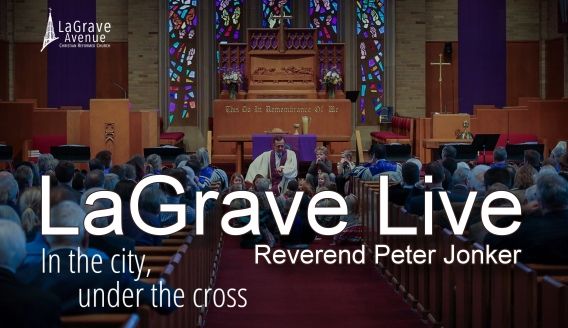

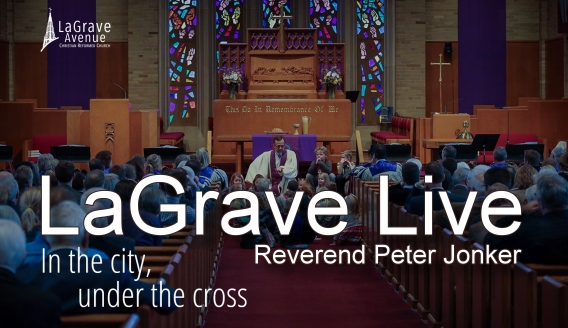
LaGrave Live
LIVE Evening Worship Service - Forgiven and Blessed - 2026-02-22
About The Service:
Rev. Kristy Manion will lead us in worship and will preach on Psalm 32.
Order of Worship:
https://lagrave.org/wp-content/upload...
About Us:
We are a traditional CRC church in the middle of Downtown Grand Rapids, MI, worshipping at 8:40am, 11:00am, and 6:00pm. (10:00am and 6:00pm during the summer months)
We'd love to hear from you:
Connection: https://www.lagrave.org/contact
Let us pray for you:
Prayer: https://www.lagrave.org/prayerrequest/
Giving: https://www.elexiogiving.com/App/Givi...
The February special offering is for The Bridge. The Bridge is part of Arbor Circle, which offers emergency shelter for youths, and additional counseling for youths and their families.
Listen on the go:
Amazon Music: https://bit.ly/LGPodAmazonMusic
Apple Podcast: https://apple.co/3tuOdwQ
Google Podcast: https://bit.ly/LGPodGoogle
Soundcloud: / lagravecrc
Spotify: https://spoti.fi/3yXDFaT
Follow us!
Facebook: / lagravecrc
Instagram: / lagravecrc
Website: https://www.lagrave.org
#LaGrave #LaGraveCRC
This worship service at La Grave Church marks the first Sunday in the season of Lent, a period dedicated to contemplating human limits, sin, and the joyful necessity of a Savior. Through liturgy, missionary testimony, and an exploration of Psalm 32, the congregation is invited to move from the "wasting away" of unconfessed sin into the restorative grace of divine forgiveness.
The Call to Worship and the Lenten Journey
The service opens with a call to recognize Jesus, even when the world fails to do so, asking for faith to see His glory and wisdom. As the first Sunday of Lent, the liturgy emphasizes that while this season involves reflecting on sin and the need for saving, it is ultimately grounded in the "joyful truth" of having a Savior. This is reinforced by a reading from Acts, where the Apostle Paul proclaims that through Jesus, the forgiveness of sins and a justification unattainable under the Law of Moses are now available to all who believe.
Ministry Spotlight: Resonate Global Mission in Hungary
Jeff and Julie Baumann, missionaries serving in Budapest, shared the story of Pamela Shammas to illustrate God’s "surprises" in mission work. Pamela, a Syrian Christian from Aleppo, fled the war to study psychology in Hungary on a scholarship. After connecting with the Baumanns' church and university fellowship, she eventually joined the "Cohort Europe Program." She is now serving as a missionary herself, working with refugees in Berlin. The Baumanns highlighted how their ministry has evolved from direct refugee aid to supporting "people on the move" who fall between traditional legal categories.
Pastoral Prayer and Community Concerns
The pastoral prayer focuses on the "dustiness" of humanity and the intercession of the Holy Spirit. It includes specific petitions for justice where the strong exploit the weak and for the repair of broken trust. The congregation also remembers several members facing significant life events, including milestone birthdays and serious health challenges ranging from cancer diagnoses to pediatric internal bleeding.
Sermon: The Anatomy of Confession
The sermon explores the "complicated" emotional landscape of Psalm 32, which blends suffering, regret, and relief. The speaker notes that the Hebrew syntax places "Blessed" at the very beginning, emphasizing that the state of being forgiven precedes the description of sin. A central theme is the danger of "keeping silent" about sin, which the psalmist describes as a physical wasting of the bones. The message concludes with Martin Luther’s famous advice to "sin boldly"—not as an excuse to transgress, but as a directive to rely even more boldly on the "true and not fictitious grace" of Christ, who is victorious over the world.
The service concludes with a reminder that while all are sinners, all have a Savior. The congregation is sent out with a benediction of peace, encouraged to live as "grace-receiving people" who keep their eyes fixed on Jesus' grace rather than the "ditch" of their past transgressions.
LaGrave Live
If you’re looking for a warm church that commits to an intensely pertinent Gospel in the Reformed tradition of the Christian faith, we invite you to worship with us. Our 1,800 members come from across West Michigan and gather weekly in our sanctuary for relevant Biblical preaching, beautiful music, and inspiring worship. We expand our worship through intentional outreach in our community and world, attentive care for our members, and plenty of spiritual enrichment and social opportunities for everyone.
We focus on a living Savior who provides genuine solutions to the deep needs of a hurting world. We are committed to need-meeting ministry in His name, and we are committed to being real people who enjoy real life and who cry real tears. Because we are a fairly large and diverse group in terms of age, occupation, marital status, lifestyle, and physical ability; our members create many accessible opportunities for community service, Bible study, and small social groups.
We worship God, the Almighty Creator of heaven and earth, and we enjoy expressing our vision of His holiness through traditional music and formal liturgy.
Music plays an integral part of our weekly worship gatherings. Congregational singing—of both traditional hymns and newer ones—is typically supported by our pipe organ. Vocal choirs, handbell choirs, small ensembles, instrumentalists, and vocal soloists provide additional music offerings.
Led by the Holy Spirit, we seek to worship and serve God in all of life, transforming His world and being transformed to reflect the character of Christ.
Founded by 36 Dutch immigrants on February 24, 1887, LaGrave Avenue Christian Reformed Church has always been deeply committed to both this local community and worldwide missions. God has seen fit to guide and bless these commitments with sustained growth, spiritual gifting, and a continual stream of new work for our members.
[00:00] Speaker 1: (background noise)
[06:09] Speaker 2: (organ music)
[12:19] Speaker 3: (bells tolling) As we are called into worship today, we remember that when God came to Earth in the person of Jesus, most of the world did not recognize him or worship him. Today, we ask for the faith that will open our eyes to see Jesus for who he is, that we might worship him with undivided hearts. Open our eyes, Lord, to see your glory. Open our ears, Lord, to hear your wisdom. Open our hands, Lord, to offer you our gifts. Open our mouths to sing your praise. Open our hearts to offer you our love, for you are our Lord.
[14:42] Speaker 3: (instrumental music plays) Sing praise to God, who reigns above, the God of all creation. The God of power, the God of love, the God of our salvation. Highs low, with love our rich he fills, and every grief he gently stills. To God all grace and glory be. What God Almighty pow'r has made, in mercy he is keeping. By morning glow or evening shade, his eye is never sleeping. And where he rules his kingdom we might, there all is just and all is right. To God all grace and glory be. These of the Lord, in whom is rest. O God, in mercy hear us. Our Savior saw our helplessness, and came in peace to cheer us.
[17:34] Speaker 3: For this we thank and praise the Lord, who is high, long, and adored. To God all grace and glory be.
[17:55] Speaker 3: (instrumental music playsLet all who hear. O praise his holy name. Give God the praise and glory. Let all who know his power proclaim. The Lamb of God and his story. Yes, every eye that on him has focused. On the Lord is drawn. And he alone. To God all praise and glory. Amen. The God whom we have gathered to glorify is in this place and he greets us, saying to us, "Grace to you and peace from God the Father and the Lord Jesus Christ through the mighty and present work of God's Holy Spirit." Amen. Welcome to tonight's evening worship service at La Grave Church. Whether you're worshiping here in the sanctuary with us and you're visiting, um, or you've been a lifetime member of La Grave, it's so good to be in your company and in the presence of God together to sing his praise and to hear from his word. We also welcome those of you joining by livestream tonight. It's good, um, to be connected across distance. I think some of you here have been away from us and are back again and, um, it feels so good to see faces that we love that are... Haven't been around for a little while. Tonight after worship, there will be a dinner and a missionary presentation downstairs right below this, um, sanctuary in the fellowship hall. That will be, um, by Resonate missionaries Jeff and Julie Baumann, who are serving in Hungary. We'll hear from them a little bit later in the service and you can hear more about their work and enjoy conversation and food with other La Gravers following worship tonight. Today is the first Sunday in the season of Lent. And during Lent, we spend a lot of time thinking about our limits, our sin, our need for saving, and we contemplate the joyful truth that we have a Savior. So listen to these words from one of Paul's sermons in the Book of Acts. He has just summed up God's work in the Old Testament to, um, bring the people to a place of anticipating their Messiah. And now, Paul is going to tell that part of the story. So listen. "Fellow children of Abraham and you God-fearing Gentiles, it is to us that the message of salvation has been sent. The people of Jerusalem and their rulers did not recognize Jesus. Yet, in condemning him, they fulfilled the words of the prophets that are read every Sabbath. Though they found no proper ground for a death sentence, they asked Pilate to have him executed. When they had carried out all that was written about him, they took him down from the cross and they laid him in a tomb. But God raised him from the dead and for many days, he was seen by those who had traveled with him from Galilee to Jerusalem. They are now his witnesses to our people. We tell you the good news, what God promised our ancestors he has fulfilled for us, their children, by raising up Jesus. As it is written in the Second Psalm, 'You are my son. Today, I have become your father.' God raised Jesus from the dead so that he will never be subject to decay. As God has said, 'I will give you the wholly and sure blessings promised to David.' And so it is stated elsewhere, 'You will not let your holy one see decay.' Now, when David had served God's purposes in his own generation, he fell asleep and he was buried with his ancestors and his body decayed. But the one whom God raised from the dead did not see decay. Therefore, my friends, I want you to know that through Jesus, the forgiveness of sins is proclaimed to you. Through him, everyone who believes is set free from every sin, a justification you were not able to obtain under the law of Moses. Thanks be to God." (Instrumental music playing)
[24:39] Speaker 4: O come to the Father, through Jesus the Son, and give him the glory, great things he hath done. O perfect redemption, the purchase of blood. To every believer the promise of God; The vilest offender who truly believes, that moment from Jesus a pardon receives. Praise the Lord, praise the Lord, let the earth hear his voice. Praise the Lord, praise the Lord, let the people rejoice. O come to the Father, through Jesus the Son, and give him the glory, great things he hath done. Great things he has taught us, great things he has done, and great our rejoicing through Jesus the Son. But purer, and higher, and greater will be our wonder, our transport, when Jesus we see. Praise the Lord, praise the Lord, let the earth hear his voice. Praise the Lord, praise the Lord, let the people rejoice. O come to the Father, through Jesus the Son, and give him the glory, great things he hath done.
[27:11] Speaker 3: Let's rise and speak together what we believe in the summary of our faith from the Heidelberg Catechism. Friends, why can't our good works be our righteousness before God? Or at least a part of our righteousness?
[27:27] Speaker 4: Because the righteousness which can pass God's judgment must be entirely perfect, and must in every way measure up to the divine law. But even our best works in this life are imperfect and stained with sin.
[27:47] Speaker 3: How can our good works be said to merit nothing when God promises to reward them in this life and the next?
[27:55] Speaker 4: This reward is not earned. It is the gift of grace.
[28:01] Speaker 3: But doesn't this teaching make people indifferent and wicked?
[28:05] Speaker 4: No. It is impossible for those crafted into Christ through true faith not to produce fruits of gratitude. (instrumental music) But what my hands have done, can save my guilty soul? Not what my toiling flesh has borne, can make my spirit whole. Not what I feel or do, can give me peace with God. But all my precious joys and tears, can bear my awful load. Your voice alone, O Lord, can speak to me of grace. Your power alone, O Son of God, can all my sin erase. No other works of yours, no other fount will do. Though strains of heaven reach his people, can bear me safely through. My grace of Christ the Lord, my rest on what divine. Can make my heart in him overcome. And so I wait in silence, wait to see his face. When with the raptured saints, I cross the shining shore, I'll wish for nothing there below. For where my trust is born, there my help is made. There my strength from birth to death is kept. And where I live or die, I know I lost my sin.
[30:49] Speaker 5: In just a moment, Jeff and Julie Baumann will come forward. I actually ... Why don't you guys come on up right now? Um, the Baumanns serve with Resonate Global Mission. They are La Grave-sponsored missionaries through the Mission Committee, and Jeff works in partnership with the Hungarian leadership at KALUNVA, which is a refugee-serving organization that provides safe homes and a loving community for people seeking asylum and refuge in the capital city of Budapest. He also teaches classes in the Faculty of Humanities at Koroly Gáspár University, and he coordinates Resonate's Europe cohort program. And Julie has been working as an intake coordinator at a counseling center there in Budapest. So we're looking forward to hearing a little about what you've been up to.
[32:08] Speaker 6: Thank you. It's good to see you all. And, and, um, a reminder, this will be just a sh- very short teaser. There's a, a longer presentation coming after, um, the service. But, um, yes, we are grateful. We, um, made a career switch about six years ago during the pandemic. Uh, I had been working at Calvin and Julie at Evergreen Christian School. We were Grand Rapids people, members of Neyland Church. And God spoke to us in mysterious ways and invited us to consider a move to Hungary, and now we've been there five years. Um, and I wanna tell a story, a brief story about a surprise. Right? We went to work with refugees, we thought. Um, well, we thought about it in a certain way, in a, in a more traditional way, and I wanna tell you about Pamela Shammas, um, as a way of, um, highlighting God's surprises for us. Okay?
[33:03] Speaker 6: So, we have ended up working with refugees more indirectly than directly, and working more with people who don't fall into the category of refugee, but who are still people on the move, fleeing dangerous situations, who just fall into categories that are not specifically refugee, and Pamela is one of those people. And I highlight her in part because she's an amazing individual, but also, uh, she has interacted with several of our different ministry areas. So Pamela is, um, a Syrian. Pamela is from the city of Aleppo in Syria. A lifelong Presbyterian. I did not know there was a Presbyterian church (laughs) in Aleppo. A very established church. She's quick to remind anyone that Christianity really ... She's from the cradle of Christianity, right? Christianity began in that part of the world. Um, and, and Pamela was born in 1995. Tomorrow actually is Pamela's birthday. She'll be 31. Um, and if you know w- the ongoing story of Syria, the war began in 2011. She's 15 years old, okay?
[34:10] Speaker 6: At 15, she's in high school. She ... I'm just gonna ... Quick background. So w- she has told us stories of her high school exams. Um, in order to allow the kids to take their exams in some semblance of security, there were helicopters above the school to protect the school from an ISIS bombing. Okay? This is the background for Pamela. She, uh, did well on those exams. She got into university. She studied banking and graduated at the regular time with a degree in banking and economics, and the war is still happening, right? So there's no banking of any meaningful substance f- going on in Syria and so there's no work for a student who graduates with a banking degree. So Pamela makes a career pivot and works for a couple of years in a kindergarten program. (clears throat) And while she's in that program serving children, she has an opportunity come her way to study in Hungary.
[35:06] Speaker 6: So Hungary does a surprisingly good job offering university scholarships to Christians from countries where they are in oppressed situations, right? So Pamela fits into that category. She applied for the scholarship and she got into this program studying psychology at Karoly Gaspár where I teach. And in the fall of 2022, after we had been in Hungary for about a year and a half, this, this young woman shows up at our church, which is an English-speaking Presbyterian or Church of Scotland congregation in Budapest, and i- she's winsome and we have a university fellowship in our apartment, so we connected right away. And she's delightful. She plays the piano, she's raised in the church, she's able to kind of help us help others with hospitality from the very beginning.
[35:57] Speaker 6: Um, and along the way, she's studying psychology, but I have this unique niche course that I'm teaching at the university in American history, and I convinced her to take my course (laughs) in sun- the, the connection between the Black church and the civil- and the poetry and music of the Civil Rights movement. And Pamela takes my course and is, is a star student. Um, so she's in our fellowship, she's in our church, she takes my class, and last summer, in June, when she was about to graduate, we were talking at coffee after church and she approached, uh, both of us and asked if Julie and I would be willing to stand in, um, her ... It's a longer story. Her mother has died, actually, of cancer. Her father, who's still in Aleppo, couldn't make it to the graduation. So would we attend her graduation as stand-in parents? Of course. (laughs) Of course we would. And, and I went on to ask her what will she b- be doing? And I found out she wasn't able to ...
[36:54] Speaker 6: She, she was gonna stay in Budapest. She was hoping to get a scholarship to study for a master's degree, but she didn't have anywhere to live for the summer... so it's, uh, again, a longer story, but we invited her to live with us for the summer, and she did. Um, but going to her graduation, flowers, you know, it, it was a very meaningful connecting experience for us. So about a week after that... Okay, w- wrap, wrap this up.
[37:20] Speaker 7: (laughing)
[37:21] Speaker 6: We found out that, um, she did not get the scholarship and the Cohort Europe Program was still accepting applications. Pamela was able to apply to the Cohort Europe Program and she's now placed in Berlin, serving refugees in Berlin with other Resonate missionaries. And so, this is a teaser. Come, come to hear more at the, at the coffee and fellowship afterwards. So, we are so grateful for your, your support, um, and we're happy to be here to worship with you tonight.
[37:54] Speaker 3: Thanks, Jeff and Julie. It's rare that we get to hear about, um, believers from Syria, so that's an enriching part of our life ta- today. Let's go before our God in prayer. Heavenly Father, during lent, we turn our faces to you, perfectly holy, perfectly loving. Dear Jesus, during lent, we marvel at the beauty of your obedient life and the great cost of your grace. Holy Spirit, during lent, we rely on your intercession for us, sometimes with wordless groans. This week, we wore ashes. We remembered our dustiness, we remembered your love, how you breathed into our dust and told us to live, how in love, you took on our dust and showed us how. And as adopted children of the Father, we look to Jesus, the forerunner of our faith, and we fix our eyes on him. More than we focus on our problems, help us focus on your present and future work, redeeming everything. More than we focus on our sin, help us see and move toward your divine grace. Make your priorities ours.
[39:23] Speaker 3: Let your heart for your creation center and ground the priorities of our lives. Help us to serve you, to bring you joy. We don't have to look farther than our own hearts and lives to see things to confess or lament, dear Lord. We cry out to you for places in and around us where everything is not as it should be. So wherever there is trust broken between people, begin the long and delicate work of repair. Wherever those who are stronger exploit those who are weaker, bring conviction and justice. Wherever inattention to what is wrong slows the pursuit of what is right, bring truth and faithful witness. We pray for your kingdom to come and your will to be done in us on this corner of La Grave and Cherry. We thank you, God, for the many people of this church who have served you faithfully across many years in this place. Thank you today for Annette Haverkamp and Clarence Van Dyken and Paul Byton, each of them celebrating milestone birthdays coming up. Be near to them.
[40:46] Speaker 3: Thank you for gifts of laughter and conversation and learning in this church, for prayer and worship and love for your scriptures, for the desire to serve neighbors and members paying attention to spiritual and physical needs. Make us humble and gentle and steady as we walk together with each other and with you. Strengthen Julie and Jeff Baumann, God, serving in your name in Hungary. Encourage them by their visit among us tonight and empower them to be your people in a place that is far from their home and make their work fruitful for your kingdom. Lord, encourage those in this church community dealing with roadblocks in life of personal suffering. Comfort all those who grieve, especially today, Marty Campbell and the Campbell family following Mark's death, and Dick, Chris, and Kelsey Canton who said goodbye for this life to Sherry. Hold up their hearts. Heal those, Lord, who have had unanticipated health issues arise this week. Many of those are known only to you.
[41:55] Speaker 3: Strengthen young Caleb Vandenberg and his parents and siblings at DeVos Children's Hospital as he's treated for internal bleeding. Strengthen Jean De Kreiger recovering after a broken hip. Grant Bob Van Wyk straightforward knee replacement tomorrow. You know how long he has managed pain and we pray for a good outcome. Encourage and restore Joan Elzinga, working on therapy. And encourage and uphold Carol Van Bruggen journeying through a new cancer diagnosis. We raise our praises and our petitions, Lord, knowing that you are eager to listen. Help us to be more eager to speak. As we open your word together now, open our hearts and fill us with yourself. Amen. Our scripture passage tonight comes from the Book of Psalms, Psalm 32. That's on page 867 in the Bibles that are in front of you in the pews. Listen."Blessed is the one whose transgressions are forgiven, whose sins are covered. Blessed is the one whose sin the Lord does not count against them, and in whose spirit there is no deceit.
[43:26] Speaker 3: When I kept silent, my bones wasted away through my groaning all day long. For day and night, your hand was heavy upon me. My strength was sapped as in the heat of summer. Then I acknowledged my sin to you and did not cover up my iniquity. I said, 'I will confess my transgressions to the Lord.' And you forgave the guilt of my sin. Therefore, let all the faithful pray to you while you may be found. Surely, the rising of the mighty waters will not reach them. You are my hiding place. You will protect me from trouble and surround me with songs of deliverance. I will instruct you and teach you in the way you should go. I will counsel you with my loving eye on you. Do not be like the horse or mule with which have no understanding, but must be controlled by a bit and bridle, or they will not come to you. Many are the woes of the wicked, but the Lord's unfailing love surrounds the one who trusts in him. Rejoice in the Lord and be glad, you righteous.
[44:42] Speaker 3: Sing, all you who are upright in heart." This is the word of the Lord.
[44:48] Speaker 5: (coughs) Thanks be to God.
[45:00] Speaker 3: Did you know that like people, psalms have moods? Some psalms, like Psalm 100, are jubilant, shouting praises. Some psalms, like number 8, are awestruck, wonder expressed at the God whose artistry fills all of creation, and yet, whose personal attention rests on his beloved people. Some, like Psalm 88, whisper despair and loneliness, and they model for us a way to tell our stories. If you were asked to sum up the mood of Psalm 32 in one word, what would you say? Is it sober, hopeful, oppressive, convicting? This psalm is one of the passage- passages that the lectionary assigns to this Sunday during lent, and it's one of the seven traditionally recognized penitential psalms. And those seven psalms have been a matter of Christian practice for us to dwell with those psalms during the season of lent. They're examples for c- confession and sorrow over sin, and requests for forgiveness, and that makes sense. As you listen to this one tonight, what words leap out?
[46:39] Speaker 3: What is the primary feeling that you get when you read? Well, maybe through my, um, more realistic and pessimistic lenses than optimistic lenses, I hear some conviction. In just a few short verses, we get a number of words for the idea of sin. We have transgression and sins and deceit in the first two verses right there. And later, iniquity and sin and transgression and guilt all crash into each other in verse 5. The emphasis on sin is hard to miss. But on the other hand, there's moments of blessing and joy in this psalm too. There are verses that deal with sin and blessing right in the same breath. And the last verse that gives the only commands to be found in this psalm are commands that command joy. What's up with that? If you find yourself struggling to identify a predominant mood in Psalm 32, well, I do too, obviously. I find it hard to boil it down. And maybe it's hard to describe briefly because, in a word, it's complicated.
[48:09] Speaker 3: Conviction and suffering and regret and blessing and relief and joy are all there. Maybe that kind of complexity gives us some room when we too feel a complex flood of emotions, two sides of the same experience. Two sides of the same experience is actually not a bad way to think about this psalm. "Blessed is the one whose transgressions are forgiven, whose sins are covered. Blessed is the one whose sin the Lord doesn't count against them, in whose spirit there is no deceit." For good readability in English, our Bibles list sins first and forgiveness second in those two verses, but I was surprised to learn this week that the Hebrew sentence order follows the syntax of Master Yoda from Star Wars.The Hebrew adjectives and s- and nouns are reversed. So literally it says, "Blessed is the one who has forgiven transgressions, who has covered sins." That affects how we hear that message, doesn't it?
[49:34] Speaker 3: The psalmist moves on from those general wisdom principles of verses one and two to a personal experience, personal testimony of suffering under sin in verses three through five. Here, the s- the psalm singer admits knowing that his suffering is somehow tied up with something that he has done. As people, we have to be so careful whenever we want to attribute especially another person's suffering to some kind of sin, because Jesus is extraordinarily careful about that. In John 9, Jesus tells His disciples not to assume that a man with blindness from birth has received that because of some kind of sin in himself or in his family. But here, in the psalmist's own experience, he gives voice to the fact that something about his sin has contributed to his suffering. We know in our own lives that that can be true. Not only does the sin affect the psalmist's soul, it also saps his strength. The burden of what he is holding eats him. His bones waste away. He's isolated from God.
[50:58] Speaker 3: He doesn't just think about how this sin will affect him sometime out in a distant and eternal future. He feels it, right here, right now, and it shakes him to his very bones. Has sin, in any of our lives, shaken us to our bones? As I was thinking about that this week, I could remember going to a workshop at another church that was designed to help equip fellow members of the church to walk with others as a body of redeemed sinners. There were 15 or 20 of us gathered around a table in a big room. We didn't know each other very well. And the leader opened up that gathering with an opening exercise and she said to us, "Okay. Welcome. I want all of you to take a few moments and think about the deepest, darkest sin you can remember committing in your lifetime. Just get that in your mind." And then she said, "Now, I want you to write that down on the paper in front of you." People looked around.
[52:16] Speaker 8: (laughs)
[52:18] Speaker 3: It got real quiet, real fast. That meeting came to order in a hurry. Some started laughing, like you just did. "No. I'm serious," the leader said. "Just, just write down the worst thing that comes to mind. I will wait." So, okay, were we really going to do this? Yes, I suppose that we were. So, I found a very small corner of that paper and in very small letters, I wrote something down that I had long been trying to forget. Put my little hand right over that corner of the paper. Ha. It felt terrible to name, in the presence of a bunch of other people who knew me not, this thing, this thing in front of people who might condemn me for my sin. "Okay," the leader said after a few long moments. The hum of the fluorescent lights serving as an excellent background to the latent energy in the room. "Now," she said, looking around at everybody. "We're not gonna share these things out loud. Ha." As the group collectively breathed, she went on.
[53:40] Speaker 3: "But when you are invited to talk and pray and walk with people in our church, I want you to remember how you feel right now. Let's talk about that. How does this feel?" This part, we could do. So people raised their hands. Vulnerable. Ashamed. "Can I trust you with this information?" people said. I'm sorry to tell you I remember nothing else we did in this workshop, but I remember that. I remember the way that all of us felt as we sat there, anticipating exposure with no cover for our sin. Sometimes on Sunday mornings during our service of confession, we'll pray with the traditional words. "Gracious God, our sins are too heavy to carry, too real to h- hide, too deep to undo. Forgive what our lips tremble to name, what our hearts can no longer bear, what has become for us a consuming fire of judgment." We know that the things we don't wanna say out loud are not things we can explain away with easy self-justifications or positive affirmations.
[55:14] Speaker 3: Our sin problem is deeper than anything we can dig out of on our own.So seeing and feeling the power of sin to do harm to us and others, sometimes devout Christians are inclined to move in another direction, to take a really serious look at how they could live a holy life. That was true of many fourth century Christians in North Africa. Feeling the burden of sin profoundly, they went to great lengths to seek out a disciplined life, either alone or with others, and that was happening because there were reports of a monk named Anthony, who later became known as Anthony the Great, the Father of Monasticism, we call him today. There was a biography written about him, so his life story spread. He lived in Egypt, and as a young man, he decided to live in the tombs near his village, about 20 years old, and then deciding that that wasn't quite removed enough from the world, he began to live in an abandoned Roman fort.
[56:25] Speaker 3: He wanted to renounce the world to live a life of poverty and solitude and service to Jesus, and he became known for his fasting and praying and healing of others, and he lived for 105 years. He gained some disciples, and after him, monastic orders began to increase in their enrollment. People committed to living together under a shared rule of life, either in cities and monasteries or out also in the desert, and they became known, f- some of them, for feats of extraordinary spiritual strength and exemplary resistance to sin. But a funny thing was true for Anthony and others. Notwithstanding their renunciations and their holy habits, something followed them to the monastery or out to the desert. Even in isolation, even as they fasted and prayed and focused their lives in the service of obeying Jesus, the proclivity to sin was still there.
[57:32] Speaker 3: An article in Christian History Magazine says it this way: "If the monks fled the city to avoid its temptations, they found the desert, the home of demons. If they sought in the desert a place to avoid contact with the opposite sex, they found the desires and images of the flesh ever-present in their minds. So for them, this became a psychological battle, with ascetic techniques aimed to conquer the mind and the body." So, given that the tendency to sin was ever-present, was Anthony wrong to go to the desert, to make radical changes in his life? How about all the people who came after him and became monks and nuns? Well, no, not necessarily wrong, but universally applicable? Should everyone who calls Christ their Lord take up an austere lifestyle, trying really hard to aim at a life of obedience and discipline the self? Well, all of us need some discipline, but that kind might be a particular kind of call for someone, not an obligation to be foisted on someone.
[58:52] Speaker 3: A life of faithful Christian obedience cannot, does not, must not rest first in our ability to resist sin and live virtuously. It cannot rest in the self-mastery that would make a fourth century monk or Stoic philosopher proud. It must rest in the open admission of sin and need to God, made possible by Jesus' grace. Psalm 32:5, "Then I acknowledged my sin to you. I did not cover up my iniquity. I said, 'I will confess my transgressions to the Lord.' And you, Lord, forgave the guilt of my sin." Does it surprise you that the psalmist in this psalm doesn't seem to expect moral perfection from fallen humans, that it doesn't say, "Blessed are the sinless people, the ones who have no transgressions that need covering"? As much as it brings us discomfort to face the realities of our sin, Psalm 32 points us to the one who loved us first. Psalm 32 takes sin for granted as part of our condition. Sinful people crying out to God are the very people who need God's help.
[01:00:28] Speaker 3: By that standard, all of us qualify. All of us can find relief owning our sin, admitting it, not letting us- it eat us from the inside, telling the one who hears, the one who, in hearing, forgives, the one who, in forgiving, heals, the one who offers hope for a different and life-giving way forward as we trust him. Psalm 32 stands in such stark contrast to penitential psalms that were written outside of Israel. Long before these biblical psalms were collected and sung in corporate worship, Babylonian poets were also writing penitential psalms. They confessed their sin. They named suffering. They sought help.But the interesting thing about their confession is that there was no expression of trust or hope that any god out there would hear or respond or help. A confession of sin and pain just went out to an empty space. What a relief it is that the case is different for the people of God who know you are heard when you confess.
[01:01:58] Speaker 3: Whether you have life-changing and life-altering sins in your past that you would hardly dare to speak out loud to another living soul, or you find yourself with thankfulness and joy pursuing a disciplined and holy life, your salvation does not rest either on your past sins or your current efforts. Anchored to Jesus by faith, we are free from both the sin that could define us and from overwhelming anxiety about holiness that keeps us from moving forward, afraid we'll make an irredeemable misstep. Because the only one who doesn't deserve to have his body waste away and his bones shake under the power and pressure of sin is the one who bears that for us. Jesus would rather die than let the sin you were born with or the sin you personally commit speak the final word about you. And so the cross is Jesus' emphatic "No" to our separation from the God who made us.
[01:03:14] Speaker 3: It is also his emphatic "Yes" to his righteousness flowing over us, covering us, freeing us along the mysterious channels of faith. So because of Jesus' obedient life and his forgiveness at the cross, when we- we look at him, we walk toward him, we don't look first at the sins that we're trying to avoid in the ditch. We keep our eyes on Jesus, his grace, and his call. In closing, I want to share some advice that Martin Luther wrote to a younger pastor, Philipp Melanchthon, in 1521. This was after Luther had been kicked out of the church. And it might rou- raise eyebrows a little bit, so I need to set it up. Ruth- Luther wrote to Melanchthon as Melanchthon was working hard to reform the local church where he worked and he wanted to do a good job. Doing nothing to reshape his local church would be wrong, but there was no way that Melanchthon could be sure that whatever he did do would be right. Doing something was better than nothing, but what if the something was the wrong thing?
[01:04:34] Speaker 3: There were no guarantees and there was no perfect path forward. And to reassure Melanchthon in this time, Luther wrote, "You are a preacher of grace, so preach a true and not fictitious grace. If grace is true, you must bear true and not fictitious sin. God doesn't save people who are only fictitious sinners. Be a sinner and sin boldly, but believe and rejoice in Christ even more boldly, for he is victorious over sin and death and the world." Thanks be to God. God, sometimes as, um, many of us have been walking with you for a long time, the beauty and mystery and majesty of your grace to us gets lost in translation. Even though we know, um, that we owe you our very lives and we are so, um, delighted to be your people, sometimes the mystery and majesty of grace is lost on us. So help us, God, um, as grace-filled, grace-receiving people to share that with others, to walk toward you, um, with diligence and joy and hope and faith. In Jesus' name. Amen.
[01:06:07] Speaker 4: (Organ plays) (congregation sings) Rejoice, O pure in heart! Rejoice, give thanks, and sing. Your press no better give among. The cross of Christ will bring. Rejoice, rejoice, rejoice, give thanks, and sing.
[01:07:33] Speaker 3: (choir sings) (organ plays)
[01:09:10] Speaker 3: Friends, we are all sinners and we all have a savior, and that's terrific news, so go out this week with the blessing of your God. May the Lord bless you and keep you. May He make His face shine on you and be gracious to you. May He lift up the light of His face upon you and give you His peace, now and forever.
[01:09:32] Speaker 4: Amen.
[01:09:34] Speaker 3: (organ plays)
[01:14:39] Speaker 3: (choir sings)