LaGrave Live, February 15, 2026
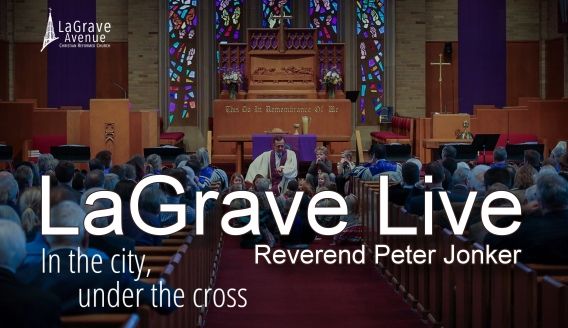

LaGrave Live
LIVE Evening Worship - For You Died... - 2026-02-15
About The Service:
Pastor Jonker will preach on Colossians 3:1-4.
Order of Worship:
https://lagrave.org/wp-content/upload...
About Us:
We are a traditional CRC church in the middle of Downtown Grand Rapids, MI, worshipping at 8:40am, 11:00am, and 6:00pm. (10:00am and 6:00pm during the summer months)
We'd love to hear from you:
Connection: https://www.lagrave.org/contact
Let us pray for you:
Prayer: https://www.lagrave.org/prayerrequest/
Giving: https://www.elexiogiving.com/App/Givi...
The February special offering is for The Bridge. The Bridge is part of Arbor Circle, which offers emergency shelter for youths, and additional counseling for youths and their families.
Listen on the go:
Amazon Music: https://bit.ly/LGPodAmazonMusic
Apple Podcast: https://apple.co/3tuOdwQ
Google Podcast: https://bit.ly/LGPodGoogle
Soundcloud: / lagravecrc
Spotify: https://spoti.fi/3yXDFaT
Follow us!
Facebook: / lagravecrc
Instagram: / lagravecrc
Website: https://www.lagrave.org
This Vesper service at La Grave Avenue Christian Reformed Church explores the profound theological paradox found in Colossians: the declaration that believers have already died. Through scripture, the imagery of C.S. Lewis, and real-world reflections, the service examines the tension between our "ghostly" old selves and the "substantial" new life found in baptism.
The Theology of Rootedness and Righteousness
The service opens with a call to worship from Psalm 84, emphasizing the blessing of those whose strength is in God as they pass through the "Valley of Baca" or suffering. Drawing from Jeremiah 17 and 2 Corinthians 5, the message contrasts two ways of living: the "tumbleweed" life of one rooted in self versus the "tree by the water" rooted in the Lord. This rootedness is further defined by the Heidelberg Catechism, which clarifies that righteousness before God comes not through the worthiness of one's faith, but through the "perfect satisfaction, righteousness, and holiness of Christ" credited to the believer by grace alone.
The Paradox of the "Dead" Self
A central challenge of the sermon is Paul’s assertion in Colossians 3:3: "For you died." While this refers to the "death" of the old self in baptism, the reality of daily life often suggests otherwise. The speaker acknowledges the "strange gap" between the theological declaration of death to sin and the persistent experience of temptation, guilt, and hypocrisy. This gap is illustrated through the tragic history of baptized individuals participating in the Holocaust, highlighting that baptism does not magically end the struggle against the old self, which remains "alive and kicking".
Ghostly Wraiths vs. Substantial Souls
Using C.S. Lewis’s The Great Divorce as a framework, the sermon describes the "great interior drama" of life as a choice between becoming a "ghostly" wraith or a "substantial" soul. Sin—such as deceit, rage, or the violence depicted in a seven-year-old’s drawing—makes a person "insubstantial" and "smudgy," like a stain in the air. Conversely, acts of compassion, kindness, and the joy of the Holy Spirit make a person "weighty" and "fully alive." The "true self" is not something believers must manufacture; it is already resurrected and "hidden with Christ in God," waiting to be lived out through the power of the Spirit.
The service concludes with a call to live out the "shining reality" of baptism. While the struggle between the old and new selves defines the human experience, the congregation is encouraged by the fact that their true, resurrected life is already secure in Christ. By the breathing of the Holy Spirit, believers are empowered to turn away from the "ghostly" and embrace the substantial life of grace
LaGrave Live
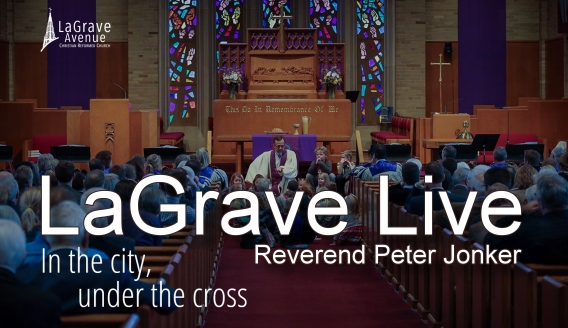

If you’re looking for a warm church that commits to an intensely pertinent Gospel in the Reformed tradition of the Christian faith, we invite you to worship with us. Our 1,800 members come from across West Michigan and gather weekly in our sanctuary for relevant Biblical preaching, beautiful music, and inspiring worship. We expand our worship through intentional outreach in our community and world, attentive care for our members, and plenty of spiritual enrichment and social opportunities for everyone.
We focus on a living Savior who provides genuine solutions to the deep needs of a hurting world. We are committed to need-meeting ministry in His name, and we are committed to being real people who enjoy real life and who cry real tears. Because we are a fairly large and diverse group in terms of age, occupation, marital status, lifestyle, and physical ability; our members create many accessible opportunities for community service, Bible study, and small social groups.
We worship God, the Almighty Creator of heaven and earth, and we enjoy expressing our vision of His holiness through traditional music and formal liturgy.
Music plays an integral part of our weekly worship gatherings. Congregational singing—of both traditional hymns and newer ones—is typically supported by our pipe organ. Vocal choirs, handbell choirs, small ensembles, instrumentalists, and vocal soloists provide additional music offerings.
Led by the Holy Spirit, we seek to worship and serve God in all of life, transforming His world and being transformed to reflect the character of Christ.
Founded by 36 Dutch immigrants on February 24, 1887, LaGrave Avenue Christian Reformed Church has always been deeply committed to both this local community and worldwide missions. God has seen fit to guide and bless these commitments with sustained growth, spiritual gifting, and a continual stream of new work for our members.
[00:00] Speaker 1: (peaceful music)
[06:09] Speaker 2: (instrumental music plays)
[12:19] Speaker 3: (bell tolling) Our call to worship tonight are these words from Psalm 84. "Blessed are those who dwell in your house, Lord. They are ever praising you. Blessed are those whose strength is in you, whose heart is set on pilgrimage. They pass through the Valley of Baca," which means the valley of suffering, "and they make it a place of springs. The autumn rains also cover it with pools. They go from strength to strength, till each appears before God in Zion." Thanks be to God. (congregation singing) How lovely, O how lovely. Is your abiding place. My soul is longing, fainting. To feast upon your grace. The sparrow finds a shelter. A place to build her nest. And so your temple calls us. Within its walls to rest. In your house, once to worship. For but a single day. Is better than a thousand. If I from you should stray.
[15:15] Speaker 3: I'd rather leave the entrance. And flee, through hell's bright door. Than dwell in the regions. Of which the sainted are born. Thus I will sing forever. On you, O Lord, most high. You shower us with blessings. From your throne we derive. The saints your grace receive. From strangeness man shall grow. Yet from there are shall be. A blessed hope for me. Amen. Congregation here in this place tonight, God Himself will water us with His word, with His spirit, and with His grace. And He greets us, saying, "Grace, mercy, and peace to you from God the Father, from Christ His Son, through the mighty and powerful work of His Holy Spirit. Congregation: Amen Welcome everyone, to our vesper service at La Grave Avenue Christian Reform Church. It's so good to see you here this evening. Uh, the Lord is, uh, in our midst by the power of His spirit. He is moving among us. So welcome to all of you, whether you're members or visitors with us this evening.
[17:12] Speaker 3: Um, may God's grace fill us all and lift us up and prepare us for the week ahead. And I'm going to read tonight as a, a way to, to root ourselves in God's grace. I'm gonna read a little bit, a combination of two passages. Jeremiah 17 and then 2 Corinthians 5:17. Jeremiah 17 contrasts, uh, two different ways, the ways of a person whose roots go down into the streams of the Lord, and is rooted in the Lord, and a person who is rooted in his or herself, someone who's more of a, a tumbleweed rather than a tree. And then 2 Corinthians 5 will tell us what it looks like when Jesus is the living water in whom we are rooted. "This is what the Lord says, 'Cursed is the one who trusts in man, who draws strength from mere flesh, and whose heart turns away from the Lord. That person will be like a bush in the wastelands. It will not see prosperity when it comes.
[18:18] Speaker 3: They will dwell in the parched places of the desert in a salt land where no one lives.'"But blessed is the one who trusts in the Lord, whose confidence is in him. They will be like a tree planted by the water that sends out its roots by the stream. The tree does not fear when heat comes. Its leaves are always green. It has no worries in the year of drought, and it never fails to bear fruit. Therefore, if anyone is in Christ, the new creation has come. The old is gone, the new is here." Thanks be to God.
[18:58] Speaker 3: (instrumental music plays) At the end of my reading, I referred to Second Corinthians and how Jesus is the living water in whom our roots go. Our confession tonight, the Heidelberg Catechism, fleshes out what it means to be rooted in Christ. Let's rise and say these two ques- questions and answers together. Congregation, how are you righteous before God?
[21:37] Speaker 4: Only by true faith in Jesus Christ, even though my conscience accuses me of having grievously sinned against all God's commandments, of never having kept any of them, and of still being inclined towards all evil. Nevertheless, without any merit of my own, out of sheer grace, God grants and credits to me the perfect satisfaction, righteousness, and holiness of Christ, as if I had never sinned nor been a sinner, and as if I had been as perfectly obedient as Christ was obedient for me. All I need to do is accept this gift with a believing heart.
[22:31] Speaker 3: Why do you say that through faith alone you are righteous?
[22:36] Speaker 4: Not because I please God by the worthiness of my faith. It is because only Christ's satisfaction, and righteousness, and holiness can make me righteous before God, and because I can accept this righteousness and make it mine in no other way than through faith. (instrumental music plays) (congregation sings) My sin was too gross; Jesus is kind. O what a foretaste of glory divine. Heir of salvation, purchase of God. Born of his Spirit, washed in his blood. This is my story, this is my song. Praising my Savior all the day long. This is my story, this is my song. Great is my Savior's love for me.Perfect submission, perfect delight. Visions of rapture now burst on my sight. Angels descending bring from above heavens of mercy whispers of love. This is my story, this is my song. Praising my Savior all the day long. This is my story, this is my song. Praising my Savior all the day long. Perfect submission, all is at rest.
[25:33] Speaker 4: I in my Savior am happy and blest. Watching and waiting, looking above. Filled with His goodness, lost in His love. This is my story, this is my song. Praising my Savior all the day long. This is my story, this is my song. Praising my Savior all the day long.
[26:10] Speaker 3: ... down by your stream. And you say that a person who drinks deeply from the water of life found there has leaves that are always green and never fails to bear fruit. Father, here in this prayer and here in this place, that's what we're trying to do, we're trying to send our roots down by your stream. We're sending our thirsty roots deep down into you, and we're looking for your life and your love to fill us up because we want to be green and we wanna be fruitful people for you. We don't want to be rootless and selfish. We wanna be sources of light and hope. We praise you for your streams of living water that feed our roots. We know that those streams come from Jesus Christ, your Son. Thank you for his sacrifice that caused this living water to flow in the world. Our sane, our sin brings death into the world. Our sin continues to bring death into the world, but his sacrifice continues to bring life and light.
[27:33] Speaker 3: Father, thank you th- for the ways you make your life known in this world, and we pray that you will keep doing that. Bring life through La Grave Church. Bless us as we make big decisions about our future. And bless us not only as we make big decisions about our future, but as we do the smaller works of the church. Bless us as we do the s- daily acts of caring for one another and praying for each other and looking after each other. Bring life too through all of us as we do our daily work, whatever that is. You've given everyone here a place to serve. Some of us are teachers, some of us run businesses, some of us spend most of our days raising children, some are caregivers, some work in the medical profession, some work in law or law enforcement. Whoever we are, Lord, whether active or retired, you have a call on our life. Bless us as we answer that call, may we answer it with joy. Use our work to pour living water into the lives of others.
[28:43] Speaker 3: Father, bring life also to the people whose life is especially diminished right now because of illness or loss. I pray for our brother, John Postmiss, and the loss of Anita, his daughter. We've seen Anita here many times, Lord, and we know her. We've been praying for her for a long time. Comfort John. Comfort too the family of Mark Campbell and his loss this week, bless them, and bless Marty, especially. I pray tonight for those who are in hospice. I pray for Sylvia Hugin and Bev Vandenbosch and George Zant. Walk with them as they get close to the edge of life and fill them with the assurance that you will be faithful with them when this earthly life is over and you will take them home. I pray for those who are recovering from surgery or s- or conditions. I think of Bready Freeswike and Joan Elsing and Sip Hutton. Father, Sherry Canton has had a really difficult week.
[29:44] Speaker 3: Please be near to her, strengthen her spirit as she continues to weaken, and bless Dick as he cares for her as best he can. Lord, strengthen all our spirits. Give us a spirit of gladness and joy and patience and love. Give us the fruit of your Spirit as we live our lives. We don't want to be small and bitter. We wanna be joyful and overflowing. That's our prayer. Receive that prayer, we pray, through Jesus Christ, our Lord.
[30:14] Speaker 3: Amen
[30:14] Speaker 4: (singing) Breathe on me, breath of God. Fill me with Your love.... and to do what you ... what you do. Breathe on me, breath of God. Until my heart is pure. Until my will is one with Yours, to do and to ... and to endure.
[31:23] Speaker 3: Bible reading tonight is from Paul's letter to the Colossians, Colossians Chapter 3:1-4. I think pretty familiar words to most of you. It's Paul speaking, and he says to the Colossian church and to us, "Since then, you have been raised with Christ. Set your hearts on things above where Christ is seated at the right hand of God. Set your minds on things above, not on earthly things, for you died. And your life is now hidden with Christ in God. And when Christ, who is your life appears, then you also will appear with him in glory." This is the word of the Lord.
[32:08] Speaker 4: Thanks be to God.
[32:13] Speaker 3: In the middle of this, uh, well-known passage, uh, Paul says something that I, I think is, is rather strange. You probably don't hear the strangeness of it anymore, because most of you as church people have heard Colossians 3 so many times. But it is a strange thing. In the middle of this passage, Paul says to us, "You died. You're dead. You kicked the bucket. Past tense, it happened. You died. Set your minds on things above," verse 3, "not on earthly things, for you died." Well, when did that happen? Right? You'd think you'd remember something like that. When did, when was it that you died? When did this thing happen? What is Paul talking about? It's a strange thing to say. Now, I know that many of you evening service people are smart and Biblically minded. And, uh, so you probably are thinking, "I got an answer for this one." Right?
[33:12] Speaker 3: Peter, and if you were in my Sunday school class, and I was doing a class and I asked the question, if I said to you, um, "Well, what does Paul mean here in Cl- Colossians 3 when he said you died?" You'd raise your hand and you'd say, "Well, well, Peter, Paul's talking about baptism. It's baptism when you die. So when Paul says you died, he's really, it's another way of saying you were baptized." And if I came back at you and said, "Well, he doesn't even mention the word baptism here, how could that possibly be the right answer?" You would say with great confidence, "Well, it's all in Chapter 2, of course. In Chapter 2:12, Paul says we were buried with Christ through baptism." 2:12. That's a death word. It's a kind of burial when you're baptized. And then in Verse 20 of Chapter 2, it says, "We've died to the ways of this world." So that's what he's talking about, it's the death, that's how the metaphor is carried forward.
[34:05] Speaker 3: You died to your, the old ways of this world and your old self, and you've been raised with Christ. And when you gave that answer, I would be very proud of you. I'd give you a gold star and I'd say, "You are absolutely right." And I would pat you on the back. This is baptismal language. But knowing that does not take the strangeness out of what Paul says. Paul says you died to your old way of life. But does that fit what we feel like in the wake of our baptisms? And we don't remember our baptism. I know there's a couple people here who do. I baptized you when you were a little older. But for any of us, whether you remember it or not, does your baptism put to end the old self and its power in your life? When you were baptized, does that, did that part of you just die so you didn't have to worry about it anymore? If only, right? If only we could say to our children, "Honey, it's okay. You've been baptized. You don't have to worry about temptation anymore.
[35:09] Speaker 3: You don't have to worry about the struggle against sin. You'll never feel the crushing weight of guilt or the sting of shame. You'll never have to pray that God will deliver you from, from sin that keeps coming into your life." We wish we could say that, but we know that we can't. The old self is alive and kicking, and sometimes the old self kicks pretty hard. So how can we say that the old self died? In one of his sermons, my old mentor, John Timmer, talked about a visit he made to Yad Vashem in Jerusalem, in Israel. Yad Vashem is the Holocaust museum in Jerusalem, in West Jerusalem. And he talked about one of the most striking places that he went was, uh, the, called the Children's Memorial Hall. And in the Chil- if you've been there, and I have not, but in the Children's Memorial Hall, I guess there's five candles lit, and there's a series of mirrors.
[36:06] Speaker 3: And the mirrors sort of duplicate the lights of those candles and create the effect that you're, you're standing under a sk- a sky of stars, half a million stars, and that 500,000 stars, those 500,000 reflections are meant to represent every child who died in the Holocaust. Sort of playing on your descendants shall be like the stars in the sky, but only in a tragic way. His image was hard to take for anyone walking in th- what, for John, what he said was particularly hard about it was, he started thinking about it and he said, "You know what? All the, all those children were killed by people who were bapt-Right? 95% of the people who rounded up those kids and put them in the trains and brought them to the camps, the people manning the gas chambers, they were baptized people. A minister like me, in a robe like mine, stood over them and baptized them in the name of the Father, Son, and the Holy Spirit and said, "Your old self is dead." But it wasn't.
[37:14] Speaker 3: It's a strange gap between this declaration and our experience of everyday life. And this gap ma- really matters. Um, there's a, a fellow named Ryan Burge who's worth getting to know. He's a modern-day, uh, statistician of, of Christianity, and I follow him on Facebook. And so I get all these charts, and they're really interesting, about the direction of modern Christianity. And just about a week ago, he put out a chart of, uh, the top reasons why people who used to be in church as young people but have now left, reasons why they say they left. Number one reason: hypocrisy. Right? And that's, that's, that's what we're talking about. The gap between who we say we are in Christ, but then how we actually live. What do we make of all this? Well, of course, I think what we have to make of it is when Paul says, "You died," he doesn't mean that there's a complete break between the old self and the new self, that the old self and the new self, we have to admit, are still struggling within us.
[38:22] Speaker 3: And really, that struggle between the old self and the new self is the great interior drama of our entire life. To paraphrase C.S. Lewis, the choices we make every day either feed that old self or feed that new self, either bring the old self and give it more power or feed the new self and give ourselves more life. It's the great drama of our life. When I try to think of that drama, I often think in my mind of, uh, C.S. Lewis's book The Great Divorce. It's not one that's been read by a lot of people. I think it's one of my favorites of his. And the book The Great Divorce seems like it's about heaven and hell, and in some ways it is, but really, it's about the drama and the, the divide between the old self and the new self. The, the book opens up in hell, and Lewis paints hell as this dim, dingy city, this bureaucratic place.
[39:24] Speaker 3: It's gray, and it's populated by a bunch of miserable people who just keep their head to the ground and go about their business, and they all stab each other in the back, and they all dislike each other, and they're, they're perpetually nursing their grievances all day long. And then some of the people in hell get put on a bus, and this bus crosses this cosmic chasm and goes to heaven. And these, these shades, these hell people get off the bus, and they come into this bright and glorious place, and they meet some of the people of heaven, the heavenly people, the redeemed people. And, and the people they meet are redeemed people who they actually knew in their regular earthly lives. And Lewis paints a really interesting contrast between the, the heavenly creatures and the, and the, the people from hell. For the, for the hell people, he says they're, they're like wraiths. They're like ghosts. He says they're small and smudgy. They are man-shaped stains in the bright air.
[40:27] Speaker 3: Their, their character is like dirt on a windowpane, right? They've shrunk. They've become like ghosts. They're insubstantial. By contrast, the heavenly souls are overwhelmingly heavy, heavy in the sense of glorious. They are bright. They are fully alive. When you see them, you wanna dance. You wanna sing. They, they, they laugh freely. They, they encourage. They're, they're just lovely, and you, you just want... You feel overjoyed in their presence. They are completely substantial. Those two descriptions are pretty good descriptions of the old self and the new self that we are feeding in each other, moving towards one or moving towards the other. I didn't keep reading in Colossians 3, but that's what he, Paul talks about later in Colossians 3, about these two selves. He says, you know, some of us are still locked in that old self, in th- that s- characterized by anger, rage, malice, slander, filthy language, sexual immorality, impurity, lust, evil desires, and greed.
[41:34] Speaker 3: When those things dominate our life, right, we become more ghostly. On the other hand, when we take off the old self, right, put it off, he says, and put on the new self, things like compassion and kindness and patience and forgiveness, and over all these things put on love, he says, something real and weighty and substantial starts to grow in us. This is real. Now you see this. A child lies to her parents about where she was last night, and she gets away with it. She deceives her parents, escapes without consequences. She feels good about it, sort of, but the next day, the damage to the trust, what she feels inside, she knows somehow she's become a little less mor- substantial, a little more ghostly. A husband blows up at his wife over something that she does repeatedly that bugs him, and he feels the surge of righteous anger and the, the goodness of that feeling. But the next day, the relationship is weaker, there's more anger, there's more bitterness.
[42:51] Speaker 3: He's less substantial, more ghostly.College student, away from home for the first time, goes out on a Friday night, parties with his dorm mates. They all encourage each other. He gets drunk. He hooks up with someone. In the morning, they all laugh and slap each other in the back, like, "Yay, way to go." But inside, he knows that something has died a little bit. He's become more ghostly, insubstantial. Sometimes it's not our choices that raise up the old man and make us more ghostly. Sometimes it's the stuff that's around us. There's a story from wa- years ago when I still worked at Woodlawn, my previous church. Uh, we had a relationship with Congress School, the same school that, uh, we do Kids Hope at here at La Grave. Um, we had a, one class that we did, uh, pen pals with. We'd write them letters and they'd write us.
[43:47] Speaker 3: And one of my partners in youth ministry, um, guy named Scott Bloom, who actually, um, works at The Other, The Other Way Ministries, um, he, he showed me, he had from another teacher, so- uh, something that he got from a teacher at that school, an exercise she'd done where she had given all the kids gingerbread-shaped cutouts, okay, with blank space in them. And she wanted the kids to draw in the blank space of this gingerbread cutout the things that represented who they were, pictures that showed who they were. These are, uh, second-graders, by the way, seven years old. One of the drawings from a boy named Mario had, had this. Um, on the right arm, he drew a kid playing soccer. So that's good. Soccer's good. On the left arm, he drew a gun, and he drew six individual bullets above the gun. In the place where his heart was, he drew money, a million dollars.
[44:52] Speaker 3: On his left leg, he drew, and this was a while ago, the game Halo 3, a very violent video game that's only supposed to be played by adults. Seven years old. On his right leg, he drew another gun. And over where his stomach would be, he drew a gravestone with the letters R-I-P on it. What's happening to that poor child, seven years old? He's fading. Probably not his own fault. Probably everybody around him. I don't know who it was. He's becoming more ghostly. He's becoming like a wraith. What will prevent him from becoming one of those teenagers we sometimes see walking around our city with blank looks on our faces, empty stares, like wraiths? This is why we do our work at Congress. This is why what we do when we mentor kids is so important. We're moving them away from that ghostly self and trying to bring them into the light, trying to show them their more substantial selves, the one made in the image of God. Paul's announcement in our passage, though, is not depressing or ghostly.
[46:14] Speaker 3: It is great. It is based on the resurrection. Even though we sometimes feel ghostly, even though we sometimes feel the weight of our old self, Paul says, "You may feel that, but that's not who you are. You died. Your true self is already resurrected. Your true self is hidden with Christ in God. You don't have to make that true self. It's already made for you. It's waiting there for you. And by the power of His Holy Spirit, God is pulling you towards your true self and away from your dead self, and that started that journey in your baptism." Now, of course, a lot of people resist the pull of baptism and turn away after they're baptized, but even when they do that, they are rejecting the person who they really are, their true self, which is hidden with God in Christ and made for glory. I said that you can see it when that ghost self creeps into people's lives. You can also see it when that more substantial self starts to come to life.
[47:22] Speaker 3: You can see it when a congregation sings a well-loved hymn. I could see it when you were singing Blessed Assurance on so many of your faces. You looked fully alive, not ghostly at all. You can see it when parents beam when their child makes profession of faith. You can see it when family members, you do a, a service at a graveside and the family members come together and they sing Amazing Grace or they sing the Doxology and hold onto each other in the face of death. I remember one year when I, long ago, when I was a youth minister at Woodlawn, I saw it. I was on sabbatical, and I always went on the service projects with our kids, but I didn't the year of my sabbatical. Uh, but I did come back, and they went to Nicaragua, and they came to make a report, so I knew all these kids well. And they were like kids are, right? You know, a little bit unsure of themselves, a little bit awkward, and that, you know, tryna figure out what it's like to be in their own skin.
[48:23] Speaker 3: Um, but then they went on this trip and they came back and they made a report after the morning service, and it was an ordinary report, but those kids were so happy, and they were so joyful, and th- they were so comfortable in their own skin. Something had happened on that trip to them. And to me, they were just so alive. They were so substantial. Something had happened to them. They had taken another step towards the true self, who they are in Christ, not ghostly at all, full of light and life.May we all know the truth of our shining selves. May all our children grow up in this context where they learn the truth of their shining selves. May the Marios of this world have faithful people who come into their life and who remind them that there is another self, a holy self made in the image of God that he should get to know. And may the Holy Spirit breathe on all of us so that we can live the full life of our baptism. Amen.
[49:40] Speaker 3: Lord God, we're about to leave this place after we sing and, and we'll go out and we'll be living this drama that we were just thinking about. The drama of, of life and death, the drama of living out of our God-created self, our true self, or sometimes, Lord, moving towards our old self. Holy Spirit, go with us, breathe on us, bring to life that new self, fan to flame the better angels of our nature, give us the courage and strength to turn away from that which is evil. Help us to cling to what is good. Through Jesus Christ our Lord we pray. Amen.
[50:22] Speaker 4: (Organ playing) (laughing) (music) Holy Spirit, living breath of God, breathe new life into my very soul. Bring the presence of the risen Lord, to renew my dying soul. Wash the world, purify it, be. Give me faith for what I cannot see. Give me passion for your purity. Holy Spirit, breathe new life in me. Holy Spirit, come abide within. May our joy be seen in all I do. Love enough to cover ev'ry sin, each thought and deed and attitude. Brightness to the greatest dimness of all our ways. Gentle voice that sows the path of peace. Turn my striving into works of grace.
[53:18] Speaker 4: Breath of God, show Christ in all I do. Holy Spirit, from creation's birth, give new life to all that God has made. Show your power once again on earth. Cause your church to hunger for your grace. Let the fragrance of our prayers arise. Lead us not from the sacred prize. Grant, in unity, the face of Christ be clear for all the world to see.
[54:27] Speaker 3: Go from this place with the life-giving blessing of your Lord. May the Lord bless you and keep you. May the Lord lift his face to shine upon you and be gracious to you. May the Lord turn his face toward you, smile upon you, and fill you with his peace, both now and forevermore.
[54:47] Speaker 4: Amen. (Organ playing)
[55:10] Speaker 5: (instrumental music)
[55:16] Speaker 6: (bells ringing)
[55:19] Speaker 6: (organ music)