
LaGrave Live, April 26, 2026
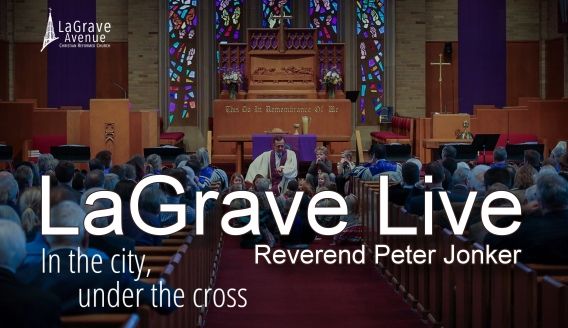

LaGrave Live
LIVE Evening Worship Service - Outward Bound
About The Service:
Pastor Jonker will preach on Luke 4: 42-44
Order of Worship:
https://lagrave.org/wp-content/upload...
About Us:
We are a traditional CRC church in the middle of Downtown Grand Rapids, MI, worshipping at 8:40am, 11:00am, and 6:00pm. (10:00am and 6:00pm during the summer months)
We'd love to hear from you:
Connection: https://www.lagrave.org/contact
Let us pray for you:
Prayer: https://www.lagrave.org/prayerrequest/
Listen on the go:
Amazon Music: https://bit.ly/LGPodAmazonMusic
Apple Podcast: https://apple.co/3tuOdwQ
Google Podcast: https://bit.ly/LGPodGoogle
Soundcloud: / lagravecrc
Spotify: https://spoti.fi/3yXDFaT
Follow us!
Facebook: / lagravecrc
Instagram: / lagravecrc
Website: https://www.lagrave.org
#LaGrave #LaGraveCRC
This worship service at La Grave Avenue Christian Reformed Church explores the dual nature of the Christian life through the example of Jesus. It emphasizes the necessity of both inward spiritual replenishment and the outward mission to engage with a distracted world.
Community Worship and Mission Focus
The service opened with a call to worship from Psalm 108, celebrating God’s steadfast love and faithfulness. A significant portion of the gathering was dedicated to the mission of the church, specifically highlighting the work at Zuni Christian Mission School (ZCMS) in New Mexico. Tim Beckford shared that the school is currently experiencing a "season of harvest," evidenced by recent baptisms of students and their family members. He emphasized that this work is sustained not by human strength, but through the Holy Spirit and the collective prayers of the global church.
Intercessory Prayer and Social Reflection
During the pastoral prayer, the congregation reflected on the beauty of creation while acknowledging the "dark valleys" of modern life. Specific concerns were raised regarding the rise of hatred, violence, and tension within the nation. The prayer sought peace, patience, and the frustration of those who promote fear. Additionally, the community interceded for those facing acute medical needs, specifically mentioning individuals battling cancer, chronic pain, and addiction, asking for both physical and soulful restoration.
The Sermon: The Two Moves of Jesus
The core message, based on Luke 4:42-44, examined Jesus’ devotional rhythm, which consists of two essential "moves":
1. The Inward Move (Replenishment)
Jesus frequently sought "deserted places" to pray and commune with the Father, especially after exhausting periods of ministry. This inward discipline is framed as vital for restoration. In a modern context, this is challenged by the "Attention Economy," where smartphones and digital distractions are designed to prevent quiet contemplation. The sermon noted a resurgence of interest in ancient spiritual disciplines (Sabbath, silence, fasting) among younger generations, such as Millennials and Gen Z, who are seeking "food and water" for their distracted souls.
2. The Outward Move (Mission)
The second move is the "must" of the Gospel—the necessity to move toward others. Jesus resisted the temptation to stay in a comfortable, successful ministry in Capernaum to reach other towns. His outward move was characterized by radical inclusion, reaching out to tax collectors, Samaritans, lepers, and the poor. The sermon argued that outward disciplines, such as hospitality, do not just bless others but also form and change the believer. By engaging with people from different backgrounds, Christians gain a fresh perspective on their own lives and ministries.
The Christian life is compared to the act of breathing: the inward move of spiritual replenishment is the "breath in," and the outward move of mission and hospitality is the "breath out." True human life, fully lived in the Holy Spirit, requires both moves to remain healthy and faithful to the example of Christ.
LaGrave Live
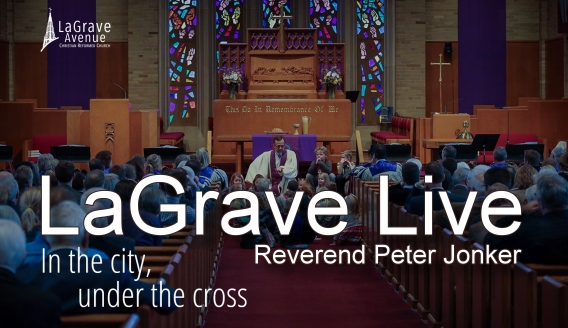
If you’re looking for a warm church that commits to an intensely pertinent Gospel in the Reformed tradition of the Christian faith, we invite you to worship with us. Our 1,800 members come from across West Michigan and gather weekly in our sanctuary for relevant Biblical preaching, beautiful music, and inspiring worship. We expand our worship through intentional outreach in our community and world, attentive care for our members, and plenty of spiritual enrichment and social opportunities for everyone.
We focus on a living Savior who provides genuine solutions to the deep needs of a hurting world. We are committed to need-meeting ministry in His name, and we are committed to being real people who enjoy real life and who cry real tears. Because we are a fairly large and diverse group in terms of age, occupation, marital status, lifestyle, and physical ability; our members create many accessible opportunities for community service, Bible study, and small social groups.
We worship God, the Almighty Creator of heaven and earth, and we enjoy expressing our vision of His holiness through traditional music and formal liturgy.
Music plays an integral part of our weekly worship gatherings. Congregational singing—of both traditional hymns and newer ones—is typically supported by our pipe organ. Vocal choirs, handbell choirs, small ensembles, instrumentalists, and vocal soloists provide additional music offerings.
Led by the Holy Spirit, we seek to worship and serve God in all of life, transforming His world and being transformed to reflect the character of Christ.
Founded by 36 Dutch immigrants on February 24, 1887, LaGrave Avenue Christian Reformed Church has always been deeply committed to both this local community and worldwide missions. God has seen fit to guide and bless these commitments with sustained growth, spiritual gifting, and a continual stream of new work for our members.
[00:00] Speaker 1: (instrumental music plays)
[06:09] Speaker 2: (organ music) Amen. (bell rings)
[08:00] Speaker 3: Our call to worship are these words of praise from Psalm 108. "My heart, O God, is steadfast; I will sing and make music with all my soul. Awake, harp and lyre! I will awaken the dawn. I will praise you, Lord, among the nations; I will sing of you among the peoples. For great is your love, higher than the heavens; your faithfulness reaches to the skies. Be exalted, O God, above the heavens; let your glory be over all the earth." Thanks be to God.
[08:33] Speaker 3: (organ music)
[08:38] Speaker 2: (laughs) (organ music) God himself is with us; let us now adore Him, bend with love before Him. God is in His temple, fall within silence, His sweet heart deep reverence. In our hearts we hold, as our God and savior, praise His name forever. God Himself is with us, hear the hearts resounding, see the crowds of those surrounding. Holy, holy, holy, hear the hymn ascending. Angels, saints, their voices blending. Bow your head to us here, hear, O Christ, the praises that your church now raises.
[10:59] Speaker 2: (organ music) Out of every blessing, given by Thy spirit, trusting only in Your memory. Like the holy angels, who behold the glory, may I ceaselessly adore You. And may all Your children sing, Your unending praises. Oh, Jesus, how I love You.
[12:09] Speaker 2: (organ music... only with me. Amen. Congregation, God Himself is with us in this place and He greets us, saying, "Grace, mercy, and peace to you from God the Father, from Christ His Son, through the mighty and powerful work of His Holy Spirit." Amen. Welcome everyone at the end of this absolutely beautiful day to worship here at La Grave Avenue Christian Reform Church. We are so glad to have you join us here this evening as we worship God together. Welcome, of course, to you members and to all you visitors here in our midst. I see a number of you here tonight. We hope you're blessed by your time with us. Uh, welcome especially to some Zuni people, Tim Bexford. Uh, right before the pastoral prayer, will get up and give us an update on what's going on at Zuni Christian School, one of the mission causes that, uh, we sponsor. Tim's been here before. Welcome again. I, I have a feeling there's a number of other Zuni people here in the congregation tonight, and that's great. After the service, Tim's gonna give a brief greeting now, and as is our custom, downstairs in the fellowship room, which is right underneath here, there will be a free meal for anyone who wants to come. So please, if, if you'd like to hear more about Zuni, if you'd like a free meal, come on down and join us there. In my liturgy today, um, I'm going to be thinking about, um, the mission of God's people, which ties into the theme of my sermon. To begin thinking about the mission of God's people, I'm gonna read the resurrection half of Psalm 22. What I mean by that is Psalm 22 has sort of two halves. The half we know best is the one that starts out, "My God, my God, why have you forsaken me?" And we think of that, of course, with Christ's cross. But about halfway through the psalm, the first half of the psalm is all about the suffering of the psalmist. About halfway through the psalm, the psalmist begins to celebrate the Lord's deliverance, which looks forward to the resurrection. And notice, not only how he celebrates the Lord's deliverance, but how part of the celebration is this impetus to go out and s- talk about it to others, to spread the news. Starts right at the beginning. "I will declare your name to my people. In the assembly, I will praise you. You who fear the Lord, praise him. All you descendants of Jacob, honor him. Revere him, all you descendants of Israel, for he has not despised or scorned the suffering of the afflicted one. He has not hidden his face from him, but has listened to his cry for help. From you comes the theme of my praise in the great assembly. Before those who fear you, I will fulfill my vows. The poor will eat and be satisfied. Those who seek the Lord will praise him. May your hearts live forever. All the ends of the earth will remember and turn to the Lord, and all the families of the nations will bow down before him, for dominion belongs to the Lord and he rules over the nations. All the rich of the earth will feast and worship. All who go down to the dust will kneel before him, those who cannot keep themselves alive. Posterity will serve him. Future generations will all be told about the Lord. They will proclaim his righteousness, declaring it to a people yet unborn, for he has done it." Thanks be to God. (organ music)
[16:22] Speaker 4: Good Christians, all rejoice and sing. Now is the triumph of our King. To all the world let music ring. Hallelujah, hallelujah, hallelujah! The Lord of life is ris'n today, sing songs of praise on this day; let all the world rejoice and say: Hallelujah, hallelujah, hallelujah! Your name we bless, O risen Lord, and sing today with one accord, the life laid down, the life restored. Hallelujah, hallelujah, hallelujah!
[18:13] Speaker 4: To-
[18:29] Speaker 2: ... with one. We sing for joy, ye heavenly host. Alleluia, alleluia. Alleluia.
[18:53] Speaker 3: When we are thinking about the mission of God's people and what it consists of and what it means, a very fine summary of that is found in paragraph 41 of the Contemporary Testimony. Let's rise together and say those words. Let's say together: Joining the mission of God, the church is sent with the gospel of the kingdom, to call everyone to know and follow Christ, and to proclaim to all the assurance that in the name of Jesus there is forgiveness of sins and new life for all who repent and believe. The Spirit calls all members to embrace God's mission in their neighborhoods and in the world, to feed the hungry, bring water to the thirsty, welcome the stranger, clothe the naked, care for the sick, and free the prisoner. We repent of leaving this work to a few, for this mission is central to our being.
[20:19] Speaker 2: The anthem of the earth shall hear. And turn unto the Lord in fear. All members of the earth shall own. And worship Him as God alone. All Earth to Him, whereout it springs. The Lord of Lords, the King of Kings. His is the Kingdom, His own right. He rules the nations by His might. All Earth to Him, whereout it springs. The Lord of Lords, the King of Kings. All Earth to Him, whereout it springs. The Lord of Lords, the King of Kings. Both rich and poor, both bond and free. Shall worship Him on bended knee. And children still their parents shall proclaim. The glorious honor of His name. All Earth to Him, whereout it springs. The Lord of Lords, the King of Kings. The Lord's a way in righteousness. All generations shall confess. From age to age it shall be told. What wondrous works the Lord has done.
[23:01] Speaker 2: All Earth to Him, whereout it springs. The Lord of Lords, the King of Kings. Amen.
[23:22] Speaker 3: At this time, (clears throat) at this time I'd like to invite Tim Beckford to come forward and share a little bit about what's going on at Zuni. Thanks, Tim.
[23:37] Speaker 5: Good evening. I bring you greetings from Zuni Christian Mission School in Zuni, New Mexico, and we are ... Indeed, there is more than just me here and we invite you to stay around afterwards to hear a little bit more, not just from me but from others who are ethnically Zuni as well, about what God is doing in our school, uh, in our town, and it's exciting. At ZCMS, our mission statement is, "Planting children in Biblical truth and surrounding them with God's grace." And we acknowledge that we are planters. Um, we see that seed go into the ground. We don't always get to see the plants come up. But right now in Zuni, it feels like a season of harvest, which is exciting, and there's a lot of joy in harvest.
[24:21] Speaker 5: Uh, about two months ago, uh, one of our eighth grade students was baptized, and if you come later on you'll get a chance to hear a little bit about her journey from her-And then, three weeks ago, her mom and her sister, as well as five other people in our community were baptized into the faith, professing their faith in Christ for the forgiveness of their sins. Um, including another former student who God pursued. That seed was planted and maybe it lay dormant in his life for a while, but God pursued him through His love and brought him to Himself. We also acknowledge that we don't do this alone, right? It's not through our own strength and power that we do this. First, and perhaps most obviously, it is God, through His spirit, that is at work in the hearts and lives of people in Zuni, drawing people to Himself, to saving knowledge of Jesus Christ.
[25:12] Speaker 5: And then also, we are supported and strengthened and encouraged by your prayers, by not just the folks here at La Grave, but also by the prayers of God's people throughout this world. So we invite you again to join us after this evening's service to hear a little bit more about the stories of what God's doing through His Spirit's power in our town, and we hope that it's an encouragement to you as you have been an encouragement to us. Thank you.
[25:43] Speaker 3: Thanks, Tim. Let's join our hearts in prayer. Um, the pastoral prayer will be concluded by singing two stanzas of My Shepherd Will Supply My Need. Those are both printed in your bulletins. Let's come together before the Lord in a time of prayer. Almighty God, you are the Lord of lord and the King of kings. You are the Lord of the ends of the earth and all the earth belongs to you. And we belong to you, and everything we have belongs to you, too. We praise you for the gift of everything we have. For the sweet miracle of our life, we are truly thankful. For the wonder of blue sky in the mornings, we are truly thankful. For the springing green of an April day in Michigan, we are truly thankful. For the joy of human love, for friends and family, for silliness and infectious laughter, we are truly thankful. And for the steadiness of your promises and the wild hope of the resurrection, we give you thanks and praise, and we are truly thankful.
[27:07] Speaker 3: Father, we thank you not only that you're the Lord of all things, but you're also our Good Shepherd who walks beside us through all the parts of our life. Whether we're strolling through green pastures or struggling through dark valleys, you are right there beside us, and your rod and your staff, they comfort us. We've already thanked you for some of the green pastures of our life. Now please hear our prayer for some of the dark valleys that we are going through. Good Shepherd, you know the tension in our nation has been going on for a long time and it flared up again during last night's events. Father, many of us feel the rise of hatred and violence in our land, and we are concerned. Bring peace and patience. Lift up kindness. Frustrate and stop those who promote fear and violence and contempt as a way forward. Good Shepherd in this world, we pray for our children, and we pray for those who are responsible for nurturing them. We pray for all parents.
[28:22] Speaker 3: Give parents patience and wisdom as they love their children, and bless them as they teach their children about you, and raise their children to love you and trust you. Bless our teachers. We thank you for all our teachers. Strengthen and sustain them as they get near to the end of the school year and maybe are a little tired. Bless our schools. And I pray tonight for Christian schools, and I pray tonight for Zuni Christian School. Thank you for all the years that you've sustained your presence, your holy presence in that place, Lord. Thank you for all the seeds that they have planted, seeds of your grace, seeds of your Gospel. Thank you f- for the harvest of those seeds in baptisms and professions of faith, and continue to bless Zuni Christian School as it goes into the future. Good Shepherd, we pray also that you would walk with those who are going through the valley of physical and emotional needs. Pray for those who are in chronic pain.
[29:32] Speaker 3: Strengthen those who struggle with anxiety or depression. Lord, give strength to those who are fighting addiction and those who love them. Encourage those who are wrestling with doubts, and be a companion to those who are lonely. And we pray for those in our family who have, uh, special and acute medical needs. I pray for Dan Moellenbeek and Ruth DeWinter. I pray for Ray Paydir and Bill Stroe and Jack VanSledrite. Give each of them what they need. I pray for Momani, who continues with her struggle, and her family who struggles alongside her. I pray for the younger people who are connected to our congregation who are struggling with cancer, and I'm thinking of Kaylee and Zoe. Good Shepherd, walk with all of those who are dealing with cancer and whose lives are overshadowed by this terrible disease every day. Give them what they need for their body and give them what they need for their soul.We are the sheep of your pasture. We are the flock under your care, Lord.
[30:41] Speaker 3: Keep us close beside you always, we pray, walking with you. Amen.
[31:28] Speaker 2: (music)
[33:08] Speaker 3: Our Bible reading this evening is from Luke's Gospel, Luke Chapter 4. I will read verses 42 through 44, so just three short verses and just to give you a little context, these three short verses come the morning after Jesus has had a really long day of ministry. If you start at verse 31 and read through 41, you get a sense of what was, that was, what was in that day of ministry. And the next morning, he wakes up and this is what happens. "At daybreak, Jesus went out to a solitary place. The people were looking for Him, and when they came to where He was, they tried to keep Him from leaving them. But He said, 'No, I must proclaim the good news of the Kingdom of God to the other towns also, because that is why I was sent.' And He kept on preaching in the synagogues of Judea." This is the Word of the Lord.
[35:06] Speaker 2: Thanks be to God.
[35:14] Speaker 3: What do we know about Jesus' spiritual habits? What was his, um, devotional regime? How did he structure his life with his Heavenly Father? Um, we don't actually know a lot. The Bible isn't very direct about this. Jesus does some teaching on prayer, of course, but he doesn't ... There's no passages that come out and say, "This is how many times a day Jesus prayed and this is exactly when he prayed." Or, "This is how much time Jesus spent every week reading God's Word. This is how much time he spent studying Torah." What we have is passages like the one I just read, which show Jesus in a kind of devotional routine and we have to sort of extrapolate from that, see from that and guess from that what his regime might have been. So there's not much there and you might read right past it if you weren't paying attention.
[36:09] Speaker 3: But when you stop and when you listen, there is enough in that passage to give us a sense of how Jesus stayed in contact what is, with his God and what his devotional rhythm was like. And I want to stop and reflect on that to see Jesus' devotional rhythm and see how it might inform our walk with God from day to day. And as I read this passage in the context of everything around it, I think there are two moves to Jesus' devotional life. Okay? Jesus' devotional life has two moves.First move is the inward move, and that's what we see right at the beginning of this passage. "At daybreak, Jesus went and departed to a deserted place." So right after a really hard day, Jesus needs to pray. He's just finished a really intense day of ministry in Capernaum. He started the day by preaching, okay? Preached in the synagogue there, sermon went really well.
[37:12] Speaker 3: Course, there was someone who stood up in the middle of the sermon who was, uh, filled with a demon and Jesus had to cast the demon out, so that was intense, right? That's not, that's not an easy sermon to get through. Jesus gets through. Afterwards, he goes to Peter's place and finds out that Peter's mother-in-law is sick. He heals Peter's mother-in-law. She gets up and immediately serves dinner. She's mother-in-law, after all. And then when that's done, he goes out and he spends the entire evening where everybody from the surrounding area comes and brings him all his sick people. Every person who's afflicted with anything comes to Jesus and tells him what's going on and wants his healing, and he, he heals until the sun goes down. A 16-hour day of ministry, he must have been absolutely exhausted. So in the morning, he gets up and he goes off to a deserted place just so he can be with his Father and be replenished, be restored. It's something he did often.
[38:18] Speaker 3: The very next chapter, right after he has another long day of pastoral care, it says, "Jesus often went to lonely places to pray." Uh, chapter five, verse 16. And if you were listening to this morning's sermon and reading, which I hope you were, you will notice, why wasn't Jesus in the boat with the disciples? He was praying in a lonely place by himself because just the day before, the passage before, it was the feeding of the 5,000. He'd spent all day with 5,000 people listening to them and then feeding them, and he needed to be replenished. The inward move, Jesus had a habit of going to be in a lonely place, a quiet place to be with his Father, to commune with him and to be restored. The inward discipline. Now, of course, we know that the inward disciplines are supposed to be part of our devotional life too. It's critically important that we find time in the busyness of our life to sit down and open our hearts to God in prayer, through scripture reading, and be replenished.
[39:24] Speaker 3: These are things that we've been taught from the very beginning if we've grown up in the church, right? Our mothers said them to us, our fathers said them to us. We know this. We know that the inward devotional life is so important. And of course, the inward devotional life doesn't just consist of prayer and Bible reading. It also includes, uh, things like Sabbath and silence and meditation and fasting. These are the sorts of inward habits of faith. I think the inward habits of faith are more important than ever. And in our age, and I've actually seen this change during the time of my ministry, the inward habits of faith are harder to do than they ever have been before in our culture. Our culture is not friendly to inwardness. Sometimes it feels like our culture is against inwardness. What do they call the modern-day economy? Used to be called the information economy, right? Now they have a new word. What's the new thing it's called? The attention economy. The attention economy.
[40:37] Speaker 3: Right? Everybody wants your eyes, everybody wants your clicks. Everybody's trying to get your attention. And when everyone's trying to get your attention, they're, there's, there's really, really clever people who are very well-funded who spend all day long thinking of ways to keep you distracted. And of course, we've always had things to distract us, television, all kinds of trivial pursuits, but nowadays, of course, the thing that keeps us most from inwardness is our phones. Our phones are designed to get and keep our attention and anyone has a phone that they use a lot, I am one of this tribe, think about what it does to you when you're in a quiet moment. If you're just holding your phone and you're in a quiet... Or if it's just sitting beside you in a quiet moment when you could be contemplating, when you could be playing, when you could be letting deeper thoughts come in, what are you tempted to do? Reach for the phone. Reach for the phone. Reach for the phone.
[41:34] Speaker 3: They've trained you. The attention economy. All this helps explain the popularity of people like John Mark Comer with this generation. John Mark Comer is the latest generation of Christian pastors who's writing books about the inward disciplines. He writes about prayer, he writes about Sabbath, he writes about fasting. His audience is, um, a lot of millennials and Gen Z and they're eating his stuff up, because they're the ones most lost, they're the ones most having difficulty keeping attention. And when they hear about these ancient spiritual practices, they are like, "Yes, this is the food we need. This is the water we need." We need to relearn how to do inwardness, the inward disciplines. There's a group in our church of young people who are studying one of his books.
[42:29] Speaker 3: It could be, who knows, but the way the church is able to reach this generation which is so distracted and knows it is, and has trouble being inward, could it be that something as simple as teaching them how to pray or how to be inward will be the way to get them to come back to church?The inward life is the first move of Jesus' devotion. But it isn't just inward. It's not just prayer and fasting. Look what happens next in this story. The people of Capernaum wake up, they realize Jesus isn't there, and they send out a search party, or to be precise, I think they send out a search committee.
[43:15] Speaker 6: (laughs)
[43:17] Speaker 3: And here's what I mean by that, right? They don't want him to leave, right? So they come to him and they say, "Jesus, Jesus. Why... No, don't go. That was such a powerful sermon you gave yesterday. It was just so great. I have not heard preaching like that in a long time. And the way you spent all day pastoring in our town, you have no idea how many people you blessed. And we've been talking. We want you to become our rabbi. Stay in town. We'll build you a new synagogue. We'll build you a parsonage. We'll give you every fourth weekend off. It'll be good for you. It'll be such a blessing for us. What do you say, Jesus?" Now, that, that might have been tempting for Jesus, right? A lot of us, what do we look for in life? A place where we can do meaningful work and be stable, have our needs provided for, and know that we're blessing people. But Jesus says, "Nope, I cannot stay here. I must..." Notice the word must. "I must proclaim the good news of the kingdom. I must go out from here.
[44:23] Speaker 3: I must go outward to preach the good news. That's why I came." Jesus is disciplining himself with those words to the outward move. That's the second move. The inward move, and then there's the out mood, outward move of devotional life. And that was central to Jesus' ministry too, right? Think of all the times that Jesus was deliberately and spectacularly outward. The whole coming down from heaven is the first outward move of ministry, right? He didn't stay safe in heaven. He came down to be incarnate and to live among us. He moved out.
[45:03] Speaker 6: (coughs)
[45:03] Speaker 3: He moved outward to the tax collectors, inviting one of them to be his disciple, sitting down and eating with them. He moved towards the Samaritans. People didn't even wanna talk to Samaritans. Jesus stopped and talked to a Samaritan woman by the well and blessed her and changed her life. Moved outward towards the prostitutes and helped one so much that she bathed his feet in her tears. He moved outwards towards the lepers and touched them and healed them when no one would do such a thing. He moved outwards towards the poor. Blind Bartimaeus shouting in the streets of Jericho, people saying, "Ignore that guy, he's always shouting." Jesus moving towards him, outwards. And he moved towards the children, blessing them when no one wanted him to pay attention. Throughout his ministry, Jesus makes the outward move towards people who are small, towards people who are unnoticed, towards people who are different. And watching Jesus too, we know that our spiritual life needs that move as well.
[46:16] Speaker 3: We need the inward move desperately. We talked about that already, but we need the outward move. And Jesus calls us to that so many times, "Do not leave your light under a barrel. Let it shine before others." When the disciples are called, tells them they're gonna be fishers of people, they're gonna go out. When Jesus gives his disciples their first independent assignment, sends them out two by two, what does he send them out to do? It's not prayer and Bible study. It's mission. Telling people about the good news of the kingdom. And then there's just the whole trajectory of the Book of Acts, right? This is Luke's first book. The second book of his is Acts. At the beginning, Jesus is concentrated in the, just in the stable. That's, that's where the presence of God is. But then it just goes outward from there, right? It goes up to Galilee and then it comes back to Jerusalem and then it goes to Samaria and up to Asia Minor and over to Greece and over to Rome by the end of the book.
[47:20] Speaker 3: And now it's filled the earth, outward, the outward disciplines, pushing the Word of God out into the world. And what does that mean for me and you? Does that mean that we're all called, you know, to be missionaries and cross the ocean like Paul? No. It means that for some people, right? Lee Huizenga, one of our old missionaries, meant it for him. Joanna Veenstra. But for us, there are many ways to be outward, many outward disciplines that we can practice. Maybe it looks something like this, a story from my own life, an outward discipline, in this case hospitality. I think it was, I think it was about 15 years ago, I don't know if you remember, that Calvin University hosted the World Conference of Reformed Churches.
[48:07] Speaker 3: There was just Reformed people from all over the world who came and stayed at Calvin University, and s- a lot of local churches, and I wasn't at La Grave at this point, but I wonder if La Grave did this too, hosted dele- um, some of these delegates from other churches and put 'em up in houses. Well, the Yonker family, doing their duty, signed up for that, and we agreed to host some of the delegates for a Sunday afternoon. I admit that when the day came, the Sunday afternoon... I'd preached that morning, and when the day came and I realized that we were gonna have to host six Brazilian delegates all afternoon, uh, there was a big part of me that did not want to practice the outward discipline. I was tired after preaching. I wanted to just be quiet and be by myself. But we'd signed up, and so over these... Six Brazilians came, and it was a wonderful afternoon.I think in general, this is my impression, Brazilians are warm, effusive, friendly people.
[49:06] Speaker 3: Uh, these people were so friendly that within a half hour, they were inviting us to come to Brazil when the World Cup was there and stay at their houses and watch with them. Uh, they told us everything about themselves in their broken English. Um, they wanted to know everything about the Christian Reformed Church and I told them everything I could. And then I wanted to know everything about their church and they said they came from a tiny little reformed denomination in Brazil that has 50 churches, 50 churches. And of those 50 churches, only three have full-time ministers. The other 47 have ministers who are part-time, right? Or they're, they're full-time, they're doing the work of a full-time minister but they're also doing a full-time job beside it. They're bi-vocational ministers. They do all their work and then write their sermons in the little in-between times.
[49:59] Speaker 3: Two of the pastors there were, who were in our house were, were just like that and I was blown away by their enthusiasm and how hard they worked. I talked to one for about an hour about how he was talking to some of the Spiritist, uh, people, people who had some traditional Spiritist beliefs and he was trying to bring the Gospel to them. We talked for a long time, for about three hours, and after that we broke our fellowship because, well, it was ti- during a time during the World Cup. We were there th- during the World Cup and Brazil was playing and they absolutely had to watch that so we went downstairs and we watched Brazil. You have not lived until you've watched a soccer game with three, uh, six Brazilian soccer fans. They were fanatics. It was a lot of fun. And when that was all done, it was time to go to evening church and off we went to the evening service.
[50:50] Speaker 3: We said our goodbyes and we were about to leave and one of the Portuguese ministers, again in his broken English, said, "No, no, no. We pray, we pray, we pray, we pray." So my backyard, they got us all together and he said this exuberant prayer entirely in Portuguese. I did not understand a word, but it was wonderful. The whole afternoon was joy. An incredible faith-building experience when it was done. And it wasn't just joy for them, it was joy for me. So maybe I thought of the outward move as a thing that I give. The inward move is when I'm getting stuff and I'm being formed. The outward move is when I give away. No. Even in the outward move, I am being formed. I'm being changed, the Holy Spirit shaping me. In a couple ways I think that happens to any of us who make the outward move. First, it's just fun to meet other people, to see what's going on in their lives, to hear what God's doing in their lives.
[51:59] Speaker 3: And second, by moving outwards, when we return to our own life we look at it differently. Believe me, I looked at my own ministry differently when I talked to these two guys who were bi-vocational ministers. I would whine about how busy I was. I didn't do that after I saw how busy they were. Outwardness blesses others, but it grows us too through the power of the Holy Spirit. There are hundreds of ways of practicing outwardness besides inviting Brazilians over. You could invite a new family who's moved into your neighborhood over for a barbecue, get to know 'em. You could join a local club, bowling league, a quilting group, and get to know some people who aren't church people and just see where that leads. You could volunteer at our Kids Hope program. That will put you in touch with people whose lives are very different than you and you will be blessed.
[52:56] Speaker 3: You could do something as simple as inviting a few other couples from church over for dessert and experience the adventure of getting to know someone new. Jesus said, "I must, I must proclaim the good news of the kingdom to others. I was sent for this purpose." Inward disciplines, outward disciplines, breathing in, breathing out. It's the way of the kingdom. It's the way of Jesus. It is the Holy Spirit breathing in us and it is human life fully lived. Amen. Thank you Lord for the example of your Son and the grace of your Son, both of these things. Thank you for the power of his life through the Holy Spirit that empowers us and enables us to do more than we ask or imagine. And thank you for his example which shows us how you would have us walk through this world. Give us the strength to do that this week, we pray, in Jesus' name. Amen.
[54:07] Speaker 3: (organ music)
[54:54] Speaker 2: (singing) Make me, Lord, a vessel, use me, Lord, as a vessel. Use me, Lord, as a vessel of your glory. Be the vessel, Lord, through me let all your power flow. Let all your power, Lord, flow through me. As I sing this song, let your power, Lord, flow through me, Lord. As I sing this song, let your power, Lord, flow through me.We risk it, pressing on though the way feels insecure; pilgrim age, hope bright and warm, trusting all our life to God. Faith endures by holding on, keeping memories true alive, so that hope may bear its fruit, promised, then our souls will thrive not through merit we possess but by God's great faithfulness. Faith matures by reaching out, spreading light, enlarging eyes, sharing struggles, living prayer, binding love, love broken hearts till we find a commonplace strong with witness to God's grace.
[56:55] Speaker 3: Let me remind you of the dinner afterwards down in the fellowship hall and let me send you out of this place with the blessing of your Lord. May the Lord bless you and keep you, the Lord lift up His face to shine upon you and be gracious to you, the Lord turn His face towards you, smile upon you, and fill you with His peace both now and forevermore.
[57:16] Speaker 2: Amen. (Organ plays) (bell rings) (organ plays)
[58:11] Speaker 2: (instrumental music plays(organ music)
[01:01:29] Speaker 7: (applause) (background chatter)