
LaGrave Live, April 12, 2026
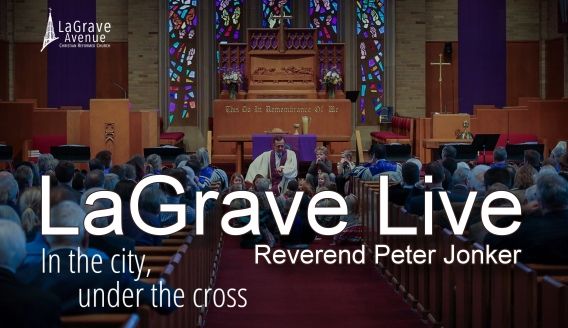

LaGrave Live
LIVE Evening Worship Service - Resurrection Risk
About The Service:
Rev. John Steigenga will lead us in worship. He will preach on John 12: 1-11 and his sermon is entitled “Resurrection Risk.”
Order of Worship:
https://lagrave.org/wp-content/upload...
About Us:
We are a traditional CRC church in the middle of Downtown Grand Rapids, MI, worshipping at 8:40am, 11:00am, and 6:00pm. (10:00am and 6:00pm during the summer months)
We'd love to hear from you:
Connection: https://www.lagrave.org/contact
Let us pray for you:
Prayer: https://www.lagrave.org/prayerrequest/
Listen on the go:
Amazon Music: https://bit.ly/LGPodAmazonMusic
Apple Podcast: https://apple.co/3tuOdwQ
Google Podcast: https://bit.ly/LGPodGoogle
Soundcloud: / lagravecrc
Spotify: https://spoti.fi/3yXDFaT
Follow us!
Facebook: / lagravecrc
Instagram: / lagravecrc
Website: https://www.lagrave.org
#LaGrave #LaGraveCRC
This evening worship service at La Grave explores the profound implications of Christ’s resurrection through the lens of Lazarus’s story in John 12. The service calls believers to shed the "grave clothes" of their old selves—specifically prejudice and selfishness—to embrace a new identity defined by "good trouble" and sacrificial love.
Liturgical Foundation and Global Intercession
The service opened with a call to worship from Psalm 100 and a responsive reading of Psalm 146, emphasizing God’s role as the maker of heaven and earth who remains faithful forever. This liturgical focus shifted into a pastoral prayer that acknowledged the "recreating power" of spring as a testimony to God's covenant. The prayer specifically interceded for those suffering in global conflicts, including the wars in Ukraine, Gaza, Lebanon, Sudan, and the uncertainties facing people in Iran and Israel. The congregation sought the strength to "see like Christ" and to act justly in a broken world.
Shedding the "Grave Clothes" of the Old Self
Drawing from Colossians 3 and Romans 6, the sermon compared spiritual transformation to Lazarus being told to "take off those grave clothes." These metaphorical clothes include sexual immorality, greed, anger, and—most stubbornly—prejudice and racism. The speaker noted that even the founders of the United States, despite declaring all men equal, failed to shed the "grave clothes" of slavery because they viewed others as subhuman. True conversion requires "new eyes" to see that in Christ, there is no distinction between Greek or Jew, slave or free, as Christ is all and in all.
The Identity of a Witness and "Good Trouble"
The service highlighted that following Jesus inevitably leads to "trouble," which the late Senator John Lewis called "good trouble." Historical examples, such as the 16th-century "hidden Christians" of Japan, and modern examples, like a retired pastor visiting undocumented immigrants in detention centers, illustrate the cost of being a "living sign" of Christ. Lazarus’s core identity became inseparable from the man who brought him back to life; similarly, believers are called to live as those who are safe in God's arms even while serving in a hostile world.
The service concludes with a powerful reminder that while the world may target those who follow Christ, the resurrection is proof that the "old order of things" is passing away. To live as Lazarus is to be a living testimony of life-giving power, choosing intimacy with God over the safety of silence.
LaGrave Live
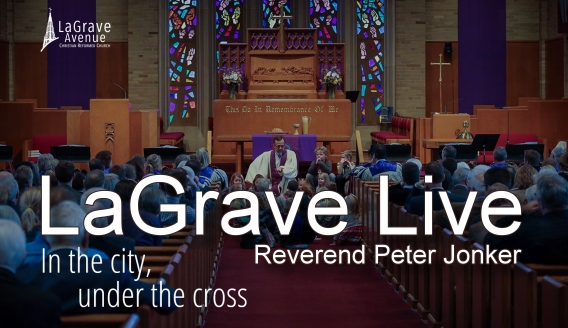

If you’re looking for a warm church that commits to an intensely pertinent Gospel in the Reformed tradition of the Christian faith, we invite you to worship with us. Our 1,800 members come from across West Michigan and gather weekly in our sanctuary for relevant Biblical preaching, beautiful music, and inspiring worship. We expand our worship through intentional outreach in our community and world, attentive care for our members, and plenty of spiritual enrichment and social opportunities for everyone.
We focus on a living Savior who provides genuine solutions to the deep needs of a hurting world. We are committed to need-meeting ministry in His name, and we are committed to being real people who enjoy real life and who cry real tears. Because we are a fairly large and diverse group in terms of age, occupation, marital status, lifestyle, and physical ability; our members create many accessible opportunities for community service, Bible study, and small social groups.
We worship God, the Almighty Creator of heaven and earth, and we enjoy expressing our vision of His holiness through traditional music and formal liturgy.
Music plays an integral part of our weekly worship gatherings. Congregational singing—of both traditional hymns and newer ones—is typically supported by our pipe organ. Vocal choirs, handbell choirs, small ensembles, instrumentalists, and vocal soloists provide additional music offerings.
Led by the Holy Spirit, we seek to worship and serve God in all of life, transforming His world and being transformed to reflect the character of Christ.
Founded by 36 Dutch immigrants on February 24, 1887, LaGrave Avenue Christian Reformed Church has always been deeply committed to both this local community and worldwide missions. God has seen fit to guide and bless these commitments with sustained growth, spiritual gifting, and a continual stream of new work for our members.
[00:00] Speaker 1: (instrumental music plays)
[06:09] Speaker 2: (organ music plays) (singing)
[08:41] Speaker 2: (whistling) (organ music plays) (singing)
[11:35] Speaker 3: The words of Psalm 100 call us to worship this evening. Shout for joy to the Lord, all the earth. Worship the Lord with gladness. Come before Him with joyful songs. Know that the Lord is God. It is He who made us, and we are His. We are His people, the sheep of His pasture. Enter His gates with thanksgiving and His courts with praise. Give thanks to Him and praise His name, for the Lord is good.... and His love endures forever. His faithfulness continues through all generations. Let's sing together.
[12:19] Speaker 4: (Organ music) (choir sings) Christ is high, no grave can keep. The cross stands bearing proof of strife. The streets that long to praise Him me. Around Him gather ever life. Christ is alive, no wonder tell. To this the years shall add beside. Of sin and guilt and pain they'll never. Yet God's redeeming grace shall find. E'en their gifts so fit and poor. Where prophets foretold of divine. Where sun rays fear, where clouds adore. And winds obey the Lord most high. When men and angels bow. And children seek the dear Lamb. Then I the way, the life, the truth. And Jesus is the way. Christ is God, yet God's obey.
[13:47] Speaker 4: Good news to ears that can't believe. Till earth and sky and ocean ring. With God's clear justice loud and free. Amen.
[16:10] Speaker 3: People of God, receive God's greeting. Grace, mercy, and peace to you. In the name of the Father, and of the Son, and of the Holy Spirit.
[16:20] Speaker 4: Amen.
[16:26] Speaker 3: Welcome to evening worship at La Grave. It's good to be together as God's people once again this evening. And I'd like to invite you to read with me Psalm 146. You'll find it printed in your order of service, and please read the bold print. Praise the Lord, praise the Lord, my soul.
[16:53] Speaker 4: I will praise the Lord all my life. I will sing praise to my God as long as I live.
[17:01] Speaker 3: Do not put your trust in princes, in human beings who cannot save.
[17:07] Speaker 4: When their spirits arise, they return to the ground. On that very day, their plans come to nothing.
[17:16] Speaker 3: Blessed are those whose help is the God of Jacob, whose hope is in the Lord their God.
[17:24] Speaker 4: He is the maker of Heaven and Earth, the sea, and everything in them. He remains faithful forever.
[17:33] Speaker 3: He upholds the cause of the oppressed, and gives food to the hungry. The Lord sets prisoners free.
[17:41] Speaker 4: The Lord gives sight to the blind. The Lord lifts up those who are bowed down. The Lord loves the righteous.
[17:50] Speaker 3: The Lord watches over the foreigner, and sustains the fatherless and the widow, but He frustrates the ways of the wicked.
[18:00] Speaker 4: The Lord reigns forever. Your God, O Zion, for all generations. Praise the Lord.
[18:09] Speaker 4: (Organ musicPraise the Lord, sing hallelujah, our great Redeemer and friend. I will sing of wondrous graces, of my God through all my days. Worthy of the highest praises, born of a virgin pure, He shall die, to God's praise returning, all their parts and flesh shall mend. Heavy heart, full breast of jealousy, Jacob's sighs will be their prayer. In that place, full soul confessing, of the Lord their God they will share. Heaven and earth, the Lord created, seas and all that they contain. Delivered from oppression, righteousness they now maintain. Who gave food to the hungry, sets the worn prisoner free, lifts his foes, found help in anguish, makes the sightless eyes to see. But our Savior loves the righteous, and the stranger He greets. Prouns the orphan, heals the widow, judgment on Him they suit. Praise the Lord, sing Hallelujah, our great Redeemer and friend. I will sing of wondrous graces, of my God through all my days. Order up a place forever, for the living to sing. Come to Him, never more to die, join the joyful song of heaven. Our second reading tonight is from the Book of Colossians, the third chapter, and I'm going to read verses 1 through 14. The bulletin says 1 through 11, but we'll go on through 14. Colossians 3, "Since, then, you have been raised with Christ, set your hearts on things above where Christ is seated at the right hand of God. Set your minds on things above, not on earthly things. For you died, and your life is now hidden with Christ in God. When Christ who is your life appears, then you also will appear with Him in glory. Put to death therefore whatever belongs to your earthly nature; sexual immorality, impurity, lust, evil desires, and greed, which is idolatry. Because of these, the wrath of God is coming. You used to walk in these ways, in the life you once lived, but now you must also rid yourselves of all such things as these; anger, rage, malice, slander, and filthy language from your lips. Do not lie to each other since you have taken off your old self with its practices, and have put on the new self, new self, which is being renewed in knowledge in the image of its creator." "Here there is no Gentile or Jew, circumcised or uncircumcised, Barbarian, Scythian, slave or free, but Christ is all, and is in all. Therefore, as God's chosen people, holy and dearly loved, clothe yourselves with compassion, kindness, humility, gentleness, and patience. Bear with each other and forgive one another if any of you have grievance against someone. Forgive as the Lord forgave you. And over all these virtues, put on love, which binds them all together in perfect unity.May the mind of Christ my Savior fill me from day to day; God, His love and power has told me, all I do and say. May the word of God convince me, in my life, from love to love, so that all may see and triumph only through His love. May the peace of God, my Father, rule my life in every way, that I may be found to conquer sin and sorrow here. May the love of Jesus fill me as the waters filled the sea; Him exalting, self abasing, praise His victory. May He go the victory before us, strong and brave to face unknown; looking only unto Jesus as we onward go. Following our pastoral prayer, we'll sing the song that's printed in your bulletin. Let us pray together. Sovereign Lord, maker of Heaven and Earth, the sea and everything in them, Your creating and recreating power is evident in the signs of spring all around us. Defying the grip of winter, each plant that emerges is a testimony to Your power. Long ago, You made this covenant with Noah. As long as the Earth endures, seedtime and harvest, cold and heat, summer and winter, day and night, will never cease. And so each day and each season, flowing into the next, is a reminder of Your faithfulness. In this Eastertide, when we celebrate the resurrection of our Savior, we also celebrate the countless ways You bless us with Your providential care. Apart from You, Lord, without Your love and Your mercy, we would cease to exist. Every beat of our hearts, every breath we take, every blessing we enjoy, every relationship that enriches our lives comes from You. We remember and give thanks for the new life we have in Christ. By Your power, by Your grace, there's a power in us, like a working of the- Your mighty strength by which You raised Christ from the dead and seated Him at Your right hand in the heavenly realms. Your Spirit lives in us and leads us to think like Christ, to see like Christ, to love like Christ, and like Christ to act justly, to love mercy, and to walk humbly with our God. We need Your help to open our eyes to the needs of others, and to open our hearts to love more fully and selflessly. Lord, save us from the pull of selfishness, greed, and small-mindedness. The wideness of Your mercy is like the wideness of the sea. May ours be similar. Our thoughts tonight go to those who are suffering the effects of war. People like us who are simply trying to live and provide for their families. People in Ukraine where war has become commonplace. People in Gaza and Lebanon who live in the ruins of war. People in Iran who live with uncertainty about whether they will see tomorrow. People in Israel and other parts of the Middle East affected by the war. People in Sudan where thousands have been killed and millions displaced in the ongoing civil war. Lord Jesus, when You were here, You spoke of wars and rumors of wars persisting until You return.Not because that's the way it's supposed to be, but because of the brokenness and sinfulness of humanity. We pray for peace, and we pray for the day of Your return when there will be no more death or mourning or crying or pain, for the old order of things will have passed away. As we wait for that great day, by Your mercy uphold the cause of the oppressed, supply the hungry with food, watch over the foreigner, sustain the fatherless and the widow, and frustrate the ways of the wicked. For You alone are sovereign and You alone are the savior of the world. We pray all this, merciful Father in Heaven, through Christ our Lord. Amen. Breathe on me, breath of God. Fill me with life anew. That I may love the way You love. And do what You would do. Breathe on me, breath of God. Until my heart is pure. Until my will is one with Yours. To do and to endure. Breathe on me, breath of God. So shall I never die. But live with You, a perfect life. For all eternity. Our gospel reading tonight is from the Book of John 12, the first 11 verses of John 12. Six days before the Passover, Jesus came to Bethany where Lazarus lived, whom Jesus had raised from the dead, a story told in the previous chapter. Here, a dinner was given in Jesus' honor. Martha served, while Lazarus was among those reclining at the table with Him. Then Mary took about a pint of pure nard, an expensive perfume. She poured it on Jesus' feet and wiped His feet with her hair, and the house was filled with the fragrance of the perfume. But one of the disciples, His disciple Judas Iscariot, who was later to betray Him, objected. "Why wasn't this perfume sold and the money given to the poor? It was worth a year's wages." He did not say this because he cared about the poor, but because he was a thief. As keeper of the money bag, he used to help himself to what was put into it. "Leave her alone," Jesus replied. "It was intended that she should save this perfume for the day of my burial. You will always have the poor among you, but you will not always have me." Meanwhile, a large crowd of Jews found out that Jesus was there and came not only because of Him, but also to see Lazarus, whom He had raised from the dead. So the chief priests made plans to kill Lazarus as well, for on account of him, many of the Jews were going over to Jesus and believing in Him. This is the word of the Lord. Thanks be to God. This story is like an onion. Not because it might make you cry, although if you think about it, it might, but because it has layers. On the surface, it is a Thanksgiving dinner. Lazarus is alive and Jesus is the reason, and the reason to celebrate. The family of Lazarus has to do something to demonstrate their thanksgiving, and so they have a feast. And they invite Jesus and His disciples, and Martha, of course, is in charge. And Lazarus is reclining at the table with Jesus and the disciples as though he were one of them, and perhaps he was. Now, it's a festive occasion, full of joy and wonder. Nobody can take their eyes off Lazarus, the dead man walking, or in this case, reclining.At some point, in expression of extravagant devotion, Mary pours this expensive perfume over Jesus' feet and wipes his feet with her hair, and the aroma fills the house. And Judas Iscariot says, "What a waste. What an absolute waste. Could have been sold to the money given to the poor. It was worth a whole year's wages." John, who was not a fan of Judas Iscariot, commented that Judas didn't love the poor, he loved money. And as the bookkeeper, or the keeper of the purse for the group, which is never explained in the Bible why Judas had that job, but as the keeper of the purse, John says, "He would put his hand in there and take what was there for himself." In Matthew's version of the story, Jesus says to that objection, "Why are you bothering this woman? She has done a beautiful thing to me. When she poured this perfume on by, on my body, she did it to prepare for my burial." So that's the second layer in the story. The dinner for most, all but Jesus, was simply a Thanksgiving feast with friends. But for Jesus, in a way, it was, it was a kind of last supper, because the cross was looming larger every day, and Jerusalem was just two miles away, and He would go in as a king and come out as a corpse. And He knew it. The others were oblivious, but the celebration had a somber note for Him. He could look around that table and see all the places empty after all those who had vowed to follow Him had left Him. And so, for Jesus, it was a reminder of what lay in store. The ominous ending of the previous chapter reads as follows. This is the chapter that tells the story of, of Lazarus being brought back from the dead. It ends with these words. "The chief priest and the Pharisees had given orders that if anyone found out where Jesus was, he should report it so that they might arrest Him." The storm clouds were gathering outside that happy home in Bethany, but only He saw them. At a ce- at a celebration of life, Jesus was thinking about His death. And a third layer of the story has to do with Lazarus, and I think, with us. John tells us what the people at the dinner did not yet know, that is that Lazarus had a target on his back. Not for anything he had done or said, but simply because of who he was. He was a man alive because of the power of Jesus Christ. And as such, he was a huge thorn in the flesh of Jesus' enemies. He was a huge embarrassment. How could you explain a man who had been in the tomb for four days walking out simply at the command of Jesus? "Lazarus, come out." And out he came, and nobody could deny it, and they were frustrated. Lazarus' life pointed like a sign directly to Jesus, and said, "This is the real thing, folks. This is the son of God. This is the Messiah." And so plans were made to kill him as well. Get rid of the, get rid of the evidence. Take down the sign. Destroy everything that indicates that Jesus is the real thing. And the irony here is so thick, you can almost cut it with a knife. Who are these people back in Jerusalem plotting the demise of Jesus and Lazarus? The priests. Not just the priests, the high priests. The leaders of the church of the day, and they had Jesus and Lazarus in their sights and they had murder on their minds, double murder. Lazarus most likely did not know he did- he had a price on his head. It's a good thing, it might have ruined his appetite. But maybe not. Maybe not. Maybe he had come to realize that no matter what happened to him, he was safe. Maybe Martha, no doubt Martha had told him what Jesus had said to her when she hurried out knowing Jesus was coming to Bethany after Lazarus had been dead for a number of days. And she met him and said, "Lord, if you had been here, my brother wouldn't have died." And He said, "Well, your brother's gonna rise again." And she said, "I know he'll rise again in the last day." "No, no," Jesus said. "I am the resurrection and the life. He who believes in me will never die."And when she told that to Lazarus, I can well imagine him saying, (laughs)
[42:59] Speaker 3: "Amen to that." And chances are, he was a lot more interested in following Jesus than in the schemes of his enemies. I know it's speculation, but I can well imagine Lazarus joining that crowd on the following Sunday, we call it Palm Sunday, that heralded Jesus coming into Jerusalem, and nobody could say it with more conviction than Lazarus, "Hosanna to the son of David!" Jesus had called him out of the darkness of death, out of the prison of the grave, and into the marvelous light with a new, of a new day, with new freedom. And he'd said to the ro- people around him, "Take off those grave clothes and let him go." Lazarus was a living testimony, a show and tell, pointing to the life-giving power of Jesus. It's a true story. John didn't make it up. He's a witness. He's a testimony. It's also a parable, pointing to another kind of life from death. Listen to this from Romans chapter six. "Don't you know that all of us who were baptized into Christ Jesus were baptized into His death?
[44:33] Speaker 3: We were therefore buried with Him through baptism into death, and you'll remember that just as Christ was raised from the dead, through the glory of the Father, we too may live a new life." We are Lazarus. In this passage we read earlier from Colossians chapter three, Paul describes grave clothes, not like the ones that Lazarus was wrapped in, but clothes like sexual immorality and impurity and evil desires and lust and greed and idolatry and anger and rage and malice and slander. "Take off those clothes," says Paul. "They don't belong to you. They don't fit you anymore. But put on the clothing of Christ, compassion and kindness, humility, gentleness, patience, and especially love which binds them all together." And there's something else, Paul says, "Take off the grave clothes of prejudice, discrimination, racism.
[45:49] Speaker 3: Here in this new life, here as Lazarus, there is no Greek or Jew, circumcised or uncircumcised, barbarian, Scythian, slave or free, but Christ is all and is in all." And that was a far more powerful and controversial statement than might strike us today. Perhaps you remember that when Paul was converted on the road to Damascus, he was blind for a few days, but when he was able to re- have his sight restored through Ananias, it wasn't just in a physical sense, but also in a spiritual sense. He had new eyes. He had new eyes through which he saw Gentiles no longer as subhuman, no longer as second-class, but God changed that. In a speech he made in Jerusalem many years later, he told about the change. After his third missionary journey, he came back to Jerusalem where he was no longer a popular person, and he was threatened there, and he was arrested by a Jewish mob, and had the Romans not rescued him, he might have been killed.
[47:14] Speaker 3: But he was rescued by the Romans, and then he asked the Roman commander if he might speak to the crowd, and he was given permission to do so. And he told a story of how he had been trained in Jewish law. He was a Pharisee among the Pharisees, and he, he hated the followers of Jesus. He persecuted them, put them in jail, stood by while they were killed, until the day, he says, when Jesus confronted him on the road to Damascus and converted him, and the people were hanging on his words. It was absolutely silent, until he said this, "Then the Lord said to me, 'Go, I will send you far away to the Gentiles.'" And that was too much. Luke says, "The crowd listened to Paul, until he said this, then they raised their voices and shouted, 'Rid the earth of this man. He's not fit to live.'" What set them off? Not the story of Jesus converting Paul, but of Paul saying, "The Gentiles are fully human, and more than that, they are within the scope of God's saving love." And that was too much.
[48:47] Speaker 3: It seems that few grave clothes are harder to shed than prejudice, discrimination, and racism.The conversion of our minds is, in some ways, more difficult than the conversion of our eyes. Our own national history illustrates that. The Declaration of Independence says, "We hold these truths to be self-evident, that all men are created equal and are endowed by their Creator with certain inalienable rights. Among these are life, liberty, and the pursuit of happiness." And yet, when this nation was founded, slavery was an established practice, and many of the founders were slave owners, including Washington and Jefferson, and many religious leaders were slave owners as well. How do you square that with that grand statement, the Declaration of Independence? Here's how. If you don't view people of African origin as fully human, then "all men are created equal" doesn't apply to them.
[50:15] Speaker 3: And just as the subhuman categories in Paul's day were supported by religious principles, they were also supported by Biblical interpretations and devout believers in 1776. And if we need evidence of how hard it is to put off those graveclothes, the Civil War should be sufficient. Lazarus had a target on his back. For one reason, he was alive because of Jesus. What the chief priests didn't understand was that Lazarus will not die. Even if they were to be successful in killing him, someone else would take his place. For every Lazarus the world silences, someone else is there. One of the early lessons the church in the New Testament learned was that the blood of the martyrs was the seed of the church. That's how the church spread. After the death of Stephen, the first martyr, a flood of persecution broke out against the church in Jerusalem, and believers were scattered like seeds on the field.
[51:41] Speaker 3: And Luke says, "Those who had been scattered preached the word wherever they went, and the Lord's hand was with them, and a great number of people believed and turned to the Lord." It was as Jesus had said later in John 12, "Unless a seed or kernel of wheat falls to the ground, it dies, and dies. It remains only a single seed. But if it dies, it produces many seeds." "I will build my church, and the gates of hell will not prevail against it." Two pictures in this passage stand out, stand out for me. One is the picture of Lazarus reclining at the table with Jesus and the disciples, and the other is a picture of the leaders in Jerusalem plotting his death. Two pictures, two messages. First, if we've been raised with Christ, we have new life and we have fellowship with our Lord. Here's how Jesus puts it in John 14, "If anyone loves me, he will obey my teaching. My Father will love him.
[53:04] Speaker 3: We will come to him and put, make our home with him." It doesn't get any better than that, intimacy with God, Father, Son, and Holy Spirit. But a second picture is not so comforting. That's the picture and the message of plot, the plotters in Jerusalem against the life of Lazarus. On the night before he died, Jesus told his disciples that Lazarus was not the only one with a target on his back. He said, "If the world hates me, keep in mind that it, if the world hates you, keep in mind that it hated me first. If they persecute me, they will also persecute you." So people like Lazarus, people like us, live in the tension between fellowship with Jesus and the hatred of those who hate Him, between the safety of His arms and the danger of serving Him in a hostile world. Recently, I learned something about the history of Christianity in Japan from a book written recently by Reverend Richard Sytsma. He happened to be a classmate of mine in seminary.
[54:30] Speaker 3: He spent, uh, 32 years as a missionary in Japan, and recently wrote a book about history of Christianity in Japan, particularly the Reformed Church in Japan. But he, uh, what I learned there is that, uh, in the middle of the 16th century, there were hundreds of thousands of Christians in Japan because of the work of Catholic missionaries that started in about, uh, 1547. And in 65 years of work...The Christian faith spread dramatically. There were hundreds of thousands of Christians there, until one of the emperors said, "You know what? This is the problem. I'm afraid all these Christians and the growth of the Christian church poses a threat to the empire." So he pronounced an edict, and banned Christianity. And thousands of Christians lost their lives, because the choice was this. Either renounce your faith, or die. And many of them renounced their faith, and many of them did not, and suffered death.
[55:52] Speaker 3: Jesus warned His disciples, "In this world, you will have trouble." The late Senator John Lewis, who was also a pastor, called it good trouble. It's good trouble when Lazarus stands with those who are on the fringe, on the edge, on the margins of society. It's good trouble when the church makes room in its, in its facilities for people who are cold and without hope. It's good trouble when a, a pastor from Rockford, a retired pastor in Rockford, drives up to the detention center in Baldwin, Michigan, two or three times a week just to visit people who are detained there because they are undocumented immigrants, and they have nobody, and they have no resources. And he started doing that when a friend of his from church was detained and brought there. But when he went up there, he found out that there were many, many, many people just like his friend. So he started doing this, and he started talking about it.
[57:21] Speaker 3: And it became a kind of movement, so now there are many people corresponding with these lonely people, and going up to visit them. They take trouble. They perhaps... It's not a political statement. He's not trying to make a, a partisan statement. He's just being Lazarus. He's just living out his resurrected life. For the rest of his life, Lazarus was no doubt always known as the man Jesus had brought from death to life. That was now the core of his identity. No one could look at him without thinking about Jesus. He was a living sign that said, "I live because He lives. I love because He loved me. I serve because He served me. I'm willing to die because He died for me." We can be known for many things in life, but none are better than that. No matter how much trouble it brings. "Take heart," Jesus said. "Take heart. In the world, you will have trouble. But I have overcome the world." And Easter is the proof. Let us pray.
[59:11] Speaker 3: Oh, Lord, give us courage to live as those who have been raised up from death to life. By the power of Your Holy Spirit, enable us to say, as Paul did, "I have been crucified with Christ, and I no longer live, but Christ lives in me." In His name, amen. (organ music)
[01:00:48] Speaker 5: I want to walk as a child of light. I want to follow Jesus. Who set aside to be light to the world, the star of light, my Lord, Jesus.
[01:03:39] Speaker 3: Go out now to love and serve the Lord. May the blessing of God, the Father, Son, and the Holy Spirit rest on you now and always. Amen.
[01:03:51] Speaker 6: Amen.
[01:03:53] Speaker 6: (organ music plays)
[01:07:40] Speaker 6: (bells ring) (instrumental music plays) (applause)