Breaking the Silence, June 14, 2026
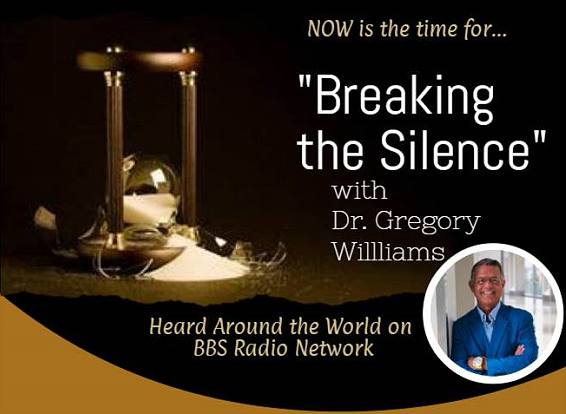


Breaking The Silence with Dr Gregory Williams
Scars, Service, and Built-to-Lead Resilience: Turning Struggle Into Strength
Guest, Keith Grounsell, a 28-year law enforcement veteran, two-time Chief of Police, former DEA Special Agent, international police advisor, entrepreneur, speaker, and multi-book author
Back by popular demand, this week's guest will be Keith Grounsell. Keith is a veteran law enforcement leader with nearly 30 years at the city, county, federal and international levels. A former deep undercover narcotics officer and 2-time Chief of Police. He is the author of more than 12 books.
You can find all of Keith's book at his author page on Amazon:
Amazon.com: Keith P. Grounsell: books, biography, latest update
A Night of Hope After Hurt
In this episode of Breaking the Silence, host Dr. Gregory Williams opens from his home near the Texas Medical Center in Houston, welcoming listeners to a Sunday evening conversation about trauma, healing, and perseverance. He reminds the audience that the show’s purpose is to give people something useful they can carry into the week, whether for themselves or someone they care about. He also notes that the program is approaching seven years on the air, making the episode part of a long-running effort to help people break the silence around personal pain.
The Value That Trauma Cannot Destroy
Before introducing his guest, Dr. Williams offers two illustrations about value after damage. First, he uses a $100 bill to show that even when something is crumpled, stepped on, or dirtied, its value remains unchanged. Then he tells the story of a broken antique vase repaired with gold, making the cracks visible but even more beautiful and valuable. He applies both images to survivors of sexual abuse, domestic violence, trafficking, emotional abuse, verbal abuse, and other forms of trauma, emphasizing that their worth has not been diminished by what was done to them.
Scars as Testimonies of Healing
Dr. Williams connects the broken-vase image to spiritual healing, saying God does not pretend that wounds never happened but instead binds broken pieces together in a way that turns scars into testimonies. He cites Psalm 147:3, which says God heals the brokenhearted and binds up their wounds. His message is that survivors may still carry visible cracks, but those scars can become signs of victory rather than defeat. He also acknowledges his own ongoing healing process, describing progress as sometimes taking two steps forward and one step back.
Keith Grounsell Returns by Popular Demand
Dr. Williams welcomes Keith Grounsell, a veteran law enforcement leader, former deep undercover narcotics officer, two-time police chief, international law enforcement professional, and author of more than a dozen books. Dr. Williams says Keith is returning for a third appearance by popular demand and highlights both his leadership experience and writing career. Keith responds to the opening message by saying that struggles and scars have made him stronger, more empathetic, and more committed to helping others.
Failure, Work Ethic, and the Drive to Help Others
Keith explains that his own life has included failures, struggles, and setbacks, but he does not allow those failures to define him. Instead, he says the way a person rebounds from failure is what reveals their character, especially in leadership. He also discusses being diagnosed with a learning disability early in life and how that challenge forced him to work harder, memorize more intentionally, and develop a strong work ethic. Keith says that what first seemed like a handicap later became fuel for his drive, education, writing, and leadership.
Teen Takeovers, Social Media, and Personal Responsibility
Dr. Williams asks Keith about recent incidents involving large groups of youth taking over public areas, including one in downtown Houston. Keith frames these “teen takeovers” as criminal activity tied to declining personal responsibility, social media influence, weak accountability, and breakdowns in family structure. He argues that parents and caregivers must be held responsible when minors participate in destructive behavior, while adults involved should face serious consequences. He also points to the role of viral attention, influencer culture, and online reward systems that encourage shocking or chaotic behavior.
Leadership, Iran, and Peace Through Strength
Dr. Williams also asks Keith to comment on breaking news about a reported peace agreement involving Iran. Keith says effective leadership requires conviction, courage, and the ability to ignore constant criticism. He praises Donald Trump’s approach as “peace through strength,” saying Trump showed restraint while still demonstrating power. Keith argues that the prevention of a broader regional war and the limiting of Iran’s nuclear ambitions required unusually difficult negotiation and strong leadership, though he notes the agreement still needed to be signed.
Writing, Discipline, and the System Behind Many Books
After the break, the conversation shifts to Keith’s writing process. Keith explains that he now devotes around sixty hours a week to writing and has developed a system that allows him to complete books efficiently. Instead of trying to perfect each chapter immediately, he focuses on getting the story down first, often using dictation in Microsoft Word and then editing afterward. He also discusses the value of self-publishing, retaining creative rights, and transforming his books into scenario-driven online leadership courses through the Institute of Global Integrity and Leadership.
Books on Policing, Leadership, and Character
Keith describes several upcoming or recent books, including a leadership book on community policing, a book for frontline law enforcement supervisors, and a book about field training officers. He also discusses his children’s books in the Kids’ Character and Confidence series, which he created to help families have deeper conversations about values, boundaries, kindness, and personal growth. One book focuses on inappropriate touching and the importance of children being able to say no when something feels wrong. Keith also shares plans for a future book inspired by his adopted son, who was born drug-addicted and later faced developmental challenges.
Built to Lead and the Daily Standard of Discipline
Dr. Williams closes the interview by focusing on Keith’s book Built to Lead, especially the chapter “Discipline Is the Leader’s Daily Standard.” Keith says discipline begins with self-discipline, because people are always watching how leaders live. He describes daily routines involving health, exercise, focus, goal-setting, and protecting one’s most productive time of day. Dr. Williams and Keith discuss the importance of knowing one’s peak mental hours, reducing distractions, and using that time for the most important work. The episode closes with Dr. Williams reminding listeners that storms eventually pass, hope remains, and no one should ever say they are worthless.
Guest, Keith Grounsell
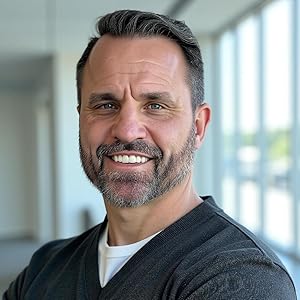
Keith Grounsell is a 28-year law enforcement veteran, two-time Chief of Police, former DEA Special Agent, international police advisor, entrepreneur, speaker, and multi-book author specializing in leadership, undercover operations, and public safety.
Over the course of his career, he has worked at the city, county, state, federal, and international levels, including six years deployed overseas in senior leadership roles with the U.S. Department of State and the United Nations. He has trained and advised leadership within more than 30 national police forces and has served in positions as high as U.S. Contingent Commander.
Keith is also a business owner and entrepreneur, leading multiple ventures focused on leadership development, training, and construction services. His real-world experience in both public service and private enterprise gives him a rare perspective on accountability, organizational culture, and building teams that perform under pressure.
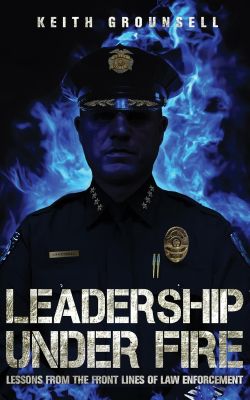
He is the author of numerous books, including the four-volume undercover series A Narc’s Tale, leadership titles Leadership Under Fire, The Great Divider and Chief, and Built To Lead, as well as Shattered Chains: Human Trafficking Uncovered, Policing Without Borders, and two children’s books centered on character and courage. His work bridges frontline experience with practical leadership principles that apply across law enforcement, business, government, and family life.
Keith holds a master’s degree in criminal justice, is court-certified as an expert witness in narcotics enforcement, and has received more than 25 medals and commendations for leadership and high-risk operations. As Chief of Police, he led one South Carolina city from the 28th safest ranking in the state to #1 in under two years through strategic enforcement and community policing.
Whether leading undercover operations, confronting corruption, advising international police forces, or building businesses from the ground up, Keith’s mission remains the same: develop leaders of character, courage, and conviction.
Breaking the Silence
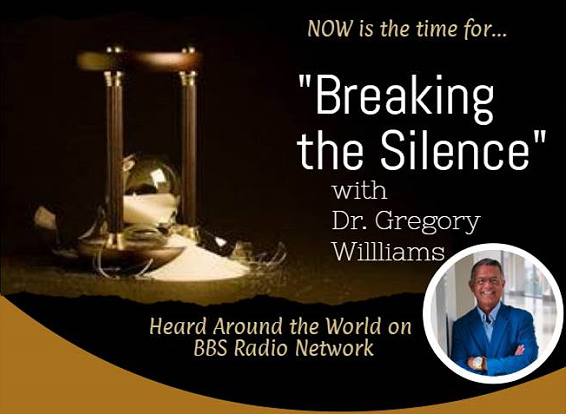

“Breaking the Silence with Dr. Gregory Williams”
Now is the time for you to step out of your own personal darkness and break the silence that has been hidden and closed up inside of you.
“Breaking the Silence with Dr. Gregory Williams” radio program will offer the listeners a Road Map to Hope each and every week with keys to discover within yourself that ray of light to make your day better and brighter. Dr. Williams will not only discuss his own personal journey of overcoming the darkness of years of horrific sexual child abuse in the hands of his father and his father’s friends, but Dr. Williams will also feature special guests that have their own personal stories of overcoming obstacles in their lives and becoming victors instead of victims.
“Breaking the Silence” will also feature information from the professional and medical field that will dive into the important research involving Adverse Childhood Experiences (ACEs) and how to build Resiliency in yourself and in your children. Along with this information will be special guests from greatest minds in the United States to share their expert research and thoughts on this very important subject that each person needs to be aware of.
Now is the time to invest a few minutes each week with some awesome information to give you steps to HOPE and keys to HAPPINESS and PEACE. NOW is the time to Break YOUR Silence and breakout into a NEW and BETTER YOU! Join us each week beginning August 13, 2019 for “Breaking the Silence with Dr. Gregory Williams”. You won’t want to miss a single program. Heard around the world on the best radio network on the airwaves, BSS Radio Network available on iTunes, Google Play, iHeart Radio, Facebook Radio, Spotify and over 100 other high quality digital radio stations.
Welcome to Breaking the Silence with Dr. Gregory Williams.
Dr. Williams is the author of the acclaimed book, Shattered by the Darkness, putting the
pieces back together after child abuse.
Dr. Williams is on the senior leadership team at Baylor College of Medicine in Houston,
Texas.
And Dr. Williams travels the United States speaking and training professionals, parents
and victims about the importance of dealing with abuse and personal trauma head on and
not being afraid to break the silence of your own personal pain.
Feel free to call in to the night show at 888-627-6008 and speak with Dr. Williams
and his guests live on air.
And now, your host, Dr. Williams.
Well, there you are.
Good evening.
Welcome to Breaking the Silence.
I'm here.
Greg Williams here at my home in right at the Medical Center in Houston, Texas.
And it's great to have you with us this evening.
It looks like we're getting some, I don't know if you can see from the glare, looks like
we're getting some dark clouds.
It's getting ready to, it's been raining off and on.
It's going to be doing that for the next week, I think, here in Houston.
So welcome to Texas, whether it's not raining now, we'll be in an hour from now.
But this will be a great show tonight.
Looking forward to having you on and listening in.
We always have said since the beginning of time since we've been doing this program, which
I got to count how many episodes we've done, but it's been several years, maybe seven.
I can't even remember.
TJ will be able to let me know.
The long time we've done this probably maybe six years, but we always said on a Sunday
evening, if you'll give us 45 minutes, we'll be able to give you something that you can
use, take, be better, maybe use with a friend later on in the week.
And TJ just takes me here and said, it's seven years that come November.
So that's going to be awesome.
So we may have a little celebration.
We once you know that you can get involved several different ways, you can call in straight
and talk to the guests tonight.
He's going to be back by popular demand.
He's been on twice and this will be his third time.
So we're going for the trifecta tonight because there's a big hockey game against the playing
Stanley Cup tonight or something like that on TV.
And then across the street tomorrow, there's going to be a big, you know, 500,000 extra
people in the neighborhood over here, the NRG playing soccer right here in Houston.
And if you want to get involved, 8886276008 will be the way and TJ will answer the phone
and just patch you right through to our guests and myself.
Or you can text me 832-396-6525 or you can get on shattered by the darkness Facebook page.
And I'm right there and you can comment there.
And during the bottom of the hour, we will take a little minute break and I'll be able
to go on there and find out if there's any comments or questions.
But we just love for you to do it.
It's been one of those weeks.
I don't know if I've been helping some people.
I think three different people develop and write their books and encourage them that they
can do it.
I personally think we have probably one of the premier people that can do it because he
writes books and he sleeps for some reason.
I don't know how he does it.
We're going to find out about that tonight.
He's got 13, 14, 15, 16, something like that.
Books.
But I've been encouraging people to do something, to leave their story, to leave their legacy
and trying to help them out.
And it seems like when we're dealing with our own abuse, our own hurts, our own pains,
it sometimes takes us places that we think we have accomplished and that we've already
overcome.
And then all of a sudden we have a setback.
I want to let you know that it is a journey.
It's not a quick one single event to get over anything that has happened to you in any type
of trauma or traumatic situation.
So whatever's happened to you in your life, you've got to be able to go through the process
and you need to, if it's been sexual abuse or verbal abuse or domestic abuse or whatever
it is, you need to recognize that what happened to you was wrong, that the abuser is the one
that's the one that caused it.
You did not.
He did.
The perpetrator is at fault.
The responsibility belongs to him and the survivor's value and worth is not diminished
by what's happened to you.
So let's look at it this way.
For instance, let's take this $100 bill.
And let's just wind it up, beat it up and just throw it away, throw it here on the counter.
It looks like this.
It's got all kinds of wrinkles and just why you can step on it.
You can drag it through the dirt, but I'm going to let you know, would you still pick
this up and straighten it out?
And would you still be able to have any value in this piece of paper, even though it's been
beat up and wrapped up and wrinkled and stepped on and dirt?
It still has the value, the same value.
So no matter what's happened to you, do you still retain the value that you are?
And there's a story that I want to share about a woman that had been willed and given a beautiful
antique vase.
And by her grandmother, her grandmother passed away and she left this beautiful vase.
And that vase was on the table and she honored that and treasured and is worth a lot of money.
She accidentally one day knocked it off the table and smashed it to all kinds of different
pieces and fragments.
Broke her heart.
So let me just grab this room.
So let's let's say this, this is an antique vase.
I got this a Ross.
Matter of fact, Ross 1599.
Anyway, let's say this was the vase and it fell off the table and it busted the smitherex.
Okay, just busted all over the place.
He gathered all of those pieces together, put them in a box and carefully took it to
a master craftsman and ask is there any way that he with all of his talent and skills
and ability and he was known miles around, cities around that he was the one to be able
to take in refurbish antique items.
Can you make this whole again where it doesn't look like it's broken?
He took the box in a few weeks later, he worked on it diligently.
He returns it back to her and where every one of the pieces were cracked instead of trying
to put them back together with glue to where it didn't look like it was broken.
He took pure gold and put all those pieces together and molded it with gold in between
and showing where every crack was and it was the most beautiful face, even more beautiful
than it ever could have been from the beginning.
And it was more valuable because it had gold all the way around it all through it.
And what ended up happening was he was detailing and exposing and making the best of every
one of the cracks and fractures in those pieces and filling in with precious gold and it was
absolutely gorgeous.
And we'll let you know, sexual wounds, domestic violence, being trafficked, being emotionally abused,
verbally abused by your parents or your husband or your spouse can take a hit on us and it can
literally, I'm one of these victims, it can take your heart and smash it.
But if you in the proper mindset in the proper mode, take some of the things that we say
on this program by the guests that are on here and the one that you're going to be hearing
tonight, that you'll be able to share some wisdom of, Hey, wait, there's still value in
you. There's still something that matter of fact, you're even more valuable now because
God does not pretend in our lives that the cracks, the fractures, the hurts, the pains
never happen. Instead, he lovingly, kindly, gently and deliberately puts us back together
and uses the most valuable product, him to be able to hold all of those pieces together,
not to let the world know this person's never been broken, to let the person know that the
scars still remain. And now they have become testimonies of his healing power through us.
And then we can do things like this. We can do things like our guests tonight. We can do
things like the guests that we have on every week and go out and help change one person's
life or millions of people's life. And it says, I'll close this now, but it says in Psalm 147
verse three, he being God heals the brokenhearted and he binds up all their wounds, no matter
what you're going through right now, no matter what you've gone through, and you may still have
a whole box of broken pieces and go, what do I do with this? This is all that I am. I have no
value at all. Yes, you do. Give it to someone, your creator, that's the master craftsman
that can put you back together and make your life something that can be even more valuable
and more precious, because you have a scar to say, I've been hurt. No, you have a scar to say,
I was victorious from those people that thought they were going to break me. And by golly,
they didn't. Here I am and get up and move on. And in that we can find so much to be able
to give other people. And I don't know that that's something that I needed to hear this week.
Every now and then I, I, I tend to take two steps forward, one step back. But if I do that for
the rest of my life, I'm still taking a step forward every time I take a step back, two step
forward, one step back, still progress. So don't be so hard on yourself. It's time to get that
box, that heart, that self-esteem, some tender loving care, and hand it to someone that can take
care of you in a wonderful, wonderful way. Okay.
Want to welcome tonight, someone that I call a friend, I mean, good night. We met several
times now. Keith Grounzel, TJ, go ahead and bring Keith in because I'll keep Raimla, if not, look
at the background of this wallpaper behind him. He is just a writer, and this is only a minute
amount of books. But he is a back by popular demand. He's a veteran law enforcement leader with
over, or nearly 30 years of city, county, federal, international law involvement, a former deep
undercover narcotics officer, and a two time chief of police. And he's the author of more than 12
books. And we're going to talk about he's just before we got on, he said, I got one coming up
next week, a couple, two or three, I'm working on, and it may be 1516. Now, but Keith, welcome to
the program. I know there's going to be people want to hear what you have to say tonight. How
are you? I'm doing great, great. Thanks for having me on for a third time. Hopefully third
times the charm is going to be even better this time. I really appreciated your mind along with
your introduction with the story about the vase and the beauty in the scars or the cracks. So
as a scars in your life, that's just because I don't have any said question. Yeah. The scars
in your life have they made you stronger, better, and more focused on what life was meant for you
to be to begin with. Absolutely. When you struggle in life, you appreciate more when you achieve what
you're trying to achieve. The person that gets it the first time doesn't have appreciation for what
they achieve. The person who has to strive and struggle and fail, fail, fail, fail, and then
finally accomplish it, appreciate it even more. So for me personally, you know, as a two time
chief of police as a international law enforcement guy, I failed miserably many a times. And the
thing about that is I don't allow those failures to define who I am. It's how I bounce back from
those failures that actually defines who I am as a leader, especially. But what it does is it gives
me empathy. I understand struggles and I understand what people are going through. And I see other
people struggling so I can step in and maybe explain my story. And that's why I got into writing.
One of the main reasons is to tell my story to helpfully help someone not have to go through that
struggle. Although I'm doing them a favor. I'm also sometimes hurting people at the same time if
you don't allow just like raising a child, you got to allow them to have some struggles. You can't
give them everything. You give them everything. They're going to grow up and be spoiled brats as
adults just like they were as children. So yeah, I believe struggles are what define you and make
you a stronger person and a better leader in the end. One of the things I love about your books,
and I've got I've read six six seven, I believe six or seven, that you don't you don't pretend to
be perfect. You use the struggles, you tell deeply very personal about the struggles. And this is
what I learned from this is what if I had to do it over again? I wanted to do it that way. I love
that and being vulnerable is tough for a person, especially a man, right? For sure. I think in my
book series, my first four books I ever wrote was a series called an ARK's Tale about working deep
undercover. But my first book in there really tells about my upbringing and trials and tribulations.
And and I was diagnosed with a learning disability early on. And at first, I thought that was like,
you know, a handicap or something. And then I realized as I got older, I had to I had to work
twice. If not four times as hard as somebody to memorize something. So what it did is it created
an intense work ethic for me. And over time, I've realized, okay, that was a struggle is my drive
now. That's what created that drive in me. And then I went on further to get a further education,
because I had a learning disability. I'm going to prove that that doesn't matter. So moving forward,
you know, getting a master's degree and things like that, they were pushed and fueled by a struggle.
So in life, if you take that struggle and turn it into a positive as a motivating
key factor in your life, you can do great things. I grew up with great parents, but I also went
through a period, a while period and got in some trouble and did some things. And and the people
that I encountered in law enforcement after getting in trouble were good to me. And they showed a
level of empathy and things worked out for me in that situation. And if it wasn't for that,
I wouldn't be where I'm at today. So I don't ever forget the people that helped me get there. And I
trained past that that forward to the next person. Yeah, that's great. Can I can I just throw out a
couple of current events that's happening locally and then nationally and just get your intake on it?
Absolutely. Okay. Last night, I believe it was last night, five to 600 youth, downtown Houston,
took over a whole area with all of this rampant violence and fighting. And you know, I don't know
what that was all doing, but it made the headlines. Yeah. What would you do? How would you handle that?
What's happening to our youth? And we're seeing this in in Seattle, all over, all over the country
right now where they're literally just overtaking areas. What what's happened? What's going on?
Where's the where's the gauge, the pattern of what it takes to be a good, solid citizen,
because it seems like we've lost a generation there. What's happened?
You know, for me personally, I believe it's the downward
diminishment of society due to social media and people not taking responsibility for their actions.
Everybody has this victim culture that they're a victim. And if somebody calls me a bad word,
it's justified to kill them or it's justified to do damage. What we have to do when we're dealing
with these, they're calling them teen takeovers, it's criminal activity involving teenagers and
some young adults. What we have to do is hold the ones that are teenagers, hold their parents
responsible, hold their caregivers responsible. Because those are the only people that are
involved in their lives that are going to step up and do something. They're the ones who ingrained
in them at a young age that it's okay to not take personal responsibility for these bad acts that
you've been doing. This is something that came on overnight. This is something that happened
from years of not being present as a parent or a caretaker or something like that. But then when
you have the adults that are out there 18 or older, throw the book at them. You know, you have to have
some sort of back in the day in the status out here a lot of we had a law that was called
inciting a riot. And if there was a crowd of people and you were provoking it, you were arrested
with the rest of the people who were doing the riot because you weren't citing the riot.
We have to bring back some things like that. But also we have to make sure that we're trying to
understand these these kids. What is the reason? Why are they doing this? Is it a curfew problem?
Is it just a lack of personal responsibility? What is the underlying issue? You know, I believe a
lot of it is, you know, not having two parents in the household. Yes, not having somebody to raise,
you know, you see a lot of these. Unfortunately, a lot of them are black youth teens. And that's
predominantly what I've been seeing on all the all the things I'm seeing a mixture now of others.
But you got to look at the single parent household. You have section eight housing, for example,
in America, 13% of the population is black in America. 7% approximately are black males,
committing approximately about 50% plus of murders and violent crimes. Okay, that's a that's a skewed
number, an absolutely skewed number. Why? What's the issue? Well, section eight housing, if you're
a single mother and you get married and you you bring in a male, you're kicked out of section eight.
So it prevents people and discourages them not to get married. That's part of the issue nowadays.
So they don't want in the system, they want to keep you down to a degree section eight housing.
I call it modern day slavery to a degree, gave you some substance, help you out with some food,
help you out of rent, and make sure that you don't get married. And you have these single moms that
some of them are working their tails off two or three jobs. They're just not able to work two or
three jobs and be there as a mother. So you have that situation and then it doesn't help if the
male is not allowed. If they bring a male into their house and they're caught sleeping over there,
they kick them out of section eight. I've seen it. I've seen it. Don't I understand part of what
they're trying to do. You don't want just random men coming and going or anything like that. But
I believe that pushes, you know, society, especially a minority group being oppressed further. And
then when you have that, people rise up and they just have no responsibility for their personal
actions as teenagers, as youth. And really, there's always this mindset of, well, somebody did something
to me. It's because of the system or some part of it is because of the system. But you have to take
personal responsibility and step up and say, you know what, I'm not going to be a part of that.
Yeah, I'm doing as a kid. When somebody got in trouble at school, they got the paddle
like then they got spanked. And then when they got home, daddy did it twice again, harder.
That's not the case anymore. The father doesn't even hardly know it's happening. And then a lot
of times when I was on a school board back in Illinois, the only time we'd have a parent in the
school board meeting was for them to say, Oh, there must be something wrong that happened to their kid.
My son would have done that. And they always are defending their child instead of thank you
for displaying my child for doing what they did wrong. They always try to find the side door out
to where they don't have to be held responsible. And I think that's half the battle too. They need
to be held responsible for what they do. Yeah, that holding people responsible at a young age
at half the start, it can't start when they're 18. Yeah, because they don't understand the concept
there's there's a consequence to every action. And if you don't ingrain that in a child,
by the time they get older, you're going to see what we have going on right now. It's exactly.
And look at this also you look at influencers, social media influencers, the crazier you are,
the more stupid you are, the more followers you have a lot of times. It's not the the logical
teenager or the logical person that gets on and discusses it's who can do the shock
back. It started back in the day with how we're stern, you know, shock, shock radio. And then it
kind of went to YouTube and then it kind of pushed out to all the social media platforms.
It's just they reward this behavior because it's clickbait. The more you click on it,
they monetize it and they make money off of it. So these kids go out there and do these stupid
pranks that are not funny, you know, and they create chaos for people. And now you're seeing
the extreme other end, they believe that they're not going to get in trouble. Look at the basketball
game, the NBA championship, New York Knicks, you know, outside just destroying the city.
It's trying to try to throw them in them. They're filming them. And they know it. Are they going
to go back and hold each and every single one of them responsible? Probably not under Montgomery.
But I believe the police want to because that's when you go take all the video evidence, tons of it.
They're capturing. I guarantee you, they're capturing it. Go back and charge these people.
And that's the thing. If they're not charged, they're going to do it again.
Yeah. Okay. Let's do a national thing. And then we'll go take it to the break. Just heard a few
hours ago that our president came across and said a peace treaty with Iran has been agreed upon.
Iran has told their people. Our president's told us that and there's going to be a signing Friday.
What did it take and what does it take to be a leader in a country like ours that no matter what
you do in the world and the political scene we have today, 50% of the people hate you. And no
matter what good, I'm waiting to see what everybody says about this. If it does get signed,
how are they going to make it look bad? What kind of person does it take to very, very leader
at this kind of work? Yeah, someone who has intestinal fortitude like no other, someone who is not
influenced by barking dogs, someone who has conviction, deep conviction for accomplishing
something that for 47 years, nobody could accomplish. Peace through strength. He tried the diplomatic
route over and over, even to the point where a lot of Republicans were against them like,
Oh man, you're giving them too much. Even myself was like, wow, yeah, he's showing some real
strength and resolve here because I would already blown him off the map. But this is a man who
showed peace through strength when he needed to. And then he gave a little bit and gave him
a little rope was like, listen, you see what we're capable of. And then they finally, they're
coming to the table granted. It's not signed yet. I believe this is the closest they have announced.
I just heard before I came in here that Iran spokesperson said that they have reached an
agreement. Opening up the Strait of Harmoves is huge. You know, yes, it was open before, but if
Iran had developed the nuclear missiles that they were developing, if they had developed them,
they would have been in a position of strength where they could have dictated the gas prices
around the world and put it at $10 a gallon. And we couldn't have done a damn thing about it.
Yeah, because they don't have the nuclear missiles, they can't do that anymore. That was very
strategic. And a lot of people look at all, they just want the oil or anything like that. No,
China's getting their oil from them. So is Russia. We pretty much could
cripple them between Venezuela and Iran. We really just, you know, change the whole market,
the whole dynamics of the market. I mean, it's almost like a revolution in the Middle East. And
now we have peace deals being brokered with Israel and Muslim nations. Like you would have never seen
these people talking and working together like they are now. So he prevented a much more broad
regional war that could have been catastrophic just by what was it 100. I forget how long ago,
a year ago, I guess, when they bombed, took out the new, I can't even remember when it was the
date when they took out the nukes. But the reality is he prevented something much larger.
And I don't think people are going to give him the credit for that. And then there's the
negotiation was no nukes. And you can't get nukes. You can't buy nukes. You can't do any of this stuff.
So that right there, I just don't think people give Trump enough credit for a thing. He's a
master negotiator. And I say this one was probably the hardest negotiation in my lifetime of ever
seeing anybody politically be involved in. And I'm going to have blood, sweat and tears and took
years off his life. Oh, for sure. Knowing it wasn't going to be popular with anybody until if it
finally got to a signage place. I just wonder what's in the back of people's minds that
have that ability to say, no, I'm going to keep on keeping on because it's the right thing to do.
You know, it's you get into a position and on a much smaller scale, like about myself,
you know, when I challenged corruption and some ethical violations when I was a brand new young
chief in my 30s, and they fired me. And they I asked for a public hearing, which I'm entitled
to under the law, they denied it. Everything I asked for, they broke the law. And I believe one of the
the renowned attorneys in the state of South Carolina published a long article in the state
newspaper and said here's 22 violations that committed against Chief Brownsell, but nothing
can be done until he sues him. So I got put in a predicament where I had to fight him. I felt
like in law enforcement, if your integrity is challenged, that's all you have. Because if you
lose your integrity in law enforcement, especially as a leader, it's done. I didn't want to fight,
but I was forced to fight. I believe Trump's in the same predicament. Trump has to fight because
no matter what he does, they weaponize the DOJ against him originally. Now they're trying to
attack him on every single angle. This man ended a war in like a hundred days. Afghanistan was almost
20 years, over 20 years, Vietnam was 17, 19 years, tens of thousands of people died.
Less than 25 died. One is too many. Don't get me wrong. Don't misunderstand that. My son's
murdered and my father served. But the reality is he prevented catastrophic deaths and eliminated
what was the world's superpower for terrorism in the Middle East. And they're pretty much nothing.
They're crippled. And a lot of people just won't see it until later. I was going to cost them
so much money to try and rebuild all the stuff that they're never going to get back up on their
feet in my lifestyle. Yeah. Well, thank you for the little commentary on that. Normally,
we don't do that. But those two things just happened one today and one last night. But we're going to
talk about on the other side of the commercial break, built to lead the book. And before we get
into that, on the other side of the break, I want to talk about your book writing and the
ability that you have to be able to pump out books that you do. But we'll do that all on the
other side of this commercial break, 888-627-6008. Give us a buzz if you want to chime in. Be right back.
Get ready for a life-changing journey from the best-selling author of Shattered by the Darkness
and when the dark clouds come, Dr. Gregory Williams is back with his highly anticipated third book
Embracing Your Scars, Learning How to Turn Life's Pain Into Life's Power and Purpose.
Have you ever wondered how to transform your struggles and the strength?
Do you want to stop hiding behind the pain, the heartache, and instead learn how to turn those
scars into the very fuel that propels you towards greatness? If you do, then this book is for you.
Embracing Your Scars, Dr. William shows you how to take the negative experiences of your past
and turn them into the very source of your future success. Don't miss out, because your
transformation begins here. The book is available soon on Amazon, phones, and mobile,
and wherever great books are sold.
Welcome back, according to that commercial third book. Like, that means nothing to this guy.
I am working on a children's book. I'm hoping to have an outcome on my birthday at the end of
July. I'm excited about that. But how do you do the books you do and the depth, the length,
and the ability to be able to, I mean, you just said the computer every day and have a goal.
How many words you go to type? It's kind of crazy right now, maybe we'll produce more books.
I actually devote about 60 hours a week to writing now. And I've developed a system I used to,
when I first started writing, I made the common mistake of trying to get it the first chapter just
right. And then I realized, get it done. Just write the book and then go back and edit it.
So then I got a system in place to where me personally, I figured out the time I take typing,
I'm pretty fast typing, but it's still slower than dictating. So I bought a headset, turned on
Microsoft Word, hit the dictation button, and I just tell the story. And I get my stuff done so fast.
And then I go back afterwards and make sure like, if I'm talking and I'll say, oh, well, this is out
of line, I'll say, well, this occurred before this event. It's easy to do that when it's your real
life. And you're telling real stories. Now on the flip side, I do a lot of research as well. And
thank God for for Google Scholar and deep research things that can all be done online. So I'm currently
deployed overseas working during the evening hours. I don't really have TV. So for me, I have internet,
I have Starlink satellite internet. I utilize that time to take advantage of an opportunity I
will not have when I go back home and I have family and all the distractions around me. And
it's my mental sanity. And I feel like, you know, I'm personally really driven. So I don't have any
issues like setting small goals. You know, I have I have four books into works right now. And sometimes
if I'm really feeling a topic, all right about it all weekend. And I won't even sleep maybe four
hours a night and I'll wake up first thing and get some coffee and start writing again. And then
I stand up when I write. I don't I don't sit down anymore. I have one of those standing desks and
I'll start moving and like doing squats and things like that and just talking. It gets the juices
flowing. I believe it releases dopamine in my brain. I just get really a natural high when I get in
a rhythm like that. And they say a runner's high. I feel like it's almost like a writer's high.
Yeah. You get into that to that level. But I mean, the key is not trying to perfect it. Everybody
has a story. And it's just a matter of putting it down on paper. And I created what I think is a
system that works. I've helped more than five, six people recently published their first books.
And they said it's a remarkable system. It's not only about the the writing of the book, because
that's just one element of it. As you know, you know, you write the book, then you got to decide
are you going to have a big box like publishing agency? Are you going to solicit queries and try
and do all that? Or do you want to self publish? For me, that was a personal decision of maintaining
control of everything because I saw bigger ambitions with my books. And I know everybody sees that.
But you know, for me, my first book series in Arksdale was picked up by a production company
in Pennsylvania. They read the books, they contacted me, I went in and filmed. And they sold some of
the films like to A&E, who we ended up having a TV show on an E&E called Undercover Called on Tape.
Only have one season, they kind of changed it around. I peered on like the main pre episode. And then
they transitioned it to something else. And it wasn't what I was expecting it to be. And then they
didn't get another season. And then prior to that, I had shared one story with a local television
or movie producer. And he created a movie, a short film called Bound, a human trafficking story.
And it won 13 international film festivals. And it was just an undercover story from my time as a
DEA special agent. And those things, so I owned all the rights. So I could do whatever I wanted
with it. I didn't have to be binded by a contract where I couldn't, if I signed a contract and got
money up front or something like that, I didn't own the rights on the long end. Your book's hot at
the beginning. And if they're not pushing it, because they have other authors coming in, it can die
out. And if you don't own the rights to it, that can create some issues with your ambitions, your
goals. For me, now I'm taking all of my books. And if you see above my shoulder, the IGIL Academy,
that's the Institute of Global Integrity and Leadership that I created. I'm creating all my
books into actually self-paced online interactive scenario driven leadership schools. And that's
like my goal now, because I've already done the research. So once you have looking the research,
it's actually relatively easy. And I had to create a avatar of myself and duplicate my voice and do
all these things. And I have a team that's working with me on that. So I'm super excited to transition
the books into an actual training where people can get continuing educational units, wherever
they're working and things like that. But yes, it's constant for me, I'm hungry. I seek to be
better every single day. I realize that I'm not even close to where I'm going to be. And as long as
you stay hungry throughout your life like that, you're always going to achieve more. And you have
to be motivated by haters and doubters. For me, I have actually, when somebody says, oh, he can't do
that or he didn't do that, man, I'm going to do it. And it's not I'm not saying from a negative
perspective, I'm just saying if they don't think I can achieve that level of something that I'm
that I'm striving for, I'm not the type of guy you tell that to. Because I'll go after it with
everything I got, I don't need to sleep two hours a night. I mean, that's just my, it's always been
my approach seven days a week. I'm like that. And many people tell you, you're going to get burned
out. No, I've never been burned out. It's a natural dopamine release by accomplishing goals.
And I tell people all the time, set goals, set small goals, mid-range goals and long-term goals
and celebrate them when you accomplish it. But also give thanks to God, because every time I
struggle, you know, I still thank God for the struggle. Even though in the heat of the moment
when it's hard, I do think of I like, I know you're doing something here. I don't know what you're
doing to me, but I trust it. And I'm going to go with it. And I know I'm going to get through
this with you. And I believe that that that blind faith is one of my probably my stronger
stronger feats, my attributes. And I think that never, never satisfied mindset. Always thinking
that you have to do more. That's mine. Now that could be a detriment too, because I never feel
like I accomplished something. If I have a day, there's never a day where I've just laid around.
Never. I can't do it. Something in my mind. And my wife's like, just relax, you know, but I can't
relax. I always feel like I got to do something today. I don't know what it is. I just got to do
something. And that is how I've always been. I set goals the night before and for the next day.
I'm constantly just my brain is I know I need to evolve. If you want to stay relevant in any field,
you have to be evolving all the time. That's great. Well, the three or four books that you have
coming out, what are they about? So the one that I just it'll be out in the next probably next five
days is a leadership book on community policing. And a lot of people have asked me, Hey, how did you
take an agency from never being ranked in the top 25 and the number one safest city in the whole
entire state in two years? How did you take another agency from 151st to the top 40 in a year?
How did you do all these community programs? That book tells it. So the book is a road map on how
to do it. But it's not just for law enforcement. It's for community activists, community leaders,
citizens who want to get involved. It has over 100 it's actually 170 programs that are within some
or larger, some are smaller than others. And some that I actually just made up over the years. And
they've been really, really successful. So I've shared them and they've got some of these programs
have been implemented around the United States and in other countries. And I just wanted to put
it all into one book, but focus on the leadership aspect of how to implement it. So the first
part of the book actually explains all the programs and the important stuff community policing. And
then the latter part of the book is worksheets, forms, all that stuff actually had implemented
the programs. So I mean, I'm excited about that one. I wrote another book on frontline leadership
for corporals and sergeants, the first line supervisors. And that one I have been
implement like not implemented, but I haven't been tested in a few law enforcement agencies
across the United States. I gave them free copies. I wanted them to give me direct feedback. And I'm
waiting on a little bit more feedback on that one to see if I need to tweak anything or anything
like that. And then I had one on field training officers when a rookie cop gets out of training,
they go to a field training officer for 12 to 22 weeks. And that is their very first exposure
to a supervisor. That person is probably the most important supervisor they will ever be with,
and they will mold them in most cops, mimic some qualities of their FTO. So I wrote a book on that
and that one just took off. It started selling pretty good recently. So I'm super excited, but I have
sociological and criminological textbook on writing for university level stuff on theories of crime
that something I'm just interested in doing research on. Okay, you even have books by kids or for kids
and your children help you write them. Was that a request or your request for them to get involved
with those? Because I've read all of those. Those are all good. Thank you. I appreciate it. So it's
called the Kids' Character and Confident series. I just saw a dwindling of family,
like we talked about earlier, parents not having those deep conversations about certain things
with their children. So I wrote the first one as a surprise from an older son, Caleb, who's
currently serving in the US Army active duty. And it was just a surprise. Well, the next one,
I was like, it's called Caleb's Journey of Kindness. It has 22 lessons in life that you should teach
your youth. And it really sparks really good deep conversations. So the next one was Noah. And I was
like, you know what, I want to help my children to achieve something as well. Wouldn't it be neat if
we could co-author these books? And they could become published authors as well at a young age,
help them for college and resumes and all that. So that's where it came from. And Noah says,
no, when it's okay to say no inappropriate touching like we talked about before. And just different
situations where it's not being bratty when a kid says no, if something makes them feel uncomfortable,
what are those things? So it goes in great detail. And then my daughter, she's probably my most
studious one. And she wrote one book that was like a fantasy book that I'm working on with her,
like proofreading it. And then we came out with McKenna's book of just to teach girls
like different things that they encounter in life. And it's pretty neat. You know, she was super
excited about it. She's a cheerleader. So she has a little cheerleader at the camp. She's going
to give a book this year. And it's not a big money maker. It's not about that. It's really about,
you know, helping the kids because there are future and you see these teen takeovers. That's
because nobody hit them early with these type of books and had these deep conversations with them
and led them they're getting they're learning how to become adults by social media.
And these are good gifts for the kids. What did say eight to 12? I would say so some of them,
you can read as young as like, you know, five, they couldn't read them, but somebody can read it to
them and depending upon the child that they would understand. And I got another one that I'm going
to do that's going to be a surprise. That's for my youngest son, Hunter. I hadn't spoken much about
but Hunter was adopted. And he was born a drug addicted baby. And he was he was addicted to opioids
and crack cocaine. And so he went through the withdrawals and we had to do a series of medical
things with him. And now he's pretty much high functioning autism. He's on the spectrum, but he has a
learning disability has a rough time. But he's pretty social surprisingly, you know, he likes
people, but he can be overwhelmed at times. So I'm going to write, you know, when he is older and
he's at the right age, where we can tell him things, I'm writing a book kind of to present to him,
and about how special he is. So I'm super excited about that. Because a lot of a lot of parents go
through that. And it's something that, you know, you never realize how much you can love
another child that's not of your own blood, just as much as your own children until you're in that
predicament. And it's just the most amazing experience. I kind of reread.
Quick read again, built to lead this afternoon. In the final few minutes we have, I want to drill
down in a couple chapters and just see how far it gets us. It's probably going to take us to where we
have to have the fourth. Chapter nine. Discipline is the leaders daily standard. Absolutely.
What? And you talked about how I call it anal in my life, because I'm anal on certain things I
got to do it this way. What's the importance of discipline for anybody that wants to be successful
in their life, no matter what lane they're driving in, vocationally and socially and, you know, all
the leaves. How important is discipline to be a leader? It's very important. It's, so when it
comes to discipline, it starts with self. First and foremost, if you can't self discipline,
you can't lead others. Because people are watching you all the time. So if you put on this front at
work and then you go home in your neighborhood, you act like a totally different person. People
aren't going to have any respect for you. So first and foremost, it starts with like healthy mind,
body and spirit. And those things are the big three combo. And if you concentrate on those
things like for me, I wake up in the morning and, you know, I drink water just to get going. I eat
breakfast. I work out every single morning. And that does something for me. It's a win. It's just
like making your bed in the morning. You feel, okay, I just accomplished something. No matter
how small it is, you're accomplishing something. And that's part of that self discipline. So if you
do that every single morning, you have a win early in the morning, then you have a routine at night.
And if you do that routine at night, you have a win. And then during the day, you have your tough
meetings or your tough engagements at a certain time when you're at your peak, whether it's 10 a.m.
11 a.m. Do you know when your peak is? Oh, man. I'll be honest.
With you. So for me, it's I'm pretty unique. I feel but I feel like around 10, 10 a.m. Sometimes
it's probably I'm not hungry for lunch yet, especially if I have like a protein bar or something like
that. But I get natural highs off of different things. So it really I've worked through lunch
countless times and I'll have my administrative assistant bring a sandwich sandwich into me because
I'm they call me the sandwich guy. I always had a sandwich because I never went out to lunch
because I never stopped for lunch. So I would just type in eat a sandwich as I'm typing. And
that was just I get when I get in a mode, I can't I can't stop. So do you believe that everybody like
mine's like four 35 o'clock till about eight o'clock in the morning. I'm that early morning.
That's what my mind is literally it's like that sweet spot on the golf club. And if you hit that
spotter on the baseball bat or whatever, it's going to go further. Absolutely. How do how do people
gauge what they're because I think a lot of people are texting, scrolling, doing goofy stuff
during their peak time. How important is to find out what your peak time is?
You know, it's it's very difficult if you have a distraction, a cell phone. If you can set that
aside, if you're in a position where you can set it aside and focus on the task at hand,
you'd be surprised how much how little time it actually takes to accomplish something that would
take you five times that amount of time with all the distractions going on. So I've tried to do
that. I'll set the phone off to the side when I'm in a zone. I'll tell my wife, Hey, I'm in my zone.
And she knows like just go. And then having that support system of people that recognize that,
that realize, Hey, but as a chief, I would have 20 30 interruptions a day, you know, coming through
with stuff going on. And for me, I'm a very quick decision maker. I'm I'm very decisive. And that's
a really good characteristic of a leader because I'm not afraid to make a decision. I'm not afraid
to fail. But I'm also, I make calculated decisions. But when they come to small decisions, boom,
if I go by my wife, she laughs, I can go pick out furniture outfits, a car in five minutes,
and never even second guess it at the end. And she's the opposite. She calculates everything,
prices it out, does everything for me. I just don't like to waste a lot of time. I feel like,
you know, time is valuable. Time is money. And I can be accomplishing something else. So I'm
going to set my mind of this, go accomplish that, move on to the next task. And I think for me,
that's how I live. But finding your peak time would depend upon where when is your creative mindset
come out when when you, you know, thinking of the things like planning, you know, setting goals,
when does that come to your mind? Is it first thing? Some people has laid at night to have a
notepad by their nightstand. I used to do that. But now I have it in my phone in my notes.
So I'm always, for me, it was hard to pinpoint that when you ask that question,
because I feel like I'm always running at a peak. Can I go when you find it? Shouldn't we
protect it? You should protect it with putting your most important task of the day. Absolutely.
I supervise if you will just work during your peak time an hour or two a day, you can play the
other six hours, but you're not accomplishing anything for the entire eight hours, because
you're not zeroed in just zero in during that peak time. And the rest of it, you get more
accomplished than you ever dreamed of. Absolutely. I agree wholeheartedly. But it's it takes discipline,
you know, and focus and the ability to tell people like, Hey, listen, this is my my time.
I'm devoting to this. And don't be, you know, don't be interrupted.
But tell you why Keith, we're out of time again. Thank you so much for being on. Look right here to
over his shoulder there. There's built a lead. I highly recommend that.
Shattered chains. I highly recommend that leadership under fire. I high all six of those.
I have not read policing without borders, but I've read the other five. And one of those is like
a three part, the NARC's tale is three parts to their is yeah, it's it's pretty smart to cover.
Try one of his and then you're going to end up trying several. Keith, thank you so much for
being on and be safe on there in the other country while you're on a mission and
may God protect you. And thank you so much. I'd love to have you back.
Anytime. I'd say I have you back every time a book comes out, but you'd be a you'd be a co-host
for every for every week. Thank you so much for being a New Year or I appreciate you Keith.
God bless you. Thank you so much for sharing as we do each and every week.
No matter what you're going through, I always want to let you know. It's getting ready to storm
out here. I'm hearing the thunder and seeing the little bit of the lightning back behind me.
But I promise you, it eventually is going to stop raining. No matter what you're going through,
that sun's going to end up coming up. So there's always always hope. Find something,
stick with it, never give up, find a trusted friend, share and never say I'm worthless.
Never forget this hope, no matter what. And I challenge you to give Christ a chance.
Give him a chance. Give him an opportunity to see what you think of that. And I think that would be
an important decision also for your life. Thank you so much, Jordan. It's right here next week.
You will not want to miss next week. We have a chief of police, Matt. It's going to be on with
Scoop Jackson, television reporter up in Dallas, Texas that he's getting ready to write a book,
the chief. And it's going to be coming out probably October, November, we're going to have him on
telling his story of how he kept his hurt and pain, quiet for over 40 years. So be with us next week
for another live edition of Breaking the Silence. God bless. Have an awesome, awesome night.
See you next week. Good night.
Thank you for listening to Breaking the Silence with Dr. Gregory Williams.
To contact Dr. Williams, dial 832-396-6525 or email him at
shatteredbythedarkness at gmail.com. And don't forget to join us each Sunday night
at 8 p.m. Central Time, 6 p.m. Pacific on VBS radio station one for the next episode of Breaking
the Silence.