

A native of East Syracuse, New York, Tom Kenny began his career doing stand-up comedy. He hosted the TV series An Evening at the Improv before making his first foray into acting with a role in the feature film How I Got Into College (1989), starring Anthony Edwards and Lara-Flynn Boyle. A stint as the host of Friday Night Videos (1990-1994) followed. He soon established himself as an accomplished voiceover artist in addition to guest roles on series such as Brotherly Love, Malibu Shores, Just Shoot Me and Roswell.
After providing voices on TV for Mr. Show (he also wrote for it), Dumb and Dumber, Dragon Ball Z, Godzilla: The Series and Dilbert, he landed the lead role as the voice of SpongeBob SquarePants in 1999. He also continues to play small roles in movies and on television, and in 2004, again provided the voice of SpongeBob in the feature The Spongebob SquarePants Movie. Some of his more recent work include the voice of Zilius Zox in the television show The Green Lantern: The Animated Series and a character in the animated film Back to the Sea (2012). Other works: The Spongebob SquarePants Movie - Family Favourites (2012), The SpongeBob Movie: Sponge Out of Water (2015, LEGO DC Super Hero Girls: Brain Drain (2017) and what will be the 3rd SpongeBob film The SpongeBob Movie (2019).
Kenny has one child with his wife, actress Jill Talley.
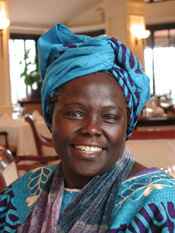
Wangari Muta Maathai (born April 1, 1940 in the village, Nyeri District) is a Kenyan environmental and political activist. In 2004 she was awarded the Nobel Peace Prize for "her contribution to sustainable development, democracy and peace" — the first African woman to receive the award. Dr. Maathai is also an elected member of Parliament and served as Assistant Minister for Environment and Natural Resources in the government of President Mwai Kibaki between January 2003 and November 2005. She is a member of Kikuyu ethnic group.
In 1977, Maathai founded the Green Belt Movement, a grassroots environmental non-governmental organization, which has now planted over 30 million trees across the country to prevent soil erosion. She has come to be affectionately called "Tree Woman". Since then, she has been increasingly active on both environmental and women's issues.
Maathai was also the former chairperson of Maendeleo Ya Wanawake (the National Council of Women of Kenya). In the 1980s her husband divorced her, saying she was too strong-minded for a woman, and that he was unable to control her. The judge in the divorce case agreed with the husband.
During the regime of President Daniel Arap Moi, she was imprisoned several times and violently attacked for demanding multi-party elections and an end to political corruption and tribal politics. In 1989 Maathai almost single-handedly saved Nairobi's Uhuru Park by stopping the construction by Moi's business associates of the 60-story Kenya Times Media Trust business complex.
In 2002 Maathai was elected to parliament when the National Rainbow Coalition, which she represented, defeated the ruling party Kenya African National Union. She has been Assistant Minister in the Ministry of Environment, Natural Resources and Wildlife since 2003. She founded the Mazingira Green Party of Kenya in 2003.
On 28 March 2005, she was elected as the first president of the African Union's Economic, Social and Cultural Council. In 2006 she was one of the eight flag bearers at the 2006 Winter Olympics Opening Ceremony. Also on May 21, 2006 she was awarded an honorary doctorate by and gave the commencement address at Connecticut College.
Her autobiography, Unbowed: One Woman’s Story, was released in 2006 for which she is currently on speaking tour in the United States.
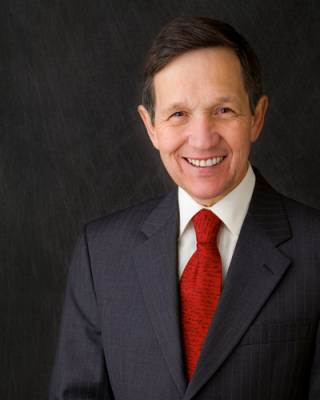
Dennis Kucinich was born in Cleveland, Ohio on October 8, 1946. He is the eldest of 7 children of Frank and Virginia Kucinich. He and his family lived in twenty-one places, including a couple of cars, by the time Kucinich was 17 years old. "I live each day with a grateful heart and a desire to be of service to humanity," he says.
In his fifth term in the United States House, Congressman Kucinich was a leader for Universal Health Care, a full employment economy, fully-paid tuition at public colleges and universities, repeal of the Patriot Act, the development of bio-fuels as alternative energy and restoration of America's basic manufacturing and infrastructure. He lead an effort to support the role of NASA in the development of basic research for civil aeronautics.
Kucinich's 2008 presidential platform had a comprehensive plan for universal healthcare, withdrawal from Iraq, free primary, secondary and college education, abolishing the death penalty and repealing the Patriot Act. In addition, he has plans for clean energy, social security plan for those at 65, banning handguns, women's right to choose abortion and ratifying the ABM Treaty and the Kyoto Protocol.
Dennis Kucinich and wife Elizabeth formed Kucinich Consulting which works with institutions, companies, causes and individuals to bring global social, economic, health, food, agricultural and ecological systems into balance.
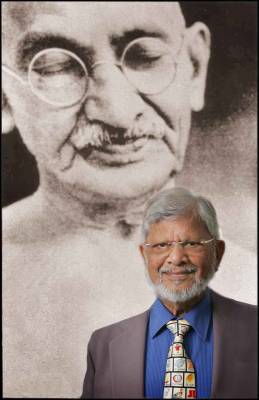
Arun Gandhi - Grandson of Mahatma Gandhi
Info: Mahatma Gandhi was a leader and a friend to all throughout his life. He dedicated his life to fostering the philosophy of nonviolent action, and spreading this concept throughout the world. Born on October 2, 1869, Mohandas Karamchand Gandhi did not live an easy life. He struggled to find freedom for his countrymen and to spread his belief in nonviolent resistance. Given the name Mahatma, meaning “great soul,” he spread his message across the globe.
Mahatma Gandhi's grandson, Arun, continues the work of his grandfather through the M.K. Gandhi Institute for Nonviolence founded in 1991 by Arun and his wife founded in 1991 by the grandson of Mahatma Gandhi, Arun and his wife, Sunanda.
Born in 1934 in Durban, South Africa, Arun is the fifth grandson of India’s legendary leader, Mohandas K. “Mahatma” Gandhi. Growing up under the discriminatory apartheid laws of South Africa, he was beaten by “white” South Africans for being too black and “black” South Africans for being too white; so, Arun sought eye-for-an-eye justice. However, he learned from his parents and grandparents that justice does not mean revenge, it means transforming the opponent through love and suffering.
Grandfather taught Arun to understand nonviolence through understanding violence. “If we know how much passive violence we perpetrate against one another we will understand why there is so much physical violence plaguing societies and the world,” Gandhi said. Through daily lessons, Arun says, he learned about violence and about anger.
Arun shares these lessons all around the world. For the past five years, he has participated in the Renaissance Weekend deliberations with President Clinton and other well-respected Rhodes Scholars. This year, some of his engagements included speaking at the Chicago Children’s Museum and the Women’s Justice Center in Ann Arbor, Michigan. He also delivered talks at the Young President’s Organization in Mexico, the Trade Union Leaders’ Meeting in Milan, Italy, as well as the Peace and Justice Center in St. Louis, Missouri. Sometimes, his journeys take him even further. Arun has spoken in Croatia, France, Ireland, Holland, Lithuania, Nicaragua, China, and Japan. Also, he is a very popular speaker on college campuses. In the past year, he spoke at the University of Rochester, North Dakota State University, Concordia College, Baker University, Morehouse College, Marquette University, and the University of San Diego.
Arun is very involved in social programs and writing as well. Shortly after Arun married his wife Sunanda, they were informed the South African government would not allow her to accompany him there. Sunanda and Arun decided to live in India, and Arun worked for 30 years as a journalist for The Times of India. Together, Arun and Sunanda started projects for the social and economic upliftment of the oppressed using constructive programs, the backbone of Gandhi’s philosophy of nonviolence. The programs changed the lives of more than half a million people in over 300 villages and they still continue to grow. Arun is the author of several books. The first, A Patch of White (1949), is about life in prejudiced South Africa; then, he wrote two books on poverty and politics in India; followed by a compilation of M.K. Gandhi's Wit & Wisdom. He also edited a book of essays on World Without Violence: Can Gandhi’s Vision Become Reality? And, more recently, wrote The Forgotten Woman: The Untold Story of Kastur, the Wife of Mahatma Gandhi, jointly with Sunanda.
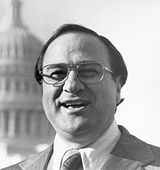
James George Abourezk was a Democratic United States Representative and United States Senator, and was the first Arab-American to serve in the United States Senate. He represented South Dakota in the U.S. Senate from 1973 until 1979.
He was elected as a Democrat to the House of Representatives, and served from 1971 to 1973. He then was elected to the U.S. Senate, where he served until 1979.
As a senator, he criticized the Office of Public Safety (OPS), a U.S. agency linked to the USAID and the CIA that provided training to foreign police forces. He also was the chair of the Senate Select Committee on Indian Affairs and of the American Indian Policy Review Commission. Abourezk was an early supporter of the National initiative and with fellow Senator Mark O. Hatfield (R-OR) introducted an amendment allowing more direct democracy. However, this initiative failed.
In an interview with Counterpunch on April 16, 2006, Abourezk called the groups Hamas and Hezbollah "resistance fighters". [1] He repeated this statement in a 2007 interview on Hezbollah's Al Manar television network and stated that that he "marveled at the Hezbollah resistance to Israel. ... It was a marvel of organization, of courage and bravery.
In th Counterpunch interview, Abourezk also argued that America's support of Israel endures because "the Congress is pretty much reliant on money from radical Zionists".
He reiterated this statement in an editorial for Electronic Intifada on July 30, 2006, where he wrote:"...the U.S. Congress is despicable in its silence. They are all bought off by the Israel lobby and are afraid to criticize. If this were happening in any other country by any other country, there would be speeches on the floor of Congress, legislation introduced to stop aid and other help to whomever would be committing this cruelty. But since their campaign money comes from the Israeli lobby, we hear only silence."
In a letter dated December 2006, Abourezk wrote: "I can tell you from personal experience that, at least in the Congress, the support Israel has in that body is based
completely on political fear - fear of defeat by anyone who does not do what Israel wants done. I can also tell you that very few members of Congress—at least when I served there—have any affection for Israel or for its Lobby. What they have is contempt, but it is silenced by fear of being found out exactly how they feel. I’ve heard too many cloakroom conversations in which members of the Senate will voice their bitter feelings about how they’re pushed around by the Lobby to think otherwise. In private one hears the dislike of Israel and the tactics of the Lobby, but not one of them is willing to risk the Lobby’s animosity by making their feelings public...
I see no desire on the part of Members of Congress to further any U.S. imperial dreams by using Israel as their pit bull. The only exceptions to that rule is the feelings of Jewish members, who, I believe, are sincere in their efforts to keep U.S. money flowing to Israel. I believe that divestment, and especially cutting off U.S. aid to Israel would immediately result in Israel’s giving up the West Bank and leaving the Gaza to the Palestinians.
Such pressure would work, I think, because the Israeli public would be able to determine what is causing their misery and would demand that an immediate peace
agreement be made with the Palestinians."
In an August 30, 2007 interview on the Hezbullah TV network Al-Manar, as translated by MEMRI, Abourezk stated that "the Arabs who were involved in 9/11 cooperatedwith the Zionists. It was a cooperation. They gave them the perfect excuse to denounce all Arabs."
In 1980, Abourezk founded the American-Arab Anti Discrimination Committee, a grassroots civil rights organization. In 1989, he wrote Advise and Dissent: Memoirs of South Dakota and the U.S. Senate and he is the co-author of "Through Different Eyes: Two Leading Americans — a Jew and an Arab — Debate U. S. Policy in the Middle East."
Abourezk now works as a lawyer and writer in South Dakota.
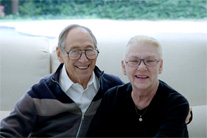
Alvin Toffler was an American writer, who wrote on futurism related to communication, digitalization and corporate growth. He was known to be the ‘world’s most famous futurologists’ and is considered as an important influence in shaping of the modern China.
He started as being an associate editor at the ‘Fortune’ magazine and did analysis for them in the field of business and management. Before that, he devoted some of his youth in working at the labor’s level and then became a labor columnist, shared his experience and analysis on the working class. His earlier writings focused on the expansion of technology and its impact on the society which got him research works form companies like IBM and AT & T.
Toffler from there on wrote books like ‘Future Shock’, ‘The Third Wave’, etc. in which he addressed the problems of information overload, increasing military hardware, weapons and technology proliferation, and capitalism. Owing to his impeccable understanding of the future impact of the current revolutionary technological changes, he was a member of the International Institute for Strategic Studies, serves on the advisory board of the Comptroller-General of the United States, and has been elected a Fellow of the American Association for the Advancement of Science.
He married to Heidi Toffler, who was a futurist and intellectual in her own right and had an active influence on Toffler’s professional growth.
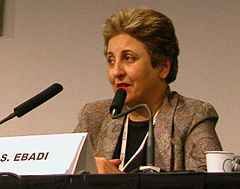
The Iranian lawyer and human rights activist Shirin Ebadi was born in 1947. She received a law degree from the University of Tehran. In the years 1975-79 she served as president of the city court of Tehran, one the first female judges in Iran. After the revolution in 1979 she was forced to resign. She now works as a lawyer and also teaches at the University of Tehran.
Both in her research and as an activist, she is known for promoting peaceful, democratic solutions to serious problems in society. She takes an active part in the public debate and is well-known and admired by the general public in her country for her defence in court of victims of the conservative faction's attack on freedom of speech and political freedom.
Ebadi represents Reformed Islam, and argues for a new interpretation of Islamic law which is in harmony with vital human rights such as democracy, equality before the law, religious freedom and freedom of speech. As for religious freedom, it should be noted that Ebadi also includes the rights of members of the bahai community, which has had problems in Iran ever since its foundation.
Ebadi is an activist for refugee rights, as well as those of women and children. She is the founder and leader of the Association for Support of Children's Rights in Iran. Ebadi has written a number of academic books and articles focused on human rights. Among her books translated into English are The Rights of the Child. A Study of Legal Aspects of Children's Rights in Iran (Tehran, 1994), published with support from UNICEF, and History and Documentation of Human Rights in Iran (New York, 2000), Iran Awakening: A Memoir of Revolution and Hope (New York, 2006).
As a lawyer, she has been involved in a number of controversial political cases. She was the attorney of the families of the writers and intellectuals who were victims of the serial murders in 1999-2000. She has worked actively - and successfully - to reveal the principals behind the attack on the students at Tehran University in 1999 where several students died. As a consequence, Ebadi has been imprisoned on numerous occasions.
With Islam as her starting point, Ebadi campaigns for peaceful solutions to social problems, and promotes new thinking on Islamic terms. She has displayed great personal courage as a lawyer defending individuals and groups who have fallen victim to a powerful political and legal system that is legitimized through an inhumane interpretation of Islam. Ebadi has shown her willingness and ability to cooperate with representatives of secular as well as religious views.
Shirin is currently in the USA on a speaking tour, giving media interviews. Shirin recently initiated the National Peace Council campaign in Iran which asks Iranian officials to soothe their approach toward international issues and advocates direct talks between Tehran and Washington, among its other goals. Middle East
E-mail this article Print this article Write to the editor
Follow the Path of Negotiation and Peace—An Interview With Shirin Ebadi
Niusha Boghrati
Worldpress.org correspondent
January 1, 2008
"Is America going to bomb us after all?" That has been the word on the streets in Iran for quite some months now. It is an issue too big to be ignored in day-to-day life, a fear more real than what an even rare optimistic United States National Intelligence Estimate could not completely ease.
The Iranian people have generally learned to compromise with any given condition and even make a gay life out of the hard times. On this issue they seem to have felt the heat to their bones. And their fear has found expression in the formation of an anti-war movement.
The "seriousness" of the situation has convinced some of Iran's most prominent civil activists to initiate an unprecedented nation-wide campaign to minimize the threat of a United States attack against Iran.
No to war; yes to peace and human rights" is the motto of the recently launched campaign.
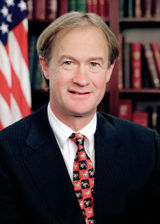
Lincoln Davenport Chafee is a former United States Senator from Rhode Island. Running as a Republican, he lost his re-election bid in 2006 to Democrat Sheldon Whitehouse. In the summer of 2007, he left the Republican Party and became an independent. He is currently a visiting scholar at Brown University's Watson Institute for International Studies.
A Rhode Island native educated at Phillips Academy and Brown University, Chafee worked as a professional blacksmith for seven years before entering state politics in 1985. He was a delegate to the Rhode Island State Constitutional Convention, a member of the Warwick, Rhode Island city council, and later the mayor of Warwick. Chafee was appointed to the United States Senate in 1999 upon the death of his father, Senator John Chafee, and in 2000 was elected to a full six-year term.
A political iconoclast, Chafee was the only Republican senator to have expressed support for same-sex marriage; the only Republican to vote in favor of reinstating the top federal tax rate on upper-income payers; the only Republican in the Senate to have voted against authorization of the use of force in Iraq; the only Republican to vote for the Levin-Reed amendment calling for a nonbinding timetable for a withdrawal of U.S. troops from Iraq; and the only Republican to vote against Supreme Court nominee Samuel Alito. Chafee favored increased federal funding for health care, supported affirmative action and gun control, supported women’s reproductive rights, and endorsed federal funding for embryonic stem cell research. Sometimes referred to by conservatives as a RINO (Republican in Name Only), Chafee turns the tables on the right and asks why it has enabled Bush Jr. to pull the GOP and the nation away from traditional principles of fiscal conservatism, respect for our environment, and aversion to foreign entanglements.
Chafee's book, AGAINST THE TIDE: How a Compliant Congress Empowered a Reckless President, is an unabashedly frank, memoir recounting his political journey from small-town mayor to a voice crying from the congressional wilderness. It offers a forward-looking assessment of what comes next for the Republican and Democratic parties, and he also addresses the potential rise of a third party within the void created by bipartisan extremism. Most important, Chafee sounds a wake-up call to his Party, and to all Americans, by challenging our government to strive, as Abraham Lincoln once articulated, “to elevate the condition of men.”
Lincoln Chafee (R-RI) served in the United States Senate at a time when his Republican Party drifted so far right it no longer stood for its mainstream principles. In the face of his party's wrongheaded direction under George W. Bush, Lincoln Chafee became, even more fiercely, what he had always been...his own leader. Chafee’s ideological positions make his voting record among the most liberal of the Republicans in the Senate. And it's no surprise that he has an eye-opening story to tell about his 7-year journey in national politics, from small-town mayor to a unique national voice.
Find a Talk Show
Listen Live
RADIO 'AUDIO' SHOWS
Station #1 audio icon
Station #2 audio icon
T.V. 'VIDEO' SHOWS
Station #1 video icon
Station #2 video icon


Click Here For
More Listening Choices
TO LISTEN ON PHONES
Station #1 Number
1-631-359-9353
Station #2 Number
1-804-220-6484
CALL IN LIVE
TO GET ON THE AIR
- only during live shows -
BBS STATION 1
888-627-6008
Direct 323-744-4831
BBS STATION 2
888-429-5471
Direct 323-744-4841
CUSTOMER SERVICE
- 10:00 am to 10:00 pm CST -
BBS Radio TV
Toll Free: 888-710-8061
Direct Line: 323-744-4828


Listen on iHeart Radio
BBS Radio TV Station 1

BBS Radio TV Station 2
CHECK US OUT ON...