
LaGrave Live, May 3, 2026
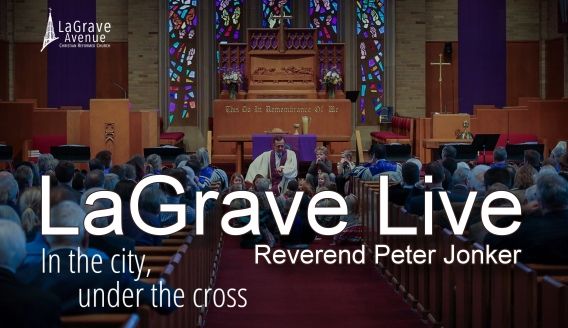


LaGrave Live
LIVE Morning Worship Service 05-03-2026
What’s Good About the Church
About The Service:
We will witness the installation of our new Elders and Deacons. Reverend Jonker will preach on Acts 11:19-30, a passage where, under the guidance of the Holy Spirit, we see the church beginning to take form.
Order of Worship:
https://lagrave.org/wp-content/uploads/2026-5-3-AM-Order-of-Worship.pdf
About the Church:
We are a traditional CRC church in the middle of Downtown Grand Rapids, MI, worshipping at 8:40am, 11:00am, and 6:00pm. (10:00am and 6:00pm during the summer months)
We'd love to hear from you:
Connection: https://www.lagrave.org/contact
Let us pray for you:
Prayer: https://www.lagrave.org/prayerrequest/
Giving: https://www.elexiogiving.com/App/Giving/lagr107178
The April special offering is for Family Promise. Family Promise partners with local congregations, individuals, families, foundations and corporations to provide emergency shelter and case management for families with children facing a housing crisis.
Listen on the go:
Amazon Music: https://bit.ly/LGPodAmazonMusic
Apple Podcast: https://apple.co/3tuOdwQ
Google Podcast: https://bit.ly/LGPodGoogle
Soundcloud: / lagravecrc https://soundcloud.com/lagravecrc
Spotify: https://spoti.fi/3yXDFaT
Follow us!
Facebook: / lagravecrc https://www.facebook.com/lagravecrc
Instagram: / lagravecrc https://www.instagram.com/lagravecrc
Website: https://www.lagrave.org
#LaGrave #LaGraveCRC
What’s Good About the Church: Embracing the Spirit and the Institution
What’s Good About the Church?
A defense of the institutional church and the movement of the Holy Spirit.
Core Argument
"Negative stories are not our main story. We are still the bride of Christ, and the Holy Spirit still moves in us."
The Spirit’s Surprise
The Spirit moves beyond strategic plans (e.g., the Gentile mission in Acts, the Ethiopian revival, and modern digital shifts like livestreams).
Institutional Grace
Structure provides essential oversight, theological teaching, leadership training, and organized benevolence to the community.
The Barnabas Model
Being a "Son of Encouragement"—standing by others when they are untrusted and fostering growth in new communities.
Crisis of Trust
*Down from ~65% in the 1960s/90s
Key Figure: Barnabas
Meaning "Son of Encouragement." He bridged the gap for Paul when the church was suspicious and led the Antioch mission.
This worship service at LaGrave Avenue Christian Reformed Church centers on the ordination and installation of new church officers while addressing modern skepticism toward religious institutions. The message highlights how the Holy Spirit works through both spontaneous movement and organized church structures to foster encouragement and benevolence.
Detailed Point Summary
The Call to Servant Leadership and Ordination
The service emphasizes that leadership within the church is defined by servanthood rather than the exercise of authority, following the example of Jesus who came to serve and give his life as a ransom. During the ceremony, several individuals were ordained and installed into the offices of elder and deacon, committing to oversee the spiritual life of the congregation and promote ministries of service. These leaders are charged to be mature in faith, exercising their duties with prayer, patience, and humility while supporting the pastors and the community.
The Ministry of Encouragement
A central theme of the service is the biblical figure Barnabas, whose name means "Son of Encouragement." Through the children's message and the subsequent sermon, the congregation is reminded that encouragement is a vital tool for helping others persevere through difficulties. Barnabas serves as a model for the church because he stood by those whom others mistrusted, such as the apostle Paul, and empowered new faith communities to remain true to the Lord.
The Decline in Public Trust (1965 vs. 2024)
Reflecting on the sermon's data regarding the general public's perception of the church and its leaders.
Trust in church leaders has similarly dropped from 65% to 27% in the same period.
The Synergy of Spirit and Institution
The sermon addresses the tension between the "organic" movement of the Holy Spirit and the "institutional" nature of the church. Using the growth of the church in Antioch (Acts 11) and modern examples like the Ethiopian Lutheran Church, the message argues that while the Spirit often initiates surprising new directions—such as LaGrave’s unplanned adoption of livestreaming and property acquisition—the institution provides the necessary framework to sustain that growth. The institutional church functions through oversight, teaching, the training of leaders, and the organized response to community needs.
Four Pillars of the Institutional Church
- ⚖️ Oversight: Discerning the spirits to ensure movements are of God.
- 📖 Teaching: Providing theological formation beyond mere enthusiasm.
- 🎓 Training: Encouraging and equipping new leaders for ministry.
- 🤝 Benevolence: Recognizing community needs and responding with resources.
Community Prayer and Global Concerns
The congregation engaged in extensive intercessory prayer, covering local health needs, the celebration of new births, and the support of missionaries. The prayer also extended globally, seeking peaceful resolutions to conflicts in Ukraine, Russia, and Iran, and requesting protection for persecuted believers in nations such as Sudan, Nigeria, China, and North Korea.
Key Data
- Public Perception: Favorable impression of the church has declined from 60-65% in the mid-1960s to 32% in 2024.
- Trust in Leaders: General trust in church leaders has fallen from 65% in 1990 to 27% today.
- Historical Growth: The Ethiopian Lutheran Church grew from 100 to 10,000 members between 1938 and 1945 without foreign missionaries.
To-Do / Next Steps
- Members should check the bulletin for events occurring during the 10:00 hour following the service.
- Attend the evening service recognizing graduates tonight at 5:30 PM (note the earlier start time).
- Submit prayer requests using the cards in the pew racks and drop them in the wood box outside the chapel.
- Participate in the National Day of Prayer noontime gathering this coming Thursday.
Conclusion
Despite the prevailing cultural cynicism toward organized religion, the church remains a vital vessel for the Holy Spirit’s work. By balancing spontaneous spiritual movement with institutional stability and a commitment to servant leadership, the community continues to offer a unique narrative of hope, healing, and benevolence to the world.
LaGrave Live
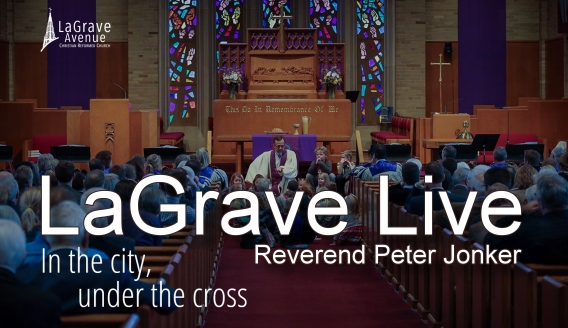
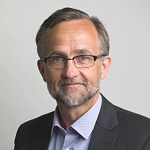
If you’re looking for a warm church that commits to an intensely pertinent Gospel in the Reformed tradition of the Christian faith, we invite you to worship with us. Our 1,800 members come from across West Michigan and gather weekly in our sanctuary for relevant Biblical preaching, beautiful music, and inspiring worship. We expand our worship through intentional outreach in our community and world, attentive care for our members, and plenty of spiritual enrichment and social opportunities for everyone.
We focus on a living Savior who provides genuine solutions to the deep needs of a hurting world. We are committed to need-meeting ministry in His name, and we are committed to being real people who enjoy real life and who cry real tears. Because we are a fairly large and diverse group in terms of age, occupation, marital status, lifestyle, and physical ability; our members create many accessible opportunities for community service, Bible study, and small social groups.
We worship God, the Almighty Creator of heaven and earth, and we enjoy expressing our vision of His holiness through traditional music and formal liturgy.
Music plays an integral part of our weekly worship gatherings. Congregational singing—of both traditional hymns and newer ones—is typically supported by our pipe organ. Vocal choirs, handbell choirs, small ensembles, instrumentalists, and vocal soloists provide additional music offerings.
Led by the Holy Spirit, we seek to worship and serve God in all of life, transforming His world and being transformed to reflect the character of Christ.
Founded by 36 Dutch immigrants on February 24, 1887, LaGrave Avenue Christian Reformed Church has always been deeply committed to both this local community and worldwide missions. God has seen fit to guide and bless these commitments with sustained growth, spiritual gifting, and a continual stream of new work for our members.
[00:00] Speaker 1: (organ music plays)
[05:51] Speaker 1: (crowd murmuring)
[06:09] Speaker 2: (organ music plays)
[09:12] Speaker 2: (choir sings) I was glad. I was glad when they said unto me, "Let us go to the house of the Lord." Our feet are standing within your gates. Oh, Jerusalem. Oh, Jerusalem. Let us go to the house of the Lord. I was glad. I was glad. I was
[11:56] Speaker 2: glad.How lovely for a mother, is her abiding grace. My soul is longing daily, to taste the hon- o- r, gra- ace. A sparrow finds a shelter, a place within her nest. Each joy your temple causes, may live its wants to rest. If one but once to worship, though but a single day. Is better than a thousand, if far from you she stray. I rather leave the entrance, than claim you as my home. Than revel in the riches, the kings of Sin-a- mor. Oh, oh, oh, oh. Oh, oh, oh, oh. Oh, oh, oh, oh, oh, oh, oh, oh, oh, oh, oh, oh, oh. Our salvation forever, coming for those who are, good shepherd us with blessings, from whom do we hide?
[14:52] Speaker 2: Thus saints from grace receiving, God's gift to sinners more, now crown their hearts shall be the views, of blessing over and over. Over, over, over, over.
[16:27] Speaker 3: The one who is Lord Most High is here in our midst this morning, and He greets you with these words. Grace, mercy, and peace be unto you, from God our Father and the Lord Jesus Christ, through the mighty and transforming work of the Holy Spirit. Friends, Christ is risen. Christ is risen, indeed. He is risen, indeed. Hallelujah. Hallelujah. We welcome all of you to worship here this morning at LaGrave Avenue Christian Reformed Church. We're so glad you're here. Whether you are here in the sanctuary or whether you're joining us online, we're so glad that you have joined us for worship. (inhales deeply) We invite you to check out the bulletin for the events happening today during the 10:00 hour that follows this service. Those are listed there, and we encourage you to look at those and to, to, um, (smacks lips) engage in one of those, if that fits your schedule. Also, a reminder that tonight, the evening service, which will recognize our graduates, will begin at 5:30.
[17:35] Speaker 3: So church tonight, not at 6:00, but at 5:30. (paper rustling) In worship this morning, we're thinking about the work of the church. And characteristics of good leaders in the church are trai- traits to which the Bible calls not just ministers and elders and deacons, but all of us. Listen to these words that we find in the Gospel of Mark from Chapter 10. "Jesus called them together," the disciples, "and said, 'You know that those who are regarded as rulers of the Gentiles lord it over them, and with their, and their high officials exercise authority over them. Not so with you. Instead, whoever wants to become great among you-"... must be your servant and whoever wants to be first must be slave of all. For even the Son of Man did not come to be served, but to serve and to give his life as a ransom for many." Having that on our hearts and our minds, we come to God in a time of confession.
[18:46] Speaker 3: We will pray a prayer of confession and assurance, and after that we will sing, but we will remain seated for that song. Would you join me in prayer? Lord, we confess the times when we have acted out of our own selfishness and when we have not put others before ourselves. We are sorry for not remembering the example of Jesus, of how he became a servant and cared well for people and for not following his ways. Thank you, Father, for hearing our prayer and for the promise that when we confess our sins, you are faithful and just and will forgive us of our sins. We ask all these things in the name of Jesus, our Savior. Amen.
[19:36] Speaker 3: (instrumental music plays) (clears throat)
[19:44] Speaker 2: (singing) Lord, we thank You for the service. For the way You lead. On the cross You saved me. (singing)
[20:52] Speaker 3: As we think about using our gifts in Christ Church, we think specifically of God's gift of leadership in the offices of elder and deacon. We thank Him for those who are completing their terms of office after the last three years, and we praise God for providing successors. In the office bearers of the church, we see how God equips leaders to serve in the church. Already in the time of Moses, God provided 70 elders to help guide His people. And in the New Testament, the letters of Paul show us how the church organized itself as one body with many members. (clears throat) In our organization, we have the offices of elder and deacon that call for people who are Christ-like, who are mature in the faith, and who exercise their offices with prayer, patience, and humility. Today, we intend to ordain elders and deacons and to install them for terms of service in this congregation.
[22:03] Speaker 3: Those appointed to the office of elder and that will be ordained and installed at this service are Chris Huizenga, Marge Penning, Ben DeGraff, and Heide van Sledrite. And at the 11 o'clock service will be Ruth Bylsma and John Rottman. Those appointed to the office of deacon who will be ordained and installed at this service are Dave Bexford, Ben Nagle, and Bethany Stacy. Those at the 11 o'clock service will be Mitch Schroeder, Robin Hollebeke, and Chris Witte. To express your acceptance of these offices, elders and deacons who are coming in, you are asked to stand and here in the presence of God and His church to answer the following questions. Would you rise? Hear these questions and I'll ask for your answer at the end. Do you believe that the call of this congregation... In that call, God Himself is calling you to these holy offices? Do you believe that the Old and New Testaments are the word of God, the only infallible rule of faith and life?
[23:14] Speaker 3: Do you subscribe to the doctrinal standards of this church, rejecting all teaching which contradicts them? And do you promise to do the work of your offices faithfully in a way worthy of your calling and in submission to the government and discipline of the church? When I ask you in a moment, if you could say yes to those, you will say, "I do, God helping me." Marge Penning, what is your answer?
[23:41] Speaker 2: I do, God helping me.
[23:43] Speaker 3: Heide van Sledrite, what is your answer?
[23:45] Speaker 2: I do, God helping me.
[23:47] Speaker 3: Chris Huizenga, what is your answer?
[23:49] Speaker 2: I do, God helping me.
[23:50] Speaker 3: Bethany Stacy, what is your answer?
[23:53] Speaker 2: I do, God helping me.
[23:54] Speaker 3: Ben Nagle, what is your answer?
[23:56] Speaker 2: I do, God helping me.
[23:58] Speaker 3: Ben DeGraff, what is your answer?
[24:01] Speaker 2: I do, God helping me.
[24:02] Speaker 3: And Dave Bexford, what is your answer?
[24:04] Speaker 2: I do, God helping me.
[24:06] Speaker 3: May God, our Heavenly Father, who has called you to these offices, guide you by His word, fill you with His Holy Spirit, and endow you with wisdom so that His name is honored and glorified in all you do. Amen. At this time, we will hear a charge to our new elders from Sue Pastor, who's president of the elders, followed by a charge to our new deacons by Deb Andersma, who is president of the, of the deacons.
[24:43] Speaker 4: I charge you, elders, as shepherds of the flock, to know the Scripture and to hold firmly to its truth so that you can encourage others by sound doctrine and correct those who oppose it. In addition, provide for the true preaching of the Word, regular celebration of the sacraments, sound instruction for faith formation, and wise counsel and discipline. You should also compassionately support people in their pain and weakness while also celebrating their joys. In all these things, keep in confidence these matters entrusted to you. Also, be wise counselors who support and strengthen the pastors. Brothers and sisters, above all, remember that if you are to give spiritual leadership in the household of faith, you must com- be completely mastered by our Lord.
[25:41] Speaker 5: And I charge you, deacons, to promote s- ministries of service so that people and communities are transformed by God's Spirit. Since the Lord requires us to act justly, love mercy, and walk humbly with our God, teach us how to be merciful so that through these deeds, we will demonstrate the care of the Lord Himself. In addition, minister to the rich and to the poor alike, both within and outside the church, and use the church's resources wisely. Be compassionate and respectful to those who are victims of injustice and selfishness while also holding in trust all sensitive matters confided to you. Brothers and sisters, above all, live as examples of Jesus Christ and promote His kingdom work until He comes again.
[26:44] Speaker 3: We also have a charge to you, the congregation, and I ask you to rise at this time. I charge you, people of God, to receive these men and women as Christ's servants and His gift to the Church. Take their counsel seriously, respond to them with obedience and respect, and accept their help with gratitude. Remember to pray for them and to encourage them, especially when they feel the burden of the office. Do you, congregation, pledge to receive them as you have been charged?
[27:23] Speaker 3: If you can say yes to that, say, "We do, God helping us."
[27:28] Speaker 6: We do, God helping us.
[27:31] Speaker 3: As both laypeople in the church and leaders in the church, let us confess what we believe by saying together the words of the Apostles' Creed. We say together...
[27:41] Speaker 6: I believe in God, the Father Almighty, Creator of heaven and earth. I believe in Jesus Christ, His only Son, our Lord, who was conceived by the Holy Spirit, born of the Virgin Mary, suffered under Pontius Pilate, was crucified, died, and was buried. He descended to Hell. The third day, He rose again from the dead. He ascended to Heaven. He is seated at the right hand of God, the Father Almighty. From there, He will come to judge the living and the dead. I believe in the Holy Spirit, the holy Catholic Church, the communion of saints, the forgiveness of sins, the resurrection of the body, and the life everlasting. Amen.
[28:41] Speaker 2: (instrumental music plays) (singing) Prince of God, ye bright and glorious, holy nation, chosen race, God has called such a people, royal priests and heirs of grace. Come, the fullness of your calling, show to all His mighty deeds. Tell of love which knows no limits, grace that hears of human needs. Prince of God, ye bright and holy, lead all people in His hands. Striving faith and steadfastness, each the better for master's commands. Royal priests, fulfill your calling, pure in heart, steadfast in prayer. Keep your life a holy sacrifice, ever ready for the work of light. Through Christ, your King, who taught you to love one another, so love one another.
[30:59] Speaker 7: All right, children, it's time for the children's message. It's your turn. Come on forward, have a seat, and we'll talk together again. Hey, guys. Hello. All right, I think... Do we have any more? Oh, yep, I see a head coming. Yeah. All right. Okay. (claps hands) (coughs) So in my sermon today, I'm going to be talking about a guy whose name is Barnabas. He's in the Bible. His name is Barna-... Have, have you heard of this name, Barnabas? Yeah, I didn't think... He's not... He's in... He's someone who followed Jesus. He's in... And he's in the Bible quite a bit, but a lot of people haven't heard of him. Uh, he does a lot of, uh, really cool things. What I like about him is his name. Barnabas means something in, in Hebrew. It means son of encouragement. So his name means son of encouragement. So his name means, like, I'm an encourager. I'm a person who likes to encourage. I like to encourage people. That's what his name means. And that's actually what Barnabas did.
[32:11] Speaker 7: He was a person who encouraged a lot. Do you guys know what it means to encourage someone? You know what it means? And if I says... Yeah. Some of you are nodding your heads. So, like, it's, it's what we do for someone if they're having a hard time, and they're tired. If we say encouragement to them, we help them keep going. We say something nice to them to help them keep going and give them courage. So maybe you're drawing a picture, and you're having a hard time getting it just the way you want it. And then I come and I look over your shoulder, and I say, "Oh, you are doing a great job. You are a good drawer. Keep going. You can do it." That's encouragement, right? Okay. Or maybe I, I see you with your little sister, if you have a little sister or brother, and your little sister's a bit of a pain, but you're still being nice to your little sister, or you're still being nice to your little brother, and I say, "Oh, you're doing so good.
[33:02] Speaker 7: You are really being nice to your little brother or little sister." Right? I want to... I'm encouraging you. That's what Barnabas did. He did that to lots of people. So for example, Paul, who you've heard of, right, in the Bible. Paul, when he first became a Christian, nobody liked him. And they didn't like him because he used to be mean to Christians, right? He used to hurt Christians. So when he became a Christian, they said, "Well, I don't know if I can trust this guy." Barnabas came beside Paul and was nice to Paul, and told all the people that Paul was okay. He was an encourager. And in the passage I'm gonna read, he goes to a brand-new church, and it's just a small church, and they're just starting out, and they don't know if they can do it. Barnabas comes and he encourages them. He says, "You guys are gonna do great. You're gonna be a wonderful church." Encouragement, right? So easy to do. Right? So easy to do.
[33:55] Speaker 7: Isn't it nice when someone says something like that to you and encourages you? You look wonderful. You are such good listeners. I'm so glad that you are all part of this church, and that I get to talk to you every Sunday. I hope that you always follow Jesus. Those are nice things to say. I hope that you get a lot of encouragement in your life, and I hope that you take the time to encourage other people, too. Congregation, what is our prayer for these children?
[34:30] Speaker 2: The Lord be with you.
[34:31] Speaker 8: And also with you.
[34:31] Speaker 7: Go in peace. (sniffs) (clears throat)
[34:46] Speaker 3: If you have a prayer request ever that you would like to have prayed for by the prayer team, there are cards in the pew rack in front of you, and you can fill that out. You can drop it into the wood box. It's outside the chapel entrance. And the prayer team welcomes those, and we keep those confidential. As we go to God in prayer this morning, listen to these words from Psalm 103 that tell us who the Lord is. The psalmist says, "The Lord is compassionate and gracious, slow to anger, and abounding in steadfast love." Knowing that we come to God in prayer, coming to a compassionate God, let us pray. Merciful Father, with praise and adoration, we come to you, for you are the one who forgives, the one who heals, the one who redeems, and the one who crowns us with love and compassion. And we thank you that your love is forever, from everlasting to everlasting. Help us never to forget who you are.
[35:56] Speaker 3: Father, we thank you for your steadfast love to those who made their professions of faith last week, Charlie Konaria... Konoya, and Will Sattler. Father, we pray that your Spirit would work, continue to work in their hearts and in more people's hearts, that more people would profess their faith in Jesus Christ as Lord. And we pray, oh God, that as a congregation, we would witness even more the salvation of unbelievers, and that you would bring renewal to this place. We thank you for your steadfast love, too, to the Lubin family and the birth of Josie. Bless their growing family. Compassionate God, we also lift before you needs in our own church family. We pray for Bill Stroe and Ray Payter. We pray, Father, that the rehab they are doing will continue to be effective in renewing their health and their bodies. We pray for Jolene DeHeer as she begins treatments.
[36:53] Speaker 3: And we pray, Father, that they would be effective in growing more rud blo- red blood cells in her body.And we lift before You as well Ruth DeWinter. Father, we pray for comfort and peace for her as her strength and health declines and as she waits for the day for You to call her home. Gracious God, we pray that You would also be with those who grieve. We lift before You the Boss family and the death of Larry's brother-in-law, and the Duzma and Vermeulen families and the death of Frank's sister-in-law. Comfort, F- Father, all those who mourn. And we thank You too this morning for the gracious provision of new elders and deacons. We thank You, Father, for- for people who take the place of those who have served and we thank You for the years of those who have served. We also lift before You Scott and Jen Miedema, our missionaries who serve with Young Life.
[37:48] Speaker 3: Father, may Your Spirit be upon them and other Young Life leaders as they gather this week for reflection, for direction setting, and for prayer. And we thank You, Lord, for the gift of prayer, that You are hearing our prayers now and that You hear them at all times. We thank You too that we live in a nation that we can celebrate a National Day of Prayer this Thursday. And we ask Your blessing on the noontime gathering that would ha- that will happen that day, as LaGrave and others from Classes Grand Rapids South gather together as brothers and sisters in Christ to pray and to seek Your face. Father, we continue to lift before You the names of those who are in our fishbowl in the library, those who don't know Christ as Savior, those who are wandering from the faith, those who have left the Christian faith. Father, show them Your everlasting love so that they would turn their hearts to You.
[38:51] Speaker 3: And we pray, O Lord, for peace in our world, for peaceful resolutions for Ukraine and Russia and the conflict there, for peaceful resolutions to the conflict between Iran and our own country, and we pray for peace where there is e- internal and religious conflict and persecution, especially in places like Sudan, Nigeria, China, North Korea, and Jordan. Father, thank You for hearing our prayer this morning. You are a merciful and compassionate God and we ask all these things in the name of the Triune God, Father, Son, and Holy Spirit.
[39:32] Speaker 3: Amen
[39:32] Speaker 2: (piano music plays) God of great and God of small. God of one and God of all. God of weak and God of strong. God to whom all things belong. Hallelujah, Hallelujah. Praised be Thy name. (piano music plays) God of land and sky and sea. God of life and destiny. God of never-ending power. Yet beside me ev'ry hour. Hallelujah, Hallelujah. Praised be Thy name. (piano music plays) God of silence, God of sound. God in whom the lost are found. God of day and darkest night. God whose love turns wrong to right. God of Heav'n and God of Earth. God of death and God of birth.
[42:30] Speaker 2: God of now and yestereven more. God who reigns forevermore. Hallelujah, Hallelujah. Praised be Thy name. Praised be Thy name.
[43:09] Speaker 9: (organ plays) (crowd murmuring)
[43:18] Speaker 10: (organ continues playing)
[49:25] Speaker 7: Our Bible reading this morning is from the Book of Acts, Acts Chapter 11. I'll read verses 19 through 30. Um, Acts is probably the churchiest book in the Bible and, uh, I'm going to read from a very churchy passage where we see the church doing various things, appropriate for a day when we bring in new elders and deacons. Starting at verse 19. "Now, those who had been scattered by the persecution that broke out when Stephen was killed, traveled as far as Phoenicia, Cyprus, and Antioch, spreading the word only among Jews. Some of them, however, men from Cyprus and Cyrene, went to Antioch and began to speak to Greeks also, telling them the good news about the Lord Jesus. The Lord's hand was with them and a great number of those people believed and turned to the Lord. News of this reached the church in Jerusalem, so they sent Barnabas to Antioch.
[50:30] Speaker 7: When he arrived and saw what the grace of God had done, he was glad and he encouraged them all to remain true to the Lord with all their hearts. He was a good man, full of the Holy Spirit and faith, and a great number of people were brought to the Lord. Then, Barnabas went to Tarsus to look for Saul, Paul. And when he found him, he brought him to Antioch. So for a whole year, Barnabas and Saul met with the church and taught great numbers of people. The disciples were first called Christians at Antioch. During this time, some prophets came down from Jerusalem to Antioch. One of them, named Agabus, stood up, and through the Spirit, predicted that a severe famine would spread over the whole Roman world. This happened during the reign of Claudius. The disciples, as each one was able, decided to provide help for the brothers and sisters living in Judea, and this they did, sending their gifts to the elders by Barnabas and Saul." This is the word of the Lord.
[51:31] Speaker 2: Thanks be to God.
[51:34] Speaker 7: (clears throat) People, um, have been down on the church for a long time. People have been critical of the church and its leaders, uh, for a long, long time. Back in 1386, so that's 650 years ago, Geoffrey Chaucer wrote The Canterbury Tales. The Canterbury Tales. I know, I know some of you probably studied those in your high school English class. I was an English major. I studied them both in high school and, and in college, too. The Canterbury Tales, um, is a story of pilgrims on their way to Canterbury and a lot of it is satire of the church. Church does not come out very well in The Canterbury Tales. Uh, the Friar is a womanizer who steals church funds. The Prioress cares more about her pets than she does people. And the Pardoner carries around holy relics which he says are bones of the saints, but which are actually pig bones, right? So Chaucer wrote this satire and people loved it. They ate it up. They laughed because not everybody loves the church.
[52:53] Speaker 7: In the 1990s, Dana Carvey introduced us to, on Saturday Night Live, The Church Lady. The Church Lady is kind of the modern day successor of Geoffrey Chaucer's characters. She just sort of embodied, uh, all the worst stereotypes of the church, right? She was prim, she was judgmental, and sometimes she was downright mean. And when Dana Carvey brought this character to the screen, a lot of people laughed because not everybody loves the church. It's been 30 years since Dana Carvey last did The Church Lady on Saturday Night Live, and if anything, our reputation is worse. If you look at the numbers, if you just look at the data from surveys about how people feel about the church and its leaders, we are at the lowest point that we have ever been since people started measuring these things. So for example, in 1960, 1965, um, roughly, um, s- or not 1960. 19 s- uh, this is like 1965, 1970, 60% to 65% of people had a generally favorable impression of you guys.
[54:06] Speaker 7: 60% to 65% of people thought you were okay. 2024, that number has crashed down to 32%. In 1990, so even more recently, when asked about church leaders, uh, roughly 65% of people had a general trust in, in church leaders, in people like me. Now we are down to 27%. We are even less popular than you. And we know the reasons for all this, right? We know the reasons why the church isn't popular. Scandals, hypocrisy, fighting, TV preachers who have private jets and expensive watches. All of these things. If anyone wants to be cynical about the church, if anyone wants to find material to make the church look bad, there is plenty of it, and so a lot of it is brought out on the table and trumpeted before the world. But today, on this Sunday, this churchiest of all church Sundays when we install elders and deacons, I want to push back on that negativity. Yes, we have problems. Yes, there are stories. Yes, we have skeletons in our closet.
[55:21] Speaker 7: But I want to talk today about what's good about the church. Because those negative stories are not our main story. They are not who we are.Every single one of us as individuals has problems in our life, and we all know it's a big mistake to judge any person by the worst things in their life. And so it is with the church. We are still the bride of Christ, the Holy Spirit still moves in us, and there is so much good in the church. And that's why I read that little bit of Acts 11, because in this passage, which when you first read it maybe seems like just a sort of a hodgepodge of activities, what you see is the church at work and you see what is good about the church, what is holy, both back then and still today. And I have several things I wanna say about what I see in this passage that makes the church look good.
[56:16] Speaker 7: The first thing I want to mention that jumps out at me is the way the Holy Spirit moves in the church and the way the church is open to the Spirit's movement, even when that movement is surprising and unexpected. So we're at the, right at the point in the church where the Gentiles are starting to come into the church. Up to this point, when the church did evangelism, they only focused on Jews, right? When the disciples went out to preach about Jesus and tell everyone about Jesus, they would go to synagogues, they would go to proselytize. They would be talking chiefly to Jews. There was no plan to bring in the Gentiles. No one was thinking about that. I don't know if the early church made strategic plans, but if they did, there was nothing that said, "Let's make the Gentiles the body of Christ." But the Holy Spirit had different ideas. He kept reaching Gentiles, pushing Gentiles towards the church and pushing the church towards Gentiles. First was the Ethiopian eunuch, right?
[57:21] Speaker 7: Remember that story? Going through the desert, runs into Philip reading Isaiah, he ends up being baptized. And then right before our passage, it's Peter and Cornelius, a Roman centurion. Peter's minding his own business, the Holy Spirit comes on him in a vision and basically shoves him towards Cornelius's house. He doesn't really wanna go. He goes. He starts preaching in that house because that's what the Spirit tells him to do. He's only in the introduction of his sermon and the Holy Spirit falls upon all those Gentiles in that room. He hasn't even got to his altar call yet, and they're all coming to Christ. As he says, immediately before our passage, when he explains himself to the people in Jerusalem, "As soon as I started to talk, the Holy Spirit came on these Gentiles, right when I started." And now in our passage, we see the Holy Spirit added again.
[58:19] Speaker 7: The disciples have been dispersed by persecution and they have a plan to go preach the gospel in Phoenicia, in Cyprus, and in Antioch. And again, only planning to go to the synagogues and preach to the Jews, but some men from Cyprus and Cyrene, under the influence of the Holy Spirit, have a different idea. And they go to the Gentiles. And lo and behold, the Gentiles receive the good news. The Holy Spirit comes upon them. They're so excited. They're hungry for this news. And they come to God, to Jesus in droves. Nobody in church leadership planned for this, right? There were no focus groups. Peter, James, and John did not sit down and do a Bible study and say, "You know what? I really think the scriptures are telling us to go to the Gentiles." This is something that the Holy Spirit did. It just happened. And to the church's credit, even though this is completely unexpected, they were open to this new thing. They didn't say, "Oh, this, this is not authorized. This, this can't be right.
[59:21] Speaker 7: We gotta shut this down." No. They saw what the Spirit was doing and they said, "Oh, better call Saul. Better call Barnabas. Better send them." And they went and it was good. Reading this passage, hearing what is happening in this passage is to watch the Holy Spirit move over the face of the early church just as he moved over the face of the waters at the beginning of creation and starting something completely new, doing something more than the early church could ask or imagine. And the church opens themselves up to it and says, "Okay, let's do this." This is how the Spirit moves in the church. This is the Spirit's MO. Do you know the story of the Swedish Lutheran Church in the late '20s and early '30s? My guess is that you probably don't. So in the late '20s into the early '30s, the Swedish Lutheran Church decided that it was going to send missionaries to Ethiopia, right? A lot of European churches were sending missionaries to Africa back then.
[01:00:27] Speaker 7: Swedish Lutheran Church decided it would send missionaries to Ethiopia to do evangelism, and they worked really hard at it. According to one source that I read, from about 1927 to 1938, they sent 92 missionaries to Ethiopia to try to create the church. And they had very modest success, but they had some success. About 100 people converted. So after about 8, 10 years, they had 100 new converts. But then trouble struck. Mussolini and the Italians conquered Ethiopia and kicked out all the Lutheran minist- the missionaries, they weren't allowed to stay anymore. So all that you had left was this little group of 100 native Ethiopians, and the only resources they had to run their church was the Gospel of Mark translated into their language and a few other key passages in their language. That was all they had. They were young Christians with these meager resources. Except for one other resource, of course, the Holy Spirit.
[01:01:30] Speaker 7: So the missionaries are cut off from contact from 1938 to 1945.And finally, they're allowed to go back and they're all worried, "Oh, what, uh, uh, th- uh, are we still gonna have 100 people? Are we still gonna have 100 people?" No, they do not have 100 people. The church grows to 10,000 people while they're gone. The Holy Spirit did a thing with those people who had so little. Quiz question. Do you know what the largest Lutheran denomination in the whole world is? It's not in America. It's not in Scandinavia. It's the Ethiopian Lutheran Church. This is what the Holy Spirit does. And this doesn't just happen across the ocean or a long time ago. It happens with us too. When I first came to The Grave, I realized, "Oh, this church, they're really good at planning. This chur- they know how to plan in this church." And, and so I joined them in the planning. And the first long-range plan that I was a part of went from 2016 to 2021.
[01:02:37] Speaker 7: And, and if you were here or even if you weren't here, you know how these things go. There's a committee and we interviewed a lot of you and we went to committees and we did a survey and we wrote a document and said, "You know, for the next five years, we're gonna do X, and we're gonna do Y, and we're gonna do Z." And you approved it and council approved it. And over the next five years, we worked really hard. And for the most part, we did X, and we did Y, and we did Z. But think of those years, 2016 to 2021. What were the most significant events for our church in that period? COVID and the coming of our livestream, which we started just, like, five months before COVID came, which was nowhere in our strategic plan. There's no livestream anywhere, right? We didn't plan for that. And then the other thing is that building. We weren't thinking of purchasing property. That building just fell in our laps.
[01:03:41] Speaker 7: And now, as, we're on the cusp of doing something really important and really engaging with that. Those are easily the two most important things in terms of shaping who we are as a body. Neither of those things were anywhere in the plans. They were something that the Holy Spirit dropped into our lap. This is how the Holy Spirit works. He moves and we open up. Now, at this point, you may be saying, "Oh, those are great stories. Thank you for those stories. That's inspiring. But you, at the beginning of this service, you were talking about how you were gonna make the institutional Church sound like a good thing and those three stories make it sound like the institutional Church doesn't matter at all, right? I mean, maybe we don't need committee meetings, maybe we don't need council. We should just wake up every morning and see what the Holy Spirit sends our way. That's what happened in those stories." That is not what I am saying.
[01:04:41] Speaker 7: (audience laughs) That is not what this passage says, okay? But in this passage, you do see the relationship between the movement of the Spirit and this institution. The Spirit takes the lead, the Spirit does the things, but then the, the institution responds with institutional ways. And these institutional responses are also Holy Spirit too, right? It's not just the wild stuff that's the Holy Spirit. It's the committee meetings. It's the oversight. Here, just, just look at some of the things that the institution does in this passage. The church gives oversight. When the Gentiles are converted in Antioch, they send Barnabas. Barnabas is one of the elders. It's his job to give oversight. They send him so that he can see, is this really a movement of the Holy Spirit or is this a human thing? He gets there, he says, "No, this is, this is of God." That's something you see in other places in Acts. When Peter is first converted, not Peter, when Paul is first converted, right?
[01:05:43] Speaker 7: Everyone's suspicious of him. He used to kill us, can we trust him? They call Paul down to Jerusalem and they do oversight to make sure he's okay. And after Cornelius, the Roman centurion I talked about earlier, after he was converted, people down in Jerusalem, the elders said, "Oh, man, what is, is that, is, should we accept this?" They call Peter down, Peter talks to them and they say okay. They exercise oversight. The institution discerned the spirits to see if they were of God. Oversight, just like we do today. The institutional church in this passage also provides teaching. All those Gentiles are converted and their hearts are on fire and they're full of enthusiasm, but enthusiasm is not enough, right? You can't just love the Lord your God with all your heart. You also have to learn to love Him with all your mind. And so Paul and Barnabas spend an entire year in this Antiochian church teaching them theology, teaching them the stories of Scripture.
[01:06:52] Speaker 7: The institutional church has a responsibility for formation and education and teaching. The institutional churches also has the responsibility of training and encouraging leaders. In this passage, what we're seeing is Paul coming to the end of his seminary training and getting his first call. Right after he was converted, he was trained in Damascus for a while, he went down to Jerusalem, was trained there, he's recently been in Tarsus completing that training, and now Barnabas says, "Okay. It's time for you to be called. It's time for you to go into ministry." And he starts, appropriately enough, preaching to Gentiles, which he will do the rest of his life.In this passage we see that the institutional church under the leadership of the Holy Spirit is responsible for training and encouraging new leaders, just like we do today. And finally, one more.
[01:07:50] Speaker 7: In this passage you see that the institutional church is responsible for recognizing the needs of the community and responding with benevolence to those needs. That prophet named Agabus gives a prophecy that there's gonna be a famine. Turns out that famine isn't in Antioch, it ends up being more a famine in Jerusalem, and this young church, this young church responds with compassion and benevolence to the poverty of their brothers and sisters. They take an offering. In the charge to the deacons that Deb read earlier, it has these words. "Prompt us to seize new opportunities to worship God with offerings of wealth, time, and ability." The deacons in Antioch obviously took their charge very seriously. They recognized need and responded with benevolence, the same institutional response that we still exercise today. Put this all together and you get this beautiful picture of the Church and the Spirit at work, right?
[01:09:00] Speaker 7: The Spirit pushing the Church, the Spirit filling the Church, the Spirit sometimes getting the Church to do really surprising things, and the Church responding with encouragement and benevolence and oversight and teaching and fellowship. This is who we are.
[01:09:19] Speaker 11: Mm-hmm.
[01:09:20] Speaker 7: This is who we have always been at our center. Do we have problems? Do we get in fights? Have we done terrible things in the past? Of course we have, and we confess those things every Sunday morning and we're trying to do better with the help of the Spirit. I am so glad to be part of this community with you. I am so grateful to you people who are willing to step up and participate in leadership and I cannot wait to see what the Holy Spirit will push us towards in the years to come. Amen.
[01:09:55] Speaker 11: Amen.
[01:10:00] Speaker 7: Thank you, Lord Jesus, for your Church. We are keenly aware of how ordinary we are on our own and we are keenly aware of our limitations and our failures, but more than those things, we are aware that you are, that you love us. And more than those things, we are aware that you have put your Holy Spirit in us as individuals and in, uh, in us all together. Lord, as we go, help us to fix our eyes on you and show us where you would have us serve you. In Jesus' name, amen.
[01:10:35] Speaker 7: (organ music)
[01:10:57] Speaker 2: Every Christian day.
[01:11:53] Speaker 2: Is filled with prayer. Come, Holy Spirit, come. Wash the church we are. Come, Spirit, come. Come. The Spirit brought to birth. The church of Christ on earth. To seek and save the lost. None ever has this goal. Since heaven's first call. The gift of heaven, come. Now may the Spirit's power. Lift us to the sky. Come, Holy Spirit, come. This our desire. Come, and help us to abide. Come, Holy Spirit, come.
[01:13:13] Speaker 11: Amen.
[01:13:13] Speaker 7: Church of God, receive the blessing of your Lord. The grace of our Lord Jesus Christ, the love of God, and the fellowship of the Holy Spirit be and abide with you all.
[01:13:24] Speaker 11: Amen. (organ music)
[01:13:45] Speaker 12: (bells tolling) (organ music plays)
[01:13:54] Speaker 12: (audience applauds)