
LaGrave Live, March 8, 2026
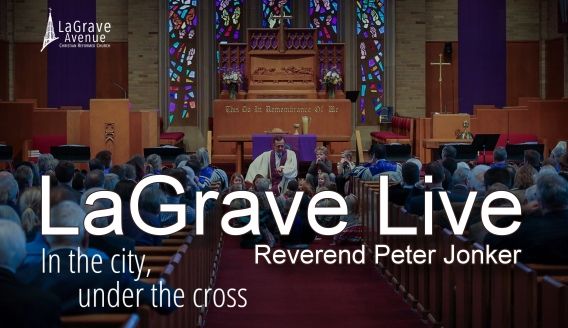
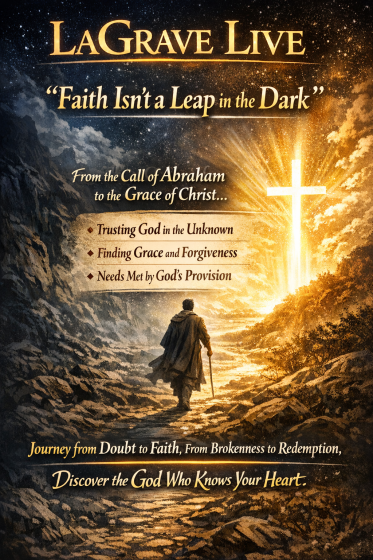

LaGrave Live
LIVE Morning Worship Service 03-08-2026
Cross Words: The Atoning Sacrifice
About The concert:
March 8 is the third Sunday in the season of Lent and we will continue our Cross Words sermon series. Pastor Jonker will preach on Romans 8: 1-4.
Order of Worship:
https://lagrave.org/wp-content/uploads/2026-3-8-AM-Order-of-Worship.pdf
About the Church:
We are a traditional CRC church in the middle of Downtown Grand Rapids, MI, worshipping at 8:40am, 11:00am, and 6:00pm. (10:00am and 6:00pm during the summer months)
We'd love to hear from you:
Connection: https://www.lagrave.org/contact
Let us pray for you:
Prayer: https://www.lagrave.org/prayerrequest/
Giving: https://www.elexiogiving.com/App/Giving/lagr107178
The March special offering is for Mel Trotter Ministries. Mel Trotter Ministries provides shelter for individuals and families with services including: meals, emergency shelter, transitional housing assistance, case management.
Listen on the go:
Amazon Music: https://bit.ly/LGPodAmazonMusic
Apple Podcast: https://apple.co/3tuOdwQ
Google Podcast: https://bit.ly/LGPodGoogle
Soundcloud: / lagravecrc https://soundcloud.com/lagravecrc
Spotify: https://spoti.fi/3yXDFaT
Follow us!
Facebook: / lagravecrc https://www.facebook.com/lagravecrc
Instagram: / lagravecrc https://www.instagram.com/lagravecrc
Website: https://www.lagrave.org
#LaGrave #LaGraveCRC
The Atoning Sacrifice: Understanding the "Blood Story" of the Cross
Cross Words: The Atoning Sacrifice
A deep dive into Romans 3 and the "strange" logic of blood, debt, and eternal grace.
"Jesus died on the cross to save us from our sins. It is a phrase as simple as a nursery rhyme, yet as strange as ancient ritual." Sin accrues a debt unpayable by humans. Only God has the capacity; only a human deserves the sentence. Christ, being both, bridges the gap through Atonement. Referencing Leviticus 16 (Yom Kippur): The high priest used blood to purify the Holy of Holies. Paul argues Christ is the final sacrifice, ending the cycle of yearly rituals. 01 Tim O'Brien: A soldier breaks his own nose to "square" a debt of guilt with a friend. Blood is the currency of justification. 02 Kazuo Ishiguro: "The Buried Giant" explores how forgotten atrocities (blood stories) eventually rise to demand justice. 03 The 100 Ribbons: A story of a prisoner returning home to find a tree covered in white ribbons—a visual of lavish, total forgiveness.
The Central Paradox
The Theology of Debt
From Ritual to Reality
The "Blood Story" Logic
Key Takeaways
This Lenten service at LaGrave explores the theological depth of "Atonement" as presented in Romans 3, reconciling ancient sacrificial rituals with the modern human experience of guilt and justice. The message challenges believers to move from external grievances to a personal realization of grace through the sacrifice of Jesus Christ.
Detailed Summary
Liturgy, Confession, and the Call to Love
The service commenced with a series of hymns and a formal call to worship, emphasizing the "wondrous cross" and the redemptive power of Christ's blood. The congregation engaged in a corporate prayer of confession, seeking God’s mercy to blot out transgressions and wash away iniquity. This liturgical opening served to reorient the community toward the "first and greatest commandment": to love God with all heart, soul, and mind, and to love one's neighbor as oneself. The assurance of pardon, drawn from 1 Peter, reminded the faithful that Christ bore their sins in His body so they might live for righteousness.
The Parable of Forgiveness
During the children's message, the concept of forgiveness was illustrated through a story of a young man returning home after ten years in prison. Fearing rejection, he asked his parents to tie a white ribbon on an apple tree if they were willing to welcome him back. Upon his return, he found the tree covered in a hundred white ribbons. This narrative served as a poignant analogy for the cross: a sign of God’s overwhelming love and a "welcome home" for those burdened by the shame of their past.
The Ritual of Atonement: Then & Now
Old Testament (Yom Kippur)
High Priest enters the Holy of Holies once a year with animal blood to cover Israel's sins. [Leviticus 16]
The New Covenant (The Cross)
Jesus, as both Priest and Sacrifice, sheds His own blood to provide eternal redemption. [Romans 3]
The Theology of the "Blood Story"
The sermon focused on the "crossword" of atonement, addressing the modern discomfort with the language of blood sacrifice. By referencing the Old Testament ritual of Yom Kippur, the message explained that blood was the "currency" required to pay the debt of sin. The speaker argued that even in secular society, the intuition that "the price of justice is blood" remains prevalent. Examples from literature—such as the physical penance in Tim O’Brien’s The Things They Carried and the "buried giant" of unpunished atrocities in Kazuo Ishiguro’s work—demonstrate that humans naturally recognize that sin creates a debt that cannot be ignored or simply forgotten.
Personal Transformation and Community Grace
The message concluded by personalizing the "blood story." Rather than using the language of grievance to condemn others, believers are invited to see their own lives "scrolled" before God, recognizing their own need for cleansing. The blood of Christ is described as both absorbing the pain caused by our sins and washing our "hands" clean. This realization excludes boasting and fosters a community defined by humility, kindness, and pervasive grace. When the story of one's own forgiveness stands between them and their grievances, the result is a transformative joy that flourishes within the church.
The Logic of Justification
"Where then is boasting? It is excluded."
Key Data
- Scripture Text: Romans 3:21-31 (Page 1,748 in the pew Bible).
- Historical Context: The ritual of Yom Kippur (Day of Atonement) from Leviticus 16.
- Congregational Milestone: Steve Palazzolo was cleared for a bone marrow transplant scheduled for Wednesday in Ann Arbor.
To-Do / Next Steps
- Check the bulletin for 10:00 hour opportunities immediately following the service.
- Attend the coffee fellowship located down the hall and to the right in the multipurpose room.
- Pray for Steve Palazzolo and his wife Lisa as he undergoes his transplant this Wednesday.
- Offer prayers of peace for those grieving family members, specifically the Colbors, Gruesings, and Buskers.
- Support those in rehab or facing cancer, including Jean de Kryger, Millie Friend, and Andrea Heckman.
- Reflect on personal "blood stories" and ensure the story of Christ’s forgiveness stands between you and your grievances.
Conclusion
The cross is not merely a primitive symbol of sacrifice but a profound answer to the universal human experience of guilt and the need for justice. By accepting Christ as the ultimate sacrifice of atonement, believers are freed from the weight of their own "blood stories" and invited into a life of humility, joy, and radical grace.
LaGrave Live
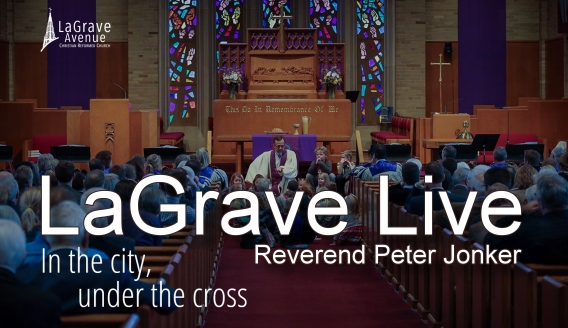

If you’re looking for a warm church that commits to an intensely pertinent Gospel in the Reformed tradition of the Christian faith, we invite you to worship with us. Our 1,800 members come from across West Michigan and gather weekly in our sanctuary for relevant Biblical preaching, beautiful music, and inspiring worship. We expand our worship through intentional outreach in our community and world, attentive care for our members, and plenty of spiritual enrichment and social opportunities for everyone.
We focus on a living Savior who provides genuine solutions to the deep needs of a hurting world. We are committed to need-meeting ministry in His name, and we are committed to being real people who enjoy real life and who cry real tears. Because we are a fairly large and diverse group in terms of age, occupation, marital status, lifestyle, and physical ability; our members create many accessible opportunities for community service, Bible study, and small social groups.
We worship God, the Almighty Creator of heaven and earth, and we enjoy expressing our vision of His holiness through traditional music and formal liturgy.
Music plays an integral part of our weekly worship gatherings. Congregational singing—of both traditional hymns and newer ones—is typically supported by our pipe organ. Vocal choirs, handbell choirs, small ensembles, instrumentalists, and vocal soloists provide additional music offerings.
Led by the Holy Spirit, we seek to worship and serve God in all of life, transforming His world and being transformed to reflect the character of Christ.
Founded by 36 Dutch immigrants on February 24, 1887, LaGrave Avenue Christian Reformed Church has always been deeply committed to both this local community and worldwide missions. God has seen fit to guide and bless these commitments with sustained growth, spiritual gifting, and a continual stream of new work for our members.
[00:00] Speaker 1: (organ playing)
[06:09] Speaker 2: (instrumental music plays)
[11:59] Speaker 3: When I survey the wondrous cross- (singing) Were the whole realm of nature mine, that were a present far too small; love so amazing, so divine, demands my soul, my life, my all.
[13:42] Speaker 3: (instrumental music) (singing) I will sing of my redeemer, and his wondrous love to me. On the cruel cross he suffered, from my curse to set me free. Sing, oh sing, of my Redeemer, with his blood he purchased me. On the cross he sealed my pardon,
[16:46] Speaker 3: paid the debt, and made me free. I will tell the wondrous story, how my lost estate to save, he, whose love is more than mercy, paid the ransom, freed me there. Sing, oh sing, of my Redeemer, with his blood he purchased me. On the cross he sealed my pardon, paid the debt, and made me free. (instrumental music) (singing) I will sing of my redeemer, and his love will offer me, he from death to life has brought me, sought the lost had found it.
[18:29] Speaker 3: (singing)
[19:14] Speaker 4: The God who brings life out of death, who calls into being things that were not, gathers and greets us, a body, in Christ this morning. And He says to us, "Grace to you, and peace from God the Father and the Lord Jesus Christ, through the mighty and present work of God's Holy Spirit."
[19:34] Speaker 3: Amen.
[19:37] Speaker 4: Amen. Welcome to all of you for this 8:40 Sunday morning service, the Third Sunday in Lent. If you are here now, it's either because you set your clocks ahead last night, or you went to bed a little extra early, or you're holding up your eyes with toothpicks because you made it for 8:40. It feels like 7:40 on our bodies, and it's good to be in each other's company and in God's presence to worship Him, to be refreshed by being in His presence, by being with each other today. And so we pray that whether you are a first-time visitor or you've been around the grave for a long time, whether you're here in the sanctuary or you're joining us, um, somewhere else, that you feel refreshed, um, in the presence of God this morning and by connection with fellow believers. Uh, those of you who are here this morning, we invite you to check out the bulletin for a 10:00 hour oppor- opportunities just after this service.
[20:31] Speaker 4: As there is every week, there's also an opportunity for coffee and fellowship down the hall and to the right in the multipurpose room, and you're all welcome to that as well. As I already said, this is the Third Sunday in Lent. We're in our Cross Words series, and we're, we're taking a deep dive into what the cross means, what it meant for Jesus, what it means for us. Um, if you've been a Christian your whole life, you know that these are deeply held, um, convictions, deep parts of theology that we hope are being impressed a little bit more, um, in a nuanced way, or in a way that just invites us, uh, to rest in the love of God for us as evidenced through the cross of Christ. And as we do that today, I wanna reorient us to the primary foundational call in our lives from Deuteronomy 6, renewed by Jesus in Matthew 22. Jesus replied, "Love the Lord your God with all your heart, and all your soul, and with all your mind. This is the first and greatest commandment.
[21:37] Speaker 4: And the second is like it. Love your neighbor as yourself. All the law and prophets hang on these two commandments." Let's sing of that gracious call of God, and ask Him to show us where He invites us to lean more into His cross as we learn from Him the way of love.
[21:59] Speaker 3: (singing)
[23:07] Speaker 4: Our prayer of confession will include some time for silence. I invite you to rest in that, and I will bring you back, um, to corporate prayer partway through the prayer. Let's pray. Have mercy on us, God, according to Your unfailing love. According to Your great compassion, blot out our transgressions. Wash away all our, all our iniquity, and cleanse us from our sin. Against You, You primarily, we have sinned, and we seek You now that You would show us Your way of love. Lord our God, it's Your kindness that leads us to repentance. Give us the strength to follow where You lead, and the assurance to rest in Your complete forgiveness. In Jesus' name, amen. Let's join our hearts and our voices in the, the assurance of pardon from First Peter, "Jesus Himself bore our sins in His body on the cross so that we might die to sins and live for righteousness." By His-For we were like sheep, going astray. But now, we have returned to the shepherd and overseer of our souls.
[24:43] Speaker 3: (singing) O sacred head, now wounded. Where grief and shame lay bound, thou scornful beast around it, with thorns your only crown; O sacred head, what glory and blessing you have known! Yet, oh despised and lowly, I claim you as my own. My Lord, what you did suffer was all for sinners gain; mine, mine was the transgression, but yours the deadly pain. So here I kneel, my Savior, for I deserve your place; look on me with your favor, and save me by your grace.
[27:39] Speaker 3: What language shall I borrow to thank you, dearest friend, for this, your dying slaughter, your mercy without end? Lord, make me yours forever, a loyal servant, too, and let me never, never outlive thy love for me.
[28:43] Speaker 5: All right, children. Time for the children's message. Come on forward. Come on down. I have a story for you today. All right. Does it feel early to you? Do you feel a little more sleepy than usual? Or it's, it's, uh, it does... Yeah, okay. A little bit. A little bit, right? A little bit. Let's wait for our balcony friends. I think they're coming. Or maybe not. No, I think this might be everybody. Okay. So I'm gonna tell you a story. Um, there was a, uh, I r- I read this story in a book. Uh, once, uh, there was a, a, a young man who grew up on a farm, and when he became, um, a little bit older, when he was maybe a late teenager, maybe 19 or something like that, he did something very, very bad. In fact, he did something so bad that the police came and they arrested him, and he got thrown in jail, and he was put in prison for 10 years, right? That's a long time, so he must've done something pretty bad if he had to go to jail for 10 years.
[29:47] Speaker 5: Well, he was really embarrassed about what he'd done. He felt terrible about what he'd done. He knew he'd hurt his brothers and sisters, and he'd hurt his family, and he was so embarrassed about what he'd done and how it made his mom and dad feel, so that when he was in prison and they would write him, he would not write back 'cause he was ashamed. He was ashamed of what he'd done. He felt unworthy to be their child. Well, 10 years went by and it was time for him to get out of prison, and finally he got the courage to write them a letter. And he said, "Dear Mom and Dad, I'm taking the train home, and the train will go right... the one that goes right by our farm where I grew up. I know that I did something terrible and maybe you don't want me around anymore, but if you are willing to forgive me-... and still have me in the house, tie a white ribbon on the apple tree by the train tracks. And that way, when I go by, I'll know that it's okay for me to come home.
[30:49] Speaker 5: But if you don't want me around, don't put a white ribbon on the tree." So the time came and he got on the train, and he started to get closer and closer to his farm, and he was wondering, "Will there be a white ribbon on the tree?" And he got so nervous about it that he couldn't even look, and he asked the person he was sitting with, "Could you just look and tell me if there's a white ribbon on that tree?" And so he, his eyes closed, and as he got closer, the person who was looking said, "Oh my goodness, you gotta see this." And when he looked, there wasn't just one white ribbon on the tree. There was a hundred white ribbons on the tree, because his parents loved him so much and forgave him and wanted him to come home. That's why forgiveness is such a great thing. It helps us when we do things wrong and someone forgives us, because it brings us back home. And that's what Jesus did for us when he forgave us and died on the cross. He takes away our sin and he welcomes us home.
[31:55] Speaker 5: That's my story today. Congregation, what is our prayer for these children?
[31:59] Speaker 3: The Lord be with you. And also with you.
[32:02] Speaker 5: Go in peace.
[32:21] Speaker 4: One update for you, congregationally, um, is to let you know that Steve Palazzolo, whom we've been praying for for quite a while, was cleared this week for a bone marrow transplant, and he's anticipating that going forward in Ann Arbor this Wednesday. He's giving thanks for that, and, um, he and Lisa really appreciate the prayers of this congregation. Let's go before our Lord together. Holy One, today we praise you, over- overflowing source of all that is good. Savior Jesus, today we praise you. Your yes to the plan for our salvation has brought you near to us, closing a gap we never could have bridged. Holy Spirit, today we praise you for translating the living word to our hearts and minds that we might know you, the Triune God, the Lord whose lavish love puts our hearts at rest in your presence. Oh, Holy Jesus, how quick we are and how persistent at setting our hearts on things we think will save us. We are not even aware we are doing it until something stops us short.
[33:42] Speaker 4: So give us both the courage and clarity to name the things we cling to, hoping for security. Help us rightly order those things. Let us not cling to our own goodness, our own strength or ability, our earning power or our beauty, our accomplishments or our honors, our reputations, our relationships, our hard work, our own sacrifices. In your mercy, put those things in their proper places in our hearts and lives. Open our eyes to the truth of where our hope lies as wholly forgiven and held in the love of God. Help us to see and joyfully place our trust in you, our light, our hope, our salvation. We are lovable and lovely because you have loved us. Lord, we do lament the ways human sin has broken our relationship with you, has fractured our own hearts, has broken our relationships with each other. And so today, we cry out to you for wholeness, for peace, for restoration, for redemption in all parts of your creation.
[35:08] Speaker 4: Lord, we are mindful of storms that claimed lives in our state late this week. We are mindful of the storms of disease affecting beloved members of this congregation. We are mindful of the storm of war that continues in Ukraine, places in Africa, and most recently in the Middle East. Lord, as ruler over all, you know the wind and the waves of our storms, so speak your peace, be still into all places of chaos and conflict. Speak peace to those among us grieving this week, Lord, particularly the Colbors and the Gruesings and the Buskers, in the deaths of immediate and beloved family members. Speak your peace to those who are hurting or in need of healing, especially Jean de Kryger and Millie Friend in rehab and Andrea Heckman and Steve Palazzolo and others continuing to walk cancer journeys with you. Strengthen the weak, comfort the broken, heal the hopeless.
[36:18] Speaker 4: Show the way for leaders the world over, for citizens the world over, for refugees the world over who are caught in places of violence with nowhere to go. Teach us all how to live for your glory and the good of our neighbor. Teach us to set our eyes on your coming kingdom, where one day swords will be beaten into plowshares and spears into pruning hooks.Lord, You are our light, our hope, and our salvation. And we pray that our church will show that light and hope and salvation in ev- in everything we do, ways that are ordinary and small and bigger and strategic. Though we can expect trouble in this world as Your people, we are also encouraged because You tell us to take heart. Because You have loved us to death and back again, we have overcome the world. Remind us of that deep love that calls us children and co-laborers with You in Your kingdom. In Jesus' name, amen.
[41:09] Speaker 4: (church music plays)
[42:55] Speaker 6: (piano music)
[43:04] Speaker 6: (clears throat)
[48:02] Speaker 6: (choir sings) (organ music)
[48:55] Speaker 5: Our Bible reading this morning is from Paul's letter to the Romans, Romans Chapter Three. I'll be reading verse 21 through 31, that's found on page 1,748 in your pew Bibles. And as Christie has already said, this is part of our crosswords series. Words about the cross that are in scripture, words about the cross that we say all the time, and trying to do a deep dive and understand what these words really mean in our lives. These are some of the most famous and well-known words about the cross the, in the passage I'm about to read. Um, it comes at the end of a long argument, really the first three chapters of Romans, Paul is setting up all of us and saying, "Look, everybody, uh, is sinful before the eyes of God." Um, "Everybody's fallen short of, of righteousness. Jews, Gentiles, male, female, doesn't matter who you are. Uh, when it comes to the standards of God's righteousness, you've fallen way, way short." And then, this is the announcement Paul makes.
[49:55] Speaker 5: This is kind of a turning point in the letter. "But now, apart from the law, the righteousness of God has been made known to which the law and the prophets testify. This righteousness is given through faith in Jesus Christ to all who believe. There's no difference between Jew and Gentile, for all have sinned and fallen short of the glory of God, and all are justified freely by His grace through the redemption that came by Christ Jesus. God presented Christ as a sacrifice of atonement, through the shedding of His blood to be received by faith. He did this to demonstrate His righteousness, because in His forbearance, He had left the sins committed beforehand unpunished. He did it to demonstrate His righteousness at the present time, so as to be just in the one who justifies those who have faith in Jesus. Where then is boasting? It's excluded. Because of what law? The law that requires works? No, because of the law which requires faith.
[51:09] Speaker 5: For we maintain that a person is justified by faith, apart from the works of the law. Or is God the God of the Jews only? Is He not the God of the Gentiles too? Yes, of Gentiles too, since there is only one God who will justify the circumcised by faith, and the uncircumcised by that same faith. Do we then nullify the law by this faith? No, not at all. Rather, we uphold the law." This is the word of the Lord.
[51:38] Speaker 3: Thanks be to God.
[51:45] Speaker 5: Here is the crossword that, um, we'll be focusing on together this morning, and it's, I think it's one you know well. Jesus died on the cross to save us from our sins. Jesus died on the cross to save us for our sins. That's the crossword I'll be thinking about. And it's an interesting crossword, 'cause on the one hand, it's about as simple and straightforward and familiar a thing as you can say about the cross, and on the other hand, when you really listen to it, it's also one of the strangest things you can say about the cross. Jesus died on the cross to save us from our sins. It's both familiar and strange. Now the familiar part, I think you know. I think this is what we're taught about what the cross means. This is the very first thing that we teach our children, and that we are taught as children. Um, what's the first Christian song that most of you learned, if you grew up in the church? Probably Jesus Loves Me, right? Jesus Loves Me.
[52:45] Speaker 5: "Jesus loves me, He who died, Heaven's gates to open wide. He will wash away my sins, let His little child come in." Right? I still remember my parents singing that to me at my bedside before I, when I was a preschooler, right? And what are they teaching me? Jesus died on the cross to save me from my sins. And then when you get to middle school and you take Catechism, as some of you did, if you grew up in the church, this is what the Catechism says about the cross, right? If I, if I quizzed you, you don't remember your Catechism, right? You would? Maybe? Catechism, just to quickly sum it up, says that human sin has accrued a debt, a debt that is unpayable by us. A debt that, the sentence for that debt, because it is so big and there's so much sin that's accumulated, this debt is death. But the problem is that the, the, the sin is so big, the debt is so big, that no human being can pay it, and that only God would have the capacity to pay it. So we human beings can't pay it.
[53:48] Speaker 5: Only God can pay it. How are we gonna pay this debt? Well, enter Jesus. Jesus is God, so He has capacity to pay the debt. Jesus is a human being, so He's the one who deserves the punishment. And so, on the cross, Jesus pays the debt. Jesus dies on the cross to save us from our sin. Course, more important than the Catechism, and more important than Jesus Loves Me, is what the Bible says. And in all kinds of places, the Bible gives us this message, including the passage I read this morning. Paul says that, "All have sinned and fallen short of the glory of God, and we have not achieved righteousness. But," says Paul, "God has justified all freely by His grace through the redemption that came by Christ Jesus." How did this redemption come? God presented Christ as a sacrifice of atonement through the shedding of His blood. Jesus died on the cross to save us from our sins.
[54:52] Speaker 5: But now here, when Paul says that God presented Christ as a sacrifice of atonement through the shedding of His blood, this is also where...... these crosswords become a little strange, because in modern years, the idea that the currency that pays this debt, we have this big debt, and the currency that pays this debt is blood. Blood is the thing demanded to pay the debt of our sins. And to a lot of modern people that, at first, they say, "Well, that's weird. What is that? What's that about?" When Paul says these words, we need to understand the background. When Paul says that he ... God has presented Christ as a sacrifice of atonement, he's referring to something very specific in the Old Testament, something that you find in Leviticus 16, and that is the ritual on the Day of Atonement, practiced yearly by the Israelites. I don't know how familiar w- you are with that.
[55:50] Speaker 5: Based on my surveys this week, most Christian people, even if they grew up in the church, don't have that in the front of their minds. So let me, let me explain to you that ritual. Happened once a year, also called Yom Kippur, and on that day, the high priest led a ritual that allowed Israel to be forgiven of the sins that they'd committed for the entire year. In order to do that, the high priest had to go in to the most holy place, at the very center of the tabernacle. He was the only one allowed to do this. He only did this once a year on this day, on Yom Kippur. So all the people are gathered, and the high priest prepares himself to go in to the Holy of Holies, the most holy place, the throne room of God where the Ark of the Covenant is kept. In order to do that, he had to do four levels of purification, 'kay? First, he had to strip naked and wash himself from head to toe so he could be physically clean.
[56:48] Speaker 5: Then, he had to put on, uh, these special garments, these sacred garments that were only used for this ceremony. Then, he had to take some incense. He had to light some really smoky incense, and he, he didn't go in to the Most Holy Place yet. He pushed the incense through the curtain into the Most Holy Place so that smoke would fill the Holy of Holies. And why was that? That was because it s- it, it sort of s- the smoke served as a veil to God's holiness so that this impure person would not be struck dead from seeing the holiness of God in that place. And then finally, and most importantly, and this is the part referred to by R- Paul, the high priest needed to bring blood into the Most Holy Place, the blood of a goat that he'd slaughtered. And he'd take that blood and he'd sprinkle it on everything, and especially on the cover of the Ark of the Covenant, because that blood was the payment for Israel's sins. Listen to what it says in Leviticus 16.
[57:52] Speaker 5: That blood, the goat, would make atonement for the Most Holy Place because of the uncleanness and rebellion of the Israelites, whatever their sins might be. So that's the ritual. There's some other things that I haven't talked to you about, and, 'cause I don't have time, the scapegoat, all that stuff. But that's the ritual, and every year they did it, and that allowed Israel to be forgiven and to live in fellowship with God and in fellowship with each other. So when Paul says that God has made Christ a sacrifice of atonement, what he's saying is that Jesus has taken the place of that goat. Christ's blood is shed, and it's like it's put on the cover of the Ark of the Covenant for the forgiveness of your sins, only that forgiveness doesn't last a year. That forgiveness lasts forever. And again, to Christian ears, maybe this is familiar, to, to, to secular ears, to people out there in the culture who hear this language, that sounds really weird. Blood sacrifice?
[58:54] Speaker 5: Jesus is like a human sacrifice for the cleansing of our sins? Wh- what are we talking about here? This sounds primitive to people, right? Right? Like, sacrificing virgins? That's like ... It sounds like something you read about in the South American tribes. This, this can't be what we mean, is it? And you see an example of this kind of attitude in the way that, uh, modern hymnals treat the hymn In Christ Alone, 'kay? And Christ Alone is one of our favorites, right? We all know it. We sing it. We love it. I love it. It has that line, "On the cross when Jesus died, the wrath of God was satisfied, for every sin on him was laid." Well, some more progressive Christians read that line and they, they don't like that. They don't like this idea that the sacrifice to appease God's wrath, they say, "This sounds primitive. This sounds like God is an angry father and Jesus is the good guy." This, we don't, w- ... So they don't put that hymn in their hymnals. I think this criticism is wrong.
[59:58] Speaker 5: I think that, actually, human beings today, even secular ones who are not particularly religious, understand how sin accrues a debt, and they understand how the proper payment for that debt is blood. I think that modern people actually do understand this, and let me give you two examples of why I think that's true. Both of them are from literature. So my, my kids were in high school, they read a book called The Things They Carried by Tim O'Brien. I don't know if you know that book. Because they were reading it, I read it along with them, and it's a book about Vietnam. Tim O'Brien served in Vietnam, and it's a book about a platoon that goes into Vietnam and comes back, and how that affects them. And one of the stories he tells in the book is about two men in the platoon. One of them, his name is Lee Strunk, and the other's name is, uh, Dave Jensen, and they're, they're basically friends. They're certainly companions in the platoon.
[01:00:53] Speaker 5: But one night, they get into a fight, and it's probably because they'd been drinking more than they should. And over some little small thing, they get into this terrible fight. It's a sloppy fight. They, they knock down all kinds of stuff, and finally, Jensen...... who was a lot bigger than Strunk, puts Strunk in a headlock, and starts pounding him, just short right hands, right to his nose, okay? Over and over again. And then smashes his face so that when they sober up, they realize Strunk has to go to the hospital, and he's in the hospital for over a week. Well, when it gets close for the time to him come, to come back, Jensen is feeling overwhelmed with his guilt. He feels the debt. He feels the weight of his sin, what he did. When his friend's going to come back, what is he going to do?
[01:01:40] Speaker 5: And so finally, one night under the weight of his guilt, this is what he does, he goes outside the tent, he takes his pistol, he fires it into the air over and over, he shouts Strunk's name to the heavens, and then he takes the butt end of his pistol and he smashes it into his own face over and over again until he breaks his own nose and bleeds. And then he goes and finds Strunk and says, "We square?" What's he looking for? Justification. What's the price that he knows he has to pay for justification? The, the price for being able to come back into his friend's presence is blood. He gets it. This is a secular book, this is not a particularly Christian book. This is a secular book. People who read it understand the logic. The debt of sin is real and the payment is blood. One more example. I just finished reading a novel by a Nobel Prize winner named, uh, Kazuo Ishiguro, many of you've probably heard of him, uh, called The Buried Giant, The Buried Giant.
[01:02:49] Speaker 5: The Buried Giant is a fantasy novel and it's set in England supposedly right after the time of King Arthur, and it's about, um, the conflict between two tribes, the Saxons and the Britains, who both live in England at that time. But both the Saxons and the Britains, the wh- the whole land, both tribes are under this kind of spell of forgetfulness. They can't remember the past properly, either their personal lives or their relationship lives, uh, because there's kind of this for- forgetfulness, and the forgetfulness is caused by this mist that has come over the land, and the mist is actually from the breath of a dragon that has been enchanted by Merlin. Now why has Merlin caused this dragon's breath to create forgetfulness? Well, because Merlin is a Britain, and the Britains and the, uh, Saxons have been fighting, and in that war, the Britains have committed a terrible atrocity.
[01:03:45] Speaker 5: The Britain soldiers have slaughtered, massacred, genocide, women and children, in one particular event, killed hundreds and hundreds of them. And the shedding of this blood, Merlin knows, is going to lead to reprisals. So to prevent the reprisals, what he does is he casts a spell on this dragon's breath and creates forgetfulness so that people will not remember, so that they will live in peace. But a Saxon warrior named Wistan somehow is not under the spell. Something about him, he doesn't feel the spell, and he remembers what happened, so he's determined to slay this dragon so that justice will be done, so that the Saxons will rise up and take their vengeance for this blood that has been spilled. And he compares the forgetfulness of this atrocity to a kind of buried giant, and this is what he says about why he wants to kill the giant. "The giant, once well buried, now stirs.
[01:04:46] Speaker 5: When soon he rises, as surely he will, the friendly bonds between our tribes will prove as knots young girls make with the stems of small flowers. Men will burn their neighbor's house by night. They will hang children from the trees at dawn. The rivers will stink with corpses." Wistan's companions are appalled by this vision, and they say, "In the name of God, for the sake of God, don't kill the dragon. Let this forgiven, let this forgetfulness remain." And Wistan says, "What kind of God is it that wishes wrongs to go forgotten and unpunished?" Wistan is a severe character, but he's right about that, at least in terms of who our God is. Our God hears the cry of blood from the ground, and He's not going to let it go unpunished. Again, in the book, understanding that the debt of sin, understanding that the payment for that sin is blood. The language of blood is very contemporary. The language of blood is still the language of justice and injustice in our society.
[01:06:11] Speaker 5: Blood is still the currency of love and personhood and human dignity. When you people talk about what animates them, what moves them, what makes them angry, what makes them passionate, they tell blood stories. Stop a kid, a 14-year-old kid on the West Bank, a Palestinian kid who's throwing rocks at our Israeli soldiers, stop him and ask him, "Why are you doing that?" He will tell you a blood story, right? Of the terrible things that have been done to him and his people. Now go to Tel Aviv, stop a protester in the streets who's supporting the war in Gaza and who wants more settlements, ask him why he's supporting that, he will tell you a blood story. Terrible things that have been done to his people. The fire behind patriotism, the, the bonding agents of any culture or any country are written with blood stories.
[01:07:09] Speaker 5: The terrible things that our enemies have done to us to take our blood, or the valorous things that our heroes have done, shedding their blood to win victory.Blood is still very much the currency of our culture. And it's not just our culture in the big picture, it's in our individual stories too, right? Blood given to us and shed for us that makes us who we are, sacrifice of family, or the terrible things that have happened to us, what my parents did to me, what that school did to me, what the church did to me. Blood is still the currency. Into the middle of all this, God has sent his son as a sacrifice of atonement. Jesus comes into the middle of all our grievances and all our blood stories that we tell on each other. And he comes and I step up to him, we step up to him, I say to him, "Oh, Jesus, I'm so glad you're here, 'cause I, I got to tell you, see that guy over there? You will not believe what he did.
[01:08:16] Speaker 5: And, uh, I've not been able to do anything about it, but, Jesus, you know what he did, you know exactly the truth and you'll be able to take care of that. Oh, and Jesus, while you're at it, how about those people over there? They are godless, they don't care about you, they've done so much destruction, I can't wait for you to take care of them." And you stand back and you wait for the shakedown. But Jesus says, "Okay, I, I know about that stuff, you're right, I'll, I'll get to them, but I'm gonna start with you." And he opens the book of your life and starts scrolling and everything is laid bare. Every thought, every word, every deed, every computer click, every lustful thought, every racist joke, every mean-spirited, cruel thing that you've ever done in your life. And as the, as the story scrolls by and you look at your hands, you realize that they are covered with blood and so much blood that you can't possibly repay it.
[01:09:19] Speaker 5: But Jesus says, "Don't worry, I got this." And he climbs up on the cross and they nail him there and he cries out in pain and he writhes in pain, and his blood starts to flow down. And some of the blood flows and it absorbs the pain of what you caused, and some of the blood flows down over you and washes your hands completely clean. You are expunged. How can this be? And then three days later, he comes back and he says, "Hey, we were talking earlier, and you were mentioning all those people out there and the things they'd done and what you wanted me to do to them. Uh, what... Can we take that up again? What is it that you wanted me to do?" And you are ashamed of your level of anger and vengeance. The world is full of blood stories. The world is stor- full of stories of grievance. It seems to drive our world sometimes. But we are Christian people, and the first blood story we tell, the first grievance story we tell is on ourselves.
[01:10:29] Speaker 5: It's the story of our sin and how Christ, in his mercy, has shed his blood for us. I said at the beginning of this sermon that same, that phrase you've heard a million times, "Jesus died on the cross to save you from your sins." We all know it, but I wonder how much of, how many of us carry it at the front of our hearts. Right? For how many of us is that our frame of reference, the lens through which we view the world? Does that story stand between you and your grievances? Does that story stand between you and your blood stories? When you take the measure of the world's wickedness, when you take the measure of your neighbor's failure, do you do that in light of your own wickedness and failure as it has been forgiven in Jesus Christ, our Lord? Jesus died on the cross to save us from our sins. Do you see how a person who carries that at the front of their heart would be completely transformed?
[01:11:39] Speaker 5: And a society of people who carry that at the front of their hearts together would be an amazing group of people. Joy would flourish in that community, so would humility. Boasting, well, that would be excluded, as Paul says. Humility would be the rule, kindness would flow, and grace would be everywhere. Jesus died on the cross to save you from your sins. May those words live front and center at every moment of your life. Amen. Lord, it is good to stand at the foot of the cross and remember what you gave us there, to remember your amazing grace, and to remember our sin too, but, but not to remember it as a weight or a tragedy, but as something that has joyfully been lifted off our shoulders. I pray, Lord, that you will send us forth from this place full of the joy of knowing, uh, that we are forgiven people. In Jesus' name. Amen.
[01:12:58] Speaker 5: (organ music plays) (congregation claps) (organ music plays)
[01:13:28] Speaker 5: (music) Receive the blessing of your Lord. The grace of our Lord,
[01:16:27] Speaker 5: Jesus Christ, the love of God, and the fellowship of the Holy Spirit be and abide with you all.
[01:16:34] Speaker 3: Amen.
[01:16:44] Speaker 5: (music)
[01:19:37] Speaker 7: (music)