
LaGrave Live, March 22, 2026
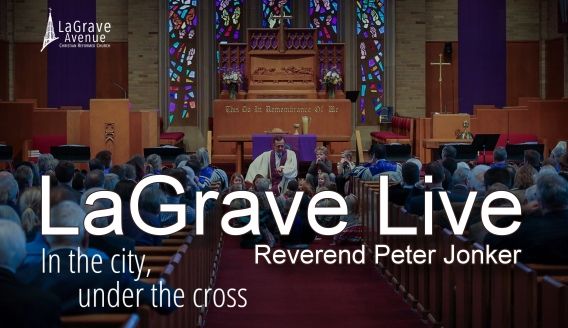

LaGrave Live
LIVE Morning Worship Service 03-22-2026
Cross Words: Taking Up the Cross
About The concert:
We continue our Cross Words series, focusing on the meaning and impact of Christ's cross. Pastor Jonker will preach on Mark 8:31-9:1.
Order of Worship:
https://lagrave.org/wp-content/uploads/2026-3-22-AM-Order-of-Worship.pdf
About the Church:
We are a traditional CRC church in the middle of Downtown Grand Rapids, MI, worshipping at 8:40am, 11:00am, and 6:00pm. (10:00am and 6:00pm during the summer months)
We'd love to hear from you:
Connection: https://www.lagrave.org/contact
Let us pray for you:
Prayer: https://www.lagrave.org/prayerrequest/
Giving: https://www.elexiogiving.com/App/Giving/lagr107178
The March special offering is for Mel Trotter Ministries. Mel Trotter Ministries provides shelter for individuals and families with services including: meals, emergency shelter, transitional housing assistance, case management.
Listen on the go:
Amazon Music: https://bit.ly/LGPodAmazonMusic
Apple Podcast: https://apple.co/3tuOdwQ
Google Podcast: https://bit.ly/LGPodGoogle
Soundcloud: / lagravecrc https://soundcloud.com/lagravecrc
Spotify: https://spoti.fi/3yXDFaT
Follow us!
Facebook: / lagravecrc https://www.facebook.com/lagravecrc
Instagram: / lagravecrc https://www.instagram.com/lagravecrc
Website: https://www.lagrave.org
#LaGrave #LaGraveCRC
Taking Up the Cross: A Lenten Journey into Sacrificial Power
Taking Up the Cross: The Revolutionary Path
Lenten Series: Cross Words | LaGrave Avenue Church (March 22, 2026)
Theological Core: Matthew 16:21-28
"Get behind me, Satan! You are a stumbling block to me; you do not have in mind the concerns of God, but merely human concerns."
Roman Power (The World)
- Pure strength & domination
- Boasting in casualties (Caesar)
- "Iron laws of force"
Cross Power (The Kingdom)
- Sacrificial love & weakness
- Absorbing pain for others
- "The last shall be first"
Key Concept: Strepho
Jesus' "dynamic turn" on Peter. It wasn't a casual glance; it was a passionate rebuke of the temptation to choose success over sacrifice.
Illustrative Narratives
Community Pulse
This worship service at LaGrave Avenue explores the radical call of Jesus to "take up the cross," contrasting worldly domination with the transformative power of sacrificial love. Through liturgy, scripture from Matthew 16, and contemporary illustrations, the congregation is invited to move beyond human concerns toward the "dynamic turn" of Christ.
Detailed Summary
Community Welcomes and Transitions
The service marked a "homecoming" for Levi Huizinga, a pre-seminary student and former member returning to lead the liturgy as part of his training. The community also celebrated the addition of three new members representing three generations of one family: Lynn Stinson, Sarah Turnage, and Francesca Turnage. Notably, Sarah and Francesca shared their upcoming plans to walk the Camino de Santiago in Spain this June. These introductions emphasize the church as a multi-generational covenant family where members support one another’s spiritual and personal journeys.
Lenten Liturgy and the Theology of Betrayal
During this fifth Sunday in Lent, the liturgy focused on the "shape of the cross" in daily life. The prayer of confession acknowledged the human tendency to deny the necessity of suffering or to hide behind religious "busyness" rather than truly following Christ. In a message directed at children, the betrayal of Jesus by his friend Judas was used to illustrate that Jesus intimately understands emotional pain and abandonment. This teaching framed the cross not just as a physical sacrifice, but as a place where Jesus absorbed the "mean" actions of others to offer healing.
The "Dynamic Turn" (Strepho)
In Matthew 16:23, when Jesus rebukes Peter, the Greek word strepho denotes more than a simple movement. It is a passionate, dynamic spin.
Success, safety, and avoiding the cross.
Sacrifice, love, and the path of the cross.
The Radical Contrast of Power
The sermon centered on Matthew 16:21-28, highlighting the moment Peter moved from being the "Rock" to a "stumbling block" by rejecting Jesus’ path of suffering. The message contrasted the Roman concept of power—pure domination and the slaughter of enemies as seen in Julius Caesar’s conquests—with the revolutionary power of Jesus. While the world values "pure winning," Jesus introduced a power that absorbs pain and offers forgiveness. This "cross-shaped power" is described as the only force capable of truly changing the world, moving beyond the "pagan" temptation to solve problems through brute force.
The Choice: The Gun vs. The Cross
To illustrate the difficulty of choosing the cross, the sermon presented two models of response to evil. First, a scene from the movie The Mission contrasted a priest who took up arms (Rodrigo) with one who carried the cross into a massacre (Gabriel). Second, a real-life example from 2015 described Leroy Smith, a Black police officer, who chose to help an elderly KKK protester suffering from heat exhaustion. While counter-protestors responded with anger and bottles, Smith responded with water and grace. These stories serve as a call for modern believers to recognize that the hope for the world lies not in "the end of a gun," but in the "blood of the cross."
Models of Response to Evil
- ⚔️ Worldly Power: Forceful restraint, shouting, and "pagan strength" to crush enemies.
- ✝️ Cross Power: Absorbing pain, offering water to enemies, and sacrificial love.
"The hope for the change of the world will not come at the end of a gun, it will come through the blood of the cross."
Key Data
- Scripture Reference: Matthew 16:21-28 (The rebuke of Peter and the call to discipleship).
- Historical Context: Julius Caesar boasted of killing 1 million Gauls and enslaving another million to demonstrate "power."
- Biblical Terminology: Strepho (Greek) – A dynamic, intense turn or spin.
To-Do / Next Steps
- Community Fellowship: Join the coffee time in the multipurpose room following the service.
- Congregational Care: Pray for Jim Kroll as he begins radiation for multiple myeloma.
- Healing Petitions: Keep Dan Goris in prayer as he recovers from a recent stroke and surgery.
- Global Intercession: Pray for those living in the "valley of the shadow of death" in Congo, Yemen, Sudan, Myanmar, Ukraine, Tel Aviv, and Tehran.
- Support Missions: Remember Mike and Megan Ribbens in their ongoing ministry in South Africa.
Conclusion
The service concludes with a sobering yet hopeful reminder that following Jesus requires a "death to self" and a rejection of pagan power structures. By picking up the cross, the believer participates in the same revolutionary grace that Jesus modeled—a grace that seeks not to dominate, but to redeem through sacrifice.
LaGrave Live
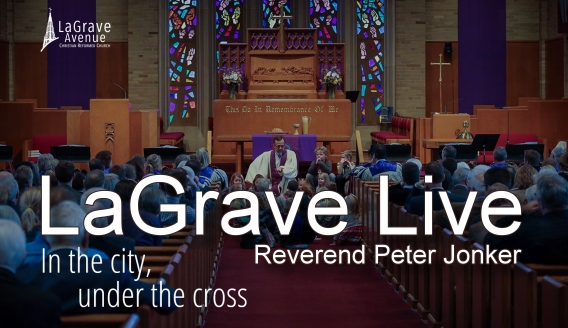

If you’re looking for a warm church that commits to an intensely pertinent Gospel in the Reformed tradition of the Christian faith, we invite you to worship with us. Our 1,800 members come from across West Michigan and gather weekly in our sanctuary for relevant Biblical preaching, beautiful music, and inspiring worship. We expand our worship through intentional outreach in our community and world, attentive care for our members, and plenty of spiritual enrichment and social opportunities for everyone.
We focus on a living Savior who provides genuine solutions to the deep needs of a hurting world. We are committed to need-meeting ministry in His name, and we are committed to being real people who enjoy real life and who cry real tears. Because we are a fairly large and diverse group in terms of age, occupation, marital status, lifestyle, and physical ability; our members create many accessible opportunities for community service, Bible study, and small social groups.
We worship God, the Almighty Creator of heaven and earth, and we enjoy expressing our vision of His holiness through traditional music and formal liturgy.
Music plays an integral part of our weekly worship gatherings. Congregational singing—of both traditional hymns and newer ones—is typically supported by our pipe organ. Vocal choirs, handbell choirs, small ensembles, instrumentalists, and vocal soloists provide additional music offerings.
Led by the Holy Spirit, we seek to worship and serve God in all of life, transforming His world and being transformed to reflect the character of Christ.
Founded by 36 Dutch immigrants on February 24, 1887, LaGrave Avenue Christian Reformed Church has always been deeply committed to both this local community and worldwide missions. God has seen fit to guide and bless these commitments with sustained growth, spiritual gifting, and a continual stream of new work for our members.
[00:00] Speaker 1: (MUSIC)
[06:09] Speaker 2: (Soft organ music playing)
[12:23] Speaker 3: Go not far from me, far from me, O God. Cast me not away. Cast me not away in the time of age. Cast me not away in the time of age. Forsake me not. Forsake me not. Forsake me not when my strength faileth, when my strength faileth me. All glory to Father and Son, the blessed Three, so bright, so
[13:44] Speaker 3: one, now
[16:14] Speaker 3: trinity who beholds thee, forever and evermore.
[18:34] Speaker 4: Disciples of Jesus Christ, the God who for us suffered on the cross, welcomes you to this place saying, "Grace and peace to you. In the name of the Father, and of the Son, and of the Holy Spirit. Amen."
[18:50] Speaker 3: Amen.
[18:56] Speaker 4: Welcome to La Grave Avenue on this fifth Sunday in lent. It looks like I'm having some mic trouble.
[19:02] Speaker 5: It's the guest, the guest pack. Guest pack.
[19:08] Speaker 4: As you can see, I'm a guest, so...
[19:12] Speaker 3: (laughs)
[19:13] Speaker 5: It's right here.
[19:14] Speaker 4: Yeah. Testing.
[19:21] Speaker 5: Hold on.
[19:22] Speaker 4: Hello. Hello.
[19:23] Speaker 5: There we go.
[19:23] Speaker 4: Here we go. All right. Good morning, and welcome to La Grave on this fifth Sunday in lent. Uh, it's good to be with you here this morning, um, worshiping in-person or online, watching through our livestream. Um, I'd like to welcome you to a time of fellowship following the service. Um, if you just go down the hallway, through the sanctuary and to the right, uh, in the multipurpose room, there'll be some coffee and some people to talk to. Um, Pastor Peter has a few more announcements to make.
[19:58] Speaker 5: I'd like to, uh, begin with introductions. This is a little unusual. I'd like to introduce Levi. Uh, this is Levi Huizinga. Uh, in addition to Jonathan, you've seen Jonathan up here and Chad. Jonathan Curley and Chad Scoltons. They're both pre-Semitism students who we've been helping to train. Levi, uh, falls into that category too. He's a pre-seminary student. He just graduated from Calvin last year. He's in a gap year. He's headed towards seminary at some point. So he's doing our liturgy this morning as part of that training. Uh, Levi is also well-connected in this church. His grandma is Joyce Huizinga, his uncle is Marc Huizinga. When Levi was a little boy, before he moved to California, he used to sit right here as a member of this, of this church. So this is kind of a homecoming for him. Welcome, Levi. I would also like to welcome three new members. Uh, Lynn, and Sarah, and Francesca. Where are you guys? Why am I not seeing you? There you are. Come on, stand up.
[20:59] Speaker 5: So everyone, this is Sarah Turnage, Francesca Turnage, and Lynn Stinson. And this is three generations of the same family. So grandma, Lynn, Sarah, mom, Franny, as she prefers to be called, his, uh, his daughter. And, uh, uh, there's lots of interesting things about them that I'd like to share. Sarah is a development director or a development worker over at, uh, the Van Andel Institute. She's been working at that job for a little while. Sarah loves reading and spending time outdoors. And in that vein, an interesting thing about them is that she and Franny are going to do the Camino de Santiago in Spain together in this coming June. And they're gonna do it in a really interesting way, which I won't tell you, but you can ask them later if you'd like when they're introduced. Uh, Franny is at Calvin College. She's a double major, which is why it's gonna take a little more than four years for her. Uh, she is doing music and she's doing biochemistry.
[21:58] Speaker 5: Um, Lynn is, uh, she loves her Bible studies. She's a BSF member and really enjoys that. And, uh, for a long part of her life, uh, was in Lakeland, Florida where she did HR work. So welcome to all three of you. We're really glad you're part of our community and we hope that we can be a blessing to you. You may be seated.
[22:24] Speaker 4: In this season of lent, we join Christ on his journey to the cross. Because we are part of Christ's body, we don't watch his journey from a distance. We go with him. And he calls us to pick up our cross and follow him. Let us join our voices and together confess our sin.
[22:45] Speaker 3: (singing) Be thou near us, O dear God, to me. Love you with all my heart and strength and mind. I see the cross where, teach my heart to live. Oh, let me see you and oh, let me know.
[23:53] Speaker 4: Let us humbly confess our sins to God. We'll begin with a time of silence and then say together the prayer of confession that is, as it is printed in your order of worship. Lord Jesus Christ, we have sinned greatly against you. You have called us to pick up our cross and follow you.But in the defiance of our hearts, we deny that there is a cross to be picked up. We tell ourselves that there could be no better disciple. Our worship attendance and committee responsibilities are commendable. Our Lenten disciplines are appropriately rigorous. We wonder, Lord, what more could be expected from us? Knock us to our knees, O Crucified One. In the violence of Your love, as it was displayed on the cross, reveal our great vanity. Dunk us in the sea of Your love and so remind us that, in our baptism, we were claimed by You and called towards a life lived in the shape of Your cross.
[25:33] Speaker 3: Through Jesus Christ, our Lord, we pray.
[25:37] Speaker 4: Pray.
[25:37] Speaker 3: Amen.
[25:39] Speaker 4: Amen. Our Lord Jesus Christ, who hears our confession and has mercy on us, does not desire that we should stay in our sin, but desires that we should turn from our wickedness and live for Him. Hear now His assurance of our forgiveness from First Peter Chapter 2. "He Himself bore our sins in His body on the cross, so that we might die to sin and live for righteousness. By His wounds, we are healed, for we were like sheep going astray, but now we have returned to the Shepherd and Overseer of our souls." (organ music)
[26:26] Speaker 3: (organ music) Jesus, meet me near the cross; there, on precious mountain, free to all, a healing stream flows from Calvary's mountain. Here, the cross, here, the cross, be my glory ever, till my raptured soul shall find rest beyond the river. Near the cross, the trembling soul, loved and mercy found thee; there, the bright and morning star sheds its beams around thee. In the cross, in the cross, be my glory ever, till my raptured soul shall find rest beyond the river.
[28:55] Speaker 3: Near the cross, the Lamb of God, bringing its scenes before me, help me walk from day to day with its shadow o'er me. In the cross, in the cross, be my glory ever, till my raptured soul shall find rest beyond the river. Near the cross, I watch and wait, hoping, trusting ever, till I reach the golden strand just beyond the river. In the cross, in the cross, be my glory ever, till I reach the golden strand just beyond the river.... us beyond the grave.
[31:00] Speaker 5: All right, children. I see you out there. Come on forward. We'll talk together. Hello, everyone. All right. How we doing up top? Oh, we got a couple. Come on down. Oh, look. Couple more. Come on down. All right. So I wanna think a little bit about, um, what Jesus did on the cross with you, which is what we think about during the time of Lent, right? This is the season of Lent, where we think a lot about the cross. And I wonder, a- and this maybe is something that's happened to you, and if it hasn't happened to you, I'll bet it's something that you've seen happen to other people, where, um, you have some people who you think are your friends, who are nice to you and you think they're friends. But then suddenly, maybe they say something mean t- about you or to you or maybe they say something mean behind your back, and that, that really hurts, right? That really hurts. What I wanna tell you is that Jesus understands what that's like. Here's a, a story, maybe some of you know.
[32:16] Speaker 5: So who were Jesus' best friends, right? It, it was his 12 disciples. Right? The disciples, he lived, he, he did everything with them for three years, right? Every day, he was with them. He ate with them, they traveled together, they talked together, they laughed together. They were complete friends, right? Friends. But then one day, one of those friends, a guy named Judas-
[32:39] Speaker 3: Amen.
[32:39] Speaker 5: ... decided that, for whatever reason, he didn't like what Jesus was saying anymore, didn't like Jesus anymore, and so he decided to betray him. And so he went to some people who he knew hated Jesus and said, "I'll help you get him. I'll help you get Jesus," even though he'd been Jesus' friends for three years. "I'll help you get Jesus." And what he did is he, he took 30 pieces of silver, which was quite a lot of money, it was, like, maybe enough to buy a car today. Took 30 pieces of silver and then he told him how to get Jesus. And so one day, Jesus was praying in a garden, right? And Judas came with a bunch of soldiers, and maybe you remember what he did. He came up to Jesus and gave him a hug, and kissed him on the cheek. Like he was his friend, pretended to be his friend. But really, that was a signal to the soldiers, and they got Jesus and they took him away and he was crucified.
[33:34] Speaker 5: And that's not even the worst of the story, because when Judas betrayed him, it wasn't just Judas who left, right? All the others took off, too. So all Jesus' best friends, on the day that he needed them the most, where were they? They were scared and they ran. That's hard. So we think of the things that Jesus suffered on the cross, and usually, we think about the nails, 'cause it must have hurt to have nails put in you. But the other things that he suffered were in here, like friends who are mean to you. So when you ever ha- if that ever happens to you, and I hope it doesn't, but if that ever happens to you, where your friends do something mean to you, you can talk to Jesus about that, 'cause he understands. That's what I wanted to share with you today. Congregation, what is our prayer for these children?
[34:20] Speaker 3: The Lord be with you. And also with you.
[34:23] Speaker 5: Go in peace.
[34:37] Speaker 4: Before we go to God in prayer this morning, uh, there are a few updates to share, uh, that aren't listed in your bulletin. Um, the first is great news. Arlo Vincent Venezia was born to Jenna and Ray Venezia last week Saturday. Uh, we'll give thanks and our prayers to God for his birth, and for Vera, Lida, and Etta's new baby brother. Um, Jim Kroll began a course of radiation this week for his multiple myeloma. We'll pray for his treatment's efficacy and for his strength. And, uh, lastly, Dan Goris had a stroke on Saturday morning and was quickly treated surgically at Metro Hospital. He's doing well after his surgery. Um, he's not able to have visitors right now, but he would like all of our prayers for his healing. Let's go to God in prayer. Suffering Lord, we cannot suffer like you. In your great love, you set aside your heavenly crown and left the throne at your Father's side to be with us, to suffer like us, and to suffer for us.
[35:46] Speaker 4: We confess that your path, embodied in the shape of the cross, is too difficult for us to walk. We are proud people, and we are weak in our pride. When we suffer, we turn from you and from the brothers and sisters you have given us to walk alongside. We isolate ourselves, hoping that we won't be seen in our pain. Forgive us, suffering Lord, for fearing pain and death more than we fear you and a life without you. Forgive us for straying from the path you laid down with your life. We give you thanks for the new life you made possible in your death, and that you have baptized us into this life. We give thanks for your promise that until we are fully present with you, you have promised to be present with us, even in the shadow of the valley of death. We give you thanks for the birth of Arlo Vincent Venezia, and anxiously await his baptism into this covenant family.
[36:45] Speaker 4: Help us to gather around Arlo and tell him the story that is your church.We give You thanks for the entrance to table fellowship of Edward Havlicek, Alex Huizinga, John Huizinga, and Henry Slotsama, that they have been baptized into Your suffering and death, and will now join us in Your feast, proclaiming and remembering with us Your death until You come again. Let Your spirit be present with all those who suffer, Lord, as surely as Your spirit is present when two or three of us gather. Let us be so present with Jim and Marilou Reefer, Jason and Melissa Reefer, and their children, Nathan, Kayla, and Austin, as they mourn the death of Jim's brother, David. Let us also be present with Dan Goris as he recovers from his stroke, and Jim Kroll as he starts a r- course of radiation to combat his multiple myeloma, and with Steve Palazolo as he recovers in Ann Arbor from a bone marrow transplant.
[37:44] Speaker 4: Help us to be present with Momani Postma as she receives radiation treatment, to Carol Vanbroogen in hospice care, and to Millie Vriend as she recovers at home. Help us to give thanks in our trials and to join hands in our suffering in the knowledge that we are walking in the path You laid for us in Your death on the cross. Be present with Mike and Megan Ribbens in their ministry in South Africa. Help us also to be present to them in our prayers. We pray also that You would be with those in the world who face death not as we do in the privacy of hospital rooms or the slow, quiet decline of health, but as a clear and present danger, present in every moment of every day. Be with those who live daily in the shadow, the valley of the shadow of death, in the Congo, in Yemen, Sudan, and Myanmar, in Ukraine, Tel Aviv, and Tehran. Be with those who fear death from above and death in the night.
[38:43] Speaker 4: Be with those who confess Your name and live under the specter of death to bear their cross and lift it high. Lord, as we journey towards Your cross, help us to carry our own. In the name of the Father, and of the Son, and of the Holy Spirit, amen. (chairs sliding) (footsteps) (instrumental music playing)
[39:45] Speaker 3: Take up your cross, as Jesus said, if you would learn discipleship. Take up your cross when you think much, and calmly follow after Him. Take up your cross, take up your cross, let love its ways, let love its ways. Fill your rich spirit, fill your rich spirit, with the love, with the love. Frustration, frustration, your spirit prods, your spirit prods, and breaks your heart, and breaks your heart, and turns you on, and turns you on. Take up your cross, take up your cross, be not ashamed, and let your foolish pride be still. The mark of you accepted death, upon the cross of Calvary still. Take up your cross, and follow Christ. Nor think till death till death, your faith died.
[42:29] Speaker 3: For only those, for only those, who bear the cross, may hope to wear the glorious crown. Take-И вот. Царство
[43:04] Speaker 3: небесное.Praise
[49:10] Speaker 3: Him all creatures here below. Praise Him all you heavenly host. Praise Father, Son, and Holy Ghost. Amen.
[50:04] Speaker 5: Our Bible reading this morning is from Matthew 16:21-28. That's found on page 1528 in your pew Bibles. We are continuing during lent our cross-focused series and, uh, last two weeks we've talked about the meaning of what Jesus did on the cross, so it's Jesus' action that's been the most... that we've been focusing on. What the cross means and what Jesus did when he died. This week it flips a little bit to us, so now we're thinking about what does it mean for us to be people of the cross, and specifically to carry our cross. Um, and for- for studying that, for thinking about that, we're going to read about one of the Apostle Peter's worst moments. One of his worst moments. And it comes right after what was one of his absolute best moments, like, the two are right next to each other. So right before our passage, and I'm not gonna read this, Jesus had asked his disciples, "Who do you think that I am?" And Peter was the one who got the right answer. Peter says, "You're the Messiah.
[51:09] Speaker 5: You're the son of the most high." And Jesus, uh, praises Peter for that answer. He says, "Hey, way to go Peter. Good answer. I'm gonna call you Rock from now on and on this rock I will build my church." So gold star and A+ for Peter. Very next passage, the rock becomes a stumbling block. Listen. "From that time on," so from the time that he admitted he was the Messiah on, "Jesus began to explain to his disciples that he must go to Jerusalem and suffer many things at the hands of the elders, the chief priests, the teachers of the law, and that he must be killed and on the third day raised to life. Peter took him aside and began to rebuke him. 'Never Lord,' he said. 'This shall never happen to you.' Jesus turned and said to Peter. 'Get behind me Satan. You're a stumbling block to me. You are... You do not have my...
[52:17] Speaker 5: in mind the concerns of God, but merely human concerns.'" And then Jesus said to his disciples, "'Whoever wants to be my disciple must deny themselves, take up their cross, and follow me, for whoever wants to save their life will lose it, but whoever loses their life for my li- for my sake will find it. What good will it be for someone to gain the whole world and yet to forfeit their soul? Or what can anyone give in exchange for their soul? For the Son of Man is going to come in his Fathers glory with his angels, and then he will reward each person according to what they have done. Truly I tell you, some who are standing here will not taste death before they see the Son of Man coming in his kingdom.'" This is the word of the Lord.
[53:11] Speaker 3: Thanks be to God.
[53:18] Speaker 5: I want to start this morning by watching Jesus turn. Focusing on Jesus' turn. It says in our passage, you heard me read, "Jesus turned towards Peter." I want us to see that turn, because in the Greek, the original Greek, the word for turn is a Greek word called strepho. And strepho, that's not just an ordinary turn. As I looked into some of my Greek resources this week, one of them said when you strepho, when you turn like that, that is a dynamic turn. It's a dynamic turn, right? So- so when Jesus turned around, he didn't turn around like a- like a tourist in an, uh, European cathedral, sort of looking at the sights. When Jesus turned around, he turned around like a mom whose seven-year-old has just sassed her, right? Jesus spun on Peter. Or to use the word in a different way, Jesus turned on Peter, right? There was passion in that turn. And the passion in the turn is matched by the words that Jesus says, "Get behind me, Satan. You're a stumbling block to me," he says to Peter.
[54:26] Speaker 5: "You do not have in mind the concerns of God, you've got just human concerns in mind." So both... Really intense words. So both the words that come out of Jesus' mouth and the- and the way he says them, so it's both the body language and the actual words, show that this is really important. Whatever- whatever Jesus is- is trying to say here is something that he wants Peter to get, it's something that he wants the rest of the disciples to get, and it's something that he wants us to get. What is the source of Jesus' intensity here? Well, Peter is completely misunderstanding what it means to follow Jesus. As I said, the disciples have just learned that Jesus is the Messiah, this is a big deal.
[55:12] Speaker 5: They've just confirmed that this is who he is, and it's from that moment, before this, Jesus hasn't said anything about this, it's from that moment on that Jesus starts to teach that that involves dying.Jesus doesn't want them to get the wrong idea of what a messiah is, so he, right from the very beginning, as soon as they know he's the Messiah, he starts to say, "I gotta suffer and die." And Peter doesn't like that. Peter's feeling pretty good about himself, right? He just got that gold star. He just got that A+. He's feeling, you know, he's trusting his intuition. So he takes his master aside, gives him a little advice. "Jesus, this shall never happen to you." And those words ignite Jesus. He spins around and he says, "Get behind me, Satan." "Peter, don't you ever say anything like that ever again." You get the sense that not only is Peter misunderstood, but he's misunderstood in a way that really matters, that's very dangerous. What is this danger?
[56:25] Speaker 5: What does Jesus see in Peter that causes him to turn and to say these hard words? Well, I think it has something to do with the path and the power of the kingdom. It's pretty clear as you read the gospels, and this is true in all of them, that when the disciples sign on to follow Jesus, uh, they think they're like some young entrepreneurs just outta college who are signing on to a startup, and who think this startup is gonna go places, right? They think Jesus is the genius in this startup, and they're just gonna ride this train to corner offices. And we know that's what they think because it, they betray, when they argue about who's the greatest, right? They're looking for a spot. Who's the greatest in the kingdom of heaven? They're hoping for the office.
[57:10] Speaker 5: And at one point, maybe you remember this, it's actually a little later, James and John, through their mom, come right out and say, "Hey, Jesus, when you come into your kingdom, can we have thrones on your left and your right?" Right? Th- they're imagining this, this upward path to glory. But now Jesus, now Peter hears Jesus say all these, these, these things about dying and suffering, and all of a sudden it, it's going down. And Peter's thinking, "I'm gonna lose my corner office." And so he takes Jesus aside and he says, "Jesus, it doesn't need to be this way. I got a better plan. We're gonna go to Jerusalem, right? Okay. In Jerusalem, do some of those miracles that you were doing up in Galilee. Like, the crowds are gonna come to you. Like, in the middle of those crowds, do an amazing miracle. We've seen you raise someone from the dead. Ooh, Jesus. Raise someone from the dead in the middle of those crowds. Those crowds will rally to you. We will have an army.
[58:09] Speaker 5: We will take care of those Romans. We will show those Pharisees that they were wrong about you. You will be king. It will be great." In some ways, Jesus's goals are the same as Peter's. Does Jesus want to defeat the powers of evil, to conquer? Yeah, eventually. Does Jesus want to reign in the new Jerusalem as a king? Yes, eventually. But what makes Peter's request satanic, and that's not me overstating it, that's what Jesus says, what makes his request satanic is the means that he proposes to achieve that good goal. Peter wants to walk the upper path of success and power and show, and Jesus needs to walk the path of sacrifice and love, the way of the cross. And the difference between these two ways is so important and so crucial and so dangerous that Jesus wheels on Peter and calls him Satan. There are many ways in which Jesus' life and his death and his resurrection and everything he teaches is revolutionary. I mean, it's just absolutely revolutionary in the history of the world.
[59:39] Speaker 5: But, but none of those ways is more revolutionary than Jesus' approach to power. And in order to see that, you really have to get your head into what power looked like in the Roman world. You can't even think about what power looks like today, because we don't even realize it. Power in our world has been so influenced by how Jesus taught, because the society is infused, even among secular people, with Christian ideas. Someone who's really good on this is a historian named Tom Holland, who talks about it in his excellent book, Dominion. And Tom Holland says, "You know, in the Roman Empire, power was pure power, pure strength, pure winning, pure domination over others." And as an example he likes to use for this, he says, "For example, Julius Caesar, when he conquered Gaul, okay, when he conquered France, modern day France, he liked to boast that in his conquering, he had slain a million French people, a million Gauls, and taken a million other hostages.
[01:00:43] Speaker 5: He boasted that he just slaughtered women and children, killed millions and millions of people, and he boasted about it." And actually, some historians think that he had inflated the numbers, made them more than they were, because to be able to completely devastate your enemies like that was strength, that was power. That would be revered in that society. Contrast that to how we are now. So like in the Gulf War, when the generals would give their report about what they were doing, they would talk about accomplishing their objectives, but they would try to minimize casualties, right? And they would, they would talk about how small those category, th- those casualties were. That's under the influence of Jesus. In Roman world, they would never boast about how small the casualties were. You wanna boast how many there were, right?One more example, sexual ethics.
[01:01:32] Speaker 5: In the Roman world, if you are a powerful man, you basically had the sexual right to do whatever you wanted with those who were under you. Right? Especially slaves. Didn't matter who they were, right? It was your right to do whatever you wanted, even if they were minors, and no one would frown about it. No one would ask any questions. So you have a guy like Harvey Weinstein, right? Back in the day. Everyone thinks he was awf- ... He was awful by our standards. Harvey Weinstein in Roman times, no one would have batted an eyelid. That's what power looked like in the ancient world. But now here comes Jesus, and he's born in a stable and attended by shepherds, and he serves in weakness. He doesn't go to the places of power. He goes to Galilee, a backwater. And he doesn't have an army. He has 12 fishermen for his disciples, and he talks about how the last shall be first and the first shall be last and blessed are the poor, and his crown is not made of gold, it's made of thorns.
[01:02:42] Speaker 5: And when he wins his greatest victory, he doesn't do it like Caesar by killing a million of his enemies. Instead, he is killed by his enemies and dies with forgiveness on his lips. This is so different and so remarkable and so revolutionary in its context. To die on a cross as a moment of triumph was inconceivable for Roman people. The cross was literally designed to make you look like a loser, not just to kill you, but to humiliate you, and there's multiple sources. Tom Holland, Flemming Rutledge, they'll tell you that if you had a relative who died on a cross, you would never want to admit it. You didn't really want to know that. It was just so shameful to have something like this happen. And now Jesus comes, and not only does he die on a cross, he calls us to pick up our crosses like it's, like it's the center of what he wants. Power for Jesus is totally different. It's picking up your cross. It's giving yourself away to others. It's absorbing pain, giving out sacrificial love.
[01:03:58] Speaker 5: The way of Roman power is still a temptation for modern Christians. It's still out there. It's always been out there, this pagan way of power, and it's still a temptation. So when a modern person of influence says something, this is a quote, "We live in a world, in the real world, that is governed by strength, that is governed by force, that is governed by power, and these are the iron laws of the universe since time began." When a modern person of influence says something like that, they are proclaiming pagan power. And it's tempting, right, because that kind of brute strength, right, like strength like that, it promises that it can take care of your problems. We can smash those problems. We can take care of those enemies. You'll stand over them. You won't have anything to worry about. Boom. They'll be gone.
[01:04:50] Speaker 5: It offers you the upper path, but if you are tempted by that way of power, as we all are, let remind, let me remind you of how quickly Jesus turned on Peter and how he compared him to Satan and how much this mattered to Jesus. And after he turns, he holds up the way of the cross and says, "This is the way you do it. Pick up your cross. Follow me." I thought a lot about the power of the cross and what it means over this last week and frankly over the whole arc of my ministry, and one of the things I've always come back to in my mind as I think about this is, uh, a movie, The Mission. The Mission. Um, that mu- beautiful music you heard earlier is from that movie, uh, The Mission, 1986 it came out, and it's, uh, it's a great, it's worth watching if you haven't seen it. It's not for kids. It's violent. Um, but it's, it's worth seeing if you haven't seen it, and it's the end of the movie that I think about a lot.
[01:05:57] Speaker 5: The movie centers around a Jesuit mission in the 18th century that's been built deep in the South American jungle, and it's these, these Catholic priests who are evangelists, who are trying to convert the tribes deep in the jungle, and they've managed to convert this really warlike, vicious tribe. They've managed to create a community of believers amongst that tribe. They've left their ways of violence. They're, they're lifting up the cross. This mission is run by two priests. One of them is named Gabriel. Gabriel is the founder of the mission. The other's name is Rodrigo. Rodrigo used to be a soldier and a slave trader, but he's given up his ways and now he's working in the mission, too, and they're having great success until politics get in the way, so that the area where the mission is is transferred from one country to the other, from Spain to Portugal, and as part of that transfer, the people in Rome say, "Okay, you gotta shut down the mission.
[01:06:56] Speaker 5: You gotta close it down and move everyone out of there, and if you don't do it, we give the right to the Portuguese soldiers to come in there and close it down by force." Well, Rodrigo and Gabriel look at their flock and look at these people and they say, "No way. We're not doing that. We're gonna stay here. We're not shutting this thing down." And when they hear that the soldiers are coming, the two of them react in, in very different ways. Rodrigo goes back to his guns. He gets some of the villagers, he gets a bunch of guns, and he's gonna fight these guys. As these, as these soldiers come, as these Portuguese come, he's gonna kill as many as he can, sets booby trapsGabriel does not want to fight. He decides to hold a church service. He's going to lift up the cross and hold a church service while these soldiers come in with their guns blazing. And so, at the end of the movie, the Portuguese soldiers arrive.
[01:07:53] Speaker 5: The music that is playing during this entire scene that I'm going to be describing is the music that we just heard, that poignant music. So this is, that's playing as this is happening. And Rodrigo gets out his guns and he shoots and he kills a bunch of the soldiers, but it's an overwhelming force and they just mow everyone down, and Rodrigo himself falls to the ground, shot. Meanwhile, Gabriel is holding his church service. The, the village is burning around him and he's walking through the streets holding the cross, and behind him is his congregation. It's mostly women and children and old people. And he makes his way to the church, but the Portuguese keep firing and some of the people in the crowd start falling and eventually Gabriel himself is shot through the neck and he dies holding the cross. And that's how the movie ends, basically. I was in my early 20s when I first saw this movie, and at that age when I saw the choice faced by Rodrigo and Gabriel, I was totally with Rodrigo.
[01:09:00] Speaker 5: I was like, "Man, give me a gun. Give me a gun, I'm gonna take out as many of these guys as I can." But now that I'm older, I'm not so sure. I think I would join the congregation behind Gabriel and his cross. I would throw in my lot with the power of the cross. And I know it's hopeless in some ways, right? I know that that would look hopeless in that situation, but in some ways I think the best I could do is to lift up the cross against the angers of that world. That doesn't mean I'm a pacifist. I'm not. Maybe some of you are. I'm not. I think that there's evil in this world and sometimes that evil needs forcible restraint. I think that Christians who choose to serve in the military do a noble and necessary thing. But I also know this, and this I know with certainty: the hope for the change of the world will not come at the end of a gun, it will come through the blood of the cross. I wonder which way you would choose to go faced with the choice between Gabriel and Rodrigo.
[01:10:18] Speaker 5: It's a hard choice. One more story to conclude this morning. Back in 2015, South Carolina was in the grips of a controversy because the Confederate flag had been removed from the state capitol. I think you maybe remember that controversy, that was lot of state flags, were losing the Confederate flag back then. And so that got people riled up and one of the groups that got riled up was the KKK, the Ku Klux Klan, and they got some people together and they were going to have a rally in Columbia, South Carolina to protest this. Well, you know what happens if the KKK shows up, all the counter-protestors show up too, right? So there's a whole bunch of counter-protestors who are going to come and it was a very combustible situation. So the head of the, the South Carolina, um, Department of Public Safety, it was a guy named Leroy Smith, and he's the one who's charged with trying to keep peace in this mess.
[01:11:16] Speaker 5: And so he calls up a bunch of his officers and says, "Oh, we got to keep the peace here." Uh, he's a Black man, right? So this is very much something that affects him very personally, and he says, "I'm gonna go too." He could just order them to do it, but he says, "I'm gonna show up. I'm not gonna make you do something hard if I'm not there too." So he goes. And the day of the rally arrives and it's blisteringly hot and the marchers are going through the streets and they got their shirts on with slogans and the swastikas and they're chanting and, and the counter-protestors are yelling at them and swearing at them and somebody even throws a bottle at them, but Leroy and his guys, they, they managed to keep it together. As the march went on, Leroy noticed that one of the marchers, one of the KKK guys, was struggling in the heat. He was disoriented, was about to fall down, an older man.
[01:12:14] Speaker 5: So Leroy went over, stabilized the guy, put his arm around him, spoke kindly to him, brought him into the shade, gave him water, called for a paramedic, made sure the guy was all right. Someone took a picture of that, as you can imagine, and that went viral, right? A Black man helping this KK guy, KKK guy out with a swastika on his shirt. Now, it strikes me that people met the evil of that racist march with two different kinds of power. The counter-protestors yelled and screamed and threw bottles. Leroy responded with water and grace. Which of these two was cross-shaped? Which of these two made a difference, changed people's hearts? Jesus says, "If anyone wants to come after me, they must pick up their cross and follow." Amen. Lord, thank you for your cross and for all the ways...It blesses us. Lord, we find forgiveness at the foot of Your cross. We find hope in the face of death at the foot of Your cross. These are the greatest gifts of our life.
[01:13:48] Speaker 5: But Lord, at Your cross, we also find a call, and it's a hard call. It's a good call. Lord, we're here to receive that call. Make us strong as we go out into Your world as people of the cross. Amen. (piano music)
[01:15:49] Speaker 3: (organ music) We love Thee, dear friend, though while day our work has flown. Yes, for Thee fields of conquest, bright victory shall be our own; Through days of preparation Thy grace has kept us strong, And now for Thee, dear Friend, we lift our battle song. We love Thee, dear Friend, till sin's fierce host shall cease, And holiness shall whisper a sweet amen of peace; For Thou hast taught compassion, Thy rule our serving loves; With deeds of love and mercy Thou Heav'nly kingdom close. We love Thee, dear Friend, with love unbounded, For Thou gavest Thine own self that man might grace should win; Thy cross is proof that o'er us His death He made us win; For Thou, O Prince of Conquest, Gave all for our help.
[01:17:11] Speaker 5: Receive the strong blessing of Jesus, your Lord. The grace of our Lord, Jesus Christ, the love of God, and the fellowship of the Holy Spirit be and abide with you all.
[01:17:22] Speaker 3: Amen. (chanting) Amen. (bells ringing) (instrumental music)
[01:19:47] Speaker 6: (organ music)