
LaGrave Live, February 1, 2026
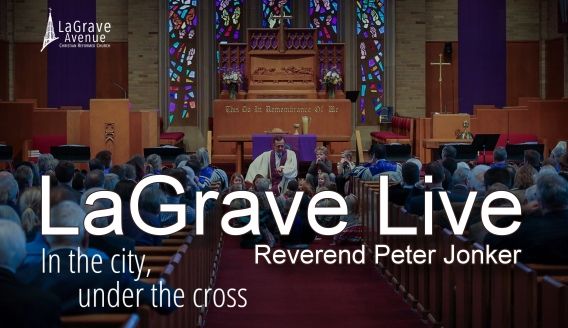

LaGrave Live
LIVE Morning Worship Service 02-01-2026
The Word in the Windows: Paying Taxes to Caesar
About The concert:
We continue our sermon series “The Word in the Windows.” Pastor Jonker will preach on Matthew 22: 15-22.
About the Church:
We are a traditional CRC church in the middle of Downtown Grand Rapids, MI, worshipping at 8:40am, 11:00am, and 6:00pm. (10:00am and 6:00pm during the summer months)
We'd love to hear from you:
Connection: https://www.lagrave.org/contact
Let us pray for you:
Prayer: https://www.lagrave.org/prayerrequest/
Giving: https://www.elexiogiving.com/App/Giving/lagr107178
The February special offering is for The Bridge. The Bridge is part of Arbor Circle, which offers emergency shelter for youths, and additional counseling for youths and their families.
Listen on the go:
Amazon Music: https://bit.ly/LGPodAmazonMusic
Apple Podcast: https://apple.co/3tuOdwQ
Google Podcast: https://bit.ly/LGPodGoogle
Soundcloud: / lagravecrc https://soundcloud.com/lagravecrc
Spotify: https://spoti.fi/3yXDFaT
Follow us!
Facebook: / lagravecrc https://www.facebook.com/lagravecrc
Instagram: / lagravecrc https://www.instagram.com/lagravecrc
Website: https://www.lagrave.org
#LaGrave #LaGraveCRC
LaGrave Service Summary: The Word in the Windows – Paying Taxes to Caesar
Introduction
This service features a sermon based on Matthew 22:15-22, correcting a misconception about the church's stained-glass windows and exploring the tension between earthly government and divine authority. The message emphasizes that while Christians respect civil authority, their ultimate allegiance belongs to God, challenging believers to prioritize the Kingdom of Heaven over political partisanship.
Detailed Summary
Community Announcements & Prayer Needs
The service began with updates on community life, including the arrival of Lenten devotional booklets and a reminder for the Wednesday prayer gathering. Significant milestones were celebrated, such as the birth of William Robert to Sarah and Tyler Medema, and the 93rd birthdays of Cal Verdyne and Laura Verbridge. The congregation also lifted up numerous members facing health challenges, surgeries, and hospice care, alongside prayers for the Versluis and Faber families regarding recent bereavements.
Specific prayers were offered for the "Missionary of the Week," asking for the finalization of his citizenship process to return to South Korea and for the safe delivery of his child. Additionally, the upcoming Mexico mission team orientation and the church's internal election of elders and deacons were highlighted as key areas for prayer.
Children's Message: The Glove vs. The Mitten
The children's message used winter clothing as an analogy for the church. While gloves allow fingers to act independently but leave them isolated and cold, mittens keep fingers together, sharing warmth. The church is described as being "more like a mitten," where members are gathered by God to live as a family, supporting one another rather than existing in isolation.
Sermon Context: The Window and the Fasces
The sermon focused on a specific stained-glass window in the church that depicts Jesus holding a coin. The pastor noted a correction to the church’s guidebook, which misidentifies the scene as "foreboding events"; the presence of the coin and Caesar's profile confirms it depicts the story of paying taxes. A crucial detail in the window is the inclusion of the fasces—an axe bundled with sticks. This Roman symbol represented imperial authority, justice, and the power to punish, setting the stage for a conflict between the power of Rome and the Kingdom of God.
The Political Trap: Matthew 22
The Herodians
Pro-Rome & Pro-Tax. They valued the stability the empire provided.
The Pharisees
Anti-Rome & Anti-Tax. They viewed paying Caesar as bordering on idolatry.
The Trap: "Is it right to pay taxes to Caesar?"
If Jesus says Yes: He is a traitor to the Jews.
If Jesus says No: He is a rebel against Rome.
The Divine Answer: Caesar and God
Jesus evaded the trap by asking for a coin and delivering the famous line: "Give back to Caesar what is Caesar's and to God what is God's."
- Legitimacy of Government: By telling them to pay the tax, Jesus affirmed that civil government is a God-created institution for order (echoing Romans 13).
- The Ultimate Claim: By adding "and to God what is God's," Jesus critiqued the inscription on the coin which claimed divinity for the Emperor. He established that while the government has authority over a limited sphere, God owns everything—including Caesar himself.
Application: Dual Citizenship and Political Identity
The sermon concluded with practical applications for modern believers. While patriotism (pledging allegiance) is good, it must always be secondary and contingent; allegiance to God is absolute.
- Political Values: Christians are warned against letting political party platforms (Red or Blue) dictate their entire value system. The Holy Spirit should order a believer's values, which might mean simultaneously supporting the unborn (often a conservative stance) and robust social safety nets for the poor (often a liberal stance).
- The Cross vs. The Fasces: The sermon contrasted the Roman fasces (a symbol of punishment and power) with the Christian Cross. While the fasces represents law and order through fear, the Cross represents justice fulfilled through self-sacrificial love and mercy.
Symbolism: Power vs. Sacrifice
To-Do / Next Steps
- Members: Pick up Lenten devotional booklets from mailboxes (visitors can pick them up at the welcome desk).
- All: Attend the prayer gathering for renewal this coming Wednesday at 6:30 PM in the chapel.
- Mexico Mission Team: Attend the training and orientation session next Sunday.
- Congregation: Participate in the upcoming process of selecting elders and deacons.
Conclusion
The service reminded believers that while they live under earthly governments and should participate as good citizens, their primary identity is found in the Kingdom of Heaven. By allowing God to order their values rather than political parties, Christians can bear witness to the revolutionary love of the Cross, which offers hope rather than condemnation.
LaGrave Live
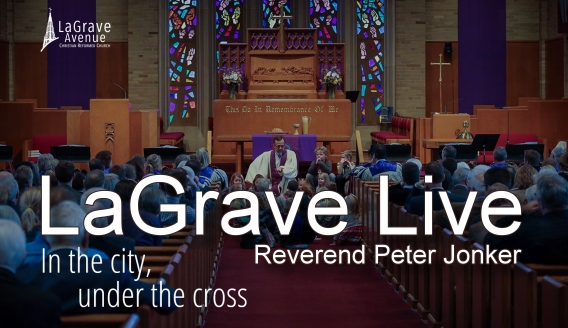

If you’re looking for a warm church that commits to an intensely pertinent Gospel in the Reformed tradition of the Christian faith, we invite you to worship with us. Our 1,800 members come from across West Michigan and gather weekly in our sanctuary for relevant Biblical preaching, beautiful music, and inspiring worship. We expand our worship through intentional outreach in our community and world, attentive care for our members, and plenty of spiritual enrichment and social opportunities for everyone.
We focus on a living Savior who provides genuine solutions to the deep needs of a hurting world. We are committed to need-meeting ministry in His name, and we are committed to being real people who enjoy real life and who cry real tears. Because we are a fairly large and diverse group in terms of age, occupation, marital status, lifestyle, and physical ability; our members create many accessible opportunities for community service, Bible study, and small social groups.
We worship God, the Almighty Creator of heaven and earth, and we enjoy expressing our vision of His holiness through traditional music and formal liturgy.
Music plays an integral part of our weekly worship gatherings. Congregational singing—of both traditional hymns and newer ones—is typically supported by our pipe organ. Vocal choirs, handbell choirs, small ensembles, instrumentalists, and vocal soloists provide additional music offerings.
Led by the Holy Spirit, we seek to worship and serve God in all of life, transforming His world and being transformed to reflect the character of Christ.
Founded by 36 Dutch immigrants on February 24, 1887, LaGrave Avenue Christian Reformed Church has always been deeply committed to both this local community and worldwide missions. God has seen fit to guide and bless these commitments with sustained growth, spiritual gifting, and a continual stream of new work for our members.
[00:00] Speaker 1: (instrumental music plays)
[06:09] Speaker 2: (organ music)
[12:19] Speaker 3: (instrumental music)
[14:08] Speaker 4: What can I give him, poor as I am? If I were a shepherd, I would bring a lamb. If I were a wise man, I would do my part. Yet what I can I give him, give my heart. (instrumental music) Let my soul from evil
[17:08] Speaker 4: like a flood, to his feet, oh, let me flee. Let some feigned peace on earth be mine, evermore his praises sing. Hallelujah, hallelujah, praise the Everlasting King. Praise him for his grace and favor to his people in distress. Praise him still the same as ever, slow to chide and swift to bless. Hallelujah, hallelujah, glorious in his faithfulness. Father-like he tends and spares us, well our feeble frame he knows. In his hand he gently bears us, rescues us from all our foes. Hallelujah, hallelujah, praise the Everlasting King. Praise him for his grace and favor to his people in distress. Praise him still the same as ever, slow to chide and swift to bless. Hallelujah, hallelujah, glorious in his faithfulness. Father-like he tends and spares us, well our feeble frame he knows. In his hand he gently bears us, rescues us from all our foes. Hallelujah, hallelujah, praise the Everlasting King. Hallelujah, hallelujah, praise the Everlasting King.... is merciful.
[18:40] Speaker 4: (organ music plays) (singing in Latin) .
[20:07] Speaker 5: This God of grace, the King of Heaven, is here with us this morning. We are gathered here to worship Him, to hear Him speak to us through His word, to offer to Him our concerns in prayer. He welcomes us with these words, "Grace and peace to you from God, our Father, and the Lord, Jesus Christ." Amen. A very warm welcome to all on this very cold Sunday morning, to all those who braved the cold weather to be here physically present with us, as well as all who are worshiping with us online. After worship, there will be hot coffee, hot tea, and warm fellowship in the multipurpose room. That's straight down the hallway and to your right, so we encourage everyone to join us there. Especially if you're visiting among us, we'd like to get to know you. Please stay around for a while. And as you go down that hallway, take note on the left side, the missionary of the week that we are praying for today.
[21:09] Speaker 5: We also want to remind you that the prayer gathering for renewal, which was to be held this past Wednesday, will be held this coming Wednesday evening, 6:30 PM, in the chapel. The Lenten devotional booklets have arrived and if you're a member here, you can pick yours up in your mailbox here at church. Uh, if you're visiting among us, there are, uh, there's a supply of them at, at the welcome desk in the narthex. Feel free to pick one of those up. Please also take note of the 10 o'clock activities that are listed in the bulletin, as well as other bulletin announcements. Please turn in your bulletin now, uh, for the call to confession, which we will read responsively. As I have often told you before and now tell you again, even with tears, many live as enemies of the cross of Christ. Their destiny is destruction, their God is their stomach, and their glory is in their shame.
[22:08] Speaker 5: Their mind is set on earthly things, but our citizenship is in heaven and we eagerly await a savior from there, the Lord, Jesus Christ, who by the power that enables Him to bring everything under His control, will transform our lowly bodies so that they will be like His glorious body. Let's pray. Lord, we confess that we too, like those enemies of the cross, tend to focus on earthly things: our personal success, pleasures, comforts, and financial security, when in Christ we are citizens of Your kingdom, Your agents to proclaim and live out Your lordship over all things. Break us loose, Lord, from our addictions to earthly things, deepen our trust that You will take care of all of our needs when we seek first Your kingdom, and focus our minds on working and praying that Your kingdom will come and Your will be done on earth as it is in heaven. In Christ's name, amen.
[23:16] Speaker 5: (organ music plays) (singing in Latin) .Let's continue with the assurance of forgiveness, the responsive reading in the bulletin. "You are a chosen people, a royal priesthood, a holy nation, God's special possession" "that you may declare the praises of him who called you out of darkness into his wonderful light." "Once you were not a people, but now you are the people of God." "Once you had not received mercy, but now you have received mercy." Thanks be to God through our Lord Jesus Christ.
[25:13] Speaker 4: (music) What shall I render to the
[26:32] Speaker 4: Lord for all his benefits to me? What shall I give my praise restore in worthy thanks from low to be? Salvation's cup of blessing now I take and all upon God's name before his
[28:17] Speaker 6: All right, kids. It's time for the children's message. Come on up. Come on up. Oh, I gotta get something. You sit down. Stay. I'm gonna be right back.
[28:27] Speaker 5: (laughs)
[28:28] Speaker 6: (laughs) You can sit. Sit. Just 'cause the minister's not there. Mm. Okay. All right. How we doing? Wow. Oh, no. We still got few more people, or couple. One, two.
[28:50] Speaker 4: Yeah.
[28:51] Speaker 6: Come on down, you guys. Three. Come on down. We're waiting for you. All right. Well, it has been cold lately, hasn't it? Would you say it's been cold? It's been very, very cold. This morning was very, very cold. And when (hands clap) it is cold, and I'm sure your, your moms and your dads and your teachers are reminding you this, you have got to dress appropriately, right? You gotta wear the right clothes, so you need a, a really good coat, a big thick coat to keep out the cold from your body. And I think you need a hat, 'cause if my hat, ears are not covered by a hat, they get very cold. And a, boots, right? Good boots that'll keep... so you can walk through the snow and your feet not get cold. And for your hands, a pair of these. A pair of gloves. Or maybe mittens. I wonder, what do you like, gloves or mittens?
[29:44] Speaker 4: Mittens. Gloves. Yeah.
[29:45] Speaker 6: Oh, we got a, we've got a split crowd here.
[29:48] Speaker 4: Hey.
[29:48] Speaker 6: Split crowd.
[29:49] Speaker 4: Hey. Hey.
[29:49] Speaker 6: That's all right. You know what? N-... Just, I'll, I'll, I'll s-... I'll answer all the questions. I'll sort it out.
[29:54] Speaker 4: (laughs)
[29:55] Speaker 6: So for me, it's a little of both. It's a bit of both. It depends. So a lot of the times I like to wear gloves because when you have a glove on, right, y- you can move all your fingers and you g-... it's a little easier to do jobs when you have gloves on, right? Because the fingers can all move in- independently, and in a mitten, y- you don't have those fingers. It's harder. But I'll tell you what.
[30:18] Speaker 4: (coughs)
[30:18] Speaker 6: When it is really, really cold, gloves aren't as good as mittens, right? The problem is-
[30:25] Speaker 4: Right.
[30:25] Speaker 6: ... you know, these, these, these fingers, they're, they're living in their own home minding their own business but they got no one to keep them warm.
[30:32] Speaker 4: They could-
[30:32] Speaker 6: There's no one, there's no one next to them. So when you're all in them, like, and it's just one finger in, and it gets really, really cold because your poor little finger is all by himself, he gets really cold in there. But with a mitten-... you go in there and it's like your fingers are a happy little family.
[30:51] Speaker 4: Mm.
[30:52] Speaker 6: Right? They're keeping each other warm, right?
[30:55] Speaker 4: Yeah.
[30:55] Speaker 6: Isn't that right? On a really cold day-
[30:57] Speaker 4: Unless you've got gloves on.
[30:58] Speaker 6: Yeah. Well, right, that's... And your gloves, sometimes you end up doing this in the middle of your glove when it's really cold. So, I was thinking about this. Church, I'll put the other one on here, is more like a mitten. It's not as much like a glove. And what I mean by that is, when we are in the church, when you're a member of a church, you're not just keeping to yourself all the time. You're not by yourself with yourself all the time. We all get together. God brings us together and we live as a happy family together, and we keep each other warm and God gives us His Holy Spirit. So the church is a little bit more like a mitten than it is like a glove. So next time you put on a pair of mittens, remember the church and how God brings us together. That's what I wanted to share. Congregation, what is our prayer for these children?
[31:47] Speaker 4: The Lord be with you. And also with you.
[31:51] Speaker 6: Go in peace.
[31:59] Speaker 5: Let's turn to God in prayer. We come to you, Lord, our good shepherd, the one who cares deeply for all of our needs, physical, mental, emotional, social, and spiritual. Guide and help us this coming week. Grant us strength to face challenges, solutions for problems, wisdom for decisions, and grace for dealing with all those around us. We praise you, Lord, for your faithfulness to those celebrating significant events and milestones, especially Sarah and Tyler Medema in the birth of William Robert this past January 21, and for Cal Verdyne and Laura Verbridge who will celebrate their 93rd birthdays this coming week. We pray, Lord, for your comfort though... for those who have lost a loved one, particularly for Rachael and Chad Versluis, John Versluis, Erik Versluis, Jesse Heidel, their families, and Connie DeVries in the death of Kenneth Faber, January 25. Many are dealing with health challenges, Lord, and need your hand of healing on them.
[33:04] Speaker 5: We pray for successful rehab for Joan Elzinga with her broken hip, for healing of Julie Farmer after her lumbar disc fusion and benign cyst removal, for Margene Green in her transition to Homeward Central, for Chip Hutton and Marlene Paue in their continuing rehab and therapy, for Marlene Padding in her recovery after surgery. We pray that you will minimize Carol VanBruggen's neck and shoulder pain due to a compression fracture, and we pray that Steve Palazzolo's new round of chemo will be the last he needs in order to have a bone marrow- marrow transplant. We lift up to, to You those who are receiving hospice care, those living with cancer, and those with other continuing needs. For all of these, Lord, we pray for Your mighty, loving, healing hand in Jesus Christ, Lord, that You will work through them through their treatments and prevent harmful side effects, and that they will feel Your presence with them.
[34:05] Speaker 5: We lift up to You our missionary of the week, that his citizenship process will be finalized very soon so that he and his family can return to their work in South Korea. We pray for his wife's ninth month of pregnancy and birth of a healthy child. We pray too, Lord, for our mission team preparing to go to Mexico in April. We pray especially for their training and orientation session next Sunday. Unite this, this team in, in love and grace, O Lord, and prepare them for what they will be doing in Mexico. Today, we remember that our citizenship is in heaven. Help us also to be faithful citizens of our earthly nation. As this is an election year, we pray that You will raise up government leaders on local, state, and national levels, people of true wisdom, skill, and integrity who will work for the benefit of all citizens and for good will internationally. Guide those who are in office now toward policies of justice, equity, and peace.
[35:08] Speaker 5: We pray that the tensions in Minneapolis will be quieted and settled justly, and that You will give our senators and representatives wisdom as they deal with another budget impasse. Other nations have had elections recently, some with troubling outcomes. There is much unrest within nations and tensions between nations. We pray, Lord, for peace and justice, and for compassion, especially on the innocent victims of these conflicts. Use us and Your people everywhere as peacemakers. It's also election season right here at La Grave Church. We pray that You will guide the process of selecting elders and deacons so that godly men and women will be chosen and serve capably in love. We pray, Lord, for those who are having a hard time with the cold weather, especially the homeless people. Bless our church's outreach ministry to them, as well as other churches and agencies providing warm spaces and meals to those who lack these ba- basic necessities.
[36:12] Speaker 5: O Lord God, we lift up all of our concerns to You, also with praise and thanksgiving for Your constant grace and faithfulness. In Jesus Christ we pray, amen.
[36:55] Speaker 4: What shall I render to my God for all the good things the Lord has done for me? What shall I render to my God for all the good things the Lord has done? I will lift up the voice of salvation and call on the name of the Lord. I will pay my vows to the Lord in the presence of all of God's people. What shall I render to my God for all the good things the Lord has done for me? I will offer my song of thanksgiving and call on the name of the Lord. Precious in the sight of the Lord is the death of His faithful ones. Precious in the sight of the Lord is the death of His faithful ones. His faithful ones. Oh, Lord, I am Your servant. I am your servant, the child of Your handmade. You have loosed my bonds and set me free. I am Your servant. I am Your servant. What shall I render to my God for all the good things the Lord has done for me?
[39:40] Speaker 4: I will offer my song of thanksgiving, and I will call on the name, call on the name, call on the name of the Lord. In the courts of the house of the Lord, in your midst, O Jerusalem. Praise the Lord. Praise the Lord. Praise the Lord. Praise the
[40:33] Speaker 4: Lord. (peaceful music) Praise God, from whom all blessings flow. Praise Him, all creatures
[43:25] Speaker 4: here below. Praise Him above, ye heav'nly host. Praise Father, Son, and Holy Ghost.
[46:25] Speaker 4: Amen.
[46:30] Speaker 6: (instrumental music) Our Bible reading this morning is from the Gospel of Matthew, Matthew Chapter 22, Verses 15 through 22. And that is found on page, uh, 1,538 in your pew Bibles. Uh, for those of you who are visiting or for those of you who've forgotten, we continue our Epiphany sermon series, which is on stories from the life of Jesus that appear in our windows. And this is a way of orienting you. The story for today is on the second-to-last set of windows on the east side of the church, so that's this side of the church. And each set has three windows. This story appears in the top corner, uh, the furthest away from me. And if you, if you can see it where you are, you see there's Jesus and He's talking to, I think it's four guys, and they're having a, a spirited conversation. Now, I wanna say more about this image. Take out your bulletins. It's on the front of your bulletin 'cause some of you can see that image and most of you can't. Um, and what's ...
[47:57] Speaker 6: And, and an interesting thing, and this is sort of a factoid about this story, so it's the image on the left of the bulletin. Um, it's misidentified in our little book on the windows. So we have a little white book which goes through all the stories in the windows and says, "This is the story and this is where it's from in the Bible." Our booklet is wrong about this story. Wrong. It says that, uh, the, the words that it says in the, in the bulletin, and it says, uh, or not in the bulletin, in the book, it says, "Jesus is preaching about foreboding events." And it says, "Matthew 16." But if you look at Jesus's top hand, there's something in His hand. What is He holding in His hand? It's a coin. It's a coin. This is the story from Matthew 22, which I'm gonna read in a minute, where Jesus is asked about whether or not it's okay to pay taxes. And these windows are so detailed.
[48:50] Speaker 6: If you look really carefully, you can actually see that the, uh, the, uh, it, the, the head of Caesar is, is painted on that coin in our windows. And there's one more item from, image from this window that I want you to see. See that strange-looking thing at the bottom, right in the middle of their conversation, right at the bottom of the page? It's a little bit cut off. It looks like an ax. It is an ax.And then the shaft of the ax is covered with a bundle of sticks that are tied together. I wonder if any of you know what that thing is called. That is an important and famous Roman symbol. It's called the fasces. The fasces. And it was a symbol of imperial authority. In fact, uh, when Romans would go on parade, when there'd be a great triumphal procession of the emperor or another Roman leader, the procession would be led by guys called lictors.
[49:44] Speaker 6: And the lictors would sort of s- prepare the way, and they'd be carrying the fasces because that was a symbol of Rome's authority to punish and do justice. And you can kinda see that these are sort of fearful items, right? The, the ax is a symbol of capital punishment. You can chop someone's head off with it. And then, you know, sticks are also, um, things that, you know, rods that you could give punishment with. So the whole thing, it's a fearful symbol, a symbol of imperial authority. The word fascism comes from the fasces because Mussolini in Italy in World War II used the fasces as a symbol that he sorta got behind to restore the glory of Rome to Italy. That's, that's just trivia. That's just trivia. The window artist, though, put this in the window for a reason. It further confirms that it's the story about tax collection. It's a way of saying the issue in this story is, what is the relationship between the power of Rome, the kingdom of the empire, and the Kingdom of God?
[50:51] Speaker 6: That's the issue at the heart of this story and these words that I'm about to read from the Gospel of Matthew. Let's read them. Then the Pharisees went out and laid plans to trap him, Jesus, in his words. They sent their disciples to him, along with the Herodians. "Teacher," they said, "we know that you're a man of integrity and that you teach the way of God in accordance with the truth." They're flattering him. "You aren't swayed by others because you pay no attention to who they are. Tell us then, what is your opinion? Is it right to pay the imperial tax to Caesar or not?" But Jesus, knowing their evil intents, said, "You hypocrites. Why are you always trying to trap me? Show me the coin that they use for paying the tax." And they brought him a denarius. And he asked them, "Whose image is this and whose inscription?" "Caesar's," they replied.
[52:03] Speaker 6: And he said, "So give back to Caesar what is Caesar's and to God's what is God's." And when they heard this, they were amazed, so they left them, left him and went away. This is the word of the Lord.
[52:26] Speaker 4: Thanks be to God.
[52:29] Speaker 6: So the first thing that I want you to notice about this story is that there's a really interesting political coalition that comes to talk to Jesus and tries to trap him. Jesus and his disciples are walking through, uh, Jerusalem on an ordinary days in Jerusalem, and all of a sudden, these, these two groups of men all come together, are coming towards him, and they come from two parties. Says that the Herodians and the Pharisees, and if you were an ordinary person in those days, the first thing you would have noticed is, "Oh my goodness, what are those two groups doing together?" The Herodians, um, were a party of Jews, a group of Jews, who were very sympathetic to Rome. They kinda liked Rome. They kinda liked King Herod because he rebuilt their temple and he let them worship, and they kinda liked the stability that Rome brang. Uh, and so they thought it was okay to pay taxes, that we should pay taxes so that the government could give structure.
[53:28] Speaker 6: They were, for their age, social conservatives. Pharisees were on the other end of the political spectrum. They did not like Rome at all. They could not wait to see Rome out of there. Now, they weren't the most radical. The most radical you probably know were the Zealots, right? The Zealots would resort to violence. The Zealots would kill people in the middle of the night to try to get Rome out of there, and the Pharisees didn't do that, but they were certainly sympathetic with the Zealot cause. They thought that paying taxes was something close to idolatry. Now, given those two stances, it's pretty clear that they're on opposite sides and that imagining them together is very strange, right? To see, if you were a regular Jew and you're in the marketplace and you saw this group walking together arm in arm, you would stop. You would look. You would wonder. This would be like being in Washington and seeing Donald Trump and Kamala Harris walking down the National Mall arm in arm.
[54:27] Speaker 6: You would take a picture. You would wonder what was going on. That's what this is like. What is it that could possibly have brought these two foes together? What is it that could possibly have united these guys in common cause? It was Jesus, only in this case, it was their mutual distrust of Jesus, their discomfort with Jesus, the man who preached the kingdom, the man who talked about turning the other cheek, who told those parables, who confronted sin, who called for repentance. Something about Jesus made both the Herodians and the Pharisees deeply unsettled.And we have a pretty good idea what that was, okay? Because when Jesus came and he preached the kingdom of heaven, he used language that maybe sounded political, or at least made them wonder. So for example, and I've already used the word, when Jesus came, well, how did he talk about the coming rule of God? He always talked about the kingdom of heaven.
[55:37] Speaker 6: "The kingdom of heaven is near." "Repent, for the kingdom of heaven is near." And you can imagine the Herodians saying, "Well, what does this guy ... Is ... Does he want to replace Rome with a new kingdom? Is this man a revolutionary?" Because that threatened their position, right? And the other thing that's just happened is Jesus has just come in in the triumphal entry, right? He just came in riding on a donkey. You know that story. And the people all shouted, "Hosanna to the son of David," like he was the new ruler of Israel. Who would that threaten? That would threaten the Pharisees and their position. Right? So both of them are deeply uncomfortable with Jesus and would just as soon that Jesus be gone. So they get together and they try to trap him with this question. Now before I get to the question, let me give you some background on why this is an extremely clever question, an incendiary question. So they are tapping into, with this question, a hot button issue. Right?
[56:36] Speaker 6: Taxes are always something that we like to fight about, but in this case it was, it was something more than regular, and here's why. About 25 years before this question, the Romans had instituted a new tax, a poll tax. And basically they said they wanted to tax you for the privilege of o- you occupying them. (laughs) You should be happy that we occupy you, because we give you stability, so you should pay us for that. Now you can imagine how the Jews felt about paying a tax to their occupiers. They did not like it at all. And in fact, there was a guy, 25 years before this question, named Judas the Galilean, who led a revolt. He got a bunch of people who were sympathetic to his cause and they tried to kick out the Romans. And they actually took over a Roman arsenal at one point. Well, the Romans did what the Romans do is they utterly crushed the revolt and they killed everyone. But the issue was hot because of that rebellion, right? The issue was hot. This was a hot button issue.
[57:35] Speaker 6: This is the kind of issue that if you brought it up at extended family dinner, your uncles might start yelling at each other if they felt differently. Okay? That's the level of intensity around this issue. So the Pharisees, Herodians come to Jesus and they say, "Rabbi, is it lawful to pay taxes to Caesar or not?" And it seems like the perfect trap question. It seems like no matter what Jesus says, he's, he's in trouble. If Jesus sides with the Herodians, with the Jews, and he says, "Yeah, you should pay taxes. Of course you should pay taxes," then the Pharisees will go over to maybe the Zealots and say, "You hear what Jesus said? He's a Roman sympathizer, you know. We should maybe get rid of him." And maybe in the middle of the night, one of the Zealots comes and slips a knife between Jesus' ribs. If Jesus sides with the Jews and says, "Oh, no, taxes are idolatry. This shouldn't happen.
[58:35] Speaker 6: We shouldn't have to pay taxes," then maybe the Herodians go down to the Roman garrison and say, "Hey, centurion, did you hear what that rabbi said? He's been getting a lot of people going. You might wanna put him away for a while, lock him up." It looks like a no-win situation for Jesus, no matter what he says. But Jesus escapes their trap with a brilliant answer that has literally changed the way Christians, the way God's people think about politics in the kingdom ever since. Jesus says, "Gimme a coin." They give him a coin. "Whose image and whose inscription is on it?" "Caesar's," they say. "So give to Caesar what is Caesar's and give to God what is God's." Now what kind of answer is this? On the one hand, it's a conservative answer. Because what he's saying is, "Pay the tax. Pay the tax. Yeah, you should pay the tax to Caesar." And when he does that, he's recognizing something that Scripture teaches, the rightful authority of civil government.
[59:41] Speaker 6: "Civil government is a God-created institution and you ought to honor it," says Jesus. And in doing that, he, he anticipates what Paul will later say in Romans 13 and expand on, that we ought to submit to governing authorities. And you remember these are the words specifically. "There is no authority except that which God has established. The authorities that exist have been established by God." So you ought to pay the tax. The first part of the answer makes it sound like he's siding with the Herodians. But then comes the second part of the answer. "Give to God what is God's." What ... and, and then you notice, Jesus says not only what is the picture on there, Caesar, "What is the inscription?" he says. So there's a subtle critique here. Roman coins had an inscription on them.
[01:00:34] Speaker 6: They had a picture of Tiberius, the emperor, and underneath that picture it said this: "Tiberius Caesar, son of the divine Augustus." It attributed divinity to Augustus and to the emperors, treated them like gods. What inscription is on there? Why does Jesus ask about the inscription? Jesus knows what's the inscription. So when he says, "Give to God what is God's," there's a critique of that inscription. "Don't give to Caesar what properly belongs to God," he is saying. That's a critique of those Herodians are getting just a little too cozy with Caesar.And then there's this. And I think this is how I understood it when I was a kid. "Give to Caesar what is Caesar's, give to God what is God's." And you hear that and you think, "Oh, well, he's kind of being even-handed, Jesus is. He's saying a little bit for Caesar and a little bit for God, you know, divide it up, be even-handed." No, that's not what he's saying at all. Give to God what is God's. What belongs to God?
[01:01:49] Speaker 6: What is properly God's? Everything, right? Every blade of grass, every mountaintop, every river, every hill, every thought, every penny in your bank account, every hair on Caesar's head belongs to God.
[01:02:09] Speaker 4: That's right.
[01:02:10] Speaker 6: Give to God what is God's. "The earth is the Lord's and everything in it," says Psalm 24.
[01:02:17] Speaker 4: That's right.
[01:02:21] Speaker 6: So Jesus is saying the civil authorities have their place and they have their authority, and it's over here, but over all of that, owning it all, is the authority of the king of kings and the lord of lords and the emperor of emperors.
[01:02:37] Speaker 4: That's right.
[01:02:37] Speaker 6: Jesus is astonished by this answer, and they are amazed. There are several things that Jesus is doing with this answer that we should pay attention to. I, as I already said, he is putting civil authority in its proper place, okay? Government, as I said before, is a God-created institution. It's created by God, it's good, and when it operates within its proper sphere and does the thing God wants it to, it is doing good and we should glorify God for it. But government and politics, and this is, I'm gonna use Michael Watson's word from the lecture he gave last week, is a second thing. Politics and government are a second thing. The first thing is the kingdom of God. Politics and government are a second thing. They rule over a small part of our lives.
[01:03:28] Speaker 4: That's right.
[01:03:29] Speaker 6: God in his kingdom rules-
[01:03:31] Speaker 4: He's got it under control.
[01:03:31] Speaker 6: ... over the whole business.
[01:03:33] Speaker 4: He's got it 100%.
[01:03:34] Speaker 6: And our allegiance is ultimately to this king, to our first king. Here's a practical way in which to think of this. (claps hands) So as, as Americans, myself included, we say the Pledge of Allegiance. Right? We pledge our allegiance to our country and, and to the flag for which it stands. This is fine and good and a patriotic thing to do. There is no problem with pledging allegiance to your government and to your country. But when we do it, there should always be, at least in our heads, a qualification and an understanding that that is a secondary allegiance. We should always remember that our ultimate pledge allegiance, ultimate pledge of allegiance is to our God.
[01:04:22] Speaker 4: He's got it under control.
[01:04:23] Speaker 6: Our, our pledge of allegiance to our country is contingent. Our pledge of allegiance to our God is absolute.
[01:04:28] Speaker 4: That's right.
[01:04:29] Speaker 6: And most of the time, those two allegiances do not come into conflict with each other. They don't. Right? We can live comfortably with both those pledges. But sometimes they do come into conflict, and then we must bay the, obey the higher authority. The rest of Scripture confirms this arrangement. I talked about Romans 13, and I, you could also list 1 Peter 2. Those are both passages which say submit to the governing authorities, okay? But on the other hand, you also have passage like Revelation 13, which says that governmental authorities can come, become like something like a beast, a demonic force that torments God's people, and in that case you've got to resist them. So in the early church, when the Christians were commanded to make an offering of incense to Caesar and say, "Caesar is lord," they disobeyed that authority and wouldn't do it, and they were right to do so.
[01:05:29] Speaker 6: Or in the story of Daniel, in the Book of Daniel, when Shadrach, Meshach, and Abednego were ordered by Nebuchadnezzar to bow the knee before the image of Babylonian power that Nebuchadnezzar had made, and they said no, they were not sinning. They were doing the right thing. We are citizens of earthly countries under God-given authority, and we should care about that authority, we should pray for that authority, we should engage in our political system. But our citizenship is in heaven. Here's another practical implication of this. Because we are citizens of the kingdom first, the way we measure and value various issues that come before us in our society, um, should not be strictly determined by the party with whose offic- uh, affiliation we most identify, okay? With the R or the D. This is how it goes, and there's a sociological reason, sociological thing that happens to us in this country, right? You're a little kid, and my, my wife is a kindergarten teacher.
[01:06:37] Speaker 6: She sees it happening already with kindergartners, right? They're already forming little party affiliations, and it's usually 'cause of their parents, right? And that's what happens. It's the same with all of us. It's okay. But, you know, you say, you're, "I'm, I'm on this team." You know, "I'm a Michigan State guy, I'm a Michigan guy," s- right? That's what, that's what it's like for them at that age. But once they affiliate, they gather together and they start talking and they share ideas and they, they, and then they start to get into the media stream, right? They start to get into the, the same stream of ideas. And then the social media algorithm kicks in and realizes, oh, that's who you are, and starts feeding you more of the same, confirms you. And pretty soon, every single position that you have on every single issue completely lines up with your political affiliation.Environment, fiscal policy, abortion, capital punishment, immigration, racial politics, renewable energy.
[01:07:38] Speaker 6: Boom, boom, boom, boom, boom, boom. All the way down the line. All of them the same. That's not great. That's not, that's not great. Why can't there be more Christians who are very concerned about abortion and the protection of the unborn and the value of what happens when a child is conceived, the extreme value of what's happening inside of a mother when that happens? And who are so concerned about the poor that they want to have robust social policy or a robust social safety network to help the poor? Why can't that happen more often? When all our opinions neatly fit whatever party we're affiliated with, I'm worried that we are rendering unto Caesar what properly belongs to God. When... Who is it who is supposed to sort our values, order our values? God through his Holy Spirit. Right? But when we follow that other order where we're just sort of getting into the party information stream and just going that way, we're letting Caesar order our values.
[01:08:49] Speaker 6: We're letting a political entity order our values. We're rendering unto Caesar what properly belongs to God. That doesn't mean it's wrong to affiliate with a party or anything like that. But again, as Christians, second order stuff. Because when you follow King Jesus, He's so different and His rule is so all-encompassing that it changes everything. At the beginning of this sermon, I mentioned how in the Roman processions, those big burly lictor guys went on ahead and they carried, they carried the fasces, that symbol of Roman authority, that fearsome symbol. That was what they lifted high when they marched. So different than what citizens of the kingdom lift high when we march. What do we lift high before we... before when we go in triumphal procession? We lift high the cross. And the cross and the fasces are so different. The fasces is a symbol of punishment for the wrongdoer. The cross is hope for the wrongdoer. The fasces is a symbol of law and order, and the cross is too, right?
[01:10:12] Speaker 6: Because Jesus pays the price for us. He does justice on the cross. Law and order is absolutely a part of the cross, but it's more than that. It's love, it's mercy, it's grace. The wrongdoer flees from the fasces in fear, but the wrong... When the wrongdoer sees and understands what Jesus did for him on the cross, the wrongdoer clings to the cross like it is a life raft for a drowning man. Jesus was a political revolutionary, but not in the sense that anyone ever understands political revolutionaries. Right? In every other political revolution, regardless of the side, what happens is th- that you... people team up and they go and they overturn the oppressor and they shed their blood, right? You kill the other side, and that's the revolution. In Jesus' revolution, He sheds His blood for the enemy. It's not shedding the blood of the enemy so you can have a revolution, it's Jesus shedding the blood for the enemy. Romans 5. "While we were still sinners, Christ died for us.
[01:11:24] Speaker 6: While we were enemies," that's what it says, "we were reconciled." Do you see how revolutionary this is and how wonderful it is? So while we recognize the authority of our government and we support it and we get involved in it, we give our life to the man on the cross. We give Him our heart, our soul, our all.
[01:11:50] Speaker 4: Menama.
[01:11:52] Speaker 6: Amen. Lord, I, I praise You for all the gifts and all the institutions You give us in this world. I praise You for the institution of good government. I thank You for faithful servants, people You put in authority over us to keep the peace, to make laws, to make sure our society runs well. We pray for all of them at every level.
[01:12:25] Speaker 4: (speaks Hebrew)
[01:12:26] Speaker 6: But Lord, we, we also recognize that we are citizens of Your kingdom and that You are our one true King. Lord, as we walk through this world, help us to keep our eyes and our hearts open and focused on You. May You be the one who orders our values in this world, even as we engage in all its spheres. Through Jesus Christ our Lord. Amen. (organ music plays) (organ and piano music plays)
[01:13:38] Speaker 4: Thee shall come. And we talk about passing in the morning hour. 'Tis the promised passion. We should call Him Lord. Who from the beginning was the mighty Word. Now we'll draw the season to receive our aid from the lips of sinners unto whom we came. Faithful, they report it, honest words avow us. But if their voice can not help be heard- For they look to their own work, its hue and white. Through all heads of regions to the central height. To that throne on high, to the Father's right, filling with glory life perfect night. Jesus, Lord Jesus, shine down on me. In this life's lonely journey through pain and fear. Though I miss the light which by day time is bright.
[01:16:06] Speaker 4: Yet all my trusting resting in the glory of-
[01:16:06] Speaker 6: Receive the blessing of your King. The grace of our Lord, Jesus Christ, the love of God, and the fellowship of the Holy Spirit be and abide with you all.
[01:16:16] Speaker 4: Amen. (chanting) Amen. (chanting) Amen. (chanting) Amen. (chanting) Amen. (chanting) Amen.
[01:17:39] Speaker 4: (instrumental music plays(organ music)