
Breaking the Silence, July 26, 2026

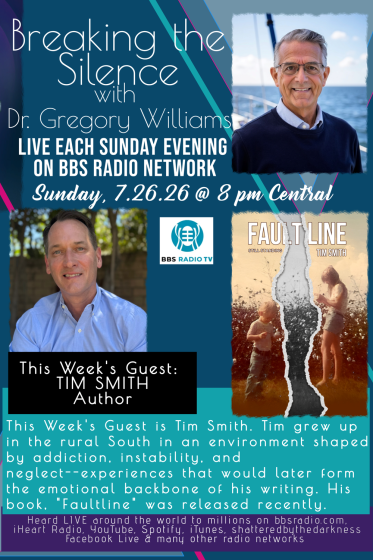
Breaking The Silence with Dr Gregory Williams
Fault Lines, Family Trauma, and the Courage to Still Stand
Dr. Gregory Williams speaks with author Tim Smith about childhood kidnapping, neglect, shame, therapy, memory, identity, and how telling the truth can turn trauma into hope, healing, and personal power.
This week's guest is Tim Smith. Tim grew up in the rural South in an environment shaped by addiction, instability and neglect--experiences that would later form the emotional backbone of his writing. His book, "Faultline" was released recently.
Guest Spotlight: Tim Smith
Tim Smith is the author of Fault Line: Still Standing, a memoir rooted in his childhood experiences of family instability, neglect, trauma, and the long process of naming what happened to him. In this episode, he discusses being taken from his father by his mother at age six, the emotional “fault line” that shaped his life, the role of therapy in recovering memory and meaning, and the hard-won belief that a person’s past can shape them without defining them.
Opening From Houston With a Message About Trauma and Truth
In this episode of Breaking the Silence, Dr. Gregory Williams opens from Houston, Texas, reflecting on birthdays, memories, and how significant moments can bring both good and painful emotions to the surface. Before introducing his guest, he continues a series of practical reflections on healing from abuse and trauma. His first point is to tell yourself the truth: admit what happened, acknowledge that it was not your fault, and stop hiding the reality of the pain. He also reminds listeners that trauma may affect behavior, triggers, and responses, but it is not the whole of a person’s identity.
Separating Identity From Experience
Dr. Williams emphasizes that what happened to someone is not the same as who they are. He tells listeners that abuse, domestic violence, neglect, human trafficking, and other traumatic experiences may shape a person’s reactions, but they do not define the person’s worth or future. He uses his own life as an example, saying that aspects of how he showers, dresses, and responds to certain situations were shaped by childhood abuse, yet those experiences are not his identity. He frames this as a key part of healing: replacing “what’s wrong with me?” with “what happened to me, and what support do I need?”
Breaking the Silence Safely
Another key lesson Dr. Williams shares is the importance of breaking silence carefully and safely. He encourages survivors to find someone trustworthy before sharing painful truths, whether that person is a spouse, counselor, pastor, teacher, friend, or another safe support. He recommends journaling as a first step, then sharing only a small portion when the time feels right. For Dr. Williams, secrets can become a prison, but safe disclosure can bring relief, healing, and resilience when the listener believes the survivor and does not push them away.
Tim Smith and the Fault Line of His Life
After apologizing for a scheduling mistake the previous week, Dr. Williams welcomes Tim Smith, author of Fault Line: Still Standing. Tim explains that the story had been inside him for years, but therapy helped him realize that what he had treated as mere facts were actually emotionally loaded experiences. The central “fault line” of his life, he says, was when his mother took him from his father at age six. He had not originally used the word “kidnapping” for the experience until his husband, who has a background in social work, pointed out that being taken against his will and hidden from his father for a year fit that description.
Memory, Music, and the Body’s Record of Trauma
Tim describes how therapy reopened memories he had not revisited for decades, almost like a dam breaking. As he began writing, sensory details returned through images, sounds, smells, songs, and scenes from childhood. He explains that, as a photographer and visual person, the pictures in his mind contain “all of the data”: emotion, sound, smell, and memory. One song, Meat Loaf’s “Two Out of Three Ain’t Bad,” instantly pulls him back to a specific childhood scene. The conversation shows how trauma is stored not only as narrative memory, but also through the body, the senses, and emotional association.
Kidnapping, Silence, and Dissociation
Tim recounts the morning his mother took him, describing how she woke him, had him kiss his father goodbye, and led him toward a car driven by his soon-to-be stepfather. He remembers becoming immediately frightened, crying in the back seat, and later being threatened that he would be left on the side of the interstate if he did not stop. Afterward, he lived in trailer parks and became nonverbal at home for about a year, using silence as the only weapon available to him as a small child. He also describes staring out windows and mentally leaving situations he could not control, a pattern of dissociation that continued as a survival tool.
Shame, Neglect, and Reclaiming Worth
The middle section of the interview explores Tim’s childhood neglect, poverty, and shame. He remembers not being fed breakfast, being placed on free breakfast and lunch programs, and being mocked at home for his body and perceived effeminacy. He says that abuse, neglect, and homophobic shaming made him fearful and ashamed for decades. Later in life, even while working in private equity in Beverly Hills, he still had to challenge the internal belief that he was somehow less than everyone else. Through therapy, reflection, and the writing of his memoir, Tim came to see that the darkness of his past was not who he was.
Therapy, Meaning, and the Ingredients of Peace
Tim and Dr. Williams discuss therapy, trust, medication, shutdown, suicidal despair, and the search for meaning after Tim’s mother died, September 11 happened, and he lost his job in quick succession. Tim says writing the book became therapeutic, though it also brought intense PTSD moments and painful memories. When Dr. Williams asks him to imagine cooking up “peace” on a Waffle House grill, Tim names ingredients such as believing in yourself, knowing who you are, stability, routine, love, a safe relationship, dogs, and the feeling of taking a nap on a rainy Sunday afternoon. His definition of peace is simple, embodied, safe, and deeply earned.
Taking Back Power and Choosing Hope
Near the end, Dr. Williams asks Tim what he would say to listeners who have carried trauma for decades. Tim tells them to be brave, to understand that healing may require burning like a phoenix, and to remember that pain may be part of them but does not control them. He urges people to take back power from the false narratives in their heads, from abusive or neglectful parental voices, and from a past that is not their identity. The episode closes with Dr. Williams recommending Fault Line: Still Standing, sharing Tim’s website faultlinememoir.com and Instagram Tim.Smith.writes, and reminding listeners that there is always hope, no matter what happened to them.
Guest, Tim Smith
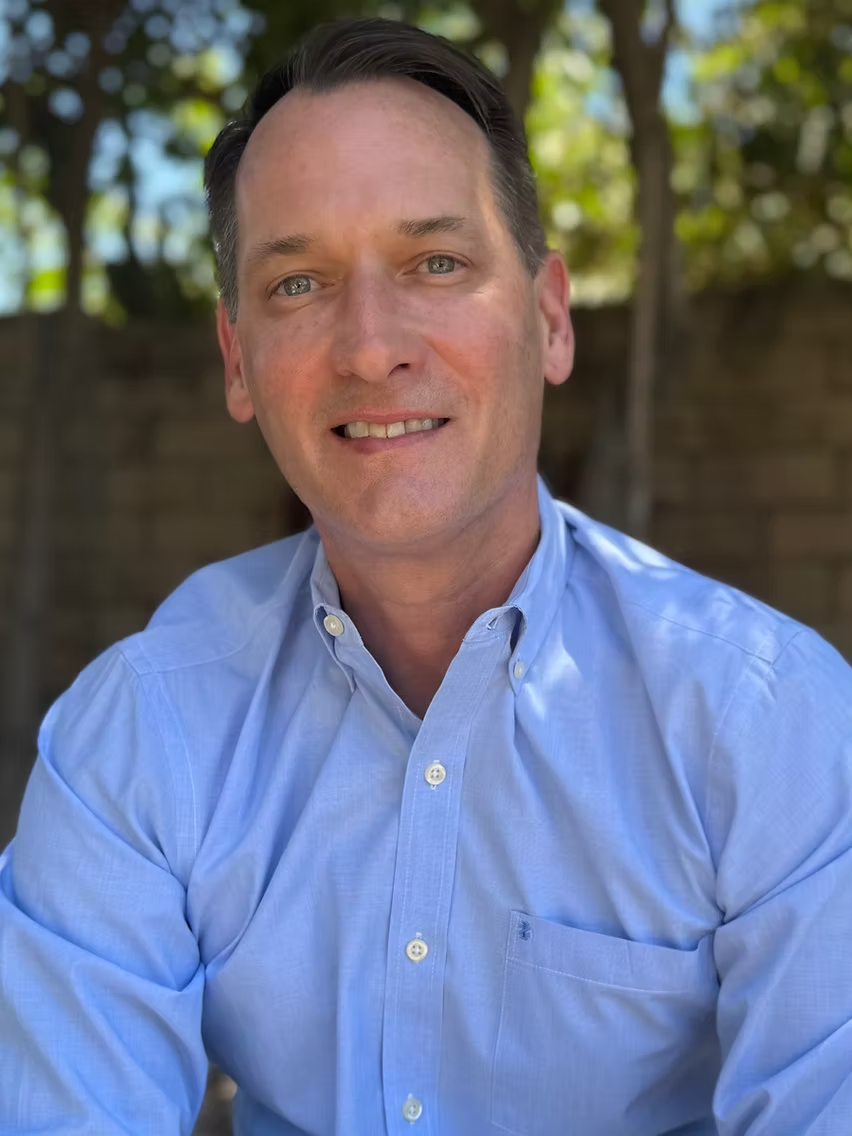
Tim Smith is the author of Fault Line: Still Standing, a raw and unflinching memoir about survival, resilience, and the long shadow childhood trauma can cast over a life.
Raised in the rural South in an environment shaped by addiction, instability, and neglect, Smith writes with striking honesty about what it means to endure—and what it takes to rebuild. His work explores abuse, abandonment, identity, and the complicated process of learning to live beyond them.
Before becoming an author, Smith held a range of jobs—from short-order cook to shipyard laborer—eventually building a career in the financial sector. He now lives in Los Angeles with his husband and their four rescue dogs.
Fault Line is his first book.
Breaking the Silence

“Breaking the Silence with Dr. Gregory Williams”
Now is the time for you to step out of your own personal darkness and break the silence that has been hidden and closed up inside of you.
“Breaking the Silence with Dr. Gregory Williams” radio program will offer the listeners a Road Map to Hope each and every week with keys to discover within yourself that ray of light to make your day better and brighter. Dr. Williams will not only discuss his own personal journey of overcoming the darkness of years of horrific sexual child abuse in the hands of his father and his father’s friends, but Dr. Williams will also feature special guests that have their own personal stories of overcoming obstacles in their lives and becoming victors instead of victims.
“Breaking the Silence” will also feature information from the professional and medical field that will dive into the important research involving Adverse Childhood Experiences (ACEs) and how to build Resiliency in yourself and in your children. Along with this information will be special guests from greatest minds in the United States to share their expert research and thoughts on this very important subject that each person needs to be aware of.
Now is the time to invest a few minutes each week with some awesome information to give you steps to HOPE and keys to HAPPINESS and PEACE. NOW is the time to Break YOUR Silence and breakout into a NEW and BETTER YOU! Join us each week beginning August 13, 2019 for “Breaking the Silence with Dr. Gregory Williams”. You won’t want to miss a single program. Heard around the world on the best radio network on the airwaves, BSS Radio Network available on iTunes, Google Play, iHeart Radio, Facebook Radio, Spotify and over 100 other high quality digital radio stations.
Speaker Identification
Speaker 1 - Announcer / Program Intro and Outro
Speaker 2 - Dr. Gregory Williams, host of Breaking the Silence
Speaker 3 - Tim Smith, author of Fault Line: Still Standing
Speaker 4 - Promotional Voice / Book Promotion
Speaker 1 - Announcer
Welcome to Breaking the Silence with Dr. Gregory Williams. Dr. Williamss is the author of the acclaimed book, Shattered by the Darkness, putting the pieces back together after child abuse.
Speaker 2 - Dr. Gregory Williams
Dr. Williamss is on the senior leadership team at Baylor College of Medicine in Houston, Texas. And Dr. Williamss travels the United States speaking and training professionals, parents and victims about the importance of dealing with abuse and personal trauma head on and not being afraid to break the silence of your own personal pain.
Feel free to call in to tonight's show at 888-627-6008 and speak with Dr. Williamss and his guests live on air. And now, your host, Dr. Williamss.
Well, good evening folks. Welcome to what I believe is the most beautiful city in our country, Houston, Texas. It's the most awesome in my eyes. And I'm right here at the Texas Medical Center.
You can see right behind me the sun going down and the actual places that I work at. I work right here on the 10th floor. And the sun is just now fading away here. Our guests and I, I believe, is going to be on the other side of the country.
In California, but I'm going to make sure that's still where our guests is from tonight when he comes on. It's been great to be with you this week. And believe we're on the last Sunday of July already in the years halfway over, more than halfway over.
And I can't even, you know, they're talking about Christmas. It just, what's going on in our world? Things seems, you know, somebody told me I had a birthday yesterday. I turned 63 years old.
I never thought that I would make 50. But at 63 years old, that's, I don't know, one of those days that you're looking go, okay, well, that's great. And you just move on. But, you know, birthdays and events like that, and we're going to talk about that a little bit at the intro of this here shortly, can bring good memories, can also bring bad memories.
And we're going to talk about some of the good and the bad tonight with our guests.
If you want to get involved, we'd love for you to get involved with us tonight. You can do it in three different ways. You can call 888-627-6008. And one of the most awesome radio hosts in the world.
Thomas is right there and he will answer the phone and patch you right through to me, our guests tonight. Or you can get on, we are on. Shattered by the Darkness Facebook page. I'm looking at it right here.
You can post a little question there. Or my personal cell phone number is 832-396-6525. That comes right here. You can text me during the show and during our commercial break at the bottom of the hour, I'll be glad to get on there and read your comment or your question for our guests.
And we started something a week or so ago when Diana and Mike LaCerte was on the program and they have a great book. It's right here on my desk, The Breaker. And it's doing really good in the world of authors and Barnes & Noble and places like that.
It's doing the Breakers and Awesome book. But we were talking about when we opened up that show a week or so ago. I was starting to talk about things to help you deal with what's happened to you.
How do you get over something that traumatic has got into your attic and start messing up things? I'm talking about your mental attic.
What do you do? And I had a whole list of like 15, but I only got through one. And I'm only going to try to get through maybe one or two tonight because I want to get to our guests tonight.
But we talked about the first thing you really need to do. And I'm interested in what our author tonight has to say about this. But the first thing we need to do is tell yourself the truth.
Not hold it back. Not hide it. Admit what happened. Also in that realm, admit that it wasn't your fault except that you're not to blame. That something happened to you if you're in one of those situations of abuse or domestic violence or something of that order, human trafficking.
And so we talked about that for quite a while. Tell yourself the truth. Another bit of wisdom that I like to be able to share with you is number two is you have to separate yourself from your experiences.
So whatever happened to you is not your identity. You have to separate that. You experienced abuse, but you are not the abuse. And I know in the book that we're going to be featuring tonight, I've read several times that you have to deal with this.
And that's such a true statement and replacing what's wrong with me with what's happened to me and what kind of support do I need to be able to get through it. And that is so, so important to separate your identity from your experience because that's not you.
That's something that you have gone through. And it doesn't ID you. It's not who you are. It may have formed you. It may have shaped you. It may have molded the way you respond and react.
And next week or the week after we'll be talking about triggers in a major way. I shower just a shower just a while ago. And the way I shower is from what happened to me as a child.
The way I got dressed this morning was formed by the way I was abused all my childhood as a kid. And there's some things that it does affect, but it is not me. That's not me. I am far beyond what happened to me.
And to be honest with you now looking back on it because of those things that made me stronger, it made me better. And it also gave me a purpose in life that I can use all that negativity that so many people wanted to bury me with and use it to help people.
And I've got a feeling our guests may have a thought about that too. I'll list you one more. You've got to break the silence safely.
When you decide that it's time to tell, that it's time to come out and not only tell yourself the truth, but you want other people to know what that truth is. Be careful with that. It's important that you do it, but you have to find someone that you trust.
I always recommend when I do, might not counsel people that they get a journal, write those things down and in that journal. Eventually when you have somebody, it could be a significant other, it could be a spouse, it could be a counselor, it could be a pastor, it could be a teacher, it could be a boss of work, whoever it is with somebody that you fully trust, a friend of yours, somebody that you really, really, really believe in and they believe in you.
Maybe just open up your journal and say, hey, can I share this one paragraph? You don't have to share the whole journal with them because then there's a lot of private stuff in those journals.
And then take that journal back and say, I just wanted to let you know that. And I trust you, I respect you enough to want to share a darkness inside of me that I need to get out and feel safe to be able to tell somebody else.
And end that, that can put balm, ointment, healing salve on the pain, because if you don't, that secret can become literally a prison. And I've lived inside that prison. And it's lonely in there.
But once you let somebody in and you find out that they don't push you away, that they'll believe you, they don't doubt the story. They don't question your manhood. They don't question everything else that you wonder if they're going to even like me anymore.
And when you find that out, it automatically not only releases baggage, it builds up something inside of resilience inside of us that is like, wow, that was better than I thought. And I think just opening that door and allowing somebody into your heart.
And I know what trust is all about. And I know what trust issues are all about. Let's face it.
If you've been hurt, you've been betrayed, you've been abused, you've been neglected, you've been, you know, beat on or whatever. Trust is huge. And I don't trust very many people. And when you allow that little piece of that silence being shared, it can make a load, a load of difference.
We're going to get to the other 11 of these as we go each week. And then maybe we'll do a program on just all 15 real quick. So you can get them all at one time. But that's just a couple of things that I wanted to share with you.
Got a busy week. I'm going to be doing a keynote speech in Fort Bend this week. Going to also come back that afternoon and do another huge with the DFPS workers in Texas. They're having a big conference and going to be sharing with them some things about vicarious trauma and how to deal with your own aces in your life.
And when they're dealing with clients all day long, what kind of triggers does that bring up inside of them? So anyway, that's just a few things I want to share with you tonight. 888-627-6008.
I am so anxious and I want to apologize publicly on on air that yes, Dr. Gregory Williams made a mistake last week that our author and go ahead and TJ bring him into the side here with me.
You're looking at Tim Smith. He is an author of a book called Fault Line, F-A-U-L-T Line. Fault Line, that's going to be my first question, Tim. Just to kind of give you a secret. What's the title name?
But last week, we were supposed to have him on the program and I committed to him and I apparently didn't write it down in my calendar book. And I was focused on everybody in the world on this side of the world.
The other side of the world is going to be Watson Soccer. And in that is that World Cup championship match. And I failed to let him know and he was probably sitting right there where he is tonight waiting for me to tap into him.
So I'm so sorry, Tim. But welcome to the program tonight. I'm finally, I'm so glad we finally got connected up.
Speaker 3 - Tim Smith
Thank you, Greg. I'm glad to be here. How's everything going with you? It's going well. First, I'd like to say a happy belated birthday to you.
Speaker 2 - Dr. Gregory Williams
Thank you. And secondly, LA may give Houston a run for its money for most beautiful city. Really awesome.
Speaker 3 - Tim Smith
Yeah. Yeah, LA is a very beautiful city. It has a lot to offer. It has its problems, but it definitely has a lot to offer. Don't we all? Yeah, they all do. I was out in LA not too long ago.
Speaker 2 - Dr. Gregory Williams
Went to see America's Got Talent and landed there in Long Beach, then experienced LA in Hollywood and all that. And it is a beautiful, beautiful town. Welcome to the program and tell me just a little bit about yourself before we get into the book, what you do.
And I have here that you grew up in rural South and in an environment of addiction, instability, neglect. And I want to go down and drill down as deep into that is what you feel comfortable with.
Speaker 3 - Tim Smith
But you went pretty deep in your story about all that. So what made you decide now is the time to write the book? My name is Tim Smith. I'm author of Fault Line: Still Standing. I'm from Pensacola, Florida.
Speaker 2 - Dr. Gregory Williams
So kind of around the corner from you there in Houston, so to speak. And it just ended up, I knew the book was in me for a while. The story kind of nagged at me for at least a decade.
And I had therapy for about three years and had initially started therapy for one other sort of issue. And maybe our third visit, he had asked, how was your childhood? And anytime anyone asked me that, I immediately clam up arms cross.
It was fine. How was yours? And that's kind of it. And as we kind of got into things, I started to realize like there were some issues and there were some problems within there that I think I had not really acknowledged.
They were more facts for me or more events, but I didn't really attach any emotion to it because I think my mind was probably trying to protect me from that. So you can compartmentalize what was going on.
And you did your own thing, but did you ever, when did you start tying in that what you're experiencing later in life could be placed back into what happened to you in your childhood?
How many years did it take you to be able to, hey, wait, maybe that's because of this. Gosh, what do you find years? 50 years? You know, I mean, it wasn't like I was. Hiding from it or in denial of it.
I just didn't acknowledge it. It was just not a part of me. You know, like my, I think my mind had done such a good job of trying to protect me from the trauma and trying to keep me safe from that and trying to keep my mind from being focused on that.
And one time in therapy, we started talking about the event when my mother kidnapped me from my dad when I was six years old. And that is sort of the title of the book and why I call it fault line because that was the really the fault line of my life.
Like that is where I can trace everything back to sort of where it all started, right? And so that was sort of the, the earthquake event. And so it kind of started with her kidnapping me.
And when I was talking to the therapist about it, he was like, it's, it's facts for you. There's no emotion attached to it. And, you know, I had not come to that conclusion. And we talked about it and we really kind of went deep into it.
And I had really, I don't say, regressed. You know, I don't know if that is really the right word, but, you know, all of a sudden that memory that I had not, you know, pulled, you know, pulled in 45, 47 years was almost sudden very vivid.
And in a way, it almost sort of, you know, the way the dam will open up and a little bit of water comes out a little bit. And then all of a sudden it all kind of came to me. It all just kind of came to me in a rush.
Do you remember what event it was that you remembered or for me, it was a holiday? For me, it was, you know, that time of the year. And then when I thought about that and started thinking about that, like, oh my God, every day after, do you remember what exactly point in your childhood that you remembered and you wait, then it spirals to other things and then it gets bigger, bigger, bigger, bigger, and you got a whole story.
Speaker 3 - Tim Smith
Absolutely. It almost is almost like a, like a spoke or a spiral on the wheel, right? So like, I see the fault line, I see that event and then like all that and then that and then that and that, you know, and sort of goes deeper and deeper almost into like an onion.
Speaker 2 - Dr. Gregory Williams
And even as like, I was writing the book, fault line, there were things that would come in a rush or in a flash that I was just shocked, you know, I was really shocked by some of it.
And then there were some things that I would remember after the book was written or would come to me, you know, maybe in more detail or came as sort of a, a new memory that just had not been there for me before.
One thing that I've really noticed and to be honest with you, really enjoyed in the book was that you would tap into you, you write kind of like I, I write because you would go through an experience and you go, well, I was going through this and what was going on.
I was listening to this song and then you threw in the song and the writer, you know, a Meat Loaf song or something like that. It's like, wow, wait, I remember that. And did that come immediately?
Or when you started thinking about all of these things and specifically shining the light on the incident, you start smelling things. You start seeing what the wallpaper looked like the time of day and it just all started what was on TV and everything.
Yeah, absolutely 100%. So I'm a photographer and so I'm the visual person. I love video and images. And so for me, when I see those images of childhood in my mind, they say a word, pictures worth a thousand words.
For me, the picture, all of the data lives in the image in my mind, all of the emotion, all of the data, all of the smells, the sound, that song. And like that particular song, like that Meat Loaf, "Two Out of Three Ain't Bad", that's on like, I remember them playing that like over and over again on that eight track and like I can.
8-tracks. Yes. Yeah, that's how old I am. Like that's how old I am. Me too. Like I could still smell the humidity in that place, you know, and like the floors creaked and it was just, you know, I kind of hated.
I remember being, you know, it's child. I wasn't, I didn't like that house, you know, because it was, there were roaches in it. It wasn't cool. And it was hot. And it just felt always dirty, you know.
And but that song definitely like any time I hear it, I am swallowed back to that place immediately. I was getting ready to ask you. So if you're listening, you're, you're driving to LA, going to take a photography shoot and you're listening to the classic rock radio or whatever and Meat Loaf comes on. Does your mind automatically boom.
Oh, absolutely. Yeah. I go straight to the event when it does. I mean, do go there I was. That was the day. That's what I. The only the best way I can describe it. And I wish I could show it to you in my head. I am almost about my head is almost like at the couch, right? Like I'm almost like a little boy in the floor with them and like I'm almost at their feet in their legs.
Right. And, and that's that's playing over here on the stereo and they're probably either smoking a joint or smoking a cigarette, you know, and like I just kind of remember being there between them and feeling that there was something.
Sad and final about whatever it was that they were experiencing like I remember really it's feeling like an ending for them. You know, it almost felt like an ending to them and I couldn't explain it. And I certainly didn't understand it as a little boy.
Now when your mom kidnapped you and you're six years old, correct? Yeah. Okay. Kidnap is a harsh work. Yeah. I was at the bar. She grabbed you in the middle of the night, three in the car and snuck out. You know, or was it, Hey, come on honey. We're going for a drive and you just never came back.
Correct. Help our listeners to figure out that I haven't read the book. Was anything going on prior to that? Was there abuse going on with her? And I guess your dad. Before she decided to kidnap you and why did she leave? Yeah. So she was crafty about it. I will give her this.
And then one thing that I do want to bring up about the kidnapping are the word kidnapping. I had never associated that word with what had happened. In my mind, she had just taken me from my dad and my husband has a master's in social work. He used to run the department here in LA County.
And so he's got some insights to some of my, you know, nonsense. Right. And, you know, so I was telling him about it one time and he said, Oh, yeah. So she kidnapped you. And I was like, No, she just took me against my will and kept me hidden from my debt for a year. And he said, maybe that's kidnapping.
Right. And then it was almost like I'd had this epiphany, this realization that I was kidnapped by my mother. You know, that was very like jarring to my psyche in a way, honestly. Like I was like, Oh, that's unsettling. And now I've got to kind of process that. Right.
And so the morning of the kidnapping, I remember her waking me up and taking me, waking up to go to school. My mother never did that through all of my childhood. Once I was gone for my dad, she never looked at her school. I don't recall her making breakfast. I don't recall her sending me to school and lunch. I don't remember any of that.
And let's prove to that later because I ended up getting a like free lunch and free breakfast programs because she was so neglectful. And so she told me to go, you know, give my dad a kiss goodbye, you know, this morning time. And I think he had probably been laying out tonight before, you know, he, he smelled stale. He smelled like beer and cigarettes in Florida.
You know, he just smelled. But you know, that was my daddy, right? I'm a little boy and it's okay. You know, it's like kissing goodbye. We're walking. And she says, what if we don't go to school today? And I was like, you know, I'm six. This sounds great. Like, what are we going to do? You know, and she's just kind of holding my hand.
And in the corner, there's this parking lot. I see it vividly now. There's a gas station parking lot. It's almost in like a triangle shape. And my soon to be self father had a gold Chevy Nova, Jack the tires in the back, big blue in the front. Very.
I just call it white trash because that's what it was. Okay. And so I saw that and all of a sudden. And I'll still do it now and I get nervous or scared. I get that in my time. Where it's like, it's being punched. You know, you're being pulled. And I just knew something was wrong. I was immediately scared.
And I was like, I don't know if I'm going to go to school. I don't know if I'm going to go to school. I don't know if I'm going to go to school. And I just remember that I was crying. I was very upset about it. You know, obviously, you know, for all those reasons.
And I remember kind of there were two ways we could go. One was to the beach and the other was to the bay. And I remember we were going across the bay bridge and we didn't always go that way. We always went to the beach.
And so I was lost and scared and I didn't know where I was. And later on, a few years later, they joked about it and recalled how I was so scared in the backseat. And then my stepfather said if I didn't stop crying, he was going to put me on the side of the interstate and leave me.
For them, it was a big joke. They really diminished the experience like it wasn't just jarring and live shattering for a little boy. And there was no real, this is why I'm leaving explanation. There's really no, you know, I believe they had divorced at that point.
But we're still living together. My dad might have just gotten back from jail in Mariana. So I think that was sort of a circumstance. She had met my stepdad. She was waiting tables in a bar.
And she had a type and he was her type. And the thing about this is he had just gotten out of prison himself for robbing of their store, which he said he didn't know anything about.
They never do. And he had taken a bullet to the side of his head that impacted his speech center. So he was not able to speak in complete sentences, which is very scary for a little boy that's very wound up and tight.
And so the words, like when he couldn't say a word or he would miss a word, he would replace the word GD with the word. He would say, you know, take the GD food, GD bathroom, you know, and as a little boy, you've got to kind of learn how to speak his language and understand what he's saying.
Sorry, I know that's a lot. There you go.
Speaker 3 - Tim Smith
Yeah. Okay. So after, so you knew immediately this wasn't just, Hey, we're going to drive to the park. You knew that this was a, you know, and your brain may have protected you with saying, Hey, this is just mom taking you someplace.
Speaker 2 - Dr. Gregory Williams
But you knew automatically what was going on as far as I don't think I'll be going back home.
Speaker 3 - Tim Smith
Yeah. Yeah. I knew I wasn't going back home. It didn't matter how much I cried and begged and squilled. I was not going back home. So what was the new chapter of your life like after you disappeared from your father?
Speaker 2 - Dr. Gregory Williams
We live in a couple of various trailer parks. I was nonverbal for about a year. I didn't speak to them at home.
Well, yeah, the nonverbal.
Speaker 3 - Tim Smith
Yeah. So you had no conversation with them at all or anyone. I would not talk to them. I'm sure at school, I probably interacted with a teacher or, you know, with kids, but at home.
Speaker 2 - Dr. Gregory Williams
Nonverbal completely would not speak. The silent treatment was the only weapon I had as a little boy. I was letting them know right up front. You're displeased with this.
Speaker 3 - Tim Smith
Yeah. Yeah. But, you know, they didn't care. I could have screamed or been silent about it. Either way, it was falling on deaf ears. Yeah. Okay. Okay. And, you know, I think there were some people attempts in my mother trying to put me and my stepfather together to bond or do something.
Speaker 2 - Dr. Gregory Williams
And I just remember, you know, like she'd send us somewhere and I would just stare out the window. Just stare out the window and just disassociate from the entire event. Just wait for it to, you know, just wait for it to be over.
And it was just strange because I couldn't. I just never understood why was it with my dad anymore. I didn't understand what's going on. You know, it just was never explained. I mean, it was just such a weird sort of a mystery and a time for me as a little boy.
So, do you find still that you fade away when things were happening around you that you didn't understand or didn't want to accept or didn't want to pretend was reality? And you would just, or is it just during that time with your mom and dad or did it affect the way you grew up and possibly or living your life right now?
Speaker 3 - Tim Smith
Yeah. You know, definitely trust issues, you know, to your point. I mean, full stop. And I want to, you know, I want to trust people. It's just, they've shown me the worst that they can be already.
Speaker 2 - Dr. Gregory Williams
And so it's really hard for me to give them much of a chance. I know everyone's not the same, right? But I definitely created a world inside my head, you know, a world of imagination.
And, you know, I would draw and do a whole spaceship to make superheroes. And I fell in love with the TV show Star Trek and some of that was a way for me to sort of disassociate. And that kind of started my love of sci-fi. And so, you know, I could go outside and play by myself and sort of be in these imaginary worlds that were safe for me.
And I was drawing things that were safe for me. And so that was always the place that I would go when everything felt a little bouncy for me. Or when the abuse got too much. And often it was too much.
Speaker 3 - Tim Smith
Yeah. Today, what we're going to take our only commercial break. 888-627-6008. On the other side of this, Tim, I really want to find out what happened after now that you're gone. A couple of places in a couple trailer parks.
Speaker 2 - Dr. Gregory Williams
And then what's going on up here. And emotionally with guilt, shame. What if I did those big what ifs. We're going to talk about all that and the rest of the story on the other side of this break.
888-627-6008. We'll be back in about 64 seconds. Count it. We were right back. Hang with us. 888-627-6008.
Speaker 4 - Promotional Voice
How do you ever wonder how to transform your struggles in the strength?
Do you want to stop hiding behind the pain, the heartache, and instead learn how to turn those scars into the very fuel that propels you towards greatness?
If you do. Then this book is for you in embracing your scars. Dr. Williamss shows you how to take the negative experiences of your past and turn them into the very source of your future success.
Speaker 2 - Dr. Gregory Williams
Don't miss out. Because your transformation begins here. The book is available soon on Amazon, Barnes & Noble, and wherever great books are sold.
Welcome back to Breaking the Silence. We have Tim Smith with us, the author of the book that just came out a few months ago. It's called Fault Line. Hold that book up one more time so everybody can recognize that when they see it on Amazon. It's hardback, right?
Yes. I got mine on Kindle. It's great to have a hardback. There's nothing better than actually having a book in your hand. I just love them. I'm from the old school on that. It's 627-608. Want me to find out from you, Tim, what else happened to you during those middle school years, junior high, high school years, that either added to this or maybe eased some of this that was going on in your life?
Speaker 3 - Tim Smith
Sure. Absolutely. Once they've taken me, we had moved to a couple of different trailer parks in Girl Towns in Florida along the Panhandle. My brother, my stepbrother, sorry, half brother was born maybe about a year after they were married.
Speaker 2 - Dr. Gregory Williams
About the time he was born, it was almost like they had their own little family. As I started to grow up, I became a more effeminate, more sissy little boy. My body gave me a way before I knew who I was. Some of the neglect started then.
My mother, I remember there was a particular cartoon I watched in the morning, the Tennessee Tuxedo cartoon. I knew it was the third commercial. It was time for me to go to school. I would take the bus and I knew that's what I was supposed to do.
I had an incident earlier when I used to go to the nurse with a tummy ache. I did that for about a week. One morning she said, did you have breakfast this morning? I said, no.
Did you have breakfast in any of these mornings? No. I remember very clearly a little boy at her face was relieved and disgusted. That's how I got on the free lunch programs and the free breakfast programs. That really sort of helped quite a bit.
Along the way, as I got older, their abuse and their disdain for me really, it just ramped up. They were physically abusive. They could be psychologically abusive. Sometimes between fifth and sixth grade, all of boys, they sort of go through that growth spurt where you're still a little chubby.
You've got those little chubby thighs. I think I just looked like a regular boy. I didn't look back at those pictures of me. I just looked like a kid. I just looked like an 11-year-old kid.
They would call me Fat Boy and then they would ask how much I'd eaten that day. They'd always monitor my food. Then afterwards, I could hear my stepfather saying the word queer or fag like it was punctuation.
She never stopped them. Then she could start with it too. They would do that combination of shaming my body and making fun of who I was. That made me ashamed of who I was. It made me have no confidence. It made me fearful in the world.
I mean, you're scared of everything. It definitely made me ashamed. I carried that shame for decades.
How do you deal with that feeling of shame when your child growing up, wherever you're growing up, no matter in Watts City, but in Florida and in these trailer parks and things of that order?
You're totally out of control with what's going on in your world. How do you deal with shame and guilt and have you completely buried that? I don't know that I dealt with it as a child. I don't know that I knew how to deal with it. I think I just carried it through my teenagers.
It definitely was still there. It's heavy, doesn't it? Oh, yeah, for sure. Especially how it is when you're a teenager. The hormones alone, right? That's just enough. You see other people like you'll see friends driving in the school in their new cars or they're pretty close.
My homecoming outfit came from the family dollar. It's hard not to feel like you're less than other people in those circumstances. You start to believe those messages and you start to believe those visuals that you see around you.
I carried that with me probably in my 20s and 30s if I'm being really honest. Now I work in to pay the bills. I work in private equity and I support RC Suite. The first year there, I was like, wow, trailer park kid next to the Monsanto factory.
What are you doing working in Beverly Hills? That was sort of in my head. It took me a minute to really say, you're as good as everybody else here because you're here. You're in the same parking lot. You're in the same building. You're in the same offices.
You're just as good as everybody else. It took me a few years to really get that message to myself. I'm as good as everybody else. All those things, all those dark years, all that stuff is not me.
It's not a part of me. It doesn't affect me. It's not who I am. It's what you're saying about some of your earlier rules about telling the truth and telling the truth to yourself. Part of that truth to yourself is that you are as good as everybody else. You are worthy. You're not less than.
Did you deal with that when you found yourself in Beverly Hills or did you think that all along when you're buying your homecoming outfit at a family dollar or whatever, and people probably bullying you and bullying is a big thing today, it happened every day at school when we were kids.
Let's face it, the teachers were bullying. All the PE coaches were terrible. Everybody would laugh. He was like a comedian making fun of, oh, where did you get those shorts that, Greg? That type of thing.
And then everybody would laugh and then they moved to the chubby person or whatever. But how did you finally figure out that, hey, here I am going through life and you're putting things in different rooms in your head.
That this young person has great value, even though you had parents that didn't quite know how to love you, how to take care of you. Have you ever come to grips with that fully in your world still?
I'm going to say 95%, right? Like 95%, which I think is great because maybe 10, 15 years ago, it was 50%. And some of the believing more in myself and not having shame is just sort of, I think one of the themes that are present in my book, fault lines still standing, is hope and sort of believing in yourself and sort of going, there's got to be something better.
There must be something better. Let's keep going. And so as I kind of went through life, things like I went from working at the Waffle House as a cook and working in Shiffyards in Virginia Beach to getting a very low level clerical job right or working in retail.
Like it was a gradual step up. And then, you know, I feel like one day I sort of opened my eyes to my own life and was like, oh, look at this thing you've created. You know, like it's stable and it's safe and it's got love in it and things are good and no one's going to hurt you.
And it was almost like the sort of realization to myself, you know, like look what you made. Look how great it is. So what you created, you know. So when you, when you work through probably for all these years, even though you're quiet about them for 45 years plus, could you ever look back on and ask yourself the question, I wonder what made mom the way she was.
I wonder what got dad disconnected from being a father and not helping other people instead of just dealing with his own issues.
If you ever questioned that or thought back what formed them, what caused this and does that give you any comfort or does it just give you it?
Well, they all had issues too. Half and half. I definitely, once I sort of went through the book and sort of being a therapist and really examining my own feelings helped me to examine their feelings, if that makes sense.
And then I was able to kind of really put her patterns together and I realized that I don't think that she herself ever felt secure in her life and her in herself. I think she lacks self confidence.
I think she felt ugly and I think she felt less than. And so her way of lifting herself up was to put me down or to put other people down. And I think a lot of it was fear. She lived in her fear body and we live in the Panhandle of Florida and your friends are snickering saying that your son is gay and they're calling him a queer and instead of sort of being offensive about it, she gets defensive about it and gets afraid because she's ashamed of it.
She doesn't know how to handle it herself. And as far as my dad, I think so many people have reached out and said they were really rooting for my dad. They really were hoping he was going to come through there really hoping it was going to.
And I just don't think he had it in him. I think he really wanted to be a dad. You know, I think he enjoyed 36 hours we spent together once every two or three months as being a dad.
I just don't think he was able to do more. And I think that he wanted to. He just didn't know how to. He just didn't know how to. So in your in your therapy. Did you ever do like EMDR?
No, we did not. It didn't work for me. I just wanted to always ask that question for people. So it's just a direct counseling back and forth.
Yeah, absolutely. And he was. I mean, just when you get a good therapist, you know, you've got a good therapist. Number one, that's hard to do, right? Oh, my gosh. It really is so hard. And then for someone like me too, as well, it's very guarded and untrusting and all of a sudden, like I've got to spill the grossest stuff to you that even I sometimes turn a blind eye to, you know, it's scary and intimidating.
Sometimes we wouldn't say anything and we would just stare across the screen and then I can't be a little bit of a smart. I like sometimes, right? So I'd say, do you get an extra $25 for every minute of silence, right? And, you know, he would just hold the silence and hold the space for me. And then, you know, I'd pull it out whenever it was, you know, and it was absolutely horribly wonderful all at the same time, you know, the experience of being a therapy and tackling some of these things.
How many years did you go to therapy before you finally found the right one? I had had a therapist. It was actually quite good. Maybe in my early 20s. It was after my mother had died. My dad was still alive. You know, my mother's ashes that sort of showed up one day in the mail.
And it was hard for me to find words of thoughts for all of that. And so I ended up doing, you know, this was in the 90s. I ended up on, you know, the Prozac, Sarah Quill, blah, blah, blah, you know, cocktail to sort of, you know, clamp down what they thought was my bipolar depression at the time.
I had a great therapist who was very, you know, open to hearing all of my, whatever it was at the time, which I think was very unfocused, because I think at the time I was unfocused in my early 20s. You know, I was very, a little bit like a firecracker, you know, because I didn't know how to not be a firecracker.
I always had to be half cocked as my husband likes to say, because growing up like we grew up, we're always scanning for danger.
Did you ever stand on the emotional ledge and wanting to take a dive?
Speaker 3 - Tim Smith
Sure. And did.
Speaker 2 - Dr. Gregory Williams
When my mother died, my mother died. We had September 11th. And though I wasn't, you know, I wasn't there. It had nothing really to do with me. It was a very jarring, it's not even the word.
It just displaced my psyche so bad seeing those events. And I got fired from my job, like right after that. So it was like August, September, October. And I have to tell you, like, I think I just shut down, you know, it was just like, no.
And I just shut down for a year and went to the library. You know, they were so pretty popular then. And I'm kind of sort of randomly, you know, I don't know if I was led to it or how it got to it.
I was not there, but started a book in world religions and just sort of went from there. And it just sort of helped me try to find some meaning to my chaos, to the world's chaos, to the chaos I've experienced.
And I really helped. Did the book become therapy for you? It did.
Yeah, it's something just to write it, whether it didn't let it out to the world. That's a whole different event. But it is therapeutic, isn't it? It is.
What surprise is the most? How easily I could have sometimes got trapped in those moments and in those things. There was a moment I had a PTSD moment, you know, here in my house. I was writing about the book and probably was just in the thought of it. And I remember I was frozen mid mid walk out the door.
And in the past few years, I've done yoga and therapy. I'm sorry, yoga and meditation. And I guess some felt safe or some trigger in my mind said, feel your heart beating. Breathe. You know, like feel the air in your lungs. Feel your feet on the ground. And sort of brought me back to the present. It got me out of my head, which sometimes I think you can agree as a person.
Not always the best place to be. You know, let's be in our bodies for. Emotionally, take me back to where, let's say, you're the cook at Waffle House and the, the waitress screams out because I think back in those Waffle House, at least around here, they don't write the orders down. They just yell them out. It's not okay. How do they keep that straight?
Let's just think right now that you have somebody's listening to the program and jelly now in order to you. Make me an order of peace. Right. What would you put on that grill? Emotionally to be able to let them know by the time you're done with this, this is going to give you the plate that you've asked for.
What is that key, those keys, those ingredients to make peace? I love that question. I think one of the ingredients is you've got to believe in yourself. You've got to find who you are. Whatever that is, right? Like you've got to find who you are.
And then, you know, my ingredients for peace is one, like I said, knowing who I am, having stability in my life, having routine in my life, knowing that there are, there's love in my life that I'm in a relationship that I have a safe place to be that I have dogs, you know, that I have those things.
And peace for me isn't always about like money or successful trips. You know, it's really about that feeling of taking a nap on your couch on a Sunday afternoon when it's raining. That is the feeling I would want to give peace. That's what I would cook up for people on the grill.
If there's somebody that's listening to the program, go ahead, wait. Forty-five years is nothing. I'm hitting 51 years of this. What do you highly recommend those listeners that's watching you right now around the world to say, give this a chance, try this, this helped me. What would be a few things if you could look in their eyes right now and tell them, give this a chance?
Yeah, so, and that's another good question. The first thing is you've got to be brave. You've got to be braver than you ever thought you could be. And you're going to be like a Phoenix. And you're going to be better than you ever thought you were going to be. But first, you've got to burn.
And the burning is painful. And in some cases, you've got to get used to the pain and know that the pain is there and it's a part of you. But it is not you that you control that. It doesn't control you.
And another thing I would say is to take back your power, take back your power from the narrative in your head that's told you something that is just not true. From the voices of your parents that were neglected or abusive, take back your power from a circumstance or from a place or from a past that is not you and give your power to things that lift you up that encourage you and that support you.
Wow, good answer. Good answer to you. What? Hold up your book one more time.
Speaker 3 - Tim Smith
Absolutely. There's the book. If people want to get a hold of you, Tim, one will be the best way for them to give a website.
Speaker 2 - Dr. Gregory Williams
Do you have a email? What's the best way for them to get in touch with you? Maybe to come and speak. Are you doing speeches yet about the books? Someone wants me to. I'm happy to do it. Absolutely. How will they get a hold of you?
Speaker 3 - Tim Smith
Sure. You can go to faultlinememoir.com and that has my contact information there. I also have an Instagram page for this book, Tim.Smith.writes.
Speaker 2 - Dr. Gregory Williams
Okay. Very good. Our wonderful TJ at the radio station will put all of that in underneath the banner, the show on the station. So they have all the access to those links right there. If you didn't get it broke down. Thank you so much for being with me, Tim.
Thank you for allowing me to make a mistake about last week. I'm so glad that we connected this week. Is that your mom's picture behind you? That is actually Queen Elizabeth. Okay, I thought I...
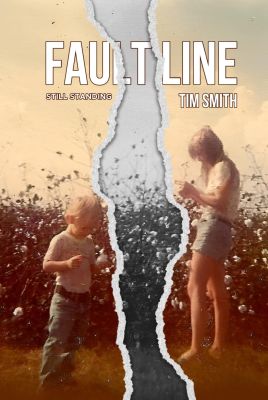
But on this is my mother. This is her and this is me. Hold this over there. Okay. That's us when we were in Prattville, Alabama and my dad took the picture. And so I thought it really worked like he's in the picture. He took the picture, but he's not in the picture.
And then we're kind of separated and we're both just sort of doing our own thing. And I saw the photo. I was going through stuff and I was like, that's the one. Is that a cotton too? Yes, yes. That's cotton filled in Alabama. We used to go and pick cotton and I don't know do before they separated. Yeah.
Wow. Thank you so much for being with us. Thank you.
If you need to book, want to book, just get on Amazon right now. You can literally download it off Kindle and you can be reading in the next 15 minutes. It's a highly recommended good reading. So I appreciate it, Tim. Thank you so much for being with us. Thank you, Greg.
Like you always like to do each and every week. And I think tonight's show was an absolute scenario that just full circles. That's very point right here that I always close with each and every week. No matter what's going on. No matter what's happened to you. No matter what your brain has told you to not reveal because it's just trying to protect you.
Flight, fight, fright, freeze, flop, whatever it is that it's telling you to do. It's there. It's there to try to keep you safe. And you're just running and you're confused. Want to let you know.
There is always hope. There is always hope. And this book tells about it. It tells you how to experience it. It tells you how to find it. And it's literally the whole definition that you can go through this and still come out. All right at the far end. And fault line is a book that you ought to get.
There's always hope. Never forget that. Join us right here next week for another live edition from the awesome book with the sun went down here from the awesome city of Houston, Texas.
We're battling for first place with LA. But here we are. But I do want to let you know it's 100 degrees here right now. So LA may be the place to be. But anyway, join us right here for another edition of Breaking the Silence. God bless you. Have an awesome, awesome week and never give up on hope.
On hope. We'll see you next week. God bless. Good night.
Speaker 1 - Announcer
Thank you for listening to Breaking the Silence with Dr. Gregory Williams. To contact Dr. Williamss, dial 832-396-6525 or email him at shatteredbythedarkness@gmail.com. And don't forget to join us each Sunday night at 8 p.m. Central Time, 6 p.m. Pacific on BBS Radio Station 1 for the next episode of Breaking the Silence.