
Apple Pie Playground, February 8, 2026

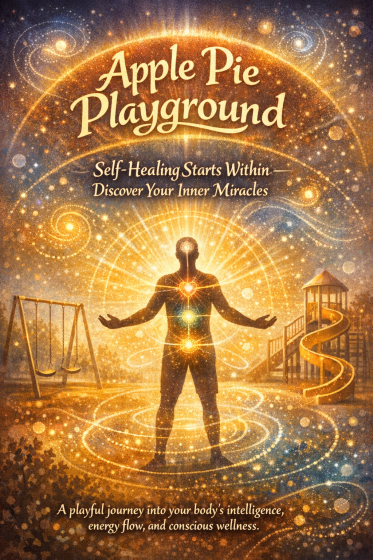

Apple Pie Playground with Valerie
Title: Self-healing: The best Miracles are Your Own
Self-healing is shrouded in enough mystery and suspicion as to be dismissed by many, without realizing it was a core teaching of the Christ who taught that the best miracles belong to those who go within. Disagree? Let's talk.
Self-Healing: The Power of Energetic Alignment and the Wisdom Within
Self-Healing: The Miracles Within
A journey of transformation back to the divine inner child and energetic alignment.
The Wisdom Framework
In quantum mechanics, "nothingness" does not exist. Every vacuum holds potential. Healing is moving from possibility to probability through intentional alignment.
Adrenal glands respond to fear cues from the brain, releasing cortisol. This creates energetic contraction. Healing requires expanding the bio-electric field back into a "balanced rhythmic interchange."
- Skepticism acts as a barrier to receiving energetic flow.
- Christ required complete alignment and removed distractions to heal.
- True knowing precedes proving; spirit cannot be fooled by the brain's metrics.
Healing Toolkit
Re-learning to walk in the fullness of spirit and energy flow.
Resetting the nervous system; nerves from every organ meet in the feet.
Using sensory ASMR effects for self-soothing and tension release.
"If you bring forth what is within you, what you bring forth will save you."— Gospel of Thomas
In this episode of Apple Pie Playground, host Valerie explores the profound journey of self-healing, emphasizing that our bodies are naturally designed for restoration when aligned with spiritual and quantum truths. By examining the biological impact of fear and the expansive nature of energy, she provides a roadmap for returning to a state of wholeness and contentment.
The Philosophy of Alignment and Quantum Potential
Healing begins with the intentional creation of an environment free from doubt and distraction. Drawing from the example of Christ’s healing ministry, it is noted that complete alignment is necessary for profound transformation, often requiring the removal of external influences that undermine the work of spirit. This alignment is supported by the principles of quantum mechanics, which suggest that "nothingness" does not truly exist; instead, even a vacuum holds the energy of potentiality. When we shift our perspective from a "prove it" mentality to one of "knowing," we move from the limitations of physical metrics to the limitless flow of universal truth.
The Quantum Shift in Perspective
"Ex Nihilo" (Nothing comes from nothing). Focuses on polarity and limitations.
Vacuums hold potential. Intentions transform possibility into probability.
The Biological Mechanics of Fear vs. Expansion
The human body acts as a mirror to our energetic state, specifically through the relationship between the brain and the kidneys. Fear triggers a "contraction" of consciousness, prompting the adrenal glands to overproduce stress hormones like cortisol and adrenaline. This state of chronic contraction disrupts the body's "balanced rhythmic interchange" and can lead to physical ailments such as high blood pressure and diabetes. Conversely, when the body is aligned, it enters a state of "expansion," characterized by an inclusive bio-electric field that facilitates natural self-healing.
The Energetic Body Model
| State | Biological Response | Outcome |
|---|---|---|
| Fear | Adrenal Overdrive / Contraction | Illness / Energy Collapse |
| Alignment | Rhythmic Interchange / Expansion | Self-Healing / Wellness |
Practices for Restoration and Play
True healing is a daily practice involving both spiritual wisdom and physical care. Ancient traditions, such as washing the feet, serve as a "reset" for the body because the feet contain nerve endings connected to every major organ. Additionally, engaging in "play" through sensory experiences—like the "Tootsie Roll lollipop challenge"—can trigger ASMR effects that calm the nervous system and promote contentment. By embracing these practices, individuals can move from a state of survival to one of thriving, recognizing that salvation is essentially the remembrance of one's true, healed nature.
Key Data
- Lollipop Lick Metrics: Studies from the University of Michigan suggest it takes 412 licks to reach the center of a Tootsie Roll lollipop, while Swarthmore College researchers concluded it takes only.
- Biological Components: The adrenal glands, which sit atop the kidneys, are the primary producers of stress hormones (adrenaline, cortisol) that dictate the body's fight-or-flight response.
To-Do / Next Steps
- Visit the Pranada Wellness Center website to explore free online wellness talk series on Ayurvedic nutrition and digestion.
- Seek out a Tai Chi master or Qigong practitioner to learn the meditative art of "walking in energy."
- Practice foot washing or massage using a Chinese medicine diagram to re-energize internal organs and provide the body with rest.
- Perform the imaginary lollipop experiment: unwrap a mental lollipop and count the licks until you reach a state of pure contentment and sensory satisfaction.
- Dedicate time for quiet mornings and sitting in silence to restore energetic alignment.
Conclusion
Healing is not a miracle performed by others, but a natural capacity we reclaim through alignment, rest, and the conscious rejection of fear. By understanding our bodies as energetic systems and embracing the wisdom within, we become the architects of our own wellness.
Apple Pie Playground


Support my show
$5.99/mo or $9.99/mo or more
Click HERE
SUBSCRIBE TO TALK SHOW
Apple Pie Playground, a show serving up slices of remembrance of who we are as sacred children of the spark, where friends gather for a little levity, add in some fun and self-reflection as we use play self-therapy tools that reawaken our authentic selves on this human journey together. Can you come out and play today?
[00:00] Speaker 1: (instrumental music plays) Welcome to Apple Pie Playground, where we serve up slices of healing for the heart. Stay tuned for a journey of transformation back to the divine inner child. Can you come out and play today?
[00:28] Speaker 2: Welcome, everybody, to Apple Pie Playground. I'm your host, Valerie. And I have to tell you, I am so, so glad you've joined me on the playground this week. Thank you so much, BBS, for coming out to play with us today. And I wanna thank you, BBS, for your great care while I was away, and we love you so, so much with all of our heart. I have not been on the playground for a few weeks, friends, and I have missed our time together. Um, but you know, I have been on an extraordinary journey though, and I just wonder if you can remember any moment in your life where your whole being sort of shifted, like you stepped through an invisible door and you know somehow that you, you can't go back? Have you ever had a moment of complete surrender to something so profound and you don't quite understand what's happening, but you know that whatever it is, it is happening, and you allow it and enjoy its gift, and that moment somehow redefines you?
[02:02] Speaker 2: And this was my journey over the last couple of weeks, friends, and we'll talk about it a little bit at a time as to what it means for me and what it can mean for you too. And, you know, as I thought about how to begin the show this week, I kept remembering Christ's insistence on complete alignment in his environment when he healed people. And in some cases, he, he would not even allow anybody who could undermine his work or disparage his work, um, to even be near, near him, uh, when he was taking on this beautiful assignment of healing. And he would send them away, and he would be in places away from other folks and away from the public eye. He would send folks out of the room, right, move, move folks out of his environment, even folks close to him. And that stays with me, uh, as I strive to, to be worthy of Christ's presence as it is.
[03:25] Speaker 2: And, and I know we're all worthy of Christ's presence, but it is to say that we're always wanting to offer our alignment, um, and to be ever present in spirit, aren't we? And we're, we're always reaching to be consciously aware, right, of how we experience the energy around us and how it affects us all and, and our opportunities for healing. But, you know, there's a reason that Christ refused distractions when he healed, because there really is no room for doubt in healing. There's really no space for hesitation, because that kind of sentiment doesn't exist in the energy of things, if that makes sense, friends, right? And there's really no interest in offering what can't be received energetically, right? And that may sound a little harsh, but our spirits live in a space of true essence and there's a resonance of our true natures there, and we really can't fool the flow of our light into these bodies, can we?
[04:59] Speaker 2: We can't fake how we use our energies or how we block our energies, right, how we divest ourselves of source flow. It's like I say, there are no secrets in the energy field of our unified life force, right? Even if our bodies are controlled by brains that don't really believe in such things, right, and we fool ourselves all the time when it comes to that. But our spirits know better, don't they? Because they're not reading the metrics of our experience the same way that our brain may be reading it, right, or our, or our physical body may be reading it. The energetics, the metrics of our energetics reads things completely different, doesn't it? And, you know, the energy kind of senses the games that we tend to play, right? And there's no blame in that. It's just, just an observation.And, you know, we're really getting better at being one with ourselves again, aren't we? We are growing. We're evolving and, and after all, it's why we're here on the playground today, right, hopefully?
[06:21] Speaker 2: To join company and to be together and flow together. And you know, there comes a time in our lives at different places and in different ways where we have to do this thing called managing folks who really aren't in alignment, right? And those folks who like to play the word game called prove it, right? And sometimes we actually play that game too, don't we? That prove it game where we don't quite believe what we're hearing or seeing or feeling, right? It's the game some folks like to play with us, you know, sort of to trip us up on our own knowing, and we try to explain an idea and we hear how, you know, you're, how you ever gonna prove that or nobody's ever proved that or that can't be real because s- I've never heard of it. And you know, that kind of exchange really does highlight the drama and, and maybe the disappointment that goes into sharing good news, doesn't it?
[07:39] Speaker 2: And we like to share good news for sure, and I know I certainly am excited to share good news over the last week or s- two and, you know, we want to reveal to the world a better way and get everybody as excited as we are about, you know, how we're growing and evolving and so much of the time, the conversation sort of goes sideways, right? It's why indoctrination is so useful for deceivers and so tricky for us, right? And I'll sort of give you an example of what I've been hinting about, um, since the opening of the show. Let me give you an example, and that example is healing. And I don't mean metaphorical healing or symbolic healing or, or figurative kinds of healing. I'm not talking about anything theoretical, right? I'm talking about healing, actual healing, right? When you think about what Christ did in Biblical terms, that kind of healing, okay? And, and here's where the prove it mentality really creates all kinds of problems for us, right?
[08:58] Speaker 2: Even talking about an idea like healing, it, it creates a lot of anxiety and a lot of self-doubt, uh, when we think about healing in this day and age of widespread and deep sickness and illness of, of any manner that you can think of, uh, in the human condition, right? But we are on a journey of wisdom this year, right, together using wisdom to guide our decision-making by allowing our questions to arise from our experience and our values, right, our interests and the center point of our energies. And that means that we're questioning from the place of what is within our alignment, right, and not outside of it. And that's wisdom seeking. We are learning from within the flow. Does that make sense, friends? Our wisdom seeking, learning from within the flow, right? Our definition of wisdom. And in that process, we look for signs of a universal truth, right? It's a guidepost for us that shows us sort of the way back to our true selves.
[10:25] Speaker 2: And one of those guideposts is the idea that what is nothing or nothingness really does not exist, friends. Right? In quantum mechanics, there's no such thing as nothingness, right? Now, that, that will play into our conversation of healing in just a little while, but suffice to say, there are really only vacuums in quantum mechanics that hold potential or potentiality, okay? Just like a person who has something to say, right, but instead they say, "Oh, it's nothing. It's nothing. Never mind," as if an idea would go away by avoiding it, right? And, and we've had those conversations. We've said those things ourselves, right? And it doesn't, does it? The idea doesn't go away. And that's just a little example to show us that there is always something stirring, isn't there? As long as the heart quickens and the mind stirs, there is always something in the alchemy or the chemistry and the energy combining to create readiness for something, right?
[11:55] Speaker 2: Our bodies and our minds create readiness for something to occur, for something to become itself, even in...... a position of quietness or potentiality or a vacuum of experience, right? Where we're not feeling or we're not sensing or we're not doing or we're not experiencing, that potentiality is th- is still there with us. It's why we don't say we've never known something, right, as our truth, because we have, and really, we're just merely remembering it, right, as, as the kinetic nature of remembering, so to speak, of waking up, right? And I hope that makes sense, friends. In other words, all things are latently possible, right, even where nothing appears to exist at the moment.
[13:09] Speaker 2: So when we think about folks who are using sort of a, a prove it kind of an argument, right, there's a function in the philosophy of nothingness as a truth, right, in this idea of a prove it argument that we like to hear, and that's to say that nothingness can exist and nothing can come from it if it exists, right? But friends, we see things a little differently in the quantum, right? As a matter of just a few words of difference there, there's a great difference in quantum as far as this physical realm and what the potential is to experience any and all things, right? And we can get a- you know, maybe a little more philosophical if you want to about that idea, clear some things up a little bit. Traditional thought believed that nothing comes from nothing, and that's sort of a play on words, right? Nothing comes from nothing, (Latin) , right?
[14:30] Speaker 2: It's a traditional kind of a Greek philosophy, but when you peel back the idea a little more deeply, what you see is the idea that nothingness could exist, right, in this traditional theory, right? Nothing could technically exist. Do we see that? And it matters only because humans tend to believe all kinds of things around the idea of nothingness, right? Black and white arguments arise from this idea, where it's either all or nothing, right? Do we see that? It's all or nothing, and we have in our minds and in this argument the proof of a nothingness as a baseline, and it's sort of the most extreme measure of pola- polarity, really, that we can ascribe to. Do we see that? And that's all based in the idea that there can be nothingness where there is literally a void of any potentiality, and so I wanna sort of- to bring that idea out, because when we, when we stretch that out and we prove it against a universal truth, friends, the reality is, there is never nothingness, right?
[16:11] Speaker 2: In quantum mechanics, even a vacuum contains energy, right? In fact, we can't find a place in quantum that does not contain energy which holds the beautiful potential of anything and everything. Can we understand that, friends? Remember that possibility evolves into probability, right? As we project our intentions and make our choices, we are always latent with opportunity, okay? That is- that's the potential of co-creation energy, friends, and it's hard to align with anything when we believe in this idea of nothingness, right? Because it's- it's a logical fallacy of, of universal truth-telling, so to speak, right? But our brains, our brains are willing to go there. Our bodies can create those kinds of barriers to truth, right? Such- you know, the limitations are there for a psychology or a philosophy behind th- the notion of nothingness. Uh, we create it all the time, right? And so a question might be, how?
[17:37] Speaker 2: How can our human mentality come in and create limitations in bodies that are not aligned with themselves and spirit? And our brains create barriers and hurdles and exceptions and limitations, right? And they do all of that as functions of our own protection, right, according to chemicals that treat our fear impulses.And it's why fear is so damaging to our true natures. It's- it spirals back to the idea of this conspiracy of nothingness in traditional philosophy, right? The all or nothing, the black or white, the extreme polarity of our physicality. Fear exists in that space, if you can understand what I'm saying. It's why fear is so damaging to our, our true natures, right? Spirit can't get to us through the unconscious nature of fear, and we'll find out why in just a minute. But the thing is, we have to be conscious in order to be able to internalize cosmic truths, okay?
[19:07] Speaker 2: When we say that we wanna use wisdom to integrate truths by asking the right kinds of questions, we really can't get there without a conscious awareness that recognizes there's no such thing as the extreme polarity of nothingness, right? There is always this vibrance of potentiality in this quantum physicality that we live in. Our brains don't necessarily like to go there because it works so hard with this thing called fear, and the mechanics of fear, right? Does that make sense, friends? But because there's no such thing as, as nothingness really, there's always the possibility of something-ness, and that small window is so very essential for us. Our choices either open that window or close it. We either don't see a way or there is always a way, right? We can't imagine what could be, or what is need only be imagined, right? We either refuse to consider possibility or we already know what is, even as it unfolds. Do we see the differences, friends?
[20:51] Speaker 2: We either can't heal or we are already healing. We are already healing. Do we see the extreme nature of the difference there in the concept, in the conceptual, uh, expression of possibility and probability, uh, and how it makes a difference? And it will make a difference in our healing journey and the way we approach healing, and we'll talk about that today. We'll talk about that all throughout our time together this year as we learn the truths, our universal truths, and, and this journey of, of walking into our wisdom. So, see how we look at it, what truth is that makes all the difference, right? It's why it's a year of befriending our wisdom, of remembering the one truth that we, all of us, have to recognize as our essential essence. It, it unifies us all, friends. And a question might be then, well, you know, we might ask, what does that possibly have to do? I mean, all of that stuff you just kind of, just kind of threw all of that stuff at us.
[22:32] Speaker 2: What could, what could that, all of that possibly have to do with healing? And I suppose for most of us, not only is it difficult to grasp what gri- Qui- Christ did, you know, as a healer, but maybe it's, it's hard to recognize that, that we have the same capacity to evolve into that kind of healing ourselves. You know, is it hard to appreciate that we were meant to be self-healing? Is that a difficult idea to wrap our heads around, our, our minds around? In the vacuum of personal experience, is it hard to imagine possibility, right? When that imagining is the essence of creation energy, and we make it so as we imagine it to be. And I really do understand the difficulty of this. You know, waking to a conscious self is a challenge, and it brings with it maybe sometimes overwhelming truths that we have to wrap our heads around. But, but we can do it, friends, together.
[24:04] Speaker 2: We can parse out these truths and break them down and learn to appreciate the practices that, that offer us a knowing without the proving, right?We can't accept the knowing without the proving, and we'll get there, friends. We'll get there, and humanity will get there. So, let's appreciate this afternoon the truth that our bodies are made for self-healing if we can walk ourselves that far in our conversation together. We can unfold examples of that on Sunday afternoons together, and we can sprinkle in a few self-help ideas as we go along that kind of reveal how true self-healing can be for, you know, a prepared body, a ready spirit, and... So maybe for today, let's, let's appreciate that healing is a practice, right? Just like everything else, healing exists in the present moment, each and every single one of them, right? As a practice of our energy flow, as a practice of what our energy is doing at any given moment.
[25:39] Speaker 2: And lifestyle and habits become important to maintaining the progress of healing in our physical bodies, moment to moment, right? And the care we take and the flow of energies in our bodies, it matters, right? The flow that we are directing through us and around us and between us, right? Healing comes from these flows. And sort of let me give you an example of self-healing in the body, if I can. Let's think about our kidneys and its relationship to the brain, and the work that we do to keep this relationship healthy in our bodies, right? We have adrenal glands that sit on top of our kidneys, and these adrenal gra- uh, glands c- create cells from a very early embryonic stage in our own development. These glands have formed with our kidneys from the inside out, uh, to do the good work that it does to produce hormones in a manner useful to kidneys and our entire body. Did we know that?
[27:06] Speaker 2: And if you'll remember, adrenal glands secrete things like adrenaline, epinephrine, norepinephrine, aldosterone, cortisol, right? And when you think about things, especially cortisol, do we see a connection between our kidneys and our brains here, with the, the secretion of adrenaline, right, and cortisol? We're talking about fight or flight here. We're talking about stress hormones, aren't we? Right? This connection between our kidneys and our brains, given the secretion of hormones that the kidneys make and send out through the body, do we see that? One of our brain's primary functions is to remain vigilant in picking up signals for when to use fight, flight, or freeze processes, right? Which means it readies the nervous system to act in a moment's danger. So, where do the hormones for these autonomic kind of reactions come from? From the adrenal at the kidneys, and that makes the kidneys closely partnered with the brain. Do we see that?
[28:36] Speaker 2: So, what's happening is the adrenal is responding to what the brain does and when the, what the brain thinks, right? And how the brain treats fear. Do we see that? Do we see that just how comprehensively the body responds to fear, right? The adrenal glands shooting out adrenaline at a moment's notice as the brain is trying to figure out fight or flight or freeze, right? And the body is responding to cues that we are afraid as a whole body process. Fear is a whole body process. When we experience fear, it consumes every part of our physical system, friends. Our whole body responds, okay? Do we understand the gravity of what, of what we've just heard? I want to share an idea from an Ayurvedic video, okay? An Ayurvedic video describing this idea in detail, and I'll paraphrase a lot of, of the ideas from this video, and then I'm gonna invite you to watch it.
[30:12] Speaker 2: It's a wonderfully produced video, a wonderfully made video, and it's very enlightening, and when we are aligned, body, mind, and spirit...Our heart space is expansive, okay? Our bodies flow into expansion, right? Into inclusiveness as a bio-electric field, okay? Do we understand that? We are becoming integrative and expansive, okay? And this process is called experiencing a balanced rhythmic interchange as energy flows in our bodies and through our bodies, right? A balanced rhythmic interchange is going on in our bodies. Now, the opposite of that expansiveness is what the work of our kidneys and our adrenal does, okay? The opposite of that expansiveness is the good work of our kidneys and the adrenal glands, okay? And that's where consciousness collapses into contraction as we manage fear in the body, as we manage stress on the body, okay? We are experiencing the opposite of expansiveness.
[32:04] Speaker 2: When our kidneys are worked and our adrenal is worked and overworked, our consciousness is actually experiencing a physical, energetic collapse within our physicality, a contraction as we manage things like fear in the body and stress in the body. Does that make sense, friends? Have you ever watched a movie and somebody in a scene pees their pants in a moment of intense fear or surprise, right? Have we ever seen that? That's the collapsing of our energies in the body. That's just one example, uh, of that kind of collapse. Now, when we are focused on the adrenal in a collapsed state of consciousness in the body, what we're doing is we are disconnecting from what is called the balanced rhythmic interchange of our unified field of experience. Our energy is no longer flowing, okay? We are no longer operating expansively or integratively. Do we understand, friends, what I'm describing?
[33:37] Speaker 2: And it wears on our bodies, and long periods of cortisol overproduction in our bodies can wreak real havoc on our body. The stress, as a chronic expression in our body, really creates all kinds of ailments like high blood pressure, heart disease, diabetes, you name it. Our illnesses are collapsing in the failure of our energy to flow in our body because of the kidneys' overtime, the working overtime, uh, to try to balance a system that is not in its flow. Does that make sense, friends? Right? This collapsing, it's not just a matter of physical symptoms that have to be managed health-wise, right? It's a matter of healing within the unified field that has to be managed, right, by realigning our energies and their flow through our bodies. Do we see that, friends? Do we understand what I'm describing? Because when we realign these flows, that's when we self-heal. Does that make sense?
[35:25] Speaker 2: The brain can align, and the nervous system can align, and the kidneys can align, and the hormones can align because the flow is aligned. Do we see that healing is a, it's a matter of energetic alignment. Can we see that? And friends, that is a truth. That is a universal truth. It is a truth from the one truth, friends. Right? And that's important because we collapse energetically into illness, right, or we expand energetically into health. Do we see that? And our wisdom would cause us to ask questions that reveal better ways to live in our bodies, that promote healing as a matter of aligning our energies. So for example-... quiet mornings, sitting in silence. It's not just a thing, friends. It's the thing that restores us, right? Alignment is our health. Do we see that?
[36:54] Speaker 2: And I was paraphrasing a lot of information there, and I wanna direct your attention to the video so you can watch it for yourselves, along with other really great videos on Ayurvedic practices for health and wellness. And we can just use it as another tool that we can put in the toolbox, right? There are so many beautiful practices and studies and communities offering a better way to live in our bodies, friends, and I just wanna share this community with you. You can find this information at the Pranada Wellness Center, okay? It's online. The Pranada Wellness Center, P-R-A-N-A-D-A Wellness Center, and Rosa Harper and her colleagues, her wonderful colleagues, offer a free online wellness talk series, right, around Ayurvedic topics on nutrition and digestion and a lot of other things. Pranada Wellness Center, and I commend it to you. It's a wonderful resource that we can add to the toolbox. Check out their website.
[38:14] Speaker 2: I think that you will enjoy the wisdom that they provide, and along those lines, I have to tell you, I had an extraordinary opportunity to be in the presence of a community of practitioners in energy healing over the last week or so. And if you can imagine a room of highly aligned individuals all focused together in such a unified process of aligning shared energy, such an energetic flow. It's so extraordinary to, to be a part of this expression of, of our energy flow in a unified field of effort. I have to tell you, friends, healing is real. Healing is real. It is visceral. It is in real time. It is in the expression of our physicality, friends. I suppose it sort of all sounds kind of mystical, and I really don't intend for that to be the case, but, um, it certainly was a beautiful experience that was so very natural in the hands of practitioners who understood energy and energy flow, and I think it's a place we can all get to, friends.
[40:01] Speaker 2: But it's gonna take seeing things in a different light and experiencing the expectation of what we are and who we are in a slightly different way than perhaps we are used to as humans in this age. Let me give you an example of what I'm talking about. Everybody on the planet who puts shoes on in the morning, and even those who just kind of get up and run off in bare feet, we all pretty much agree that we know very well how to walk. It's something we've been able to do since early, early childhood, and something we depend on for our health and welfare, something we probably take for granted. But I'd like to invite you to do something that will absolutely change your life if you choose, and that is seek out a tai chi master or find a qigong practitioner and ask them to teach you how to walk. Ask them to teach you how to walk, and you will never look at walking the same again, my friends. You will never see walking the same again. Right?
[41:46] Speaker 2: You have never walked in the fullness of your spirit until you have walked the way a healing arts practitioner walks, and I recommend you try it. And then perhaps it will help us understand better how we need to rethink what is real in our lives, because before that moment that you step out on the floor with that practitioner and begin to take new steps in a very different way, you will have believed in an entire lifetime of having complete capacity to walk, and it will be so enlightening to see what walking in energy truly is, and I recommend it for each and every one of us to try that out.One class, just call 'em up and say, "Teach me how to walk," and see what they say, and it will be something of an adventure, I can guarantee you. And so, the greatest teachings really are those instructions that help us to learn self-healing, and I reflect on the ideas in, uh, what many of us call the Gospel of Thomas and how it reminds us of Christ's teaching, right?
[43:24] Speaker 2: And the idea that if you bring forth what is within you, what you bring forth will save you. And this was something very common that Christ spoke about, and self-healing was very much a part of his repertoire of teaching. It was a focal point, even to the extent that he preferred it to the, the, the miracles that he performed, right? He believed in self-healing and what the spirit could do in your own body, it as a, as a very powerful way to evolve energetically. And it's sort of unfortunate that Christ's work was reduced in some ways to big biblical miracles, as beautiful as they were to behold, uh, because of his passion for teaching self-healing and the power in that application for the, the human body and for the spirit.
[44:35] Speaker 2: And applying that idea of bringing forth what is within you already will save you, uh, applying that to the body, we can really understand, uh, that the true self is the flow of our energy and its healing capacity, and this news is as big as any of Christ's own miracles, truly, and it's what he tried so hard to teach. Go within, get our house in order, heal ourselves, and live forever. Ah, beautiful messages. And really apart from our own efforts to heal ourselves and to energize ourselves and to center ourselves and our own knowing and to find integration in the flow of our unified field of experience, there really isn't any other kind of salvation, friends. And I say that with a little hesitation because, uh, it could be offensive, and so please, please don't let me offend, friend.
[46:08] Speaker 2: Um, but praying for salvation will not bring it, my friends, because it's yours and yours alone to call forth, and how we do that in the physical body that we are using for a while is our good work, but salvation is ours to claim. It's ours to create, friend. There's, there's no saving a spirit. So what are we saving then? Well, only our remembrance of who we are. That is our salvation, friends. That is the journey of, of being informed and enlightened and walking our path as a, a straight direction, you know, into our spirits and being a lamp at each other's feet really. And that idea bears some reflection, I think, in our conversation today. And I guess along with it is this thing that I've been thinking about for a few weeks, and I'm not sure why, but I'm sure that there is a reason to discover, and that's the idea of Christ washing the feet of the disciples.
[47:32] Speaker 2: You know, in ancient Irish traditions, folks who come in off the road from travel would stay over with families or friends or with hosts, and it was a common and expected kind of occurrence that visitors would get their feet washed, right, get the dirt off their journey washed off of 'em when they arrived, as much as decorum as anything else, I think. And the thing is, washing our feet actually touches every single part of our body. Did you know that? There are nerves from every part of our body that come into our feet, right? All of the organs are there. Essentially, when you wash feet, you are reenergizing the body and its organs. You are giving the body rest and helping it to normalize from its work. You are, I guess, essentially resetting your body with washing your feet.... and massaging your feet. So find a good diagram, any Chinese medicine will do, get a picture of the feet, and you'll see what I mean, right?
[48:59] Speaker 2: And I reflect on that, and it's been something of a meditation for me, that Christ meant, above all things, to give us rest, friends. He meant to give us rest, to offer assurance of our salvation from within ourselves, and he knew we were hurting and we're hurting still, and he left a roadmap for us to find peace and to find rest and to self-heal. And Christos' energies and those powers, these ideas, even now, those messages are offered again to us and for us, for their understanding in a new age. They have not left us, friends. This knowing, this offering of rest, it's being applied right now all around us in our evolution, even now. So let's learn how to walk in a healing manner. Let's invest in our own rest and in our own self-healing, and let's ou- allow ourselves to be washed as feet are washed for their healing, and let's walk that path, friends, and all for self-care according to the ways of Christ, ways we may never have heard of, but we know to be true when we think about it.
[50:31] Speaker 2: Our journey of wisdom is building the knowing of asking the right questions according to experience and values that we hold, right? Our true nature is a whole, healed, essential self embodied in an enlightened beingness, right? Self-care is our good work to do in every present moment, right? Heal the spirit, align the body, and wellness becomes inevitable, right? Does that make sense, friends? But, you know, I'm actually kind of missing our play time together, and I hope you're in for a little bit of play before we go. Let's do something fun to end our time together. Do you want to? I think you're gonna enjoy this activity. Um, and I wanna call to your attention a commercial from a very long time ago. It's still around sometimes as it's replayed into new commercials, and it's online everywhere, so if you wanted to l- to watch those old commercials, you could go in- online very quickly and find them.
[51:51] Speaker 2: Some of you won't remember the commercial, but hopefully you'll, you'll look it up, and, and maybe you will. Popular culture still loves this idea, and it's the idea of the Tootsie Roll lollipop, okay? The idea of the Tootsie Roll lollipop and the commercial where a little boy asks Mr. Owl, "How many licks does it take to get to the center of a Tootsie Roll lollipop?" You remember? So, anyway, check out the, the commercial online if you, if you don't quite remember. It probably will spark your memory. I'm, I'm pretty sure it will. Mr. Owl takes the boy's lollipop, if you'll remember, and unwraps it and starts licking. You remember? And Mr. Owl concludes that it takes three licks to get to the center, right, of a Tootsie Roll lollipop. Uh, and just so you know, okay, universities far and wide have (laughs) have actually really done studies on this particular question, okay? For some reason, it's like a thing, okay?
[53:17] Speaker 2: The University of Michigan, for example, has discovered, friends, that it takes about 412 licks, believe it or not, for the average c- college student to get (laughs) to the center of a Tootsie Roll lollipop, okay? Believe it or not. You know, which is why a lot of us probably just bite right through there, right? Uh, and just so you know, Swarthmore College has concluded that it actually only takes 222 licks, okay? So somehow at Swarthmore, it only takes about half of the licks that it does in Michigan, for some reason. And we won't, we won't, you know, parse that out right now. But it takes about half of the licks at Swath- Swarthmore than it does at Michigan. So we will leave that one right there, uh, where that lies. But let's do our own pretend experiment. Do you want to? So follow along and let's find out how many licks it takes to get to the center of our imaginary lollipop, if you want to.
[54:44] Speaker 2: So we don't usually have to have paper and pen for our activities, but a lot of us enjoy using our notepad 'cause it's, it's kind of fun and it lets us jot down ideas and things to reflect on, you know, when we have some time.So, you may want to write down, uh, some ideas here w- in your notepad, but you don't have to. So, if you want to, get any old thing to write with, any old thing to write on, and you can write some reflections down if you'd like to do that, and, you know, think about it this week. Here are the instructions for the lollipop challenge, okay? This is going to occur in our imagination, okay? So first, get a picture of your lolly clearly painted in your mind, okay? You can close your eyes if you want to. Imagine your Tootsie Roll lollipop if you want to, and go ahead and unwrap your lollipop, okay? Unwrap your lollipop. Notice its color, notice its flavor, right? Notice the stick that you're holding, but don't taste it yet. Okay?
[56:06] Speaker 2: Don't lick that y- that lollipop just yet, okay? We are focusing on our experience with this lollipop, and when I say go, we are going to consciously take imaginary licks of this lollipop, and we're going to allow whatever comes into our minds to come in and to flow out, right? And our focus is gonna be on one lick at a time. Got it? And as we lick, the goal is to be hyper-aware of our level of contentment and happiness. Okay? And we are going to lick our lollipop until we feel nothing but pure contentment. Okay? Just like Mr. Owl, we are going to lick our lollipop until we feel happiness, until we feel a contentment. Okay? You got it? Now, our contentment means getting to the center of the lollipop, and so whatever that means to you, okay, notice the thoughts that flow in and out of your experience. Notice if different thoughts come in with each lick or if similar thoughts keep coming back, okay? Just notice and allow, right? Observe and allow.
[57:49] Speaker 2: So, let's take one lick at a time, counting how many licks until we are purely content with the taste of our lollipop, okay? Here we go. Count our licks as we are imagining, mm, this yummy lollipop, the taste of this lollipop. And as we lick, how are we building our pure satisfaction? Let's take some licks at this lollipop. Count them as you go. And we are licking this lollipop to find that pure satisfaction, right? And we are tasting this lollipop, we are smelling this lollipop, and we are noticing the feelings and the thoughts crossing our minds as we are engaging in this yummy experiment that will move us into our contentment. And I'm wondering if we are there, friends. Have we reached the licks that get us into our contentment in the imagination process that we are participating in? Are we there? How many licks did it take to get to the center of your lollipop? And let's count and see where we are. So, what is a little psychology behind licking a lollipop?
[59:56] Speaker 2: And you can feel free to continue or you can see how far you got, measure whether or not you reached your contentment level. Perhaps it's an experiment you'll do again sometime this week. A little psychology behind licking a lollipop, okay? And I'm gonna quote, and I am gonna quote, "Licking a lollipop is a sensory experience that combines nostalgic comfort, sensory satisfaction, and in some contexts, a form of self-soothing or tension release. The rhythmic action is often linked to calming, meditative, or autonomous sensory meridian response, ASMR, effects, right? While also representing a compulsive desire to reach the center." And that's the end quote there. That was a quote. So, what is ASMR?Well, it's a tingling sensation that we get with stimulation, like licking a lollipop, and so were you able to feel that tingling sensation? Did you feel it on your scalp or your neck or the back of your mouth? Because that sensation calms and de-stresses us. Did you know that?
[01:01:28] Speaker 2: And over time, we move into a more relaxed, positive state. So think about how many licks it took for you to move into that contentment, that state of relaxed positivity. Did you get there? Maybe you'll take some time this week to go get yourself a real lollipop, give it another try, see if you can reach that tingly feeling, and, and see what happens for you, right? I've been thinking about lollipops this week, because I had an occasion to be in a bank to try to get some things taken care of, and there were literally jars of lollipops sitting everywhere, and it was noticeable and very, very strange. But now, knowing what we know about the psychology of lollipops, you know, we might know why banks are relying on them the way they do, right? All the stress folks might feel trying to get their banking done, right? Just something to think about, right? Just something to think about.
[01:02:47] Speaker 2: And so it might be worth remembering this week, friends, that giving each other opportunities for rest is the best healing we can offer each other, right? Give those you love a little rest. Let them sink into your compassion, your presence, your willingness to comfort. Let's go about giving each other a little more rest this week. Let's wash each other's feet, right, so to speak. Let's be a lamp unto the feet of others. Let's begin a healing journey, one step at a time, and see where it leads us. And I can't believe that our time together is up already. I cannot believe it, and I can't wait to be back next Sunday. Get some play in this week, friends. Do something fun. Read a story to somebody you love. Play a game, go to the park, find a reason to smile and laugh. And thank you so much, BBS, for smiling with us on Sunday afternoons. We're so, so grateful. And so until next time, my friends, have a wonderful, smiling week.
[01:04:07] Speaker 1: (Instrumental music playing) Time to head home, friends. Thanks for being a part of today's journey. We'll see you back on the playground next Sunday at 1:00 PM Central Time on bbsradio.com. Make sure to subscribe if you enjoyed the show. Find us on Telegram and X to share your insights on topics today. Your input heals the child in us all.