
Skin Wars, April 18, 2026
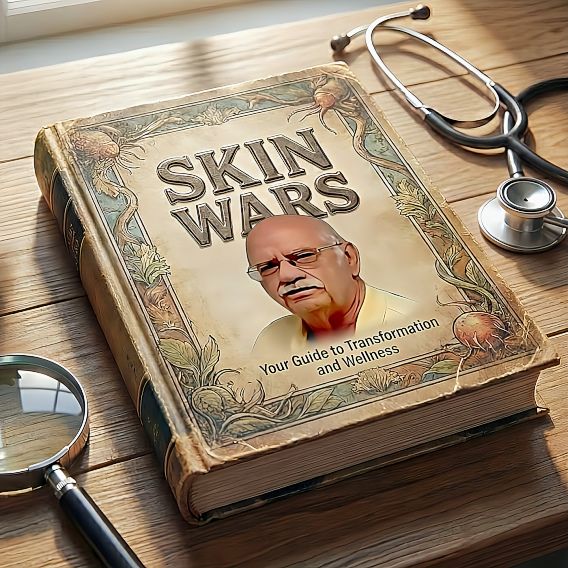

Skin Wars with Richard L Kuhns B.S.Ch.E., and co-host, Robin O'Herron
Comprehensive Strategies for Invisible Skin Parasites and Lyme Disease
On this episode of Skin Wars featuring Richard Kunes, focuses on holistic recovery protocols for skin parasites. The discussion outlines a rigorous multi-pronged approach involving dietary discipline, environmental cleaning, and skin debriding.
Defining Morgellons and its Co-factors
Morgellons is primarily identified by the presence of filaments or fibers emerging from the skin, which may be microscopic, multi-colored, or fluorescent. Participants noted that these fibers sometimes exhibit movement, leading to the hypothesis that they serve as protective environments for microscopic parasites. While often associated with Lyme disease, the experts suggest that Lyme is frequently a co-factor rather than the primary cause, with other organisms like springtails (Collembola), mites, and fungal pathogens playing more significant roles in the "plethora" of symptoms experienced by patients.
The "King Diet" as the Foundation
The "King Diet" is described as the most critical element of the recovery program; without it, other interventions are unlikely to succeed. This diet is significantly more restrictive than standard Paleo or Mediterranean diets, excluding items like carrots, peas, asparagus, and even certain breath mints or salts containing sugar. The goal is to eliminate the internal biological support for the parasites, which can react aggressively to even minor dietary slips, such as the consumption of ice cream or non-compliant stevia.
Skin Debriding and Environmental Hygiene
External management involves "debriding" the skin using specialized soaps—such as Nature's Gift, charcoal, or silver soaps—to physically remove fibers and organisms. Simultaneously, the environment must be aggressively managed. This includes using ammonia or hypochlorous acid for disinfecting living spaces and vehicles, and employing specific laundry protocols to prevent re-infestation. Participants emphasized that because these organisms are molecular and highly contagious, even sitting in a chair can leave behind infectious material for the next person.
Addressing Specific Sensitivities and Myths
The call addressed sensitive issues, including infestations in private areas and the scalp. For sensitive skin, the experts recommend diluted Nature's Gift or specific gels rather than harsh vinegars. They also debunked the efficacy of standard cleaners like Windex, advocating for stronger, targeted disinfectants. A recurring theme was the lack of recognition from traditional medical practitioners, who often misdiagnose these conditions as "delusional parasitosis" due to a lack of training in molecular parasites.
Recovery from Morgellons and skin parasites requires an uncompromising commitment to a "structured" lifestyle. Success is found in the synergy of the King Diet, aggressive environmental hygiene, and consistent skin debriding. As emphasized by the coaches, "nothing will work if you don't get the diet to work" and maintain a clean environment simultaneously.
Skin Wars
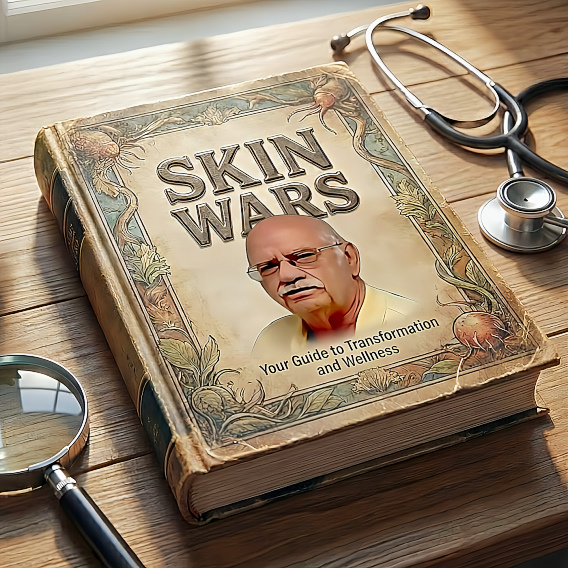

Skin Wars: Beating Morgellons, Chronic Lyme, and Other Skin Parasites
The Tools You Need to Get Your Life Back
1. The King Diet aka Morgellons Diet
How would you like to get rid of all the discomfort of biting and itching within just a few days?
Sounds too good to be true? Well, it’s not and the secret is the three phase Morgellons aka King Diet. Hundreds of others have successfully used this amazing diet to get their lives back – healthy for you and not so healthy for the parasites.
This diet, worth thousands, is totally free by providing your first name and email address in the form above. Sign up now and kick the parasites out of your life!
2. Nature's Gift® Debriding Soap
The sub-molecular particle size of this solution cleans not only the pores, but the cells inside the pores.
How it works: What happens when you get a pebble in your shoe? Answer: You must remove the shoe and get rid of the pebble. Here a tiny pebble weighing less than a gram dictates your behavior.
That’s how Nature’s Gift® Debriding Soap works – it irritates the parasites such that they must leave your skin. No other solution works as good or is as effective than Nature’s Gift® Debriding Soap.
3. Cleaning Your Environment
By now, you must know that the parasites have infested your furniture, clothing, bedding, automobile, and so on. We have proven steps to disinfect these areas to keep you from being re-contaminated.
4. Build Health & Immune Function
By now your health and immune functioning is probably compromised. Specific supplements are recommended to rebuild your health.
The FDA has not evaluated these statements. This information is for educational purposes only. Before starting the King Diet or implementing any recommendations consult with your attending physician to make sure that they do not interfere with any medical issues you have. This is information is not to be considered diagnosis, treatment, or cure or means of mitigation or prevention of any disease. Please see your physician for diagnosis and treatment. It is to educate you on how to clean your environment, skin, body, and how to improve your general well being.
[00:01] Speaker 1: Welcome, everyone. It is Sunday, April 12th (bell rings) . Can you believe it? April's almost halfway over and this is the Morgellons Think Tank Call of the Week and the BBS Parasite War Podcast. I don't know if I got that right. I'm still working on the intro. Anyway, we are so glad you're here. If you are struggling with m- ind- invisible parasites, Morgellons, Lyme, other skin parasites, you've come to the right place. We have answers, we have solutions, and we have a community of people who care. That's the biggest thing, I think. When I was searching for answers and getting ready to burn my house down, I found Richard and his book and this call, and it saved my life. It saved... and it saved my house (bell rings) . I'm sure my house is grateful. (laughs) But, um, so, you know, we, we are a community that cares. We help one another. Richard is a world-leading expert on Lyme, Morgellons, and other skin parasites. He has 13 editions of his book.
[01:16] Speaker 1: He, he's constantly learning, constantly researching, constantly updating us on new things, finding speakers to share their ex- strength and knowledge and experience with us. So, at this time, I am so happy to welcome Richard Kunes, author of How to Get Your Life Back from Lyme, Morgellons, and Other Skin Parasites, and host of the Parasite Wars BBS Podcast.
[01:48] Speaker 2: Skin Wars.
[01:49] Speaker 1: (laughs)
[01:49] Speaker 3: Thank you, Robin. Yes. It's the Skin Wars Paras- uh...
[01:54] Speaker 1: Mm-hmm.
[01:55] Speaker 3: ... pod- (laughs)
[01:56] Speaker 1: I'll get it. I'll get it one of these times.
[01:58] Speaker 3: Yes.
[01:58] Speaker 2: That's a mouthful.
[02:00] Speaker 3: All right. Uh, well, uh, let me start by saying that, uh, my program is based on my book, How to Get Your Life Back from Morgellons. Chronic Lyme is not on this title because I didn't wanna start the whole process over, but, uh, and that is... We have over, gosh, uh, about 274 and 5 star reviews with this title. And if I add chronic Lyme in it, they all get wiped out and starts all over again, but as Robin mentioned, and you know, chronic... Lyme is, uh, a pussycat as far as I'm concerned. Uh, it was something that I dreaded for many years of my life and was r- deathly afraid if I ever came down with it, that would be the end of me. And guess what? It almost was. (laughs) It, it almost, uh, tipped my scale to, uh, six feet under, it was that bad. But, uh, I discovered, uh, uh, what is necessary to, to deal with it, and that was, that's what happ- Now, eh, the title also says something about the unraveling the connection with Lyme disease.
[03:16] Speaker 3: Uh, again, uh, this was written, uh, this title was written probably about maybe 10 years ago when I was, uh, uh, greatly influenced by some of the work done at the Charles Homan Association and connecting with Lyme disease. Not that Lyme disease isn't important, uh, but, uh, you know, anybody who hangs their hat on thinking that Morgellons is highly connected to Lyme disease is really out of touch. Way out of touch. Uh, because I could just as easily say, you know, back in 2006, there was some guy who actually believed that Lyme disease, that Morgellons was, uh, uh, Strongyloides auriculans. So he could, he would have said unraveling the connection with Strongyloides auriculans. Uh, since then, you know, I've talked to many other experts around the world. One in Europe, uh, felt that was connected with helminths, worms, uh, nematodes, and that would be to change the title, uh, uh, Unraveling the Connection with Worms.
[04:23] Speaker 3: Uh, an- and then we have, uh, a long, uh, so, uh, a fellow, uh, who swears it's a fungal issue. And, you know, of all the, uh, all the hypotheses, I, I kind of agree with that. It is connected with, uh, a fungal organism and very well may be a fungal organism. So we could say unraveling the connection with, uh, fungal organisms, um, it being a specific fungal organism. And if you read my book, there are, uh, list of probably 20 or 30 co-factors. Uh, now, what these co-factors do... Well, before I get into that, I need to make my, uh, statements. This book and anything in it is not evaluated by the FDA. In fact, the FDA requires me to inform everybody on this call that, uh, before you start my diet or accept any part of my protocol...
[05:30] Speaker 3: I mean, regulations are written such that if I say to you, "The answer is to drink a lot of water," and certainly hydration is very important, you are supposed to take that information to your doctor and say, "You know, Richard Kunes says I should be drinking a lot of water. Uh, would that be contraindicative to my health problems?" Uh, the... So the bottom line is, that is what you would be doing. Uh, before you start my diet or accept any of my recommendations, the FDA requires me to tell you to go to your medical doctor...... who might have already told you you're suffering from delusions of perithetosis, and ask him if the diet or any of my recommendations will be a problem, uh, with any of your health problems. (bell dings) The AMA requires me to inform you that none of us are medical doctors. We are not. And only, by law, medical doctors, licensed physicians, are allowed to diagnose, treat, cure, prevent disease. We do none of that.
[06:39] Speaker 3: So, if we can't do any of that, what can we possibly do? Well, we can educate you. We can educate you. First of all, let ... Just because this is a podcast, and who knows, you may not be in my program, and I hope that there are people from, uh, uh, Morgellons Uncensored and maybe some of the other Facebook groups, uh, uh, joining us today here. Uh, and quite frankly, when you're listening to me and my coaches and the people that have been in the program for some time, you're gonna think we're out of space. (laughs) I mean, where did these people come from? But what you will come away with is we are structured. We have structure from A to Z. We can tell you how to disinfect your bathroom, your kitchen, your car. We can tell you how to do your laundry. We can tell you ... What else can we tell 'em, Robin?
[07:37] Speaker 1: Just about everything. How to take care of your stuff, your skin, your clothes, your laundry, your bedding, your car, um, rugs, floors, a- and everything in between. Health, vitamins, um, nutrients, diet. Y- we've got it all covered.
[07:57] Speaker 3: I don't think we miss a beat.
[08:00] Speaker 1: (laughs)
[08:00] Speaker 3: And in the int- in the intro, you mentioned that we are the experts. What do you mean by that?
[08:07] Speaker 1: Well, through hard time, trial and error, we have come up with a solid way to get your life back with things that actually work.
[08:21] Speaker 3: Real things that work. Now, how do you know they work?
[08:24] Speaker 1: Well, 'cause I've done them and they work. (laughs)
[08:27] Speaker 3: (laughs) And, and you're a coach. And how many people have done them that you've shared? How, how many have you helped?
[08:33] Speaker 1: I ha- I haven't kept count, but I know that, uh, many people that I have coached have gotten their life back.
[08:40] Speaker 3: In fact, some of our coaches work with you.
[08:43] Speaker 1: Some folks ... Right. Right.
[08:45] Speaker 3: Yeah. So, uh, so we mean business. We get results. So starting with education, would you educate us to, as to what Morgellons actually is? What are the symptoms? What defines whether a person has Morgellons or not?
[09:03] Speaker 1: Sure. Um, well, it's, it's des- uh, it's defined by, um, f- fibers that come out of your skin is the main thing that ... And sometimes they can be almost microscopic, so that sometimes you think you don't have ... There are ways to test for those fibers. And then, you know, there's lesions, there's itching, there's biting.
[09:26] Speaker 3: Now, be- before, before you go on, the filaments and fibers, what, uh, c- can they be of various colors?
[09:32] Speaker 1: Yes. Yes, they can. They can-
[09:35] Speaker 3: Might they be fluorescent sometimes?
[09:37] Speaker 1: Yeah, they can be fluorescent sometimes.
[09:39] Speaker 3: Yeah. And might they move? You ever hear anybody t- saying that the filaments move actually?
[09:46] Speaker 1: Yes, absolutely. And I personally think it's because I think Morgell- This is my personal opinion, but I think Morgellons are a microscopic parasite and they build environments for themselves to live in. And the fibers are one of the environments they build, and that's why they move, 'cause they're filled with little Morgellons.
[10:08] Speaker 3: So, not all filaments and fibers are reported to move, but m- some are reported to move.
[10:14] Speaker 1: Right.
[10:14] Speaker 3: So, they can be a very ... Now, this is what Dr. Saverley, in her book, defines as Morgellons. Now, you went on to itching, right?
[10:25] Speaker 1: Right.
[10:25] Speaker 3: What are the-
[10:26] Speaker 1: Right.
[10:27] Speaker 3: Now, is Morgellons the only thing that would cause itching of the skin?
[10:34] Speaker 1: No, not at all.
[10:36] Speaker 3: What else might cause itching?
[10:39] Speaker 1: Um, it could, it could be a fungal infection. It, it ... I mean, there are so many things that can cause itching. It's-
[10:46] Speaker 3: Like skin fung- skin fungus could cause it?
[10:49] Speaker 1: Yes.
[10:50] Speaker 3: What else? Springtails, maybe?
[10:55] Speaker 1: Springtails can cause itching and biting, yes.
[10:58] Speaker 3: Mites?
[10:58] Speaker 1: And mites. Mites, absolutely. Yes.
[11:03] Speaker 3: Okay. But so far, filaments and fibers actually defines Morgellons. H- how about intense, uh, biting sensations that feel like it goes to the bone? Would that be Morgellons?
[11:15] Speaker 1: I think that that can ... I think it's more likely springtails or mites, but it can be Morgellons.
[11:21] Speaker 3: Okay. So, uh, the- these are different symptoms, and we're kind of, uh, defining what can be involved, because Morgellons generally does not exist by itself. Along comes Morgellons, and along comes springtails, and along comes mites, and sometimes bed bugs and, uh. So, we have a plethora of things going on. So, the, the identifying aspect of Morgellons is indeed filaments and fibers. Now, how about things coming from the skin? Like, some people report plastic barbs, or cocoon-like things, or things like spiders, 16 legs coming out of their skin, goo, and stuff like ... What about that kind of stuff? Where ...
[12:09] Speaker 1: I think that that's all related to Morgellons. I mean, they, they mutate and they create weird stuff in your body. Um, it's, uh, you know, there's not a lot of medical research about Morgellons. We know what we experience and we have the pictures to prove it. (laughs)
[12:29] Speaker 3: All right. So it's, it's Morgellons. Now, what about myiasis?
[12:34] Speaker 1: I don't know about that.
[12:35] Speaker 3: Okay. Well, myiasis is when like, for instance, you're bitten by a fly or bitten by a midge and they lay eggs under your skin and they breed, and they then come from your skin as well. You may or may not have Morgellons associated with it, but that is another issue. It could be myiasis as well.
[12:54] Speaker 1: Right.
[12:54] Speaker 3: But the, the filaments and fibers pretty well define you as Morgellons. And you mentioned something, uh, uh, transmuting... You, you know, Morgellons is a DNA thing. It modifies DNA. So when you have Morgellons and you c- you, you can contract it from an insect, and when that insect, uh, is breeding under your skin, it... The DNA of that insect is modified. So as one lady reported, the spider that emerged, emerged from her skin didn't have eight legs, it had 16. So these organisms then as they come out look weird as hell, because nobody could ever identify a 16-legged spider.
[13:46] Speaker 1: Right.
[13:46] Speaker 3: So, all right, so we're on the same path. We understand. Now, uh, we talked about diet. H- h- how is diet related? Sharon, do you wanna answer that? Or how is diet connected with what we do here?
[14:00] Speaker 4: Oh my goodness. Diet is most important. The King Diet is how you get your life back. If you don't do the... make the King Diet work for you, there's no need to do anything else. You've gotta make the King Diet work before you can start debriding your skin and cleaning your environment. You wanna do all of those hand-in-hand, but the diet is most important. If you wanna stop-
[14:25] Speaker 3: So how many-
[14:26] Speaker 4: ... ******* and all.
[14:26] Speaker 3: How many things do you need to do at the same time? We're get- we're getting started here. How many things do you need to do at the same time?
[14:33] Speaker 4: Oh, you need to do them all at the same time, and with aggression. Don't leave any, uh, any rock unturned. So you wanna make sure that you're, um, combating your environment, you wanna make sure that you're debriding your skin, you definitely wanna make sure that you're on the King Diet, because that's where the beginning of life starts again, where you can sleep. Very important word. Sleep. You get to sleep again after you eat properly on the King Diet.
[15:04] Speaker 3: Now, you mention, you mentioned a word debriding. What does that mean, debriding your skin?
[15:10] Speaker 4: Oh, we wanna use our nature's gifts. I use the soap because I shower. But if you're taking your baths, you definitely wanna use your nature's gift to pull the, the filaments and fibers out of your skin. That's what debriding is. You're going to-
[15:25] Speaker 3: Well-
[15:25] Speaker 4: ... emerge everything out.
[15:26] Speaker 3: Is, is that the only way you can clean your skin, nature's gift? I mean, uh, we're, we're really... you know, I don't, I don't want anybody get the idea that, that you gotta go buy things. Uh, I mean, I, I do have probably the best store and the best products in the entire world. But the last thing I want anybody to say is, "Taj's making a big buck off of me. That's all he's out here for." You know? So what else can you do to clean your skin, deep clean your skin?
[15:55] Speaker 4: There are some other soaps that you can use. Um, one of the protocols includes the Dawn dish soap. So you can use that, um, as your bath soap. You can use a charcoal soap. Um, there's even a silver soap that you can use, um, from Amazon. So there are different things that you can use. But what works best for me is the soaps, the Indian soaps.
[16:20] Speaker 3: Thank you. All right. So cleaning, debriding, and the environment. Uh, we talked about that a little bit earlier. So now we're educating you. So we know what Morgellons is. We know that there are other skin parasites involved, fungal issues, skin fungus, Strongyloides saricollis. Goodness' sake, what is Strongyloides saricollis? Well, it's a nematode, and it is recognized by the CDC, and you can go there and look it up and you'll see its life cycle inside and outside of your body. Uh, much to my surprise, because I did have Strongyloides saricollis way, way, way back in the '90s when I first was in- infected. And I assumed that because I was itching that that was part of the itching aspect of it. But strangely enough, if you look up the symptoms of Strongyloides saricollis, and I'm, uh, I, I say very few people actually have it, probably less than 10% of the people that I work with. As opposed to, um, th- everybody who has Morgellons, at least 90% have, are dealing with springtails.
[17:33] Speaker 3: That's Collembola. If I'm working with Collembola, at least 90% have Morgellons. You get the picture there? That's a, that's a biggie. How many people actually have Lyme disease and are dealing with it? Uh, maybe like 20%. Not the, not the numbers that, uh, uh, others would lead you to believe. Uh, even though I myself contracted it, and it almost killed me, it had nothing to do with Morgellons. I contracted Lyme disease long, long, long, long before I ever had any experience dealing with Morgellons. So I can say that it is not...... causative necessarily of Morgellons, although it's a co-factor, and along with bed bugs can come Morgellons, along with mites can come Morgellons, along with Columbola can come Morgellons, along with Lyme disease can come Morgellons. All right? So they're just co-factors, uh, and that's, that's the reality of it. Well, anyway, uh, I think it's time to maybe open up the lines for Q&A. I was hoping, uh, Kerry, uh, could be with us today.
[18:52] Speaker 3: She's not feeling well. And we send her love and, uh, energies to, uh, uh, get her back on track and participating, uh, with us on a regular basis. That would be wonderful. Because our goal here is to move beyond what you see on Facebook. I mean, you can t- you can see things on Facebook, but where do you, where do you go? What do you g- I mean, what's next? You know, confusion? Uh, I, I occasionally, I've learned some things from Facebook. I've, uh, uh, seen posts by other professionals on Facebook, uh, explaining how to deal with worms. Uh, Dr. Lodi, I believe, was a, a post on Facebook, and I learned, uh, a lot about the connection or the, the use of ivermectin and Fenben, and how to use them as opposed to many people just use ivermectin, and they use ivermectin, and they use ivermectin, and they use ivermectin year after year and get nowhere, other than maybe a toxic liver over a long time. But, uh, it, it's how to use these medications, and there are other alternatives.
[20:08] Speaker 3: I mentioned last week, I did see a post on Morgellons Uncensored by a doctor. I didn't jot down her name, but she was talking about using castor oil packs, uh, to get rid of worms. I'm not sure if that's all kinds of worms. I w- led to believe, or from what I read, that it would deal with tapeworms as well. I don't know. Uh, but we're, we're here to get educated, to learn more, to, uh, make the path smoother and faster and easier for everybody. Now, this is, as I said, overwhelming. But consider this: if you're new and have come from Morgellons Unc- Uncensored, uh, some of what we might be talking about, eh, is, is kind of ringing a bell, and, and, uh, uh, but it's overwhelming. And it, it's like learning a new job. Uh, the diet itself is not easy. It can be if you follow instructions that are perfect to the letter. But there are nuances, and not everybody, uh, that... With some people, some modifications to the diet.
[21:22] Speaker 3: It's, it's effective, I'd say, for 90% of the people just the way it is. The other 10% need to figure out the nuance and what makes it work for them. But you know what? It's diet-connected. Not the Paleo, Paleo Diet, not the Mediterranean Diet, not the Hypoglycemia Diet, not the Caveman Diet. Well, they are all a part of this, but this goes 10 steps beyond any diet in the entire world. Can you imagine a diet that carrots are not allowed? Peas, asparagus, olive oil? Well, one little Tic Tac breath mint? Morton's Salt, although salt is good, but not s- because it's got sugar in it. Stevia, but you gotta be careful because a lot of stevia, even though it might be rated as organic, has organic sugar in it, (laughs) as well, or, or maybe, uh, xylitol or something else in there. Okay. I'm gonna open up the phones now, and, uh, uh, did anybody leave their number, uh, with a question that they may have?
[22:42] Speaker 5: Uh, Carol.
[22:44] Speaker 3: Okay. Welcome.
[22:47] Speaker 5: Carol4863, you can unmute your line by pressing star six.
[22:57] Speaker 3: Hello? Hello? (keyboard clacking) Uh, who's next?
[23:09] Speaker 6: So if, if, if, um, Chris unmutes you, you know, there's a delay. Don't keep hitting star six.
[23:19] Speaker 5: Hmm. Hello?
[23:26] Speaker 3: Who's next?
[23:26] Speaker 2: Richard?
[23:28] Speaker 5: Hello?
[23:29] Speaker 3: Hello?
[23:29] Speaker 5: Hello?
[23:29] Speaker 6: Yes, she's still muted.
[23:30] Speaker 5: Yes, my name is Gary.
[23:31] Speaker 3: Hi, Gary. I see you're unmuted. Welcome.
[23:34] Speaker 5: Yeah. I live in Montebello, California. Um, now, I've been having problems with, with this for quite a while now. And, uh, of course, it's never been diagnosed. I wish I could get a medical diagnosis because, um, I'm, I've, I've been in pretty bad shape. I even got a DUI, and, uh, I've been driving still but the other day, I had a, um, confrontation with a, with a police officer, and he told me, "Don't ... You cannot drive anymore." So he told me my license, uh, went to warrant, uh, and, and, or was suspended and, and warrant.But he didn't, he didn't mention the ward part but it, but anyways, so I've been, I've been going through a lot. I wish, I, like I said, if I had a diagnosis from, uh, somebody I could show the judge, uh, 'cause I did originally go to court and I had an attorney. It cost me, like, almost $6,000, but I didn't do the, uh, requirements of the court which is, you know, go to mad meetings, go to AA meetings, put a device on my car and all this stuff.
[24:43] Speaker 5: I, I was in bad shape. I, I mean, I just didn't care. I mean, I wasn't looking at my mail. I wasn't doing nothing. And I, I gotta get back into, um, you know, living a life, you know? But I'm still, I still got ... I know I have Morgellons. I could take hairs off of my, off of my hair, off of my head and my beard and it's so thick. They'll ... And somebody told me, I think it was Sharon told me, that those are eggs. So I'm pretty sure it's Morgellons. But I also get these little black things. I mean, they are so small, probably, uh, an eighth the size of a small ant, you know?
[25:26] Speaker 3: Oh, yeah, yeah.
[25:26] Speaker 5: But they're little round things.
[25:27] Speaker 3: Uh, generally, the black specks are connected with, uh, mites in general. Uh-
[25:32] Speaker 5: Yeah. Some kind ... That's what I thought.
[25:34] Speaker 3: Yeah.
[25:34] Speaker 5: Some kind of a mite.
[25:35] Speaker 3: Yeah. I don't know what a diagnosis of Morgellons would do for you, any more so than a diagnosis of Lyme disease in, in your situation. I get it that you're stressed out to the nth degree, and I know what that feels like, and, uh, uh, I've been there, and, uh, uh-
[25:53] Speaker 5: But I got a DUI on top of everything else.
[25:55] Speaker 3: Yeah.
[25:55] Speaker 5: The cherry was on top of the whole works, you know?
[25:58] Speaker 3: Yeah.
[25:59] Speaker 5: It's, it's like, ever since I retired at 65, I'm 70 now, um, I had nothing but problems, you know? I wrecked my truck, uh, busted my kneecap, hurt my back, uh, got a DUI. I mean, I was ... And I was drinking a lot and not hardly eating. So, uh, I was kind of thinking too, maybe that compromised my immune system and maybe that's why I became susceptible to it. But, uh-
[26:24] Speaker 3: What, what, uh-
[26:26] Speaker 1: Can I, can I jump in here? Can I interrupt for a minute?
[26:27] Speaker 3: Sure.
[26:28] Speaker 1: A diagnosis of, of Morgellons is not gonna help with alcohol-related ...
[26:33] Speaker 5: Well, I don't drink anymore. I stopped two years ago.
[26:36] Speaker 1: Well, that's good. So, so, you know, maybe you can, uh, go to the court and ask to, them to reevaluate what's going on.
[26:43] Speaker 3: Sure.
[26:44] Speaker 5: Uh-
[26:44] Speaker 1: But if that has something to do with Morgellons, it's a separate issue.
[26:48] Speaker 5: Yeah. I'll, I'll, um, throw myself on the mercy of the court. I hope they won't (laughs) lock me up, you know? But, uh, anyways, I tell everybody now, uh, "You don't have to, you don't have to drink to have a good time." And drinking is a privilege, it's not a right, and if you abuse it, you're gonna lose it, guaranteed. You know?
[27:08] Speaker 1: Right.
[27:08] Speaker 3: Okay.
[27:08] Speaker 5: So, I, I don't ... I'm done with that stuff but I still got Morgellons.
[27:13] Speaker 3: Yeah.
[27:14] Speaker 5: And some kind of a mite problem.
[27:16] Speaker 1: Yeah.
[27:16] Speaker 3: Well, uh, do you have the protocol? Start the diet? The ... That's something we can help you with.
[27:22] Speaker 5: Yeah. Sharon's, Sharon's been my coach, uh, for last, I don't know, maybe couple years, at least.
[27:27] Speaker 3: Mm-hmm.
[27:27] Speaker 5: Um, Sharon would know more, maybe have a better memory of that than me. And I used to listen also to, uh, to, to Russ-
[27:37] Speaker 1: It's been a while.
[27:37] Speaker 5: ... Russ, Russ Crescentia. And-
[27:40] Speaker 1: It's very different. Yeah.
[27:40] Speaker 5: Yeah, I don't know if you know, but he had a, he had a stroke and, uh, I'm not sure how he's doing right now. But, uh, the one taking over, Kelly, for, for him, uh, she hasn't been answering the phone when I call. I don't know why. But I need to buy more products and stuff, and I need to really buckle down and attack this. And I, I think too, I, I've gotten so weak physically, you know? I, I used to be in very decent condition.
[28:09] Speaker 3: Yeah, it, it definitely has a toll. Now, when you say buckle down, have you started a diet? Are you doing it?
[28:14] Speaker 5: I've been doing the best I can. Uh, my house is infected, and so I don't feel comfortable cooking here. I mean, I usually go out, but now I can't-
[28:26] Speaker 3: Well, you-
[28:26] Speaker 5: ... even drive to go out, you know?
[28:27] Speaker 3: Well, I ... You know, there, there's a problem because going out is very difficult to control what you eat, and then you ... If you're contagious-
[28:35] Speaker 5: Yeah.
[28:35] Speaker 3: ... you're not being socially responsible, you're potentially spreading it to other people. Uh, you-
[28:41] Speaker 5: Well, I try to, I try to stay away from other people, you know, keep a distance and stuff.
[28:45] Speaker 3: It doesn't matter. If you sit-
[28:47] Speaker 5: Yeah.
[28:47] Speaker 3: ... in a chair, if you si- if you're the only one in the restaurant and you sit in that chair, you're depositing these organisms and the next person that sits in that chair potentially can be susceptible to picking them up.
[29:00] Speaker 5: They could. They could. That's ... This is true. I agree with you, but I, I think this stuff is so selective as to who gets it and who doesn't. Uh, because I've talked ... Like, even my sister, I try to tell her, "Don't eat sushi," you know? "Oh, what are you talking about? I've been eating it for 15 years," you know? And I've never gotten any kind of, uh, parasite from it, but I don't know. I try to talk sense to people, and, but they just don't believe, uh, in parasites. Like, you can't get it, you know? They t- I don't know. You could even get it from the tap water, I heard. Is that true? Richard?
[29:40] Speaker 3: There are people that have gotten it from, uh, using wells out in the country, that they, uh, bui- uh, build up fly mold and things like that. Uh, Robin, can you take over for a few minutes?
[29:51] Speaker 1: Sure. Um, uh, first of all, you know, Morgellons is more epidemic than Lyme. And just because not everyone gets it-
[30:02] Speaker 5: Wow.
[30:02] Speaker 1: ... doesn't mean that it isn't really highly contagious. It is.
[30:06] Speaker 5: Yeah.
[30:07] Speaker 1: And-
[30:07] Speaker 5: What is wrong with doctors that they don't wanna recognize it?
[30:10] Speaker 1: Because that, that ... Well, first of all, doctors aren't trained in molecular parasites. And so they have no clue how to deal with it.And, and, um-
[30:20] Speaker 5: And, you know, th- these things, I think, have the, uh, ability to become invisible.
[30:26] Speaker 1: No, they're-
[30:27] Speaker 5: Uh, no.
[30:27] Speaker 1: ... they are molecular. You can't see them unless you-
[30:30] Speaker 5: No, but sometimes, sometimes I put, uh, stuff on them. Like, they might be in my sink, and once I put s- like alcohol or something, then I could see them. They... All of a sudden-
[30:39] Speaker 1: Yeah. Well, that all-
[30:39] Speaker 5: ... oh, I can see it now.
[30:40] Speaker 1: Well, first of all, I think that you have... He, if you're talking about... You can't see eggs from Morgellons. You can see... And you can barely-
[30:48] Speaker 5: What-
[30:48] Speaker 1: ... see eggs from mites. The mites-
[30:50] Speaker 5: Well, what is on the h- shaft of... The, the, the part that's below-
[30:55] Speaker 1: Well, it could-
[30:56] Speaker 5: ... the-
[30:56] Speaker 1: It's either mites or, or, um, uh, fle- fleas or, uh-
[31:05] Speaker 5: Could, could that be Morgellons though? 'Cause that's what I've been calling Morgellons.
[31:08] Speaker 1: Well, all of the... All those other insects can be carriers of Morgellons.
[31:11] Speaker 3: Okay.
[31:12] Speaker 5: But the dealing with Mor-
[31:13] Speaker 3: Have, have you read the book? Are you reading the book?
[31:15] Speaker 5: Yes.
[31:16] Speaker 3: All right. Chapter three. You wanna read it at least 15 times. Dog ear it, make notes, because it's all, it's all explained right there in chapter three, how to disinfect. Basically if you're dis- i- if you're disinfecting for Morgellons, uh, you can simply use ammonia. Uh, some people, uh, you know, had, had success with hypochlorous acid, but I think ammonia is better. And, uh, disinfect. Uh, follow the instructions in there. Gotta disinfect, uh, uh, everything, everywhere.
[31:45] Speaker 5: Right.
[31:45] Speaker 3: And, and it's very detailed. It's about 50 pages.
[31:49] Speaker 5: Right. I've been using Windex and then I add more, uh-
[31:52] Speaker 3: Windex is a waste-
[31:52] Speaker 5: ... ammonia to it.
[31:53] Speaker 3: Windex is a waste of your time. Follow the book. The book tells you-
[31:56] Speaker 5: Well, it seems like it... It seems to be effective.
[31:59] Speaker 1: Uh, uh, uh-
[32:00] Speaker 3: Please, say it to be.
[32:01] Speaker 1: ... and Windex, uh, some Windex has ammonia in it and it's a little bit effective, but it's not-
[32:05] Speaker 3: A little bit.
[32:06] Speaker 1: ... effective, uh.
[32:06] Speaker 3: But, uh, use ammonia or use hypochlorous acid, or something like that, uh, and you just have to read the book. Okay. Thank you-
[32:15] Speaker 5: Mm-hmm.
[32:15] Speaker 3: ... for coming back. Who's next?
[32:17] Speaker 5: Okay.
[32:22] Speaker 3: Anyone else? Who's next? Star six.
[32:25] Speaker 4: Richard, I have a quick question. You had mentioned something a few moments ago about castor oil packs. Now, when I was a, when I was a child, my mother would give us castor oil for like, you know, for worms and things of that nature. Now, is it the castor oil that you consume or the castor oil that you put on your hair that goes in these packs that you're talking about?
[32:49] Speaker 3: I'm not really sure. Accordin-... I, I think if you go and you search and look for castor oil packs, you can find them there. Uh, but I'm, I'm not familiar. That's why I was hoping that, uh, perhaps, uh, uh, since the post is on Kerry Anne's, uh, Uncensored Morgellons, that she could enlighten us.
[33:09] Speaker 4: Mm-hmm. Thank you.
[33:11] Speaker 3: Okay. Star six. Anyone else?
[33:13] Speaker 2: Can I talk about-
[33:14] Speaker 7: Richard, could I say... make a comment?
[33:17] Speaker 3: Who's this?
[33:18] Speaker 7: This is Debra.
[33:19] Speaker 3: Hi, Debra.
[33:20] Speaker 7: Hi. I just want to say, you know, this man that was talking about, um, his problems with, um, Morgellons and Lyme's disease or whatever he had. My personal opinion from listening to him is thinking maybe he should get diagnosed, then he would be-
[33:36] Speaker 3: So, uh, Debra-
[33:36] Speaker 7: ... more positive and treat himself.
[33:38] Speaker 3: Debra, we do not... Does that... Debra, we do not offer advice. You can speak from your personal experience.
[33:42] Speaker 7: Oh, that's true. Yes, true. Well, that's... Well, then I'll speak personally. What I did is I did the research because we were... during COVID, I couldn't see a doctor. I found... I think it was the doctor you speak of. I've got the book, uh, and I saw the photos in there. They lined up with the problem I had with my foot. I saw the fibers because I had a nurse taking photographs of me, of my foot, before they, uh-
[34:06] Speaker 3: (laughs)
[34:06] Speaker 7: ... amputated my foot, which could have been saved, I think, if I had the right doctors. But my... a personal opinion was I diagnosed myself first and then I went to a functional doctor because regular doctors aren't gonna... You have to go to a functional doctor that treats Lyme's disease to get a proper diagnosis if that's what you really want. If you wanna follow and think, well, okay, I got Morgellons or Lyme's disease and take all these treatments which we are doing, then, you know, it's your prerogative. But, it sounds to me like he was seeking advice which we can't give, like you say. So, I'm speaking from my experience. I diagnosed it, I went to a doctor and my diagnosis was correct. It took five weeks because my fr- initial tests through her went to the University of Chicago, Northwestern and other prominent universities have done research on my blood work over the last couple years.
[35:01] Speaker 7: But I think that might help, uh-
[35:03] Speaker 3: Well, o-
[35:03] Speaker 7: ... as far as-
[35:05] Speaker 3: Okay.
[35:05] Speaker 7: ... he really-
[35:05] Speaker 3: Thank you. The unfor- uh, the unfortunate thing is that there is no clinical diagnosis for, uh, organic Morgellons. It's diagnosed as a delusional parasitosis. And that really isn't-
[35:14] Speaker 7: No, I'm, I'm talk... No, I didn't... No. I didn't have that res-... So, do I had a functional doctor that knew what she was doing. She... I got the diagnosis for the, for the bacteria and the parasites were all... It's, uh, like I said, I got the proper diagnosis with my doctor, is... was treated, was taught to, um, to how to help patients with Lyme's disease. She's cured some. I've left her... since I've had her in the background because I'm following your protocol-
[35:41] Speaker 3: I, I don't see the relevan- I don't see the relevancy here in, uh, it being like-
[35:45] Speaker 7: Well, you can... First of all-
[35:47] Speaker 3: ... a court issue.
[35:47] Speaker 7: ... mold, mold toxicity plays a role in Morgellons and I, uh... She didn't tell me this when she diagnosed me. She gave me drugs-
[35:53] Speaker 3: Well, I get. I don't see a relevancy here in a court proceeding with a DUI. I don't see the relevancy.
[36:00] Speaker 7: Well, the DUI is because he's depressed about his problem. His problem is his health.
[36:05] Speaker 3: Okay.
[36:05] Speaker 7: He needs to get-
[36:06] Speaker 3: Well, thank you.
[36:06] Speaker 7: He needs to get it together though.
[36:07] Speaker 3: We're not getting-
[36:08] Speaker 7: Yeah.
[36:08] Speaker 3: We're not gonna get into this conversation. Thank you.
[36:11] Speaker 7: Okay. Bye.
[36:11] Speaker 3: Let's stick, let's stick to what we know. We're not about, uh, to give advice for courts and things of that nature. Thank you. Who's next?
[36:21] Speaker 8: Can I speak?
[36:22] Speaker 3: Yes, please.
[36:24] Speaker 8: My name is Nikki, and I, I just got the book so I haven't even dug into it yet. I will get into it-
[36:31] Speaker 3: Great.
[36:31] Speaker 8: ... this week. But my question to you is, how do I obtain a coach here?
[36:36] Speaker 3: How do what?
[36:38] Speaker 1: A coach.
[36:38] Speaker 8: How do I get a coach? Yeah.
[36:39] Speaker 1: You get the numbers on the unrecorded part of the meeting, at the end, and then you can call somebody up.
[36:47] Speaker 8: Oh, okay. All right.
[36:49] Speaker 3: Okay.
[36:49] Speaker 8: Sounds good.
[36:50] Speaker 3: So at the end of the, end of the meeting, when we, uh, stop the recording, I'll give the, uh, numbers of all the coaches and their names. Okay, thank you. Uh, who else has a question? Star six? Anyone else?
[37:08] Speaker 5: Richard, can I make another comment?
[37:11] Speaker 9: (laughs)
[37:11] Speaker 3: Yes, you may.
[37:12] Speaker 5: Okay. No, I-
[37:14] Speaker 3: Keep it, keep it with, keep it with Morgellons. We're not interested ... We, we-
[37:16] Speaker 5: Okay. Well, I, I don't know what I've got, actually. But listen, one, one of the things-
[37:21] Speaker 3: All right. Let, let-
[37:22] Speaker 5: One of the symptoms-
[37:23] Speaker 3: Let ... Before you comment, do you have filaments and fibers growing from your skin that are abnormal?
[37:29] Speaker 5: Yeah.
[37:30] Speaker 3: All right. Then I, then, then-
[37:31] Speaker 5: They don't look right, right to me.
[37:33] Speaker 3: According to Dr. Saverli, you are dealing with Morgellons.
[37:37] Speaker 5: Yes.
[37:37] Speaker 3: Now what's the next question?
[37:38] Speaker 5: Okay. Well, my fingertips get numb, and, well, and so, like, when I wash my hands, they still feel wet. So I'll rub them together, I mean hard, really-
[37:50] Speaker 3: Okay.
[37:51] Speaker 5: ... uh, over and over again, and I get all this stuff coming off. This cannot be skin. I wouldn't have skin left if, if this was skin that's coming off.
[37:59] Speaker 3: Okay. Then are you doing finger baths? Are you doing finger baths with, uh-
[38:04] Speaker 5: No.
[38:04] Speaker 3: ... uh, apple cider vinegar and maybe the Nature's Gift in a finger bath? I-
[38:07] Speaker 5: I should. I should. I need, yeah. I need to, I need to buy some more products.
[38:11] Speaker 3: As far as the numbness goes, that, uh, sounds like a circulation issue. I, uh, I, I don't know what that's about. You know?
[38:19] Speaker 5: Yeah. It comes and goes. It gets worse at times, like, like, if I could feel, oh, something got on me, I could feel that. Like almost like, uh-
[38:28] Speaker 3: All right. Well, let, let's start with a finger bath, some Nature's Gift-
[38:31] Speaker 5: Finger bath, okay.
[38:32] Speaker 3: ... and, and, uh, apple cider vinegar. Or just plain vinegar.
[38:34] Speaker 5: How about regular vinegar? White vinegar?
[38:36] Speaker 3: White vinegar's fine. Okay.
[38:38] Speaker 5: Okay.
[38:38] Speaker 3: Thank you. Okay, someone else?
[38:40] Speaker 5: Thank you.
[38:43] Speaker 3: Star six, someone else?
[38:44] Speaker 10: Yes, hi. Mar- Maris in Georgia.
[38:48] Speaker 3: Hi, Maris.
[38:48] Speaker 10: Hi. Well, I just was wondering where Gary was and, boy, would, did he get some airtime. Uh, okay. (laughs) Hi, Gary. Bye, Gary. Um, can we have-
[38:57] Speaker 5: How are you doing?
[38:58] Speaker 3: That's okay.
[38:58] Speaker 10: (laughs) Can we have Boston lettuce or green or red leaf lettuce?
[39:03] Speaker 3: Of course.
[39:05] Speaker 10: Thank you. Can we have cumin, cloves, or basil?
[39:10] Speaker 3: I believe so. You can have all of them I would think. What do you think, Romie?
[39:13] Speaker 10: Oh, okay.
[39:14] Speaker 1: Yes. Um, I just wanted to say, uh, you can have any lettuce, but lettuce is mostly water and sugar.
[39:20] Speaker 10: Mm-hmm.
[39:21] Speaker 1: There are ... Uh, you'd be better off with kale and spinach and red and white-
[39:27] Speaker 10: Oh.
[39:27] Speaker 1: ... cabbage and use those in salads.
[39:30] Speaker 10: Don't say that after spinach. Kale, spinach, and white spinach?
[39:33] Speaker 1: No. Uh, cabbage. Red and white cabbage.
[39:37] Speaker 10: Red and white cabbage. Yeah, got a lot of cabbage going on there, which was my next question.
[39:42] Speaker 1: Okay.
[39:43] Speaker 10: My next question is, can we have, um, spinach? And you said yes. So we, so we can have some leafy greens. We can have some leafy greens. Are there any leafy greens we cannot have?
[39:55] Speaker 1: No. There are no leafy greens that you can't have. Um-
[39:59] Speaker 10: What does the, what does the diet say? I think this is all specified in the diet. Lettuce is lettuce.
[40:03] Speaker 1: Yeah. And, and, and when I do that, then, uh, it, um, needs correcting, uh, from time to time. So that's why I like to ask the question. Can we have artichokes? No. They're too oily, right?
[40:15] Speaker 3: Mm-hmm.
[40:15] Speaker 1: Um, I, I don't know. You might be able to do artichokes in stage two.
[40:19] Speaker 10: And ... Artichokes stage two, zucchini stage two. I'm experimenting with zucchini only because we had a lovely woman that was experimenting with zucchini, and it might be, she might be zucchini specific. Okay. I think we can have organic green tea. Yes?
[40:35] Speaker 1: Yeah. The only thing about teas is that you just wanna, you don't wanna have them to have, like, a lot of other ingredients in them. If it's just green ... You have to, still have to read labels. Just because it's-
[40:46] Speaker 10: Exactly.
[40:47] Speaker 1: ... organic doesn't mean-
[40:48] Speaker 10: Yeah.
[40:48] Speaker 1: ... that it's not gonna have other things.
[40:50] Speaker 10: I- I've been using green, uh, organic green tea that's just pure, 100% green tea, Uncle John Lee's, with some chamomile, with some peppermint that Celestial Seasons. I will go back and, you know. Celestial Seasons is supposed to be pretty good. So I'll go back and check, check, check that. And then last time, um, it was mentioned that castor oil packs are good, uh, on the, you know, on the tummy, you know, and all that. I like that. I don't even ... I just put it on there. But, um, can you take castor oil internally? And it works against, uh ... I'm mostly working against, uh, beating up the Columbola right now. That's what I'm doing.
[41:29] Speaker 1: Castor oil helps internally, and it helps digestion.
[41:33] Speaker 10: Oh, great. Um, okay. And I know I ask it every time. Is there anything (laughs) that anybody could come up with that can, um, whoop the ass of Co-Columbia, Col- Columb- Columbola? I can't say it. I say it every now and then.
[41:48] Speaker 1: On your body or in your environment?
[41:51] Speaker 10: On my body, back, biting the back of the neck, just like Anna in Atlanta.
[41:57] Speaker 1: So that involves a really, uh, aggressive hair treatment because they're coming from your hair to your neck. And, um, that-
[42:06] Speaker 10: I've been doing that aggressive hair treatment every day of my life, except when I slept in my car at the Cherokee powwow.
[42:13] Speaker 1: So you need to do it every night, and you need to cover your head with, like, a plastic bag?
[42:17] Speaker 10: I do it every night since October.
[42:20] Speaker 3: You may have to do it up to three or four times a day to get a hold of it. Then, then, then it goes down.
[42:25] Speaker 10: So it-
[42:26] Speaker 1: And also-
[42:26] Speaker 10: Is it really?
[42:27] Speaker 1: ... whoa, whoa, whoa. When you do it at night you also have to use like, um, Vaseline or something to create a barrier.
[42:33] Speaker 10: Yes, ma'am. Yes, ma'am.
[42:35] Speaker 1: Okay.
[42:36] Speaker 10: I'm a really fast student. I'm pretty smart. I have a Master's in Psychology. I'm 75 years old and I am on top of this shit.
[42:42] Speaker 1: You might want to relook at your laundry also.
[42:46] Speaker 10: Yep. I'm using cedar. I'm using, uh, uh, ammonia, uh, and I'm just, if I can do anything any better, I'm tweaking it all the time.
[42:55] Speaker 1: Or how you store your laundry after it's clean because maybe it's getting reinfested.
[43:01] Speaker 10: Okay. Yes, ma'am. I, I hear you on that. Okay.
[43:05] Speaker 1: Yeah.
[43:05] Speaker 10: Um, can, can I use, I'm using some dandruff shampoo, uh, Nizoral, um, because Sharon had tried it and, um, but I'm wondering, I don't, I want to use it with the Nature's Gift.
[43:18] Speaker 1: Add some Nature's Gift too. Yeah. Add some Nature's Gift to it.
[43:20] Speaker 10: Yes, ma'am. Okay. Well, gee whiz, that might be... You know what? Thank you for letting me ask all my questions. And if it's like ever graduate to getting us memory foam, where do you get the giant, giant, giant Ziploc? Also on Amazon you get the giant, giant Ziploc for the memory foam?
[43:37] Speaker 1: Well, it's just called a zip, uh, uh, vinyl Ziploc mattress cover.
[43:44] Speaker 10: Vinyl Ziploc mattress cover. Thank you.
[43:46] Speaker 1: And they come in different sizes.
[43:49] Speaker 10: To match your memory foam. And you got your memory foam on Amazon or something?
[43:53] Speaker 1: I did. I did.
[43:54] Speaker 10: Yes, ma'am.
[43:55] Speaker 1: I sure love it.
[43:56] Speaker 10: Okay. All right. Well, I thank y'all. I love y'all. I'm signing off. I'm at work with Ruby. Love you.
[44:03] Speaker 11: Hi, I, this, this is Nan. I have a comment. I have a comment. If she doesn't have her hair shaved she should cut it as short as possible.
[44:13] Speaker 10: It is short, it is short and ugly. It's been short and ugly for about a year. Yes, ma'am.
[44:19] Speaker 3: Okay, thanks.
[44:19] Speaker 10: I've been through, I've been fighting this for two years and eight or nine months, okay?
[44:25] Speaker 3: Okay. That's on that.
[44:26] Speaker 10: Moved four times. I know what I'm doing even though I'm 75 years old.
[44:30] Speaker 3: Thank you.
[44:30] Speaker 10: Thank you. Bye. Love you.
[44:32] Speaker 3: Again, our rules are we don't give advice, we speak from personal experience. So you would say, "In my experience, I shave my head and that's what works for me," as opposed to, "You should cut your hair short." Uh, okay. Uh, so thank you. Uh, you know, last week, uh, we went the whole hour and we heard of nobody new, no, no new people from Morgellons Uncensored until after we stopped recording. Finally somebody did share that they were new and we like that now. We, you know, uh, share your experience, don't be shy. We're all in this together and everybody on this call was new at some point. And so anyone, please, if you're new and this is all sounds alien to you, let's hear your experience and let us help guide you. Anyone.
[45:30] Speaker 11: Yeah. And there, there is one thing I'd like to say that I've been on this call for two years now and, and even though, you know, I hear things repeatedly, I don't take offense when somebody reminds me because it just brings it back to me that, oh, yeah, I, I should be, you know, more diligent, diligent about doing that, you know. So I don't take offense when somebody says, um, you know, um, you know, "This is something that you could do." You know, and even though I'm doing it, you know, I just, I just, you know, take it as a note, "Yeah, I'm doing that," you know, "I'm glad I'm still doing that."
[46:08] Speaker 3: Thank you. And you know how many times-
[46:10] Speaker 10: Thank you.
[46:10] Speaker 3: ... somebody might hear something and not really hear it?
[46:12] Speaker 11: Yeah. Yeah.
[46:13] Speaker 3: And then once they, you know, 10 times later they do, "Oh, yeah, you've been saying that for the last 10 sessions." And, uh-
[46:20] Speaker 10: Thank you for your generosity.
[46:23] Speaker 3: Yes, we are somewhat repetitive and eventually they, people get, we get it. Um, okay, anyone else like to share? Star six, any newbies?
[46:33] Speaker 5: I, I'd like to say one, one, one thing.
[46:35] Speaker 11: Hello?
[46:35] Speaker 5: I put all of my clothes in plastic boxes, but the ones that have a seal on it. Because a lot of the plastic boxes don't have seals. So you got to look for the ones with the seal, like Home Depot sells them. That's all.
[46:51] Speaker 3: Well, if you store, if you store your clothes in a, in a plastic box and you put in menthol crystals in a little sachet, uh, it probably won't matter that much. But, uh, if it is an issue for anyone, thank you for, uh, sharing, uh, that source. We appreciate it. Thank you.
[47:09] Speaker 5: Menthol crystals, is that what you said, Richard? Menthol?
[47:12] Speaker 3: Yeah, menthol crystals. We have them in the store. We also have green tea in the store. Uh, we have, uh, shampoo in the store. We have all these things so you don't have to run around reading labels or, or wondering if you got the right, uh, right thing.
[47:26] Speaker 5: Yeah, all your products are, are top, uh, quality I've noticed.
[47:31] Speaker 3: Thank you.
[47:32] Speaker 5: They're very good products.
[47:33] Speaker 3: Any, anyone else? Star six, any newbies?
[47:36] Speaker 1: Hello?
[47:37] Speaker 3: Hello.
[47:37] Speaker 1: Hello.
[47:38] Speaker 7: This is Debbie again.
[47:40] Speaker 3: Yes, Debbie.
[47:41] Speaker 7: Yeah, I just wanted to say, uh, thanks for everything. Um, you've been very helpful. Don't take me wrong, and I'm not here to argue with anybody. Um, I do have a question. I do have one today, besides. I just want to make one more comment about what was on before with this testing. It's up to the person if they want to be tested. If you're unsure, if it makes you feel better, I say go for it. That's my personal experience. Now I'm going to ask my question, probably to Rob. And, uh, as far as liquid silver for my eyes, where do you recommend I can buy it, um, liquid silver, um, to use in my eyes for Morgellons?
[48:16] Speaker 1: Richard has it in the store.
[48:18] Speaker 7: Where was that?
[48:19] Speaker 1: Richard has it in the store.
[48:21] Speaker 7: Oh, he does? Okay.
[48:23] Speaker 1: And-
[48:23] Speaker 7: And is it... Go ahead.
[48:25] Speaker 1: No, what?
[48:27] Speaker 2: You were gonna say something?
[48:29] Speaker 1: Hello?
[48:29] Speaker 2: Yeah, I'm here.
[48:30] Speaker 1: I was just saying that-
[48:30] Speaker 3: Yeah, the colloidal silver's in the store, 12 parts per million, I believe, same as silver, uh, the, the most popular one.
[48:37] Speaker 1: Right.
[48:37] Speaker 3: Thank you.
[48:38] Speaker 1: Hello?
[48:39] Speaker 3: Yes.
[48:39] Speaker 2: And you can put that in your eyes, right?
[48:41] Speaker 1: Yes, 100%.
[48:43] Speaker 2: Okay, thanks.
[48:45] Speaker 1: Hello?
[48:46] Speaker 3: Yes, hello. Your name and-
[48:48] Speaker 1: Yes.
[48:49] Speaker 3: ... where you're from?
[48:50] Speaker 12: Hi. This is Yvonne.
[48:52] Speaker 3: Hi, Yvonne. Where are you from?
[48:53] Speaker 12: I'm ... I'm in Florida.
[48:57] Speaker 3: Welcome. And what would you-
[48:59] Speaker 12: Okay.
[48:59] Speaker 3: ... like to know? What is your question?
[49:01] Speaker 12: I, I just ... I am having issues, I, um, I ... It's embarrassing. Um, I want to know if the female ladies are having any issues with their private parts.
[49:17] Speaker 3: Oh, that is a very popular question, and I'll turn that over to, uh, Robin, uh, Sharon, and Carol Ann if she's on.
[49:27] Speaker 1: Yeah, that's very common, um, and you have to-
[49:30] Speaker 12: Oh.
[49:30] Speaker 1: ... treat that part of your body just like the rest of it.
[49:34] Speaker 12: Well, I have been using the apple cider vinegar. I took your suggestion, I believe you said to get Menistat. I did that, but when I'm sleeping, I literally feel like something is crawling in my whole insides.
[49:50] Speaker 1: Well, I wouldn't use apple cider vinegar.
[49:51] Speaker 12: And ... Pardon me?
[49:54] Speaker 1: I wouldn't use apple cider vinegar on sensitive skin parts. Um, but when ... Before you go to bed, first of all-
[50:03] Speaker 12: I dilute it. I dilute it, uh, to, to, to use.
[50:07] Speaker 1: I, I, I'm just saying I would not use it. What I'm saying when you go to-
[50:10] Speaker 12: Okay.
[50:11] Speaker 1: ... bed, well, you wanna make sure that your bedding is all clean and fresh, and-
[50:16] Speaker 12: I change it every day.
[50:21] Speaker 1: Well, if you change it in the day and then leave it, and your house is infested, it'll be infested again by the night.
[50:28] Speaker 12: Right. Well, I- I-
[50:29] Speaker 1: But, but let's just say that-
[50:30] Speaker 12: ... I'm, I'm, I'm not strong enough to ... I'm trying to clean and sanitize the, our whole condo, and it's hard 'cause I, I just moved into a condo from a big house, and it's very hard. (laughs)
[50:44] Speaker 1: Yeah, well-
[50:45] Speaker 12: I, I have to get rid of everything.
[50:47] Speaker 3: Instead of using, instead of using vinegar, I'd suggest using diluted Nature's Gift. That would be far more effective.
[50:54] Speaker 12: I ... Okay. I've used that but I, I didn't see-
[50:58] Speaker 1: Well, again w-
[50:58] Speaker 12: ... for me-
[50:59] Speaker 1: You can't, you can't use something once or twice. You have to be aggressive with how you use it. You have to use it maybe two or three times a day.
[51:08] Speaker 3: Maybe more.
[51:09] Speaker 1: Or more, and you have to use it-
[51:11] Speaker 3: For sure.
[51:11] Speaker 1: ... over time. It takes a long time.
[51:13] Speaker 12: I take it, I take a bath twice a day, soaking in, in, um, borax.
[51:19] Speaker 1: Well, the, giving a bath is one part of ...
[51:21] Speaker 3: Now, how are you doing with the diet?
[51:24] Speaker 12: My ... That, that, that I did. I did something wrong, and I know what I did. I ate ... Uh, so my doctor said I'm losing too much weight, so I had a little bit of ice cream, and my God, my ... I, I'm suffering from it. So I'm back on my-
[51:44] Speaker 1: You're very beautiful now.
[51:44] Speaker 12: ... I'm back on stage one again.
[51:46] Speaker 3: Yeah, so tempt- ... It's so easy to give in to temptation, but after a while, you realize it isn't worth it, and, and-
[51:53] Speaker 12: Right.
[51:53] Speaker 3: ... it's gonna be a setback, uh, in every part of your body for a few days anyway. But, uh, there-
[52:00] Speaker 12: I'm having some issues with my lips. Like, uh, when I ... My car, I, I'm cl- I'm cleaning my car with the, the, the, um, with the st- ... uh, the ... I mix the solution (coughs) and I spray down the car. I clean and vacuum. I clean. (laughs) But, uh, now, I seem to be having some problem with my leg, my right leg. Um, I could feel like something is moving in my leg, and sure enough, when I take the sitz bath and I rub my ... I, I go over my body with, um, castor oil and, and, and clove oil and, and, uh, tea tree oil. They, they, they just come out of my skin like, like little black mites. Um, Richard?
[53:00] Speaker 3: Uh, let's let this lady finish first.
[53:03] Speaker 12: Okay. So, so, uh, (clears throat) I'm soaking in the, um ... (clears throat) I do the foot, the foot soak, and I'm doing it with my nails. Like, I can't grow my nails all of a sudden. (clears throat) My ... There's something is eating at my nails, but I do the ammonia with the apple cider soak for my nails. So, and I'm doing that with my feet now, and it, it has helped a little bit. (clears throat) But I did, I, I did go off the diet (crosstalk) diet is critical.
[53:43] Speaker 3: Well, again, diet is critical. Disinfecting your environment is critical. Uh, so there's, there's a lot to do. And, uh ...
[53:53] Speaker 12: I know, and I'm exhausted. I'm tired. I'm exhausted. I just lost the care of my, both my parents and I'm, I'm just despaired.
[54:04] Speaker 4: Do you have diatomaceous earth? Do you have diatomaceous earth?
[54:05] Speaker 12: Yes, I, I had, I had that all over the house.
[54:08] Speaker 4: Okay.
[54:09] Speaker 12: I, I sprayed ... I mean, I didn't even have company because I was embarrassed.
[54:14] Speaker 4: Are you dusting the inside-
[54:15] Speaker 12: I put it all over the house.
[54:18] Speaker 4: Are you dusting the inside of your clothes? When you put them ... before you put them on?
[54:23] Speaker 12: I, I, I'm u- I'm using the, um, the ammonia to do my clothes with the borax.
[54:28] Speaker 4: Okay. So I was asking about the diatomaceous earth. I was asking about diatomaceous earth specifically. Do you dust the inside of your clothes? Is that what-
[54:35] Speaker 12: I use it in my shoes. I put it, put it in the shoes.
[54:39] Speaker 4: Okay.Okay. So what I'm trying to explain to you is if you use diatomaceous earth, it will help with the itching and crawling that you're having in your private parts. Try dusting your part- your underwear and your pajamas and your clothes every day with diatomaceous earth. If it makes you feel better, you can, um, think that you are, uh, using baby powder. Sorry, I wasn't-
[55:07] Speaker 2: Right.
[55:07] Speaker 4: ... on screen. I was talking into my-
[55:08] Speaker 3: Okay.
[55:08] Speaker 4: ... phone 'cause it was going dead.
[55:10] Speaker 3: Uh, the diatomaceous earth-
[55:12] Speaker 2: Okay.
[55:12] Speaker 3: ... is a great suggestion for definitely, uh, your, uh, underwear. Um-
[55:17] Speaker 2: Well, I have, I have pulmonary problems, so I have to be careful of the inhaling.
[55:22] Speaker 3: Yes, you do. All right. Here, here's a, here is a, uh, uh, an update that I sent out about this. And, uh, "For vaginal cleansing, make a douche solution from the debriding soap, uh, 50 or 100%, whichever you have. Follow directions on the bottle. Uh, spray on the wet wipe. M- uh, make sure the wet wipes have no scents or ex- uh, extras added to it. I use the ones from Malbart, ma- Walmart, pink and white bag. You get a lot of them, quantity." So you make a douche, you use these wipes. Carol Ann says, "I mix, uh, NG's Super MSM gel with preparation and apply it." Another gal who prefers to be anonymous, "I had at one point hundreds of very small white bumps in the private area. It was consistent with the bumps under my skin. The nodules hard, nodules everywhere. But I have experienced, I am experiencing, there's a pinching feeling, and it, and it is and can be painful. I've been using Claudia's Dream Cream since I purchased it from your store. It has helped greatly.
[56:31] Speaker 3: And yes, the advice below to these wipes, to wipe is very important." Uh, so there are what people have written in as to how they deal with the vaginal issues.
[56:43] Speaker 2: Okay. Thank you.
[56:45] Speaker 3: Okay.
[56:45] Speaker 4: Richard.
[56:46] Speaker 3: Thank you.
[56:46] Speaker 4: Richard, I was going to add to that. Um, since you mentioned the baby wipes, because I always, um, mention that as well. It's, it's really good to kind of stay away from the soft tissue, um, that can kind of go back into the skin. So maybe like Richard just mentioned, use baby wipes and less tissue as well. So that's my comment.
[57:05] Speaker 3: Okay. We are down to one minute, uh, so, uh, anything you'd like to say to wrap it up, uh, Robin before we close?
[57:13] Speaker 7: I'd like to- I would like to make a, a comment about, um, the, um, women's private parts. Uh, when, if you don't mind, I could talk about my personal experience.
[57:22] Speaker 3: One minute. We're down- you got 60 seconds.
[57:22] Speaker 7: Okay. I'll talk, I'll talk quick. I'll talk quick. Um, what I did is I, I used castor oil. I, um, patted the area like, like women wear, you know, the, um, uh, Padding or Kotex, whatever you want to wear. Or you even make yourself a, uh-
[57:39] Speaker 2: I do that.
[57:41] Speaker 7: Yeah. Pat it and ... but oil yourself. That's ... that, and I was on medications that might have solved the problem. I had no problem for a while, but recently I, I experienced problems again. But I'm using the Nature's Gift, and I don't have the problem. You have to attack them like they said.
[57:56] Speaker 2: Well, I'm using the boric acid also, the tablets.
[58:00] Speaker 3: All right, thanks.
[58:00] Speaker 7: Ah, yeah. All right. I think-
[58:02] Speaker 3: I think we've, uh, exhausted that issue. We've given a lot of suggestions.
[58:06] Speaker 7: (laughs)
[58:07] Speaker 3: So that's the best that we know. Uh, Robin, anything you'd like to say to wrap this, uh, uh, segment up?
[58:13] Speaker 1: Um, I, I would like to say that nothing will work if you don't get the diet to work. And you can't just ignore your environment. It's not easy. It's really hard. But you have to deal ... Richard always said it's like driving a car with four, like a manual shift and four clutches. And it's hard. But unless you deal with your environment and get the diet right, nothing else will work. And the thing is, is you can't do something once or twice or even 10 times.
[58:45] Speaker 1: You have to be really-
[58:46] Speaker 2: I've been doing it for three years.
[58:48] Speaker 1: Well, then you have to-
[58:49] Speaker 2: I clean, I clean, I constantly, I'm obsessed with it.
[58:53] Speaker 1: Well, I'm talking now. So if you've been doing it for a long time and it-