
Hollywood and Horsepower Show, September 3, 2026

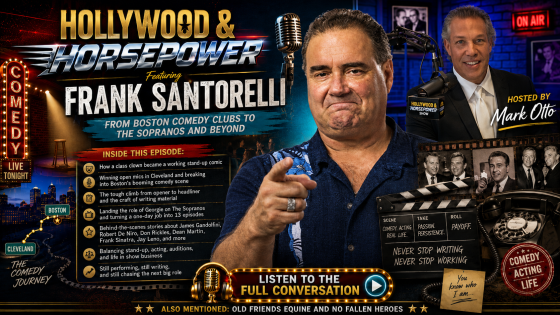

Hollywood And Horsepower Show with Mark Otto
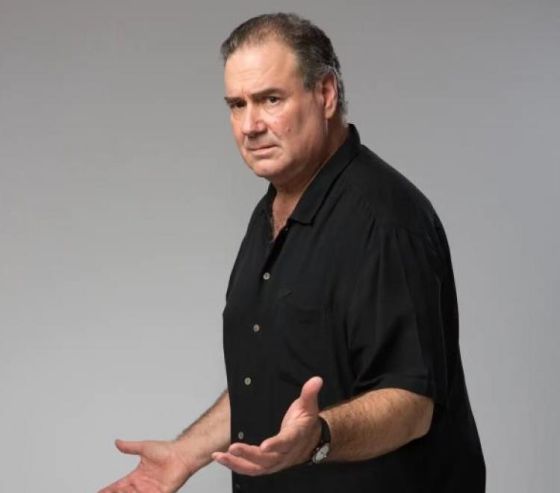
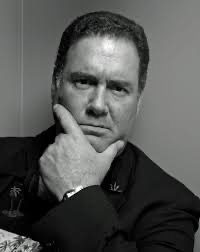
Frank Santorelli: From Boston Comedy Clubs to The Sopranos and Beyond
Summary
From Class Clown to the Comedy Stage
Frank Santorelli describes an early instinct for making people laugh, beginning with childhood impressions and class-clown behavior before his first organized performance as a guard in a school production of The Wizard of Oz. He says his professional stand-up path began around 1981 after he was living in New York City and studying acting with ambitions of becoming a dramatic actor. A friend encouraged him to try an open mic in Cleveland, where he won repeatedly and was soon placed into regular comedy shows. Santorelli recalls narrowly missing Drew Carey at the Cleveland club and then expanding into venues in Pittsburgh, Chicago, and other cities. He moved to Boston in 1985 as the city's comedy scene was booming with clubs, colleges, and one-night engagements. The discussion emphasizes how many nights a week young comics worked and how little money they often made while trying to establish themselves.
The Competitive Craft of Stand-Up Comedy
Santorelli and Marc Otto discuss the difficult progression from opener to middle act to headliner and the amount of material required to close a show successfully. Santorelli explains that he needed roughly forty-five minutes of strong material before he could become a reliable headliner and that comics at every level were trying to outperform the act ahead of them. They describe Boston as a working comedy market rather than merely a showcase city, which meant comedians had to deliver for paying audiences night after night. Otto brings up the importance of clean, durable material and the amount of writing that goes into apparently effortless stand-up. Santorelli says he still develops material by noticing what strikes him as funny and writing it down so it can be shaped later. Both men also reflect on how the collaborative camaraderie of earlier comedy scenes has become less common as performers increasingly work as independent operators.
Breaking Into Acting and Building a Screen Career
Santorelli explains that professional acting opportunities began to arrive after managers and agents saw him performing stand-up in New York. Early work included a commercial for the Omni Biltmore in Providence, a television role on Providence, and an early film he remembers as Crooked Lines. He says he continued doing stand-up while acting because television and film jobs paid more but were unpredictable and separated by long gaps. The scheduling could also be difficult because actors might be called to a set before dawn and then wait many hours before their scenes were shot. Santorelli describes balancing the financial reliability of live comedy with the opportunity and higher pay of screen work. The conversation later touches on Meet the Parents, where he says he worked in a scene with Ben Stiller and met Robert De Niro on set. He characterizes De Niro as highly professional and businesslike while emphasizing that he avoided asking working stars for photographs or selfies.
Becoming Georgie on The Sopranos
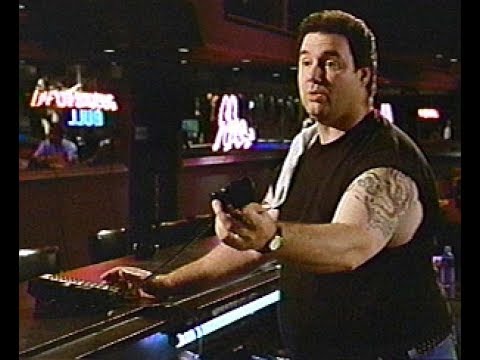
Santorelli recounts auditioning for what was then an unknown project called The Sopranos after being told the production needed a bouncer-type character. He describes reading for casting director Georgianne Walken and performing the repeated "hello" phone bit that became associated with his character, Georgie. Although he was hired as a one-day player, Santorelli says David Chase ordered elaborate tattoos for him and encouraged the physical business and background activity he improvised around the club set. Santorelli built Georgie by constantly cleaning, moving, kibitzing, and adding silent reactions, and he realized the production might bring him back when Chase insisted that the makeup department photograph the tattoos for continuity. He says the one-day job eventually became thirteen episodes without a long-term contract, with the production simply calling him back as needed. He also describes the large cast read-throughs, the hierarchy around the table, the early Radio City Music Hall screening, and the excitement of realizing the new series might become something extraordinary.
James Gandolfini, Ensemble Chemistry, and Celebrity Encounters
Santorelli remembers James Gandolfini as serious, hardworking, pressured, and personally very different from Tony Soprano. He emphasizes the enormous emotional and dialogue burden Gandolfini carried because so much of the series revolved around his character. Otto and Santorelli discuss how The Sopranos blended crime drama, family conflict, humor, and multiple overlapping story lines in a way that helped make the series compelling. Santorelli says most of the cast did not even know he was also a stand-up comedian, and he recalls Michael Imperioli reacting with surprise when the subject came up. The conversation expands into stories about Robert De Niro, Don Rickles, Dean Martin, Frank Sinatra, Foster Brooks, Joe Piscopo, Tom Selleck, and other performers whose professional habits or comic instincts made an impression. Santorelli and Otto repeatedly return to the idea that performers such as Rickles could improvise fearlessly because they had an unusual command of timing, character, and the room.
Still Working, Still Auditioning, and Still Writing
Santorelli says he remains active in stand-up comedy and continues to work multiple dates in a week. He explains that his method for developing material is simple but disciplined: recognize what is genuinely funny to him, write it down, remember it, and test or refine it. He and Otto discuss advice from comedians such as Jay Leno and the unforgiving instant feedback of a live audience, where a joke either produces a laugh or it does not. Santorelli also says he continues auditioning for television, mentioning Dexter: Resurrection and Tulsa King as recent opportunities for which he came close to being cast. He does not believe his Sopranos identity prevents him from being considered for new roles because casting is often driven by whether an actor visually and dramatically fits the part in front of them. The episode closes with Santorelli directing listeners to Facebook for updates, followed by Otto's acknowledgments of Old Friends Equine and No Fallen Heroes and his appeal for listeners to support the organizations if they can.
Hollywood and Horsepower Show

Through the relationships Mark Otto developed in Thoroughbred Horse Racing and Automotive Racing, during his global travels, the thing that most interested him was the story behind the story, with the famous people he was fortunate to meet. What was it that these people liked to do? How did they get into Hollywood or into Racing? These stories are fascinating! This is what encapsulates the “Hollywood and Horsepower Show”.
Bringing you along, we talk to so some of the most interesting people Mark met during his career. Don't be surprised if a few other guests stop by this show. This will be fun! It is where SNL meets The Tonight Show; a perfect mix of talk and comedy.
Speaker Identification
Speaker 1 - Marc Otto, Host
The transcript identifies Marc Otto by name in the opening: "Welcome to the Hollywood and Horsepower Show. I'm your host, Marc Otto." He conducts the interview, reads the sponsor mention, and delivers the closing remarks and charity acknowledgments.
Speaker 2 - Frank Santorelli, Guest
The host introduces Frank Santorelli by name and discusses his work in stand-up comedy, The Sopranos, film, television, and commercial acting. Frank answers the interview questions and recounts stories from his career.
Speaker 3 - Prerecorded Theme Vocal
The opening and closing musical lyrics are presented as prerecorded show-theme material rather than live dialogue. The vocalist is not identified by name in the transcript.
Speaker 3 - Prerecorded Theme Vocal
I've been down roads from Churchill to L.A.,
Met kings of speed and stars along the way.
They've got stories that the cameras never show;
Yeah, the truth behind the fame is what we know.
From the saddle to the silver screen,
Fast lanes and punch lines on a late-night show.
You think you've seen it all, but you don't know the half
Till the curtain lifts and we all have a laugh.
It's not just who they are; it's how they came to be,
A little horsepower, a little mystery.
Hollywood and Horsepower, baby,
Take a ride where the legends laugh and the engines never hide.
From the track to the spotlight, stories unwind.
Hollywood and Horsepower,
Where every twist and turn is a tale you didn't know.
So pour a drink, sit back, enjoy the show,
Where the fast and famous let it all go.
Speaker 1 - Marc Otto, Host
Welcome to the Hollywood and Horsepower Show. I'm your host, Marc Otto. We are the show that brings you the story behind the story, brought to you today by Tony's Steak and Seafood. Tony always says there's room at his table for one more. I always say dining at Tony's is an experience, not just dinner. You owe it to yourself to go.
We are joined today by a very special guest, introduced to me by a very good friend of this show, Michael Blowen: Frank Santorelli. Most people will probably know him from The Sopranos. A lot of people in New England and on the East Coast are going to know him best for his comedy. And really, if you've followed him like I have, you know him for a lot of different things.
Frank, welcome to the show.
Speaker 2 - Frank Santorelli, Guest
Thank you so much, Marcus. Great to be here.
Speaker 1 - Marc Otto, Host
It's an honor to have you. You are a legend in so many different ways. You're one of the rare guys in our industry who has worked in way more things than people are probably even aware of, but you're also well known for several different things. To me, and I think to most people, somebody sees you and immediately thinks of something, but I don't think it's always the same thing. Is that fair?
Speaker 2 - Frank Santorelli, Guest
Yeah. I had a guy come up to me at the Reno airport and he goes, "Are you Frank Santorelli?" I said, "Yes, I am." He goes, "You're in The Godfathers of Comedy." I said, "Yes, I am." He goes, "I just saw you on Conan O'Brien the other day." I said, "Yes, I was." He goes, "I saw you in a commercial for A.1. Steak Sauce." I said, "Buddy, you watch way too much television."
I mean, I do it all. I do commercials, TV shows, movies - whatever you need me to do.
Speaker 1 - Marc Otto, Host
I would love to get into all of that. You're known from the improv, and anybody who listens to this show knows I'm a huge fan and follower of comedy. I've always loved comedy. I've written a lot, but I'm not the guy behind the mic like you. I'm the guy behind the curtain, sliding things over to you.
I have so much respect for it, and one of the things we want to work on with this show is a series on the history of comedy. I'd definitely like to have you be part of that.
Did you start out more in acting or more in comedy?
Speaker 2 - Frank Santorelli, Guest
It's kind of a tie. I was always the class clown. Even as a young kid, I would make my parents laugh. I'd say, "Watch, I'm going to walk like Mr. Wilson," the guy across the street who walked funny, and I could walk like him. I knew everybody would laugh at that.
But my real beginning was stage theater. The first thing I ever did was play a Winkie Guard in The Wizard of Oz - one of those guards at the Wicked Witch's castle. That was the first organized thing I was ever in. It was the ninth-grade play.
The guy asked me, "Can you get some of your football-player buddies to come down here?" The rest of the guards were guys from the offensive and defensive lines on our football team. You needed the biggest guys to be the guards at the gates where the Wicked Witch was.
Speaker 1 - Marc Otto, Host
It's amazing how those things start. You touched on the class-clown thing and doing things at home. I was the same way. My mom was my biggest victim. Everything I tested out, I tested on my mom, and then I'd use it at school. She was the test tank. The most common response was that she'd look at me with a blank stare and go, "You're not right."
When did you do your first stand-up?
Speaker 2 - Frank Santorelli, Guest
That was around 1981, about five or six years after I graduated from high school. I was living in New York City and taking acting classes. I thought I wanted to be the next Robert De Niro.
Then I got sidetracked into comedy. A friend of mine said, "You've got to go down there." We went to an open-mic night, and I won. It was at the Cleveland Comedy Club in Cleveland. I started in Cleveland. I won the contest, then I won again, and then I won again. I won about four weeks in a row, and they put me into the regular shows there.
At first it was Sunday-night open mic. I had never been onstage as a real professional comedian; I was just goofing around at open mics. That's how I started doing comedy in Cleveland.
I just missed Drew Carey. Drew had just taken off and moved to L.A. I missed him by literally one Sunday. He was gone. I started at his home club.
I joke about it all the time. I say, "I'm friends with Drew Carey. He makes twelve million dollars a year. I'm in the back of a pizza shop working for a slice."
From there I started branching out. I worked the Pittsburgh Funny Bone, Zanies in Chicago, and all these clubs that were happening in the early to mid-1980s. Then I moved to Boston in 1985 because the comedy scene was exploding.
Speaker 1 - Marc Otto, Host
Exploding. Legendary clubs. It was insane.
Speaker 2 - Frank Santorelli, Guest
Everybody had a one-nighter somewhere. We were working five or six nights a week and getting paid. It was insane.
Speaker 1 - Marc Otto, Host
For people just joining us, we're talking with Frank Santorelli, a well-known comedian, writer, and actor. I think a lot of people don't realize how hard it is for comedians to get started. People would work their tails off six or seven nights a week and barely make enough to cover running around the city.
Speaker 2 - Frank Santorelli, Guest
That's right. You don't make any money when you're trying to break in. There's no money to be made doing a guest spot here and there.
One place, the Catch in Cambridge, used to pay twenty dollars on Sunday and twenty-five on Monday. Those were the two open mics they had, so you could make forty-five bucks doing open mic.
By then I was making money as a regular comedian. I was in the rotation and working everywhere from Gloucester, Massachusetts, to Providence, Rhode Island. You name it. I was doing thirty thousand miles a year.
Speaker 1 - Marc Otto, Host
Wow. Were you already headlining, or were you working toward it?
Speaker 2 - Frank Santorelli, Guest
I was trying to break into headlining. You needed forty-five minutes. I only had half an hour, maybe forty minutes tops if I was really stretching it. You have to establish yourself as somebody who can close the show and do better than the other two comedians. That's hard to do.
Speaker 1 - Marc Otto, Host
People don't always realize there's an opener, a middle, and a closer, and clubs are very selective about who they put in those slots. It's tough to get a spot.
I remember Judd Apatow saying he felt like he made all the movies he made just to get a good spot at the Improv because it was so hard to get in there.
Speaker 2 - Frank Santorelli, Guest
That's really funny. He's a funny guy.
Speaker 1 - Marc Otto, Host
What was the first professional acting role you received?
Speaker 2 - Frank Santorelli, Guest
Like I said, the first acting thing was the play in high school, but professionally it wasn't until around 1986, when I got a real manager and a real agent from doing stand-up in New York. They would sit and watch the comedians, looking for new people.
They saw me at Stand Up NY, around 86th Street. A guy came up to me and said, "Do you have a manager and an agent?" I said, "No." He said, "I can be both."
One of the first acting jobs I got was a commercial for the Omni Biltmore in Providence, Rhode Island. They were farming the work out of New York. I played a chef and had to wear three different outfits.
One of the first television acting jobs I got was on a show called Providence. There was also a movie before that, but it didn't really do anything. I believe it was called Crooked Lines. David Johansen, the lead singer from the New York Dolls, was in that movie. He was trying to do a movie career and played a drunk guy standing on a street corner.
Speaker 1 - Marc Otto, Host
That brings us to one of the things you're known for. I was told - and I know where I'm going with this - that you're considered one of the best drunk acts since Foster Brooks.
Speaker 2 - Frank Santorelli, Guest
A couple of people have said that. It's probably true. I do a really good drunk.
Speaker 1 - Marc Otto, Host
Foster Brooks was a legend. He would come on the screen and was electrifying. Some of the best bits were the ones he did on the Dean Martin roasts. The one where he was Bob Hope's pilot - I've watched that probably twenty times and I still laugh every single time.
Speaker 2 - Frank Santorelli, Guest
He was wonderful. And I heard he never drank.
Speaker 1 - Marc Otto, Host
No. They also said that about Dean Martin, and I thought, "You've got to be kidding me."
Speaker 2 - Frank Santorelli, Guest
Our mutual friend Michael Blowen said Dean Martin didn't drink a lot. I'm not going to say he didn't drink, but he didn't drink the way people thought he did.
Michael said one reason was that Dean always had a standing tee time the next morning. He was pretty adamant about his golf. He was one of the only guys who could tell Frank Sinatra no. Frank would say, "Listen, we're going out tonight," and Dean would say, "No, I've got a tee time at six a.m. I can't go. You come with us golfing. I'm not going to stay out until four o'clock in the morning."
Frank would be furious, but Dean was like, "No, I have to golf tomorrow."
Speaker 1 - Marc Otto, Host
Frank was almost nocturnal from everything I've heard. He could go hard on very little sleep.
Tom Selleck told us a story that made the same point: Frank did not take it well if you didn't hang with the boys. One night Selleck was with him, it was getting late, and he had an early flight to get back somewhere, probably when he was doing Magnum. He stood up, and Frank, who called him "Moose," said, "Where are you going, Moose?" Selleck said, "I've got an early flight." Frank said, "Sit down." So he sat back down, and they were there for another three hours.
Speaker 2 - Frank Santorelli, Guest
Sure.
Just to go back, I started at the Cleveland Comedy Club, then moved to Boston about four years later, in 1985. A friend convinced me to move there. He said, "You've got to come here. There are a million one-nighters, there are colleges, there are seven comedy clubs."
There was Stitches, there was the Comedy Connection, the Charles Playhouse, Faneuil Hall - everybody went through Boston. All the comedians of the day would come to Boston to work.
L.A., San Francisco, and New York were showcase places. You're hoping somebody is going to see you for something. Boston was different. Boston was a place where they needed somebody to close the show. They needed a headliner, somebody who could be really funny at the end. It wasn't just a showcase.
Speaker 1 - Marc Otto, Host
People don't realize that's a tough slot. If you've got a guy in front of you who levitates the room, you're the guy who has to walk out next. That's like forgetting your bag after everybody is already headed out.
Speaker 2 - Frank Santorelli, Guest
You're right. The guy in the middle was always trying to blow the headliner off the stage, and every opener was trying to blow the middle act off the stage. The idea is that you want to become a headliner, so you want to do as well as you can.
They're always coming for you when you're the headliner. They're thinking, "I'm going to be funnier than this guy." That's good for the show.
Speaker 1 - Marc Otto, Host
Sometimes it happens naturally. Before people really figured out who Dennis Miller was, I heard he would go up in Southern California as an opener or sometimes a middle, and the people following him would wonder what happened to the crowd. Somebody would watch him and say, "Jesus, I'm following this guy? He's levitating the room."
Another thing you have a strong reputation for is keeping your act pretty clean. You could play almost anywhere.
Speaker 2 - Frank Santorelli, Guest
You're right.
Speaker 1 - Marc Otto, Host
I remember Jerry Seinfeld saying it's easy to throw something out there, drop an F-bomb, and get a quick laugh, but it doesn't always age well. If you're really going to build an act, you need to put work into it.
I think that's a part a lot of people don't realize - how much time goes into writing and planning. Michael told me that when he was in Boston with the Globe, Chris Rock showed up really late one night and worked on new material for several hours, over and over, moving a line, coming back out, and running another set. Michael said that was when he really realized how much writing went into it.
The guys I've talked to from Saturday Night Live have said writing was a big deal. One of the things they looked for in a new person was whether the person could write. If the writing was there, the rest could fall into place.
Speaker 2 - Frank Santorelli, Guest
Michael and I became friends when he started writing stories about me in the Globe. He was like my own personal writer because he would write stories about me.
Then he started hiring me to work out in Kentucky. One time I opened for the Flying Wallendas. Michael had gone to Kentucky in connection with Old Friends Farm, and they had a horse named Wallenda.
I opened for the Wallendas in Midway, Kentucky. There were about a thousand people outside. They watched them ride their bicycles back and forth on that wire, and it was almost uneventful because they were so perfect. They didn't look like they were going to fall. Nobody said a word. Everyone just watched. It didn't shock or scare anybody because they were too good.
People ask me, "How did the high-wire act go?" I say, "Yeah, I opened for the Wallendas in Midway, Kentucky."
Speaker 1 - Marc Otto, Host
I love Midway - midway between two civilization points. We're right near Lexington.
I love Michael Blowen. He's a great guy. And for people who don't realize the time period, this is pre-internet. The Boston Globe, The New York Times, and the Los Angeles Times were kind of the three points where you wanted good reviews if you were an act. Boston and Chicago were really hot for building careers. You were either in the clubs in Boston, doing colleges, or around Second City in Chicago.
Did you ever go through Second City?
Speaker 2 - Frank Santorelli, Guest
No, I never did any of those things. I never really had the time. I was always getting booked, so I never got a chance to do it.
Speaker 1 - Marc Otto, Host
Did you ever audition for Saturday Night Live?
Speaker 2 - Frank Santorelli, Guest
No. I never auditioned for them.
Speaker 1 - Marc Otto, Host
As time went on and you started acting more, were you still doing a lot of stand-up, or did acting consume your time?
Speaker 2 - Frank Santorelli, Guest
Absolutely, I was still doing dates.
Speaker 1 - Marc Otto, Host
If you were on a set somewhere, would you go out and do stand-up sets on off nights?
Speaker 2 - Frank Santorelli, Guest
It could mess me up a little bit because television and movie acting are not an exact science at all. They tell you to be on set at 5:30 in the morning, and then they may not use you for twelve hours. You're getting paid to be there, but twelve hours later they still haven't used you, and you're thinking, "Man, I've got a show tonight at nine o'clock."
I would have to nudge them sometimes into shooting my scene. It created a lot of stress because the timing was so inexact.
Speaker 1 - Marc Otto, Host
For people just joining us, we're talking with Frank Santorelli about comedy and his acting career. You're doing stand-up and opening shows, but you're also starting to act, and at that point you don't really want to give up either one because stand-up is paying the bills.
Speaker 2 - Frank Santorelli, Guest
Absolutely. The TV and movie stuff can pay so much more than stand-up, but there are gaps. The two rarely run into each other perfectly.
Speaker 1 - Marc Otto, Host
You've done Spin City and a lot of other things. At what point did you get in front of the people from The Sopranos? How did that happen?
Speaker 2 - Frank Santorelli, Guest
It was just an audition. It was that simple. At that time I would do four or five auditions a month. I went in and read because they said they were looking for a bouncer for The Sopranos.
I thought the title was kind of a dumb name at the time, but when you think about it, The Beatles is a dumb name, too. You never know. When you don't know what the project is, you're thinking, "The Sopranos? What could that possibly be?"
I went in and read in front of Georgianne Walken, the casting director, who is Christopher Walken's wife. She had Walken/Jaffe Casting.
The audition lines were basically, "Hello, hello, hello." I'm saying "hello" about fifteen times in a row. Then I look at him and say, "It's a menu." Then I look back at the phone and say, "Hello, hello," and he beats me with the phone because he's so mad that I'm saying hello so many times.
Speaker 1 - Marc Otto, Host
Who worked across from you when you were reading?
Speaker 2 - Frank Santorelli, Guest
I think James Gandolfini was there. I can't remember for sure because I didn't really know who he was. I knew he had been in A Civil Action with John Travolta, and I think he'd done Get Shorty by that point. He had done smaller parts here and there, but he wasn't widely known yet.
I think he was there. I think Paulie Walnuts was there, and there could have been assorted other people.
Television and movies are a visual medium first. I looked like a bouncer. They weren't looking for a male bartender in a strip club for men because they use female bartenders. I was really more of a bar back. My job was to make sure nobody messed with the strippers, bus tables, and do that kind of thing.
So no, I wasn't really a bartender, even though that's what people call me. I say, "Okay, fine. I was the bartender on The Sopranos." That's going to stick. It's not going to change.
Speaker 1 - Marc Otto, Host
And they used the phone on you in the read?
Speaker 2 - Frank Santorelli, Guest
Oh, yeah. They hit me with a phone, but it was fake. It was made of rubber. It looked like a real phone.
I got stunt pay. They actually asked me if I wanted a stand-in, and I said no. They said, "Okay, sign here, please. You're getting stunt pay." I said, "Really?"
I got stunt pay because I actually fell onto the ground. They had everything padded with mattresses and rubber foam around the corners so that when I fell it was like falling into a powdered donut. There was no danger at all, but I got stunt pay.
Speaker 1 - Marc Otto, Host
What was it like working with the cast?
Speaker 2 - Frank Santorelli, Guest
Great. Everybody was nice. Everybody was really nice. Gandolfini was a dream. He was nothing like that character at all. He was a wonderful guy, very serious, and under a lot of pressure.
When I worked with him, I couldn't really bust chops with him. There was no goofing around. He was all business. He had a million lines. He really had the lion's share of the work. He was in most scenes. The show ran around him, so he was under a lot of stress.
If you watch it, there's a lot of acting in his role. He had to work himself up into every emotion you can think of, from absolute outrage to chuckling to being really stressed out. He was tremendous to work with and nothing like the character at all.
Speaker 1 - Marc Otto, Host
You're Italian, I'm Italian. I grew up in Detroit, and obviously we know that kind of family culture. The show always struck me as interesting because it mixed familiar cultural details with a very heightened criminal world.
I remember talking to a guy who was in that life. He said, "It's a great show, great show. But I've got to tell you, if the boss ever sat down with a shrink, that would be over before it started."
Speaker 2 - Frank Santorelli, Guest
Absolutely. Admitting you have a fault, and talking about it with somebody else? No. You're right.
Speaker 1 - Marc Otto, Host
But it was a terrific show. It was so tragic to see James go the way he did. I think everybody would have loved to see what he did next and what he went on to do because he was so good at his craft. You could see that he put a lot into what he did.
Speaker 2 - Frank Santorelli, Guest
Yes. He was deadly serious about it.
Speaker 1 - Marc Otto, Host
What were some of the highlights for you while you were on the show?
Speaker 2 - Frank Santorelli, Guest
I was supposed to be there for only one day. I was hired as a day player, which means one day.
I was there at about five in the morning, and in the makeup room David Chase came in and said, "Put tattoos on this guy." The makeup person said, "What do you mean?" He said, "Just go crazy. Give him tattoos all over his arms and cut his sleeves off."
This was the very beginning, before anybody knew what the show was going to become. They cut the sleeves off my shirt and gave me these big tattoos.
I started making a character for myself. I took bar napkins and flipped them over my shoulder while wiping down tables. I started kibitzing with the bartenders. There were three of them there, half-naked, and the strippers were naked. It was a pretty unusual environment, and some of the crew were acting crazy because there were naked women around.
I kept trying to create a little character. When I answered the phone, I didn't always say every line as written. I'd say, "Tony, the phone's for you." He'd ask, "Is it that guy?" Instead of saying, "Yes, it is," I just dipped my head and gave him the phone.
The director came over and said, "I like what you're doing. Keep doing that. Keep cleaning, keep kibitzing, keep moving. Don't stay in one spot." I said, "Okay."
I built a little character for myself. I was balancing things on my nose, balancing chopsticks, and basically being goofy Frank Santorelli.
When the taping was over, I was in the makeup room and they were going to take the tattoos off. The tattoos had taken hours to put on. I said, "You know, I can leave them on." She said, "You can?" I said, "Yeah. I don't work in an office building. Nobody is going to see these." I had huge, elaborate tattoos on both arms.
Then David Chase burst into the room and said, "Take pictures of those tattoos." The makeup person said, "Excuse me?" He said, "You heard me. Take pictures of those tattoos. Make sure you get good shots of those tattoos." Then he left.
She said, "Oh my God." I said, "What?" I was such a rookie at the time. She said, "That means you're coming back." I said, "It does?" She said, "Oh, yeah. Why would he take pictures of them if they weren't thinking about putting them on again?"
That's exactly what happened. I'm in the first three episodes of The Sopranos. I was only supposed to be there for one day, and I ended up appearing in thirteen episodes. I made a character for myself as I was going. I never got a long-term contract. They would just say, "You're in the next episode. We need you next week."
Then I'd go to the read-through. The read-through was a special thing. The entire cast would sit around a giant room with tables and chairs set up in a square. Each person would sit according to hierarchy. At the top was David Chase, then James Gandolfini, Lorraine Bracco, Edie Falco, and so on.
Each person would say their name and who they were in the episode. This happened every single episode I was in. There might be seventy-five, eighty, or ninety people there, right down to a janitor or background player. Everybody said who they were.
David Chase would joke, "My name is David Chase. I'm the executive producer of this show, and this show in no way depicts Italian Americans as they really are." Everybody would laugh. Then it would go around: "I'm Jim Gandolfini. I play Tony." "I'm Lorraine Bracco. I play Dr. Melfi." Eventually it would get to me: "I'm Frank Santorelli. I play Georgie."
At Radio City Music Hall they showed the first two episodes on the biggest screen I had ever seen, in front of about five thousand people. I was there, and it was spectacular. The crowd went crazy. They were laughing, screaming, and cheering. It was electric. That's when you started thinking, "This thing could be big. This could be really big."
One of the funniest scenes was Paulie Walnuts and Big Pussy getting coffee in episode two. Paulie says something like, "How did we not get out in front of this? They steal everything from us." Then he goes on about how Italians gave them the gift of the cuisine. He just rips into the coffee-shop trend. It was hilarious.
Speaker 1 - Marc Otto, Host
That reminds me of David Chase making the comment that the show was in no way supposed to depict all Italian-American life. You never know who's watching.
Joe Piscopo has told a story about doing the Sinatra impersonation on Saturday Night Live. A huge guy came up to him, leaned on the armrest so Joe couldn't move, and basically said, "Frank loves you," then walked away. You never know who's watching or listening.
To me, one of the things that made The Sopranos so addictive was the combination of drama, comedy, real family issues, and every emotion possible. It wasn't just intense drama and it wasn't just comedy. It was a really good mix.
The personalities were so strong. Obviously Tony Soprano and Dr. Melfi were central, but there were also a lot of different directions going at once - stories nested within other stories. I think that makes for a great show. Friends and Cheers had some of that same strength: it wasn't just one or two characters. There were multiple layers.
Speaker 2 - Frank Santorelli, Guest
Nobody on The Sopranos even knew I was a comedian. Nobody ever asked. Michael Imperioli asked me one time when we were in a van together. He said, "Somebody says you do stand-up." I said, "Yes." He took a puff off a cigarette and looked in the other direction, almost like, "How the hell did this guy get this part?"
Nobody could figure it out.
Speaker 1 - Marc Otto, Host
Was anybody else from comedy cast in those kinds of spots?
Speaker 2 - Frank Santorelli, Guest
No. Pretty much everybody else came more from dramatic acting.
Speaker 1 - Marc Otto, Host
Gandolfini definitely had comedy in him, though.
Speaker 2 - Frank Santorelli, Guest
Absolutely. There's a scene where Joe Pantoliano's character says, "I was going to be an architect," and Gandolfini doesn't say a word. He just stabs at his pasta and smirks, like, "Yeah, you were going to be an architect, all right." It was perfect.
Speaker 1 - Marc Otto, Host
Then you go on from there, and another famous credit is Meet the Parents. So you actually got to work with De Niro?
Speaker 2 - Frank Santorelli, Guest
No, I'm not in any scenes with De Niro. I only had one scene with Ben Stiller. But I did get to meet De Niro, which was nice. He was on set when I was there.
He was another one who was all business. There was no, "Hey, how are you doing? Good to see you." It was just, "Hi." That's all.
I never once said to Gandolfini, "Hey, can we do a selfie?" I didn't do that with any of those people. They were working. There's no way I'm going to walk up and say, "Can I take a picture with you?"
Speaker 1 - Marc Otto, Host
It's funny you say that because people say that to me all the time: "Did you get a picture?" I say no. I feel like it's rude. If you're in a situation like a restaurant or a meeting, I just don't feel comfortable asking, so I don't do it either.
I've met a lot of well-known people and don't have pictures. Today people sometimes don't realize that wasn't always something you did.
Speaker 2 - Frank Santorelli, Guest
Correct. I never even thought of it until it was over. Then I thought, "I should have gotten some pictures." But what the heck?
Speaker 1 - Marc Otto, Host
There's a famous Don Rickles story involving De Niro. Everybody warned Rickles that De Niro was really serious and not somebody you messed with. Then, in a scene or on a set, Rickles slammed his hand down and said something like, "I can't work with this guy - all this mumbling and spitting," and walked out.
Speaker 2 - Frank Santorelli, Guest
De Niro absolutely died laughing. Rickles could get away with that. He could get away with murder.
There was another story where Rickles was on the set of Heat - or at least that's how I remember it - and he says to De Niro, "Yeah, that was pretty good, if that's the way you want to do it. I don't know, if that's the way you want to do it..." He was one of the few guys who could say things like that.
Speaker 1 - Marc Otto, Host
Nobody else could. He had such great stories. He'd go up to somebody like Billy Graham at a very high-function event and say, "Mr. Graham, if you could just say a little word for me to stop the shaking in my arm," while making his arm twitch.
And the funny thing is, people claim he didn't really write in the conventional sense. He had bits he knew, but so much of it was from the hip. He worked the room.
Speaker 2 - Frank Santorelli, Guest
Absolutely.
Speaker 1 - Marc Otto, Host
When you were doing stand-up in Boston in the 1980s going into the 1990s, you had to cross paths with a lot of people who weren't huge yet but later became huge.
Speaker 2 - Frank Santorelli, Guest
Oh, yeah. Jay Leno came into the back room at the Cleveland Comedy Club in 1981. He was mildly famous for working comedy clubs. He and Jerry Seinfeld were part of this new idea called the comedy club, which a lot of people didn't know much about at the time.
Leno came into the back and said to us, "Do you have anything in your act that doesn't get a laugh, but you think it's funny, so you keep it in your act?" We all said, "Yeah." He said, "Why?"
He got us with that. Basically: far be it from you to tell two hundred people what's funny. Two hundred people just didn't laugh at one of your jokes.
Speaker 1 - Marc Otto, Host
That's a great point. Comedy is probably the truest form of instant feedback. When you first start, you think everybody's there, they're having fun, they're laughing, so you'll go up there and throw some stuff out. Then you find out really quickly: they're not laughing. It gets quiet really fast.
I've heard stand-up compared to the PGA - you qualify every week. There's no automatic spot. It's one of the toughest forms of entertainment because you constantly have to keep developing.
Steve Martin made a comment when he quit stand-up. Everybody asked why. He said it took him ten years to build that act, it belonged to a certain time and place, and he could see it coming to an end. He didn't feel like he had another ten years to put another act together.
Speaker 2 - Frank Santorelli, Guest
Sure. Rodney Dangerfield had a line about quitting around 1960: "Just to show you how my career was going, I was the only one who knew I quit."
Speaker 1 - Marc Otto, Host
Exactly. I think Rickles said something similar - that he walked away for a while and didn't know if anybody even noticed.
Are you still doing a lot of stand-up today?
Speaker 2 - Frank Santorelli, Guest
Oh, yeah. I'm working a lot. I'm working Friday, Saturday, and Sunday this week.
Speaker 1 - Marc Otto, Host
How do you work on material? Are you constantly writing? Obviously you have things you've used for years that people love, but you constantly have to work on new material. What do you use to develop it and build your act?
Speaker 2 - Frank Santorelli, Guest
I have a good sense of humor. That sounds pretty easy, but that's basically it. I can hear something and go, "That's really funny," remember it, and write it down.
Speaker 1 - Marc Otto, Host
I think writing it down is a key piece.
Speaker 2 - Frank Santorelli, Guest
You've got to write it down.
Speaker 1 - Marc Otto, Host
I've said that to people many times. People always ask, "Where do you get material?" I say, "If it's funny to you, it's probably funny to somebody else. Write it down. You can play with it later."
Do you collaborate with anybody? Do you do a lot of writing with other comedians?
Speaker 2 - Frank Santorelli, Guest
Actually, I don't. It's just not how the game works for me. We don't really get together and write with other comedians. Everybody pretty much does their own stuff now.
Speaker 1 - Marc Otto, Host
Would you agree that, especially in the 1980s and early 1990s, the clubs were more of a community? You'd meet people and feed off each other.
Speaker 2 - Frank Santorelli, Guest
Yes. Woody Allen used to talk about working in New York with all the Borscht Belt guys and people like that. Somebody would say, "Hey, man, try that joke this way," or, "Do the joke this way." There was a camaraderie.
There's not as much of that anymore. It's too singular. Everybody is trying to make it on their own. They don't want help. There isn't the same camaraderie.
I still have friends I talk to from time to time, and we'll bounce ideas off each other. There are half a dozen guys I know like that. But mostly we're on our own. We're independent contractors.
Speaker 1 - Marc Otto, Host
You would have been toward the tail end of Johnny Carson's run. Did you ever get a chance to meet Carson?
Speaker 2 - Frank Santorelli, Guest
No, I never met Johnny Carson.
Speaker 1 - Marc Otto, Host
They said Carson could be like that with young comics. If he had somebody on, or saw somebody, and had the chance, he'd say something to the side like, "Maybe try this," or, "Turn this way. Give it a shot." He was another guy who really tried to help young comics.
Dennis Miller had a reputation for doing that, too. I hope people still do things like that because comedy is a community, and it would be cool to keep that alive.
Do you still audition quite a bit?
Speaker 2 - Frank Santorelli, Guest
I am auditioning, and I'm coming very close to getting certain things. It's frustrating.
I just auditioned for Dexter - the new Dexter. I believe it's called Dexter: Resurrection. I came very close.
I also auditioned for Sylvester Stallone's Tulsa King and came very close to getting something there. It's frustrating, but at the same time I'm still in the game. I'm very close to grabbing something.
Speaker 1 - Marc Otto, Host
Do you feel like The Sopranos helps you, but can also create a block at times because you're known as Georgie?
Speaker 2 - Frank Santorelli, Guest
First of all, it's been so long that I don't believe it really gets in the way anymore. Film and television are a visual medium first. If they're looking for a landlord, I could be a landlord. If they're looking for a bouncer, I could be a bouncer. If they're looking for a detective, I could be a detective.
They don't necessarily go back and say, "He did thirteen episodes of The Sopranos." It might come into play in some way, but a lot of the people auditioning and casting are young. Some of them were kids when The Sopranos was on the air. They don't care about the old credit as much as whether you're perfect for this part.
Speaker 1 - Marc Otto, Host
That's another thing that has changed. Before The Sopranos, there were three or four networks and that was most of the entertainment. If somebody was on a very well-known show, it stayed with them for a long time.
Now, because of the number of channels and the amount of content, it amazes me when you come across somebody who has never seen a well-known show. You'll mention something and they'll say, "I've heard of it. I never really watched it."
Speaker 2 - Frank Santorelli, Guest
Absolutely. You're right.
Speaker 1 - Marc Otto, Host
We're up at the top of the hour, and I can't thank you enough for taking the time to do this. I really appreciate it.
Where can people go if they want to see future dates and projects you're working on? What's the best way for people to find you online?
Speaker 2 - Frank Santorelli, Guest
Facebook.
Speaker 1 - Marc Otto, Host
All right. Frank Santorelli on Facebook. I know you're on other platforms, and we really appreciate you taking the time to join us today.
Speaker 2 - Frank Santorelli, Guest
No problem.
Speaker 1 - Marc Otto, Host
I can't thank you enough. It's been a pleasure, and I'm sure we'll be talking again soon.
Speaker 2 - Frank Santorelli, Guest
Absolutely. Hopefully we'll see you somewhere soon. Thank you.
Speaker 1 - Marc Otto, Host
Thanks, Frank. Bye.
Well, folks, that brings us up to the top of the hour and, unfortunately, the end of our show. We really appreciate everybody joining us.
There are two charities on this program that we support. The first is OldFriendsEquine.org. You heard us talking about Michael Blowen. He was a former entertainment writer for The Boston Globe, and his wife, Diane White, was a columnist with the Globe. They went on to start Old Friends Equine in Georgetown, Kentucky.
Take a minute and take a look. If you can't do a lot, do what you can. They really do a lot of good work, not just for horses but for people as well.
The other organization is No Fallen Heroes. No Fallen Heroes was started by Matt "Wiz" Buckley, a former naval aviator, Top Gun graduate, and Top Gun instructor - what I always refer to as the real-life Jester because he was an adversary instructor.
He and his wife started No Fallen Heroes to help first responders, people coming out of the military or first-responder life, and their families. It's not just about the veterans themselves; it's about helping people readjust to civilian life.
We're losing way too many people to suicide today, and anybody we can help, we really try to help. So if you can't do a lot, do what you can.
We really appreciate you taking the time to join us. This has been the Hollywood and Horsepower Show, brought to you by Tony's Steak and Seafood, and we will see you again next week.
Speaker 3 - Prerecorded Theme Vocal
So stay awhile.
You're in the driver's seat, where the road and the rhythm finally meet.
Stick around.
You never know who's next, and trust me,
They've got a story worth hearing.