
Hollywood and Horsepower Show, May 14, 2026


Hollywood And Horsepower Show with Mark Otto
From the Silver Screen to the Stables: Michael Blowen on Hollywood’s Golden Secrets
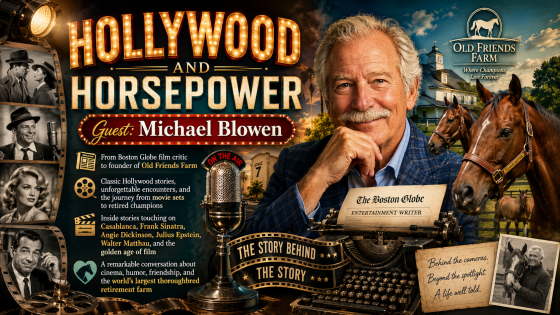
Hollywood & Horsepower
The Story Behind the Story: From Cinema Legends to Thoroughbred Stables
Guest Spotlight: Michael Blowen
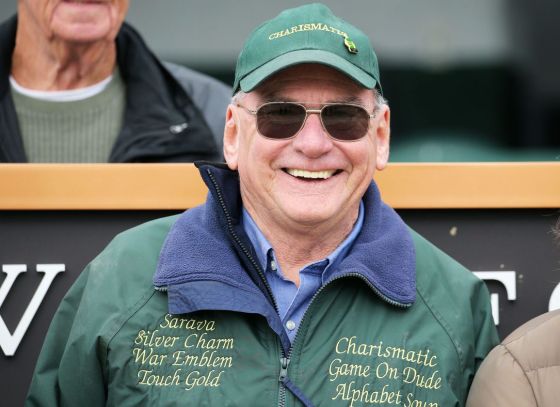
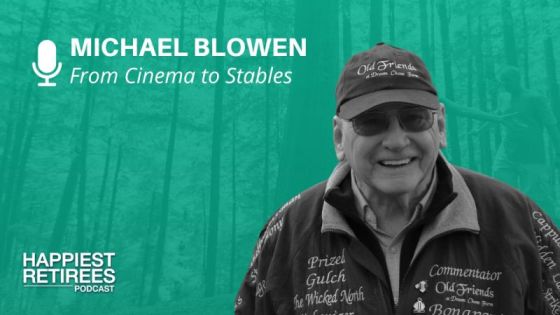
Former Boston Globe entertainment writer who transitioned from interviewing A-list stars to founding Old Friends Farm, the world's largest thoroughbred retirement sanctuary.
Golden Era Chronicles
- ✦The Stewart Lesson: Jimmy Stewart sent handwritten "Red Envelope" thank-you notes to fans, treating them as friends, not customers.
- ✦Nicholson's Code: Jack Nicholson valued Blowen because he never acted as a "go-between" in a town built on transactions.
- ✦The Casablanca Legacy: Insights from writer Julius Epstein on the organic creation of iconic lines like "Round up the usual suspects."
Key Quote
"The horses are like my movie stars now... we make sure they have a gentle landing and the respect they've earned."
Old Friends Farm
Featured Legends
Introduction
In this episode of Hollywood and Horsepower, host Mark interviews Michael Blowen, the legendary Boston Globe critic who transitioned from interviewing movie stars to founding the world's largest thoroughbred retirement farm. The conversation explores the "human" side of Hollywood icons and the shared DNA between the film industry and horse racing.
Detailed Summary
The Evolution of Hollywood Access and Journalism
Michael Blowen reflects on his tenure as an entertainment writer for the Boston Globe during a period he describes as the transition from "old Hollywood" to the new. Unlike the modern era of publicist-controlled phone interviews, Blowen was often sent on-location to observe movie sets firsthand. He notes that being physically present allowed him to witness the authentic friction and "fights" that occur during production, providing a level of reporting that is impossible in today's highly managed media environment. He views his current work with horses as a natural extension of his career, remarking that his retired thoroughbreds are his current "movie stars".
The Jimmy Stewart Protocol
During an interview, Jimmy Stewart revealed a stack of red envelopes on his desk—handwritten thank-you notes for fans who sent him birthday cards.
"These people are not customers... they are your friends, and you should treat them that way."
Iconic Friendships and Behind-the-Scenes Lore
The discussion highlights several intimate anecdotes involving Hollywood royalty. Blowen shares a transformative lesson in humility from Jimmy Stewart regarding the importance of treating fans as "friends," a philosophy Blowen later adopted at his farm. He also recounts humorous and poignant moments with Jack Nicholson, who valued Blowen’s friendship because he never acted as a "go-between" in a town built on transactional relationships. Other stories include the brilliance of the Epstein brothers—the writers of Casablanca—and the business foresight of Lucille Ball, who greenlit Star Trek and Mission Impossible against her board's wishes.
The "Fever Pitch" Incident and Forging Bonds
Blowen details a unique encounter with director Richard Brooks following a scathing review Blowen wrote for the film Fever Pitch. After a heated phone call filled with "every curse word in the world," Blowen challenged Brooks to a face-to-face interview. This confrontation led to a deep, lasting friendship, illustrating Blowen's belief that the "curtain dropping" allows one to truly know the people behind the fame. He notes that both the movie and horse businesses are remarkably small, interconnected worlds where reputation is everything.
Old Friends Farm: A Gentle Landing
Founded by Michael Blowen in Georgetown, KY, to ensure thoroughbreds receive the respect they've earned after their racing careers end.
Old Friends Farm and the Legacy of Thoroughbreds
The final segment focuses on Blowen's current mission: Old Friends Farm. He describes the farm as a place for horses to have a "gentle landing" after their careers. He shares how actress Angie Dickinson helped fund the retirement of a horse appropriately named "Academy Award." The farm has become a major Kentucky tourist destination where fans can meet legends like Kentucky Derby and Breeders' Cup winners, treating them with the same reverence once reserved for the stars of the silver screen.
Key Data
- Old Friends Farm: Recognized as the largest thoroughbred retirement farm in the world.
- Rescue Funding: Angie Dickinson donated $5,000 to secure the retirement of the stallion "Academy Award".
- Location: The farm is located in Georgetown, Kentucky, approximately 14 minutes from Tony's Steak & Seafood.
To-Do / Next Steps
- Visit oldfriendsequine.org to learn more about thoroughbred retirement or to schedule a tour.
- Look up the archived Boston Globe columns of Diane White for examples of acclaimed, timeless writing.
- Dine at Tony's Steak & Seafood in Indianapolis, Cincinnati, Lexington, or Bowling Green to support the show's sponsor.
- Check the Old Friends website for information on meeting Little Brown, the farm's resident miniature horse.
Conclusion
Michael Blowen’s life story serves as a bridge between the high-stakes world of Hollywood glamour and the quiet dignity of a Kentucky horse farm. By applying the lessons of character and humility learned from cinema legends to the care of equine athletes, he has created a unique legacy that honors the "stars" of both industries.
Hollywood and Horsepower Show

Through the relationships Mark Otto developed in Thoroughbred Horse Racing and Automotive Racing, during his global travels, the thing that most interested him was the story behind the story, with the famous people he was fortunate to meet. What was it that these people liked to do? How did they get into Hollywood or into Racing? These stories are fascinating! This is what encapsulates the “Hollywood and Horsepower Show”.
Bringing you along, we talk to so some of the most interesting people Mark met during his career. Don't be surprised if a few other guests stop by this show. This will be fun! It is where SNL meets The Tonight Show; a perfect mix of talk and comedy.
[00:10] Speaker 1: (singing) I've been down roads from Churchill to LA. Met kings of speed and stars along the way. They got stories that the cameras never show. Yeah, the truth behind the fame is what we know. From the saddle to the silver screen glow. Fast lanes and punchlines on a late-night show. You think you've seen it all, but you don't know the half. Till the curtain lifts and we all have a laugh. It's not just who they are. It's how they came to be. A little horsepower. A little mystery. It's Hollywood and horsepower, baby! Take a ride where the legends laugh and the engines never hide. From the track to the spotlight, stories unwind. Yeah, the truth's a little wild and one-of-a-kind. Hollywood and horsepower, where the real ones show. Every twist and turn is a tale you didn't know. So pour a drink, sit back, enjoy the show. Where the fast and famous let it all go.
[01:35] Speaker 2: Welcome to Hollywood and Horsepower, the story of... The show about the story behind the story. Today we are joined by a very special guest, a good friend of mine, and probably one of the most interesting people I know, Michael Blowen. Michael has had an amazing career. I mean, in a lot of ways I'm green with envy. The people he's been able to work with, meet over the years, from the cinema to the stables, it's been said more than once. Started out with the Boston Globe as the entertainment writer, and then went on to several other associations. And then best known today as the founder of Old Friends Farm, the largest thoroughbred retirement farm in the world. So without any ado, Michael, welcome to the show.
[02:22] Speaker 1: Welcome to the show.
[02:23] Speaker 3: Mark, thanks for the invitation. I really appreciate it.
[02:27] Speaker 2: Oh... It's an honor to have you. We always have fun, and I, I love hearing the stories. I mean, going to dinner with you is probably one of my favorite things in the world. I love hearing the stories, so.
[02:39] Speaker 3: It's mine too, because you always pay.
[02:41] Speaker 2: Yeah. (laughs) You can't beat it.
[02:44] Speaker 3: One of my favorites, actually, so. Huh?
[02:44] Speaker 2: And now, you know, our, our show, and I, I'd be amiss if I didn't say this, our mutual friend's, our show is brought to you today by Tony's Steak & Seafood. Indianapolis-
[02:55] Speaker 3: Oh, great.
[02:55] Speaker 2: ... Cincinnati, Lexington, and Bowling Green. So we'll be having-
[03:00] Speaker 3: Oh, wow. Great.
[03:00] Speaker 2: ... many more dinners tonight, uh, throughout the, the years with, uh, Tony's.
[03:07] Speaker 3: Fabulous. Well, that, that's a great restaurant. It really is. I'm not saying it 'cause they're your sponsor.
[03:11] Speaker 2: Fabulous place, and he's a nice guy. You can't help but like him. And the food is phenomenal.
[03:17] Speaker 3: Yeah, he has a really nice-
[03:18] Speaker 2: You know, Tony, Tony has a saying that I really like. He says, "There's always room at our table for one more." And you know what's funny? Y- But I can honestly tell you, as a rest- as somebody... You know how much I travel, and you know how many restaurants I go to. Tony actually is one of those guys that truly means that. You call them up and they will do everything they can to g- get you in.
[03:39] Speaker 3: That's true, yeah.
[03:40] Speaker 2: And there aren't a lot of places that'll do that. And then once you're in, I don't think I've ever been any place that has a better steak. And I'm not saying that because they support us. I'm saying that in all my travels, he has the best steaks of any place I've ever been. Everything is like a step above.
[03:59] Speaker 3: Well, they're really terrific. They're really terrific, especially when somebody else is paying for it.
[04:04] Speaker 2: Can't beat it. It's the best price in town.
[04:07] Speaker 3: Yeah, exactly. For me it is. Not for you.
[04:10] Speaker 2: (laughs) I know. Well, I wanted to kind of jump in and really, I mean, it's kind of funny. On this show, we usually talk about what people don't know about somebody. And as hard as it is to believe, I think we're getting to the point where what a lot of people don't know about you is your time in Hollywood. You know, you've become so well-known in the thoroughbred world that I'm sure, like, in Boston and a lot of places, you're, you're very well-known for The Globe. But I bet a lot of people, especially in thoroughbred racing, don't know how, you know... And, and this is me saying, this not you, but how big you were in, in Hollywood. I mean, people don't understand, when you were the entertainment writer, this is pre-internet. This wasn't like you'd jump on a phone like we are now and do an interview. You would go and sit down with these people. And you'd spend sometimes weeks out in Hollywood working, uh, different stories and following different things.
[05:12] Speaker 3: Yeah, I, I used up a lot of good job hours, Mark. Really good jobs. Teaching school, working at The Globe, having old friends in the horses. The horses are like my movie stars now, but, but... And I was very fortunate to work at The Globe at the time that I did, because, uh, the paper was running full throttle. We weren't allowed to do interviews on the phone, actually, because, uh, you didn't really know who was on the other end. Could be anybody.
[05:39] Speaker 3: So if it was-
[05:40] Speaker 2: Sure.
[05:40] Speaker 3: ... important enough to interview the person, they'd send you on a plane. So no matter where you wanna go, you know, you, you'd go there to do the interview. And, and, uh, so they had a lot of money. We got to travel, I guess... I got to travel a lot. And, uh, it was fun. It was really, really fun. And, and it was at, it, it was at the very end of the old Hollywood and the beginning of the new Hollywood. So you got a little of this and a little of that. There... And it was really, really a, a lot of fun.
[06:09] Speaker 2: Well, and, and, you know, you touched on that. It was kind of almost like to me, like the golden era, like the end of the golden era. It was in, in my mind. I mean, I know-
[06:19] Speaker 3: It was on the edge. And you're, you're absolutely -
[06:21] Speaker 2: ... I'm sure there's an actual date to the golden era.
[06:23] Speaker 3: ... both accents. They have so many publicists now, they have so many people, they have so many people protecting them that it's, it's very difficult. It used to be you could get invited to movie sets and just hang around and watch them make the movie and instead of waiting till the movie came out and then everybody from the, from the, from the cinematographer through the director and the producer and all the stars, they were, all they were doing was a sales job. They're just trying to sell the movie and so that's, that's all you were getting. But if you hung around a set, you could actually report your, by yourself what, what you observed. And there's not a movie that I was, set that I was ever on that didn't have at least two or three fights in one day, you know, where people are going at it. And, and you might think now they never have fights, everybody loves each other, they think it's all like a Hallmark movie and it's clearly not.
[07:12] Speaker 2: No.
[07:13] Speaker 3: But anyway, but that was, it, it was, uh, it was, it was a, it was a great time and, and, you know, I can tell you some of the, some of the stories from some of the old stars that people might be interested in.
[07:26] Speaker 2: Yeah, I mean-
[07:27] Speaker 3: Uh-
[07:27] Speaker 2: ... you know, the ones that come to mind, you know, we can get into them but, you know, you told me about going to dinner at Sheldon Leonard's house.
[07:37] Speaker 3: No, that wasn't Sheldon Leonard. What it was, was, it was a, uh, Julius J. Epstein's house, the-
[07:44] Speaker 2: Okay.
[07:44] Speaker 3: ... fellow who wrote like 40-something movies for Warner Brothers with his twin brother Phillip. It was Phillip G. and Julius J. Epstein. You know, they wrote Yankee Doodle Dandy, they wrote, you know, to, to... They're most known for, for writing Casablanca with Howard Koch. And, uh-
[08:01] Speaker 2: Oh, yeah.
[08:02] Speaker 3: And they just were remarkable and, and there was a movie with, uh, Tom Conti where he played a, a voracious, uh, English teacher in a small college in Vermont who was after all of his students. It was obviously 40 years ahead of the Me Too movement but nevertheless that was the, the movie based on a Peter Debris movie with Tom Conti and when I saw the credits, I said, "Oh, Julius Epstein, that's interesting.
[08:30] Speaker 3: It must be related to the guy who wrote Casablanca." And I found out it was the same guy, so yeah-
[08:37] Speaker 2: Wow.
[08:37] Speaker 3: ... I went up there to talk to him and we had a great, a great interview. He's really, really a funny guy. And then after that, he liked Diane, Diane White is my wife and she was a long time, very successful Globe columnist and she, he'd invite Diane I. and they would have, we'd have dinner at his house and he'd, he invited everybody from, you know, Sheldon Leonard, and Sheldon at that time had turned into one of the most successful TV producers ever with I Spy and Make Room for Daddy and all of that.
[09:06] Speaker 2: Dan, for people that don't know him, for people that don't know him, what were some of the programs that he did? I know he did a lot, he did stuff with Desilu and...
[09:16] Speaker 3: Yeah. Well, you know, he did my Make Room for Daddy, he did, uh, The Andy Griffith Show I think for a while, and he did, and he, uh, and he did, uh, what's that third? Oh, he did I Spy. And he made a fortune, uh, producing these, these things and it was really funny because those of us remembered Sheldon Leonard as a character actor, you remember one kind of persona but he's a brilliant businessman and he really knew show business and he knew how to put things together and, uh, and he, and he-
[09:50] Speaker 2: And for people that don't piece it together, Sheldon was, he had a career that spanned from radio all the way through, like, TV production and in radio, he was really famous for like, The Jack Benny Show and s- several other shows of kind of being the thug on the street. He'd be the guy that somebody would walk up on. In fact, one of the most famous lines in radio was The Jack Benny Bit where he does the, you know, your money or your life and, and that was Sheldon Leonard for anybody who doesn't, didn't know who he was.
[10:26] Speaker 3: Yeah, he was Tipster at the racetrack.
[10:29] Speaker 2: Tipster at the racetrack-
[10:30] Speaker 3: Everybody, I got one for you. (laughs)
[10:31] Speaker 2: Thug at the elevator.
[10:33] Speaker 3: What's that, Mark?
[10:35] Speaker 2: The guy at the elevator. One of my favorite ones was his Otis elevator bit with Jack Benny of which elevator to take, tying it into the racetrack. He's telling him, "No, no, no. You want Otis, number two. Don't take number one, you go with two."
[10:52] Speaker 3: Yeah, he was, uh, he was, he was a brilliant guy and, you know, and as I say, Julian would have these dinners and I remember Gloria Stuart, uh, who was a phenomenal actress in the, in the '30s, gorgeous and she was, she was, uh, I think when she was coming to the dinners I think she was in her mid-80s and she was auditioning for Titanic and she ended up playing the, playing the role that introduces the film where she's looking back on what happened at the Titanic and she, she was the Kate Winslet when Kate Winslet was old character and she would, she had fabulous, fabulous stories. Um, and, and, uh, and Matt Schulman who, who had Many Loves of Dobie Gillis, you know, he'd come and we'd just sit around and talk and, and they were really, really good.
[11:44] Speaker 3: And then, then the other thing is when before I, before I retired from the Globe I made a list of the people I wanted to interview and one of the people was Jimmy Stewart and so-
[11:54] Speaker 2: Oh, yeah.
[11:55] Speaker 3: ... I made arrangements to go to see him at the, at the studio. He had a little office in the studio and, and we spent, uh, all afternoon walking around, like four hours walking around through the studio and talking and telling stories and at the end of it, we ended up in his office-And he had a, he didn't have any movie pictures in there. He had all pictures of airplanes, because of course he was a pilot during the war and a colonel and, uh, but he loved airplanes. And he had a huge desk and he was getting, he was pretty tired at, at the end of the walk around and everything. And he say- sat down next...
[12:33] Speaker 3: And I noticed there's this whole stack of red envelopes in the corner of his desk and I said, "I know, I know we're, we're done here, Mr." Then I go, "One more question." I said, "What are those red envelopes for down there?" And he goes, "Oh, those are thank you notes." I said, "Well, so you don't mind my asking, thank you notes for what?" He goes, "Well, those are thank you notes for people that send me birthday cards." I said, "Wait a minute."
[12:55] Speaker 2: Oh, wow.
[12:55] Speaker 3: "You mean you send a thank you note? I've gotten a few birthday cards in my life. I never sent a thank you note and you're Jimmy Stewart, famous movie star and, and, uh..." And he, and he said, "Well, I'll tell you what, when I first came here in the 30s, you know, uh, in the 30s, we had a, we, we, we were told certain things and one of the things I was told by the head of publicity, Mr. Strickland, that, is that these people that go to see your movies are not customers. We're not trying to sell them anything. They're your friends and you should treat them that way." And that's what I, that's what I do. So now, about six months later, it's his birthday. So I decide I'm going to send him a book about airplanes. So I sent him this really nice coffee table book with pictures of all these airplanes. And about, about three weeks later, I get a, um, a, a thank you note from him in a red envelope. And, uh, it said, "Dear Michael, uh, thank you very much for the book.
[14:01] Speaker 3: I really like it a lot and enjoy looking at it for a long time and I appreciate the thoughtfulness. But what I really want to know if you were just testing me to see if you could get this thank you note." (laughs)
[14:14] Speaker 2: (laughs)
[14:15] Speaker 3: But ............................
[14:15] Speaker 2: Yeah, that was the request of yours.
[14:16] Speaker 3: Because when, when, when I started Old Friends, I always, no matter if somebody contributed a book, I sent them a handwritten thank you note and, and, and I learned that from, uh, I learned that from, uh, from Mr. Stewart. He was a really, really tremendous guy. Obviously a great star and a great actor but, you know, fundamentally, uh, a very, very nice human being.
[14:39] Speaker 2: You know, they claim that, um, Lucille Ball, Lucy, um, Lucie Arnaz, her daughter claims that her mother always responded to anybody that wrote her personally. Said it might take her a-
[14:54] Speaker 3: I think, I... I think it's that...
[14:57] Speaker 2: ... while.
[14:57] Speaker 3: I, I got a good Lucy story. You want to hear my good Lucy story?
[15:00] Speaker 2: Yeah, I'd love to hear a Lucy story.
[15:02] Speaker 3: All right. So it doesn't involve Lucy, it just involves Lucy's house. So now this is terrible name dropping but that's what your old show is about, right?
[15:14] Speaker 2: Sure.
[15:15] Speaker 3: Okay. So I'm at Jack Nicholson's house at Mulholland Drive. We get in the car, Dan Cahill's the driver. Jack was very smart because 99% of the time, if he wasn't going to play golf, he had a driver. So you couldn't get in trouble if you drank too much or smoked too much dope or anything. So-
[15:34] Speaker 2: (laughs)
[15:34] Speaker 3: He didn't want to get in trouble, so he had a driver named Dan Cahill. Dan Cahill only drove two people, him and Bob Hope, those were his two clients. So we're going down, going downhill, going down towards the point of the basketball game and, uh, and Jack's smoking a joint and I'm drinking a beer in the back of his car, his nice car. And, uh, and all of a sudden there's a siren going off and the cop pulls Dan over and of course the windows are all shaded, he can't see who's inside. But we can hear Dan say, uh, he... Yeah, he... Dan, Dan... The policeman says to Dan, "Who you got in there?" And Dan says, "Nobody." And he says, "Well, I smell something a little funny." And Dan says, "Well, you know, that's funny you should mention that because I, I thought I smelled something funny when that truck just went by." And, uh, he said, "Okay." He says, "Wind down the wind, window." He winds down the window and there's Jack.
[16:34] Speaker 3: Jack sticks his head out and he goes, "Evening, officer." He says, "Evening, Jack. How you doing? Good? Where you going?" He said, "Oh, well, we're just, this is my friend, we're going down to a basketball game, you know." And he says, he says, "Okay." He says, "Well, have a good time," the policeman says. And, and Jack says, "What's your hurry?" He said, "Well, I got to go catch up to that truck." (laughs)
[16:54] Speaker 2: (laughs)
[16:54] Speaker 3: And then on the way back from the basketball game, we're driving back up the same way through Bel Air and everything and Jack says, "Hey, Dan, I, I got to go to the bathroom tonight. I got to go out, I got to go to the bathroom." "Jack, Jack, it's Bel Air. You just can't, you know, go." He goes, "Oh, see those pine trees over there?" "Yeah." "Stop over, just stop. I'll get out, I'll be right back." He says, "Jack, that's, that's Lucille Ball's house." And, uh-
[17:22] Speaker 2: (laughs)
[17:23] Speaker 3: ... he goes, Jack goes, "Well, okay. She won't mind." So he goes over there and, you know, he disappears into the darkness and that's when Dan tells me his other client's Bob Hope and we're talking back and forth about his job. And all of a sudden we hear Jack say, "Here's Lucy!" (laughs)
[17:40] Speaker 2: (laughs)
[17:40] Speaker 3: Coming out of the darkness and, uh, so that's, uh, those are some of the, uh, those are some of the encounters I had with Mr. Nicholson and he remains a good friend. I asked him once, I said, "How come we're friends?" I said, "We don't see each other. We hardly ever talk." You know, he'll send me a book once in a while and I'll send him something or all that. I said, "Why are we friends?" And he, he gave me another piece of really good advice, he says, "You know, you're the only friend I've ever had that never acted as a go-between." I said, "Wow."
[18:10] Speaker 2: Oh, yeah.
[18:11] Speaker 3: Yeah, I never thought of that, but there you go.
[18:13] Speaker 2: In a, in a town where everybody is a go-between. (laughs)
[18:16] Speaker 3: Well, yeah, same thing with the racing. And then I learned so much covering the movies that-... because the movie business is same as the horse business. It's very, very small.
[18:24] Speaker 2: The movie business is a lot like the horse business.
[18:27] Speaker 3: Yeah. Yep, yep.
[18:28] Speaker 2: Yeah. I mean, as you and I have talked before, I worked out in the studios, not on your level. I mean, I was on the back end with suppliers, set builders, that type of thing. But I still got a taste of it and, it, it's very much like the horse industry. Very... But if you take the attitude that you're kind of the guest in the house, they treat you pretty well. And that's been my experience in both industries. They, they kinda are okay. Most people are. You know, I had a piece that Desi Lou... You'll know this, but I bet most of our listeners wouldn't. And I, I had heard this but I forgot about it. I was looking at stuff for, for today and I was... I came across this. So, you know, Desi Lou goes along and he's very successful. And then, you know, later on, and I, I, I've never seen killed anything. But gets to a point where Lucy has to buy Desi out. So she buys out Desi and now it's just Lucy and the board of directors.
[19:26] Speaker 2: And Desi, for people who don't know, he was really the head of Desilu. He was the guy... He was much more of a front than people realized. He really had a, had a head for it. She had two shows that really set her apart that her board of directors took... Pan said, "Don't waste your time. It's not gonna go... It's gonna be a fortune and we don't think they're gonna amount to anything." Mission Impossible and Star Trek.
[20:00] Speaker 2: Mission Impossible-
[20:01] Speaker 3: Yeah, there you go.
[20:01] Speaker 2: ... went on to run seventh season, get six Emmys. And Star Trek is, you know, the greatest TV show of all time. And it's just kind of amazing that she went... She trusted her gut and went against her own board and everybody and green lit those two shows and those turned out to be probably the two most successful shows besides I Love Lucy that Desilu ever put out.
[20:29] Speaker 3: Yeah, I wouldn't be surprised. But, y- y- you know, so many, so many things happen that way where... That, that, that surprise you. There was a director named Richard Brooks who was a really good director. He, he made Elmer Gantry, he made In Cold Blood, uh, he did Cat in a Hot Tin Roof. He did... He's a... And he did The Professionals and he's a really, really good director. But by the time his career was winding down, he made a movie called Fever Pitch with Ryan O'Neal, and it's about sports gambling. And Ryan O'Neal's a professor, a teacher or something, and he's got a sp- you know... Well, anyway, I hardly remember anything except how bad the movie was.
[21:15] Speaker 3: So I started off my review by asking the re- the, the, the, the question that seems rhetorical but it's not, which is, you know, how could the man who made Elmer Gantry and The Blackboard Jungle and Something of Value and all these, all these great movies, In Cold Blood, how could the same person have directed this movie because it's so terrible? And, um, and I went on to describe, you know, how banal it was and it lacked... It lacked everything else, everything that old Richard Brooks... So I... At the end of it, I said, "It couldn't have been Richard Brooks. It must be another guy." So that came out on Saturday and on Monday, right? I'm at my desk and the phone rings and I answer the phone and the guy starts yelling and screaming every curse word in the world at me. Screaming, you know, screaming. You know, you know. And, you know, making all kinds of references to my last name, which was not very nice. But anyway, but when he cooled off, I said, "You know, Mr.
[22:20] Speaker 3: Brooks, I'll tell you something." I said, "I really admire your work. I admire your work as a director. I just, I just think that, you know, when you have time to settle in a little bit and you look at this movie, it's not gonna be at the pantheon of your accomplishments." (sighs) So he... It was a long pause and I said, "I'll tell you what I'll do." This was on Monday. "Uh, you... If you'll, if you'll let me come out there and interview you, then I'll, uh, I'll put down what you say about the movie and you can have your say." He goes, "You don't have the guts to do that or any-" I said, "It doesn't take guts. It's just a good story, I think, because you're absolutely wrong and, uh, you can say whatever you want." So he, he says, "You blah, blah, blah." So I screamed... I said, "No, when can I come?" He says, "Come o-... All right. Wednesday at lunchtime. I'll see if you can come here for lunch then." And he was... He, he had an office at MGM.
[23:11] Speaker 3: I said, "Okay, fine." So the Time Globe had money. Off I go and go down and make a few other arrangements on doing other things besides talking, talking to him. So I go to his office and I open up... I knock on the door and, you know, I hear this gruff voice saying, "Who is it?" And I said, "It's Michael Blum from Buzz-..." "All right. Come on in." And I open up the door and he starts throwing stuff at me. He's throwing scripts and all kinds of stuff. And I, I find out, uh, midway through our interview that a- actually those weren't scripts.
[23:42] Speaker 3: They were affidavits from actual, you know, uh, addicted gamblers
[23:48] Speaker 2: Lawsuits. (laughs)
[23:48] Speaker 3: And he's telling me, "Oh, this movie's true," and this and that and the other thing and I said, "Richard, you know as well as I do that, you know, it doesn't make any difference if it's true or not. It... There's a lot of things true that don't really make very good movies." Uh, and I said, "The Professionals isn't true, but it's a great movie." I said, "Elmer Gantry's" he says, "is, is just based on a crazed teacher and, and, and, and that's not really true in, in the technical sense." I said, "Even In Cold Blood that was based on a true story isn't true in the truest sense of the word." And I, I said, "But I don't wanna argue with you because I really like you and I meant it that I, I really respect your work." I mean, we started talking about Elmer Gantry, started talking about some of the other movies. Well-... to make this already too long story a little longer, we became really good friends.
[24:36] Speaker 3: A- And again, just like Julie, every time Diane and I went to California, we'd go out to eat with Richard and he always would p- we'd always go out to dinner. He'd always bring somebody else and like the first time, he brought Robert Culp. And, and he and Robert Culp had this great idea and now it seems like, why didn't they do it? They couldn't get it, they couldn't get it by anybody but it was a true, uh, it was a true crime show. Now they, all they have are true crime shows but this, they had the first one all lined up how they wanted it and doing it and everything, right? And then, then next time, he brought Mort Sahl, who was married to, uh, Miss March, I think, of 1958 and, uh, that was fun. I mean, and we got to be really, really good friends. Found out later on that he used to play, uh, play poke, pla- playing poker games with Angie, Angie Dickinson, Mrs. Ira Gershwin and, uh, and Barbara Sinatra, Frank Sinatra's widow. That was their, that was their poker game.
[25:37] Speaker 3: Anyway, so we did-
[25:39] Speaker 2: And they-
[25:39] Speaker 3: It's a really great thing and there's, it's a, it's a great history. And again, those were the days we could actually sit down with somebody and have a conversation and develop a relationship over the years. I'm still in contact with Nick- with Nicholson. Uh, Julie unfortunately, unfortunately passed away. Um, and Richard passed away and, but An- Angie's still alive and, and, and, and it's fun. You know, once, once the, once the curtain drops and everything and you get to know some of these people a little bit, uh, better than you would have if they were just trying to sell you a movie.
[26:13] Speaker 2: You know, and the funny thing is, as you know this, I mean, Casablanca is my favorite movie of all time. I mean, and I, way before I met you. I mean, it was like, it's always been a favorite and I think it's just because to me it's like, it's kinda funny 'cause I know it's not a muted ] movie.
[26:33] Speaker 3: Well, maybe.
[26:34] Speaker 2: I know it's not probably the most well-written movie, but it just, there's something about it that just hooks you.
[26:39] Speaker 3: It could be the best written movie. I mean, when you think of all, all the lines that came out of that, and the lines were all organic. They weren't like pasted on, you know? Like, rounded up in the beginning or stuff.
[26:49] Speaker 2: Now what was the story though? 'Cause there's a story behind it 'cause Julie was, he wrote several movies and this was not one of his, like, ones that he was the most proud of. Is that correct?
[27:02] Speaker 3: Well, yeah. That's what he used to say. But over the years, he finally reluctantly admitted that, yeah, I think it was, I think the reason was because there was a conflict about who did what, uh, between Julie and his brother, Philip, and, and, uh, Howard Hawks. And, and they, before Julie died, they resolved all this stuff. I think one of the reasons Julie would denigrate the picture a little bit was because he didn't want to give credit to Howard 'cause he, he took Howard, he thought Howard took to- too much credit and I'm sure Howard thought he took too much credit. And nobody want, cared about any credit back then. I mean, uh, Julie's brother, when they were working on The Big Sleep, Howard Hawks came over to their office and said, "Look, I need something here. And you gotta come over and help me." And so, uh, Phillip went over and he wrote one of the greatest scenes in, in the whole movie, uh, in, in, in 15 minutes.
[27:58] Speaker 3: And, uh, great dialogue between Bogie and Bacall and that's the way the place was. And everybody helped everybody else and nobody was into like who did what when and nobody took notes about all that kind of stuff. You wou- you showed up, this was my job. And if Jack Warner, who they didn't, nobody liked. Uh, if he told us to do something, then we did it and we got paid very well and had a, and it was very amusing and had a lot of times. In fact, Julie ended up dating for quite a while, Judy Holliday. Um, back in the, back in the, uh, early '50s.
[28:33] Speaker 2: Oh, wow.
[28:35] Speaker 3: And he was a j- boxing champion. He graduated from Penn State. He was an inter- inter, uh, collegiate boxing champion in the NCAA. I wasn't, he didn't win the national championship but I, I think, I think he went through the, the division and, and beat all of his rivals at, in the, in the Penn State arena. And, um, but anyway-
[28:55] Speaker 2: Now, one of the things, stories that I had heard is that he was really proud of Mr. Steppington, which was a movie that most people probably never heard of. Is that true-
[29:05] Speaker 3: Oh.
[29:05] Speaker 2: ... that he really liked that one and it just didn't go anywhere?
[29:08] Speaker 3: Yes. But I'll tell you one thing. Bette Davis was never invited to any of the dinners. (laughs)
[29:14] Speaker 2: (laughs) Oh, no. (laughs)
[29:17] Speaker 3: He said it was terrible. He said he and his brother, as a reward for writing Casablanca, they made the brothers producers on Mr. Steppington. So they became producers for one movie, it's the only movie they ever produced. And, uh, he said it was a terrible experience. It was like, it was like you were tearing your hair out because, um, because Bette Davis would like certain things one day and not like them the next day, and she'd complain about the costumes and complain about this and she'd change, liked to change words and she wanted to ad lib some stuff and the... It was like, it, it was like every day they went to the studio, they couldn't wait to just get back to the studio and write instead of waiting to sets and the movies and the production support and, because they, they did like the writing. But that was, that wasn't a particularly, uh, a, that, that wasn't a particularly positive experience for either Julie or his brother.
[30:09] Speaker 2: That's hilarious.
[30:10] Speaker 3: But, but, you know, they went through that with all kinds of movies.
[30:11] Speaker 2: We touched on her name but I gotta go back to... Oh, go ahead. Sorry.
[30:15] Speaker 3: You know, they adapted Parsnip and Old Lace and they sh- they made, uh, Yankee Doodle Dandy. I mean, they made so many really, really good movies together. And, and what's it like? He's his twin brother and they worked together.
[30:27] Speaker 2: Yeah, they, it was just-
[30:27] Speaker 3: And they came up with the whole line from Casablanca about round up the usual suspects simultaneously driving to work one day when they couldn't figure out how they were gonna resolve it. How, how's the ending of that movie?... and then they, then they come up with the, uh, uh, "Louie, I think this is the beginning of a beautiful friendship." And off they go. I mean, this movie is just filled with great insight and great lines and, and, um, and the studio pretty much threw it away.
[30:52] Speaker 2: You know, they claimed that some of the top- they claimed that some of the top movie lines of all time come out of Casablanca.
[31:01] Speaker 3: Yeah, of course. Yeah, if you remember, you remember-
[31:02] Speaker 2: I remember, if I remember right, there's like three in the top 10.
[31:06] Speaker 3: Wow.
[31:07] Speaker 2: And some of the company in that is like Gone With the Wind and, you know, several of the real, you know, just, just blockbusters.
[31:16] Speaker 3: Well, you know, the movie was absolutely ... The interesting thing was the movie was buried for a long time and nobody paid much attention to it. But during finals at Harvard University, one of their traditions were they had midnight showings at the theater, uh, in Harvard Square of Casablanca and the popularity that it engendered among the students, you couldn't get a ticket at that- at that show anymore because it was a big celebration and there was even a- a cafe next door called Casablanca that they named after the movie so people could go in there, sit in rattan chairs and pretend they were, you know, they were listening to, uh, to Bogie and Bacall.
[31:57] Speaker 3: Or Bogie-
[31:58] Speaker 2: Oh, that's so cool.
[31:58] Speaker 3: ... and Charlie Chalmers and things like that. Yeah.
[32:02] Speaker 2: You know, I mean, but it is kind of funny down through the years, you know, as you know, I mean, I'm, I'm, I love comedy and, you know, I think back to a lot of the- the, you know, real big comedies that we think of today, they didn't really start out that way. You know what I mean? Even like some of the more recent ones like Tommy Boy, Coneheads, they had kind of soft start and then they kind of become evergreens.
[32:26] Speaker 3: (coughs) .
[32:26] Speaker 2: But in the beginning they weren't blockbusters.
[32:30] Speaker 3: Each- each movie has its own organic life, you know, for better or for worse. Some die early, some die late. (laughs)
[32:38] Speaker 2: Some never die.
[32:39] Speaker 3: But very few of them- ve- very few of them live on like Casablanca figuring how they're gonna ever die.
[32:44] Speaker 2: Yeah, no it's true. But it is- it is a- it's a movie that kind of holds your attention. You know, it's- it's kind of timeless in a weird way.
[32:53] Speaker 3: Oh, it's totally timeless. You know that's why it stood out.
[32:55] Speaker 2: And I think it's timeless because it touches on a lot of the stuff that even goes on in the world today.
[33:02] Speaker 3: Yep. Yeah, yeah. It was-
[33:04] Speaker 2: Um, you know-
[33:05] Speaker 3: It's kinda the u- you know, it's universal.
[33:07] Speaker 2: It is. It... So you touched on another name that we both know well is Angie Dickinson's. So you and Angie have been-
[33:14] Speaker 3: Yeah.
[33:14] Speaker 2: ... friends for- for a long time.
[33:18] Speaker 3: Yeah. Yeah, really good friends.
[33:19] Speaker 2: And I actually have a funny story with this one. You might re- you'll remember this. So as you know- our listeners may know, um, I have two kids, Keith and Grace. Grace is my daughter, she's now a freshman in college, but we- but Grace has been tagging along with me, Keith and Grace both have, since they were little. One time, way back, Michael, Diane, I'm not sure who else was there, probably Nancy, and Grace was pretty small and she is sitting at the table with us having dinner and Michael's telling a story about Angie Dickinson, um, the story about you and Diane going to the show and using her seats and Frank coming out and missing his mark. And I'll let you tell the story, but the funny thing was, Grace sits there, doesn't say a word and when it gets all done, she goes home, starts school. The teacher asked the kids, you know, "Did you guys do anything exciting this summer?
[34:25] Speaker 2: Anything- anything unique?" Grace stands up without missing a beat and says, "My dad's friend, Michael, made Frank Sinatra miss his mark." (laughs)
[34:35] Speaker 3: That's pretty funny.
[34:37] Speaker 2: (laughs) That was hilarious.
[34:38] Speaker 3: With his wife still-
[34:38] Speaker 2: Especially for a kid that I don't think any of us even thought was listening to what we were talking about. (laughs) So I'll let you tell the story. There was a story-
[34:48] Speaker 3: Well-
[34:48] Speaker 2: ... where you had went to interview Frank?
[34:52] Speaker 3: No.
[34:53] Speaker 2: No.
[34:53] Speaker 3: Uh, what happened was this. Frank was doing one of his last tours. It might have been the last one, I'm not sure. But a night... And, uh, and he wasn't doing any interviews so my editor said to me, "Chivas Regal is paying Angie Dickinson to go around to talk about Frank. Do you want to go have a drink with her and talk about Frank?" "Oh, are you kidding? This will be great." So I meet in the hotel bar and, uh, sh- we walk into the bar and the piano player starts playing, uh, songs from her la- from her- from her ex-husband, uh, Burt Bacharach.
[35:25] Speaker 2: Oh, brother. That's funny.
[35:27] Speaker 3: And we're driving, we're doing in there and he's doing a medley of Burt songs. Everybody in the bar recognizes her and applauds and we sit down and we start talking and we- we really hit it off 'cause we knew someone- she knew Richard Brook, she knows... Talked about the poker games. We knew a lot of these same people 'cause Hollywood's such a small town, you know a lot of people.
[35:45] Speaker 2: Yeah, absolutely.
[35:45] Speaker 3: So we start chatting and, you know, it's- it's going really well and we're talking about Rio Bravo and working with John Wayne and Ricky Nelson and Walter Brennan, Dean Martin and everybody, that's... And, and, and what it was like hanging around with Martin and Sammy Davis Jr. and all the Rat Pack guys, Joey Bishop and all of them and we're, and we're, and, and we're having a really nice conversation. And at the end of it she says, uh, "I'm- I'm a little tired." She goes, um, "Have you ever, uh, ha- have you ever seen Frank?" I said, "No, we've never seen him." So she says, "Why don't you take my tickets? Just take my tickets.
[36:21] Speaker 3: The only thing I ask is that when you're done, when the show's over, you come back here and you can have a drink and I can meet your wife." I said, "Okay, that'll be good." So I called Diane, we go there and naturally the seat's in the 1 and 1A, there's the red carpet, here we are-
[36:34] Speaker 2: (laughs)
[36:34] Speaker 3: ... and all that. So we're sitting there and, uh, Frank starts off a little slow. He's not, like, really, he's not right. He's missing a few things here and there, but t-By the third song, he starts really going and it's all, he's as good as he's ever been. I mean, he's really sensational. And about the fifth or sixth song, he's gonna sing The Nightingale Sang in Barclay Square, great song, and, uh, and he, and he looks down as if he's gonna sing it to Angie and he looks and he sees Diane and me there. He looks in the chair and he, and he starts to get this very quizzical expression on his face 'cause he doesn't know what's going on. And he, he went through with the song, but the expression on his face when he was expecting to see Angie Dickinson and saw us was priceless. And then later, we went back to the hotel to talk to Angie again and we began, you know, I, you know, we sent each other stuff in the mail and we talked all the time and we'd see her, went to California.
[37:32] Speaker 3: Then when we started Old Friends, one of the things I did, I, I called her about a horse I really wanted to get. It was in a, it was, it wasn't in a bad situation, but it wasn't a really good situation, a retired stallion. And, uh, she said, "How much you need?" I said, "$5,000." So she says, "Okay, fine." So I told her the name of the horse was perfect for her and I, and she said, "What is it?" I go, "Academy Award." And so she laughed and so we get Academy Award here and then the, the Bloodhorse calls her up because they wanna do a story on her, her, uh, participation in getting Academy Awards for retired Old Friends. And, uh, and she said, "Well, you know, Michael asked me to do this and I'm glad to.
[38:13] Speaker 3: I like the idea of taking really good care of these horses." She was really good and at the end of it, she said, "Besides, I've always wanted to have an Academy Award and now I've got one." (laughs)
[38:25] Speaker 2: (laughs)
[38:26] Speaker 3: Anyway, she's just, she's just really, really great. And then she came here and stayed with us for a few days a while back and the third day she was here, I brought my little miniature horse, little Silver Charm who's passed away recently, but he was a great little horse and he, he used to come in the house all the time. So early in the morning before breakfast, I brought him in the house and I left and Angie comes down and I, she, my phone rings. I go, "Hello?" She goes, "Michael, it's Angie." "Yes." "There's a horse in your living room." I said, "I know, he comes in, he watches Al Roker do the weather and then, and then he goes back out." And so that's ...
[39:03] Speaker 3: (laughs)
[39:04] Speaker 2: So is Little Brown graduated-
[39:05] Speaker 3: And so
[39:06] Speaker 2: ... to where he goes in the house yet?
[39:06] Speaker 3: ... we brought him in shortly thereafter. What's that?
[39:09] Speaker 2: Has Little Brown graduated to where he goes in the house yet?
[39:12] Speaker 3: Oh, yeah. It took him about 15 minutes to figure out the whole place. (thumping sound) He's in the house and-
[39:16] Speaker 2: (laughs)
[39:16] Speaker 3: ... everywhere. He yells at me when I'm not doing things correctly. You know, he's, he's figured it all out. So he's our other miniature horse and if people wanna meet him, I'd be glad to show him around Old Friends anytime they'd like to come. And he's a-
[39:29] Speaker 2: And for those that don't know, Little Brown is in-
[39:32] Speaker 3: ... likes to come, I can tell him more stories, I'll tell him more stories until, until... I'll tell you about that. I went and got, gave this talk one time at a place in Lexington and I, they advertised it on TV and it, it was a big deal. And so I go to the thing and I'm, I'm there and, and I'm, I'm thinking, "I can't be in the right place because there's not that many people." So I finally said to the, the guy who was doing the landscaping, I said, "Is this where this event's going on?" "Yeah, that's it." And I walk in, there's just, like, nine people and they expected, like, 150. So, (laughs) so anyway, Diane came, thank goodness. So I started telling the stories about the horses and things and, and I said to the, I said, "Look, there's only nine of us here, uh, so if you have any questions, just re- you know, just let me know and we'll, we'll, we'll do whatever you want." So about 20 minutes into it, uh, Diane raises her hand.
[40:27] Speaker 2: (laughs)
[40:27] Speaker 3: I said, "Yes, the woman in the back, please." And she goes, "You already told them that story." (laughs) I said, "Okay, I guess that's... I guess we better wrap it up." (laughs)
[40:41] Speaker 2: Diane is great.
[40:42] Speaker 3: So-
[40:42] Speaker 2: We'd be remiss without mentioning this. So who Di- who Michael's talking about is his wife, Diane W- White is what she went by when she was writing and she was a syndicated columnist for The Boston Globe. I would encourage anybody to look up her articles. You can find them, her columns, they're still out there. And, you know, I've said this a million times, I really hope someday she puts her, her columns in a book, or somebody does.
[41:12] Speaker 3: Yeah. Yeah.
[41:12] Speaker 2: Because I think her columns are very interesting and I think, you know, it's one of those that a lot of it is kind of timeless. It's good, it's, it's interesting no matter when you read it.
[41:23] Speaker 3: Yeah, she is, man. She's amazing.
[41:24] Speaker 2: And she's written books. She's a brilliant writer.
[41:27] Speaker 3: Yeah.
[41:27] Speaker 2: I'm very, you know, you know, it is kind of amazing to have two brilliant writers in the same house, but, I mean, you guys are both-
[41:36] Speaker 3: Yeah.
[41:36] Speaker 2: ... really acclaimed writers and do very, very well and she's-
[41:40] Speaker 3: My, my favorite story about that, Mark, is that... Of course, her name's Diane White. Now one year, I came back from Saratoga, we'd been going to Saratoga on a little vacation and going to the races and everything. And it was the first time I ever got, I did so well gambling that I got to pay for the whole vacation, uh, with my gambling winnings and, uh, I actually came back with cash in my pocket, which is a very unusual occurrence. But anyway, so we come back and I knew that that year I was gonna be named Best Film Critic by, uh, Boston Magazine in their Best of Boston issue because all the other movie critics got big, big jobs. You know, David Denby went to The New Yorker with Stephen Cheyf, um, Jan Mosley went to The New York Times, David Ansen went to Newsweek. Heck, they had to ma- name me Best Movie Critic, I was the only one left. So we come back and I go to the newsstand and every year they would name Diane Best Columnist.
[42:40] Speaker 3: So I go to the newsstand to get it and I go to the media section of the Best of Boston issue and I'm looking there and there's Best Lobster over here, best, you know, restaurant over here, best this and I go, "Oh, here's the media," and-... uh, Diane, uh, they, uh, they have a drawing, Snow White, and she's Snow White. And it says, "All the other columnists are dwarfs, especially her husband, Dopey."
[43:04] Speaker 2: (laughs)
[43:07] Speaker 3: (laughs) He's always-
[43:07] Speaker 2: You can always tell on your friends. (laughs)
[43:10] Speaker 3: ... funny boss. Yeah. (laughs) So that was, uh, that was... So in the house now, uh, is, well, I'm sitting here at the table, I'm looking right over, I, D- Dopey's right down there beh- behind that, uh, other thing. But-
[43:22] Speaker 2: Yeah. Sorry.
[43:22] Speaker 3: ... we have stuffed Dopeys, pictures of Dopey, we got a lot of Dopeys around here.
[43:27] Speaker 2: I gotta take a brief minute, and then we're gonna jump back into it here and thank Tony's Steak & Seafood. Tony has been kind enough to bring this show to you people today. Um, Tony's kitchen started in a small town in Italy. Just like many other Italian families, he spent a lot of time in the kitchen. His mom had a saying, "There's always room for one more at your table." Tony's adopted that at all four of his restaurants, Tony's Steak & Seafood, of Lexington, Bowling Green, Cincinnati, and Indianapolis, Indiana. If you're looking for an experience more than just a meal, Tony's Steak & Seafood, you'll thank us that we pointed you there. And Michael and I have both been there, and we can tell you firsthand, it's, it's amazing. They do a great job, great people, and they make you feel like you're part of the family. So we can't thank them enough. You know, another one I was gonna ask you about, 'cause we've talked a little bit, you know, we keep coming back to, like, Julie.
[44:28] Speaker 2: There was a really good story you told me one time about Walter Matthau with Julie.
[44:36] Speaker 3: Well, yeah. Uh, uh, uh, uh, Julie wrote, I don't know if you've seen that movie, Pe- Pete & Killian, but Julie wrote that movie w- for Walter and Carol Burnett.
[44:45] Speaker 2: Oh, wow.
[44:46] Speaker 3: And, um, and, uh, I was halfway through, uh, y- Julie wanted me to write his a- his biography so I was halfway through that, and he'd come to Boston and we were talking and doing some interviewing and stuff. And on the way back, flying back, the plane, th- plane had to have an emergency landing in Cleveland because Julie had a stroke.
[45:09] Speaker 2: Oh, my.
[45:09] Speaker 3: And it was really bad. And about a week and a half later, he was at a very fancy hospital in Beverly Hills. And I flew out there to see him. And, and I went in, and it was a lunchtime. And I, I hadn't s- seen him after he, he had this terrible stroke. And he was in, uh, dining area and they're putting on a Purim play. So he had a guitarist and a singer putting on this, this little play. And they were, and they were feeding Julie. So Julie's eating this gruelly stuff and it's terrible and it's like, i- it was awful. He wasn't, he didn't say a word. And there was stuff, miscreant weed or whatever it was in his mouth, he was drooling and they were mopping it up and I'm thinking, "How can this, how can this ending, how can this guy end his life this way?" 'Cause his whole life was so, filled with so much, so much humor and so much fun, so much gaiety.
[46:07] Speaker 3: And, uh, and, and here we are, we're in this, we're in Beverly Hills in this fancy hospital and everything, but it was just, it was just tote- so humiliating. And I can't imagine how tough it was for Julie, 'cause it was tough for me just to be there. And so, and the, and they, they kept playing the, the song that was, it was, it was a pretty bad Purim play, whatever it was, uh, it wasn't good. And so, um, after about an hour, here comes Walter Matthau, and, uh, I didn't know Walter at the time. It was the first time I ever saw him. He walks in, he goes, "Julie, Julie, come on, l- let's go. The football game's on." Walter always bet football games. He said, "Look, it's Syracuse and Penn State, Syracuse and Penn State.
[46:51] Speaker 3: Come on, Julie-"
[46:52] Speaker 2: (laughs)
[46:52] Speaker 3: "... we better go watch the game." Julie still hasn't said anything. They, they wrap Julie up, the Purim play is over, and they, they, they, they put him in a wheelchair and bring him back in there, put him into bed. Walter puts the TV on, it's a football game that's hanging off the ceiling, this little TV. And Julie opens his eyes and the only words he uttered to me, and the last words he ever uttered to me were, "That's the worst play I've ever seen."
[47:23] Speaker 2: (laughs)
[47:23] Speaker 3: And then he went back to sleep. (laughs) I mean, (laughs) talk about a great exit line. And then, then he died just a week later or so. It was traumatic.
[47:33] Speaker 2: Oh, wow. So the, he didn't-
[47:35] Speaker 3: He was the greatest father-
[47:35] Speaker 2: ... he didn't last long after he had his stroke?
[47:39] Speaker 3: No.
[47:40] Speaker 2: A few weeks.
[47:42] Speaker 3: It was, it was very hard on him and his wife, Ann. And, you know, his son, his, uh, his, uh, nephew, his, uh, his brother Philip died young, his, uh, uh, brother Philip died in the early '50s and, uh, and Julie lasted forever. And I think that was tough on him, 'cause I think that was the most important relationship in his, his life. His, his wife, Ann, was fabulous. And, and the intere- the other interesting thing for your listeners is his son w- his nephew was Leslie Epstein, who was a terrific novelist. Wrote a great book called The King of the Jews, along with several others. And he's written several, uh, autobiographical, uh, books that talk about growing up in Beverly Hills. He, uh, took Jane Fonda to the prom. He might be a good guest for the deal.
[48:26] Speaker 3: So, uh-
[48:26] Speaker 2: Yeah, I'd love to have him on.
[48:28] Speaker 3: Leslie, so Leslie, uh, Leslie taught creative writing at Boston University and, in the master's program. And he had a nice family. Eileen ran a really, a really nice, uh, women's, uh, store in, in Brookline, Massachusetts. And he had three children, Anya, who ended up being the head writer and producer of the TV show Homicide: Life on the Street. Then he had twins, uh, Paul...Paul was the head of suicide prevention among teenagers in Brookline. And the third one was Theo Epstein, who ended up being the general manager of the Red Socks, got them to World Series. Then he became the general manager of the Chicago Cubs and got them to World Series, and he's still working in baseball. So that's the family.
[49:15] Speaker 2: Wow.
[49:15] Speaker 3: Amazing thing, just an amazing family. Yeah, so.
[49:20] Speaker 2: That is amazing.
[49:21] Speaker 3: Again, it's just because you make a phone call and you find out that it's the same guy that wrote, you know, that wrote Casablanca, wrote this Tom Conti movie. I'm trying to remember what the name of it was. It's a Peter Debris novel. I, uh, I wish Diane was here, she'd remember that. But anyway, uh, it's, uh, it's, uh, it's the same with the horses. I mean, the horses are celebrities. People come here, they hear the stories of these horses and their great accomplishments. And again, we're here in Georgetown, Kentucky, and if anybody would like to come and see them, they can look up our website, Old Friends Thoroughbred Retirement, and, uh, find out what, uh, what, what we do here, which is, you know, make sure that these horses, when they retire, have a, have a gentle landing and treat them with the respect that they've earned.
[50:11] Speaker 3: So if anyone would like to call or wanna find out more-
[50:12] Speaker 2: And we promote Old Friends every week. So for anybody who's listening, you know, what Michael's talking about is the farm that he founded, Old Friends Farm. It's oldfriendsequine.org. They are the, probably in my opinion, the most prominent thoroughbred retirement in the world.
[50:31] Speaker 3: Yeah.
[50:31] Speaker 2: But beauty of it is, they are one of the few places that you can be face-to-face with a Kentucky Derby winner, with, you know, a Breeders' Cup winner, and Michael's there almost every day that he can take you around. We are up against our hour, so we're gonna have to call it a day, Michael. But we have to do this again. And you know what we should do? We should, we should con Diane to coming on with us. Diane's got, you know, a really amazing career, and I'd love to hear a little bit more about her stories.
[51:06] Speaker 3: Yeah. She's terrific. We're still married after all these years.
[51:09] Speaker 2: I know. Like they say, check the bus before it leaves. But-
[51:13] Speaker 3: (laughs) That's exactly right.
[51:14] Speaker 2: Michael, we can't thank you enough. I can't thank you enough for coming on today. I always enjoy talking to you. An hour feels like five minutes. There's never enough time. We wanna thank Tony's Steak and Seafood, Lexington, Cincinnati, Indianapolis, and Bowling Green. Oldfriendsequine.org, if you're in Kentucky or anywhere close. It's definitely worth the trip. One of the top tourist destinations in Kentucky. We support No Fallen Heroes and mvgrayhealthcare.com. We'll talk to you again next week. This has been Hollywood and Horsepower, and thank you for taking the time to join us today. Thank you, Michael.
[51:52] Speaker 3: Thank you, Mark. Yeah, we're only 14 minutes from Tony's.
[51:56] Speaker 2: Ah, that's amazing. We've gotta go. Thanks, Tom.
[51:58] Speaker 3: Thank you so much.
[51:59] Speaker 4: (sings) So stay awhile. You're in the driver's seat. Where the road and the rhythm finally meet. (instrumental music) Stick around. You never know who's next. And trust me, they got a story worth hearing. (instrumental music)