
Hollywood and Horsepower Show, August 13, 2026

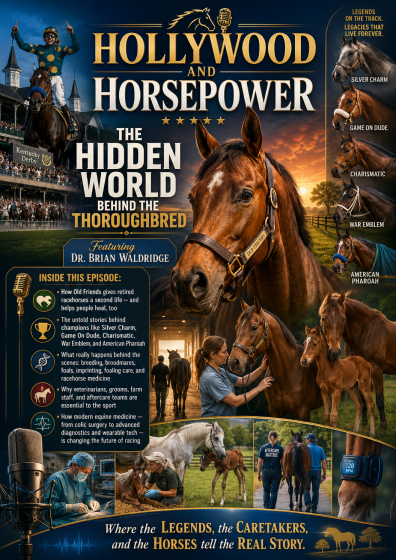

Hollywood And Horsepower Show with Mark Otto
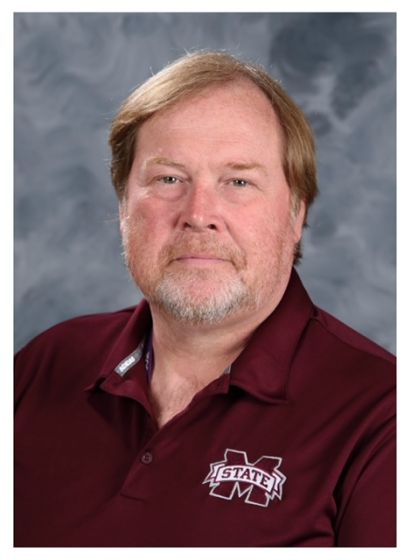
Our guest is Dr. Bryan Waldrige DVM from Mississippi State University Equine Medicinee | College of Veterinary Medicine | Mississippi State University https://www.vetmed.msstate.edu/directory/bw1873
Bryan Waldridge, DVM, MS, Dipl. ABVP, ACVIM, is a veterinarian at Mississippi State University as a Clinical Professor
He also continues to serve as a veterinarian at Old Friends Thoroughbred Retirement Farm, where he cares for an aging equine population. He received his veterinary degree from Auburn University, and upon graduation became a faculty member teaching large animal internal medicine at Tuskegee University and Auburn University. He then worked for Rood & Riddle Equine Hospital, in Lexington, as an internal medicine clinician. Waldridge also served as a resident veterinarian for Kentucky Equine Research, where he was responsible for herd health of research horses and overseeing nutritional research and new product development. He was also the treating veterinarian at the equine quarantine facility for the 1996 Olympic Games in Atlanta. Most recently Waldridge worked for the Kentucky Horse Racing Commission, where he was the treating veterinarian and worked the 2015 Breeders’ Cup at Lexington’s Keeneland Race Course. Waldridge has a special interest in internal medicine and clinical pathology. He and his wife, Sonja reside in Mississippi now on their farm.
Behind the Finish Line: Equine Medicine, Racing Legends, and the Healing Power of Old Friends
Summary
The Healing Power of Old Friends
The episode opens with the host promoting Tony's Steak & Seafood and two charitable causes, No Fallen Heroes and Old Friends. The host and guest describe Old Friends not only as a retirement home for notable racehorses but also as a place that can have a powerful emotional effect on visitors and volunteers. Both men recount how time spent around retired horses can help people decompress and recover from difficult periods in their lives. Game On Dude, Silver Charm, Lava Man, and other famous horses are discussed as examples of the personal connections people develop with equine athletes. The guest says the farm became a kind of personal refuge for him, while the host describes how visits there helped him through a difficult period. They also credit the people behind Old Friends with creating an atmosphere of kindness, acceptance, and respect for both horses and visitors.
The People and Stories Behind Horse Racing
A major theme of the conversation is that horse racing's strength comes from its stories and from the people who work behind the scenes. The guest praises grooms, farm workers, night-watch staff, veterinary technicians, and other workers whose lives revolve around caring for horses that often belong to someone else. He remembers the camaraderie of the racetrack backside and the remarkable stories told by veteran horsemen. The host recalls an older Churchill Downs groom known as Mr. Bones, who could tell stories about horses and Kentucky Derby history for hours. Both speakers argue that racing could attract more people by telling these human stories rather than focusing only on races and wagering. They present the backside culture as hardworking, diverse, humorous, and deeply connected to the horses.
Bardstown, Kentucky Roots and a Career in Equine Medicine
The guest traces his connection to horses back to Bardstown, Kentucky, where he grew up near My Old Kentucky Home and the Talbott Tavern. He remembers his mother's long career at a drugstore near the tavern, his uncle's involvement with racehorses, and his own early exposure to stalls, hot walkers, and farm work. He later attended the University of Kentucky and found a summer job in an animal pathology and blood-typing laboratory before modern DNA parentage testing became standard. He explains how blood types and inherited markers were once used to evaluate parentage in horses. That experience helped move him toward veterinary medicine and eventually a career that included hospital practice, university work, racing regulation, and international equine assignments. The discussion illustrates how a childhood connection to Kentucky horse culture grew into a lifetime devoted to equine medicine.
Breeding, Foaling, and the Work Behind a Thoroughbred
The program spends substantial time explaining what happens before a Thoroughbred ever reaches a racetrack. The speakers discuss live-cover breeding, stallion books, pedigree selection, broodmares, foaling, night-watch crews, and the importance of early handling. The guest describes how quickly a normal foaling should progress and why delayed or abnormal delivery can threaten a foal's oxygen supply. He explains the role of farm staff and veterinarians in recognizing dystocia, helping newborn foals stand and nurse, and monitoring the mare after delivery. The conversation also covers imprinting and the practical value of getting foals accustomed to having their legs, ears, feet, and bodies handled. Throughout this section, the speakers emphasize that the glamorous public image of racing rests on a large amount of specialized work that most spectators never see.
War Emblem, Charismatic, and American Pharoah
Several famous racehorses anchor the episode's most memorable stories. The guest identifies Charismatic as the horse who most took his breath away and recounts the Belmont injury, Chris Antley's effort to support the injured leg, the horse's surgical repair, and Charismatic's later return from Japan. War Emblem is remembered as highly intelligent, difficult, and famously reluctant to breed, a behavior that created a complicated quarantine problem when he returned from Japan. The guest describes assembling a veterinary team to castrate War Emblem so the horse could ultimately live normally at Old Friends. Later, both speakers share personal memories of American Pharoah's historic races, souvenir tickets, clothing, track dirt, garland flowers, and the feeling of witnessing a once-in-a-lifetime champion. These anecdotes reinforce the episode's broader idea that racing is remembered through emotional stories as much as through statistics.
Veterinary Progress, Technology, and Racing's Future
The final portion of the interview focuses on the extraordinary growth of equine veterinary medicine. The guest contrasts early film X-rays and large, primitive ultrasound machines with modern digital radiography, portable ultrasound, CT scans, MRI, and other advanced diagnostics. The speakers discuss the evolution of colic surgery and the improved ability of horses to return to useful or athletic lives after major procedures. They also explore wearable training devices that can collect heart-rate, recovery, movement, and GPS information and potentially reveal patterns associated with injury risk. The host argues that the public often hears about catastrophic injuries without seeing the continuous veterinary research and preventive work happening behind the scenes. The episode closes by returning to Old Friends, Silver Charm's longevity, Japanese equine research and aftercare, and the shared belief that being close to horses can enrich people's lives.
Hollywood and Horsepower Show
Through the relationships Mark Otto developed in Thoroughbred Horse Racing and Automotive Racing, during his global travels, the thing that most interested him was the story behind the story, with the famous people he was fortunate to meet. What was it that these people liked to do? How did they get into Hollywood or into Racing? These stories are fascinating! This is what encapsulates the “Hollywood and Horsepower Show”.
Bringing you along, we talk to so some of the most interesting people Mark met during his career. Don't be surprised if a few other guests stop by this show. This will be fun! It is where SNL meets The Tonight Show; a perfect mix of talk and comedy.
Speaker Identification
Speaker 1 - Host: Mark. The guest addresses the host as "Mark" near the beginning of the interview. The transcript itself does not establish the host's surname, so no surname has been added.
Speaker 2 - Guest: Dr. Brian Waldridge. He is introduced as a veterinarian and professor at Mississippi State University, formerly based in Kentucky. The automated transcript renders his surname several different ways; "Waldridge" is used consistently here as the most likely rendering, but the spelling should be verified before publication.
Speaker 3 - Prerecorded Theme / Promo Voice: Opening theme lyrics and the brief closing promotional tag. The transcript does not identify the performer or announcer by name.
Speaker 3 - Prerecorded Theme / Promo Voice:
I've been down roads from Churchill to L.A., met kings of speed and stars along the way. They've got stories that the cameras never show. Yeah, the truth behind the fame is what we know. From the saddle to the silver screen, fast lanes and punch lines on a late-night show. You think you've seen it all, but you don't know the half until the curtain lifts and we all have a laugh.
It's not just who they are; it's how they came to be. A little horsepower, a little mystery. Hollywood and Horsepower, baby, take a ride, where the legends laugh and the engines never hide. From the track to the spotlight, stories unwind - gathered truths, a little wild, and one of a kind. Hollywood and Horsepower, where the real ones show. Every twist and turn is a tale you didn't know, so pour a drink, sit back, enjoy the show, where the fast and famous let it all go.
Speaker 1 - Host:
Brought to you today by Tony's Steak & Seafood in Lexington, Kentucky; Bowling Green, Kentucky; Cincinnati, Ohio; and Indianapolis, Indiana. Tony always says there's room at his table for one more. I always say dining with Tony is not just dinner; it's an experience. You owe it to yourself to go. It's one of the best places in Lexington and in the other cities where they have locations, and it's truly a Kentucky staple. Take some time and check it out.
We support two charities on this show. We don't take a dime from either one of them. We do it because we believe in what they do. You'll hear me reference my dad many times, but my dad was always big on helping those who couldn't help themselves. He always said to support charities and organizations that focus on what they're there for, not on helping themselves and their executives. These two absolutely check those boxes.
On the human side, it's No Fallen Heroes. A good friend of the show, Matt "Whiz" Buckley, and his wife, Susie, are behind it. He's a former Top Gun fighter pilot. I tell people he's the real-life Jester. If you like the movie Top Gun, he was an adversary trainer at Top Gun. He started No Fallen Heroes to help first responders, veterans, and their families readjust to civilian life. We're losing way too many of these people to suicide every day. Matt and Susie have done a phenomenal job helping people make that adjustment. So take a look at No Fallen Heroes. If you can't do a lot, do a little. Every bit helps.
On the equine side - and the human side, truthfully - it's Old Friends in Georgetown, Kentucky, oldfriendsequine.org, founded by a friend of the show, Michael Blowen, and his wife, Diane White. They were with The Boston Globe, retired to Kentucky, and started a farm largely on their own, with virtually no support from the industry. It has grown to become, basically, a model for aftercare in the Thoroughbred industry.
If you get a chance, and you're anywhere near Lexington, Kentucky, you owe it to yourself to go. Old Friends has been recognized as one of the top attractions in Kentucky. It has been featured by national media, including the Today show and CBS Sunday Morning. Take some time and check out oldfriendsequine.org.
Our guest today ties into Old Friends because he is a veterinarian and a professor at Mississippi State University. Dr. Brian Waldridge joins us today. Dr. Brian is a great friend of the show and a great friend of Old Friends. Brian, welcome to the show.
Speaker 2 - Guest:
Thank you so much, Mark. Thanks for having me on the show.
Speaker 1 - Host:
It's an honor. I really appreciate it. I don't want to dive in and focus only on Old Friends, because you have an amazing career of your own, but I want to let people know something I know you wouldn't say about yourself. You've done a tremendous amount for Old Friends, helping them when you lived in Kentucky, and even today you still go up there, take your students, and do things that help the farm. You're one of the many people behind the scenes who make that place possible. We thank you for that, because I know that's your time, your effort, and obviously a lot of your skill. We really appreciate it.
Speaker 2 - Guest:
Well, thank you for that. I used to tell people in Kentucky - and I still tell these students when we take them up there - that I'm really proud of the program we have that lets the students go there and see those horses. I used to always say that farm was my psychiatrist.
Some people fish, some people golf, and I work on old racehorses. That was just the delight of going out there and seeing those horses and thinking, here I am touching Silver Charm, Game On Dude, Lava Man - all these horses I'd seen on television and thought I'd never touch or see in person.
And in the afternoons, when the tours are gone, it's four or five o'clock and you're riding around on that golf cart with Michael. We'd go to Michael's refrigerator in the garage, get a beer, and drive around. It's amazing what that does to somebody. It's just the love of the horse. That's what it is.
Speaker 1 - Host:
It is the love of the horse, and that's something I've said - I even mentioned it in the introduction about Old Friends. There's something about Old Friends, and you bring up a very good point. I saw early on that Old Friends helped people as much as it helped the horses.
I saw so many people, especially volunteers, and it seemed like a common thread - and I don't mean this in a bad way - that a lot of them, just in my observation, had been through something traumatic in their lives. It could have been a divorce, the loss of a spouse, the loss of a child. Something had happened, and they decided to get involved in something to get their minds off what they were going through, and then it became part of a healing process.
That was really interesting to me. At the time, the focus obviously was caring for retired racehorses and giving them a home when there really wasn't a home for them anywhere. But a hidden benefit was that it also started helping people.
And, to Michael and Diane's credit, when you spend time there - run up on the golf cart, grab a beer, drive around - Michael is probably the most unconditionally kind person I've ever met. He doesn't judge anybody. He doesn't qualify anybody. He accepts everyone the way they come through the gate. It doesn't matter who it is. When they come up the hill, he has the same smile on his face, he's happy to see them, and he shows them around. There's something about that which is really healing and helps people.
I know for myself, many people listening to this show know I went through a divorce back in 2015. On days that were hard - and anybody who's been through that knows it's not a fun experience - there were many days I would go there at the end of the day, when there were no tours, and just walk around.
Game On Dude was a real influential part of that for me, because everybody has their horse, right? Everybody has that horse that holds a spot in your heart. He was a special horse for a lot of people, but for me, as you know, I came from outside racing. I've done a lot in marketing, radio marketing, and Hollywood, and when I was working a lot in L.A., that was when Game On Dude was racing.
You would hear his name a lot around L.A., from Santa Anita or Del Mar, wherever he happened to be. He kind of became a local celebrity in horse racing. I think his name was catchy. Joe Torre was one of the owners and got some publicity. Bob Baffert was the trainer and got publicity. I started to notice him. He was a pretty horse, and he was very successful.
I remember when Jill Baffert called Michael and said, "Do you have room at your farm for a little brown horse?" It was like finding out Elvis was coming for the weekend. I was there when he came. I was there when he came off the truck.
I don't get starstruck. I've been around celebrities and worked in Hollywood studios and talked to many people throughout my career, and I judge people as people. But I have to tell you, when he walked off that truck, it felt like that was a celebrity. That was a movie star to me. It was phenomenal.
So, to your point, there is a therapeutic, healing part to that farm for both people and horses. I'm sure you saw the same thing.
Speaker 2 - Guest:
Oh, yes. You'd have people come from all over. I remember a lady from Montana who used to come every year and spend several days on the farm. The word I'd use is joy - the joy on people's faces when they came down there. You just decompress.
It's the same way at the racetrack. One of the things I love is the backside of a racetrack, because the people back there are from everywhere, and they work so hard. And it's somebody else's horse - that's the thing. I wish racing would get these stories out there, because racing's strength, to me, is stories. That's where we're going to build interest in racing: through the stories.
When I had my first mare, whose name is rendered in the transcript as "Love Me Do," I had a one-horse stable. She didn't do very well. We were subleasing a stall because that's how you had to do it at the track if you were a one-horse stable. Tim Wilson, who was the farm manager at the time, was training her.
One of the guys there had been the groom for one of the horses in that famous picture where one horse is biting another during a race. That guy could tell some of the greatest stories. The grooms are tremendous people. You talk to them, and everybody laughs. Everybody is working really hard, but everybody laughs and everybody has a good time. Somebody has a bad day and blows up; everybody stops and watches, and five minutes later they're laughing again.
I loved the people because of those stories. They were from everywhere. Some people had addiction problems or alcohol problems. But, as you say, when you look into that big brown eye of a horse, there's just something about it.
The older I get, the more I believe in genetic memory. My grandfather used draft horses to plow fields and really liked working draft horses. I found out that his grandfather was a cavalry officer in the Union Army. You almost wonder, where did that come from? I didn't grow up on a farm. I grew up in the city. I fell into horses, decided I wanted to work on them, listened to people, learned from them, and now I couldn't imagine life without them. So I agree with you a thousand percent.
Speaker 1 - Host:
Let's go back. Where did you grow up? Where was home for you?
Speaker 2 - Guest:
Home for me - home home - is Bardstown, Kentucky. When you hear "My Old Kentucky Home" at the Kentucky Derby, that's Bardstown, Kentucky.
Speaker 1 - Host:
Absolutely. Another famous touchpoint for me when I think of Bardstown is the Talbott Tavern.
Speaker 2 - Guest:
That's right. My parents basically had the same jobs their entire lives. If you walk directly across the street from the Talbott Tavern, there was Hurst Drugstore. My mom worked at the pharmacy counter there for probably 50 years.
Speaker 1 - Host:
We talked about Bardstown on our Kentucky Derby show, and a big part of our show is travel and tourism. I tell everybody Bardstown is a hidden Kentucky gem. You and I share that love of Kentucky. When I lived in Kentucky, I would go to Bardstown probably once a month or more for dinner or just to walk around. It's a really neat place with a wealth of history.
The Talbott Tavern goes back a long way. It was like an outpost, and as I recall it goes back even before Kentucky became a state in 1792. If you go upstairs in the Talbott Tavern, there are bullet holes in the wall that are said to have been shot by Jesse James. That's pretty cool. It's still preserved. Supposedly it's haunted. My wife and I stayed there just for fun, and I asked her one night if she'd heard anything. She said she thought she heard some things, but we never really saw a ghost.
Speaker 2 - Guest:
And now there's a really nice bourbon bar directly across the street. I think it's called Neat, or something close to that. What's funny is that the bar is in the old printing office that used to print the newspaper in Bardstown. There wasn't much news in Bardstown, and one reason people got the paper was to see who was in jail because they printed the jail logs.
That's also where my very first job was - working in that newspaper office. Now I go back and it's a really nice bourbon bar.
Speaker 1 - Host:
So if you go to Bardstown, you've got to check out the Talbott Tavern. If they'll let you go upstairs, ask them about the bullet holes in the wall. Bardstown has My Old Kentucky Home, the Talbott Tavern, and, if I understand correctly, the Talbott Tavern was a stagecoach stop at one point too.
Speaker 2 - Guest:
Yes. And the original county jail is right beside the Talbott Tavern. They used to put stocks out in front of it, so now tourists come by, stand in the stocks, and get their pictures taken. At one time, of course, those stocks were there for the unfortunate people who ended up in the jail.
Speaker 1 - Host:
And another place in that town I always think of is the restaurant in the old building people associate with a rickhouse.
Speaker 2 - Guest:
Right. The building used to be connected with a college. I can't remember the name of the college, but St. Catherine's Hall is the name I remember for that building. Some movie stars went there back in the day. It was a college, and that was a big dormitory-type building.
If you know where that is, you can walk to my mom's house in about two minutes. You walk across the little park there, and now there's a big building with swimming pools and things like that. You can walk to my mom's house in two or three minutes. That's exactly where I grew up.
Speaker 1 - Host:
What was it that got you interested in horses? Of course, it wouldn't be hard to get interested where you were. You're right on the edge of the horse world there.
Speaker 2 - Guest:
I had been around horses through my uncle. He had the same job his whole life too. I've had what seems like 2,000 jobs compared with most of my family. My uncle was the bartender at My Old Kentucky Home Country Club. In his younger years, he was a partner in some racehorses, and they had one that did pretty well.
I can remember going and helping him. I remember picking stalls, working the hot walker, and all of that. Then I went to the University of Kentucky for my undergraduate degree. I needed a summer job to afford college, and I got really lucky and ended up getting a job in what was then the old animal pathology building.
This was before the Gluck Equine Research Center was there. They were just starting to build it when I went to veterinary school. A lot of the original research on parasites, viruses, and other horse diseases had been done in that old building. Truly famous people had worked there.
I got lucky and worked in the blood-typing laboratory. In those days, parentage testing was done by blood typing. We did Standardbreds there; Thoroughbreds were handled elsewhere. The stallion's blood type would be known, and blood would be submitted from the mare and foal. They knew how all those different blood types were inherited, so they could determine whether a particular mare and stallion could have produced that offspring.
One of the things we had to do was go out to Coldstream Farm, on the northern edge of Lexington. It's part of the University of Kentucky. It's another really cool place. The original house is still there on that farm, and it's amazingly beautiful. It was ahead of its time, with things like heated running water, and the farm covered thousands of acres.
We would go out there and blood-type the horses. We collected blood and worked with red blood cells and antibodies. If you put antibodies against a particular blood type together with the corresponding red blood cells, the cells would agglutinate, or clump together. That was how we identified the horse's blood type. From the inheritance patterns, you could determine whether the mare and stallion could have produced that foal.
Now, of course, it's DNA testing. It's amazing technology that people take for granted.
Speaker 1 - Host:
That's part of the reason I wanted you on the show. I think a lot of people don't realize everything that goes into these horses behind the scenes. They see a Thoroughbred on the track, or they see one at the Kentucky Derby, but a big portion of our audience comes from outside racing.
For people just joining us, we're joined today by Dr. Brian Waldridge from Mississippi State University, formerly of Kentucky. We're talking about his career, horse racing, and the medicine behind horse racing.
You bring up a really good point. Thoroughbreds are one of the breeds where, first, they have to be bred by live cover for the pedigree to be recognized; artificial insemination isn't accepted for registered Thoroughbred breeding. And second, they use DNA testing. Personally, I think that's part of what preserves the value of the breed.
Speaker 2 - Guest:
Oh, one hundred percent. When I was in Lexington, it was around the time artificial insemination was becoming established in Standardbreds. Instead of one collection from a stallion resulting in one mare being bred, depending on his fertility, you might be able to breed eight or ten mares from one collection. So the exclusivity changed dramatically because it wasn't one-to-one anymore.
There were also questions about breeding and pedigree. I remember Dr. Byars, who helped Old Friends a lot. He taught me so much. He was a brilliant guy. He mentioned one time that, on paper, Storm Cat appeared in far more pedigrees outside Thoroughbred live-cover breeding than the number of mares he physically covered would suggest. People theorized that some Quarter Horse and Standardbred breeders had used artificial insemination from Storm Cat, which raised pedigree questions outside the Thoroughbred registry.
Late in his career, because semen could be collected for use in breeds that allow it, I know there was interest from Quarter Horse people. Storm Cat was a short, very fast horse, and people in cutting and roping were attracted to that. You'll find Storm Cat in a number of Quarter Horse crosses, mainly in performance horses used for cutting and roping.
I also remember the technicians when I worked at Rood & Riddle while Storm Cat was still an active stallion. They always said the Storm Cat foals tended to be more fiery.
I have a funny story that comes full circle and involves Old Friends. Storm Cat's last Thoroughbred crop had only four foals. During pregnancy, fetal sex can sometimes be determined by ultrasound at roughly 60 to 70 days if the fetus is positioned correctly. There aren't many veterinarians who are really good at it, but the people who are good can identify the anatomy and tell whether the fetus is male or female.
There was a doctor at Rood & Riddle who had a reputation that if he told you with confidence what the sex of that foal was going to be, he was right. He would also tell you when he was only making his best guess.
They scanned those four fetuses, and Storm Cat's last crop was projected to be one male and three females. Lucky me, one day I ended up working on Storm Cat's last male offspring. I remember thinking, "Oh, no." He did fine as a foal and went home, but I'll tell you, there was some stress involved. He was well cared for, and we got him home safely.
Speaker 1 - Host:
Here's a question. Did you ever have a horse you worked on or met that just took your breath away - a horse you'd heard about for years, and then all of a sudden you were standing there looking at him?
Speaker 2 - Guest:
That's a good question. For me, it was Charismatic. As we speak, over my left shoulder there's a painting of Charismatic winning the Derby.
Here's another example of what Old Friends lets people experience. When Charismatic came to Old Friends, D. Wayne Lukas came to see him on a Sunday morning. I'll never forget the love he had for that horse. He ran his hands down Charismatic's leg, and you could still feel the steel and the screw heads in the leg where the injury had been repaired. It had healed amazingly well.
Back in those days, that level of orthopedic repair was remarkable. That horse was a testament to the veterinarian who put him back together, and I don't want to say the surgeon's name because I don't want to get it wrong.
Speaker 1 - Host:
And they gave a lot of credit to the jockey for stopping him and jumping off, didn't they?
Speaker 2 - Guest:
Right. Chris Antley. In the Belmont, Charismatic broke down and still finished third. Antley felt him go wrong, pulled him up, jumped off, and held his leg. They don't know whether the horse would have been savable otherwise.
What can happen with the kind of fracture Charismatic had - a condylar fracture near the bottom of the cannon bone - is that the support at the fetlock starts to become unstable. If the horse continues loading the limb, the damaged bone can impact the smaller bones below, and the tendons, ligaments, and sesamoid structures around the back of the ankle can sustain catastrophic soft-tissue damage. Once all of that breaks down, there may be too much damage to repair the horse.
Antley had a good hold on that horse and supported the leg. I still have trouble looking at that image because, for me, Charismatic is the one I'll always remember. There are others, but if I have to pick one, I pick Charismatic.
Michael Blowen gave me a painting of Chris Antley holding Charismatic, and I have it in my house.
Speaker 1 - Host:
I was just going to say, that has to be one of the most famous images in horse racing.
Speaker 2 - Guest:
It is. And there is no doubt in my mind that Antley saved that horse's life in that moment. Then a surgeon, whose name I don't want to misstate, saved the horse with an amazing repair. It was innovative. It was essentially, "Let's try this," and they put him back together.
Charismatic's life is almost a lesson in horses. He goes through all of that, has a stallion career, goes to Japan, and then comes back to the United States. I remember Old Friends had a way you could follow the plane on Facebook while Charismatic was coming home. I remember watching the flight. It stopped in Alaska, and I remember thinking, "He's there. He's back." From there, I think he went to Chicago, and an equine transport brought him from Chicago back to the farm.
Then he injured himself in a stall in a terrible way, and that injury was fatal. To me, his story is horse racing. If you ever get a chance, there's an ESPN 30 for 30 on Charismatic. It's one of the most amazing stories you'll ever see, and a large part of it is about Chris Antley - how he got a chance on that horse, got himself clean, rode him, and then had trouble afterward that people around him associated, at least in part, with the trauma of what happened with Charismatic.
Speaker 1 - Host:
I've heard that too. I've talked with jockeys and people who knew that era well, including Gary Stevens and Mike Smith, and everybody said it was very, very hard on him.
Speaker 2 - Guest:
It was. Everybody gives him credit for saving Charismatic's life, but it was really tough on him.
Speaker 1 - Host:
There were so many sad stories around that horse too. Even the way Charismatic's life ended was horrific and really sad. But when you look back on it, the whole story was up and down - really high highs and really low lows.
Speaker 2 - Guest:
That's horse racing right there: the highest highs and the lowest lows.
Speaker 1 - Host:
That's very true.
Speaker 2 - Guest:
And Charismatic lived a big life. That sums him up. His life was like that. He was a beautiful horse. I love chestnuts, and he was just a beautiful horse. He could bite you, but he wasn't too bad about it. He had a really cool personality.
To me, the story is perseverance, tragedy, and triumph. That's what racing needs to put out there. On Derby coverage, they need to go to Churchill Downs and find the crustiest old groom on the backside and interview him. It would be one of the most incredible things you could do, because those people have the best stories. Ask them what they've done, what the best horse was that they ever rubbed, and what their day is like. People would come to racing for those stories. We've got to get those stories out there.
Speaker 1 - Host:
I agree. I remember one time I was on the backside at Churchill leading up to the Derby. I don't remember exactly why I was back there, but Bob and Jill Baffert have always been gracious to a lot of people, including myself and Michael, and they would make arrangements so we could have access.
There was an older gentleman who was a groom. I don't even know his real name; everybody called him Mr. Bones. He had so many stories. He would sit around the little track kitchen - I don't even want to call it a restaurant - and tell stories about this horse, that horse, the Derby of '78, all of it. He was probably in his 70s and still working every day. To your point, these are hardworking people who are really good at what they do, and it's their whole life. But, man, did he have a lot of good stories.
Speaker 2 - Guest:
I hear that all the time. The horses have stories too. Maybe a mare had trouble while she was pregnant, or it took a long time to get her pregnant. Maybe the foal ends up in the hospital or gets an injury. What those horses overcome just to get there is incredible.
Working on the other side of it in the hospital, we work so hard. We have students, technicians, and assistants. The technicians are the veterinary nurses taking care of these horses, and you get so attached to them. You make these amazing saves, and then you get to see the horse go on to the track, or the filly goes on to become a broodmare and has amazing babies later.
Just the work you put into them, and what these horses have to overcome - I love broodmares.
Speaker 1 - Host:
Broodmares, to me, are probably some of the most underrated horses in the industry. For people just joining us, we're joined today by Dr. Brian Waldridge, a professor at Mississippi State University and a veterinarian with years of experience in Kentucky, talking about horse racing and what happens behind the scenes.
Broodmares are just what they sound like: mares, females who are the mothers of foals. Some become very well known for consistently producing major runners. Think about Weekend Surprise, one of Secretariat's daughters, or Littleprincessemma, American Pharoah's mother. Some of these mares become famous in breeding, even if they don't get the credit they should. They're the consistent producers.
Speaker 2 - Guest:
Right. And what those girls go through is incredible. A Thoroughbred foal may be around 125 pounds at birth, so the mare carries that foal for roughly 340 days and then delivers it. Foals can be rough on mares.
I remember being in the hospital with mares as patients. The poor mare might be lying down and the foal will go over, call to her, and make her get up because it wants to nurse. You think, "How mean is that?" But it's just the foal being a foal.
One thing I used to see some mares do - and I've seen it in other breeds, but I noticed it in a lot of Thoroughbred mares - was that when the foal came up to nurse, the mare would pull her side in, tighten her abdominal muscles, and make more room for the foal to get underneath and nurse. I always thought that was one of the coolest things. You're in there doing an examination or treatment, and you see that mare make room for her foal. You think, "What a mama." She's working hard to keep that foal going.
Speaker 1 - Host:
It's interesting because that's another thing I don't think a lot of people realize: how much work goes into breeding and producing a foal. There's so much work on the back end of the industry, especially with genetics.
One of the best stories I've heard came directly from Claiborne. Most people understand it's expensive to breed to top stallions, but War Front is one of the most famous stallions in the world, and when he was standing at Claiborne they would go so far as to cover up the owner's name and the mare's name and make the decision based on the pedigree. They'd get applications and hand-pick which mares were accepted to War Front.
The story goes that they once turned down Arthur Hancock without realizing it, and he called them and basically said, "Really? I'm your brother." That's a tough business. His mare simply didn't fit the criteria.
Speaker 2 - Guest:
I remember that system too. Back in the day, Thoroughbred breeding was different in a lot of ways. You nominated mares to stallions, and depending on the stallion's fertility, his book might be smaller. The stallion manager and bloodstock people had to be picky.
Speaker 1 - Host:
Claiborne has always prided itself on that, going all the way back to Bull Hancock. They tended not to let their stallions breed as many mares as some other farms. Their stallion books were often smaller than those at some of the other major farms.
Speaker 2 - Guest:
Right, because managing those stallions is another part of it. We ask a lot of them, especially the ones that shuttle between hemispheres. Some of the major stallions may breed three mares a day.
Speaker 1 - Host:
War Front would do three mares a day for several months. With Thoroughbred breeding, they have scheduled covers through the day and night. On a busy farm it can almost feel like every eight hours, around the clock.
The mares are brought in, they're checked, the veterinarians make sure everything is right, and they're often introduced to a teaser. For listeners who don't know, a teaser is a stallion used to determine whether the mare is receptive and will stand for the breeding stallion.
For registered Thoroughbreds, natural service - live cover - is required. The stallion and mare have to breed naturally. Most major farms don't simply turn them out in a pasture. The process is typically controlled in a breeding shed, with handlers on the stallion and mare to keep everyone as safe as possible.
Then you go to the other end of the process, when the foal is born. A veterinarian at Hagyard once told me that most foalings need at least a little observation or assistance, particularly at the large breeding farms. They often have experienced people right there when the mare delivers.
Speaker 2 - Guest:
Exactly. A farm manager or an assistant is usually going to attend every birth. And in Kentucky you have the night watch, another very underappreciated job in the Thoroughbred industry.
Night-watch people spend the night monitoring mares to see which one is going to foal, while other staff are caring for sick horses in other areas. They're watching these mares, recognizing when labor starts, helping if necessary, and making sure problems are caught immediately.
Once a mare's water breaks, a foal should normally be delivered quickly - roughly within 20 minutes. You want to make sure the foal is positioned correctly. Sometimes the mare needs some assistance, although we try not to pull unless she truly needs help. A foal weighing around 125 pounds isn't always the easiest thing to deliver.
The most important point is that time is critical. If the foal is positioned incorrectly in the mare's uterus and you can't correct the position and deliver the foal quickly on the farm, you may have to get the mare to a hospital. Many farms have veterinarians nearby or on the farm, but if you can't resolve a dystocia promptly, you have to move.
At the hospital, the mare may get an IV catheter and go under anesthesia. One technique is to place her on her back and elevate the hindquarters. That shifts some of the abdominal contents away from the pelvis and can give the veterinarian more room to reach in, reposition the fetus, and try to get it aligned correctly for delivery.
Time is of the essence for a successful outcome. Once the delay becomes prolonged, the chances of foal survival decline rapidly. The clock is ticking from the beginning.
That's why the night watch is so important. They're recognizing problems, watching mares foal, helping the mares, and then helping get the newborn foals nursing.
After delivery, you also clean the mare's udder and hindquarters because you want to reduce the bacterial load the foal is exposed to. Then you make sure the foal learns to nurse. People often use a simple "one-two-three" rule of thumb: the foal should stand within about one hour, nurse within about two hours, and the mare should pass the placenta within about three hours, plus or minus. There's a lot of work involved, and a good night-watch person is extremely important.
Speaker 1 - Host:
It does seem like the more we push genetics toward bigger foals, longer legs, longer stride - all the things people want in racing - we're also asking a lot of these horses. Those first few hours are absolutely critical. You want the foal up, nursing, handled, and getting accustomed to people.
What percentage of foals born today would you say need some degree of help getting started?
Speaker 2 - Guest:
If you include everything, probably around half need some kind of assistance, even if it's minor.
And we used to joke about big colts. People on the farms, the night-watch people, the broodmare crews - everybody would say, "He's a big colt; he's going to take an extra day." Big colts often seemed a little slower to figure things out than a filly or a smaller foal. They might be slower getting up, slower getting onto the udder, and slower figuring out how to take care of themselves.
Some of that may be related to how difficult the delivery was. Remember, all of the foal's oxygen before birth comes through the placenta. As delivery begins, the placenta can start to separate, and the umbilical cord normally breaks as the foal passes through the mare's pelvis. If the foal gets stuck and the cord breaks or blood flow is compromised before the foal is out, it may not get enough oxygen.
A prolonged birth can cause hypoxia - a lack of oxygen - and that can contribute to brain swelling and inflammation. People have historically referred to some of those affected newborns as "dummy foals." So there are reasons a difficult birth can affect how quickly a foal gets going.
But on the farm we'd still joke: "It's a big colt. Give him an extra day." Eventually they figure it out.
Speaker 1 - Host:
You mentioned imprinting, and for people just joining us, we're talking with Dr. Brian Waldridge of Mississippi State University about equine medicine and the work behind the scenes in horse racing.
People talk about handling a foal and "imprinting" it when it's first born - touching it, rubbing it, getting it used to people. How much difference does that make in the foal's personality and in how easy it is to handle later?
Speaker 2 - Guest:
It makes a tremendous difference. I can tell you that from working on these horses. It doesn't take much. Five minutes a day can help. Run your hands down their legs. Hold them gently for a few seconds and then let them go. Rub around their eyes and ears. Get them used to being touched.
It makes them much easier to handle, and it makes life easier for the horse as it gets older. If they're accustomed to having their legs rubbed and their feet picked up, the farrier is going to be a lot happier when they're yearlings and people start working seriously on their feet and shoeing them.
I think it's hugely important because it helps everybody who's going to have to work on that horse in the future. If it's a horse you're eventually going to sell, it's definitely in your best interest to have that foal used to a halter, used to having its legs rubbed, ears touched, rump scratched, and body handled.
And, having worked with different breeds, I can tell you that the Thoroughbred farm crews are more unsung heroes. They're the people doing this every day, and it makes a difference. Some horses from other environments come into a hospital almost like white-tailed deer - barely handled - and then you're trying to do a medical procedure or even take a temperature. Early handling helps enormously.
Speaker 1 - Host:
It's interesting because I've noticed that with older horses too. One you mentioned earlier, Silver Charm, really doesn't like his ears being touched. It makes you wonder whether something happened when he was young, or why individual horses develop some of the quirks they have.
War Emblem was another one. He wasn't very good with farriers.
Speaker 2 - Guest:
He wasn't good about much.
Speaker 1 - Host:
No, he wasn't good about much. I remember when we brought him back. Bob commented that he was a handful, and that's putting it lightly.
I always heard a story about one of the guys who played in the bluegrass band at Old Friends events. I can't remember his name, so I won't try to guess it. He was the one who shod War Emblem for the Derby, and I think he said it took two or three days because War Emblem would let him do only one or two feet a day. He had to keep coming back.
Bob also said there were days when War Emblem basically decided, "I'm taking the day off," and they couldn't even get him out of the stall.
Speaker 2 - Guest:
He bit me one day like a rattlesnake, and he was sedated. Luckily it was winter, so I had on a puffy coat. I can't remember exactly what Tim Wilson and I were doing, but I loved War Emblem. He was a weird horse, but a really cool horse. He got me hard and quick. You didn't see it coming.
Speaker 1 - Host:
He was a very smart horse. Michael always said the most important thing at Old Friends was to let a horse be a horse and let the horse tell you what it wants to do. Even War Emblem lightened up somewhat as his time went on at Old Friends. He never became easy, exactly, but he wasn't quite like he was when he first arrived.
Speaker 2 - Guest:
Tim Wilson said one time, "Everything you do with War Emblem comes with a price." He would often let you do what you had to do, but you were going to earn it.
I remember hearing about a time when he had what I think was a tooth abscess. They got the treatment done, and then he chased one of the guys toward the gate. That was War Emblem. If you had a needle, he might stand there and let you do what you needed to do. But if you just wanted to lead him somewhere, he might spend ten minutes dragging you around. He'd let you get the job done, but there was going to be a price.
Speaker 1 - Host:
And, famously, War Emblem reached a point where he simply didn't want to breed mares anymore. His breeding career didn't end because he wasn't producing. It ended because he refused to breed.
Speaker 2 - Guest:
Right. Without getting overly graphic, he became very selective about which mares he would breed. They even tried to trick him a couple of times, and they couldn't get him to do it.
Looking back, some of the stories are actually pretty funny. My memory is that he had been sold for around $18 million, and he did have some good runners and somewhere around 130 offspring, give or take. But he got to the point where he might breed chestnut mares and refuse bays. People would bring in a chestnut as a teaser and then try to switch to the mare he was supposed to breed, and he'd still refuse.
They even tried pasture breeding, which is almost unheard of with modern Thoroughbred stallions. He was turned out with mares, and my recollection is that this went on for a very long time, but he still wouldn't breed reliably.
Speaker 1 - Host:
When he came back to the United States, Michael had organized a grassroots effort where people donated to help bring War Emblem home. A lot of those donors had a personal connection to him through the Derby or through following his story. People came from all over the United States, and when he arrived they had what was basically a War Emblem homecoming party. Just talking with those people and hearing their connection to the horse was really cool.
Speaker 2 - Guest:
But bringing him back also created a veterinary and regulatory problem. There's a transmissible reproductive disease called contagious equine metritis, or CEM, that can cause reproductive infections and pregnancy loss in mares. War Emblem was coming from Japan, and part of the U.S. import requirements was proving that he had not brought that bacterium into the country.
The quarantine protocol required testing of War Emblem and test breeding under controlled conditions. The mares would then be cultured to make sure the bacterium couldn't be recovered. The problem was obvious: a stallion who wouldn't breed in Japan also wouldn't breed in Kentucky.
A reproduction specialist tried every trick we knew. We'd go over there and he'd be turned out near mares, just standing there grazing 20 feet away, and he still wouldn't breed.
That left us with very limited choices. We could keep him permanently separated under quarantine restrictions, which defeated the whole point of bringing him home. Sending him back to Japan wasn't a practical solution after all the effort to return him. Or we could castrate him so he could be cleared and live normally at Old Friends.
He was an older stallion by then, somewhere in the neighborhood of 17 or 18 by our recollection, so castration wasn't something we took lightly. But it became the practical option.
I thought it would be less stressful on him if we did the procedure there at the farm, so I started putting together a team.
Dr. Brad Tanner, a veterinarian at Rood & Riddle, was doing a lot of the work at the farm. I had taught him in veterinary school, although he probably wouldn't claim that. I'm really proud of him. He's board-certified in equine dentistry and is one of the key people in the broodmare side of the practice. He's a tremendous guy.
Then I thought, somebody has to do anesthesia on this horse, and this is a horse that had once sold for roughly $18 million. I could do the anesthesia, but I really wanted somebody I trusted deeply.
I went to veterinary school at Auburn and did my residency at Auburn. One of the people who taught me anesthesia was a wonderful Taiwanese anesthesiologist whose name is rendered in the transcript as Dr. Wai-Chu Lam. She was the kind of person who could anesthetize zoo animals, rodeo bulls, horses - all kinds of difficult cases. I'm so grateful to her for what she taught me.
I called her and said, "Will you do anesthesia on an eighteen-million-dollar horse?" She started laughing, and I said, "I'm serious." I explained the situation, and she said yes.
We lined up the crew. I think we did it in February. Somehow, amazingly, War Emblem cooperated that day. The weather was decent, the sun was out, and we anesthetized him in a paddock. Dr. Tanner performed the castration, Dr. Lam handled the anesthesia, and everything went fine.
We were all thinking, when this horse wakes up, he's going to kill us. But he recovered. It wasn't an easy procedure to do on an older horse, and he had a few bumps in the road afterward, but he did all right. That's the story of why War Emblem had to be castrated.
Speaker 1 - Host:
That's interesting because a lot of people don't realize how often gelding is a last-resort management decision. In War Emblem's case, he was at the end of his breeding career and there were regulatory reasons. But you think about horses like Game On Dude. He had to be gelded because they couldn't handle him. Bob Baffert said one time that if Game On Dude hadn't been gelded, you probably wouldn't know his name because they couldn't do anything with him.
And then John Henry - everybody knows how tough John Henry could be. Gelding may have been part of what allowed him to become the John Henry we remember.
Speaker 2 - Guest:
I think that absolutely holds true for a lot of horses.
Speaker 1 - Host:
So you went to Auburn, and then you came back to Kentucky. What was your first job in Kentucky?
Speaker 2 - Guest:
I worked at the equine hospital, and it was the most fun I ever had at work and also the hardest work I ever did in my life. There were a lot of good people there. You learned so much and saw so much.
I used to tell interns, people might work 30 years in general horse practice and never see some of the cases you're seeing here a few months out of school. It was a very collaborative environment because everybody was in it together.
You spent a lot of time together, especially from January through June, when everybody was incredibly busy. You got to know the people on the farms. Sometimes you saw the same mare year after year, through multiple foalings or whatever medical problems she might have. It was hard work, but it was a lot of fun.
Speaker 1 - Host:
You also had some interesting opportunities outside routine horse racing. You were one of the veterinarians working around the Olympic Games in Atlanta, from what I understand.
Speaker 2 - Guest:
I was. That came between finishing my residency and starting my first academic job, which the transcript appears to place at Tuskegee. A company was handling the logistics of importing horses from all over the world for the Atlanta Olympics, and the horses flew into the Atlanta airport.
I had to live in a hotel near the airport for about six weeks because the flights often came in at night. We'd go over when the European and other international horses arrived. As part of importation, those horses had to be tested for certain foreign animal diseases. Blood samples were collected, and it took a couple of days to get some of those results back.
There were also biosecurity concerns involving diseases such as foot-and-mouth disease that can affect livestock. United States Department of Agriculture personnel were involved. I collected samples, and equipment and tack were disinfected according to the import protocols.
My job was that if any of those horses became sick while they were in that process, I would be responsible for the horse's care locally. Most of those horses traveled with team veterinarians, so I would work with the team veterinarian, help with drugs and supplies, and we'd develop a treatment plan together if a horse became ill. Luckily, none of the horses I was responsible for became seriously sick.
That assignment was a lot of fun because I met veterinarians from all over the world and saw some amazing horses - some of the best jumpers, dressage horses, and other equine athletes in the world. From there, the horses went out to the Olympic equestrian venue.
Speaker 1 - Host:
And you've done work with the Breeders' Cup and the Kentucky Horse Racing Commission. You've had quite a few opportunities in and outside racing.
Speaker 2 - Guest:
I have. I've been really lucky. I worked for the Kentucky Horse Racing Commission when American Pharoah ran in the Breeders' Cup, and I'll never forget it.
I got lucky because I only had to work racing that morning, so I didn't have to spend the race in the test barn. If you work for the racing commission, you aren't supposed to be betting on races, but I bought a two-dollar win ticket on American Pharoah as a souvenir. I thought there was no way anybody was going to give me grief over a two-dollar keepsake ticket on American Pharoah. I still have the ticket.
I got to go down near the gap with the horsemen, and that's where I watched American Pharoah in the Breeders' Cup. To this day, it is the best and most amazing horse race I've ever seen with my own eyes.
Speaker 1 - Host:
That was one where I was very fortunate too. Michael, Bob, and Jill were so gracious. I was at the Derby, the Belmont, and the Breeders' Cup.
I remember that morning. We had made some saddlecloth-related memorabilia from the Derby, and I donated one to Old Friends. There's a picture of Michael and me associated with that donation.
I'm not a big handicapper, but one of the few times Bob ever said something to me about a race, he said, "Make sure you get some tickets, because he's going to win this." So I went and got a whole stack of two-dollar win tickets, and I still have them today.
The cool thing was that the Breeders' Cup logo was on the ticket, and American Pharoah's name was actually printed on it.
Speaker 2 - Guest:
I have one too. I have a picture of him winning that race, and I put the ticket with it.
When he won, I went with some of the other racing commission people and horsemen toward the gap so we could watch him come back off the track. Standing there as American Pharoah came back was electric. It had been so long since racing had seen a horse accomplish what he had just accomplished, and you knew you were watching something historic.
I can still remember seeing Victor Espinoza relax his hands, and then that horse just took off. That was it. In my mind I thought, "This is one of the greatest horses I'm ever going to see, and this is the greatest horse race I've ever seen."
Speaker 1 - Host:
There's something about Pharoah. He was one of my favorites too. Hanging on the wall behind me I have a shadow box with the shirt I was wearing at the Belmont.
Bob signed my shirt when we were walking back to the barn. Michael and I were walking with him, the horse was up ahead of us with Jimmy Barnes, and somebody stopped Bob and asked him to sign a program. He signed it. We kept walking, and I stopped Bob and said, "Hey, sign my shirt."
He looked at me and said, "What are you, a teenage girl?" I said, "No, look - when are we ever going to be here again?" Of course, not realizing we'd be there again two years later with Justify.
At that moment, I truly thought this was a once-in-a-lifetime thing. I thought, I'm never again going to be walking from the Belmont back to the barn behind a horse that just won the Triple Crown.
The shadow box has the shirt, tie, cufflinks, Bob's signature, and my credentials - the access passes, barn passes, all of it.
Speaker 2 - Guest:
I'm the same way. I still have the lanyard and credentials I wore for the Breeders' Cup because my racing commission access let me go frontside, backside, and into restricted areas as needed.
I even kept dirt from the track. I reached down, picked up a handful, put it in a napkin or whatever I had in my pocket, and later put it into a small plastic tube so I could keep it.
Then I followed American Pharoah down toward the test barn at Keeneland, and some flowers fell off his Breeders' Cup garland. Nobody was picking them up, and I thought, "I've got to have that. That's from American Pharoah."
Speaker 1 - Host:
You and I are just alike. When he won the Derby, I got two roses that fell off his garland. I still have them.
Speaker 2 - Guest:
I did the same with the Breeders' Cup flowers. I pressed them. I was looking for something the other day and found the framed display where I kept them. I said, "There are American Pharoah's flowers from the garland." That was an amazing day.
Speaker 1 - Host:
I've got a picture of myself back at the barn with the garland after the race.
Speaker 2 - Guest:
That's so cool. At the Breeders' Cup, when you walk the backside and see the garlands hanging over the boards outside the barns, that's just special. You walk around and see those symbols of what just happened.
Speaker 1 - Host:
We've had several great horses, and I don't want to take anything away from Seattle Slew or any of the others, but there was something different about American Pharoah. It reminded me of the way people describe Secretariat - like he was simply on another level.
What stuck out to me most at the Belmont was watching him after the winner's-circle photos. There had to be close to a hundred people in that winner's circle. Then they walked him out to go back to the barn, and I looked at him and thought he could have gone back out and run another race.
Speaker 2 - Guest:
That's how he looked. I agree. That horse had so much stamina. It was amazing.
Speaker 1 - Host:
He wasn't lathered up the way you'd expect. From what I remember, there was just a little sweat around the saddlecloth and his neck. Not what you'd expect from a horse that had basically gone wire to wire.
Speaker 2 - Guest:
I just feel lucky to have seen that race. I'll probably never see another one like it.
Speaker 1 - Host:
It was really special. And I think, to your earlier point, it's the stories that make horse racing unique. That's something that goes underappreciated. Horse racing is also unusually accessible.
I tell people, when you travel around the country, take the time to go to one of these racetracks. It doesn't matter whether you're already in racing or you've never been to a race in your life. Go. You'll probably enjoy it.
It's one of the last professional sports where you can get almost face-to-face with the people in the industry, standing right at the rail, and you don't have to break the bank to do it. Some of the best vantage points at many racetracks are not the most expensive seats.
Speaker 2 - Guest:
That's true. You can go to Keeneland for a relatively inexpensive admission and stand right there by the rail or the paddock. The horses, jockeys, and trainers are right there. You can watch the jockeys get up, watch the horses walk across, and then see them run.
For the Breeders' Cup at Keeneland, I had a general admission ticket, and I loved it. I was with my people, right there on the apron. You can see the horses up close, hear the breathing, hear the feet, hear people talking, hear a jockey talking to a horse or a groom talking to one. It's an amazing experience, and I never take it for granted.
Speaker 1 - Host:
I don't either. And I also think the technology keeps making the sport safer and the medicine better. You deal with this every day: the advancements in equine medicine that help people not only keep these animals healthy and sound, but avoid future problems.
You and I talked a week or so ago about wearable devices. There are several companies developing equine wearables that generate training data and may help identify patterns associated with catastrophic injury risk. A lot of the value comes from the veterinary world taking that raw data and connecting it to specific injury patterns.
There have been papers and studies tying changes in performance and locomotion data to injury risk. It's that technology, knowledge, and research that keeps moving things forward. Those are stories people need to hear too.
Everybody hears the bad stories. Everybody hears about a horse when something goes wrong. But people don't always understand how much care goes into the approximately 18,000 to 19,000 Thoroughbred foals the speakers are discussing as being born in a year, or how much top-level medicine those horses receive.
Behind the scenes, what you do every day - and what university veterinarians around the country and the world do - is producing discoveries that improve genetics, treatment, diagnostics, and repair.
We touched on that with Charismatic. Before the kind of orthopedic repair he received became possible, an injury like that often would have ended with the horse being euthanized.
People hear the negatives. I like to point out the positives because I think the Thoroughbred industry has driven and adopted a lot of medical advancements. Going back to Dr. Byars, Michael used to tell a story that Dr. Byars paid close attention to human medicine and translated useful ideas into equine medicine. It's people like that you have to credit for some of the advances that let horses live longer and recover from injuries that used to be considered hopeless.
Game On Dude is another example, and you worked on him yourself. How many times has he dealt with colic? For a normal horse in an earlier era, that might not have ended well. Thanks to the veterinarians, Tim Wilson, and everybody else involved, he's still alive and doing well. If he'd been born 15 years earlier, who knows whether he would have survived some of those episodes.
Speaker 2 - Guest:
Colic surgery is a perfect example. In the early development of equine colic surgery, the people who pioneered it were doing incredibly difficult operations with equipment that was primitive compared with what we have today.
Some of those pioneers are still around. The transcript gives names that sound like a California surgeon and Dr. Jim Moore in Georgia, but the exact first name should be verified. When you talk to the people who helped pioneer colic surgery, the stories are remarkable.
In the earliest days, they didn't have the modern operating tables and lifting systems we have now. Surgeons might be working in physically awkward positions, opening the abdomen, bringing out sections of colon or small intestine, finding the problem, determining whether the bowel was positioned correctly and viable, and then putting everything back in the proper orientation.
You can't just put the large intestine back any old way. It has to be positioned correctly. Early survival rates were poor, as you'd expect while surgeons were developing the procedures, but they pioneered the techniques.
Now, depending on the type of colic and the case, outcomes can be dramatically better. As a rough conversational estimate, 60 to 70 percent of athletic horses that undergo some forms of colic surgery may be able to return to their prior level of work or even higher. That can include broodmares, cutting horses, reining horses, racehorses, retired racehorses, jumpers - all kinds of horses.
That's how far we've come in a few decades.
I don't take modern diagnostics for granted either. Today we did a CT scan on a horse. Another horse had an MRI. Those weren't routine tools when I started.
When I first got out of school, you went out with an X-ray machine and a plate. You took the X-ray and hoped you had everything positioned correctly. Then you came back to the darkroom - often it felt like it was in a laundry room - opened the cassette, took out the film, and ran it through chemical tanks like you were developing a photograph.
You had to let it process and dry. And every now and then somebody had forgotten to put film in the cassette, so you'd open it up, discover there was no film, and have to go back and shoot the X-ray again.
Now it's digital. I take an X-ray and it pops up on a computer screen. I can adjust brightness and contrast, zoom in, and manipulate the image to see details. That technology didn't exist for me when I got out of school.
I've been doing veterinary medicine for about 35 years, and the change is amazing.
Ultrasound is the same way. Today you can carry ultrasound equipment in your hand or in something the size of a laptop. When I was in school, one of the anatomy professors who taught us, Dr. Earl Cartee, was one of the early pioneers of ultrasound in veterinary medicine. The ultrasound machine was a giant thing with a tiny screen.
They would show us ultrasound images in school, and we'd almost laugh, thinking, "We're never going to use this stuff." Now I use ultrasound literally every day. You can hardly practice modern equine medicine without one.
I tell students all the time: it's amazing what diagnostic capability you have in your hands now.
Speaker 1 - Host:
And it keeps advancing. With wearable training devices, you can have data downloaded to your phone by the time the horse walks back to the barn after a workout. You can see patterns in heart rate, recovery, breathing, speed, GPS data, and locomotion. A lot of this didn't exist in a practical way just a few years ago.
The part that stands out to me is what doctors and researchers do next: they tie the data to actual injuries. Collecting data is one thing. Then somebody looks at a spreadsheet full of points and says, "When you see this pattern, it often points toward this type of injury."
I was reading something recently suggesting that certain sustained declines or abnormal training patterns can be associated with a very high probability of catastrophic breakdown if nothing changes. The exact figure quoted in the conversation was around 94 or 95 percent for one specific pattern, though that number would need to be checked against the underlying study.
And that kind of research is very new, especially here in the United States. Japan and the United Kingdom have been ahead in some of these areas.
It really is amazing how quickly veterinary medicine advances. The reason I bring it up is the same reason we've been talking about all day: I don't think people realize how much happens behind the scenes to keep these horses healthy - from genetics, breeding, and foaling to training, injury management, treatment, and repair.
Universities and veterinary programs are advancing this in real time - programs like yours, Auburn, Cornell, and others. Researchers are out on farms and at places like Old Friends monitoring aging horses, looking at connective tissue and bone changes, and then using that information to adjust breeding, training, and treatment.
All of that can give horses longevity. Look at Silver Charm. He won the Kentucky Derby in 1997 and, as we're talking here, he's still walking around at Old Friends in his early 30s.
Speaker 2 - Guest:
Some of that is genetics and the inherent toughness of certain horses. Silver Charm is a remarkable example. But it's also a huge testament to Michael and everybody at Old Friends and how hard they work.
I see pictures of Silver Charm from Old Friends, and I look at him and think, that really looks like Silver Charm. His body condition is amazing. That's what hits me most: he looks really, really good.
It takes a village to keep an old horse thriving at that age.
And I don't think you can underestimate the care some of these horses received in Japan either. One thing that has always stood out to me is how good many horses coming back from Japan look.
If you look at the veterinary literature on racing and equine medicine, a lot of strong research comes out of Japan. I have a lot of respect for the work their veterinary schools do. When major horses go there, you have confidence they're receiving serious care. California Chrome is over there, for example.
Japan also has organizations working on aftercare, including an Old Friends-related effort, and they're trying to create places where people can see retired horses up close.
That's important because it makes people happy in their hearts. You go to Old Friends and see people petting these horses or feeding them carrots. Being around horses might not be part of their daily lives at all. They just want to be near them. They're happy, and it makes me happy to see them happy.
Speaker 1 - Host:
I agree.
Brian, we're at the bottom of the hour, so we're going to have to wrap up. I can't thank you enough for joining us. I also can't thank you enough for everything you do for Old Friends and everything you and your team do to discover new things for the industry.
Speaker 2 - Guest:
Thank you. I sure enjoy visiting with you. I don't get to see you much anymore with us being so far apart. We're going to have to figure out a time when we're both in Kentucky and go to Tony's for dinner.
Speaker 1 - Host:
All right. Breeders' Cup - we're there. I'll probably be there too, and I'd definitely love to have you join us at Tony's.
Speaker 2 - Guest:
I haven't been there. I know exactly where it is, but I've never had a chance to go. It'll be great to see you.
Speaker 1 - Host:
We need to right that wrong, because there are a lot of amazing restaurants in Lexington, as you can attest, and Tony's is one of the best. I miss Lexington too.
Most people don't realize it, but Lexington is a hidden gem to me. People ask me all the time, "What's it really like?" I say Lexington is like Beverly Hills with horses, bourbon, and candy.
It's a beautiful place with so much to offer in a relatively small package. It's not a huge city. You have tourism, medicine, bourbon, candy, and of course the horses. Everybody thinks of the horses, and that's obviously what we've been talking about today, but Lexington goes way beyond that.
I tell everybody: you owe it to yourself to go to Tony's, and you owe it to yourself to plan a weekend in Lexington. Take the time and look it up. There's a great resource called visitlex.com, and they're also supporters of Old Friends.
Look at the places to stay. There are historic places, modern places, bed-and-breakfasts on farms, vineyards, and terrific restaurants. And if you're anywhere near Lexington, you owe it to yourself to go to Old Friends and to Tony's.
Speaker 2 - Guest:
That's right. Do them both. Enjoy downtown, and after dinner take a nice walk around Triangle Park.
Speaker 1 - Host:
I agree. Brian, thank you so much for joining us today.
This has been Hollywood and Horsepower, brought to you by Tony's Steak & Seafood in Lexington, Kentucky; Cincinnati, Ohio; Indianapolis, Indiana; and Bowling Green, Kentucky.
Take some time and check out visitlex.com, oldfriendsequine.org, and No Fallen Heroes. We appreciate you joining us, and we'll see you again next week. This has been Hollywood and Horsepower. Talk to you later.
Speaker 3 - Prerecorded Theme / Promo Voice:
Stick around. You never know who's next. And trust me, they've got a story worth hearing.