
Beverage Chronicles, June 24, 2026

Beverage Chronicles with Gary Monterosso
Dive Bar Soul, Bottle Science, and the Pickle Beer Surprise
The Humble Doorway Into Dive Bar Culture
The episode opens with a sponsor message for Buna Connection Brewing Company before host Gary Montaroso introduces Beverage Chronicles as a relaxed conversation about the stories behind what people drink. The main feature begins by defining dive bars as casual, unpretentious places with simple drinks, low prices, local clientele, and a worn-in atmosphere that often includes music, karaoke, or pool tables.
Why Authenticity Matters More Than Polish
The host explores the dive bar as a cultural symbol of authenticity. Rather than focusing on curated aesthetics, expensive cocktails, or social performance, the segment presents dive bars as places where people can simply exist without pressure. Sticky floors, faded posters, basic beer selections, and bartenders who know regulars by name become part of the larger point: dive bars value consistency, comfort, and character over reinvention.
The Neighborhood Memory Bank
The episode describes dive bars as social equalizers where construction workers, retirees, musicians, couples, and regulars share the same space without status getting in the way. In small towns, the local dive can function like an unofficial city hall, while in cities it can serve as a refuge from constant noise, pressure, and performance. The host frames these places as community memory banks that hold stories of work, romance, celebration, heartbreak, and everyday connection.
The Threat of the Faux Dive
The discussion then turns to economic pressure, redevelopment, and the rise of bars designed to imitate the look of older neighborhood dives. The host contrasts authentic dive bars with faux dives that use thrift-store decor, Edison bulbs, and curated shabbiness while missing the real spirit of the place. Surviving dives may have adapted with card payments, expanded menus, or local craft beer, but the episode argues that their honesty, grit, and atmosphere cannot be manufactured.
The Science Behind Beer Bottle Color
Correspondent Vince Douglas shifts the episode into a practical beer-science segment about why beer is often bottled in brown or green glass rather than clear glass. He explains that light, especially UV rays and visible wavelengths, can trigger reactions in hop compounds that create the smell and taste known as skunked beer. Brown glass is presented as the best standard for protecting beer flavor, while green and clear bottles offer less protection unless breweries use special coatings or light-stable hop extracts.
Pickle Beer Takes the Spotlight
The episode closes with a humorous look at pickle-flavored beer trends. The host discusses Pabst Blue Ribbon’s collaboration with Grillo’s Pickles on a limited-edition pickle beer and Busch Light’s own pickle lager, presenting both as surprising but culturally timely responses to widespread enthusiasm for bold pickle flavors. The segment ends by framing pickle beer as a playful evolution of the classic dive-bar garnish, where the pickle is no longer added to the drink because the garnish has become the beer itself.
SEO Keywords / Key Phrases
dive bars, beer bottle color, skunked beer, brown glass bottles, pickle beer, craft beer culture, neighborhood bars, third places, beer science, authentic bar culture
Beverage Chronicles

Support my show
$5.99/mo or $9.99/mo
Click HERE
SUBSCRIBE TO TALK SHOW
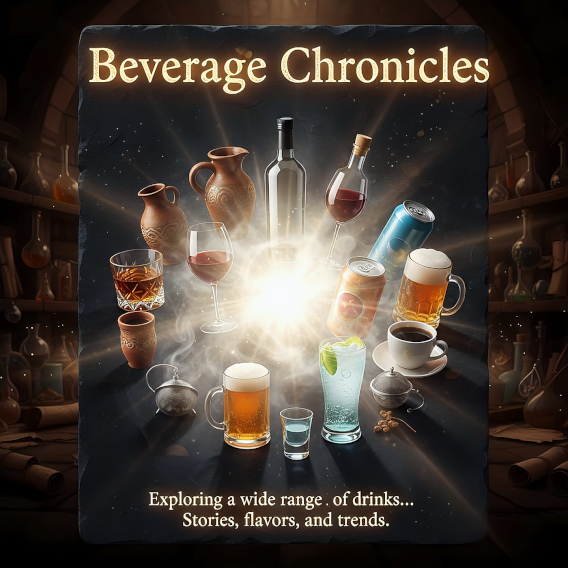
Beverage Chronicles is the radio show that explores a wide range of drinks, both alcoholic and non-alcoholic. From whiskey, rum, vodka, and tequila, to ready-to-drink cocktails, wine, beer, flavor-infused seltzers, coffee, tea, and more. We bring you the stories, flavors, and trends behind your favorite beverage.
Dive Bar Soul, Bottle Science, and the Pickle Beer Surprise
Speaker Identification
Speaker 1 – Prerecorded Sponsor Voice: Identified by the opening promotional language for Buna Connection Brewing Company.
Speaker 2 – Host: Identified from the introduction: “Hi everyone, and welcome to Beverage Chronicles. I’m Gary Montaroso.” The spelling of the host’s surname should be verified.
Speaker 3 – Vince Douglas / Correspondent: Identified from the segment sign-off: “I’m Vince Douglas for Beverage Chronicles.” A garbled introductory line appears to refer to Vince Douglas.
Speaker 1 – Prerecorded Sponsor Voice:
Make your weekend better at Buna Connection Brewing Company. Fresh craft beer, great vibes, and a taproom perfect for kicking back. Grab a pint, bring friends, and enjoy the weekend at Buna Connection Brewing Company. Go to BunaConnectionBrewing.com.
Speaker 2 – Host:
Hi everyone, and welcome to Beverage Chronicles. I’m Gary Montaroso, and this is the show where we kind of kick back, pour something interesting, and talk a little bit about the stories behind what’s in the glass.
From craft beer to classic cocktails and everything in between, we’re going to take a dive into the people, the passion, and the culture that make the beverage world so fascinating. We’re so glad you’re here joining us again this week. Let’s get right into it.
They’re casual and unpretentious, often with a relaxed atmosphere, low prices, and a local clientele. There’s usually simple decor, sometimes with a worn or gritty appearance. They serve basic drinks and snacks, usually focusing on beer and cocktails. There may be live music, karaoke, or pool tables. We’re talking about dive bars.
Push open a warped wooden door and the smell hits first: a mix of spilled beer, fryer grease, and time. Jukebox lights flicker in the corner. A couple of regulars look up for half a second before going back to their drinks. The bartender, no-nonsense and likely multitasking, nods in acknowledgment.
You’ve just entered the most American of habitats: the dive bar.
Once written off as grimy watering holes, dive bars have become cultural touchstones, symbols of authenticity in a world increasingly obsessed with curated experiences. But their charm has nothing to do with branding. A true dive doesn’t try to be anything other than what it already is, and that’s what keeps people coming back.
So what actually makes a dive bar a dive? It’s less about the size of the beer selection and more about attitude.
These places are defined by unpretentiousness. No one’s there to be seen. They’re there to be. Think dim lights, sticky floors, and vinyl stools that have seen better decades. The decor is unplanned: a mix of neon beer logos, faded posters, and maybe a dusty pool trophy from 1994.
The beers on tap are simple: Bud, Miller, maybe Yuengling. The prices don’t vary much because nobody came here for a $16 cocktail anyway. If the bartender knows everyone’s usual order without asking, you’re in the right place.
Dive bars value consistency over reinvention. They’re comfort zones disguised as drinking establishments.
In the bigger ecosystem of nightlife, dive bars are the anti-trend. Lounge bars perfect presentation. Breweries perfect flavor. Rooftop bars perfect the selfie backdrop. Dive bars perfect indifference.
Even the term “dive” was once an insult, early 20th-century slang for places people dived into to avoid being seen. Over time, that secrecy evolved into community.
Where every other type of bar asks something from you, whether money, fashion, or enthusiasm, a dive asks nothing except that you mind your manners and pay in cash.
The difference is almost philosophical. A fancy bar offers curation. A dive offers permission. You don’t need to talk, smile, or even fit in. You’re simply allowed to exist there. And in an era when everything feels performative, that’s radical.
Every dive bar tells the story of its neighborhood. You’ll find construction workers next to retirees, a couple arguing quietly in the corner, and a local musician celebrating gig money. They’re social equalizers where rank, fashion, and bank accounts suddenly don’t matter.
Dive bars are community memory banks. The walls could probably talk about lost jobs, first romances, big wins, and heartbreaks. Birthdays are celebrated with paper plates of cake, not menus full of handcrafted bites.
In small towns, the local dive might double as the unofficial city hall, a place where news travels faster than social media. In big cities, they are refuges for people who need a break from the grind, offering the sort of genuine connection algorithms can’t replicate.
That’s what makes these places culturally important. They preserve a sense of neighborhood identity that’s vanishing elsewhere. The faces change, but the atmosphere doesn’t.
Even the most stubborn dives can’t always survive modern economics. Rising rents and urban redevelopment have forced countless neighborhood bars to shutter. In their place comes the faux dive: sleek establishments built to look shabby, complete with Edison bulbs, thrift-store decor, and cleverly worn wood panels.
You’ll know the difference the second you see the beer list. A true dive doesn’t have one pasted on chalkboard walls, and you won’t need a QR code either.
That’s not to say surviving dives haven’t evolved. The pandemic years forced many to adapt, switching to card payments, adding kitchen menus, or offering local craft beers alongside the old standbys. But even as they modernize slightly, the spirit remains the same. You can’t fake that blend of honesty and grit.
So how do you spot authenticity when the neon glow can fool you? Real dives often don’t bother with card readers, or they just got one last week. The regulars control the playlist. Expect Springsteen, Patsy Cline, or the Stones. If your beer is under five bucks, you’re doing fine. You might get teased before you get served, but it’s usually in good humor.
A dive never advertises itself as one. If it calls itself a dive on Instagram, chances are it’s not.
The simplest test is this: if you instantly relax because nobody cares who you are or what you order, you’re probably there.
Dive bars endure because they meet a need modern life doesn’t. In a world of algorithms and endless updates, they offer something low-tech and human. They’re one of the last places where you can have a real conversation with strangers, with no agenda and no Wi-Fi password required.
They also remind us of continuity. Neighborhoods change. Real estate cycles turn. But a dive bar anchors memory. The stool by the door might have held your grandfather one night in 1972. The bartender pouring your pint could have been there for decades, running tabs the old-school way with pen marks on a coaster.
There’s comfort in that. Dive bars avoid the churn of trends. They ask nothing but honesty from their patrons, and in return give authenticity back.
Sociologists call them third places, those social hubs that aren’t work or home, but something in between. Starbucks and coworking spaces have tried to occupy that role, but there’s something about a bar at midnight, a softly glowing neon sign, the hum of conversation, and the quiet clink of glasses that feels more enduring, more alive.
To love dive bars is to love humanity, imperfections and all. Their walls absorb laughter and sorrow in equal measure. They’re places where a bad day ends better than it began, or where a stranger turns into a friend.
In their dim light, we remember that community doesn’t need high-speed internet or mixology classes. It just needs a place to gather.
As cities evolve and the old haunts fade one by one, it’s worth recognizing that those dusty, noisy, proudly imperfect spaces still play a vital role. They’re the beating heart of American bar culture, proof that sometimes authenticity can’t be manufactured.
So next time you spot a faded neon sign over a doorway you’ve never noticed before, step inside. Have the beer. Talk to the bartender. Listen to the story the walls are telling.
Because when the last dive bar closes its doors, we’ll lose more than cheap drinks. We’ll lose a piece of our collective soul.
Speaker 3 – Vince Douglas / Correspondent:
Vince Douglas here for Beverage Chronicles.
Here’s a question you probably haven’t asked yourself: have you ever stopped to think why your favorite beer comes in a brown or green bottle and not a clear one?
Most of us just grab a cold one, pop the top, and move on to what’s inside. But there’s a hidden reason behind that glass color, and it has everything to do with keeping your beer tasting the way the brewer intended.
As pretty as those clear bottles can be, and they sure look good lined up on a shelf, they’re not great at protecting what’s inside. Light, especially UV rays and visible wavelengths, can mess with the chemistry of your beer. And when that happens, things can go downhill fast.
Here’s the science in simple terms. When light hits the hops in beer, a reaction starts. Those delicate hop compounds break down and sulfur molecules get released. The result? A smell and taste that’s, well, let’s call it unpleasant.
You may have heard the term “skunked beer.” That’s exactly what’s happening. It’s the same compound that gives a skunk spray its telltale odor. And once a beer gets skunked, there’s no coming back from it. It can happen in just a few minutes under sunlight.
That’s why dark glass is the unsung hero of your six-pack. Brown bottles do the best job blocking out much of the harmful light that triggers this process. Green bottles help a bit, but brown glass is still the gold standard when it comes to preserving flavor. It’s like sunglasses for your beer.
Now, you might wonder: if brown bottles are better, why do we still see clear ones? Well, marketing and innovation both play a part here.
Some breweries have found ways to adapt. A few use UV-resistant coatings on their bottles or tweak their brewing recipes to include light-stable hop extracts. For example, Corona, one of the most recognizable beers in a clear bottle, uses hops that don’t react to light the same way traditional ones do. The result is a bright, beach-ready look without the risk of that skunky surprise.
Still, not every clear-bottle beer gets that kind of protection. So if you’re stocking up for your next cookout or enjoying an open-air pour, keep your bottles shaded and cool. Better yet, store them in a dark place until you’re ready to crack them open.
So next time you hold that brown, green, or clear bottle, know that the color isn’t just for show. It’s science and craftsmanship working together to protect the beer inside, a little detail that keeps your brew tasting as fresh as the day it left the brewery.
I’m Vince Douglas for Beverage Chronicles.
Speaker 2 – Host:
Thanks, Vince.
All right, folks, here’s a quick question for you. Have you ever been sitting at a dive bar, cracked open a cold beer, and thought to yourself, “You know what this needs? A pickle?”
Well, I guess a lot of people have, because now beer is finally listening.
Two of America’s most iconic beer brands dropped a bombshell on the beverage world, and that bombshell smells faintly of dill.
First, Pabst Blue Ribbon has teamed up with Grillo’s Pickles to launch a limited-edition PBR plus Grillo’s Pickle Beer, officially turning what was once a dive-bar garnish into the main event.
It clocks in at 4.7% ABV and delivers a bright, tangy profile that balances the maltiness of PBR’s classic lager with a crisp, dill-forward punch.
Even the folks at Pabst seem a little surprised by themselves. Their senior brand director actually said, “I don’t think the founder of Pabst saw this one coming.” Sir, with respect, neither did we.
The beer hit retailers nationwide in May, but get it while you can because supplies are limited. Fitting, really. Nothing says “grab one before it’s gone” quite like a pickle.
And PBR isn’t alone in the brine. Busch Light is also getting into the game, announcing Busch Light Pickle, a tangy, bright, light lager coming in at 4.1% ABV with just 117 calories per can.
That’s right. You can now feel almost healthy while drinking something that tastes like a jar of dill spears. Summer is truly saved.
Now, you might be wondering: is this just a gimmick? A desperate cry for attention from brands that have already given us apple, peach, and lime-flavored beers? Or maybe.
But here’s the thing: nearly two-thirds of consumers globally have expressed positive sentiment about pickles across social media and online platforms, with young millennials and baby boomers especially drawn to bold, tangy, and crunchy flavor profiles.
In other words, we as a society are deeply, passionately pro-pickle, and the beer world is finally catching up.
So whether you’re a lifelong pickle devotee or just someone who’s always felt your beer was missing a little something, a little zing, your moment has arrived. Crack one open. Add no garnish. The garnish is the beer now.
And that’s it for this week’s episode of Beverage Chronicles. See you next time.