
Beverage Chronicles, July 8, 2026

Beverage Chronicles with Gary Monterosso
Long Island Iced Tea Returns as a Cocktail Classic
Beverage Chronicles

Support my show
$5.99/mo or $9.99/mo
Click HERE
SUBSCRIBE TO TALK SHOW
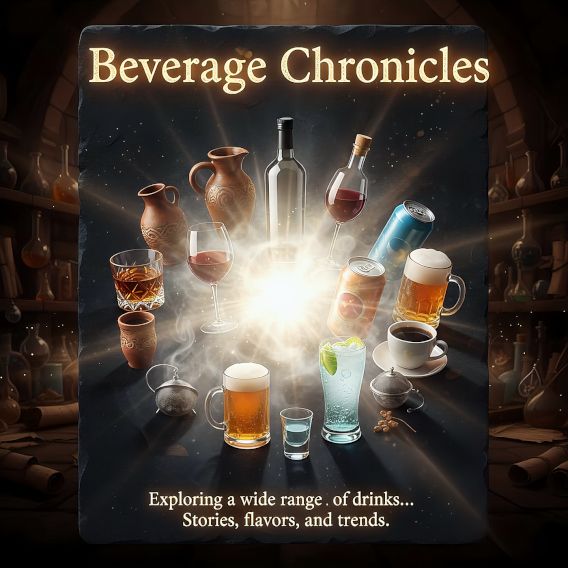
Beverage Chronicles is the radio show that explores a wide range of drinks, both alcoholic and non-alcoholic. From whiskey, rum, vodka, and tequila, to ready-to-drink cocktails, wine, beer, flavor-infused seltzers, coffee, tea, and more. We bring you the stories, flavors, and trends behind your favorite beverage.
Cocktail Comebacks, Lager History, Brand Trust, and the Rise of Mid-Strength Beer
Speaker Identification
Speaker 1 – Announcer / Prerecorded Promo Voice. This identification is based on the opening show-introduction language and the phrase introducing the host.
Speaker 2 – Gary Monteroso, Host. This identification is based on the host introducing himself, leading the main Long Island Iced Tea segment, transitioning between contributors, and closing the episode.
Speaker 3 – Rachel Benkowski, Beer Historian / Contributor. This identification is based on her self-introduction as Rachel and the host later naming her as beer historian Rachel Benkowski.
Speaker 4 – Leslie Jespersen, Branding / Media / Consumer Behavior Contributor. This identification is based on her self-introduction and spelling of her name and website at the end of her segment.
Speaker 1 – Announcer / Prerecorded Promo Voice:
Welcome to the award-winning Beverage Chronicles, the show where beer, wine, spirits, and everything in between get the spotlight. You’ll hear the stories, meet the people, and discover the pours behind your favorite drinks. Here’s your host, Gary Monteroso.
Speaker 2 – Gary Monteroso, Host:
Welcome to Beverage Chronicles, the show where every drink has a story, from craft beer and fine wine to spirits, coffee, and the latest beverage trends. We’ll bring you the news, history, reviews, and conversations that keep the beverage world flowing. I’m your host, Gary Monteroso. Thanks for joining us. Let’s raise a glass and get started.
I want to tell you about a drink that might be the most deceptive ever poured into a highball glass. It is the Long Island Iced Tea. It looks innocent, like something you’d sip on a porch on a summer day. But behind that amber glow is a cocktail with a history full of myth, competition, prohibition, intrigue, and a modern-day comeback.
Let’s start at the beginning, or at least the beginnings, because this drink has two competing origin stories. The most widely accepted version takes us to 1972 at the Oak Beach Inn on Long Island, New York. Bartender Robert “Rosebud” Butt was competing in a contest to create a new drink using triple sec. His entry was a bold mix of vodka, gin, rum, tequila, triple sec, lemon, and cola, an unlikely combination that somehow worked. The drink caught on instantly and became a staple in bars across America.
But there’s another story, one that goes way back to the 1920s Prohibition era. In Kingsport, Tennessee, a man known as Old Man Bishop supposedly created an early version of the drink on a small island in the Holston River. His recipe used whiskey and maple syrup, and his son later refined it by adding cola and citrus. This version was designed to look like iced tea so bootleggers could disguise the alcohol. It’s a great tale, though historians agree it is less substantiated than the New York origin.
Regardless of which story you prefer, by the 1980s and ’90s, the Long Island Iced Tea was everywhere: college bars, nightclubs, beach resorts, and chain restaurants. It became famous for two things: its sweet, easy-drinking flavor and its very high alcohol content, roughly 22% ABV, far stronger than most highball cocktails. That reputation cut both ways. Some bartenders loved it, others banned it, but the drink never disappeared. It just waited for its comeback, and that comeback is happening right now.
Today’s cocktail culture is obsessed with nostalgia, authenticity, and revisiting maligned classics. Bartenders are reclaiming drinks like the appletini, the mudslide, and, yes, the Long Island Iced Tea. Modern versions use higher-quality spirits, fresh lemon juice, and balanced sweetness. Craft bars are even offering regional riffs: smoked Long Islands, tea-infused Long Islands, and low-ABV Long Islands for people who want the flavor without the knockout punch.
This revival is part of a broader trend: Americans rediscovering the drinks they grew up with and giving them a second life. Of course, part of the Long Island Iced Tea’s renewed popularity comes from social media. It’s visually striking, easy to film, and fun to make at home. People love the shock factor: “Wait, there’s no tea in this?”
So let’s talk about how to make a proper Long Island Iced Tea in your kitchen. According to the most widely accepted recipe, you’ll need equal parts of five spirits: vodka, gin, white rum, tequila, and triple sec. Add fresh lemon juice and simple syrup, and then top with cola to give it that signature iced-tea color. Pour everything over ice in a highball glass, stir gently, and garnish with a lemon wedge.
It’s a drink that shouldn’t work, but it does. The cola adds color and sweetness, the citrus brightens the mix, and the spirits blend into something surprisingly smooth. It’s a cocktail that tells a story: part Prohibition mystery, part Long Island innovation, part 1980s party fuel, and now part of America’s cocktail renaissance.
The Long Island Iced Tea has survived controversy, confusion, and decades of being underestimated. Today, it’s back, strong as ever, but finally getting the respect it deserves. For more about the Long Island Iced Tea, go to our website at www.BeverageChronicles.com.
Speaker 3 – Rachel Benkowski, Beer Historian / Contributor:
What is up, everybody? Rachel here, a.k.a. Brews with Beerkowski, and I am here to talk to you today about some beer history. I’m a certified cicerone, and I am a historian. Today we’re going to be talking about beer before refrigeration, so let’s get nerdy.
Today, brewing beer is a year-round activity. Temperature-controlled tanks allow brewers to dial in precision no matter the season. But for most of history, beer was brewed on nature’s terms. Before refrigeration, heat was the enemy. Warm temperatures encouraged bacteria, spoiled beer, and created unpredictable fermentation. So brewers worked with the seasons, not against them.
In many parts of Europe, brewing was limited to the colder months, from late fall through early spring. In fact, in Bavaria, brewing during the summer was once legally prohibited due to the risk of fire and spoilage.
So what happened to beer during the warmer months? Well, it was stored. Brewers placed their beer in caves, cellars, or underground spaces, often packed with ice harvested during the winter. These cool environments allowed beer to mature slowly over time. This practice gave rise to the word lager, which comes from the German word lagern, meaning “to store.”
Many styles were designed specifically for this system. Märzen beers, brewed in March, were stronger and more robust so they could survive the months of storage and be enjoyed in the fall. Bocks were brewed with higher alcohol to improve shelf life, and even Czech lagers benefited from long, cold conditioning.
Farmhouse brewing traditions followed similar patterns. Beers like saison were brewed in winter and consumed in summer, aligning with agricultural cycles. Beer wasn’t just a drink. It was part of the rhythm of life.
Modern brewing freed us from these constraints, but many brewers still honor them. Cold fermentation, extended lagering, and seasonal releases all echo a time when patience and planning defined the craft. So when you drink a lager these days, you’re tasting more than just a style. You’re tasting history shaped by climate, necessity, and time.
Speaker 4 – Leslie Jespersen, Branding / Media / Consumer Behavior Contributor:
It’s Leslie Jespersen, your Everyday Celebrity.
Can I tell you what I think is the most boring marketing strategy in the world? Consistency. Nobody gets excited about consistency. It is not flashy, it does not go viral, and nobody wakes up saying, “You know what I hope my favorite brand does today? Stays exactly the same.” And yet, it is one of the biggest reasons we keep buying the brands we love.
So here’s a way to think about your favorite beverage. Maybe it is your morning coffee, or, I have a feeling if you’re listening to Beverage Chronicles, it is your favorite beer. Maybe it’s that bottle of wine you always bring to a dinner party.
Imagine if you bought it next week and it tasted different. Then next month, the can looks completely different. A few months later, they change the logo, and then they decide to market themselves to an entirely different audience. At some point, you’re probably going to stop and think, “Wait, is this even the same brand? Is this the same product?”
As consumers, we say we like surprises, but when it comes to the brands we trust, what we really appreciate is reliability. We want that coffee to taste like that coffee. We want the beer to taste like the beer. We want to know that when we order our favorite drink, we’re going to get exactly what we’ve been looking forward to. That is what consistency creates. It removes uncertainty, and uncertainty is exhausting.
That is why you’ll hear people say things like, “I’ll just have my usual.” Think about that phrase for a second. “My usual” is one of the biggest compliments a brand can receive, because it means that brand has earned a permanent place in someone’s routine. It has become familiar, dependable, and trusted. Trust is what keeps people coming back long after the excitement of something new wears off.
So the next time you reach for your favorite drink, ask yourself, “What keeps bringing me back?” There’s a good chance it isn’t because the brand keeps changing. It’s because it knows exactly who it is.
I’m Leslie Jespersen. If you enjoy looking at branding, media, and consumer behavior from a different perspective, let’s connect. You can find me at LeslieJespersen.com. That’s J-E-S-P-E-R-S-E-N.
Speaker 2 – Gary Monteroso, Host:
Okay, you heard from our beer historian, Rachel Benkowski. Thanks, Rachel, for that report. And thanks to Leslie Jespersen. Here’s some news for you: Leslie has just started a new TV show, and we’re going to tell you about that on next week’s episode of Beverage Chronicles. We will post it on our website at BeverageChronicles.com.
You know, one of the biggest trends in beer right now isn’t stronger beer. It’s actually the return to moderation. For years, craft breweries seemed locked in an arms race. The new IPA was bigger, hoppier, and higher in alcohol than the last. Seven, eight, even 10% ABV beers became common, and bigger often meant better.
But now the pendulum is swinging back. Across the country, breweries are embracing what many are calling mid-strength beers, typically in the 4% to 5% alcohol range. These aren’t light beers, and they’re not non-alcoholic beers. Instead, they’re designed to deliver full craft flavor with a little less alcohol, making them easier to enjoy over the course of an afternoon or evening.
In many ways, this movement actually began about 15 years ago when Founders Brewing introduced All Day IPA. At just 4.7% alcohol by volume, it proved that an IPA didn’t have to be a heavyweight to be satisfying. In fact, All Day IPA helped create the session IPA category and remains one of the brewery’s biggest success stories.
Interestingly, this isn’t a new idea around the world. Breweries in the United Kingdom, Australia, and much of Scandinavia have embraced lower-alcohol beers for decades. In many cases, governments tax stronger beers at higher rates, giving brewers an incentive to produce flavorful beers with lower alcohol content. Australia’s best-selling beer, for example, is a 3.5% lager.
Even craft brewers are now borrowing that philosophy, but with one important difference: they know today’s consumers won’t accept beer that tastes watered down. Early session IPAs sometimes earned that reputation, leaving drinkers feeling like they were sacrificing flavor. Brewers today are working hard to make sure that is no longer the case.
That is the real challenge. Making great mid-strength beer is only half the battle. Convincing consumers to try it is the other half. Breweries across the country are relying on tastings, festivals, and in-store sampling to introduce these beers. As one brewery owner put it, it’s almost like the early days of the craft beer revolution all over again: sample, sample, sample, and then educate, educate, educate.
Perhaps the biggest reason this trend has a chance to succeed is because consumers are already thinking differently about alcohol. The rapid growth of non-alcoholic beer has shown that many drinkers aren’t necessarily looking to quit drinking. They’re simply looking for more choices. Mid-strength beer may be the next step in that evolution, offering a balance between flavor, moderation, and the social experience that has always made beer special. That could make this one of the most important beer trends to watch over the next few years.
Okay, that wraps up this week’s episode of Beverage Chronicles. As always, we thank you for joining us. I’m Gary Monteroso, and we will see you back here next week. Take care, everyone.