
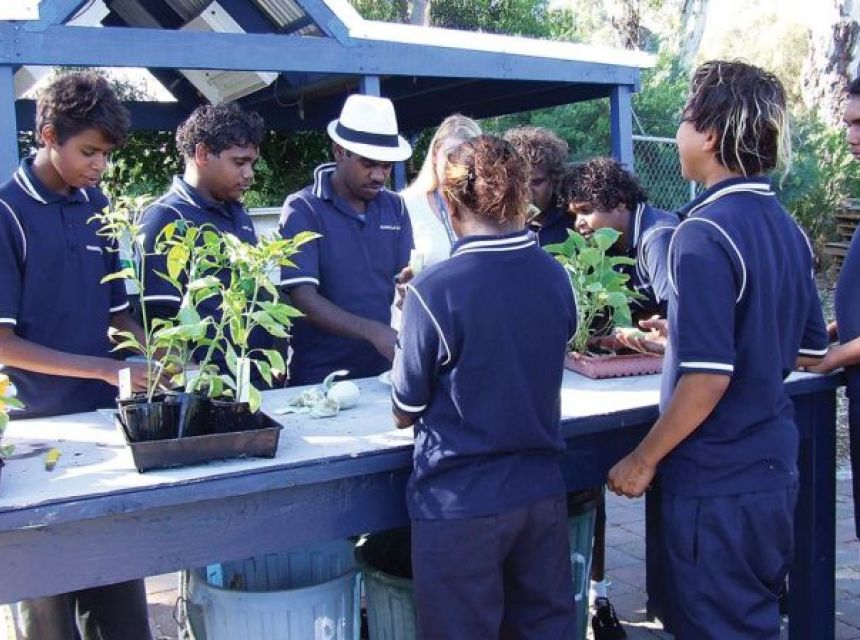
There are many benefits to inquiry-based learning. Inquiry is not a pedagogy as it's a way of being in the world. Some of these are: deep engagement instead of compliance, increased intrinsic motivation, stronger memory retention, development of research and reasoning skills, creativity and innovation. Learners can also develop a greater empathy and awareness as they increase ownership of their own learning which generates a shift from consuming to creating. This article has lots of ready to use resources to assist in inquiry.
 To listen to an interesting podcast about inquiry learning go to https://bbsradio/alllearningreminaged.
Recorded on to the 21st February 2026. See below for ideas to promote inquiry and questioning in any educational settings. Enjoy!
Questions that Prompt Wonder
These can be used with any age group, in any context. They nudge the brain into curiosity, connection, and exploration.
Wonder Questions (curiosity activators)
- What do you notice that others might miss?
- What feels mysterious about this?
- What does this remind you of in nature or your life?
- What surprises you?
- What’s one thing you want to explore further?
Deep Learning Questions (open pathways)
- Why do you think this happens?
- What evidence supports your idea?
- How could you test this?
- What are all the perspectives people might have on this?
- How might this be different in another culture, time, or environment?
Creative & Design Questions
- What could we create to help solve this problem?
- How could we make this easier, safer, or more beautiful?
- What materials or skills do we already have to start right now?
Reflective Questions
- What did you learn about yourself through this?
- What challenged you?
- What will you do differently next time?
- What moment felt energising or satisfying?
Expansion Questions (break assumptions)
- What if the opposite were true?
- What hidden forces might be influencing this?
- What is a possibility most people wouldn’t even consider?
- What else could be true here?
INQUIRY PROJECT EXAMPLE — YOUNG LEARNERS (AGES 5–10)
“How Does My Local Environment Work?”
A playful project that blends nature, science, art, community, and self-led investigation.
Guiding Question
“How does nature take care of us, and how can we take care of nature?”
Mini-Inquiries Inside the Project
- Where does our water come from?
- What animals or insects live in our school yard?
- How do plants know how to grow?
- What happens to rubbish after it leaves our bin?
- What sounds and patterns can we find in nature?
Activities
- Nature walk with observation journals
- Micro-habitat investigation (under a log, near a tree, in a garden bed)
- Water exploration (evaporation, condensation, water cycle sketching)
- Mapping the school grounds
- Creating posters, songs, or artworks to share learning
- “How can we care for our place?” collaborative action plan
Culminating Experience
Children present their findings at a class “Earth Steward Circle,” sharing how their thinking changed and what they want to do next.
INQUIRY PROJECT EXAMPLE — TEENS (AGES 11–18)
“What Is Possible for the Future of Our Community?”
A transformational project that builds research, interviewing, design thinking, and real-world impact.
Guiding Question
“What does our community need, and how might young people help shape the future?”
Mini-Inquiries
- What issues or opportunities exist right now in our area?
- What do different community members value?
- How is technology, environment, or culture shifting our future?
- What skills and talents do young people have that adults may overlook?
- What is one problem we could meaningfully influence?
Authentic Research Steps
- Interview elders, local business owners, and families
- Conduct surveys
- Compare perspectives (young vs. older, newcomers vs. locals)
- Explore local council data
- Observe public spaces and patterns of use
- Map strengths, needs, and opportunities in the community
Creation Phase
Students design a proposal, prototype, or plan such as:
- a youth-led initiative
- a sustainability project
- a wellbeing or anti-isolation strategy
- an inclusive community space
- a digital storytelling campaign
- a solution for transport, safety, connection, or environment
Culminating Experience
A “Future Makers Expo” where students share their inquiries with invited guests, community leaders, and families. This type of project grows purpose, agency, belonging, leadership, and self-belief—exactly the things adolescents crave.
EDUCATOR MINI-GUIDE: Teaching Inquiry in Any Subject
1. What Is Inquiry?
Inquiry is a learning approach where students ask questions, explore possibilities, test ideas, and construct meaning rather than passively receive information. It can be used with any age group, in any curriculum area, and at any point in the learning cycle. Inquiry is the engine of deep learning.
2. Why Inquiry Matters Across Subjects
✓ Builds curiosity
Ignites natural motivation, making learning more memorable and joyful.
✓ Develops critical thinking
Students evaluate sources, analyse information, and identify patterns.
✓ Strengthens communication
Students learn to ask better questions, listen deeply, and share their thinking clearly.
✓ Encourages creativity and innovation
Students imagine possibilities, design solutions, and explore alternatives.
✓ Fosters sovereignty and agency
Students begin directing their own learning, taking responsibility for their growth.
3. The Anatomy of a Powerful Inquiry Cycle
Step 1 — Spark (Activate Curiosity)
Use:
- images
- short videos
- natural objects
- provocative statements
- stories
- mystery items
- field observations
Teacher role: Invite wonder. Don’t give away the “answer.”
Step 2 — Questioning (Generate Ideas)
Help students explore:
- What do I notice?
- What do I wonder?
- What might be happening here?
Group questions into:
- factual
- explanatory
- creative
- ethical
- investigative
Encourage open-ended questions that lead to possibilities, not worksheets.
Step 3 — Research & Exploration
This may include:
- books
- interviews
- fieldwork
- experiments
- datasets
- videos
- maps
- artworks
- community knowledge
- Indigenous perspectives
- observations over time
Teacher role: Guide method, not outcome.
Step 4 — Meaning-Making
Students organise information, compare ideas, identify patterns, and notice what their research reveals.
Tools:
- thinking routines
- diagrams
- concept maps
- sorting activities
- group discussions
- reflective journals
Step 5 — Creation & Application
Students share their learning by creating something meaningful:
- a model
- a presentation
- a report
- a community action
- a prototype
- a story, poem, or artwork
- a design proposal
Inquiry becomes real when it leads to action.
Step 6 — Reflection
Students reflect on:
- what they learned
- how their thinking changed
- what surprised them
- what they still want to explore
- how they felt during the process
Reflection transforms information into wisdom.
4. Inquiry in Any Subject: Practical Examples
Mathematics
Guiding Question: How do patterns help us understand the world?
Students explore symmetry in nature, Fibonacci sequence, patterns in music, or geometry in architecture.
Science
Guiding Question: How does energy move through living systems?
Students investigate food webs, sunlight, human energy systems, or water flow.
English
Guiding Question: How do stories shape the way we see ourselves and others?
Students analyse narratives, create alternative endings, and explore point of view.
History
Guiding Question: Whose stories are told and whose are missing?
Students evaluate sources, compare perspectives, and research untold histories.
Technology
Guiding Question: How can we design tools that help people connect, learn, or solve problems?
Students build prototypes, evaluate ethics, and test solutions.
Art & Music
Guiding Question: How do artists communicate meaning without words?
Students explore symbolism, emotion, rhythm, pattern, and cultural expression.
Wellbeing / Social Sciences
Guiding Question: What helps people feel safe, connected, and purposeful?
Students investigate belonging, community design, mindfulness, grounding, and kindness.
5. Teacher Moves That Strengthen Inquiry
- Ask open-ended questions
- Wait to allow silence
- Validate partial ideas
- Encourage multiple viewpoints
- Avoid rescuing students too quickly
- Model curiosity
- Celebrate mistakes as part of discovery
- Offer choices in how learning is demonstrated
- Connect inquiry to real-world contexts
- Honour cultural knowledge and the wisdom of community elders
Inquiry teaching is less about what you deliver and more about how you guide learners back to their own thinking.
STUDENT ACTIVITY SHEET: REAL RESEARCH (Not Just Googling)
A 6-Step Guide to High-Quality Inquiry
1. Start With a Strong Question
Write your guiding question here:
My question: ____________________________________
A strong question is:
✓ Interesting
✓ Open-ended
✓ Connected to your life or community
✓ Worth exploring over time
2. Gather Diverse Sources (Not Just Search Engines)
Tick the sources you use:
□ Books
□ Interviews
□ Field observations
□ Experiments
□ Surveys
□ Maps
□ Photos or artefacts
□ Videos/documentaries
□ Scientific or academic papers
□ Cultural or community knowledge
□ Elders or experts
□ First-hand experiences
List your sources:
3. Investigate & Take Notes
For each source, record:
- What did you learn?
- What questions does it raise?
- What seems reliable?
- What seems uncertain or biased?
Use this space:
4. Compare Perspectives
Strong research includes multiple viewpoints.
Answer:
- What are the different perspectives on this issue/topic?
- Why might people see it differently?
5. Make Meaning
Now step back and connect the dots.
- What patterns do you notice?
- What surprised you?
- What ideas changed for you?
- What conclusions can you draw?
6. Create Something With Your Learning
Choose how you will share or apply your research:
□ Report
□ Artwork
□ Model
□ Presentation
□ Video
□ Story
□ Infographic
□ Community contribution
□ Prototype
□ Something else: ___________________________
What will you create and why?
OPTIONAL EXTENSION
The Next Question…
Every good inquiry leads to another question.
My next question is:
This reveals the growth mindset and keeps curiosity alive.
TEACHER VERSION: REAL RESEARCH CHECKLIST
A professional guide for educators supporting inquiry in any subject
1. PRE-INQUIRY: Setting the Stage
✓ Establish a culture of curiosity
- Model your own questions.
- Validate student wonderings.
- Encourage “not knowing yet.”
✓ Support students to craft high-quality guiding questions
A strong inquiry question is:
- open-ended
- meaningful
- researchable
- connected to the learner or community
- expansive enough for multiple pathways
Ask students:
“What makes this question worth exploring?”
2. SOURCE QUALITY & DIVERSITY
✓ Require multiple source types
Encourage at least five different kinds of sources:
- books (nonfiction, encyclopedias, atlases)
- interviews (community members, elders, experts)
- field observations or experiments
- academic papers or data sets
- documentaries or videos
- cultural knowledge
- first-hand experience
✓ Teach credibility indicators
Students should ask:
- Who created this source?
- What is their expertise?
- What is the purpose or agenda?
- Is this primary or secondary?
- Is the information current?
- Does another source confirm this?
✓ Teach how to identify bias
Support students to spot:
- persuasive language
- missing perspectives
- commercial interests
- emotional manipulation
- selective data
3. NOTE-TAKING & INFORMATION ORGANISATION
✓ Encourage structured notes
Students record:
- key findings
- new questions
- contradictions
- patterns
- quotes or data
- visual sketches
✓ Model how to separate fact, interpretation, and assumption
✓ Support students to sort and group information
Use:
- concept maps
- organisers
- tables
- colour coding
- timelines
- flow charts
4. COMPARING PERSPECTIVES
✓ Prompt students to actively seek multiple viewpoints
Ask:
- Who agrees?
- Who disagrees?
- Who is missing from the narrative? (e.g., Indigenous voices, women, children, the environment)
✓ Teach emotional and cultural intelligence in research
Discuss:
- why people might see things differently
- how background shapes interpretation
- the value of lived experience
5. ANALYSIS & MEANING MAKING
✓ Ask students to synthesise, not merely report
Guide them to:
- identify patterns
- link ideas
- compare evidence
- evaluate credibility
- revise earlier assumptions
✓ Introduce thinking routines
Examples:
- Claim–Evidence–Reasoning
- See–Think–Wonder
- Connect–Extend–Challenge
- What makes you say that?
6. CREATION & EXPRESSION
✓ Support students to choose an authentic output
Examples:
- digital stories
- action projects
- prototypes
- artworks
- presentations
- podcasts
- community solutions
✓ Emphasise meaningful contribution
Ask:
- How will your learning help others?
- Who benefits from this inquiry?
7. REFLECTION (The True Marker of Deep Learning)
✓ Prompt reflective questions
- How did your thinking change?
- What surprised you?
- What challenged you?
- What are you curious about now?
✓ Encourage learners to identify new questions
This is the hallmark of a curiosity-driven mind.
8. TEACHER ROLE THROUGHOUT
- Guide, don’t tell
- Offer frameworks, not answers
- Celebrate attempts, not perfection
- Foster independence, not dependency
- Encourage ethical, respectful research
- Embody curiosity yourself
A TEACHER CHECKLIST SUMMARY (Quick-Reference)
Before Research Begins:
✓ Students developed meaningful, open-ended questions
✓ Inquiry purpose is clear and relevant
✓ Students understand expectations for diverse sources
During Research:
✓ Students use more than one medium (books, interviews, fieldwork, data)
✓ Students evaluate credibility and bias
✓ Students develop new questions along the way
✓ Students compare perspectives
After Research:
✓ Students synthesise information
✓ Students apply or create something meaningful
✓ Students reflect on learning and next steps