Sound Healing, May 23, 2026
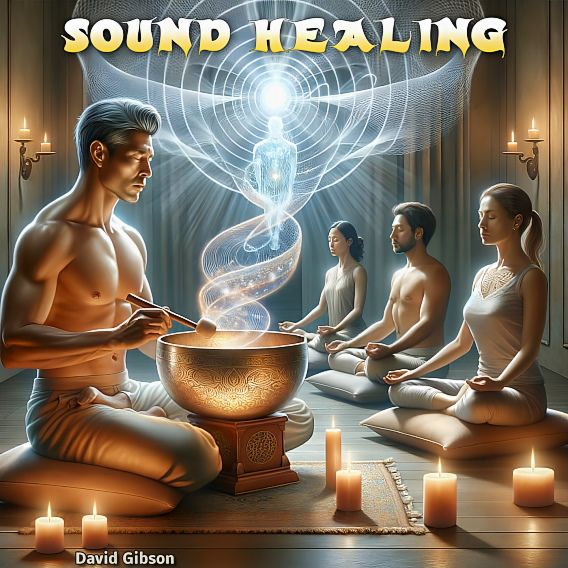

Sound Healing with David Gibson
Awake and Coherent: Using Sound, Music, and Frequency for Activation and Focus
Introducing the Sound Healing Center and David Gibson
In this episode on sound healing, host David Gibson begins with an overview of the Sound Healing Center and its connected programs, including the Globe Institute, the Sound Healing Store, the Sound Therapy Center, the Sound Healing Research Foundation, and the Sound Education Association. He discusses certificate programs, instruments, vibroacoustic tools, sound-healing resources, voice-analysis software, dementia-related protocols, and educational efforts involving children and schools. David then announces upcoming classes, an open house, a summer intensive, a Mount Shasta retreat, and voice-analysis training before introducing the episode’s central topic: how sounds and music can create activation, wakefulness, focus, and coherent energy.
Activation Is Not the Opposite of Peace
David explains that sound healing is not simply about becoming calm or sleepy. In his view, a person may need to be highly alert, energized, and focused while still remaining peaceful and coherent. He contrasts chaos, which he associates with stress, fear, anxiety, depression, and PTSD, with stable and consistent vibration, which he describes as coherence. According to David, coherent sound can support a person whether they are deeply relaxed or fully activated. His goal in this episode is therefore to demonstrate sound approaches that help people become more awake without pushing them into agitation or overwhelm.
“Uplift” and Gradually Moving Out of Depression
David introduces a song he created called “Uplift,” which he says was designed for depression and appears on the album Healing Lights. He explains that the composition begins in a subdued emotional space in order to meet a depressed listener where they are, then gradually increases its activating qualities over approximately ten minutes. He describes the use of higher frequencies, faster rhythms, rising chord progressions, and rain sounds to steadily increase energy and wakefulness. David emphasizes that someone experiencing depression may reject music that begins too intensely, whereas a gradual musical progression may help the listener move toward activation more comfortably.
What Makes a Sound Activating
David provides an extended explanation of the musical and sonic qualities he believes contribute to activation. He says edgy or overtone-rich sounds such as gongs, Tibetan bowls, reeds, and certain pure tones can be stimulating, as can louder volume, more instruments, higher frequencies, faster tempos, percussion, complex melodies, layered harmonies, changing song structures, and powerful nature sounds such as crashing waves or waterfalls. He also discusses studio effects, lyrics, higher-pitched vocals, improvisational or channeled vocalization, and rapidly changing music as additional activating elements. In contrast, he describes lower frequencies, sustained tones, repetition, mantras, chant, and vowel sounds as generally more calming.
Focus, Brain Rhythms, and Dementia-Related Sound Work
David then introduces several sound demonstrations connected with focus and brain activation. He plays “Find Focus,” describing it as an energizing composition that uses soft sounds and angelic-style voices to make fast rhythms and higher frequencies easier to tolerate. He discusses “temporal awareness,” suggesting that very fast musical or vocal patterns may help challenge the brain and support alertness, and briefly introduces a rapid light-language recording by Judy Satori as an example. David also discusses his work with dementia-related sound approaches, saying that activation may be appropriate for earlier stages but could overwhelm people in later stages. He introduces a 40-hertz composition that he says was designed around rhythms and frequencies associated with dementia research, while presenting these uses as part of his own sound-healing approach.
Sound Demonstrations for Depression, Focus, and Intention
Toward the close, David introduces an “Antidepressant” song, describing it as incorporating a sweep of frequencies, higher tones, rhythms, and cello to combine activation with emotional warmth. He also plays excerpts from a depression-relief recording containing activating frequencies that he associates with mood, concentration, and sympathetic and parasympathetic balance. His final demonstration is “100% Focus,” which he says was created while thirty people held an intention of complete focus for approximately nine minutes. David concludes by inviting listeners to tone along with the sound and to hold the intention of being fully awake when needed while remaining at peace and coherent.
Sound Healing
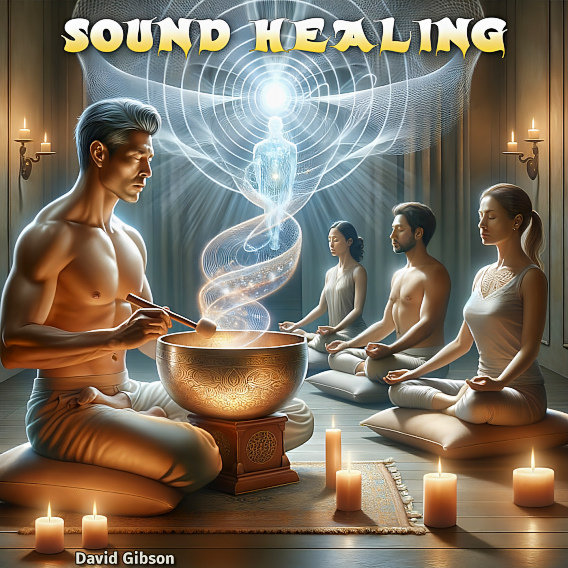
Study the effects of sound on the body, psyche & spirit LIVE with the Founder and Director of Globe Sound Healing Institute. Using the Voice for Sound Healing, Inner Sound Awareness & Transformation of matter and consciousness, and to connect to Spirit.
The radio shows on this site will explore the full range of techniques and technologies used in the field of Sound Healing. Although the field is commonly called Sound Healing, it is also about maintaining health, raising consciousness and connecting to spirit. The show is a sound combination of discussion and experience including the following topics: Toning, Chanting and Overtone Singing - Root Frequency Entrainment - Sound to Improve Learning -Disabilities - Using Sound to Connect to Spirit - Tuning Fork Treatments - Voice Analysis Technologies - Chakra Balancing - Sound to Induce Desired States of Being - Tibetan/Crystal Bowl Massage - Electronic Nerve Stimulation - Water Sound Infusion Systems - Sound Visualization systems - Infratonics Holographic Sound - Scalar wave EESystem Drumming and Rhythm - HydroAcoustic Therapy - Neurophone Bio-Tuning - Sound Surgery - Cymatics Frequency based therapeutic devices - VibroAcoustic Sound Chairs and Tables
:
The Sound Healing Center, we have four main things going on. The Institute, the Sound Healing Store, the Sound Therapy Center, and the Sound Healing Research Foundation. At Globe Institute, we offer two Sound Healing certificates and one audio recording certificate. All of them are also offered online, as well as in-person here in Sausalito, outside of San Francisco. We're the only state-approved college in the entire United States. that offers sound healing. David has created the number one selling books in the field of audio recording and sound healing. In recording, there's the art of mixing and the art of producing. And in sound healing, the complete guide to sound healing. He's also written a book on sound loving relationships, creating harmony and loving relationships, including many sound healing techniques. It's all about being whole on your own, heart open. The Sound Healing Store has over 400 sound healing instruments and technologies. We also have a physical store where you can experience everything. In the store we've got over 100 CDs and downloads. We've got all of my books. We have a full range of instruments including crystal balls, Tibetan balls, digital rados, gongs, drums, rattles, tuning forks, and a full range of melodic instruments. We also have wide range of consciousness-raising technologies, including sound chambers. have sacred geometries and pendants, color and light therapies. We also have our Brainwave Assessment Kit software and the Voice Analysis software. We got a contract with the largest dementia company in Northern California and we've created eight different protocols that have been implemented there for the last two years and it's transformed the place dramatically. Check it out at soundfordementia.com. And we've got a full range of vibroacoustic tools. We make sound lounges, sound tables, sound vests, sound pillows, sound dolphins, and bass straps. All of these are excellent for a wide range of physical and emotional issues and just getting you relaxed and blissed out. At the Sound Healing Research Foundation, you can find over 1,000 clinical and student papers categorized for easy searching. You will also find the Medical Sound Association with over 1,000 doctors and sound therapists meeting bimonthly to create treatment plans for a wide range of issues. These 30 page treatment plans are an Excellent resource if you're working on a specific issue for yourself or a client. Check out MedicalSoundAssociation.com where you can also join and attend our bi-monthly meetings. At the Sound Therapy Center we have a list of over 40 issues and all the things that we offer for each issue. These include music and frequency CDs or downloads, treatment plans from the Medical Sound Association, and treatments we offer in person and online. in the sound therapy center for each specific issue. Finally, we have the Sound Education Association. We got a grant for $100,000 to bring our curriculum into two Montessori schools. With over 100 teachers and administrators, we've created over 2,500 exercises for kids from three months up to 18 years, all based on the books on brain development. We're now expanding the curriculum and creating schools around the world. Check out soundeducationassociation.com where you can also join for free. You can find everything at soundhealingcenter.com. You can also email us at david at soundhealingcenter.com or call 415-777-2486. Now enjoy the podcast. Hi there, I'm David Gibson and this is Ms. Baer behind me. So let me tell you about some things that are happening at the Institute. So we've got another open house on Sunday, June 28th here in Susoleto just outside San Francisco. And it's all about how sound works physically, mentally, emotionally and spiritually. do a lot of... heart opening meditations and put everybody on the sound table and get you blessed out. So that's uh one to five, Sunday, June 28th. uh We also have our summer intensive coming up, which is June 9th to the 19th, 10 to 9.30 every day. That's half of the certificate program. You could just do that half, but the other half is online and you can start that actually this Thursday. May 28th, if you like. And it's how sound works in the universe, how vibration creates reality. It's also how it works in the body. It's also where we get you to a place of peace over and over and over. And we teach you different career techniques as well. We're a vocational school. We also have the in-person version, three and a half month version starting on September 8th. Then we have the full online version where you can do the whole thing online starting this Thursday the 28th, works really well. We also have individual classes if you don't wanna do the whole program. Our recording program is going right now. You could still jump in, the next one's October. And then we have a retreat in Mount Shasta for two days, August 1st and 2nd. You can find uh everything at soundhealingcenter.com. We also have our voice analysis uh software training we're doing July 12th. You can get a treatment or get the software at voiceanalysisharmony.com. oh Alrighty. So today we're gonna be talking about activation. Things and music, sounds and music that really get us awake. You know, I've talked a lot and said the whole deal is really peace. And it's interesting because sometimes we want to be awake. So it's not necessarily peace, but the truth is it's still peace. Because we're talking about peace and coherence, whether you're really relaxed or sleeping, and peace and coherence when you're totally awake. You could be in chaos, As I said, the difference, the basis of all sound healing is the difference between chaos, which is anxiety, depression, PTSD, it's uh fear, ah, it's oh just stress, ah, versus the peace, which is stable, consistent vibration. Whee. But you can be totally awake and in chaos or stable. You could be totally calm or slow, I should say, even relaxed, but still have some anxiety going or be at peace. So it's really about coherence. We could call the peace coherent. Coherent is stable, consistent, whether you're asleep or totally awake and activated because sometimes we need to be totally focused and awake. So I want to start with a song that I created that totally uses all of the techniques we've come up with for creating activation and awake. And this song is for depression. It's called Uplift and it's on our one of our CDs. I'll tell you what the name, I forget the name of it now. So It's need to be a more little awake or more awake. So uh this song uh starts uh really blah. So it's meeting someone who's depressed where they're at. And then slowly over 10 minutes, it gets more and more activating, which are higher, higher, more and more higher frequencies, uh faster rhythms. And then we even use some rain for the activation as well. And also the chord progressions keep going up and up. So check this out, our song Uplift for Depression. And notice how activating it is in the end. It really gets you awake. Let me share my sound. Okay, enjoy. There's multiple things that actually create activation and sound. And I actually go over these in my recording class, but also in the sound healing class. By the way, that song is on the album Healing Lights that you can find on our site at the store, soundhealingcenter.com. Let me show you a list of everything that actually creates activation and calming as well. But I'll just focus on the activation right now. Odd harmonics, which are actually sounds that are a little more uh edgy, like the gong, or even Tibetan bowls, uh they are going to be, or even any reed sound, like a clarinet or oboe or saxophone, they're going to be more activating than other sounds. Also pure sounds, even crystal bowls are very pure, pure tones like flutes and such, uh they're actually quite a bit more activating than richer sounds. Because some people, they're even too much, they're piercing. Loud volumes, of course, are more activating. More instruments, if you have a whole symphony at once, it's going to be more activating than a few instruments. High frequencies are more activating than low frequencies. That's a really... important one there that I use a lot whenever we're doing activation. Low frequencies calm the body, high frequencies activate the mind. And then we've also got all of the uh tempos. Faster tempos of course are more activating. Also staccato sounds, which are like percussion, da da da da da da, versus sustained notes, whoo hee, are going to be more activating. Sub-delta, delta, and theta are really slow rhythms, whereas alpha, beta, and gamma are really fast rhythms of the brain. Complex melodies are more activating than simple melodies. Two or three part harmonies are more activating, and then when you have a complex song structure, it's more activating uh where it changes. lot in the song. Nature sounds run the full gamut. You can have a tweety bird or you can have a that's kind of sweet and then you could have a crow that's like ah ah. You could have a bubbling brook or you could have a crashing wave or a huge waterfall that's very activating. In mixing there's all types of trippy effects like flanging, chorusing and and pre-verb that that make things more activating. uh Lyrics are more activating than vowel sounds because they activate our left brain, which uh is often also more critical. Vowel sounds are actually more calming. Female vocals are only more activating because they're higher in frequency than male vocals, but there's plenty of calming female vocals. Channeling is activating in the beginning because Channeling, it's like ad-lib, you don't really know what's coming next. So you're present in the moment and it keeps the brain awake. And that's the Mozart effect where there's changing rhythms and changing melodies. And that's really good for creating new neural pathways. Whereas repetition like chant and mantra and trance is not as activating because it puts the left brain to sleep because it's repeating over and over and the left brain gets bored and goes to sleep. uh Sound healing music they found is uh Well, let me put it this way normal music is more uh Can can be activating in that we don't like it We don't like certain styles of music where sound healing music. We often don't know what box to put it in So if we want something to be really activating we can use everything on the on the that we just went through on the right side or start calm and slowly uh change to activating, which is exactly what we just did in the previous song, which is really good for depression. Because if you start really activated with somebody that's depressed, they're probably gonna throw you out. They get out of here, leave me alone. So uh we wanna build slowly to actually get to that activation. And that's really cool because people will go with it even better. So. These are the full range of different things that create activation. Let me now play for you another song. This is called Find Focus. And what I did this, oh, by the way, that last song, uh Uplift and Find Focus are both in Massachusetts General Hospital in the Integrative Therapy Department. They paid me $10,000 to do a whole series of music for them. So this one is totally activating the fine focus, but as you know, and you're probably well aware of, if you're too activating, people are gonna freak out. They don't like it. I mean, it can be too much, especially for fragile people. In fact, we probably all have our limits as to how activating you can be. So what's really nice is to actually do activation or busyness and fast rhythms and high frequencies with soft sounds. Because then people don't get overwhelmed by the sound. It's not like it's heavy metal that we just played, right? Or even big drums. We were playing like really soft sounds for the actual uh rhythm part. So that's really cool to use soft sounds that are very activating. And that's what we do here, especially a lot of piano in this one. So check this out. This is for focus. for being focused and being awake. This is called fine focus. Enjoy. Notice that I use some angelic voices to really soften the busyness of the activation so that it's much more palatable. Now, uh whenever you have really fast things, it's called temporal awareness. And people that have certain learning disabilities actually can't track something really fast. Their brain doesn't go that fast. So sometimes playing something really fast can be really good for the brain. It can get you into alpha, which is a very fast brainwave state, and then beta as well. And as we've talked about, when you tune your actual uh music and the rhythm to your brain where you're at peace, which is what we call your home note, then it's way more effective for actually getting you awake with the uh alpha and the beta. And we do a whole assessment where we can find your rhythm and your note and get you music in alpha and beta tuned precisely to you. And that's really just excellent. But let me play something that's really fast. I mean, this is like unusually fast. This is some light language from uh Judy Satori and it is so fast. It's like the brain can hardly even comprehend it, but it can be really good. for getting you present. I haven't tried it, but this could be really good for the dementia patients that we work with. So check this out. I'll just play a little bit of Judy Sartore here. Doing light language. This is a trip. Okay, check this out. I'm gonna fast forward here a little Here we go, check this out. Good, good, good. Here. See Right? And what's so cool about it is it's somebody's voice. So it's not really annoying. I imagine it can make some people nervous and little overwhelmed, but it's actually really cool, especially because there's a spiritual component of it where she's bringing in these higher energies as well. That's very cool. Now for dementia, uh it's really interesting because For early stages of dementia, the whole thing is activation to get more blood flow to the brain. So the more you can get them activated without overwhelming them, the best. But with later stages of dementia, you can make them nervous and anxious in a second with activation because they're really sensitive. So we don't do any activation with later stages of dementia. It's only for the earlier stages. Let me play a song. that we've created based on 40 hertz, which has some clinical study to actually uh reverse dementia. And we've not only got 40 hertz rhythm, we've got the song tuned to 40 hertz. So we've got both the rhythm and the actual frequency tuned to 40 hertz. And I've got some activating high frequencies and some activating rhythms. So check this out. This is. our song, which is free on our website, by the way, the 40 Hertz song. This is for dementia, for 40 Hertz. Let me fast forward here. Here we go. Nice to get a little calm and still after the activation as well, But your system is still activated, but it brings it to a place of peace and coherence. This next song I wanna play is my antidepressant song. And what we did here is a few things. First of all, we actually do have a frequency sweep of different notes. So we go through all the different notes in the middle of the song. And then we've got a lot of high frequencies. and rhythms as well to do total activation, but a little cello to bring in some heart and sweetness so we're not overwhelmed. So check this one out. This is my song called Antidepressant, also tuned to 432 hertz. So here we go. Okay, let me fast forward. Check this out. That one's pretty mellow, huh? Let go through some higher frequencies earlier. So I wanna play you just a second of uh my depression relief CD, which is not music, it's frequencies for activation. So here is uh frequencies for sympathetic and parasympathetic. Check this out. Here's one for overcoming mental depression. Here's one for concentration. totally activating frequencies that are really cool when read with our script, which is a tapping script to overcome depression. So I want to play one last one. This one was 30 people actually holding an intention of 100 % focus. So just the energy of 30 people holding that focus for like nine minutes is activating right there. uh So let me play this one, which is called 100 % focus. This is on the holding frequency CD. Okay, enjoy this. tone along with it, any vowel if you like. May you be awake completely when you need to be awake, at peace while awake. Hold that, may everybody hold that frequency, that energy, that intention for least the rest of the evening, weeks ahead, months ahead, lifetimes. Thank you for listening. Take care.