
The Power of Synergy, May 11, 2026


The Power Of Synergy with Gabrielle Cardona
Mastering Relationship Dynamics and Unlocking exponential human connections
In this broadcast of The Power of Synergy, relationship coach Gabrielle Cardona explores the transformative potential of human connection through the lens of "synergy." She argues that individuals do not merely add to one another but can exponentially increase each other's value through intentional synchronization and understanding of personality functions. By moving away from "excess" toward a centered state of "abundance," individuals can become powerful catalysts for growth in the lives of those around them.
The Core Principles of Synergy and Energy
Synergy is defined as a healthy, spiritual coming together that facilitates exponential growth. A foundational principle of this philosophy is that energy is never neutral; individuals are always moving toward, away from, or with others, and their influence is either positive or negative. Indifference itself is categorized as a negative energy state. Cardona emphasizes that personal power comes with a high degree of accountability, suggesting that every interaction leaves a person either better or worse than they were before.
The distinction between "abundance" and "excess" is critical to maintaining a healthy spiritual center. While abundance is defined as having more than enough to facilitate the help of others, excess is viewed as a greedy or selfish state that pulls an individual "off-center." True prosperity involves taking care of oneself specifically to have the motivation and resources to assist others, rather than self-improvement at the expense of the community.
The ART of Connection and Personality Functions
To achieve synergy, Cardona introduces the "ART" model: Appreciation of abilities, Respect for intentions, and Trust in motives. This framework allows individuals to value differences rather than being threatened by them. She categorizes personality types into four functional roles based on their primary "support" contribution to a group.
Sensory Judgers (Bones): Provide moral support, stability, and consistency.
Sensory Perceivers (Muscles): Offer physical support, high-performance execution, and multitasking.
Intuitive Thinkers (Brains): Supply mental support, logic, and organizational clarity.
Intuitive Feelers (Hearts): Deliver emotional support through unselfish concern and benevolence.
When problems arise, they are often analyzed through the "TIP" of the iceberg: the Topic (the subject), the Issue (the specific disagreement), and the Problem (the root cause, often a person being "off-center" or performing at a low functional level).
Tools for Maintaining a High-Quality State
Achieving synergy requires individuals to maintain their own "high-quality state" through specific psychological and physical tools. Cardona suggests using "milestones" for goals—rewards that are far enough to challenge but close enough to reach. For low energy, she recommends a "shot in the arm," such as 5-10 minutes of music, stretching, or prayer.
Furthermore, she advocates for "brainwashing" oneself through affirmations using a 1:3 ratio: one statement you believe, one you suspect is true, and one you don't believe but wish were true. By repeating these until they are all believed, an individual can realign their mental state. Finally, negative emotions are reframed as tools: Anxiety alerts us to what could go wrong, Fear identifies what is going wrong (self-preservation), and Anger signals what has already gone wrong.
Synergy is the art of recognizing that our differences are our greatest resources. By maintaining a centered state, utilizing functional personality strengths, and choosing to be a positive "exponent" in the lives of others, we can transform simple interactions into exponential growth. As Cardona concludes, "Positive is more powerful than negative," and through intentional connection, we can collectively improve the quality of the world.
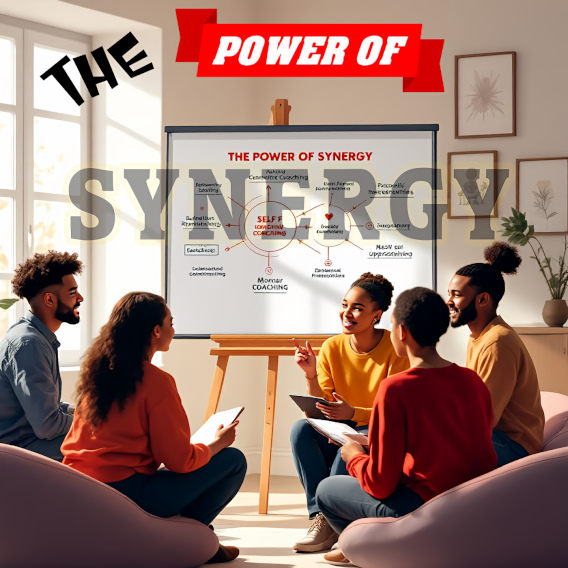
The Power of Synergy

"Is relationship coaching right for me?"
Unlike conventional counseling, relationship coaching is about insightful education and listening more than talking.
Connection, communication, and accountability are the 3 elements to a successful relationship. All 3 are vital and perpetual. Relationships are about knowing yourself and understanding others so that what you share is healthy and beneficial--to you both.
Some questions to ask yourself:
- Are you truly ready for healthy change?
- Can you handle homework?
- How honest are you with yourself?
- How much support do you provide to others?
- Are you qualified for a relationship?
Only YOU know the answers!
Do you know what the things people say mean? How do you interpret their actions? Try taking a look at their personality! There are 16 different personalities, and one statement from one person can mean something completely different when coming from someone else.
Learn about what's behind behavior. Information from "experts" can confuse people. It is inaccurate. If you attend an MBTI seminar, you'll walk away knowing AND understanding what people do, how they do it, and why they do it. You'll also understand yourself.
"Relationship Coaching"
What's the formula to success? How can you reach your goals? Want some practical advice on how to get what you want out of life, without making it painful or complicated?
The Relationship Coaching program provides information, tools, resources, and support to set you up for success in every area of your life. Define your goals, know where you are, and create the path in life that YOU want to take. Check it out and take the Workbook that comes with it home with you for free!
[00:04] Speaker 1: We are more than what we see. Every voice, every story holds a key. Together, we rise in synergy. Different faces, different pain. Different story, same refrain. Trying to find a place to stand. Trying to feel a guiding hand. What you say and what you mean. Left somewhere in between. Every action has a cause. Every heart behind the wall. If we listen, we can hear it. If we look, we can see it. There's a pattern in us all. Every piece can make us whole. The power, the power of synergy. Understanding you and me. Every difference, every truth leads back to something...
[00:57] Speaker 2: Welcome to The Power of Synergy on BBS. I'm Gabrielle Cardona, a relationship and life coach. I've been in practice for about 23 years now, but I've been helping people for about 40 years. As a young girl, I belonged to a congregation where I was doing missionary work, yeah, at a very young age. But I learned about community, and I knew that when my mother sent me to mental health professionals who couldn't fix me, but they knew how to label me, and they sure wanted to pump me full of drugs, that, you know what? People aren't really mentally ill, they just don't quite get it sometimes, and, and they have a hard time. That doesn't mean they're mentally ill. So, I knew just from personal experience that I wanted to help people, I wanted to make people's lives better, but I didn't like the idea of labeling them and pumping them full of drugs. So, as I was married and raising my children, one day, I saw on television a life coach on a, a talk show, and I went, "Wait a minute. What's that?
[02:09] Speaker 2: I like the sound of that. A, a coach, that's someone who, who gets people to score in the game of life, that actually teaches them how to be successful. Oh, see, now that's something I, I wanna do." But there wasn't really any parameters around what a life coach did. It was kind of a vague, ambiguous industry, so I thought, "Hmm, let's, let's go ahead and think about what people actually struggle with. What is it that they have a hard time with in life?" Sometimes it was weight, sometimes it was time, money management. Sometimes it was their work or their relationships. You know what I noticed? Everybody had a hard time in their relationships, even with the people that they loved. And I thought, "Okay, you know what? Instead of just being a life coach, I want to really find a, a niche, right? A specialty, an area of expertise." And something that I could definitely see everybody needing help with was getting together with people in a healthy and happy way. Yeah, that synergy.
[03:22] Speaker 2: That's what we create when we come together. And so I would tell people something that I understood as a very young girl, because I was in a spiritual environment, the principles of synergy. That's coming together in a spiritual way, yeah. So I can teach people how to get together in a healthy way to make each other's lives better. Okay, yeah. So how we can do that? We synchronize. I always tell my clients very simple principles. There's no inertia. You're never not moving. You're either moving towards someone or away from them, or with them. And there's no neutral energy. You're either positive or you're negative. Well, some people want a Get Out Of Jail Free card and say, "Well, I don't care. I don't have any kind of feeling." Well, no, I'm sorry, ladies and gentlemen, indifference is negative. If your energy is not positive, it is, by default, negative. So think about those two principles.
[04:28] Speaker 2: When you are with other people, you are either moving towards them, away from them, or with them, and you are either positive or negative in the effects that you have on them. That means you have a lot of personal power. And another principle I learned spiritually as a very young girl, power comes with responsibility, and you're accountable. You might not want to concede to a higher power with a name. I have a, a name for my God. Different religions call their higher power different things. But if you don't wanna concede to a higher sense of accountability, that's also gonna compromise your ability to do good things for people. But you know what? One of the things that I was told a lot by different secular sources, not truly spiritual sources, but secular experts in the mental health professional industry is, abundance, abundance, everything in abundance, and that's where true prosperity and health and happiness... Uh, okay, abundance, that, that sounds nice.
[05:39] Speaker 2: But what about spirituality? Now, what really is abundance? Abundance just means having more than what you need. Okay. Well, but when is abundance actually excessive? Have you ever thought about that? Now, when you have personal power, that means you can influence other people, and you have a potential to do negative things as well as positive things. Do you believe that you are responsible for the way that you affect...... other people. And if your mindset is of excessivity, that almost makes it greedy. That's selfish. Today, I'm gonna be talking about what's the difference between abundance and excess. At what point does more than enough become too much? I'm gonna go ahead and open up the, the phone lines today. Anybody who wants to call in, can call the station. The number is 888-627-6008, and they can ask me a question about this topic, but I'm gonna be covering kind of different themes about it.
[06:56] Speaker 2: So even if it's not something that I'm discussing at the time that you have a question for me, please don't hesitate to call in, because I can answer questions that are all related to this one particular theme. Abundance or excess? And does that really even matter? Ask yourself, do you believe that you have a responsibility to other people? Now, my mother was a flight attendant, and one of the examples that became very popular in the self-help industry, especially in the '90s, was, put the mask on yourself before you help anybody else. Okay. That's, that's fine. You can go ahead and take care of yourself. But again, remember, ladies and gentlemen, it was with the purpose of saving other people's lives. (laughs) Unfortunately, something happened in the self-improvement industry of reject other people. Use your time and energy and effort and resources for yourself, for yourself first. For yourself. Don't, don't make yourself, um, a, a loss, right?
[08:07] Speaker 2: Because it, it almost became the, the idea of, it's either you or other people. That's not true. When you are truly taking care, quality, good quality care of yourself, that means you have the motivation to ultimately help other people as well. You're not taking care of yourself at the expense of other people. It's for the purpose of other people. And when your motivation, your intentions, yeah, those are good, healthy, positive, unselfish things, then you can know that you're gonna get together with those people. Okay. So now, what I like to teach people are the principles of synchronicity. When we come together, we don't add to each other, and we don't multiply each other. We exponentially increase each other. But again, that can be in a negative or a positive way. Now, thinking about just in terms logistically of the principle, let's say people are worth from one to ten, okay? We're qua- quantify their value here, just for the, the sake of argument.
[09:24] Speaker 2: Let's say we have a person who's a seven and someone who's a three. Well, seven plus three, that's ten, right? No. (laughs) Actually, well, seven times three, right? That, that's 21. Nope. We are either seven to the third power or three to the seventh power. Now, what's the difference? What's seven to the third power? That's 343. Do you know that when you come together with someone, if you're a three and they're a seven, that could be 343... Wait a minute, what's three to the seventh power? Well, there only a three, you know. Three isn't that much. But to the seventh power, that's 2187. Okay. Yeah. We have (laughs) , we have something to think about here. Now, do you know that you have the power to make someone 2187 if you are the exponent in their life? We're gonna take a commercial break here really quick. Just think about this.
[10:31] Speaker 2: Ask yourself, do you believe that when you come together with other people, you have an exponential opportunity to influence them to be more than what they were when you were not in their life? And that can be a good or a bad thing. The number of the station, again, is 888-627-6008. Today, we're gonna be talking about abundance or excess. How can we make sure we empower in a good way? This is The Power of Synergy on BBS. I'm Gabrielle Cardona. We'll be right back.
[11:10] Speaker 3: It's the power we can be. When we see what's underneath. Not just words, but energy. That's the power of synergy. 16 ways to see the world. Every mind, a flag unfurled. What you think is black and white. Might be someone else's light. Read between the lines they speak. There's a strength inside the weak. Not just who we show outside. There's a deeper truth inside.
[11:46] Speaker 2: Welcome back to The Power of Synergy on BBS. I'm Gabrielle Cardona. I am a relationship coach, but if you were to ask my oldest son, he would say I'm a shrink in denial. No, I'll tell you why I'm not a shrink, because I don't think people are mentally ill. I think most of the time, they're just very confused, they're very misinformed, and they're overwhelmed. And so their behavior can seem negative. Now, wait a minute. When I'm talking about synergy, that's synchronizing to come together to facilitate people becoming exponentially more than what they are, remember, again, the principle that there's no neutral energy. It's either going to be positive or negative.... when you have an effect on someone and you're never not gonna affect them. Ask yourself this: What do you believe? Do you know that when you are done interacting with someone, they are either going to be better or worse than they were before they interacted with you? Period. They're not gonna be the same.
[12:52] Speaker 2: They're either gonna be better or worse. Do you believe that you have an accountability to them, a responsibility to be a good, healthy element in their life? Yeah. Okay, so when we're thinking about relationships, in terms of abundance or excess, you can make someone healthy or sick. Now, I, I like to use some words... Oh, and if you wanna call in the station, the number is 888-627-6008. Okay, so thinking again about human behavior, one of the things I like to explain to people is that a good quality can become bad, but that means inherently a bad quality can be cultivated and developed potentially into something good. Okay, I'll give you examples. Um, telling the truth. As a strength, that's being honest. As a weakness, it's brutal. Okay, well, feeling good about yourself. As a strength, that's confidence. As a weakness, it's arrogance. Okay, how about willingness to adjust to people? As a strength, that means you're flexible. Uh, as a weakness, it could be insecurity.
[14:07] Speaker 2: Or how about, um, not being swayed by emotions? Yeah, that could mean as a strength, you're objective. As a weakness, it means you're heartless. Well, okay, so let's think about all of the different things in life that you might not like necessarily about someone else. Okay. If they're excessive in some way, that means that they have taken a potentially good thing and turned it into something bad. We can go ahead and get back to what I learned as a very young girl is centered. If we get centered, then we are going to be healthful, not only in what we do, but in the way we do it. When I was in ballet, my very British ballet teacher always said when we were doing our little routines, okay, 'cause we had to work at the barre a little bit before we could actually get out on the floor and start dancing. We needed to get our flexibility. We needed to build up our endurance. We needed to warm up our muscles, but then we would get routines.
[15:15] Speaker 2: Just five or six different steps that we would repeat three or four different times from the back of the classroom to the front of the classroom, and we would go in groups of three or four. Ah-hah. Synchronize. Time to synergize. But you know what? Sometimes we just couldn't get it. (laughs) If we were in groups of three or four girls and we were distracted by each other, she never said to us, "You're not balanced." She'd say, "You're off center," and she would literally remove us from the group and say, "Go ahead, step to the side, get yourself recentered, and then you can come back and be a part of the group because the influence that you're having on the people around you is actually hurting them." Okay. So, thinking about it in terms of our personal power when we have an abundance, that's enough, enough, more than enough.
[16:09] Speaker 2: When we have excess, it's too much of something, and that could mean that our quality of our performance, that could be emotional, it could be mental, it could be the physical. Something is harming other people. Okay. That's where it comes down to our mindset, our spiritual center, not just external balance, because balance is about what's going on all around you, and unfortunately, these industries when they were telling us that abundance and spirituality, what they were teaching was millions and millions of dollars in possessions and, and accumulations of these fine possessions, diamonds and homes and cars and... Okay. The question is if you lose your focus so that you are off center, something has become excessive. Now, a spiritual principle I really like is when Jesus was giving The Sermon on the Mount and he was talking about the birds. They don't have storehouses, but they always have enough because they know that God will take care of them.
[17:22] Speaker 2: There's a certain amount of surrender to that. They're never gonna have more than a few days' supply, maybe even one day, what they need for that day, and they are satisfied. Or the lilies of the field. They don't sew their clothing but they are gorgeous and they're not worried about it, right? They're always gonna be very, very beautiful because they have someone or something else taking care of them. Do you believe that if you have a good quality spirit in the generosity and you are centered mentally and emotionally in the f- the things that you do physically with other people, around other people, you are going to improve the quality of their soul? And then when they come together with other people, okay, now we're having some fun. Okay, so let's stick with this, the three and the seven that we started out with. Three and seven. Now, what if we got a four coming into the group and saying, "I wanna go ahead and join you, seven and three.
[18:31] Speaker 2: Yeah, let's go ahead and, uh, add a four to that."Well, now think about this. Three and four to the seventh power? Or no, three and seven to the fourth power. Or- or hold on, no. Four and seven to the third power. There's a lot of different ways people can unite when they combine and then empower each other. How do we determine how that synchronicity is going to manifest? Four plus seven to the third power is 1,331. Three and seven to the fourth power is 10,000! Three and four to the seventh power is 823,543. Do you believe that you can have exponential power over people in the way that you not only combine them, but facilitate the way they will manifest in the world? You might not believe it. That's not gonna change the fact that you have power, and you are accountable to whatever it is that you create with the people that you are with, that you synchronize with. That means you have unity of thought and feeling, purpose, and your performance.
[19:52] Speaker 2: You have been able to coordinate what you do and the way that you're doing it. You have unified the exponential possibilities that you have with those people in your life if you are centered, not just balanced, in not only what you do, but how you do it. Do you believe that different people have different abilities, they have skills, talents? If you wanna call into the station, the number is 888-627-6008. What I'm gonna be doing is explaining very, very specifically. A couple shows ago, a couple weeks ago, I explained different functions in the personality profile system and what they kind of looked like, but how they manifest in different ways, specifically in life activities. I'm gonna try not to get too excited, but I'm gonna be talking about the people that I like a lot in my life, and I am so glad they are in my life. Let me just say, to m- my father, I... Shout-out to my father.
[20:59] Speaker 2: He died a while back, but he's still very much in my life, because he taught me things like, "It's not what you know, it's who you know." Yeah. It's not about having possessions and it's not about having money. It's about having access to amazing people who can get you the resources that you can turn into the money that you need and the possessions that you need. But you don't need as much as you think you do. When you have true connections with the people in your life and you see them as your greatest resource, then you'll never be insecure about having an abundance, because you'll know that you will always have access to that potential gift. When I come back, we're gonna talk about the different functions in life, in terms of what activities they are in daily life and how to determine what people are for you in your life. And when you tell them, "I want you to be in my life," you're giving them a gift. This is The Power of Synergy on BBS. I'm Gabrielle Cardona. We'll be right back.
[22:09] Speaker 3: ... by the week. Not just who we show outside. There's a deeper truth inside. If we learn to understand. We can finally take a stand. Not against, but side by side. With awareness as our guide. 'Cause the power, the power of synergy. Understanding you and me. Every difference, every truth. Leads us back to something new. It's the power we can be. When we see what's underneath. Not just words, but energy. That's the power...
[22:43] Speaker 2: Welcome back to The Power of Synergy on BBS. I'm Gabrielle Cardona, a relationship coach, a mother, a wife, a daughter, a sister. Yeah, you know what? I got a lotta energy in my life, emotional energy, personal resources. But it wasn't until I really understood functionality that I started to appreciate the people in my life and see them as an amazing gift and a beautiful blessing, because they're a resource that's worth more than possessions or money. My father taught me, "It's not what you know, it's who you know." Yeah. And you know what? We're all very different. Uh, I, again, I'll, I'll quote a s- the Scriptures as different body parts. What's more important, a hand or an eye? You can't compare them. They're both important. When I was a very young girl and I had my personality profiled, not only did I learn that it was okay for me to be completely different than the kids that I was going to school with, but it was a good thing.
[23:52] Speaker 2: The kind of different that I was made the world a better place. Do you know the potential that the people in your life have to contribute to the quality of your life, to make you exponentially better? Okay, if you wanna call into the station, the number is 888-627-6008. Now, just to be very, um, quick about this, not too detailed, because I, I could talk about this for hours, but I won't, there are four activities that everybody does. There's sensing, there's intuiting, there's thinking, and there's feeling. It doesn't matter what your personality profile is. Everybody has to do all four of those activities. The question is, do you do each of them in an introverted or an extroverted way, and what level of your performance do each of those activities qualify as? There's dominant, auxiliary, tertiary, and inferior. Now,Introverted and extroverted sensing, introverted and extroverted intuition, introverted and extroverted thinking, introverted and extroverted feeling.
[25:06] Speaker 2: That's a lot of activity. That's a lot of different things that a lot of different people can do. Now, look, I'm an INTP. That means I'm an introverted thinker and an extroverted intuitive. When I'm being intuitive with people, I do really well in groups. But you know what? My husband, he's an ESTP. His introversion, his intuitive, yeah, he doesn't really like being intuitive. And when he does it, he needs to be alone. I need to be with other people. What's the difference? The difference is when you have activities that require intuition, that's about being profound. It's about coming up with new ideas. It's about seeing the big picture, long-term potential of what opportunities. Yeah, I love that. And that's why I can come up with ideas literally in my sleep. But you know what? For him, it's like running uphill barefoot in the snow. So you're not gonna go to an ESTP for intuitive activities. When I wanna hypothesize, you know who I go to? My daughter. She's an ENFJ, okay?
[26:15] Speaker 2: (laughs) She can brainstorm with me. And when we are walking, we can walk for five miles and not even know that we've been walking for about an hour and a half, because when we start brainstorming together, it's amazing. Okay, well, how about sensing? You know what he's great at? Sensing. He's an ESTP, his dominant extroverted. When he and I are delivering food, he knows how to drive places that he's only been to once and forget the stupid computer telling us, "At the light, make a left-hand turn." He knows better than the technology. So when we're delivering food and we can actually get to the destination 10 minutes before the application for Uber Eats is telling them their food will arrive, not only is the client getting better food, they're getting it in a better quality state because it's still hot. They're always happy when they get it. (laughs) But you know what, ladies and gentlemen? Again, as an intuitive, I get lost walking around the block.
[27:16] Speaker 2: I can literally go someplace four different times and forget how to get there. I love that sensing, that is his quality, that makes us about $45 an hour when we're working together. But you know what? My intuition, I know how to turn our $1,700 income tax return into a $5,000 vacation. (laughs) Okay? Or how about the thinking part? My introverted sensory son, his dominant thinking is introverted. He has the ability at the restaurant to make the decision when he's managing the food, when he has to cook four different things at the same time. He can multitask like a woman because his brain is working like a computer. Well, how about feeling? You know what? My oldest son, he's an ESFJ, and his dominant extroverted feeling, which is the polar opposite of his brother, was literally reading to his brother when he was, uh, about two years old while his brother was in my tummy. And when he was reading to his brother inside of my stomach, his brother would respond to him.
[28:26] Speaker 2: You could see my stomach moving. And when his brother came out and he ran into the room saying, "Where's my baby?" In the hospital, that was the only voice that that child responded to. He literally lifted up his head and moved around looking for that noise because he recognized the voice. When extroverted feelers really and truly do things with people, for people, it's an amazing connection that they have. And so when they're doing things that are about taking care of other people's emotional needs, it is so benevolent and it is so generous that it never runs out. It literally is a lifetime non-ending supply. Okay, so what's most important? Sensing, intuiting, thinking, or feeling? You know what? You can't compare them. They are all vitally important. So think about the people in your life. When you are doing things that really need the ability to multitask, reach out to a sensor. They have an ability to do things, like, with five hands. (laughs) How can they do it?
[29:40] Speaker 2: I don't know, but that's something that I absolutely love about my husband. And, and things like when we can't find the dust pan, he'll get a, uh, sheet of newspaper, the edge of it, gets it wet, he sticks it to the ground, he sweeps up into the newspaper, he crinkles it up, and throws it away. Okay. See, to me, that's very sexy. (laughs) But you know what? When it comes to, um, the intuitive feeling, I, I literally can say to my daughter, "I, I don't know what I'm doing right now. I kind of feel like my head is in a fog." She can literally close her eyes and feel what's going on in my soul. And when... I don't even have to tell her about the situation, the, the nitty-gritty details of the situation, that as an INTP I wanna know all the time. She can just feel her way through it and say, "You know what? This is what's really going on beneath the surface, and this is what you gotta get to the source of the cause of the effect, not just what's going on in this situation." Okay. Yeah.
[30:43] Speaker 2: If you know the people in your life have an abundance of talents and strengths and gifts and abilities, do you believe that when you reach out to them and say, "I..."You make my life better because of who you are, not just what you do, but how well you do it and why you do it. That makes me a better person. Please be in my life and bring your amazingness into my world. You're giving them a gift, because there is more joy in giving than in receiving, and what you're telling them is when they give to you, the world is a better place. Yeah, that's a beautiful gift to give someone, genuinely telling them not only do I understand you, but I appreciate and I respect and I trust you, not only for what you do, but for who you are, why you do the things that you do. Now, if you know that, mm, the motives and intentions of the people in your life are not really the best and you can't really trust them, that's gonna make it a struggle to make that connection with them.
[32:04] Speaker 2: If you know that there are going to be people in your life that will always be available, my father said, "I'm always available." You know what? Just knowing that, I didn't even need him half the time. Knowing he was there if I did need him was enough. Okay, so when we come back, I'm gonna explain how to synchronize, okay? This is the tricky part, but it's definitely worth it, and the ROI is just indescribable. It's beautiful. The number to the station, again, is 888-627-6008. If you have any questions about anything that I've said so far, please don't hesitate to call in. And you might wanna get some paper and pen out now (laughs) for the notes, but this show is archived, so you don't need to worry about it if you don't- if you can't get it all down right now. (laughs) Okay? So, we'll take a real quick break again, and this is The Power of Synergy on BBS. I'm Gabrielle Cardona.
[33:04] Speaker 4: ... of synergy. Oh, oh, oh, oh. Oh, oh, oh, oh. In silence, there's a reason. Oh, oh, oh, oh. In the chaos- Oh, oh, oh. ... there's a meaning. Oh, every soul is speaking loud if we only slow it down. No more guessing who we are. We've been brilliant from the start when we see with open eyes.
[33:34] Speaker 2: Welcome back to The Power of Synergy on BBS. I'm Gabrielle Cardona, a relationship coach, a wife and mother, a sister, and a daughter. Yeah, I've had a lot of experience in my industry. I've been a coach for over 20 years. I've written books, but you know what? I think being in five different congregations in English and Spanish in two different states, that taught me a whole lot more than anything I learned in any book in any university, because again, my father taught me it's not what you know, it's who you know. Relationships are the foundation for abundance in your life. When you have good quality... Think about this. What is the best way to maximize the people that you have in your life, the resources? First of all, know who they are. I love in Spanish that there's two different words for the word K-N-O-W in English. Saber is to K-N-O-W information, know information. Conocer is knowing people, K-N-O-W people. There's two different words. Yeah, because you know what?
[34:53] Speaker 2: You can read books all day about people, but until you get together with them, you're not truly gonna know them, you're not gonna understand them. And that's the first part in the art of synergy. A-R-T. Appreciation, respect, and trust. You have to respect (clears throat) and trust and appreciate things about people, but you can't i- if you don't know them. So, I call it the art of AIM. A-I-M. Appreciate their abilities, respect their intentions, trust their motives. That's how you synchronize. When you genuinely get to know people and say, "Wait a minute, you know what?" Let's, let's use the body. Again, I use, um, the illustration of the body for different, um, dispositions. Sensory judgers are like bones. Sensory perceivers are like muscles. Intuitive thinkers are like brains, and intuitive feelers are like hearts. You're not gonna go to a bone to do math. (laughs) You're not gonna go to heart to lift 500 pounds, and you certainly don't want a brain to swell up like a muscle.
[36:14] Speaker 2: That's encephalitis. Okay. You could die. Now, here's the deal. When you know the people in your life, you appreciate their abilities, and you respect their intentions, and you trust their motives, you don't have to be the same. In fact, it's your differences that are going to create that synergy, because that means that when you get together, you will be able to do a wide variety of different activities and in a wide variety of different ways, because each situation is gonna require different talents and strengths and abilities. I always say that SJs are great moral support. They're very firm, they're very consistent, they're very stable in what they do and how they do it and why they do it. So, whenever you need moral support, sensory judgers are great people.You know what? SPs, sensory perceivers, they're great physical support. They can get things done. Not only can they get them done quickly, but their execution is precise. It is so good.
[37:20] Speaker 2: They can multitask and they're very high performance, physically getting things done. Now, intuitive thinkers are like brains because they're very objective, they're logical, they're rational, they're good mental support. When you don't know what in the world is going on in your mind, they can not only figure out what's going in your mind, but they can help you organize it really well too, (laughs) okay? And then intuitive feelers, they're emotional support. They don't need to know all the gory details and they don't necessarily have to change your life for you. They support you emotionally by giving you the love and affection and genuine unselfish concern. They are incredibly generous people. And you know what? I love to tell this to people about the most important people in my life who've been intuitive feelers. They literally never run out. Sometimes they will overextend themselves, but that's only if they don't know how to take care of themselves in the process.
[38:21] Speaker 2: If they know how to personally care for themselves, they literally can take care of other people without it draining them. That's not true of intuitive thinkers, sensory perceivers, or sensory judgers. Intuitive feelers have that amazing gift. So now if you know that the people in your life have those potential supports to give you, why wouldn't you say to them, to that person, personally, directly, "Who you are in my life not only is gonna make me better in what I do, but it's gonna make the world better because the results are going to extend to everyone around us"? Okay. It's just a question of which kind of help should you ask each person in your life? You can profile them if you understand the letters of their personality and you can say to them, "What is it that you have most and best to give me?
[39:22] Speaker 2: I will tell you when I need that." And then you will feel the gratification of the more joy in giving than in receiving when you can see that who you are did in fact make the world better. There is more power in good than in evil. That's the other thing I tell people. Positive is more powerful than negative. We just happen to live in a world where there's an abundance of negativity, but you know what? Positive, when it's fighting with negative, positive will win. Good will conquer evil. The only unfortunate fact of the matter right now is that people who are good give up quickly, more quickly than people who are negative. That doesn't mean that they couldn't win, they couldn't succeed. It just means they stop trying.
[40:13] Speaker 2: So, tell yourself, give yourself that commitment that you are going to use your good energy, your thoughts, your feelings, your per- your personal physical power in a good way to make sure that every time you interact with someone, you are going to make the quality of their life better. I'm gonna give you an example. One of the things that I love to do is surveys. When I go to a restaurant or to a store, if there has been an employee who has said or done something that is positive and constructive and helpful and healthy, I literally go to the company and I say, "This is their name. This is what they did. This is why it meant something to me. And you know what? Now I'm gonna come back to your company because this good quality person did an amazing thing that made my life better and I'm grateful for it." Do you appreciate the things in your life that people can create for you? If you wanna call in and ask a question, the number is 888-627-6008.
[41:20] Speaker 2: Now, what's tough sometimes is just identifying what the problem is. Sometimes you could love someone, you could appreciate them and respect them and trust them, but a situation is difficult. Sometimes you don't even necessarily know what kind of help you need. That right there can be a challenge. So, what I tell people is, "It's a tip of the iceberg," another acronym, TIP. There's the topic, there's the issue, and there's the problem. Well, you know what? Situations have a lot of facets, they have elements, they have features, they have different, um, people that bring all of those different elements into the situation, which is a circumstance completely separate from the people. It is the, the problem which is the source of the cause of the effect that's not the topic and that's not the issue. The problem is why you can't resolve the issue that is the topic of discussion in that situation.
[42:19] Speaker 2: Usually the problem is that one of the people in the situation is performing on a lower functional level. Wait a minute, what is it that actually needs to be done here? Maybe we just have the wrong person doing it. That's very exciting to learn because you know what? O- odds are there's someone who can do that better than they can. Yeah. Or how about maybe the problem is that someone is just off center and they need to take a step back and get themselves re-centered to a high quality state. But you know what? Sometimes it's a genuine issue of a personal challenge. That means even when a person is doing their high quality performance function and they're doing it in a very centered way, okay, yeah, what if they have an issue that has nothing to do with the situation that needs to be resolved? Now we can go ahead and go to a mental health professional who will address that one particular-...
[43:21] Speaker 2: challenge that that person is experiencing, and everybody can get together to support and encourage and facilitate the resolution of that, that personal issue. Okay, so we're gonna take one more real quick break, and when I come back, all about getting into a high-quality state with the people in your life. The number of the station is 888-627-6008. This is the Power of Synergy on BBS.
[43:52] Speaker 3: Who we are, we've been brilliant from the start. When we see with open eyes. We don't divide. We unify. It's the power. The power of synergy. Breaking walls and setting free. Every voice and every mind. Finally seen, finally aligned. Oh. It's the power of the truth we couldn't see. Now, it's right in front of me. Not just people's destiny. That's the power.
[44:25] Speaker 2: Welcome back to the Power of Synergy on BBS. I'm Gabrielle Cardona, a relationship coach, and I, I've been talking to people about their personalities pretty much my whole life, because I knew it was the only way I was going to be able to be with people. As an INTP, I just don't like people in general. I wanna be alone all day, every day, and that's not healthy, so what I learned about people and their gifts and talents and strengths and abilities, I appreciated them more, and I respected them, and I trusted them. And that made all of the things that I was doing in my life a higher quality because I incorporated the people into my experiences. And my father was a salesman. He told me at a very young age, I was a salesman. "Honey, you're a closer." Yeah, it's not about what you know, it's who you know, personal connection, that you have to get together with people to connect with them.
[45:29] Speaker 2: How can you get yourself into a high-quality state so that you have an abundance of emotional and mental and physical ability, yeah, strength, endurance? When you have all of those things, when you can say to yourself, "You know what? I'm having a problem with this particular person in this particular situation, but I know how to resolve the issue, so it's not really a problem past a few things." W- one of the things that I teach people as a coach is equipping yourself with the tools and resources before those things ever even happen. So, I'm gonna talk about, um, some very common tools that I teach people about, so that they'll, they're prepared for when, not if, when those things do, in fact, occur in life. And if you have a question or a comment, you can go ahead and call in, 888-627-6008. Now, sometimes, when people are off-center, uh, yeah, it's because they're, they've lost focus. O- one of the things that we learned in dance was, you have to have your eyes on one thing.
[46:42] Speaker 2: You, if you have a focus, then the rest of your body gets into alignment. Well, you know what? Sometimes people don't have, uh, something specifically that they're focused on, so I teach them, get yourself milestones, have a goal of what it is that you want to accomplish, but then give yourself milestones along the way, and reward yourself so that you have positive energy in your life, that self-reinforcement. Yeah. Well, just make sure that they're far enough apart to keep you challenged, but close enough together to be reachable, okay? And then, when you reward yourself, just don't undo the rewards of the, the progress that you've made in reaching those milestones. That's a very simple concept, but be honest with yourself about what you need. How about just having low energy? Well, you need a shot in the arm sometimes to keep yourself going.
[47:40] Speaker 2: Good examples of a shot in the arm would be listening to enjoyable music, stretching or walking around the block for 5 or 10 minutes, affection, hugs and kisses, touches from dearly loved ones, prayer or meditation. The rules for energizing is keep any objects that you need to use in a place where you have immediate access. Don't do any activity more than twice per day. Don't spend more than 10 minutes doing these activities unless it was pre-scheduled. And don't spend more than half of your hourly pay rate to purchase anything needed for the activity. Those are just good general basic guidelines. Ok, well, how about positive thought? Yeah, we can do affirmations. If we know that just the negative thinking that we have, uh, it's not really working for us, okay, so let's go ahead and think about how we talk to ourselves when we are alone. And when we're saying things quietly to ourself, it's different than when we say it out loud, when we hear our own voice.
[48:47] Speaker 2: Okay, rules for making an affirmation effective. Always phrase it in the present indicative tense. Keep it short and simple. It should be highly complementary statements about wonderful things that you are. Write a minimum of 10, but they need to be proportionate, a 1:3 ratio. In the 1:3 ratio, one statement needs to be a statement you completely believe without a doubt. One can be something you suspect is true, but you sometimes wonder about. And the last one needs to be something you don't believe at all, but would give anything to have it be true. (laughs) Just knowing that brainwashing yourself will make it true, will be good.So, when we have common affirmations, you need to read the list out loud at least five times daily, more as needed, and you need to say the whole list out loud until you completely believe each and every statement. That means as many times as it takes for that to happen. That may be for up to 15 minutes, depending on how you're feeling the moment you start.
[49:50] Speaker 2: If you have a list of 20 statements and you believe 19 of them, one of them you don't believe, you need to reread the entire list out loud until you even believe that very last one. Your brain doesn't know what's true. You can brainwash yourself. Okay, so then the last one is emotional, mm, okay, potentially negative things. There's anxiety, there's fear, and there's anger. How can you turn those potential weapons into tools? Your anxiety is about what could potentially go wrong. That's your body's way of telling you, "This is something that could potentially go wrong." So, so knowing ahead of time how to manage the sensory experience that you're having, separate from whatever is mentally causing it. Learning how to compartmentalize. Fear. Fear is about what is in the process of going wrong. That is self-preservation.
[50:53] Speaker 2: When you can say to yourself, "Okay, I'm definitely graduating from anxiety into fear," then you can say, "It's time to stop and take a look at what is going on and why I'm having this response. I need to address this right now." And then there's anger. Yeah, anger is about what's already happened. If you have the, the space, the place, and the freedom to really take a look at what is it that has gone on, not anxiety, what could go wrong, what fear is going wrong, and anger is what has gone wrong, that gives you a lot of chemicals, yes, to go ahead and, uh, deal with it. (laughs) Learning how to compartmentalize. That's when you have the people in your life that you can say, "I need your help with this," and when you're talking with people, there's different people that you can talk in different ways. Take advantage of that, ladies and gentlemen.
[51:55] Speaker 2: Yes, and don't ever be worried about telling people what's really going on with you, because they will appreciate and respect and trust you when you are honest. You can be honest about being vulnerable, about your needs. That's going to show them that they can be that way with you too. Okay, so now wait a minute. Let's think about this. Now, the, the base number that we're talking about when we synchronize, when we synergize, think about someone in a situation who has the best ability to do the work that needs to be done, but who could be the best support and facilitation to that? It's more important to remember quality over quantity. It's better to have a small amount of a high-quality experience. Be ready to say, "You know what? I'm the seven in this group. I'm gonna be the base. I'm gonna be the one doing the work. I'm gonna be...
[52:59] Speaker 2: Uh, let the, the three and the four exponentially make me better, because at least I'm the one doing a high-quality work." You don't want someone who's a three or a four being facilitated to the seventh power if they're not good at it, (laughs) okay? And that's what modesty and humility, when you can say to people, "Yeah, I know that different people have different skills. I don't necessarily need a large amount of something if I know that it's high quality, and you coming into my life have made me exponentially a better quality." Yeah. So, thank you so much for listening, ladies and gentlemen. This is a lot of information. Thank goodness BBS archives the shows. Don't hesitate to go back and replay it if you need to listen. And my website is life-synergy-coaching.com. My name is Gabrielle Cardona. This is The Power of Synergy on BBS Radio. We'll see you here the same time next week. Have a great rest of your week.
[54:09] Speaker 4: ... of synergy. Every story. Every sound. Every loss can still be found. When we choose to truly see. We become. Synergy.