
Children are not born to be passive consumers of the world around them. They are natural contributors who are curious, creative, and eager to help. When learning environments intentionally reconnect children with their communities, something powerful happens: learning becomes purposeful, character is shaped, and a sense of belonging emerges.
Contribution is not about service as sacrifice or obligation. It is about offering one’s gifts into the community in ways that are meaningful, reciprocal, and empowering. For children, this builds a deep internal belief: “I matter. What I do has value.”
The Benefits for Children
From a psychological perspective, contributing to real-world projects strengthens self-efficacy and confidence. When children see the impact of their actions whether caring for a garden, helping a neighbour, or creating something for others, they develop a strong sense of capability and agency.
Emotionally, contribution fosters belonging. Children feel connected not because they fit in, but because they are needed. This sense of purpose supports emotional regulation, resilience, and wellbeing. It also cultivates empathy and respect for others and for the environment.
Physiologically, purposeful action activates the brain’s reward systems. Completing meaningful tasks releases dopamine (motivation and satisfaction), serotonin (confidence and wellbeing), and oxytocin (connection and trust). These are the same chemicals linked to mental health, engagement, and long-term motivation but they are activated through doing, not consuming.
Over time, contribution shapes character. Children develop responsibility, initiative, perseverance, creativity, and leadership not through instruction alone, but through lived experience. Importantly, they learn that they do not need to be perfect or fully prepared to begin. Starting where they are becomes a life skill.
Practical Ways to Connect Learning with Community
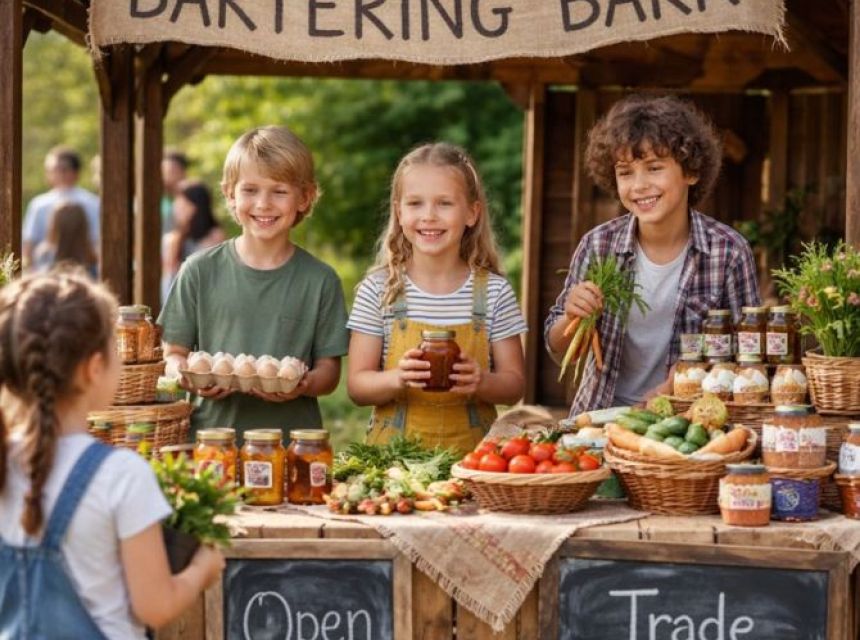
One powerful example is a Bartering Barn - a simple, community-based exchange space where children offer goods, skills, or services instead of money. Children might trade handmade crafts, homegrown produce, storytelling, garden help, pet care, or creative skills. This teaches cooperation, entrepreneurship, communication, and the value of reciprocity.
Other practical ideas include:
- Community gardens maintained by learners
- Intergenerational projects with elders
- Skill-sharing days where children teach and learn
- Repair cafés, seed libraries, or kindness exchanges
- Local problem-solving projects designed by students
These initiatives turn communities into living classrooms.
From Consumption to Creation
When children contribute, they shift from consuming the world to co-creating it. They grow up seeing themselves not as bystanders, but as capable participants in community life. This is education that prepares children not just for work but for life.
To listen to an interesting podcast on contribution to community with guest Bo from Idaho go to https://bbsradio/alllearningreminaged.
Recorded on to the 17th January 2026. See below for ideas to promote grounding in any educational settings.
PRACTICAL EXAMPLES OF CONTRIBUTION OPPORTUNITIES (All Ages)
EARLY CHILDHOOD (Ages 3–7): Contribution Through Play & Presence
1. Nature Helpers Circle
Children take turns choosing a small act of contribution:
- Watering shared gardens
- Feeding worms in a worm farm
- Collecting flowers or herbs for an elder
- Creating nature mandalas for the community space
2. Story Stones Exchange
Children paint stones and leave them at community pathways, parks, or libraries to spark joy.
3. Kindness Bartering Basket
A basket where children place:
- A drawing
- A handmade nature bracelet
- A found feather or leaf
… and swap with others.
Teaches early reciprocity without monetary value.
4. Community Creature Care
Visiting a neighbour’s chickens, garden, dog, or seedlings and helping tend them.
PRIMARY AGE (8–12): Contribution Through Skill & Creativity
1. The Bartering Barn
A simple weekly or fortnightly market where children bring:
- Handmade crafts
- Homegrown produce
- Skills (sharpening sticks, braiding, simple repairs)
- Services (pet sitting, reading stories to younger children, sweeping pathways)
This builds confidence, creativity, and real-life entrepreneurship.
2. Community Problem-Solving Projects
Examples:
- Designing signs for local parks
- Building bee hotels or bird feeders
- Creating a nature trail map
- Restoring a small area of bushland
- Helping elders with simple tech tasks (turning devices on/off, finding photos)
3. Intergenerational Learning Days
Children host afternoons where they teach:
- How to make nature ink
- Simple card games
- Drumming or rhythm circles
- Origami, weaving, or recycled-art crafts
4. Compassion Walks
Students choose a community “gift action”:
- Picking up litter
- Caring for a creek
- Leaving positive notes or artworks in public places
TEENAGERS (13–18): Contribution Through Purpose & Leadership
1. Youth Skill Exchange Hub
A peer-to-peer bartering model:
- One teen teaches guitar
- Another teaches coding
- Another offers sports coaching
- Another trades for gardening help
A real-world demonstration of sovereign economies.
2. Community Action Labs
Teens choose a local issue (e.g., food waste, sustainability, loneliness in elders) and design a solution.
Examples:
- Creating a free community library box
- Starting a compost collection route
- Hosting teen-led workshops for primary kids
- Running music or performance nights open to the community
3. Apprenticeship Tasters
Short, real-life experiences with:
- Local artists
- Tradespeople
- Gardeners
- Holistic practitioners
- Farmers
- Marine or wildlife carers
Hands-on contribution builds clarity around passion and purpose.
4. Media for Good
Teens create:
- Mini documentaries
- Interviews with community members
- Podcasts about local wisdom
- Story archiving projects for elders
This also enhances digital literacy in a conscious, sovereign way.
YOUNG ADULTS (18–25): Contribution Through Mastery & Community Leadership
1. Sovereign Project Incubators
Young adults design and launch community initiatives such as:
- Seed libraries
- Repair cafés
- Zero-waste hubs
- Barter-based learning exchanges
- Community gardens with teaching areas
2. Skill-for-Skill Exchanges With Local Businesses
Examples:
- A young adult offers graphic design to a café → receives mentoring in business operations
- Photography traded for barista lessons
- Website building traded for herbal medicine workshops
3. Contribution Residencies
Short placements where young adults contribute their passion:
- Music residencies in early childhood centres
- Ecology residencies in bushland areas
- Wellness residencies teaching grounding, breath, or quiet focus
- Makerspace residencies in community halls
4. High-Level Mentoring Webs
Creating small pods where youth and elders co-learn:
- Elders share wisdom
- Young adults share innovation
The exchange is reciprocal, dignified, and sovereign.