
All Learning Reimagined
For generations, education has prioritised the intellect, often overlooking the profound role the body plays in learning. Yet true understanding is not confined to the mind, it is experienced, felt, and lived. Embodied learning invites us to rediscover the body as a powerful instrument of wisdom, transforming education from an abstract process into a deep experience.
We do not merely think our way through learning; we sense, move, and engage with the world through our physical presence. From a child learning to walk, to an artist mastering their craft, knowledge is integrated through action and experience. This understanding is supported by the concept of embodied cognition, which recognises that the brain and body work in partnership. Movement, sensation, and environment shape how we perceive, process, and retain information.
When the body is engaged, learning becomes meaningful and memorable. Walking while discussing ideas, building models to explore concepts, or acting out historical events can deepen comprehension and strengthen retention. Quite simply, when the body moves, the brain engages.
Central to embodied learning is the nervous system which is the body’s internal communication network. It continuously scans the environment for signals of safety or threat, influencing our capacity to focus, absorb information, and engage with others. When learners feel safe and supported, curiosity flourishes. When they feel stressed or overwhelmed, the brain shifts into survival mode, limiting higher-order thinking and deep learning.
This insight raises a compelling question: if we only release and heal what the body feels safe enough to process, might the same be true for learning? Deep understanding, like healing, requires safety, trust, and a sense of belonging. When learners feel secure, their bodies relax, their minds open, and authentic learning can occur.
Embodied learning also acknowledges that the body holds memory. Experiences are not stored solely in the mind but are reflected in habits, posture, and emotional responses. Repetition and practice transform knowledge into skill: what we live, we remember. Popular culture illustrates this beautifully in The Karate Kid, where mastery is achieved not through explanation but through consistent, embodied practice.
This perspective invites a shift in how we approach education. Instead of asking learners to sit still and absorb information, we can create environments that encourage movement, sensory exploration, and experiential engagement. By honouring the body as an essential partner in learning, we nurture curiosity, resilience, and confidence.
As we reimagine education for the future, embodied learning reminds us of a timeless truth: learning is something we live.
Perhaps the body was never meant to be still while learning, but part of the learning itself.
 To listen to an interesting podcast on learning about Embodied Learning go to https://bbsradio/alllearningreminaged.
Recorded on to the 18th April 2026. See below for ideas to promote embodying learning in any educational settings. Enjoy!
Activities for Listeners
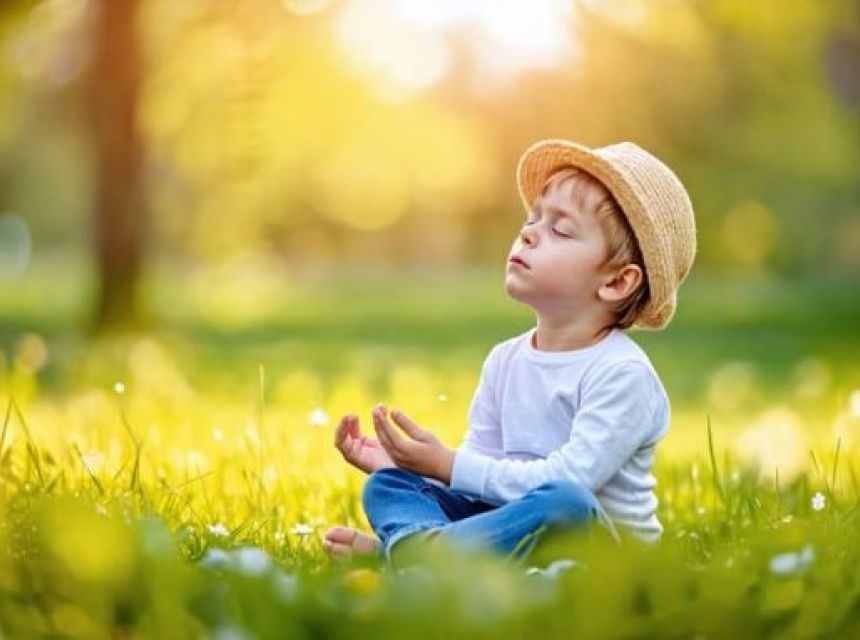
1. Body Awareness Pause
Take a moment to tune into your physical sensations.
- Close your eyes and take three slow breaths.
- Ask yourself: What is my body feeling right now?
- Do you need movement, rest, or stillness?
Reflection:
What did you notice when you paused and listened?
2. Move to Learn
Engage your body in the learning process.
- Take a walk while listening to a podcast or reflecting on an idea.
- Stretch or pace while brainstorming.
- Discuss concepts with a partner while moving outdoors.
Reflection:
How did movement influence your clarity and understanding?
3. Learn Through Doing
Choose a topic and explore it through action.
- Build a model, create a diagram, or design something practical.
- Experiment with hands-on learning in your daily life.
Reflection:
Did engaging physically deepen your understanding?
4. Sensory Exploration
Activate your senses to enhance awareness.
- Spend time in nature and observe what you see, hear, smell, and feel.
- Explore textures, sounds, and environments that support focus.
Reflection:
Which senses most support your learning?
5. Rhythm Over Rigidity
Align your learning with natural cycles.
- Alternate between periods of focus, movement, and rest.
- Notice when your energy is highest throughout the day.
Reflection:
How does working with your natural rhythm affect your productivity and wellbeing?
6. Nervous System Check-In
Support safe and receptive learning.
- Place a hand on your heart and take a slow breath.
- Ask yourself: Do I feel safe, calm, and ready to learn?
Reflection:
What helps your body feel safe enough to engage deeply?
“We don’t just learn with the mind; we learn through the body.”
When we honour the wisdom of the body, learning becomes an experience of integration, presence, and transformation.