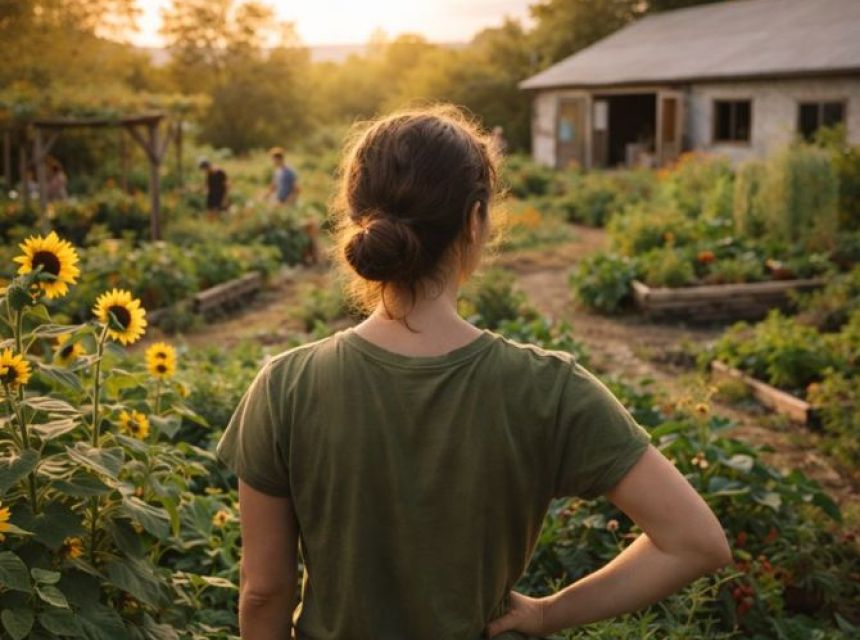
Contribution to community is often spoken about as something we do for others. Yet one of the most overlooked truths is this: meaningful contribution transforms the contributor just as profoundly, often more so than the receiver. When children and young people are given opportunities to contribute from a place of sovereignty, not obligation, it shapes their psychology, emotions, character, and lifelong sense of belonging.
At a psychological level, contribution activates a deep and fundamental human need: purpose. When a child or young person contributes, they naturally begin to ask, Who am I? What can I bring? Where do I belong? These questions are not abstract; they are answered through action. Contribution allows learners to experience themselves as creators rather than passive consumers of the world around them.
With each real act of contribution such as tending a garden, helping an elder, organising a small event, solving a community problem, young people build self-efficacy. They receive clear internal feedback: I can do things that matter. I can influence my environment. I am capable and needed. This belief becomes the foundation for resilience, self-leadership, and mental wellbeing.
Emotionally, contribution creates belonging. Belonging does not come from fitting in; it comes from being of value to the whole. When children contribute, they feel seen, needed, and connected. This strengthens emotional regulation, lowers anxiety, and nurtures empathy. Caring for shared spaces like gardens, creeks and community halls also deepens emotional connection to the environment. Children protect what they feel connected to. Contribution naturally cultivates stewardship.
There are also powerful neurological benefits. Purposeful action activates the brain’s reward and bonding systems. Dopamine supports motivation and momentum. Serotonin builds confidence and emotional stability. Oxytocin strengthens trust and connection. At the same time, cortisol levels reduce, supporting better sleep, clearer thinking, and overall wellbeing. These benefits arise not from consumption or screen-based engagement, but from meaningful participation in real life.
Over time, contribution shapes character. Responsibility, reliability, initiative, resilience, and leadership emerge naturally when children feel connected to outcomes that matter. Importantly, contribution normalises imperfection. Young people learn that they do not need to be ready, resourced, or expert to begin. Starting where they are becomes a skill and a mindset.
In a world increasingly marked by disconnection and consumption, contribution acts as a powerful antidote. It restores human connection, shared purpose, creativity, and a sense of collective responsibility. When children grow up contributing, they grow up knowing they are not here to merely take from the world, they are here to help shape it.
Contribution shapes us from the inside out. It is how we discover who we are, how we belong, and how we co-create the world we want to live in.
The Patch of Earth That Changed Everything
A short story about contribution, purpose, and beginning where you are
Maya was twenty-one and feeling stuck.
She had ideas, energy, and care for the world — but no clear direction. Jobs came and went, and she felt like she was waiting for something to begin.
One afternoon, she passed an old community hall with a large, neglected block of land. A small sign read: Available for community use.
She stopped.
It wasn’t a big vision. Just a feeling.
This place could become something.
Maya didn’t have money, tools, or a plan. What she did have was a notebook and the courage to start small. She posted a simple message online inviting anyone who wanted to help revive the space.
The first day, only two people came.
They cleared weeds, laughed at their lack of knowledge, and planted a few seedlings. The space barely changed — but Maya did. She felt lighter, calmer, and quietly proud. She had begun.
Over the following weeks, more people arrived. Someone donated plants. Another brought tools. Children came. Elders came. Conversations formed where silence once lived.
The land became a garden — but more than that, it became a meeting place.
Maya noticed something unexpected. Her confidence grew. Her anxiety eased. Opportunities appeared — collaborations, invitations, ideas. Not because she chased them, but because she had become visible through contribution.
One evening, standing among sunflowers, a teenager helping in the garden said,
“You changed this place.”
Maya smiled and replied,
“No. We did.”
In that moment, she understood: abundance isn’t something you wait for. It grows when you contribute — imperfectly, sincerely, and together.
Educator Companion Activities: Start Where You Are
Activity 1: The Forgotten Patch of Earth
Purpose: To help learners identify where contribution is calling them.
Invite learners to reflect on:
- A space, idea, relationship, or community need that feels overlooked
- Something they care about but haven’t acted on yet
They can draw, write, or discuss:
- What is calling my attention?
- Why does this matter to me?
- What small action could I take?
Activity 2: The One-Hour Contribution
Purpose: To normalise action without perfection.
Challenge learners to design a contribution that can be completed in one hour or less.
Examples:
- Tidy or beautify a shared space
- Help a neighbour or younger student
- Start a mini garden or care project
- Create something useful for the community
- Offer a skill or service (reading, organising, fixing, creating)
Key rule:
It does not need to be perfect — only started.
Activity 3: The Ripple Effect
Purpose: To help learners recognise non-financial abundance.
After completing their contribution, learners reflect:
- How did I feel before and after?
- What did I learn about myself?
- Did anything unexpected happen?
- Would I like to continue or expand this?
Reflection Box for Educators
Key Reflection Questions:
- How does contribution differ from obligation or “helping because we must”?
- What shifts when learners see themselves as creators rather than consumers?
- How can we offer more real-world contribution opportunities within learning environments?
- What happens when we allow imperfection and trust learning-through-doing?
Educator Note:
Contribution builds confidence, belonging, resilience, and responsibility not through instruction alone, but through lived experience. When learners are trusted with real opportunities to contribute, character develops naturally.
Bartering Barn: A Community Contribution Activity
Learning through contribution, reciprocity, and real-world connection
Purpose of the Activity
The Bartering Barn invites learners to experience contribution as a sovereign, joyful exchange, rather than obligation or consumption. It supports children and young people to recognise their gifts, take initiative, and engage meaningfully with their community.
This activity builds:
- Confidence and self-efficacy
- Communication and social skills
- Initiative and responsibility
- Creativity and problem-solving
- A sense of belonging and purpose
What Is a Bartering Barn?
A Bartering Barn is a simple, community-based exchange space where goods, skills, or services are offered and exchanged without money.
Learners discover that value exists beyond currency — in time, care, creativity, and contribution.
Age Range
Adaptable for:
- Early Childhood (3–7)
- Primary (8–12)
- Teenagers (13–18)
- Young Adults
Materials
Keep it simple. Use what you have.
- Tables, blankets, or crates
- Handmade items, produce, tools, or materials
- Paper and pens for signs
- Optional: baskets, jars, boxes, or cloths
Step-by-Step Guide
Step 1: Discover Your Gifts
Invite learners to reflect:
- What can I make?
- What can I grow?
- What can I do?
- What do I enjoy helping with?
Examples:
- Crafts, artwork, baking, gardening
- Storytelling, reading, organising, cleaning
- Pet care, tech help, teaching a skill
Emphasise: everyone has something to offer.
Step 2: Prepare the Exchange
Learners prepare their offering:
- Create or gather items
- Practise explaining their offering
- Decide what they might like in exchange
This step builds planning, communication, and confidence.
Step 3: Set Up the Bartering Barn
Create a welcoming exchange space:
- Arrange offerings clearly
- Add simple hand-written signs
- Encourage friendly conversation
Educators act as facilitators, not controllers.
Step 4: The Exchange
Learners engage in:
- Explaining what they offer
- Listening to others
- Negotiating fair and respectful exchanges
There is no “right price” — value is relational, not fixed.
Step 5: Closing the Circle
Gather learners together to share:
- What they exchanged
- How it felt to offer something
- What surprised them
Reflection Page (For Learners)
Invite learners to reflect verbally or in writing:
- What did I offer?
- How did it feel to contribute?
- What did I receive?
- What did I learn about myself?
- Would I like to do this again?
Educator Reflection Box
Observe and reflect on:
- How learners recognised their own value
- Shifts in confidence or engagement
- Leadership emerging naturally
- Collaboration and empathy in action
Educator Note:
The Bartering Barn supports a shift from consumer mindset to creator mindset. It strengthens community bonds while teaching real-world skills that cannot be replicated through abstract learning alone.
Extension Ideas
- Link the Bartering Barn to a community garden
- Invite elders or local artisans
- Create a seasonal or monthly exchange
- Combine with a service-learning project
- Reflect on how barter systems were used historically
Key Message to Learners
You do not need money, perfection, or permission to contribute.
Your gifts matter — exactly as they are.
To listen to an interesting podcast on contribution to community go to https://bbsradio/alllearningreminaged.
Recorded on to the 23rd January 2026. See below for ideas to promote grounding in any educational settings.
Enjoy!