Contribution Over Consumption - Learning that gives back
In many learning environments, the focus is often placed on what individuals can gain: knowledge is delivered, content is absorbed, tasks are completed but beneath all of this, something deeper is often missing.
Purpose.
There is a quiet yet powerful shift that occurs when learning moves from:
“What can I get from this?” to “What can I give through this?”
When individuals begin to contribute (truly contribute) learning changes as they no longer see themselves as passive participants, but begin to experience themselves as someone who brings value.
Why Contribution Matters
Research consistently shows that contribution supports wellbeing. Studies on volunteering highlight:
- increased happiness
- reduced anxiety and depression
- stronger sense of connection and belonging
But beyond the research, this is something we can feel. There is a different quality to doing something that matters to someone else. It carries meaning.
Learning Through Contribution
When learning connects to real community needs, it becomes alive. This is often described as service learning where learning is embedded in real-world contribution.
It is not separate from life. It is part of it. When individuals:
- grow food and share it
- build something useful
- create, communicate, and inspire
- support others or care for animals
they are stepping into it.
A Story - The Garden That Fed More Than Hunger
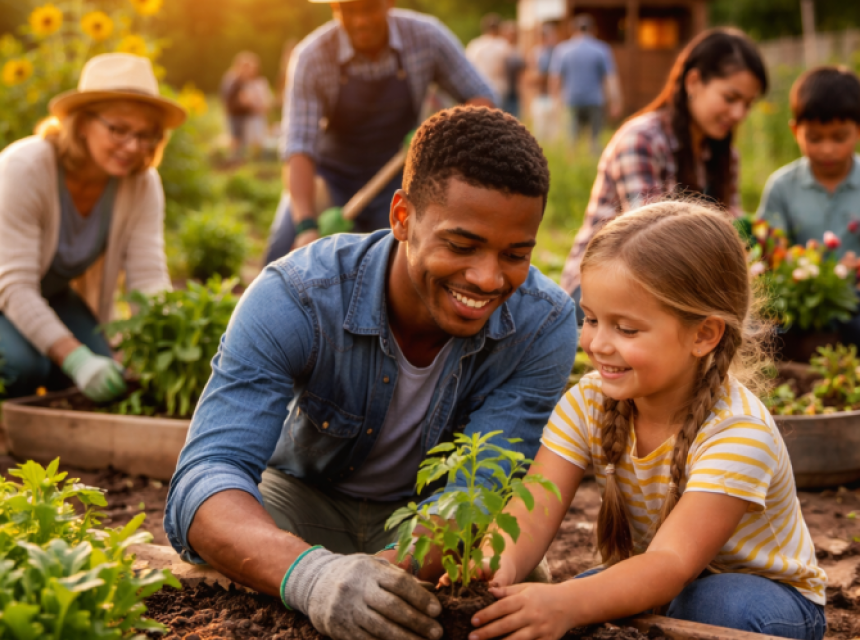
A small group of learners were given an opportunity to use an abandoned patch of land sat beside their learning space. Instead of leaving it… they chose to transform it.
They planned.
They researched.
They built garden beds and planted seeds.
At first, it was simply an experiment however, over time, something deeper emerged as the garden began to grow. And so did they. Children from all ages measured, calculated, adjusted as they worked together to solve problems and share ideas.
Then one day, they harvested more than they needed and so they gave it away to families, neighbours and to those who needed it.
In that moment, something shifted as it was no longer just a project. It was contribution and the learning that came from it reached far beyond the garden.

Getting Started in Your Community
Simple ways to begin
You don’t need a large project or perfect plan to begin. Contribution starts with awareness and small, intentional steps.
1. Start with “Who Could This Help?”
Take any learning activity and ask Who could benefit from this?
- A garden → could support neighbours
- A writing project → could inspire others
- A building task → could solve a local need
This one question shifts learning into purpose.
2. Map Your Community
Look around your local environment.
- neighbours
- local groups
- community centres
- elderly individuals
- families
- local organisations
Ask:
Where is there a need?
Where is there an opportunity to contribute?
3. Begin Small and Real
Start with something simple and tangible.
- grow herbs and share them
- bake and deliver food
- write letters or create cards
- help maintain a shared space
Contribution does not need to be big to be meaningful.
4. Create a Culture of Exchange
Introduce simple bartering or sharing systems.
- trade skills (baking, building, teaching)
- exchange items
- share time and support
This builds connection and reduces reliance on consumption.
5. Collaborate with Others
Invite others into the process.
- work with neighbours
- partner with local groups
- involve multiple age groups
Learning deepens when it becomes collective.
Practical Ideas for Contribution-Based Learning
Build & Contribute
- construct garden beds
- create seating or shelters
- repair or repurpose items
Grow & Share
- grow food to share or trade
- create herb gardens
- collect and distribute seeds
Create & Communicate
- write newsletters or stories
- create a podcast or blog
- design awareness campaigns
Care & Support
- volunteer with animals
- create care packs
- support elderly or isolated individuals
Create Value
- make art or crafts
- sell, trade, or gift creations
- raise funds for community causes
Bartering & Exchange
- trade skills, items, or time
- create a local sharing system
- develop a “Bartering Barn” style space
The Benefits for All
For Learners
- confidence
- purpose
- real-world skills
- sense of belonging
For Families
- shared experiences
- meaningful conversations
- deeper connection
For Educators
- increased engagement
- authentic learning
- stronger relationships
For Community
- greater connection
- shared resources
- collective wellbeing
For the Individual
- sense of meaning
- inner fulfilment
- alignment with values
Contribution changes the question from: “Am I good enough?” to “How can I make a difference?”
And when individuals experience that shift…learning becomes more than knowledge. It becomes purpose in action. How can you get started in your community today?
 To listen to an interesting podcast on learning through contribution to community go to https://bbsradio/alllearningreminaged.
Recorded on to the 5th April 2026. See below for ideas to promote contribution to community in any educational settings. Enjoy!