
Reclaiming Authenticity, June 3, 2026
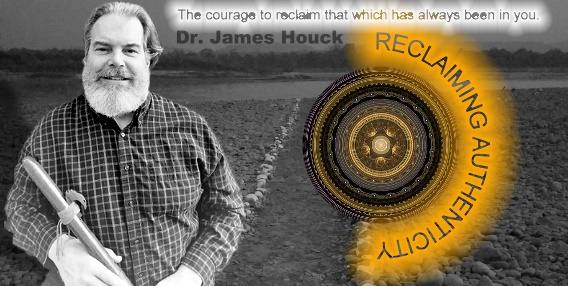

Reclaiming Authenticity with James Houck PhD, LPC, CCTP
The Sun; It's Reflection and Illusion
Summary
Spirituality, Mental Health, and Reclaiming the Soul
In this episode of Reclaiming Authenticity, Dr. James Houck frames the show around the integration of spirituality and mental health. He explains that the program is meant to help listeners reclaim what has always been within them by examining the relationships they have with themselves, others, and God or the divine. He emphasizes that the ego often distorts perception and keeps people from recognizing themselves as vast, eternal souls capable of forgiveness, gratitude, bliss, and love.
The Illusion Created by Ego and Worldly Love
Dr. Houck explores the idea that illusion keeps people stuck, comfortable, and resistant to transformation. He contrasts worldly love, which he describes as conditional and tied to changing emotions, with godly or divine love, which he presents as eternal, unconditional, and purifying. Through this lens, he explains that people often search outside themselves for something they already possess, when the deeper task is to discover who they truly are and live as a soulful presence in the world.
The Sun as a Symbol of the Eternal Soul
Using the summer season as a starting point, Dr. Houck reflects on the sun’s importance in culture, poetry, music, religion, and science. He discusses the sun’s warmth, brightness, influence on mood and circadian rhythms, and its spiritual symbolism. He then introduces the central metaphor of the episode: the sun as a symbol of the eternal soul, constant and unchanging, while the sun’s reflection represents the shifting nature of the body, mind, intellect, memory, and ego.
The Soul, the Reflection, and the Illusion of Separation
Dr. Houck explains that people often mistake the reflection for their true nature, identifying themselves only with the body and mind. He argues that this creates the illusion of separation from God, others, and all things. By identifying as souls rather than temporary bodies and minds, he says people can remember their deeper connectedness, recognize their divine purpose, and walk through life with a greater awareness of unconditional love.
Fear, Shame, Guilt, and the Mind’s Interpretation
The episode then turns to fear, shame, and guilt as forces that can make illusion feel permanent. Dr. Houck clarifies that pain, suffering, and the world are not illusions in themselves; rather, illusion arises in the mind’s interpretation of those experiences. He suggests that people may cling to victimhood, hopelessness, or woundedness because those states feel familiar, even when healing would lead them into a truer and more empowered way of living.
Overcoming Inferiority and Living as an Eternal Soul
Dr. Houck uses Alfred Adler’s life and work on inferiority to illustrate how early vulnerability and limitation can become part of a larger path toward purpose. He explains that inferiority, fear, and self-doubt can either keep people trapped in illusion or become catalysts for growth when transformed. The episode concludes with the message that people are already connected to God, others, and all things, and that their greatest strength lies in transforming physical, emotional, and psychological illusions while reclaiming themselves as eternal souls.
SEO Keywords / Key Phrases
- Reclaiming Authenticity
- Dr. James Houck
- spirituality and mental health
- the sun and the soul
- illusion and consciousness
- eternal soul
- divine love
- fear shame and guilt
- ego and spiritual growth
- Alfred Adler inferiority complex
- soul purpose
- healing through self-awareness
Reclaiming Authenticity
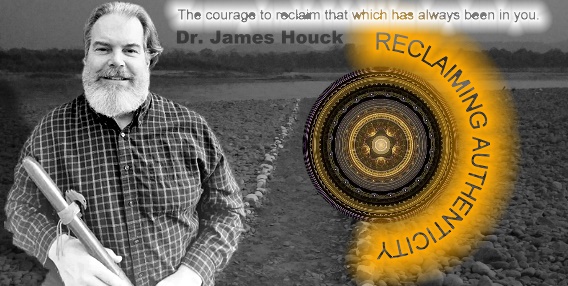
Support my show
$5.99/mo or $9.99/mo
Click HERE
SUBSCRIBE TO TALK SHOW
A Subscription is NOT REQUIRED to listen to my shows,
but it is greatly appreciated!
Reclaiming Authenticity: The courage to reclaim that which has always been in you.
No matter who we are, where we were born, and into what family we were placed, ours is a world full of relationships. Indeed, we are social beings who spend our lives making sense of our world by trying to find our place in the world. As social beings, it is often within the context of relationships that we experience tremendous pain and suffering. From overt acts of betrayal and cruelty that someone may have inflicted against us or vice versa, to simply being in the wrong place at the wrong time, many people bear the scars of physical, psychological, emotional, and spiritual wounds. And yet ironically, just as we experience our woundedness in relationships, it is also within the context of healthy relationships that we find our healing and authenticity. The difficulty, then, is often finding the courage to discover that which has always been in you.
For over 25 years, Dr. James Houck has been helping people discover their authentic selves by integrating spirituality into their mental and emotional health. As people are able to integrate these disciplines, they often discover core issues that have been keeping them wounded in relationships.
Speaker 2 – Dr. James Houck / Host:
Okay. Good evening, everybody, wherever you are in the world at this time. Welcome once again to Reclaiming Authenticity, helping you find your courage to reclaim that which has always been in you. In fact, helping you reclaim that which you have always been and are.
I am very happy to be with you here tonight and every other Wednesday evening at 9:00 p.m. Eastern Standard Time, 6:00 p.m. Pacific Standard Time.
If you have been following me for some time, you know that each and every one of these broadcasts is certainly dedicated to integrating spirituality with our mental health. I place all of this within the context of the relationships we have with ourselves, the relationships we have with others, and the relationship we have with God or the divine.
I am Dr. James Houck, and if you would like more information about me, or if you would like to leave me your comments about tonight’s show, I invite you to visit the websites. The first one is www.BBSRadio.com/ReclaimingAuthenticity, and the second one is www.Reclaiming-Authenticity.com.
If you would like to be part of the show, you can certainly call in. That number is 888-627-6008. That is 888-627-6008. I will be taking your calls after the break.
Just in case you cannot spend the entire hour with me this evening, this broadcast will be reposted again on the BBS Radio website, so you can go back and listen again, or you can check in with the archives for any previous shows you might have missed. These podcasts are also available for download on iTunes, Audible, Spotify, and Amazon Music.
Just a reminder, I am now closing in on, and soon wrapping up, my sixth year with BBS Radio. These broadcasts have always focused on the integration of spirituality and mental health.
I find this very essential because quite often our minds interpret what we take in through our senses. Based on previous experiences, education levels, upbringing, and so forth, our minds interpret. They often fail to capture a more accurate understanding of deeper lessons, realities, and greater truths because our egos, which truth be told are very self-centered and limited, want to come in and take over. The ego keeps us from knowing ourselves as vast and eternal souls and from learning how to live in forgiveness, gratitude, bliss, and love.
This is something I am going to be talking more about tonight, namely in terms of illusion. What is it about illusion that keeps us stuck, keeps us where we are, and keeps us from growing? People can get quite comfortable living with illusion.
Admittedly, circling back to our egos, our egos certainly lead us astray with all kinds of thoughts, selfish pursuits, and a lower-level consciousness, if you will, which is always bound by time, space, and causation.
Yet how often are we guilty of not paying attention to our egos and our mind’s distorted templates, which are teaching us something more about ourselves and showing us where healing and transformation are still needed? These are places or states in our lives where we struggle with unforgiveness, hold grudges or bitterness, lack gratitude, or come across harsh at times, even mean-spirited. Taken to an extreme, that can become an overall hatred for others and perhaps even self-hatred.
There is a huge difference between worldly love, which is most familiar to us, and godly or divine love. According to one of my great teachers and dear friends, we often use the term “I love you,” but such love is conditional because it is temporary. It changes and goes back and forth between conflicting emotions of the mind, such as envy, jealousy, and hatred.
On the other hand, godly or divine love is a love that is not entangled in the human emotions of the mind. Divine love is eternal. It is not conditional, and it helps us and others purify our hearts and minds by realizing our oneness in relation to all people and all things.
This is certainly what Reclaiming Authenticity is all about. It can be summed up in that one word I love, which is “namaste.” Roughly translated, it means that because I see myself as a soul of light, this allows me to greet your lighted soul of who you are, even if you do not see it in yourself.
The integration of spirituality and mental health begins here, because when we examine and implement a oneness integration, let us say, we certainly come face to face with our deepest physical, emotional, psychological, and even spiritual wounds in our relationships.
In addition, we may believe that we will find happiness, joy, and contentment, yet we also might discover that the larger our ego becomes, the greater the sorrows that are sown.
Eventually, our ego brings us back to coming to terms with the relationships in our lives, especially our woundedness within families, coworkers, friends, and other relationships. But it is godly or divine love that heals and transforms those wounds into something more life-giving, something certainly more tangible, and definitely eternal.
This transformation is especially needed for the people whom society deems unlovable, unreachable, and untouchable. When we do the work of integrating healthier ways of transforming this ego of ours by embracing our own and others’ value, dignity, and worth as souls, we transform. We also transform others through our presence, grace, understanding, forgiveness, gratitude, and love.
Or to put it another way, the Dutch priest, author, and professor Henri Nouwen puts it this way. He says that just by paying attention to what is going on around us, we discover that there are people who heal each other’s wounds, forgive each other’s offenses, share their possessions, foster the spirit of community, celebrate the gifts they have received, and live in constant anticipation of the full manifestation of God’s glory.
So do not get trapped in this illusion that you have to go in search of something you already have. In fact, do not go in search of something that you already are. Discover who you are and be that soulful presence in this world.
As I stated, if you would like to call in and be part of the show, again, that number is 888-627-6008. I will be taking your calls after the break because I really want to hear what is on your heart regarding tonight’s show. It is entitled “The Sun, Its Reflection, and Illusion.”
Welcome to the month of June. Here we are, at the unofficial official start of summer for parents, teachers, and school-age kids alike. Of course, summer vacations are underway, or at least they are being planned. Many people hit the beaches or do other outdoor activities.
Just because I am feeling nosy tonight, whenever you go away on vacation, what is the one thing you make sure you take with you? You can forget everything else, but what is the one thing you have to have with you? Is it your meds? Is it underwear? Is it your toiletries? Do you make sure you have enough sunscreen protection? What is your SPF rating? Is it 15, 40, 75, 100? Or maybe you are like me and need 150 minimum so you do not burn. Yes, everybody seems to have an exact SPF number to keep them from burning.
At any rate, people love the sun and getting their vitamin D naturally. One thing is for sure: at the beginning of June, people really start to focus on the sun and its warmth. At least it is that way here on the East Coast.
Have you ever noticed just how many cultural references there are to the sun? It seems like, ever since the dawn of time, no pun intended, humanity has been fascinated by the sun. The sun is something every culture and religion appears to have some sort of emphasis on. People have been drawn to the sun for its brightness and warmth, and they have been inspired to reflect on it, write about it, and even sing about it.
For instance, poets have used the sun to express emotions, such as John Donne’s “The Sun Rising,” in which he writes about love as more powerful than the sun. What about Thomas Traherne’s “Ode to the Sun,” in which he writes that the sun is a gift from God and connects its light to humanity’s spiritual enlightenment? Of course, there is William Wordsworth’s “I Wandered Lonely as a Cloud,” which highlights the sun’s warmth captured in the beauty of nature.
But that is not all, because in the world of music and song, who could forget these timeless classics from the Beatles, such as “Here Comes the Sun” and “Good Day Sunshine”? All right, do not make fun of my singing now. What about back in the 1980s, when the group Katrina and the Waves sang about “Walking on Sunshine,” or Natasha Bedingfield, who sang about a “Pocketful of Sunshine”?
I did not forget you Pink Floyd fans out there. How about “Set the Controls for the Heart of the Sun”? It is kind of a psychedelic take on the sun. And yes, let us wrap it up with Annie, as in, “The sun will come out tomorrow.”
Even religion has something to say about the sun and God. For instance, there is Psalm 113, verse 3: “From the rising of the sun to its setting, the name of the Lord is to be praised.” What about Genesis, the very first chapter? “God made two lights, the greater light,” that is the sun, “to rule the day, and the lesser light,” which is the moon, “to rule the night,” as well as the stars. Also, Ecclesiastes, chapter 1, verse 5, says, “The sun rises and the sun goes down, and hastens to the place where it rises.”
Now let us not forget science, because scientifically, the sun has been understood in terms of influencing our circadian rhythms. Our circadian rhythms are kind of like our internal biological clock that regulates our sleep-waking cycle and other behavioral patterns, and they are significantly influenced by sunlight.
For example, research from long ago indicates that exposure to natural light, that is, the sun, positively affects our mood and cognitive function. I am sure you have heard about seasonal affective disorder. It highlights how the absence of sunlight can lead to depressive symptoms, demonstrating the necessity of sunlight for good mental health.
In fact, there is a study published in the journal Environmental Health Perspectives. It found that individuals with greater daytime exposure to natural light experienced improved sleep quality and reduced symptoms of anxiety and depression. The article attributed this finding to melatonin being released and regulated by exposure to light. So get out there and enjoy the sun this summer.
Let us shift gears a little bit and explore an aspect of the sun that you perhaps do not hear much about: how a deeper understanding of the sun and its ever-changing reflection has something to teach us about ourselves as souls. It is true. There is a unique understanding regarding the sun that we can use to further our understanding as a soul.
Follow me on this. There are two kinds of light in this world. We have the light of the sun, and then we have the sun’s reflection. The sun is always there, even on cloudy days. You can set your watch and your calendar by it. It is constant. It never changes.
However, the reflection of the sun is not always there. Sometimes it is there. Sometimes it is not, depending on the angle, such as from a mirror. The reflection of the sun is going to change when we move the mirror. We see this at night in the various phases of the moon. Sometimes it is a crescent moon. Sometimes it is a half moon. Sometimes it is a new moon. Sometimes it is a full moon. The sun is the sun, but the moon reflects that sunlight.
Now let us take this metaphor of the sun and its reflection into the realm of our consciousness as a soul. I have been saying for a long time that in our original, eternal, and limitless state, we are souls. We are ultimate consciousness, very much like the analogy of a wave that has always been part of the ocean. The ocean can exist without the wave, but the wave comes from the ocean. The wave does its thing, and then the wave dissolves back into the ocean.
Being the ultimate consciousness is something I believe we have definitely forgotten about ourselves. We just do not know ourselves as souls. We are like, “How can this be? All I can see is my physical self. I know my mental self,” and so on and so forth.
Reclaiming Authenticity is all about helping people remember who they are and who they have always been as souls connected to God, connected to one another, and connected to all things. There was, and is, no time when we were not souls.
Remember that passage in the Bible? It is in the book of Jeremiah, the very first chapter, I think verse 5. God and Jeremiah are having this conversation, and Jeremiah is like, “Why are You picking me?” God speaks to Jeremiah and says, “Look, before I formed you in the womb, I knew you. Before you were born, I set you apart. I already appointed you as a prophet to the nations,” and so on.
This passage really emphasizes God’s intimate knowledge and purpose for us, even before our birth. In other words, God is telling Jeremiah, “Look, do not worry about what you think you can and cannot do. Remember who you are.” That is the main lesson there. Every life has a divine purpose.
This is what God wants us to remember: ourselves as vast souls that are constant, eternal, and never changing like the sun. Yet within humanity, we often want to focus only on the temporary, such as the sun’s reflection. We are changing because of our biological makeup, just like the sun’s reflection changes.
Imagine this as the soul’s reflection. For instance, this reflection is made up of our mind, which takes in information through our five senses. It is also made up of our intellect, which knows and has the ability to decide, judge, and discern. It is also made up of our memories, and it is also made up of our ego.
Staying with this metaphor, many people assume that the reflection, so to speak, is our true nature. It is not, because those things—our intellect, memory, ego, and so forth—are always changing. Yet our soul, or ultimate consciousness, does not change. Remember, the sun is constant. It does not change, but the reflection does.
My Hindi friends share this metaphor of the sun and its reflection as a way of understanding ourselves as souls that do not change, even though our individuality undergoes many changes as we age and die. This is not understood in some morbid sense, but rather as an understanding that we do change mentally, emotionally, and physically, which should lead us to realize that there is something greater, unchanging, and eternal. That is the soul.
Yet how often do we believe, and there is no shame or guilt in this, that we are nothing more than the mind and the body? The mind and the body are not going to live forever. Only the soul does, because that is who we ultimately are.
When we identify ourselves with the body and the mind, we get caught up in the illusion that we are separated from everything and everyone, which leads us to believe that these things are permanent when they are not. However, when we identify with the soul and understand, “I am a soul,” we understand our connectedness to everyone and all things, because we have always been, even if we have not realized it yet. We learn to walk in this world as a soul.
So many times we limit ourselves in so many ways, believing we are helpless, that we are victims, that we will never amount to anything, or that God is just waiting for us to step out of line so God can whack us good. On the contrary, God’s heart is for us to realize who we are, who we have always been, to embrace the fullness of unconditional love in all areas, and to walk this earth as an eternal soul who is able to see others as souls, even if they have yet to see it in themselves.
One of my favorite quotes is from author Marianne Williamson. I shared this a couple of weeks ago in one of the last broadcasts, and I will share it again because it definitely fits what we are talking about here. She writes that our deepest fear is not that we are inadequate. Our deepest fear is that we are powerful beyond measure. It is our light, not our darkness, that most frightens us.
We ask ourselves, well, who am I to be brilliant or gorgeous or talented or fabulous?
Actually, who are you not to be?
Because you are a child of God.
You're playing small does not serve this world and there is nothing enlightened about shrinking
so that other people won't feel insecure around you.
We're all meant to shine as children do.
We were born to make manifest the glory of God that is within us.
It's not just in some of us, it's in everyone.
And as we let our own light shine, we unconsciously give other people permission to do the same.
As we are liberated from our own fear, our presence automatically liberates others.
Fear has to be one of the themes that keeps coming up for people who continue to struggle and who are trying to come to terms with their underlying fears.
Most of the time, people deal with their fears by not facing them. They avoid them. They want to escape them. For example, a person who fears flying will probably never get on a plane. A person who fears drowning will probably never get in the ocean, and so forth.
But what if what a person fears turns out to be something that is actually good for them? What if their fears can actually be understood as a means of seeing things for what they are: an illusion? Fear can be understood as “false evidence appearing real.” If we can recognize what is false, and if we can recognize what is an illusion, that is a good thing.
Brian Weiner once wrote that if you are afraid that books might change someone’s thinking, you are not afraid of the books. You are afraid of thinking. That is a good point.
What does fear teach us, not only about ourselves, but also about something deeper in our lives that needs to be healed and overcome? After all, we are a lot stronger than we have perhaps been told about ourselves.
I would really love to hear what is on your heart about this subject. Again, if you want to call in, that number is 888-627-6008. I will be taking your calls after this break. Again, you are listening to Reclaiming Authenticity, and I am your host, Dr. James Houck. I will be back with you in one minute.
Okay, everybody. Welcome back. I am Dr. James Houck, and you are listening to Reclaiming Authenticity.
Earlier in the show, I was talking about the many benefits of the sun, especially in our understanding of our ultimate selves as souls beyond our individual human selves, which change much like the changes we see in reflected sunlight.
As I said in the first half of the show, there are two kinds of light in this world: the light of the sun and the sun’s reflection. The sun is always there. It is constant, even on cloudy days. It just does not change. That is a powerful metaphor for understanding ourselves as souls. That is who we truly are. We are eternal. We are constant.
Yet in this other understanding of the reflection of the sun, the reflection is not always there. Sometimes it is there. Sometimes it is not. It changes depending on an angle. For example, if we hold up a mirror and catch the reflection of the sun, that reflection is going to change, not because the sun moves, but because the Earth is moving. When we move the mirror, the reflection will change.
We can see this pretty much any time at night in the various phases of the moon, which reflect the sun at different times each month. This reflection of the sun, which changes, is kind of like our physical sense, our mental sense, and our emotional sense. We go through changes all the time. Our bodies age. Our bodies get sick. Our bodies get tired. Our bodies get hungry, and so on and so forth. The mind and the body are always changing.
But our souls, who we truly are, are eternal. The soul does not go through those changes of aging and so forth.
My Hindi friends have shared with me that this is important in trying to help people understand that who they truly are is a soul, and not get caught up in the illusion that they are nothing more than the mind and the body.
As I have been saying for a long time, in our original, eternal, and limitless state, we are souls. I also use the analogy of a wave that has always been part of the ocean. The ocean can exist without the wave, but the wave comes from the ocean. The wave does its thing, gains some strength, and then dissolves back into the ocean. So the wave changes, but the ocean is constant, just like our souls are constant, while our minds and bodies change.
Being ultimate consciousness is something I believe we have forgotten about ourselves. This is why I really emphasize this show, Reclaiming Authenticity. It is all about helping people remember who they are and who they have always been as souls connected to God. There is a oneness there, a oneness with all things and with all people. There was and is no time when we were not souls.
How often do we believe that we are nothing more than the mind and the body? The mind and the body, as you know as well as I do, are not going to live forever. Only the soul does, because that is who we ultimately are.
When we identify ourselves with the body and the mind, we get caught up in the illusion that we are separated from everything and everyone. This leads us to believe that we are not really permanent. Yet when we identify as souls, we understand that we have this connectedness to everyone and all things because we have always been. Maybe we just have not realized it or learned to walk in it yet.
So many times, we limit ourselves in many different ways simply by believing or thinking that we are helpless, that we are victims, or by accepting any other negative message people have shared with us growing up, or maybe even today. We may believe that God is somehow displeased with us and that we had better watch out, or else. But I am convinced that God’s heart is for us to realize who we are, to remember who we have always been, to embrace the fullness of unconditional love in all areas, and to walk as eternal souls in bodies and minds that are always changing.
Taking this a little bit deeper, one of the things I hear a lot from people is that they question how everything can be an illusion. The world is an illusion, our lives are an illusion, and so forth. If everything is an illusion, what, then, can we believe to be real?
After all, when we drop a brick on our foot, that pain is real to us. The tears we cry are real to us, and the joys and celebrations we experience are real to us. So why does illusion make us cry, scream, or hurt?
Quite honestly, pain is not an illusion. Suffering is not an illusion, and the world is not an illusion. What is illusion, then, is our interpretation of those things. In other words, we really do not see and understand what is. We see and understand only what our minds project as versions of our desires, fears, beliefs, memories, and so forth.
The illusion is not outside of us. It is internal. Suffering is in our mind because the mind creates this illusion. Consciousness is real. The soul is real because it never changes. It is eternal. It continues on after the mind and the body have changed, aged, and died.
What we see can be an illusion. Why? Because anything that changes or can be destroyed is part of that illusion. We think it is always going to be there, but if we can destroy it or change it, it is not permanent. The illusion is that we think it is permanent.
For instance, let us use a very familiar analogy. Imagine that you have a house made of bricks. The house looks real, but it can be demolished, leaving us with the bricks. But the bricks are also part of the illusion because they, too, can be destroyed, leaving us with the mud from which the bricks were made. As a result, the house is temporary. It is not consistent like the sun, and it is not consistent like the soul.
Similarly, we may believe our physical state is permanent because the mind creates the illusion that we will live forever, that we will never change, and that we are never going to die. But that is just not true.
So again, let us bring all of this into a very practical application and address what most people struggle with day in and day out: fear, shame, and guilt. All three of these issues have the potential to create changes in our lives, which in turn create an illusion that we perceive as real and permanent.
However, let us also keep in mind that these issues create their own negative energy: fear, shame, and guilt. What we know about physics is that energy cannot be destroyed. But once we are aware of an illusion, we can transform that energy into the truth of what is real.
So what is it about change that people fear the most? Is it a state of being comfortable with an illusion that makes letting go of something that no longer serves them difficult, even when something better is available? In other words, perhaps the majority of people would rather stay comfortable living in an illusion of victimhood or hopelessness than take responsibility for their lives.
Granted, what a person has gone through is real, and it is painful to them. That is not the illusion. But when a person believes that what has happened to them is the end-all, be-all of who they are, that is the illusion. Illusion is not based on externals. Rather, illusion is created in the mind’s projection or interpretation of these things.
But exactly what is it about being a victim that can be so appealing to a person that they will fight tooth and nail to hang on to that woundedness? Could it be that living in an illusion is more comfortable than healing from the illusion and beginning to live with the truth?
Again, here are the words of Marianne Williamson: it is our light, not our darkness, that we fear the most. I tend to agree with her that people fear their greatest potential. They fear the light and stay helpless or vulnerable.
I hear this all the time in people I counsel, namely when they say, “There are a lot of other people out there who are worse off than me.” That really comes across as self-pity clothed in some sort of false humility.
Either way, as Marianne Williamson says, playing small does not serve the world, and there is nothing enlightened about shrinking so that other people around you will not feel insecure.
Most of the time, people deal with their fears not by facing them, but by avoiding them. That is part of human nature. I am convinced of it. Certainly, a person who fears flying is not going to get on a plane. A person who does not want to get out in the ocean should not be put on a sailboat, a cruise, or anything that might sink. They have that avoidant type of behavior.
But again, let us circle back to something I said in the first half of the show. What if what a person fears turns out to be something that is actually good for them? Once they understand where their fears come from, maybe they can heal beyond their mind’s self-imposed illusion.
So what do fear, shame, and guilt teach us not only about ourselves, but also about something deeper in our lives that needs to be healed and overcome? Like I said before, we are a lot stronger than perhaps we have been told about ourselves. When we recognize the illusion, we can transform that negative energy into something that empowers us to live as souls, even while we are on this earth.
On the other hand, what if your fear involves something related to your potential? I shared this story in the last broadcast, but it bears repeating.
One of my favorite psychoanalysts and psychiatrists was Alfred Adler. He was a contemporary of Freud until they did not get along, and then Freud took his toys and went home. That is my opinion, okay?
Alfred Adler faced his own sense of vulnerability. He faced it personally and professionally, and he understood overcoming inferiority as a means of finding one’s potential. He used this as one of the major accomplishments of living an authentic life.
Back in the day, Adler was born around 1870, and he was a very sickly child. He developed rickets, which kept him from walking until about four years old. Then, at the age of four, he developed pneumonia, and he heard a doctor say to his father, “Forget it. Your boy is lost.”
To make matters worse, he was run over twice, witnessed his younger brother’s death, and his sickness contributed to his overall fear of death. But he did not realize he was living in an illusion.
From these and other experiences throughout his life, young Alfred rallied back from the grave, so to speak, and proposed that every person experiences a feeling of inferiority. If you are familiar with the inferiority complex, that comes from Alfred Adler. He proposed that inferiority originates in early childhood, when we are naturally dependent on others for everything.
Basically, an inferiority complex is rooted in feelings of inadequacy, and it affects our self-worth and relationships. This condition can arise from a combination of real or imagined weaknesses—there is the illusion—often leading to distress and a distorted self-image in relational or social contexts.
Signs of an inferiority complex include low self-esteem, feelings of perhaps not being able to meet the expectations of parents and caregivers as a child, or struggling with unresolved trauma or internalized shame, just to name a few.
The inferiority complex can also come out in a tendency to overanalyze compliments and criticisms: “Why are you saying that to me? Who are you to say that to me? I do not feel that way about myself. No, do not say that.”
It also comes out in persistently looking for validation and praise from others: “How am I doing? Am I okay? Do you like what I did? Did you have fun with that?” It can show up as being a people pleaser instead of being your authentic self and pursuing what brings you joy and pleasure.
Certainly, the inferiority complex also shows up when we attempt to make others feel insecure in order to make up for our own feelings of inadequacy. We may want to put others down so that we feel better, all stemming from this inferiority complex.
Ironically, these feelings of inferiority can motivate children to develop skills, overcome challenges, and attain their own goals. Again, remember, it is not where you begin in life; it is where you end.
However, you do need at least one person in your life who believes in you and will not let you settle for less. Perhaps that one person recognizes themselves as a soul and recognizes you as a soul, even though you have yet to see it in yourself.
Circling back to Alfred Adler, another story goes that young Alfred was not a particularly good student in school. At one point, he came home from school with a note from his teacher addressed to his father. It said that Alfred should not set his sights too high and perhaps would be better suited to become a cobbler.
There is nothing wrong with being a maker, repairer, or seller of shoes, but in his father’s eyes, his son was not going to settle for failing to live up to his potential. I can almost hear the conversation: “Alfred, you will not live in the illusion that this is all you can ever be.”
As a result, his father basically kicked his son’s butt to do better in school, and Adler eventually went on to become a psychiatrist and the developer of a theory that empowered people to heal from feelings of inferiority and be their best in life.
In other words, he overcame the illusion that he could not do something and that there was no more to him than just his mind and body.
Why this is an important distinction to make is that, as my Indian friends explain it to me, people are already in a relationship with all things and all people, including God, but they just do not know it yet. They are not aware that they are souls. They are living in this illusion.
At some point in our lives, we all walk in ignorance, or in the illusion of who we truly are. Therefore, it is a matter of realizing that we are souls—vast, formless, and eternal souls.
I have had some great conversations with my friends from India. We have talked a lot about sin and ignorance because, in Western spirituality, this concept of sin tells people they are wrong, that they have done something wrong, and therefore they need to eliminate sin to be in a right relationship with God and others. I was raised on that. I get it.
But whereas others see sin as bad or evil, my Indian friends believe that people act out of ignorance of who they are. Therefore, they commit evil acts because they have not realized themselves and others as souls.
I get that too. I really do, because once people have fully realized the grip of illusion and are transformed by it, they clearly see the dynamic between wounding and healing. Every thought, every word, and every action has the potential to heal or hurt, to nurture or wound.
Let us not forget the echo metaphor, one of my favorite metaphors. We live in an echo. Whatever we send out is going to come back to us in one form or another. It is like saying “hello” in a cave and hearing it echo back to us. The same principle is at work.
For us, regardless of religion, it is a matter of understanding how we live our lives with superimposed notions and distorted templates that tell us we are only bodies and minds. Yes, we have bodies and minds, but we may believe that is all there is to us and that maybe someday we will get to go to heaven.
There is certainly more to us, but the illusion wants us to stay there and believe, “Well, that is all it is. If you see it, it must be true. If you hear it, it must be true.” But when we transform the illusion and realize that we are eternal souls, that makes all the difference in the world. It makes all the difference in us.
I have even seen this in Christianity and other major religions. People are afraid to walk in this newness of life as eternal souls because they still believe they are tied to this illusion, so to speak. Didn’t Jesus once say that the kingdom of God is in you? We just have not realized it yet. Sometimes we do not know how to embrace it, let alone walk in this newness of life and relationships in which we are connected to God, others, and all things.
The truth is that the greatest strength of who we are as souls lies in our ability to transform and transcend the physical, emotional, and psychological illusions in our lives. As much as history has shown us the horrific crimes humanity commits against itself, there are just as many stories of humanity rising above such tragedies, finding healing, and reclaiming themselves as souls.
Perhaps your life could be one of those stories yet to be told.
I am Dr. James Houck, and you have been listening to Reclaiming Authenticity. Again, as I say at the end of all these broadcasts, thank you. Thank you from the bottom of my heart. Thank you for spending this hour with me. I really appreciate it.
Do drop me a line and let me know what you think. If you have any further questions, I would be glad to talk with you more about this. But until we talk again in two weeks, everybody out there, be safe. Behave yourselves. Recognize illusion for what it is, and claim yourself as that soul.
Good night.


