
Reclaiming Authenticity, June 17, 2026
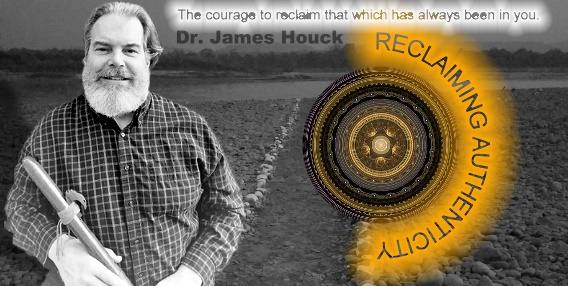

Reclaiming Authenticity with James Houck PhD, LPC, CCTP
Whispering Transformations. Can You Hear Me. Movie, The Horse Whisperer
6. Six-Paragraph Summary
The Journey Back to the Authentic Self
The episode opens with Dr. James Hoch framing Reclaiming Authenticity as a program about integrating spirituality with mental health. He explains that every person enters life with gifts, strengths, character traits, and a unique spiritual imprint, which he identifies through the term haecceitas. He argues that painful experiences, shaming voices, and unsafe environments can cause people to hide or bury their giftedness, leading them to live from woundedness rather than wholeness. The spiritual journey, as he describes it, is not about becoming someone else, but about reclaiming who one has always been.
Listening as a Pathway to Healing
Using The Horse Whisperer as a central image, Dr. Hoch reflects on how healing can emerge through non-coercive presence, compassionate communication, and mutual respect. He highlights Tom Booker's work with the traumatized horse Pilgrim as a metaphor for listening beyond words. For the host, the lesson is not that whispering itself heals, but that deep listening creates safety and restores trust. He applies this same principle to human relationships and spiritual life, suggesting that people often need presence and understanding more than explanations.
The Difference Between Quiet and Sacred Silence
Dr. Hoch distinguishes ordinary quiet from spiritual silence. Quiet may simply mean an absence of background noise, while silence, in his view, is an intentional state of inner stillness in which a person listens for God at the level of the soul. He describes his own shift from prayer dominated by talking to contemplative prayer rooted in listening. He also shares the story of Mother Teresa saying that in prayer she listens and God listens, presenting silence as a mutual spiritual encounter rather than emptiness.
Vibration, Sound, and Spiritual Attunement
The episode explores the idea that silence, sound, words, and the body all carry vibration. Dr. Hoch references Mr. Holland's Opus, tuning forks, chanting om, and the body's response to sound as examples of how human beings can perceive resonance beyond ordinary hearing. He connects this to prayer and spiritual attunement, suggesting that people may need to retune their lives to align more fully with the vibration and energy of God. He also emphasizes that words carry the power either to heal or to wound.
Presence, Water, and the Voices Hidden in Silence
In the second half, Dr. Hoch reflects on his work as a hospital chaplain and the healing power of simply sitting with people in crisis. He argues that silence is not merely waiting to talk, and that in therapy or grief, silence can be a sign of contemplation rather than resistance. He expands the theme through the image of water, the film The Cherokee Word for Water, and Urvashi Butalia's writing on the Partition of India and Pakistan, emphasizing the importance of listening to what is not said, especially when people have been silenced or denied a voice.
Becoming a Hollow Bone for Transformation
The closing portion draws on the Oglala Lakota teaching of Frank Fools Crow and the image of becoming a hollow bone. Dr. Hoch presents this as a spiritual model for emptying oneself of ego, selfishness, doubt, and reluctance so that God's Spirit can flow through a person for the benefit of others. He connects this to becoming an answer to someone else's prayer, listening for God in all things, and finding the divine voice in sorrow, beauty, wind, rain, birds, and heartbreak. The episode closes with gratitude, blessing, and a call to live with greater openness to silence, transformation, and authentic spiritual presence.
7. SEO Keywords / Key Phrases
spiritual silence, contemplative prayer, authentic self, spiritual transformation, healing presence, soul listening, sound vibration, compassionate communication, hollow bone teaching, mental health and spirituality
Reclaiming Authenticity
Support my show
$5.99/mo or $9.99/mo
Click HERE
SUBSCRIBE TO TALK SHOW
A Subscription is NOT REQUIRED to listen to my shows,
but it is greatly appreciated!
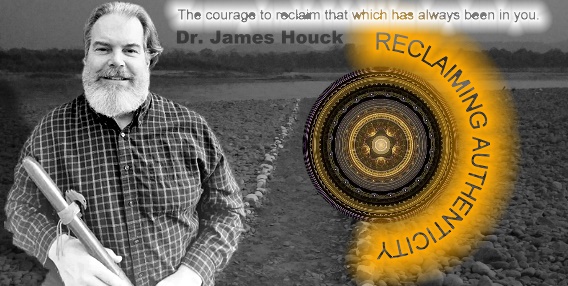
Reclaiming Authenticity: The courage to reclaim that which has always been in you.
No matter who we are, where we were born, and into what family we were placed, ours is a world full of relationships. Indeed, we are social beings who spend our lives making sense of our world by trying to find our place in the world. As social beings, it is often within the context of relationships that we experience tremendous pain and suffering. From overt acts of betrayal and cruelty that someone may have inflicted against us or vice versa, to simply being in the wrong place at the wrong time, many people bear the scars of physical, psychological, emotional, and spiritual wounds. And yet ironically, just as we experience our woundedness in relationships, it is also within the context of healthy relationships that we find our healing and authenticity. The difficulty, then, is often finding the courage to discover that which has always been in you.
For over 25 years, Dr. James Houck has been helping people discover their authentic selves by integrating spirituality into their mental and emotional health. As people are able to integrate these disciplines, they often discover core issues that have been keeping them wounded in relationships.
The Sacred Power of Silence, Listening, and Spiritual Transformation
Speaker Identification
Speaker 1 – Announcer / Prerecorded Promo Voice: Identified by the introductory and closing promotional framing, including the formal introduction of the host, book references, website mention, and show-time announcement.
Speaker 2 – Host: Identified from the transcript as the primary speaker who introduces himself as Dr. James Hoch and leads the full episode discussion. The host's surname appears inconsistently in the automated transcript, so the exact spelling is listed for verification.
Speaker 1 – Announcer / Prerecorded Promo Voice:
And now, with over 25 years of experience integrating mental health and spirituality, the author of Reclaiming Authenticity, When Ancestors Weep, and Redeeming the Buried, here is Dr. James Hoch.
Speaker 2 – Host:
Okay, good evening, everyone, wherever you are in the world currently. Welcome to Reclaiming Authenticity, helping you find your courage to reclaim that which has always been in you.
In fact, say it with me now: finding one's courage to reclaim who you have always been and who you are. Absolutely.
We are excited to be with you here tonight and every other Wednesday at 9:00 p.m. Eastern Standard Time, 6:00 p.m. Pacific Standard Time. If you have been following me for some time, you know that each of these broadcasts is dedicated to integrating spirituality with our mental health.
I am Dr. James Hoch, and if you would like more information about me, or if you just want to leave me your comments about tonight's show, I invite you to visit the websites. The first is www.bbsradio.com/reclaimingauthenticity, and the second is www.reclaiming-authenticity.com. On either one, you can leave me your comments, and I always enjoy reading them.
I also welcome any suggestions you have for future themes or subjects that you would like me to talk about, or topics you would like me to open up so people can call in and discuss them.
On that note, if you would like to call in and be part of the show, that number is 888-627-6008. That's 888-627-8008. I will be taking your calls after the break.
Just in case you cannot spend the entire hour with me this evening, have no fear, because this broadcast will be posted on the BBS Radio website so that you can go back and listen again. You can also go back into the archives for previous shows that you may have missed. These podcasts are now also available for download on iTunes, Audible, Spotify, and Amazon Music.
For those of you who are just happening to tune in for the very first time, I would just like to say welcome aboard. I always like to have new listeners. I would also like to share a little bit about myself, just ever so briefly, for people who are tuning in for the first time.
I am a firm believer that all of us, I do not care who you are, come into the world already equipped and graced with everything that we need for this life in terms of our gifts, our skills, our talents, our strengths, our character traits, our personalities, and so on and so forth.
Unfortunately, as we go along in life, due to some unpleasant experiences, we may think that we need to hide our giftedness, our skills, or our talents because maybe they have been exploited, or maybe we did not feel safe showing them. Or we might have pushed our giftedness way down so that somebody else cannot see it. Or maybe we were told again and again that we would never amount to anything, or we heard whatever other voice told us that there is nothing special about us.
At any rate, when we do not realize our giftedness, when we do not find those strengths, skills, talents, personality traits, and so forth, we go through life functioning from a place of woundedness instead of from a place of healing and wholeness.
My favorite Latin word, haecceitas, means uniqueness. It means thisness. As I explain it to the kids, it is like a thumbprint. We all have one. We all have a uniqueness to us, but no two are alike. That is where this uniqueness comes in. That is this haecceitas, which we all have.
Yet there is so much more to us than what we have become so far. This is really what reclaiming authenticity is all about: having the courage, finding the courage, and walking in the courage to reclaim that which has always been in you and that which you have always been.
Anthony de Mello was an Indian Jesuit priest. He was also a psychotherapist and a spiritual teacher, and he was renowned for blending Ignatian spirituality with Eastern contemplative traditions. He writes about this very same thing. He writes about spirituality as a journey in a poem entitled A Journey Without Distance.
He says that the spiritual quest is a journey without distance. You travel from where you are right now to where you have always been, from ignorance to recognition. For all you do is see for the first time what you have always been looking at.
He writes in a musical way, almost asking, who has ever heard of a path that brings you back to yourself, or a method that makes you what you have always been? But it is true. He says spirituality, after all, is only a matter of becoming who you really are.
That is so true. I think many times we often complicate things. But it is a journey that is not for the faint of heart, let's just say that. Once we are committed to a spiritual journey and committed to the question, who am I, we need to fasten the seatbelt and hang on, because it is kind of the rest-of-our-life question and search.
But it brings so much peace, joy, and bliss in discovering who we are and trusting who we are as a soul. Then we can live it out in a world that can sometimes be hostile to it.
Right.
Well, how is your heart today? I hope you are well, and I hope your heart is well. If you are struggling today in any sense of the word, I hope that you find rest. I hope that you find the comfort you need and the peace that you need.
Welcome to tonight's show, which focuses on whispering transformations. Can you hear me?
Does anybody out there remember ever watching the movie The Horse Whisperer? The Horse Whisperer was a 1998 movie that starred Robert Redford, Kristin Scott Thomas, Sam Neill, and a very young Scarlett Johansson.
The movie plot centered on a young girl and her horse struggling to recover from a horrific riding accident involving a semi-truck on a back road. Her mother, Annie, who is played by Kristin Scott Thomas, was a high-powered New York magazine editor, and she realizes that Grace will only recover once the horse is healed.
She gets this idea. She finds Robert Redford's character, this horse whisperer, and she takes them both to a secluded Montana ranch, where this legendary horse whisperer, Tom Booker, begins to heal the horse.
Interestingly enough, both Grace and her horse heal and recover from their traumatic wounds. Despite the intense dialogue sometimes, there is one scene that really caught my attention. It is a scene where Tom Booker, the horse whisperer, and Grace take a break from driving lessons in an open field. You know the scene. They talk, and Tom shares what he really thinks is going on with her horse, Pilgrim.
Moving all throughout this movie is Tom Booker's understanding of how to treat traumatized horses. First of all, they are not just animals to be trained or ridden. They are actually awakened beings. They are very spiritual, with their own unique feelings, fears, and needs, kind of like haecceitas.
Tom works to restore the horse's trust and confidence by creating this safe, calm environment. He uses gentle, non-coercive methods to rebuild the bond between the horse and the rider. Or, in other words, Tom explains it as, I actually help horses with people problems.
His secret in treating Grace's horse is really not that complicated. Tom's method is not about whispering in a literal sense; it is more about listening. It is about truly listening to the horse's needs, the horse's heart, the horse's spirituality, and responding with compassion.
It is a definite heart-to-heart, soul-to-soul connection that he makes with the horses he works with. In this method, we also understand the story's central theme: healing, whether for a human or an animal, comes from understanding, compassionate communication, and mutual respect.
Powerful. Not complicated, but still powerful.
To be a truly good listener, we have to be comfortable with silence. We have to quiet ourselves and listen to another person, as well as especially listening to God in silence and allowing the presence of that moment to speak for itself.
One of my favorite stories about Mother Teresa was about the time she was asked by a reporter, What do you say to God when you pray? She replied, I do not say anything.
Well, then, what does God say to you?
Well, he does not say anything. He also listens.
Now, that is entering silence on a soul level. This is when we discover that human language may actually hinder listening to the soul's cry. We can be in prayer, but if our minds are racing a mile a minute, then we are definitely not in silence.
I have been there many, many times, especially when I think, Okay, I am now ready to pray and just sit quietly, and all of a sudden the monkey mind starts in. It is like, Okay, I have to take care of this first, and then I can sit in peace and really listen.
There was a time way back when I really threw myself into prayer. I prayed all the time. I loved it. I prayed morning, noon, and night. But it seemed as though the more I talked, the less I heard from God.
Until one day, I was sitting around with a group of friends talking about spirituality. When the subject turned to prayer, a subject I bragged that I knew a lot about, about halfway through my pontification, a friend from Africa motioned for me to stop. He raised his hand and said, Wait, wait, wait. For all of your praying, you know nothing about prayer.
I became offended. Like, what are you talking about? That was until he spoke his next sentence.
He said, This is the problem with your prayers and why you do not hear from God. You do all the talking. You never listen. You never listen to God.
In that moment, I knew he was right. I did not like it, but I knew he was right. I did all the talking. I never gave God a chance to respond or act in line with what I wanted God to be for me. God is never going to do that.
As a result, that aha moment really put me on a trajectory toward contemplative prayer.
Contemplative prayer is actually a discipline of intentionally entering a quiet, reflective state to draw closer to God and to listen. I am not listening with my ears. I listen with my heart, to be fully present with God, fostering a deeper spiritual connection within myself and fostering this connection that I have with all people and all things.
So why are we so uncomfortable with silence?
Depending on the kind of day people have, many people cannot wait to get home, decompress, relax, and enjoy some peace and quiet. Yes, we have all been there. But craving some peace and quiet is not the same thing as being in silence.
How so?
First of all, you would think that quiet and silence are the same thing. Not quite. When we think about quiet, we may tend to think of it as the absence of sound, or at least as stifling the noise around us. We even have noise-canceling earphones and earbuds, soundproof rooms, and so on and so forth.
Yes, these are very helpful in eliminating background sound, which allows us to work from home or be on conference calls without all the distractions, or even simply listen to music more fully without interference.
Silence, on the other hand, is different. In a spiritual, meditative sense, silence is intentionally entering into a state of inner peace and tranquility. It is more than just quieting our minds by dismissing all the checklists of things we have to do. When we enter into silence, it is really more intentional because we seek to communicate with God on that soul level, a dimension where words are not necessary. In fact, words cannot even follow.
I will be the first one to admit that quiet and silence are often interchangeable in the minds of many. I do it all the time. I did a little checking earlier this week because I have often heard it said that there is no sound in silence. Maybe that is because I am nostalgic and I remember the Simon and Garfunkel song The Sound of Silence.
But does silence have sound?
It all depends on whom you ask. There are many interpretations out there of sound and silence. According to Dr. Seth Horowitz of Brown University, he writes in his book The Universal Sense that in truly quiet areas, you can even hear the sound of air molecules vibrating inside your ear canals or the fluid in your ears themselves.
Others may interpret silence as a moment when something is left unsaid, because, as I said, words themselves are unnecessary. It can cause a gap in the conversation when silence itself replaces words. Say you are in a group of people, or you are at a party, and everybody is talking. Every seven minutes, there is a pause. There is just a brief moment of silence, and then the conversation starts up again.
That just seems to be the way conversations go. There has to be a pause or a gap where silence is there.
Silence can also be an indication of empathy. When we are really tuning in to how another person is feeling and what they are saying, we are listening more to the tone of their voice and its speed than to the actual words. There is an awareness of pain or suffering in others that is so deep words cannot express it adequately. We enter into that empathy, that advanced empathy, to really join another person in their pain, suffering, or whatever else is troubling them.
So, in one sense, you can say that silence has sound, but more accurately, silence has vibration. It is a vibration that can not only be heard by our ears and interpreted in our minds, but it is also felt deep within. It is this characteristic of silence that requires no words.
Just as we have the capacity for language, we also have the same capacity for vibration. This is why we need to realize that when we choose the words we say, they carry not only the sound of energy, but they also carry vibration. With our words and our energy, we have the power to heal, and we also have the power to wound.
Another favorite movie of mine, apart from The Horse Whisperer, is Mr. Holland's Opus. That is a classic summer movie. If you are looking for something to do this weekend, get it or stream it somehow. Mr. Holland's Opus.
Richard Dreyfuss is a music teacher. Going back to the story, you might recall that his character, Mr. Holland, was this music teacher, a lover of music, but he had a son who was born without the sense of hearing. He thought God had played a cruel joke on him. Here I am, my whole world is listening to music, and my son cannot hear anything.
But as his son grew up, his son fell in love with working on older cars. He found this mechanic's stethoscope to really listen to the engine's vibration. He would be able to tell whether the engine was running smoothly or if something in it was misfiring.
An underlying, very subtle message in that movie was that human beings can be attuned to increasingly high vibrations that connect us with higher parts of ourselves. This realization even helped Mr. Holland when he put on a high school concert in which the sounds of his orchestra were hooked up to all kinds of bright lights so that every note, every drumbeat, and even the clash of the cymbals resonated with exploding flashes of colorful light. It was truly astonishing to watch.
In fact, I have watched that scene over and over again, and I have turned off the sound just to try to understand what that would be like if I did not have music, but I could feel and see the vibration.
We can feel sound. We can feel silence, because after a sound is produced, the vibration continues. We can even listen to our own heartbeat through a stethoscope, but more importantly, we feel the vibration of our hearts.
In a practical sense, when we experience forgiveness and release the negative energy and pain that we have been hanging on to, those aspects of ourselves that really no longer serve us, we tune into higher frequencies or vibrations, as it were. We begin to experience things in ways we never have, and then this truth about us as a soul becomes a little bit clearer.
Or think of it this way. If you have ever seen a music tuner using a tuning fork, say he is tuning a piano, he has this tuning fork and tunes the fork by first striking the prongs, thereby releasing a perfect wave pattern. Then he adjusts the sound of the instrument, in this case the piano, so that the two vibrations are in sync.
It kind of sounds a lot like this question: are we in tune with the higher vibrations, the energy of God? It is not God who has to be adjusted. We do. The two vibrations need to be in sync. Therefore, what do we need to retune in our lives to match the higher vibration and energy of God?
Even scripture reminds us of the importance of entering silence through prayer and meditation so that we can benefit from that attunement. Vibration takes us into another level of awareness. In fact, this is what the gurus, swamis, and yogis teach: in order to find God, you must first know how to enter into silence, for that is where God is.
Many ancient and contemporary practitioners of meditation use chanting sounds, chanting sacred sounds, to help them align with higher vibrations, such as the sacred sound of om, or as I have always been taught, aum.
Back in the 1990s, I remember science was tripping over itself, trying to discover that when people chant om, a vibration of sound is felt through our vocal cords, clearing and opening the sinuses. They also discovered that chanting om has cardiovascular benefits. It reduces stress and relaxes our bodies. It lowers our blood pressure to a normal level, and it really helps our heartbeat maintain a regular rhythm.
But the vibration of sounding om goes far beyond merely a physiological result. The more attuned we are to the presence of God, the more we experience this empathetic resonance that is our soul coming into resonance with the soul of God.
What we discover in being more fully connected to the soul of God is that we are connected to things that bring us great joy as well as being connected to things that are disturbing and cause us great suffering. But that does not stop us.
That does not stop us because we can transform great suffering into great joy. We can transmute what we think is our separateness from God into a realization that before we were born, God knew us as a soul. God knew us as a soul.
So what is keeping us from seeing ourselves as a soul and seeing others as a soul? Still, we embrace all as an extension of God's presence, grace, and healing for those who are looking and listening.
In other words, we embrace all things to create a space for transformation in all people. That is very profound right there. What space are we creating for transformation to occur? What kind of presence do we bring to each and every relationship, group, or whoever? What is that like?
Can people see that? Yes. Can people hear it? Yes. More importantly, our presence can be felt by others, and they can get in touch with being reminded of who they are as a soul and their own unique haecceitas presence.
As transforming people, we simply cannot pick and choose when, where, why, and how God will use us. Instead, since we expect that God is more than able to understand and embrace all aspects of our lives, should we not also be willing to be the same for ourselves and others?
For example, if we want to be used by God as healers, it should not come as a surprise that we are going to be placed in circumstances where there is pain, sorrow, and suffering. If we want God to grant us ancient wisdom, it should come as no surprise that we are going to be placed in situations where people may be impulsive, lack insight, and really need wisdom.
If we want God to use us as peacemakers, it should come as no surprise that we are going to be placed in times of war, chaos, and death. In fact, even to work for peace, we might have to expose ourselves to non-peaceful situations.
The same is true if we want to be more and more authentic. We sometimes are going to find ourselves exposed to very inauthentic people and inauthentic situations.
The question for us, then, is when we listen for God, what do we hear?
Moreover, contemplation helps us reclaim our authentic selves as the silence awakens the deepest desires of our souls. Before I fully understood the value of contemplation, I viewed silence as not only the absence of noise, but also the absence of God.
To be quite honest, I knew that silence was there, but I did not know how to enter it or even how to listen for God in it. My mind and my ego, especially my ego, just could not comprehend how God communicates when I hear nothing.
In some ways, I was kind of like David in Psalm 130: Out of the depths, I cry to you, O Lord; Lord, hear my voice. Let your ears be attentive to my cry for mercy, and so on and so forth.
Although most people are uncomfortable with silence, or they might even convince themselves that God is uninterested in their circumstances, silence is actually where we connect with God's living presence. We do not enter into silence just for the sake of ridding ourselves of whatever sounds of the day we want to escape. Many people would see that as a welcome relief, me included.
On the contrary, we welcome purposefully entering into silence with God to experience this empathetic resonance more clearly.
I would really love to hear what is on your heart on this subject of whispering transformations. If you would like to call in, that number is 888-627-6008. As I said, I will be taking your calls after this short break.
Again, you are listening to Reclaiming Authenticity, and I am your host, Dr. James Hoch. I will be back with you in one minute.
Speaker 1 – Announcer / Prerecorded Promo Voice:
Thank you.
Speaker 2 – Host:
All right. Welcome back, everybody, from that short break. I am Dr. James Hoch, and you are listening to Reclaiming Authenticity.
Earlier in the broadcast, I was talking about the movie The Horse Whisperer and how the main character, Tom Booker, played by Robert Redford, was the horse whisperer. I just blanked on his name. Can you believe that? Robert Redford. Okay, here we go.
Tom Booker, played by Robert Redford, used his understanding of how to treat traumatized horses not just as animals to be trained or ridden. He truly believed that they are awakened beings, spiritual beings with their own unique feelings, fears, and needs, kind of like I was talking about earlier with haecceitas.
He really works to restore the horse, Pilgrim. He works to restore Pilgrim's trust and confidence by creating a safe, calm environment, using this gentle, non-coercive method to rebuild the bond between a horse and a rider.
He did this very discreetly. It was all done in silence. This is where the whispering comes in, but he was not exactly whispering. He was listening.
His secret in treating Grace's horse is not complicated. Like I said, Tom's method was not about whispering in a literal sense, but more about listening, truly listening to the horse's needs and responding with compassion.
In my book, it is a definite heart-to-heart, soul-to-soul connection that he makes with the horses he works with. Granted, it is a movie, but there are people out there who consider themselves to be horse whisperers, who have such a strong spiritual connection with animals that they can connect with them on a deeper level, especially not even using words, but just by their presence.
It is this method that came through in the movie The Horse Whisperer, and we understand the story's central theme: healing, whether it is for an animal or a human being, comes from understanding, gentle communication, and mutual respect.
It is kind of ironic. We crave quiet, but we can be uncomfortable with silence. The movie is powerful, but it is really not complicated. Just listening. Still powerful.
To be truly good listeners, we have to be comfortable with silence. We have to quiet ourselves and listen to others, especially to God in silence, and allow the presence of the moment to speak for itself.
This was something I learned when I was a hospital chaplain many, many decades ago. I did not even know what it was. I did not even know the value of presence. I would be paged: family needs a chaplain. Go.
So I would go, introduce myself, and just sit with them. Maybe they had lost a loved one. Maybe their loved one was in surgery. Whatever the crisis moment was, I barely said a couple of words, but I sat with them.
When it was time for me to go, I asked if they wanted to pray, and we prayed and so forth. I started to take notice that the people I sat with started to feel better. They had this peace. They still did not know what was going to happen to their loved ones, but they had this peace about them. They were calmer.
I remember about halfway through the chaplaincy program, I had the beeper, and I slid it across the table to the head chaplain. I said, You know what? I do not even know if I am doing any good. I just sit with people, and we pray at the end and so forth. How do I know if I am doing any good here? I do not get it, but they seem to respond to that.
The chaplain slid the beeper back to me and said, Why don't you hang on to that? You are going to be called many, many more times because you are starting to realize the power of presence.
Is that what you call it? Presence?
I really started to see that there is power in our presence. There is healing power. There is grace. There is not just sitting in silence, but sitting with silence, using that silence to really fully understand, witness, and be in that same presence with others who are suffering.
We must not only be comfortable with silence; we also have to be comfortable in silence. Silence does carry sound, and with that sound, as I said in the first half of the show, there is vibration.
There is more to silence than just waiting to talk.
It is interesting in counseling therapy that whenever a client is silent, we were always taught that we need to understand that as the client displaying some form of inner resistance, or not wanting to talk as an act of defiance.
But that is not always the case. In fact, I did just the opposite. Whenever a client was silent, I entered into silence with that client because they were going inward. It is not resistance. It is contemplation. It is a struggle in the moment, and I enter into that struggle with them.
After a while, I may or may not break the silence, but if I do, I might say something like, So what is coming up in you right now? What are you thinking about? What is being laid on your heart?
Sure enough, in that time of silence, they went deep. They really went deep into looking at their problems, situations, pain, misery, or grief.
If there is one lesson I have learned over the years, it is that suffering and silence often go hand in hand. This is also another way to understand the vibration of silence. When a person or people are forced into silence and believe that they have no voice, how do we reach beyond these stories into the silences that they hide?
Listen for what is not being said, or even more importantly, what cannot be said. We can hold a space for another person's story to emerge, but we have to be comfortable in silence.
To further grasp this truth, let us contemplate the silence of water. Yes, you heard right: the silence of water.
If you have ever noticed, water is the epitome of silence. Water only makes sounds when it is moving against another surface, such as being poured into a glass or swallowed, or when water runs over rocks or crashes against the shore, or when the winds create its waves.
Yet when it is still, this inaudible silence of water communicates how it is filled with life that gives life to all who depend on it.
Another great summer movie, if you want to watch it, is a movie that communicates this very truth about water. It is the 2013 film The Cherokee Word for Water, which follows the work that led Wilma Mankiller to become the first contemporary female chief of the Cherokee Nation. I highly recommend it. Great storyline.
In this movie, the analogy of listening is woven throughout, encouraging people to listen to the water. Listen with your hearts. Listen to what another person really needs.
Here is a great exercise. The next time you drink water, meditate on the characteristics of light and the sound that it makes. Really sit in silence and contemplate how this molecular structure of water, H2O, gives life to our human breath: O2 and CO2, oxygen and carbon dioxide.
Consider how God has breathed life into us, and where we feel the breath, matter, and movement of God in our lives.
There is something about words, speaking, and breath. It is all external. It all goes away from us. We cannot form words if we are breathing in. It is only when we breathe out that we have sound with the words and the vibration.
Let us take this understanding one step further. Why not? As we swallow water, enter into the silence of gratitude for its life-giving properties. How often do we just chug water and say, okay, next? But do we ever stop and express a prayer of gratitude for how water gives us life, how water actually sustains the life within?
We deeply connect with how the essence of water helps us discover our inner voice so that we can be a voice for those who have no water, let alone for those who are unable to speak.
This was actually a phenomenon that I read about in a book by Urvashi Butalia. It is something she understood all too well because she wrote this book, The Other Side of Silence. Powerful writing.
She wrote about how, 50 years later, the people of India and Pakistan still grieved the Partition of 1947. She also noticed that when she interviewed people about how life changed for them, men and women told their stories differently, and the women had more periods of silence in their stories.
For example, if husbands or sons were present, she said they would actually take over the interview, causing women to lapse into a sort of silence. She noted that this was not uncommon because many oral histories have been written about the difficulty of speaking to and with women, or of learning to listen differently, often listening for little hidden nuances, or as she puts it, the half-said thing.
She was amazed because, all in all, it was this silence that was sometimes more eloquent than speech.
One of the aspects I am discovering is that in attuning to higher dimensions of spirituality and who we are, we indeed hear God and the universe more clearly. However, living daily in higher dimensions certainly will awaken us to higher levels of silence.
Ultimately, as we become aware, we also accept, and we allow ourselves to be carried by God's grace.
I am sure that you all have heard the poem, or you have read the poem, Footprints in the Sand. It is a poem based on Christian beliefs that describes a person having a dream one night when they are walking on a beach with God.
As they walk along, analogous to a person's various life experiences, they leave two sets of footprints in the sand. Suddenly, the two sets of footprints become one, especially at the lowest and most hopeless moments of the dreamer's life.
The dreamer questions God, believing that the Lord must have abandoned his loved one during those times. God says, No, but let me explain. It was during your times of trial and suffering, when you see only one set of footprints, that I carried you.
Perhaps if we can enter into a higher dimension of silence, we just might also awaken to the lesson that silence does not automatically mean the absence of God. Rather, maybe silence is calling us to resonate with the calling to become an answer to prayer for others.
Have you ever considered yourself to be an answer to somebody's prayer? I think we have many opportunities each and every day. You just never know.
As we go through life, and depending on our experiences, we really start questioning what used to be true for us. For example, ever since childhood, we have had a certain way of seeing ourselves, interacting with others, seeing God, or even viewing this world at large.
When we have gone through an experience that really shakes us up, or even shatters our assumptions, we feel as though nothing makes sense anymore. We do not seem to have a sense of our bearings, let alone know which way is up.
This can be very unnerving. It is an unnerving state or place that we find ourselves in, especially if we feel like everything we have known is starting to crumble and evaporate.
We can become so unsure, not only of ourselves, but also of whether all that we see is all that there is. Yet we can weather these storms. We may also discover that something greater than ourselves is tugging at our souls.
Let me call it a stronger nudge from God, a more intense dimensional energy, or even a hunger that resonates deep within, compelling us to go and search to discover the vastness of who we truly are.
As we go on this journey, we are going to discover that there are things we need to identify, let go of, and transform in order to embrace higher, more intense dimensions. In other words, we rise above those negative mental, emotional, physical, and even spiritual triggers that keep us from experiencing the fullness of unconditional love.
This phenomenon is at the heart of a multidimensional understanding of spirituality.
One more story.
In the Oglala Lakota tradition, there was a gentleman who lived from 1890 to 1989. His name was Frank Fools Crow. He taught that in order to become holy, that is, one through whom the Great Spirit could work in and through to heal others, a person must first become like a hollow bone.
Frank Fools Crow believed that people are not to seek transformation for their own power and honor, but rather they seek transformation so they can serve the community. Or, rather, being a hollow bone, they can be this pipeline connecting God and the people.
This process of becoming a hollow bone began when people asked God to rid themselves of anything that might impede them, such as doubts, questions, selfishness, or reluctance, just to name a few. As a result, psycho-spiritually transformed people would then need to see themselves as unobstructed conduits, for lack of a better phrase, through whom God could work to bless others.
Asking to be a hollow bone is a selfless task that you are taking on, and the ego will put up a fight because the ego does not like to lose. However, if you have such a burden on your heart for others and to serve others without the need for recognition, if you are one who does it so that the people can live, then you are on the path of becoming a hollow bone.
The hollow bone is a powerful symbol for emptying ourselves of everything that hinders and impedes the life of God's Spirit.
Let us go back to our early days in biology class, where we learned that bones provide our bodies not only with the physical frame, but our bones also contain marrow, this flexible tissue that is responsible for producing blood and supporting the immune system.
However, in understanding this concept of becoming a hollow bone, we must first acknowledge our need to, metaphorically speaking, die to ourselves. Ironically, a hollow bone is both dead, in that it does not contain any blood or marrow, and yet, at the same time, the hollow bone is alive because it is the Spirit of God flowing freely in and through us for the benefit of others.
I will say that again, because that is something we really need to take in. A hollow bone is both dead, in that it does not contain any blood or marrow, and yet, at the same time, the hollow bone is alive because it is the Spirit of God flowing freely in and through us for the benefit of others.
This is not a one-time event. Rather, it is an ongoing process of examining and letting go of ourselves, letting go of that ego, and transforming that ego in order to take hold of something better for the sake of humanity.
God is speaking all the time. What keeps us from hearing his voice? Do we do all the talking? Maybe we do.
How hard is it, how difficult is it for us to enter into silence, to really sit and just listen with no expectations?
Through contemplation, we not only need to stop our mind's chatter, which can go a mile a minute, trust me, but also open our hearts to how we see and listen for God, especially in silence.
So where do you see God in all things? In the beauty of a sunset? In the beauty of a sunrise? Do we focus on hearing God's voice in the cries and laughter of others? How do we feel God in the wind and the rain? Do we hear God in the sound of the owls and the eagles and the hawks?
Similarly, should we not also look for God in the tears of a child, listen for the voice of God in every heartbreak, or find the voice of God giving us a voice to express our pain?
I am Dr. James Hoch, and from my heart, I just want to say thank you for spending this evening with me. Until the next time we get together, may everybody be safe, may everybody behave themselves, and may everyone be held in the palm of God's hands.
God bless you, and good night.
Speaker 1 – Announcer / Prerecorded Promo Voice:
Oooooooh.
Oooooooh.
For an answer, or just to leave a thousand comments, or to poke around and buy a book by Dr. Hoch, it is all there. Just wander over to reclaimingauthenticity.com and click around.
We will see you next Wednesday at 9:00 p.m. Eastern Time, 6:00 p.m. Pacific, on BBS Radio TV.
Oooooooh.