
Reclaiming Authenticity, July 15, 2026
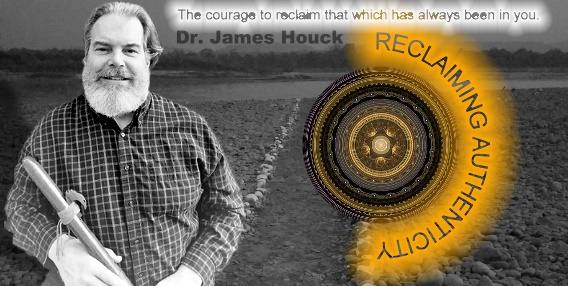

Reclaiming Authenticity with James Houck PhD, LPC, CCTP
Invisible Connections: Finding Meaning, Healing, and the Souls We Overlook
Seeing the People Society Overlooks
The episode explores the human need for connection, meaning, acceptance, and purpose through literature, film, spirituality, and everyday experience. Dr. Hauck draws on Carson McCullers, Forrest Gump, A Love Song for Bobby Long, and Past Lives to consider people who move quietly through the world while carrying unseen struggles. He encourages listeners to notice those who are marginalized, isolated, or treated as invisible.
Stigma, Exclusion, and Disenfranchisement
A substantial portion of the discussion examines how societies have stigmatized people because of disease, mental illness, emotional suffering, social status, or other characteristics considered unacceptable. The host describes historical practices of separation, branding, quarantine, and exclusion, while emphasizing the emotional and social wounds created when a person is reduced from a whole individual to a discredited identity.
Chance Encounters and Meaningful Connection
The host questions whether apparently accidental encounters may contain deeper meaning. He describes ordinary moments in stores, crowds, and public places as possible opportunities to recognize another person’s need for attention, compassion, or conversation. The Korean concept of inyeon is presented as a way of imagining connections between people that may extend beyond a single meeting or lifetime.
Lessons from the Produce Aisle
Dr. Hauck shares a personal story about repeatedly meeting strangers in grocery-store produce sections who unexpectedly disclosed painful experiences. What initially felt like an interruption became a spiritual lesson about presence, safety, and intentional listening. He explains that this changed the way he approached errands, leading him to ask whom he might need to see, hear, or support that day.
Wounds, Energy, and Relationships
The episode connects unresolved wounds with the ways people interpret and respond to relationships. Bitterness, betrayal, distrust, shame, and unforgiveness are described as inner conditions that can shape how a person sees others and can echo through families and social systems. Healing, forgiveness, gratitude, and compassion are presented as ways to transform those patterns and recognize shared dignity beyond race, class, creed, culture, or stigma.
Inner Riches and the Freedom to Let Go
The closing story, attributed to Anthony de Mello, concerns a wandering sannyasi who freely gives away an enormous diamond. The villager eventually returns it and asks for the inner wealth that made such generosity possible. Dr. Hauck uses the story to conclude that lasting freedom does not come from possessing external treasures, but from healing within, releasing former burdens, and embodying grace, love, and a deeper awareness of connection.
SEO Keywords / Key Phrases
social stigma, invisible people, meaningful encounters, spiritual connectedness, emotional healing, intergenerational trauma, forgiveness and compassion, finding life purpose, inner freedom, unconditional love
Reclaiming Authenticity
Support my show
$5.99/mo or $9.99/mo
Click HERE
SUBSCRIBE TO TALK SHOW
A Subscription is NOT REQUIRED to listen to my shows,
but it is greatly appreciated!
Reclaiming Authenticity: The courage to reclaim that which has always been in you.
No matter who we are, where we were born, and into what family we were placed, ours is a world full of relationships. Indeed, we are social beings who spend our lives making sense of our world by trying to find our place in the world. As social beings, it is often within the context of relationships that we experience tremendous pain and suffering. From overt acts of betrayal and cruelty that someone may have inflicted against us or vice versa, to simply being in the wrong place at the wrong time, many people bear the scars of physical, psychological, emotional, and spiritual wounds. And yet ironically, just as we experience our woundedness in relationships, it is also within the context of healthy relationships that we find our healing and authenticity. The difficulty, then, is often finding the courage to discover that which has always been in you.
For over 25 years, Dr. James Houck has been helping people discover their authentic selves by integrating spirituality into their mental and emotional health. As people are able to integrate these disciplines, they often discover core issues that have been keeping them wounded in relationships.
Invisible Connections: Finding Meaning, Healing, and the Souls We Overlook
Speaker Identification
Speaker 1 – Announcer / Prerecorded Promo Voice
Identification is based on the opening introduction and closing station promotion, which are delivered in a voice distinct from the program host.
Speaker 2 – Host, Dr. James Hauck
Identification is based on the host’s repeated self-introduction and the closing reference to Dr. Hauck.
Speaker 1 – Announcer: And now with over 25 years of experience integrating mental health and spirituality. The author of Reclaiming Authenticity, When Ancestors Weep and Redeeming the Bereaved. Here is Dr. James Hauck.
Speaker 2 – Host: All right, good evening everybody, wherever you are in the world currently. And welcome to Reclaiming Authenticity, finding the courage to reclaim that which has always been within you. In fact, helping you reclaim that which you have always been and who you truly are. I am so delighted to be with you here tonight and every other Wednesday evening at 9 p.m. Eastern Standard Time and 6 p.m. Pacific Standard Time. And if you have been following me for some time now, you know that every other week, these broadcasts are dedicated to integrating spirituality and our mental health, all within the context of our relationships with ourselves, one another, and especially God or the divine. I am Dr. James Hauck, and if you'd like more information about me or if you just want to leave me your comments.
Speaker 2 – Host: About tonight's show, I invite you to visit those websites. The first one is bbsradio.com/ReclaimingAuthenticity. That all runs together there. And the second website is www.reclaiming-authenticity.com. And if you would like to call in and be part of the show, you know I do this. I always take calls after the break if people would like to call in. That number is 888-627-6008. That’s 888-627-6008. And just in case you cannot spend the entire hour with me this evening, no worries. These broadcasts are now available in podcast form in case you want to go back and listen again. Or you can go back into the archives and listen to previous shows because it is now available for download. On Apple Podcasts, Audible, Amazon Music, and Spotify.
Speaker 2 – Host: And you know this integration of our spirituality and our mental health is just I believe very essential. Because quite often, you know our minds interpret what we take in through our senses. what we see, smell, touch, taste, and so forth. That is what our brains do. But our minds want to place an interpretation on them like this is a good smell. Or this is a pleasant touch. Or this is not a good smell or this is not a pleasant touch. You know there's always interpretation based on the mind. And you know based on our previous experiences and even our education levels and upbringing and so forth. Our minds interpretation of what we take in really fails to capture a more accurate understanding of you know let's just say deeper lessons. Or realities and greater truths.
Speaker 2 – Host: Because our egos which are very self-centered and very limited, our egos come in and want to take over. They're kind of the bully you know they come in they want to take over and they keep us from knowing ourselves as that vast and eternal soul. And how to live in forgiveness, gratitude, bliss and love. Admittedly, it is our egos that lead us astray with all kinds of thoughts and selfish pursuits. I would say like a lower level consciousness if you will. Which is always bound by time and space and causation. Yet how often are we guilty of not paying attention to our egos and our mind's distorted templates. That have some to teach us more about ourselves and shows us where our healing and transformation is still needed.
Speaker 2 – Host: You know places that pop up whether it is unforgiveness or grudges or bitterness or lack of gratitude or harshness or even a mean-spiritedness or like an overall hatred and contempt for others. which may even be directed at ourselves. There is a huge difference between worldly love. Which I would say is probably most familiar to us. This is what we grew up in. Yeah so there's a huge difference between worldly love and godly or divine love. According to my dear teacher you know we often use the term I love you. But as we pick that apart really if we want to take a look at it you know that love is conditional. Because it's temporary and it changes as it goes back and forth between conflicting emotions of the mind. Such as envy and jealousy and hatred. On the other hand godly or divine love.
Speaker 2 – Host: It is simply not entangled in human emotions. Divine love is eternal. It's not conditional. And it helps us and others to purify our minds by realizing our oneness in relation to all people and all things. This is exactly what reclaiming authenticity is all about. In fact, it can be summed up in my favorite word. Namaste. Roughly translated, it means: because I see myself as a soul of light. This allows me to greet your light and soul of who you are. Even if you don't see it in yourself. Even if you don't recognize who you truly are. This integration of spirituality and our mental health begins here. When we examine and implement let's just say a oneness you know integration. We come face to face with our deepest physical emotional psychological even spiritual wounds. All within the context of our relationships.
Speaker 2 – Host: In addition we may believe that we will find happiness and joy and contentment. Only to discover that the larger the ego becomes within us. The greater the sorrows we're going to experience. Eventually our ego brings us back to coming to terms with the relationships in our lives. Especially our woundedness within families co workers friends and other relationships. But godly or divine love heals and transforms those wounds into something more life giving. More tangible more eternal. This transformation is especially needed for people whom society deems as unlovable or unreachable or even untouchable. When we do the work of integrating healthier ways of suppressing that ego by embracing our own and others' value and dignity. And worth as souls.
Speaker 2 – Host: We transform and we also transform others through our presence grace and understanding with forgiveness gratitude and love. Let’s put it another way as the Dutch priest and professor Henri Nouwen put it. Just by paying attention to what's going on around us just by paying attention. We discover that there are people who actually are healing one another's wounds and forgiving one another's offenses. And sharing their possessions and fostering the spirit of community. And celebrating the gifts that they have received and living in a constant anticipation of the full manifestation of God's glory. All in all don't get trapped in the illusion that you have to go in search of something that you already are. Discover who you are and be that soulful presence in the world.
Speaker 2 – Host: Welcome to tonight's show. It has an interesting title for this one. It's a Carson McCullers, Forrest Gump, and the Invisible People. Unseen connections that join individuals through destiny. And you know I believe this is something that the writer Carson McCullers knew all too well. Because in her writings you know especially in The Heart Is a Lonely Hunter. which, amazingly, she wrote at age 23. She explored people who struggle with you know Where do I find connection? Where do I find meaning and purpose in a world where loneliness seems to be this universal human experience. Throughout this story the characters are unable to communicate their true emotions in a world that really is prioritizing shallow interactions. But they keep trying.
Speaker 2 – Host: Interestingly another favorite movie that I like is A Love Song for Bobby Long. And it had John Travolta in it and a very young Scarlett Johansson and so forth. There are a lot of quotes of The Heart Is a Lonely Hunter throughout that story because it presents a modern-day question: How do we communicate our true emotions in a world that really is this content to have shallow interactions. And the narrator says you know Some people reach a place in time where they've gone as far as they can. A place where wives and jobs collide with desire. And that which is unknowable and those who remain out of sight. But see what is invisible and you will see what to write. And that's how Bobby used to put it. That is A Love Song for Bobby Long. I would say see what you have not seen.
Speaker 2 – Host: That is the invisible people who do their jobs go about their businesses and appear to lead lives in quiet desperation. These are the people whose stories of struggle and search for meaning. All you have to do is see them. Another favorite movie of mine is Forrest Gump. Interestingly Forrest Gump asks this very same question to his mother when he finds out that she has cancer. He jumps off the boat and swims and runs home. They talk for a little bit. Finally, Forrest you know asked his mother he goes What's my purpose, Mama. In other words: Where do I find meaning and purpose within my people. My community and my life. His mama replies. Well you're going to have to figure that out for yourself.
Speaker 2 – Host: Again, this movie explores themes of perseverance in search of meaning and purpose simplicity as well as life's unpredictability. It is no accident that in any society I don't care where you go any society any culture. There are people who struggle to fit in. They struggle to find meaning in their lives they definitely struggle to find acceptance. To really find answers to all these you know we have to first look at and understand what the rest of society is doing. And has done. While these outcasts so to speak. Struggle to survive. For instance, throughout history. You know there have been certain diseases that have carried a social stigma. And have often struck fear and contempt into the hearts and lives of people around the world.
Speaker 2 – Host: And whether it was leprosy in you know early biblical times or tuberculosis and ancient Greece or the bubonic plague in the Middle Ages. or acquired immunodeficiency syndrome—AIDS in the late 20th and even the 21st century. Societies have often displayed a pattern of purposefully disenfranchising people who contract these and other diseases. You know it's just like this isn't socially acceptable. And you know initially this reaction you know from a person who has one of these diseases or a situation or just something that's just socially undesirable about them. This kind of reaction was often justified as, “Well, it’s necessary to prevent the further spread of communicable diseases.” All right. However many afflicted people interpreted being quarantined as society's way of displaying contempt for those who are sick.
Speaker 2 – Host: And as a result many people felt stigmatized by their illness. Many of them felt shunned or alienated from fully participating in their communities as people of value and worth.
Speaker 2 – Host: Now one of the books that I came across a long time ago was written by author Erving Goffman. I think it was way back in 1963. He wrote that the Greeks actually coined the term stigma to refer to bodily signs that expose something unusual and negative about the bearer's moral status. And these signs as he put it were imposed by society and they were cut or burned into a person's body which advertised their condition. You know such as being a slave or a criminal or a traitor or an adulterer. See and as a result this act of branding you know signified to everybody that the recipient was a blemished person and was ritually polluted and to be avoided especially in public places. And such markings you know not only spoiled a person's social identity but also cut that person off from society.
Speaker 2 – Host: You know they're by forcing him or her to live in isolation in an unaccepting world. And from this aspect it appeared as though there was just no way to remove this outward sign let alone recover from the emotional wounding from such harsh treatment. And yet this was not always the case. According to the ancient Israelite purity laws Leviticus let's just say distinction was made between the holy and the profane or let's just say between the clean and unclean. And cleanliness was considered and is considered the normal condition of most things and people. Anything else you know just say such as death or sickness or diseases or coming into contact with blood and so forth was considered a deviation from this societal norm.
Speaker 2 – Host: And this carrier—the person was then separated for a period of time from the community to avoid further contamination. All right. so here's a good example and let's say a certain persistent skin disease you know which was referred to as leprosy. You know it was viewed as especially destructive and its symptoms were very repugnant and thus a variation from let's say a normal skin condition. Consequently you know sorry consequently there we go the leprous person was expelled from the community for the duration of his or her illness. And once the condition had returned to normal let's just say the person would be readmitted to the community by having the priest pronounce that person as clean. Then special sacrifices were then offered to complete the ritual of purification and so on and so forth.
Speaker 2 – Host: Although this purity system was meant to impose a temporary isolation the practice eventually became an acceptable way to expel people permanently who let's just say polluted society by their conditions. This expulsion was true not only for people who had an identifiable condition but what about those people who had a condition that was not readily seen such as a mental illness or an emotional illness. In today's society not all the signs of a socially intolerable disease are immediately visible. Yet once such a condition is disclosed society's overall contempt for what is deemed unacceptable behavior or flawed character reduces a person from a whole and unique individual to then a tainted or a discredited one.
Speaker 2 – Host: When society imposes stigma let's just say on a person this ultimately leads to some form of disenfranchisement that is placing a person within a context in which he or she has not afforded the rights the social right to have their voice heard or even their vote counted. Taken to another extreme such people are also relegated to like a second class status or a third class status or an untouchable class status which subjected them to political and, at times, religious suppression. Ironically you know disenfranchisement not only happens to the discredited person with an unacceptable illness or situation but I've also discovered that those involved who are close to the stigmatized individual they also can be stigmatized. They also can become disenfranchised.
Speaker 2 – Host: It is like a guilt by association judgment you know that was being rendered against loved ones or friends or even caregivers. It can even extend to those who volunteer their services to agencies that provide care to disenfranchised people. It seems that, while the symptoms of let's say a just a socially stigmatized disease may remain less discernible for longer periods as medical expertise advances. The brush that really marks persons with stigma sweeps a much wider area.
Speaker 2 – Host: Here is a question for you. How many of you have accidentally bumped into another let's just say unseen or marginalized person. You are out running errands you're simply going about your business or they were going about theirs let's just say and we bumped into another person. Or if we're trying to get through a large crowd or close you know closely brush against another person. Most of the time we wouldn't even think twice about it or just maybe we would respond with the polite. Oh excuse me and keep going. Is there anything that would make us believe that running into another person was nothing more than a chance encounter. Yeah maybe perhaps maybe but what if running into another person was a moment that was supposed to happen all along.
Speaker 2 – Host: What if it couldn't be helped or let's say with the benefit of hindsight we realized that there was a deeper lesson that needed to be learned in the moment. What did you see? While we are busy trying to get to where we need to go and then complain about bumping into somebody we may have missed something far more important that needed our attention that day. That sheds a different light on the subject doesn't it sure does. The lessons you know we are asked to be shown and learned from often come through the most unlikely times through the most unlikely places and through the most unlikely people. This is an aspect is something I've come to appreciate every time I'm out and about let's just say you know I typically offer up a little prayer just asking you know to allow me to meet somebody whom I need to talk with today.
Speaker 2 – Host: And the strangest things happen, and it makes running errands and completing tasks or whatever I'm doing I'm running around. Yeah it makes those tasks just a little bit more meaningful because when you run into another person in a store you realize that in the grand scheme of things it wasn't so much that you needed to buy eggs or clothing or whatever. Okay but perhaps the real reason you went to the store or going to get an ice cream cone in the first place was that you needed to talk to that specific person or they needed to talk to you. We have many examples of these so-called chance encounters so it is worth paying attention to what's really important in our lives at any given moment as well as understanding how much we're connected to one another.
Speaker 2 – Host: The reason I'm bringing up this phenomenon is because in the 2023 movie Past Lives If you have not seen it, that's another one put on your summer movie list. The story is all about an ongoing relationship between a man and a woman across various stages of their lives. It begins with childhood and then later adolescence and then it jumps to middle adulthood and so forth. Throughout this movie a Korean phrase keeps coming up in various situations inyeon. Inyeon. Two people having a special connection which is often described as a fate or a destiny. There is also a deeper meaning to this phrase, inyeon.
Speaker 2 – Host: It is grounded in this Buddhist philosophy and carries the wisdom of a connection between two people which is often born out of their actions and relationships in previous lives or Past Lives hence the title of the movie. This connection is not necessarily a romantic one that we often see in other movies. Instead think of inyeon as being more of a linking of souls across lifetimes or as the main character Nora puts it inyeon can also mean that if two strangers walk by one another and their clothes accidentally touch there must have been something between them in a previous encounter. Again, let’s go back to the movie Forrest Gump. You know he emphasizes something very similar he says you know I don't know if we each have a destiny or maybe we're just all floating around accidental-like on a breeze. But I think maybe it's both.
Speaker 2 – Host: Maybe both are happening at the same time. Food for thought.
Speaker 2 – Host: Whether or not you believe in reincarnation or destiny or fate you know focus on the people in our lives whom we see every day in and day out especially the people whom we don't see who work behind the scenes. the “invisible people,” as it were you know people we pass by each and every day but we just simply do not notice. Do we have a connection with them. Yes, we do. It is like walking up to a you know I love this joke you know walking up to a hot dog vendor and requesting. Hey, buddy you know make me one with everything. What if the hot dog vendor you know was enlightened and he simply replied in surprise. You know I can’t make you one with everything in fact nobody can make you anything. You already are one with everything. You just haven't realized it yet.
Speaker 2 – Host: That is a very wise hot dog vendor indeed you know certainly worthy of an extra tip. Yet how many of us perceive ourselves as lacking something we already possess. How many of us fail to see ourselves for who we truly are let alone continue to search for that person we are and are becoming. And in this case how many of us fail to understand our connection with one another. It is there. We just haven't realized it yet. How many times do we fail to understand our connectedness with one another and yet act as if we are separate from one another. As a result you know realizing our oneness or our connection with all people and all things. We ought never to take anything for granted. Instead, cultivate gratitude and a deep sense of compassion for all people who provide the things that we use every day.
Speaker 2 – Host: Everything, therefore, is a gift and there is no such thing as a chance encounter. Are we paying attention to that.
Speaker 2 – Host: This makes so much more sense whether or not we realize that we are connected to everybody in all things indirectly or directly. When you think about it we are interconnected with all things and all people in a universal awareness let's just say. But oneness and this connectedness in the spiritual sense goes much deeper because they involved who we are at our core rather than who do we know. When it comes to wrestling with life's questions many people are overwhelmed not only by the idea that the answers they seek may lie within themselves. but also by their belief that inner freedom and peace and joy and unconditional love. those things are just all too good to be true because: “You don't know how I've been hurt. You don't know how I've been betrayed. You don't know what I've been through.
Speaker 2 – Host: You know those things belong to somebody else. But everybody possesses the key to unlock those doors to an inner freedom and grace and peace as we have never known before. The question then becomes how open am I to really knowing who I am. Whether it's in Western or Eastern cultures you know when we're ready effective teachers mentors and leaders throughout history have been characterized by those who help pull out of others the very best in themselves. You know the old saying when the student is ready the teacher appears. In fact when we are open and teachable life lessons appear through the most unlikely people and in the most unlikely places.
Speaker 2 – Host: I really want to hear your heart on this subject. So again if you want to call in you know that number is 888-627-6008 I'll be taking your calls after the break. You are listening to Reclaiming Authenticity and I'm your host Dr. James Hauck. I'll be back with you in one minute. Thank you. Thank you.
Speaker 2 – Host: Welcome back everybody again I'm Dr. James Hauck and you're listening to Reclaiming Authenticity.
Speaker 2 – Host: Earlier in the show I asked just a very simple question. How many of us have ever bumped into another person by accident. You are just out running around minding your own business you got things to do or whatever or you know or maybe another person is just out and about and doing whatever they need to do. And we bump into each other you know and you know sometimes in a large crowd you know we're trying to get here and there and work our way around the people and so forth and our clothes generally brush against another person. Most of the time we wouldn't you know think twice about this we just wouldn't even give it a second thought you know but we would just respond with maybe a polite, “Excuse me excuse me just trying to get through. Oh pardon me oh I'm so sorry that I bumped into you or whatever.
Speaker 2 – Host: Now is there anything that would make us believe that running into another person was nothing more than a chance encounter. What if running into another person was a particular moment that was supposed to happen all along. What if it couldn't be helped. What if you needed to learn a deeper lesson. We may have missed something more important that needed our attention that day.
Speaker 2 – Host: This is something that I had to actually learn a very valuable lesson because you know even before I got into the counseling therapy and education and clinical supervision and so forth clinical training. I was one to just love to do grocery shopping. I just no problem there I can get in get my stuff get out I'm home no problem easy-peasy okay and but I kept running into so to speak running into this problem or what I thought was a problem. I would always talk to people in the produce aisle and they would start to tell me their problems. Many of people would often break down into tears and say I don't know why I'm telling a complete stranger this I've never I never told anybody this before I'm so sorry for crying you know and that would go on and on and on.
Speaker 2 – Host: I do not know what it is about the produce aisle I don't know if people you know flip out because of cabbage or the kale or the carrots or the beets or whatever. Maybe it's a certain kind of potato that maybe who knows but I never had that experience in let's say the cereal aisle definitely not in a dairy section and definitely not in the frozen food. What was it about produce fruit and vegetables okay what was it about that and I remember you know I just couldn't take it anymore because it was just starting to just kept happening. And so I go to you know my teacher my mentor you know and I go you know and I explain everything I just go well why is this happening to me I just want to get in get my stuff and go home. My teacher said well you are asking them how they're doing.
Speaker 2 – Host: I was like yeah okay I get that it's more like a casual, “How are you doing today good morning how you doing. But people seem to stop you know He said, “Your presence probably you know people feel comfortable talking to you and sharing their pain because a person has to feel safe before they open up to you know making themselves vulnerable. Through all that I learned this lesson that you know maybe it doesn't really have anything to do with me going to this door and making sure that we have a side dish let's just say for dinner tonight or whatever. Maybe it had everything to do with me running into a person who needed to talk. That changed my entire outlook. I no longer said okay I'm going to be back I'm just going to the store to get this and that like no that phrase was just you know stricken from my vocabulary.
Speaker 2 – Host: It became you know okay put the keys in the ignition, turn the car on or the starter and before I put it in drive I would just say okay. Who do I need to speak to today. Who do I need to run into today. Help me to be able to see what's really important today. Again, it made all the difference in the world. I was just you know just less and less worried about okay I got to make sure I get eggs and milk and oh yeah why I'm mad I got to pick up potatoes and let's get some kale or some corn or whatever you know it was less about that and just. Who needs to talk. And so even that you know good morning how you doing. That changed. Now I would say something like good morning how are you. And the person says well you know I'm doing okay and I would say, “No, seriously I want to know how you're doing.
Speaker 2 – Host: Because you sound a little sad or you look a little sad or you look like you carrying the weight of the world on your shoulders. And it became very intentional. And people just continue to open up. As I said it just doesn't happen in the cereal aisle or the dairy section you know forget the frozen food section. It's something about the fruit and vegetables. I can't explain it. Probably because that's the first thing you run into when you go into a grocery store. It doesn't matter. It just that's where it's happening. That is my story of how I came to understand that because we bump into somebody that's no chance encounter.
Speaker 2 – Host: When I watched the movie Past Lives you know and that Korean phrase that kept coming up in various situations—inyeon. I realized that. That phrase is interpreted as two people having this special connection. Which in the movie they described as fate or destiny like you were destined to meet eventually. That is not a bad idea. I can accept that. But there's also this deeper meaning throughout this movie in this phrase inyeon. You know and it's grounded in this Buddhist philosophy and it carries the wisdom of this connection between these two people. Which is born of their actions and relationships throughout previous lives. This connection is not necessarily you know like I said before a romantic one that we often see in the movies. This is not Casablanca okay or when Harry Met Sally or whatever okay.
Speaker 2 – Host: You know Inyeon is more like a linking of souls across lifetimes because come on how many times you met somebody and you're like Have we met before? You look very familiar you sound very familiar Are you sure we haven't met? Honestly with yourself you've had those encounters. But you know I really like in this movie you know Past Lives you know as the main character Nora puts it at one point she goes Inyeon could also mean that if two strangers walk by one another. And their clothes accidentally touch. They don't even say anything to one another but just their clothes accidentally touch. There must have been something between them in a previous encounter. Why that person. Perhaps you bumped into somebody by accident that you needed to talk to and that person took the time to say no seriously I want to know how you're doing.
Speaker 2 – Host: I care. I want to listen. It's okay.
Speaker 2 – Host: This is what I really believe it means to pay attention to the people that we see every day in our lives especially the ones whom we don't see. You know those people who work behind the scenes or it's commonly referred to as the invisible people you know people who if they weren't there nothing would get done. People we pass by every day we just we don't even notice. Do we have a connection with them and I think of yeah absolutely of course we do.
Speaker 2 – Host: Because connectedness in more like a deeper spiritual sense also includes everything that we think and say and do because everything we think and say and do is energy. We cannot destroy energy. We can transform it according to you know Physics 101. We can transform that energy first into healing ourselves by healing our own wounds. And you know once we are healing our wounds and transforming that negative energy it's going to come back to us exactly as it went out from us. This is a phenomenon I run into time and time again with counseling clients who want to heal from their past and improve their relationships. Whatever a person is struggling with in relationships more than likely they're going to be struggling with the same issues in themselves.
Speaker 2 – Host: Just as I try to explain to kids it's like we live in an echo. Just think of the cave or the tunnel and where you shout something and you're going to hear it bounce back to you. The same is true: whatever negative energy is being sent out echoes back sooner or later. However, whatever positive energy is being sent out definitely echoes back sooner or later.
Speaker 2 – Host: But let's just think about it this way you know a person who's filled with bitterness from a previous hurt or let's just say a betrayal. If that goes on healed there is a strong tendency that person is going to view everything and feel everything through a lens of bitterness. What about a person who has experienced tremendous hurt from a broken trust in relationships. Unless this is healed and transformed the danger is that person is going to view everything and everyone with suspicion. “I don't trust anybody there is no good person out there everybody's out for themselves. It is very difficult for people to understand this phenomenon of emotional and psychological self-inflicted wounds. What goes out has first come from within.
Speaker 2 – Host: Because maybe you've heard a person say I'll never forgive that person for which usually means I'm never going to be able to forgive myself for. Or, “I could never trust another person because that usually means I might have difficulty trusting myself. Or what about I can't stand it when a person says this or does this usually means I really can't stand myself when I say or do this. And, “I just can't love that person being,” whatever usually means you know I also struggle with loving myself.
Speaker 2 – Host: How we are with others is often how we are with ourselves and vice versa. How we see others is often how we see ourselves. Unresolved, unhealed wounds distort how we view and interact with the world.
Speaker 2 – Host: These unresolved unhealed wounds you know in severe cases okay. Trauma can be passed down genetically. According to the host, those studies have been done over and over and over again. Yes, there's you know that ties into the nature nurture argument you know under something that to be said for how we are raised. But often of times trauma is passed down through the genes because it attaches itself to our DNA. Often covertly disguises itself as these harmful physical psychological emotional and spiritual symptoms. Similarly you know as intergenerational trauma is passed down through society and families that is what we carry in our genes and how we are raised and so forth.
Speaker 2 – Host: Various social systems have also galvanized harmful stereotypes and harmful I mean prejudices and injustices and emotional dependence and biases so on and so forth. Society does not get off the hook that often starts with them. Therefore intergenerational trauma is not just limited to how it affects our families because it also affects all relationships. From the most intimate to mere acquaintances in our lives even the people we bump into.
Speaker 2 – Host: This realization is a significant aspect of healing relationships. It occurs when we're able to understand what has so wounded another person. What has so wounded ourselves. That we can continuously act out of our woundedness and yet expect different results. I have to say you know folks from personal experience that understanding the background of those who hurt me. Has also allowed me to take the necessary steps closer to forgiving and releasing the burdens of carrying around my wounds any longer. The same is true when we forgive another we're saying that we no longer want them to carry the weight of their woundedness.
Speaker 2 – Host: We also want them to be unburdened by any weight of bitterness or unforgiveness or shame or humiliation or any other pain that they have suffered in the past that continues to influence how they think and speak and act in very harmful ways. This is where we often see ourselves being separated from everybody and all things.
Speaker 2 – Host: Let’s go back for the person we've accidentally bumped into let's just say. We may believe we have nothing in common with that person. This would be true if all we did was focus on the externals. What if we allowed ourselves to truly see one another as souls. We would understand the oneness or connection we share with others. Regardless of race and class and creed and culture and stereotypes and prejudices and stigmas or language. This is all the more reason why it's important to see the divine in everybody. When we're ready God opens up for us a profound understanding of who we are as souls. Trust me on this: to experience that is powerful, life-changing, and transformative. When we look at each other as souls we soon discover that we see ourselves as souls.
Speaker 2 – Host: We begin to realize that these externals just simply do not matter. There is no more sexism. There's no more racism. There's no more ageism. There's just there's no more “isms” at all. They simply cannot hold up to this whatever standard that you know that just doesn't fit. We are all souls. We are all children of light. As my Hindu friends like to tell me we're all droplets of water returning to the ocean. We are no different from one another. Albeit externally. Why do we have the externals? You may ask. Why are we on earth as embodied souls? Some would say that we're an embodied soul because of karma. Because of what our soul still needs to work out in terms of the lessons that are learned. And healing that needs to take place.
Speaker 2 – Host: That we're often reminded of the wounds and the habits and choices or whatever that we make. Is how we're working out that karma and how these things come to us through the externals. They are all there for us as lessons to be learned. And learn the deeper lessons.
Speaker 2 – Host: Anthony de Mello is truly one of those spiritual teachers and mentors who always sought to empower others. And to bring them into higher states of self-awareness and self-discovery. He often told this story to illustrate that we can let go of the former things in order to take hold of something better. He loved to tell this story of a villager in India who happened upon a sannyasi. A sannyasi is a wandering enlightened one who, having attained enlightenment, understands that the whole world is his home. As de Mello puts it, the sky is his roof and that God will look after him. And so he moves from place to place the way you or I would move from one room of our home to another. When this villager, you know, when he sees a sannyasi, he says, I can't believe this when their paths crossed.
Speaker 2 – Host: The sannyasi says, what is it that you can't believe? The villager says, I had a dream about you last night. I dreamt that the Lord said to me, tomorrow morning, you will leave the village around 11 o'clock and you'll run into this wandering sannyasi. And here, look, I've met you. Oh, okay. Well, what else did the Lord say to you, ask the sannyasi? The villager replied, he said to me that if the man gives you a precious stone that he has, you'll be the richest man in the whole wide world. Would you give me that stone? The sannyasi tells the villager, “Well, just hang on a second.” And he rummages around through his knapsack and he retrieves an object. Is this the stone you're talking about? He hands it to the villager and the villager just simply couldn't believe his eyes. It was the largest diamond in the world.
Speaker 2 – Host: He holds the diamond in his hands and his eyes are all big and everything. And he just asked, like, can I have this? “Yes, sure. Why not?” the sannyasi says, take it. I found it near the river. No problem. “You are welcome to it. The villager, with kind of a shady grin and chuckling to himself, he takes the diamond and he takes the diamond and runs and then he sits under this tree on the outskirts of the village and he just clutched this diamond to his heart. And he felt great joy. You know, kind of like the joy we experienced when we really finally get something we want. But do we ever stop to ask how long I was going to last? How long does the joy last? How many seconds? How many minutes? Eventually you get tired of it, don't you? Then you're off looking for something else, aren't you?
Speaker 2 – Host: The villager sat under the tree all day, clutching his diamond, and became immersed in thought. Toward the evening, he went down to the river where the sannyasi was meditating and gave him back this diamond. He says, master, please take this back. Can you do one more favor for me? “What is it?” “Could you give me the inner riches that make it possible for you to so easily give away this thing that would have made you the richest man in the world? The lesson is about letting go of former things in order to take hold of something better.
Speaker 2 – Host: We are capable of sending out negative energy from unresolved emotional, physical, psychological and spiritual wounds that we can also send out through our thoughts, our words and actions, positive energy that gives life and healing and grace because those things come from places in us that have been healed and transformed.
Speaker 2 – Host: Thank you for spending this hour with me. You've been listening to reclaiming authenticity and I am your host, Dr. James Hauck. Again, if you would like, please shoot me an email or leave me your comments at the website. And I would just love to have further discussions on this. In the meantime, the next two weeks, everybody behave yourselves. Everybody be safe and everybody be blessed. Good night.
Speaker 1 – Announcer: For an answer or just to leave your comments or browse around and buy a book by Dr. Hauck, it's all there. Just wander over to reclaiming-authenticity.com and click around. And we'll see you every other Wednesday at 9 p.m. Eastern Time, 6 p.m. Pacific on BBS Radio TV.