
Reclaiming Authenticity, July 1, 2026
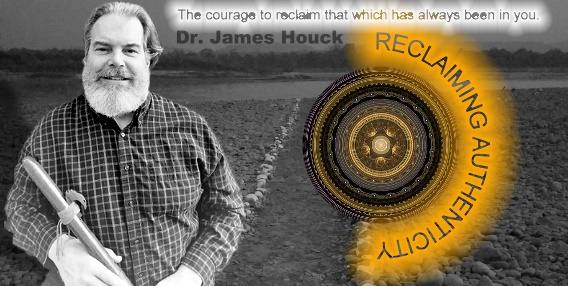

Reclaiming Authenticity with James Houck PhD, LPC, CCTP
The Light Beyond Forgiveness: Healing the Shadow Through Gratitude and Authenticity
The Inner Work of Authentic Living
Dr. James Hough opens the episode by grounding the program in its ongoing theme: the integration of spirituality, mental health, and relationships. He explains that reclaiming authenticity involves remembering the gifts, strengths, and spiritual identity already present within each person. The episode frames authenticity as a spiritual and psychological process that is lived through relationships with oneself, others, and the divine.
Forgiveness as a Process of the Heart
The central teaching begins with forgiveness, which Dr. Hough describes as a process rather than a one-time act. He reflects on the biblical idea of forgiving “seventy times seven” and emphasizes that forgiveness is not record keeping, forgetting, or pretending harm did not occur. Instead, it is a matter of the heart, attitude, honesty, release, and continued inner work.
Facing the Shadow Without Fear
Dr. Hough explores the concept of the shadow, drawing on Carl Jung and literary imagery from Dr. Jekyll and Mr. Hyde. He explains that people often reject the parts of themselves they do not want to see and may project those disliked qualities onto others. The episode presents shadow work as a path toward healing, self-awareness, responsibility, and more authentic relationships.
Wounded People Can Still Heal Others
The episode challenges the belief that people must be fully healed before they can help others. Dr. Hough discusses the wounded healer concept and argues that wounds and scars can awaken compassion rather than serve as excuses for bitterness or prejudice. He encourages listeners to recognize that acts of comfort, kindness, and support can come through imperfect people who are still healing.
Choosing What We Feed
Through stories, humor, and traditional wisdom, Dr. Hough discusses the principle that people reap what they sow. He references the Cherokee teaching of the two wolves to illustrate the importance of feeding joy, peace, humility, compassion, faith, and truth rather than resentment, ego, anger, or superiority. He applies this teaching to family relationships, holidays, conflicts, and the everyday choices that shape character.
Gratitude, Boundaries, and the Light of the Soul
In the second half of the episode, Dr. Hough offers journaling as a practical forgiveness exercise, urging listeners to write honestly about the people and experiences they need to forgive, including themselves. He connects forgiveness with release, gratitude, and healthy boundaries. The episode closes by returning to the theme of authenticity as spiritual light, encouraging listeners to heal the shadow, live from the soul, and act with wisdom, grace, and compassion.
SEO Keywords / Key Phrases
forgiveness process, shadow work, gratitude practice, spiritual healing, mental health and spirituality, authentic relationships, wounded healer, intergenerational trauma, self-forgiveness, emotional healing
Reclaiming Authenticity

Support my show
$5.99/mo or $9.99/mo
Click HERE
SUBSCRIBE TO TALK SHOW
A Subscription is NOT REQUIRED to listen to my shows,
but it is greatly appreciated!
Reclaiming Authenticity: The courage to reclaim that which has always been in you.
No matter who we are, where we were born, and into what family we were placed, ours is a world full of relationships. Indeed, we are social beings who spend our lives making sense of our world by trying to find our place in the world. As social beings, it is often within the context of relationships that we experience tremendous pain and suffering. From overt acts of betrayal and cruelty that someone may have inflicted against us or vice versa, to simply being in the wrong place at the wrong time, many people bear the scars of physical, psychological, emotional, and spiritual wounds. And yet ironically, just as we experience our woundedness in relationships, it is also within the context of healthy relationships that we find our healing and authenticity. The difficulty, then, is often finding the courage to discover that which has always been in you.
For over 25 years, Dr. James Houck has been helping people discover their authentic selves by integrating spirituality into their mental and emotional health. As people are able to integrate these disciplines, they often discover core issues that have been keeping them wounded in relationships.
The Light Beyond Forgiveness: Healing the Shadow Through Gratitude and Authenticity
Speaker Identification
Speaker 1 – Announcer / Prerecorded Intro Voice
Identified by the formal opening that introduces the host, his experience, book titles, and the program.
Speaker 2 – Dr. James Hough / Host
Identified by the host’s greeting, explanation of the show, personal reflections, call-in information, teachings, stories, and closing remarks.
Speaker 3 – Announcer / Prerecorded Closing Voice
Identified by the closing promotional tag directing listeners to the host’s website and next broadcast time.
Speaker 1 – Announcer / Prerecorded Intro Voice:
And now, with over 25 years of experience integrating mental health and spirituality, the author of Reclaiming Authenticity, When Ancestors Weep, and Redeeming the Bereaved. Here is Dr. James Hough.
Speaker 2 – Dr. James Hough / Host:
All right. Good evening, everybody, wherever you are in the world at this time and welcome to Reclaiming Authenticity. Finding one’s courage to reclaim that which has always been in use. In fact, helping you remember and to reclaim that which you have always been and are. Welcome to July. Here we are, July 1st. Unbelievable. How fast is your year going? Everybody out there, I want to just wish you an early, happy 4th of July. May all of you be safe and healthy this upcoming weekend. Unfortunately, the 4th of July weekend is the busiest time for emergency rooms and urgent care facilities. Why is that? Because alcohol and fireworks do not mix.
Say it with me: alcohol and fireworks do not mix. Just keep repeating that mantra and then you'll be fine. It's always, it's not a good sign when somebody wants to light off fireworks and they go, “Here, hold my beer.”. Not a good idea. no, no, no, you know, but nothing wrong with fireworks, nothing wrong with alcohol, but when you mix the two, forget it. Anyway, I'm very happy to be with you here tonight and every other Wednesday evening at 9 p.m. Eastern Time, 6 p.m. Pacific Time. And as you all know, every broadcast here is dedicated to integrating our spirituality and our mental health. And I place all of this within the context of relationships.
You know, certainly we have a relationship with ourselves, the intrapersonal relationships and we have relationships with others, the interpersonal relationships, and we have a relationship with God or the divine. Well, I am Dr. James Hough and if you would like more information or about me or if you want to leave me your comments about tonight's show and just invite you to visit those websites. The first one is www.bbsradio.com/reclaimingauthenticity. And the second website is www.reclaiming-authenticity.com. Either way, I would love to read your comments. And if you'd like to call in and be part of the show with any insights or questions or just general conversation on tonight's topic, here's that toll-free number is 888-627-6008.
And I will be taking your calls after the break. Now, just in case you cannot spend the entire hour with me this evening, that's okay. This broadcast will be posted on the BBS radio website so you can go back and listen again or you can go back into the archives. And browse, you know, previous shows that you might have missed or anything that piques your interest. And these podcasts are also available for download on iTunes, Audible and Amazon Music and I believe also Spotify. And I just want to share with you tonight before we get started that when I started this series of reclaiming authenticity six-ish years ago, I had this deep desire to highlight the integration of spirituality and our mental health.
And nothing has changed, you know, because one thing is for certain that I've not only seen through these broadcasts, but also throughout my clinical practice, that there is this growing awareness and hunger for the need for people to not only integrate their mental health with their spirituality, their spiritual beliefs and so forth. But also they want to apply their spiritual growth within the context of relationships, especially people who want to heal from intergenerational traumatic experiences. And the benefit of healing from these traumatic experiences is that we dispel mental and emotional distortions of who we thought we were. And we come a little bit closer to discovering the fullness of who we truly are as souls.
Well, you know Edgar Cayce, who was considered to be the father of holistic medicine and the most documented psychic of the 20th century. He once wrote that what is truly valuable in thought and what is truly valuable in activity and in experience is the sense of appreciation. And this inner realization and understanding of the self, especially the self in relation to others and the self in relation to God. And meditation is a means to this end. And I'll be saying more about this as the broadcast goes on. And you know, furthermore, Dr. Harold Koenig, whom I met, oh gosh, probably 18 years ago. But he is still the director of the Center for Spirituality, Theology and Health.
He also notes that a person's religious and spiritual beliefs and practices are important resources for coping with illness. You know, and that was his specialty just how do people cope with an illness or a disease. And, you know, since his work, you know, there has been research in this area that demonstrates a strong connection between your spiritual beliefs and your sense of well-being, such as positive beliefs, or a sense of comfort, or deep inner strength gain from one's religion or spirituality. And people also engage in deeper meditation and contemplative prayer. And that is just to name a few. And his research highlighted the belief that improving your spiritual health may not cure an illness, but it may help your overall well-being.
You know, as well as you might feel a higher sense of purpose or peace, hope and meaning. And that's tremendous. And he also writes that you may experience having more confidence or improve self-esteem and self control. You know, and all of this is just attributed to this integration of spirituality and our mental health. So there are many positive outcomes from integrating our mental and spiritual health. And this is where I come in, folks, because I have a keen interest in helping people live authentic lives by helping them find the courage. That is, I strongly believe is in each and every person, but helping people to find that courage to reclaim what has always been within them and to remember who they have always been and are as a soul.
Because I've shared on this broadcast many, many times that I have this solid belief that all of us come into the world already. We're already equipped and graced with everything we need for in this life in terms of our, say, giftedness and our skills, our talents, our strengths, our character traits, so on and so forth. And how we live out our giftedness and strengths and character traits is in and through various relationships. And this aspect is very important when considering who we are because although we may have similar gifts and skills and talents and strengths and character traits, etc, etc. No two people express these identically. So in other words, each of us have a goodness about us that cannot be duplicated.
You know, people can try to imitate how we do things, but nobody can duplicate us and let you in on a little secret. Neither can I think about it, because what because within us lies the 12th century scholar, you know, John Duns Scotus. He, he referred to all this as a haecceitas. a uniqueness, if you will. Or as I how I explain it to kids and teenagers, it's like we each have a thumbprint. There's something we all have in common. We all have a thisness, but no two are alike. So there's your uniqueness. And therein lies the importance of realizing who we truly are. So, as I said later in the broadcast, I'm going to be taking your calls because I really would love to hear from you on tonight's subject.
The light that transcends forgiveness and gratitude. Well, one of my most valuable lessons that I had to learn over the years is that forgiveness is a process. Now, forgiveness is not a one-and-done deal, you know, and like I said, I had to learn this the hard way because, you know, I was just always taught, well, I just forgive and forget and move on. Like, okay, I can say I forgive you, but have I really moved on? But, you know, if you recall in the Gospels, I think it's Matthew chapter 18. This is where Peter, he asked Jesus, Lord, how often shall my brother sin against me and I forgive him? Up to up to seven seven times. And back in back in the day, Peter's question and that number seven times mirrored a common cultural idea of forgiveness.
And if you forgive somebody seven times, well, that was considered to be very generous. However, Jesus responds with Peter, how about seventy times seven? You know, this is an exaggerated way of saying that forgiveness has no limit. It should be continual and without reservation. Because forgiveness is a matter of the heart and attitude. It's not a matter of record keeping. You know, we can't say, well, that person is up to 65 times. I've forgiven him. They only have five more chances. That's not what this passage is saying. It comes from the heart. Now, as I said, you know, I had to learn this lesson too, you know, because the popular belief out there is that once you've forgiven a person of any wrong, do it.
Okay, that you can forget. Move on. And this is simply not the case. I mean, it sounds good, but is it realistic? Well, I would call this that the shadow, the shadow side of us and the shadow often shows up on unconscious levels, then moves into our conscious level. And the more we make friends with our shadow, such as, you know, looking at it as our teacher, the more opportunities we have to understand those parts and heal from those parts and integrate them back into our lives, especially when we have trouble forgiving another person. Like I said, we just don't forget. But what do we do with that? You know, and let's go back to when we were kids.
Okay, I mean, we were fascinated with how our bodies produce a shadow when we were facing the sun or perhaps even we had fun making puppet shapes with our hands when standing in front of a movie projector or a light that just shown on the wall. I mean, either way, we didn't really pay attention to our shadows when it came to things like what we disliked about ourselves. We just thought it was cool. Okay. And another childhood aspect regarding darkness and shadows was that if any of us were afraid of the dark, we never properly learned how to face it or even overcome it. I mean, I was always told as a young boy that there's nothing to be afraid of when it came to the dark because there's nothing in the dark that could not be found in the light.
It's a good point, but still many people fear shadows and darkness, especially when it comes from their own shadow within. Well, going back throughout history, it was actually the work of the Swiss psychiatrist Carl Jung that brought the concept of this shadow, metaphorically speaking, to our awareness of understanding who we are. You know, this aspect of us has long been recognized as a universal human trait, which is called that. Okay. And according to Jung, this shadow is the source of both our inner creative and our destructive energies. And Jung once wrote, unfortunately, there can be no doubt that man is on the whole, or let's just say humanity is on the whole, less good than he imagines himself or that he wants to be, because everybody carries a shadow.
And the less it is embodied in the individual's conscious life, the blacker and denser it is. At all accounts, it forms this unconscious snag, thwarting our most well-met intentions. So in other words, what Jung is saying here is that within each of us lie two parts of the whole, the person we want to be, and some part of us that conflicts with that ideal and distorted version of ourselves. You know, because often the part of us that conflicts with the ideal is the part that has impulsive urges and desires and the things we feel, but we don't like. And this contrast between the ego and the shadow leads us to reject and resist the shadow. Okay.
And in doing so, we unconsciously project on to others the parts of ourselves we dislike. Okay. And this is evident in our dislike of certain people, okay, which is going to be tying us back into why can't we forgive? You know, and often the specifics we dislike in others in a way holds a mirror up to us and shows us what we dislike in ourselves. I mean, think of it in terms of, you know, Robert Louis Stevenson’s story of the strange case of Dr. Jekyll and Mr. Hyde, okay. Great book, great, great book. It's a great summary. You know, in the story, Dr. Jekyll, you know, is the character that represents the respectable part of one's personality, okay?
But he can't leave well enough alone. He finds his concoction that he transforms into Mr. Hyde, his shadowy personality, you know, and gains dominance over him. And it just wreaks havoc in his life. And it just got to the point where he just couldn't control it. And in this context, the shadow is a psychological term for everything that we can't see in ourselves. Now it is interesting that Stevenson wrote this story back in 1886, a few years before Carl Jung was born. So this concept of what lurks inside of us, that, you know, the shadow side, was already an understood concept. Now, I'll be the first one to say that most of us go to great lengths to protect our self-image from anything unflattering or unfamiliar.
You know, we just don't want to be seen in a poor light. In fact, many people I counsel struggle with the idea that they have the capacity for both good and evil. For example, you know, how can I have the capacity to love another deeply yet at the same time? I also have this capacity to hurt them deeply. That's, you know, difficult to wrap your head around. But it's true. Because every now and then, I run into this misperception that's out there today, that before you can help others, you have to be free from your own pain and suffering. You know, to first be healed from your own problems or at least have your act together. And quite often, many people quote Jesus' teachings again from another place in the Bible that, you know, you have to take the plank out of your own eye first before removing the speck of saw dust from another person's eye.
Okay. And most times that is taking that in context, because many people wrongly interpret this teaching as, as implying that others have no right to speak, you know, mind your business. And again, this is simply not the case. In fact, it often turns out to be just the opposite. That despite themselves, despite knowing that they had this capacity for good and evil, people do find ways to reach out and serve others and offer emotional healing and support. Okay, let's take another example here. Consider the number of people in your life who have helped you along the way, or who may have spoken words of comfort and grace and healed you on some level with their kindness.
Now, did these people seem to have their acts together? Or did they just do it despite their perceived limitations? You know, did they wait until they had their acts together, let's just say before reaching out, or did it appear that they just reached out and comforted and gifted others? Because that, you know, when they looked at their shadow side, or, you know, they didn't let that stop down. Okay. And I've served, we can make a long list of people who fit that description. And that's just people whom we are aware of. You know, what about others who work behind the scenes? You might be wonderful. You know, the people that we pass every day, but we do not see, you know, the individual, I'm sorry, the invisible people of society, you know, people that we don't necessarily interact with, but they're there.
And without them there, we would notice. But let's take this idea one step further. Would we be willing to add our names to that list? I mean, do we believe that before we can comfort and reach out to others? Well, we must first make sure our front porch is swept clean, so to speak. Now, not necessarily. You know, ironically, another good book, you know, to read is Henri Nouwen’s book The Wounded Healer. I mean, it's a classic, you know, and it raises this question. Do we have to wait until we are fully healed from our past, our wounds, our shortcomings before we reach out to others? And if the answer is no, then what are we waiting for? I mean, we all have psychological and emotional and physical, even spiritual wounds and scars.
And these wounds and scars refer to what we have gone through. You know, those reminders of where we've been, not to serve as excuses, you know, that we can make just to justify our anger and bitterness and prejudices, you know, some people say, well, it's just the way I am, you know, but rather our woundedness can often serve to awaken compassion and empathy in us towards another person. And hopefully that awakens compassion and empathy in that person, and they reach out, and it just continues and continues and continues, kind of like paying it forward. Well, you know, most of the time society tells us to view ourselves in this dualistic, good versus evil framework, you know, as this or that, you know, in fact, we may have learned to use both good and evil to our advantage of times.
And this is what I'd mean, you know, have you ever seen those t-shirts? It's been a while, but I remember seeing these a while back, t-shirts that people wear that read, and I'll clean it up a little bit here, folks, 50% angel, 50% devil, or some sort of alternative, but you get the meaning. And I often wonder, why would anyone want to make that statement? Unless, of course, one may be proud of the fact that, you know, he or she can keep others off balance, or at least at a distance, you know, because whenever we see a t-shirt like that, you know, it's kind of unspoken, but the message is clear, you know, be nice to me, and I'll be nice to you.
But if you're not nice to me, you're going to get the horns, and I'll make you pay. And yet, you will not believe the number of times I've heard the same people complain about how lonely and miserable they are. We can't expect to have it both ways. Now, in all fairness, keeping people at bay in this sense comes from a place that has been wounded, and that has yet to be healed. Okay, granted, people who have been previously hurt in relationships are leery of being hurt again. That I understand, I get it. However, others may shy away from this person because they don't want to risk saying or doing anything that's going to get them into trouble. So there's this potential of both not being able to be in a healthy, satisfying relationship.
Now, just consider for a moment the upcoming Fourth of July picnic, okay, you may start on Friday, you may start on Saturday, or it may continue to Sunday whenever you're going to throw something on the grill, okay? You're there with your family and friends and looking all festive and clean, and like every year, one person usually brings something, let's just pick on potato salad, okay? Usually somebody brings a big bowl of potato salad, or should I say, a big bowl of unseasoned potato salad, no salt, no paprika, no dry mustard, nothing. And you promised yourself, as well as you promised your spouse, that you would not say a word, you're not going to say anything, but you simply can't take it anymore because it's year after year after year, and you comment, every year, and we have to eat this bland potato salad, and boom, there go the fireworks, even before it gets dark.
And before you know it, an ambulance shows up in your driveway, you know, and you've just set a family and friends precedence that will carry over even to Thanksgiving, and Thanksgiving's the come, you know, like you might want to time back in, you know, 4th of July, you know, that's the talk of Thanksgiving tables. And it's kind of interesting too that, you know, emergency rooms are the busiest on the 4th of July, but on Thanksgiving, police are called to more domestic incidences than any other time of the year. So, you know, bring your own paprika, bring your own hot sauce, and sit there and have a good time. Well, a common expression that cuts across all generations and races and cultures is that we reap what we sow.
That is no secret, you know, every society has this, you know, you reap what you sow, what goes around comes around, karma, I get it. And many agricultural societies understand this concept better than others, especially those who have never put a seed in the ground, they just don't get it, you know, but if you have good soil, good seeds, enough water, sun, and care, you're going to produce a healthy crop. And the Chinese actually have a saying regarding this and it says that if a man plants melons, he will reap melons. If he sows beans, he will reap beans. In other words, every action will produce an outcome or a consequence or a reward. And yet there also is another way to express this same idea in terms of a person's character.
And this comes from an old Cherokee teaching. And one evening, an old Cherokee told his grandson about a battle that goes inside all people. He says, my son, the battle is between two wolves inside of us all. One is evil. It is angry at envious jealousy, sorrow, regret, greed, arrogance, self pity, guilt, resentment, inferiority, lies, false pride, superiority, and the ego. And the other wolf is good. It is joy, peace, loving, hope, serenity, humility, kindness, benevolence, empathy, generosity, truth, compassion, and faith. Well, the grandson thought about this for a long time and then he asked his grandfather, ah, grandfather, which wolf wins?
And the old Cherokee simply replied, the one that you feed. You know, certainly the food that we feed on, whether it's physically, emotionally, spiritually, grows to produce more of the same. The concept is true whether we're referring to agriculture or our own human desires. So like I said, bring your own paprika and hot sauce and have a good time. You know, this Fourth of July. Well, you know, despite our perceived differences in race and language, religion, culture, there is a common Native American expression that emphasizes this interconnectedness among all that we see, namely, Mitakuye Oyasin, all are related. This phrase is understood by the Lakota Sioux people, of course, as an expression extending to all of creation, because everything that is humanity, animals, vegetation, minerals, elements, land, water, thunder, fire, wind, sun, moon stars, and so forth, they're all connected to one another.
And they all affect one another. Well, in the second half of this broadcast, I'm going to share how we can transcend this shadow side of ourselves with the light of healing and grace and truth of who we are. So I would really love to hear your heart on this matter. And again, if you want to call in that number is 888-627-6008, and I'll be taking your calls after this break. Again, you are listening to Reclaiming Authenticity, and I am your host, Dr. James Hough. I'll see you back here in one minute. All right. Welcome back, everybody. I'm Dr. James Hough can you're listening to Reclaiming Authenticity? Well, earlier in the broadcast, I was talking about how we can certainly make friends with our shadow side.
You know, that side of our personality that contains all the parts of ourselves that we really don't want to admit to having. And as I mentioned at the beginning of the broadcast, forgiveness is a process. It's something that I had to learn. One is one of the probably the most valuable lessons I had to learn. So let's say that another person has hurt you deeply. And to be quite honest, let's say you're only at 10% forgiveness. Okay, honest answer. But what would it take? Or what would need to shift in you? Or what would you need to hear in order to move you towards, let's say, 15% or 20% toward forgiveness and so forth. And you move towards eventually 100% forgiveness.
Again, this isn't about scheduling forgiveness. Forgiveness is indeed a matter of the heart and it's a matter of attitude. It's not a matter of record keeping. So do your forgiveness work, let's just say, on everybody who has hurt you, living or deceased, anyone who has disrupted your peace or disappointed you, including what you need to forgive yourself for. And that is where the real work begins. Because I again, I struggled with this too. And I heard I still hear it from many people. I can forgive so and so, but I don't know if I can forgive myself for that. It happened so long ago and I carry this heavy burden, so on and so forth. I just I can't forgive myself.
Well, here's the exercise. You begin by writing down or journaling every offense that you've ever experienced with each person one at a time. And then, you know, as much as you want to write about the incident or that person and so forth and then when you can't think of anything else, you draw a line underneath, you know, where you finished and ask yourself, what am I still hanging on to? What are some things that I just can't let go? Because it's only a half completed exercise. If you only write down who and what you need to forgive, you must also release it as well. You can't hang on to unforgiveness. However, you can forgive a person and also set a very healthy boundary with them.
That is very much needed in people's lives. So continue to ask the question, what is keeping me from forgiving this person? What's keeping me from forgiving myself? I mean, we have to be like brutally honest with ourselves, just, I mean, brutally, brutally honest and ask tough questions of ourselves, even to the point where it makes us squirm and we're getting somewhere. Okay, now do this exercise, you know, and this is just on one person. Okay, we may have like a long list of people we need to forgive and release, but you start with one person. You know, I do this exercise for a minimum of 21 days. Why 21 days? Well, that's because that's how long it will take to move your healing process into your subconscious, whereby your subconscious will take over and you'll develop a habit by transforming the energy of it.
And this isn't anything, you know, brand-new. This is something that the researchers Watson and Crick discovered back in the 1960s, as far as like DNA and RNA, they realized that energy just cannot be destroyed. Okay, and of course, then, you know, physics come in and they kind of like echo that and they go, you're right, you know, energy can't be destroyed. It can be transformed. You can change the energy, but you can never destroy it. So, but Watson and Crick, they, you know, throughout their research, they came up with this idea that, you know, even just a single thought, okay, whether it's positive or negative, just a single thought carries four volts of energy.
But when we speak that single thought, okay, this is just one thought, but whenever we speak that single thought, it jumps to the equivalent of 10 volts of energy. Now, we have a single thought. We speak that single thought, but when we write down that single thought, it jumps to the equivalent of 50 volts of energy. That's a lot of energy that can be transformed. And this is why journaling is still the most effective way of transforming the energy of our thoughts. You know, now, don't sit down at the computer and type out your thoughts. It just does not have the same effect. I know what you're thinking. Okay, but when we sit down with, say, a little lined yellow pad or white line, you know, doesn't matter, but writing engages the head, the heart and the hand.
I mean, it's the mechanics of it. But always keep in mind that where your thoughts go, energy flows. And if you've done your forgiveness journaling thoroughly enough, including releasing all that negative energy and transforming it, I guarantee you, you will move into a state of gratitude, unlike anything you have known. And I'm speaking from personal experience here, folks. And if you don't have the gratitude, if you don't experience that gratitude, or let's say instead after trying to forgive people, you have bitterness, then you haven't gone deep enough in your forgiveness. Again, it could be quite honest to write down, you know, and doing your forgiveness exercise that, well, I'm right now on about 20%.
That's fine. But make sure you also include what needs to happen. What do you need to hear? Or do you need to do or something to move you closer to that 100%. Again, forgiveness is a process. Okay. And you're going to learn to live in gratitude. That's the joy of this, especially for the lessons that life has taught you along the way. When you look back, you'll be so glad that you were able to forgive and let it go, release it, set boundaries where you need to. Okay, because some people, you know, you can forgive them, but you still need to maintain boundaries. I think that's a very healthy thing to do. But you know, speaking of the valuable life lessons, okay, what if, okay, just what if these valuable life lessons that you needed to learn come from people who have hurt you the most with their words and their actions?
Okay. Now, I know what you're thinking, you know, well, where are the lessons in that? You know, are you a metaphorical punching bag, or you a doormat? No. You know, and how can going through atrocities and humanities, inhumanity towards one another, you know, all the betrayals and the physical and mental and emotional and spiritual abuses and woundedness have lessons for us. After all, what did we do? But do they have something to teach us about ourselves? I mean, let's be honest here, I'm sure you've heard this maybe we've even said it that the average person might believe that, you know, well, I've gone through the school of hard knocks and it has really taught me not to trust anybody.
Or if you want anything done, you're going to have to do it yourself. I get it. I get it, folks. I have been there. But I remember counseling a young teenager, let's just call her Kathy, okay, a young teenager one time for depression and this kid had all the symptoms. You know, for all outward appearances, she had it all together. Like you couldn't tell, okay, because she held herself together. I mean, she was president of her grades student council. She was a cheerleader. She was a straight A student. She was also a middle child. So she was trying to hold things together at home. But when she got to school, she ratcheted it down and she took on the matinee like a being a model student.
But as I said, she also had all the classic symptoms of adolescent depression, especially irritability. And that's what it, you know, separates adolescent depression from, let's say, adult depression. There's irritability there. And she had learned many things in her young life. I mean, I was impressed with like, yeah, this kid is whip-smart. But there was one lesson that she'd learned way too soon. So one day in session, we, I don't think how we did this, but we just got on the subject of love dating, getting married, so on and so forth. And when I asked her if she had a boyfriend, you know, she held up her hand to us if they say stop. And she emphatically said, I don't.
Okay, don't what? I don't love. Why not? And she said, I don't love because when you love, you are vulnerable to being hurt. Wow. I was not expecting that from that kid. You know, definitely. This was a lesson that she was way too young to learn. Or was she? You know, but then again, this was also a teenager who had a little chip on her shoulder. And even her body language conveyed a sense of being closed off to others, you know, because she would just sit there and just fold her arms, you know, in front of her. And one of the exercises after we kept meeting for some time, one of the exercises we engaged in was, you know, knowing when to open her arms, like say, you're going to hug somebody, and then when to close those arms around her, you know, it's kind of a lesson in feeling safe and not feeling safe.
And when do I do this? And who do I do this for? And so on and so forth. And you know, over time, she was able to relax her arms during sessions with me. You know, she no longer no longer crossed them, you know, in front of her. You know, and I wanted to feel that the counseling office was indeed a safe place. And she eventually got there. And at the end of every session, she would wrap her arms around herself, then to protect herself from the outside world. In fact, in fact, I would often tell her like, okay, you know, did a great work in this session today. Now, remember, you're going back out there. So what do you need to do? I need to protect myself.
And then she would just cross her arms and felt the door and like, okay, see you next week. But you know, for too long, humanity has been influenced by this. What's in it for me? You know, the different scenarios. I hear that all the time like, okay, that's good. I can forgive. But what's in it for me? You know, how do I get through all this? What's in it for me? And as much as we can become so enthralled by our gifts and our giftedness, we also have to keep in mind that the things that may be still lying dormant in us, you know, our talents and our skills and our blessings and knowledge and wisdom and our presence, all of those things are not for ourselves.
These gifts are for the benefit of somebody else. And reclaiming our authenticity compels us to now ask, how can I share these with others? How can I alleviate suffering? How can I speak up for those who don't have a voice, who have yet to find their voice? And this is what authenticity is really all about. And some might say that they're well, I'm content to be who I am. But okay, let's start there. We also need to ask ourselves, am I being authentic today? Am I being honest and genuine in my relationships? And again, I often hear that, you know, people are waiting till they are retired, you know, whenever that will be, you know, to do the things that they've always dreamed of doing.
But what are people waiting for? Have all our bills paid? To have enough money in the bank? Okay, I get that. But you know, too many people play the, I'll get around to it someday. Well, vulnerable and wounded people are in need right now, even the ones that may live right next door to us. Because you see such hurting people need others to see in them this potential to live authentically, including the benefit of reclaiming their authenticity. And perhaps people believe that they might have too much to lose to be authentic. Perhaps they don't know or fear that people will not accept them as they are. Maybe they fear rejection, maybe they fear ridicule or shame or being ostracized, or maybe they fear being shunned.
Well, there's a Native American saying that's been passed down from ancient times. They say that the strength of a tree comes not from growing thicker during the good years, you know, when there's plenty of water, but learning how to stay alive in the bad, dry times. And we live in a time when, as we focus on the virtue of, let's just say stewardship, okay, the one gift that we need to foster in treasure is the gift of ourselves, our inner life, our spirit of resiliency. I had this conversation with somebody earlier today. You know, it's like, do you see what you have to offer others? And this theme of stewardship came up. We didn't name it a stewardship, but that's what it is.
You know, what am I doing with what I have been entrusted with? What am I waiting for? See, there is great value in reclaiming our authenticity, because we do find this inner freedom. We do find this strength and peace and assurance of who we are without giving away that uniqueness, that haecceitas, playing by somebody else's rules or how they want to define us or their expectations of us. And find, you know, for some finding their inner strength to stand on their own two feet further and powers them to let's just say reach out for better jobs or better relationships or to pursue justice. You know, indeed, those who are authentic often find God's blessings in very unique ways.
And I believe this is where the next great spiritual awakening is going to come from. Mark it down, you know, finding the strength to reclaim our own authenticity. And for us to embrace the fact that we have come into this world with everything we need. Remember, our haecceitas, our uniqueness is who we are on the inside. And we live in a time when this is truer than ever before, you know, because we're honest with ourselves, the choice is ours. What are we going to feed? If we feed inauthenticity and we feed our shadow side, then we're simply going to get more of the same. But if we heal and integrate that shadow, transform it, we will behave more genuinely and responsibly in our relationships.
And we're going to learn to live in gratitude. You know, once and once we understand this teaching, that blame game starts and stops with us. You know, we're going to be contentious to throw up our hands and fatalistically say, well, that's just the way the world is. Nothing I can do about it. Or we're going to be able to realize that one simple act of kindness, an act of love and authenticity sends out ripples of transformation that will wash back ashore to us. We've been given tremendous power for transformation. In fact, with authenticity comes a correct use of power tempered with wisdom and grace, but it's for the betterment of all people.
Reclaiming our authenticity means we now have the capacity to change the power to become what has yet to be realized, but also who we are. And when we experience this psycho spiritual transformation, we're going to catch a glimpse of the beginning of something greater than ourselves with the unlimited potential for life. And, you know, as a counseling educator and a clinician and a pastoral prevention, pastoral professional, I should say, I still amaze that many people are only able to recognize their insights and strengths as if they say that, well, I'm just, I don't see myself capable of healing, let alone achieving anything meaningful in my life.
Because most of the time, people are content to live for brief moments of joy and celebration that's marked off by, let's just call it transitional milestones, such as baptisms and marriages and birthdays and graduations, promotions, retirements, and Fourth of July picnics. Okay. So how do we transform the shadow side of ourselves? We transform it by knowing ourselves as a soul, as light. And not everybody agrees with this understanding when it comes right down to it, I'll be quite honest, you know, but we are souls filled with light. Remember the word namaste? I mean, quite literally it means because I see myself as a lighted soul, I'm able to recognize another person as a lighted soul, even if that person cannot see it in themselves.
That's where it's at. Oh, and let me just leave me with this. Let me tell you one more thing about that teenager, Kathy, she had done tremendous work over time. And it did, it took time, you know, and when we were wrapping up one session, you know, I said, okay, we're done for next week. So I'll see you at three o'clock after school or whatever. And don't forget to keep yourarms around yourself to protect yourself. And she paused. And she smiled and she says that she feels as though she doesn't want to do this anymore. Because she has a greater peace and strength in herself. Indeed, she did. Dr. James Hough, and you've been listening to reclaiming authenticity.
So glad you're able to spend this time with me here tonight. So do have a very pleasant 4th of July. Be safe. Everybody, please be safe out there. But have a great time. Celebrate, celebrate, celebrate, and love the people in your life. Everybody be safe. Be well. And by all means, behave yourselves. Talk to you in two weeks. Good night.
Speaker 3 – Announcer / Prerecorded Closing Voice:
For an answer, to leave comments, or to browse books by Dr. Hough, it is all there. Just wander over to reclaimingauthenticity.com and click around. And we will see you next Wednesday at 9 p.m. Eastern Time, 6 p.m. Pacific Time on BBS Radio TV.