
Reclaiming Authenticity, August 26, 2026
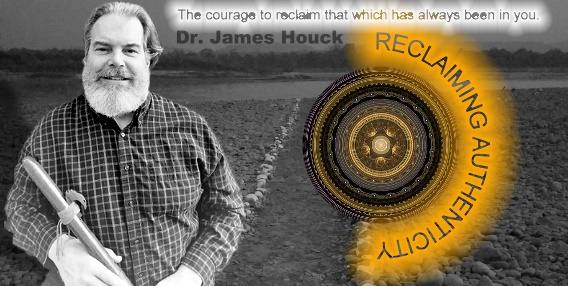

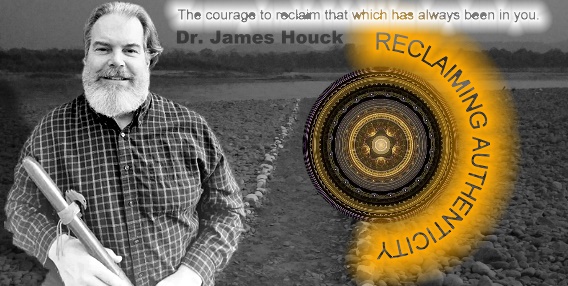
Reclaiming Authenticity with James Houck PhD, LPC, CCTP
Beyond the Mind’s Knots: Healing Wounds, Transforming Thought, and Remembering the Soul
Reclaiming Authenticity
Support my show
$5.99/mo or $9.99/mo
Click HERE
SUBSCRIBE TO TALK SHOW
A Subscription is NOT REQUIRED to listen to my shows,
but it is greatly appreciated!
Reclaiming Authenticity: The courage to reclaim that which has always been in you.
No matter who we are, where we were born, and into what family we were placed, ours is a world full of relationships. Indeed, we are social beings who spend our lives making sense of our world by trying to find our place in the world. As social beings, it is often within the context of relationships that we experience tremendous pain and suffering. From overt acts of betrayal and cruelty that someone may have inflicted against us or vice versa, to simply being in the wrong place at the wrong time, many people bear the scars of physical, psychological, emotional, and spiritual wounds. And yet ironically, just as we experience our woundedness in relationships, it is also within the context of healthy relationships that we find our healing and authenticity. The difficulty, then, is often finding the courage to discover that which has always been in you.
For over 25 years, Dr. James Houck has been helping people discover their authentic selves by integrating spirituality into their mental and emotional health. As people are able to integrate these disciplines, they often discover core issues that have been keeping them wounded in relationships.
Speaker Identification
Speaker 1 – Announcer / Prerecorded Promo Voice. Identified by the formal host introductions at the beginning and after the break, and by the closing station promotion.
Speaker 2 – Host, identified in the transcript as Dr. James Halk. He repeatedly identifies himself as the host and delivers the full discussion.
Speaker 1 – Announcer / Prerecorded Promo Voice:
And now, with over 25 years of experience integrating mental health and spirituality, the author of Reclaiming Authenticity, When Ancestors Weep, and Redeeming the Bereaved, here is Dr. James Halk.
Speaker 2 – Host:
Good evening, everyone, or good afternoon, or wherever you are in the world currently. Welcome to Reclaiming Authenticity, helping you reclaim that which has always been in you.
In fact, if you haven’t been listening for a while, or this is your first time, excellent, excellent. You will soon discover that I take this one step further, and I actually help people remember who you have always been and always are. It’s just a nice take on eternity, let’s just say, and on who we are as souls.
Based on our time-space continuum, we try to push the soul into that framework, but the soul is so vast, and it is not limited to any time or space. So it’s about the vastness and eternal nature of our soul: being able to reclaim that which has not only always been, but helping you remember who you have always been and are, and how you live that out in today’s world. That, in a nutshell, is what Reclaiming Authenticity is all about.
At any rate, I am very happy to be with you here tonight and every other Wednesday at 9 p.m. Eastern Standard Time, 6 p.m. Pacific Standard Time. If you’re tuning in for the very first time, I am so glad. Welcome to the show. I hope you will call in after the break and just say hello: “Hey, this is my first time,” or, if you have any questions, I would love to hear them.
If you’ve been listening to me for some time, you know that each and every one of these broadcasts really emphasizes integrating our spirituality and our mental health. I talk with more people who say this fits nicely, like a hand in a glove: our spirituality and our mental health. We often struggle with mental-health issues, emotional-health issues, and so forth, but where does our spirituality intersect? Where are we challenged in what we believe or what we experience, and how do we come to terms with that?
I am Dr. James Halk, and if you’d like more information about me, or if you just want to leave me your comments about tonight’s show, I invite you to visit the website: www.bbsradio.com/reclaimingauthenticity. If you want to be part of the show, if you have questions, or if it’s your first time listening, just give me a shout-out. Call and say hello. That number is 888-627-6008. That’s 888-627-6008. I’ll be taking your calls after the break.
I also want to make everybody aware that these broadcasts are available in podcast form, so you can go back and listen again. You can go into the archives on the website and listen to previous shows. Just find the one you may have missed or want to hear again, pull it right up, and there you go. These podcasts are also available for download on iTunes, Audible, Spotify, and Amazon Music.
I wanted to begin tonight’s show by sharing a reading I came across by a professor and scientist named Baird Spalding, from Book Five of Life and Teachings of the Masters of the Far East. The particular chapter I came across, as I’ve been reading this book, is one that I really, really like. It is entitled “The Reality.”
What got me stuck on this particular chapter is that he starts off by writing, “The Hindu says, if God wished to hide, God would certainly choose humanity to hide in. That’s the last place they would look for God.” The trouble with the masses today is that they’re trying to become something that is already right within them. We search and seek everywhere outside ourselves for God. We attend countless lectures, meetings, and groups. We read innumerable books. We look for teachers, personalities, and leaders when God is always right within.
If humanity would let go of the trying and accept that they are a soul, they would soon become aware of the reality that God is always right within. In fact, it has been said that humanity’s greatest mistake is trying to become God instead of simply being. That’s a good point the author is making: just simply be.
But with our experiences, our woundedness, and so forth, we want to make it more difficult than it is. At times, depending on our woundedness, we don’t know how to be, or maybe we’re afraid of being because it was misunderstood and we suffered for it. We need to remember who we are and realize that we can simply be while also taking care of our wounds.
He is not the only one telling this truth. I certainly believe this, and one of my teachers, Joseph Raill, Beautiful Painted Arrow, also echoes this sentiment. From a Native American perspective, in his book Becoming Who You Are, he writes, in essence: How do you know who you are? You might think this is a silly question. Of course you know who you are. You might say, “I know who I am. I am my name. I am a boy, or I’m a girl. I am this many years old. I know who my parents are. I know who my grandparents are, and maybe even I know my great-grandparents. I know the number of the street I live on and the name of the town I live in. I know the country I live in. I know the color of my skin. I know who I am. I am me.”
Well, that’s all very good and true, the writer says, but still, do you know who you really, really are? Who are you beyond the color of your skin, beyond the place that you live, or even beyond your name, beyond the names of your parents, brothers, sisters, grandparents, aunts, uncles, and cousins?
Becoming who you are means that you do not one day become you. Rather, you are always in a state of becoming. You are always learning. You are always discovering who you are, like pages of a book opening or a sprouting seed that grows, transforming into new leaves and flowers. Knowing who you are is a lifelong journey, a journey that is both old and new.
That is certainly true. Joseph Raill’s words remind us that we don’t have to go out and search for who we are because, yes, it is right within us. But how many times do we convince ourselves, “Well, there has to be more to it than that”?
When I came across that particular paragraph from the writer, the first thing I said was, “Well, good. That is all true. But what about our wounds?” If we look inward for God, what do we do when we run into our woundedness? Do these wounds keep us from seeing God and seeing ourselves as souls?
Ironically, we often receive our deepest emotional, psychological, physical, and spiritual woundedness as a result of being in relationships with one another. That is the common denominator. Whether the wounding was intentional or accidental, what matters is what we do afterward. Once we have been wounded, what do we do? And what do we do if we have wounded another person? What we do afterward will either reinforce these wounds or help us find a way to heal. Can we actually be free from these burdens? Yes.
To find healing, we need to remember who we are and embrace who we truly are as souls, so that we can build healthier relationships and heal from damaged emotions, wounded spirits, and a lack of emotional and psychological support.
The danger is, according to another author, Andrew Park, in his book From Hurt to Healing, that when people’s deep wounds remain unhealed, they become “vortexes of troubled waters,” intertwined with their own instinct for survival and fear. Many victims instinctively, his word, synchronize their wavelengths with the people who have hurt them. They internalize their perpetrators’ images and values and externalize them in treating their own victims.
In other words, hurt people hurt people; wounded people wound people. In short, he writes, they see the world through their oppressor’s eyes. Seeing it again through their own eyes begins the healing process.
It is important, on one hand, to remember who we are. But the way we continue discovering who we are throughout our lives, growing in understanding, is by searching out, dealing with, and healing from our wounds. It also means healing from cognitive distortions we may have picked up over life: what we tell ourselves about what happened to us, our prejudices, our assumptions. All of that needs to be healed in order for us to grow in awareness and embrace ourselves as souls.
Those things can cloud our vision, but the more we heal from them, the more we embrace the vastness of who we truly are. This really matters when considering who we are because, although we may have similar gifts, skills, talents, strengths, and character traits, no two people express them identically. Each of us has a “thisness” about us that cannot be duplicated.
Maybe when you were a kid, you tried to imitate the way a certain hero did things, but nobody can duplicate us, and we cannot duplicate them. Within us lies what the medieval scholar John Duns Scotus referred to as haecceitas. It is a “thisness,” a uniqueness, if you will.
I love explaining this to the kids and teenagers I counsel. I say, “Look at your thumbprint.” It is something we all have, but just as no two thumbprints are alike, everybody has their own thisness, a uniqueness, a haecceitas. Whatever you do in this life, you kind of put your fingerprints all over it, almost to say, “I was there,” in very positive, wonderful settings and perhaps also in things we are not so proud of.
We have that giftedness. We have those skills, talents, strengths, and character traits. The very best of who we are comes out when we also embrace this haecceitas, because we are all souls, but all souls have a uniqueness to them. This is why it matters to recognize, embrace, and learn to live out who we truly are.
Unfortunately, millions of people never have a chance to discover their uniqueness because society still tells us to look in all the wrong places. We’re told to look for that thisness, that haecceitas, in the externals of life, or to find our uniqueness in the accumulation of things, our accomplishments, or our accolades. But our thisness, our uniqueness, our haecceitas, is not found there. Instead, the full expression of who we are is found in deep realization and the full experience of ourselves as soul.
What often presents a huge challenge to this realization is when we have experienced, or are experiencing, very deep physical, emotional, psychological, and even spiritual wounds in and through relationships. We go through life and live, and because of unpleasant experiences, we may feel, “I need to hide my gift. I don’t really want anybody to see it, because I was exploited the last time and I got hurt.”
We may give up and give in to the so-called labels and stereotypes that others want us to be for them so that they feel good about themselves. That is not truly who we are, but sometimes we give in to it. Or we might push that giftedness way, way, way down so that others cannot see it. In fact, if we keep pushing it down within ourselves, we lose track of it as well.
Maybe you were told that you would never amount to anything, or you heard some other voice telling you there was really nothing special about you. Those are lies. They are not true, but we take them as true because we don’t really know who we are.
Ironically, the relationships in which this wounding occurs just might be within our own families. What about your coworkers? What about the institutions where we work and with which we are associated? What about friendships? We assume that the people who are supposed to love us the most just might be the ones who hurt us the most because of their unhealed wounds and underdeveloped selves.
But all is not lost, because there is power in seeking healing, inner transformation, and the direct realization of ourselves as souls. It is not just in the mind. It is a realization that there is more to us than what we have become so far, and that brings about transformation little by little over time.
The beauty of that is that when we transform, we are also going to transform others, but we are going to transform others through our presence, our grace, and our understanding. First, the weightier matters of self-forgiveness, kindness, and being compassionate with ourselves begin with how we treat ourselves. Am I gentle with myself? Do I forgive myself? Can I forgive and let go of the things I have said, or how I hurt somebody with my actions or even my thoughts?
When we are compassionate with ourselves, we can then be more compassionate with others. When we are forgiving of ourselves, we can be more forgiving of others. When we are able to live in gratitude with ourselves, we discover how this opens our hearts to see and live in gratitude with others.
And when we are truly able to know ourselves as a soul, when you know that you know that you know, nobody is going to convince you otherwise. You live from your soul. That really opens us up to understand the potential in others to see themselves as souls.
Transformation, first and foremost, has to begin with us. This is what Reclaiming Authenticity is all about. It really can be summed up in one word. Say it with me, people: namaste. I love this rough translation: because I see myself as a soul of light, this allows me to greet your lighted soul for who you are, even if you don’t see it in yourself. I love that. I hope I’m not taking too much liberty with the translation, but it fits.
Welcome to tonight’s show. That was just a warm-up, folks. This show is certainly entitled “Smashing Coconuts: Breaking Through the Obstacles of the Mind.”
One of the things I run into most when counseling others is the need to let go of, say, a former concept, philosophy, expectation, or even an assumption that no longer serves us. It could be something as simple as “stinking thinking” or cognitive distortion. Often, what we think isn’t real.
If you’re not familiar with the term “stinking thinking,” it is used in 12-step programs, often to refer to negative patterns of thought that actually fuel the fire of addiction. These thoughts sabotage our ability to see the world clearly as well as take responsibility for our actions.
A lot of the time, the process of healing involves becoming aware of these inaccurate but very personal beliefs that no longer serve us in healthy ways. For example, we might walk into a room full of people talking and laughing, but the minute they see us, everything becomes quiet, except for a few crickets we hear in the corner. Immediately, we might assume, “Everybody was talking about me,” or, “They were making fun of me,” or, “Did I do something wrong? Why am I not in on the joke?”
Or consider this example. Maybe you get a six-month or yearly evaluation, and your boss or supervisor says, “Pam, you’re a great employee. You’re on time. You do quality work. In fact, I wish I had ten more employees like you. However, there’s just this one area over here we would like to see you improve.” Pam comes away thinking she is the worst employee there ever was because all she can focus on is that one area that was criticized, not the rest of her outstanding work.
Have you ever had knots in your shoelaces, or had your phone or iPad charging cords get all knotted up and need untangling? It’s a total nightmare when that happens. These cognitive distortions are like those knots, or knots in a cloth, that need to be untangled. They trip us up, and we get all knotted up, so to speak.
We often believe that what we see and hear is all there is to see and hear, and that simply is not the case. To see things as they truly are, we have to be able to dissolve the delusions in our minds, especially when it comes to understanding and embracing ourselves and others as living souls.
One of my favorite teachings came from my Indian teacher, who taught me about the Vedanta concept of laya, which means to dissolve, especially to dissolve the delusions of the mind and our perceptions of our experiences. To drive home this lesson, he stated that the mind thinks what it sees, hears, tastes, touches, and smells is the truth. But these are experiences that come from our senses, and when it comes to matters of the soul, they simply cannot reveal the truth of our existence because they are limited.
Think about it this way. Suppose we walk by a demolition site where workers are dismantling a house. Once the house has been demolished, they are left with, let’s say, bricks. Now suppose the workers dismantle even the bricks. What are they left with? Clay. The original substance of the house is clay, shaped in the form of bricks and so forth.
To the mind, the house and the bricks have been dismantled and are no longer objects to be seen, heard, held, or whatever, because they have returned to their basic substance: clay. All things can be understood as once having existed in their original substance. The key to dissolving the delusion in our minds that what we can see, hear, feel, taste, and smell is all that is real is to recognize an object’s original state or substance.
One of my favorite books is definitely a scholarly read. It uses Winnie-the-Pooh and the Taoist principle of pu, often translated through the image of the “uncarved block,” meaning that things in their original state carry their own natural energy and power. In other words, when you manipulate that thing, or let’s say we carve the block, you may tend to think, “Whoa, I’ve changed its power. I’ve changed its energy.” Not so.
Through those amusing stories of Winnie-the-Pooh, Pooh Bear embodies this uncarved block because he is simple-minded. He really doesn’t think too much about what life means or how to change the world to suit his desires. He simply exists in the world, and he takes life for what it is.
Yes, I get it. Once we carve or cut the wood, we can make all kinds of beautiful items from it. We can make tables, bed frames, coffee tables, dressers, wardrobes, and more. All these items have one thing in common: they are all made out of wood.
Let’s bring this idea of understanding or seeing things as their original substance into our world, into the world of humanity. At our base substance, our existence, we are souls. We are not the bodies that we see when we look into the mirror. Yes, we can see ourselves in the mirror, but that is not really who we are. We have a body that needs care, food, rest, and medicine when it gets sick or diseased, but at the end of the day, we are so much more than that because we are souls.
I’m convinced that perhaps all of humanity’s problems come from not being able to see ourselves and others as souls. Instead, we see just the opposite. We may tend to focus on the externals: skin, gender, age, height, weight, and all that stuff. These externals have created “isms” in our lives: ageism, sexism, and so forth.
But when we dissolve this illusion of the mind, we can begin to understand one another in a whole new way. The pain in our lives is real. The wounds we feel are real. But the mind likes to come in with the ego and take that reality and create a distortion, an illusion, if you will. That creates more suffering when the mind adds hopelessness, despair, or victimization. We start to believe that the illusion is reality when it is not.
I would really love to hear what’s on your heart about this subject. In the second half of the show, we’re going to get into smashing coconuts, because this ties in with how we change our perceptions and how we transform the energy of the mind. If you want to call in, I’ll give you that number one more time: 888-627-6008. I’ll be taking your calls after this break.
Again, you are listening to Reclaiming Authenticity, and I am your host, Dr. James Halk. I’ll be back with you in one minute.
Speaker 1 – Announcer / Prerecorded Promo Voice:
And now, with over 25 years of experience integrating mental health and spirituality, the author of Reclaiming Authenticity, When Ancestors Weep, and Redeeming the Bereaved, here is Dr. James Halk.
Speaker 2 – Host:
Well, that was the intro to this show, but no big deal. [Unclear transition in source: “But the hustler breaks a break.”]
All right, welcome back, everybody. I’m Dr. James Halk, and you’re listening to Reclaiming Authenticity.
In the first half of this show tonight, I was really talking about how I learned of a spiritual practice observed in India when people want to break through the obstacles in their minds: distorted thinking, unrealistic expectations, living in illusion from the mind’s interpretation, and so forth. We all have done these things.
Here’s the spiritual practice. In order to break through the obstacles in their minds, people there often smash coconuts to break through the limitations of the mind’s ego. Breaking coconuts is often associated with breaking the hard exterior of our egos and realizing a higher-dimensional energy within ourselves.
In Hindu mythology, breaking coconuts reminds people that Ganesh, the elephant-headed deity, provides protection and is considered the remover of obstacles from one’s spiritual path. So this smashing symbolizes how often our thoughts sabotage us into believing we cannot be something greater than what we have become so far.
Yes, it takes hard work and awareness to unlearn old negative patterns of distorted thinking and to relearn healthier perspectives of who we truly are as that soul. Breaking through the mind’s obstacles is essential, whether or not you have a coconut.
But what are these distortions that we really need to break through? These distortions limit us and limit our understanding. Whether positive or negative, what is limited is not eternal; it can be destroyed. Like destroying the house, we think, “Oh, the house is gone,” but we don’t see the clay from which the bricks were made that formed the house. So there is a real distinction between that which takes on form and that which is formless: the soul.
Breaking through the mind’s obstacles is essential because where our thoughts go, energy flows. Quite often, our negative or victimized thoughts are where emotional and psychological self-inflicted wounds tend to thrive.
Here’s a quick example. We think that if we say something harmful or do something harmful, it is never going to come back on us. We did it when we were out in another state, no harm, no foul. Well, let’s not kid ourselves, because it does come back on us. Every negative thought, every negative thing we say, and every negative thing we do comes back to us and often reinforces those wounded parts of ourselves, keeping us bound as victims.
We have many ways to understand this one concept. We may say, “What goes around comes around,” or, “What you sow, you’re going to reap.” Even the understanding of karma is another way to understand that, no matter how you say it, humanity lives in an echo. What goes out from us is going to return to us, just like we hear the sound of our own voice echoing back in our ears when we are in a tunnel or cave, because everything we think, say, and do is energy.
Unless we transform that energy through healing our own wounds, it is going to come back to us exactly as it went out from us. We can’t destroy energy. That’s physics 101, but we can transform it. That’s what physics teaches us on a more practical level: we can transform that energy. We can transform the negative energy. It begins with healing ourselves.
To get to the heart of the matter, so to speak—sorry, I couldn’t resist that pun—we can find healing by asking ourselves, “Who am I, really?” Going back to the reading from Joseph Raill: Who am I? Underneath all the external facades, beneath all the pretense and outward appearances, who are we at our core?
Our thoughts are at the very focus of this question of who I am and who others are. My teacher often says that most people think any undesirable situation in their life is due to the behaviors of others. In other words, most people don’t want to accept responsibility for their own thoughts, words, or actions. But one’s perspective is the result of the mind’s interpretation of experiences.
Now we’re coming back to the mind. This is why what we see, hear, feel, taste, touch, and smell is interpreted by the mind. But it is not reality itself; it is an interpretation of that which is real. When there is something we don’t want to take responsibility for, we may say, “Well, that’s because somebody else did it.” But that is the mind’s interpretation. Do you hear the difference?
Circling back, these cognitive distortions, unrealistic expectations, and assumptions often result from absorbing negative thoughts in any given hour, day, month, or year. For example, if you think you’re weak, you’re going to become weak. If you think you are a victim, then you’re going to become a victim. But if you think yourself strong, then you’re going to be strong.
Unfortunately, many people have accepted their inner weakness to the point that they have attached themselves to it. They don’t want to come out of their self-created illusions. That is all the more reason we have to be careful with our thoughts, words, and deeds.
Here is an example going back to the 1970s. Two researchers, Watson and Crick—C-R-I-C-K—did quite a study. They were two researchers, scientists, let’s just say, and they showed that thoughts have energy. They showed how thoughts and energy can change.
For example, let’s say you become aware of a single thought. Hold that single thought. Watson and Crick said that a single thought—forget whether it is good or bad, because that is the mind interpreting it—can generate about four volts of energy, not to mention everything else in our brains and energy signals. Four volts of energy per single thought.
Now compare that to a AA battery, which is about 1.5 volts, just to give it some scale. When we speak our thoughts, taking that one thought that has four volts of energy, that energy jumps from four volts to about 40 volts, or ten times the amount. That’s just taking a single thought and speaking on it. See how our brains are acting here?
Again, let’s put this into some context or perspective. The amount of voltage required to start a car from its battery is about 12.6 volts, give or take. Basically, our brains run on chemical energy from adenosine triphosphate, or ATP. Just like other parts of the body, ATP does many things in the brain, and apparently one of its biggest jobs is to run molecular pumps that simultaneously pump sodium out of the neuron and potassium in, creating and maintaining a chemical gradient across the neuron cell membrane.
In other words, energy is being exchanged, changed, and transformed. Staying with this notion that our thoughts are energy, if we speak a single thought, the energy jumps ten times. If we take that single thought and write it down on paper, that amount of energy jumps even higher, 50 times more. This is because we have engaged the head, the heart, and the hand.
Head, heart, hand. In other words: thought, word, and deed. That is a significant amount of energy, and this applies not only to negative thoughts but also to positive thoughts.
The more we do this exercise, the more aware we become of the thought patterns, words, and behaviors we communicate in our relationships. Engage the head, heart, and hand: thought, word, and deed.
This is why I still encourage the people I counsel to journal. As we journal, it starts the flow of that energy and transformation because those thoughts are not just bouncing around inside our heads. We are putting them down on paper. We see them. We are talking in our heads about the words we are writing.
The more we journal, if you journal a single thought—something that is disturbing you, or even something very positive, like, “I am a soul. My soul is vast. My soul is limitless. My soul goes way beyond a time-space continuum. I see the souls of others as I see the soul that I am”—let’s just say you start with that.
You write that out for 21 days, and you have not only developed a habit, but now that energy gets transformed in that single thought. The subconscious picks it up and runs with it. In other words, the subconscious is like, “Okay, thank you very much. I got it.”
After those three weeks, after those 21 days, it is in the subconscious, which will be able to recall it, and it is going to start change and transformation in us. The same is true if we take a negative thought, bitterness, or victimization—something with which we tear ourselves down or tear somebody else down. The same thing is going to happen.
If we write that out for 21 days, it goes into our subconscious as well and can do a lot of damage. We naturally begin to live out that which we have, let’s say, programmed into our subconscious.
But that does not mean all is lost. We can certainly undo and unlearn those negative thoughts about ourselves. Again, start with journaling. Write it down and give it even more context. Do that every day for 21 days, and that is going to start the process.
The more you commit to journaling that one positive thought, the longer you do it, the more it becomes ingrained in you. It is actually going to start to show up, I would say, even down to the cellular level, where it becomes so much a part of us that the change and transformation we discover become inevitable.
It all starts with journaling. And no, you can’t sit at your computer and type this out. You have to engage the mechanism of writing on a tablet, with a pencil or pen, or whatever, but you have to write it out. I don’t care if you use cursive. I don’t care if you print. You have to write it out. Again, engage the head, the heart, and the hand.
By looking at ourselves more closely and examining our motives, assumptions, and limited perspectives, we just might realize the first steps toward lasting transformation. We can acknowledge that the illusions of oppression and limited understandings actually begin with our minds and our limited minds’ interpretations.
In other words, we might be in a physical prison, but if we find our true nature—that we are eternal souls—then no amount of earthly limitation can convince us that we are limited, inadequate, or restricted. The body might be in a prison, but our souls are free. We’re free.
This is especially true when we transform our thoughts from being a victim and staying in victimhood to being someone who has healed from the past and now walks in wholeness.
To close out this broadcast, I want to read a quote. This is something Nelson Mandela quoted in his inaugural speech, way back in 1994. You might also recognize this poem as something Marianne Williamson used in her book A Return to Love.
She writes: “Our deepest fear is not that we are inadequate. Our deepest fear is that we are more powerful beyond measure. It’s our light, not our darkness, that most frightens us. We ask ourselves, well, who am I to be brilliant, gorgeous, talented, or fabulous? Well, actually, who are you not to be? You are a child of God, and your playing small does not serve this world. There’s nothing enlightening about shrinking so that other people won’t feel insecure or unsure around you. We were born to make manifest the glory of God that is within us. It’s not just in some of us. It is in everyone. And as we let our own light shine, we consciously give other people permission to do the