
Raising Expectations, June 29, 2026


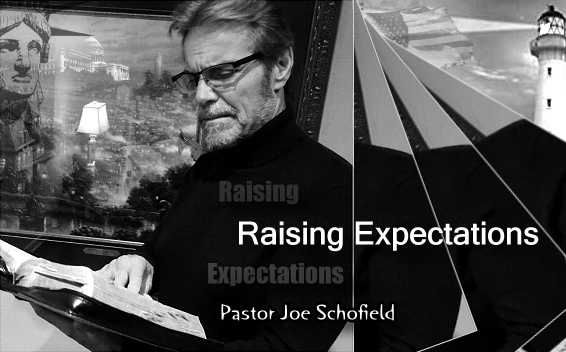
Raising Expectations with Pastor Joe Schofield, Melba Schofield, Stefanie Thayer, Dr. Craig Thayer, Dr. Paul Hall, and Ron Greer
America's 250th Anniversary, insights into the courageous Founding Fathers, Faith, Freedom, and the Duty to Keep the Republic Alive
Guest, Pastor Will Hobbs
Friends,
Pastor Will Hobbs is back with us on “Raising Expectations!”
“America's 250th” has arrived! Join us this Monday evening for a powerful discussion with Pastor Will Hobbs on 'Raising Expectations!' as he shares transformative insights on America's founding and the courageous individuals who shaped our nation's history.
Amidst today's challenges, let's stand strong in faith, gratitude, and trust in God's unwavering presence, power, love and faithfulness that guides us. His plans unfold with purpose, bringing Him glory, us guidance, and demonstrating His love…Experience His peace that transcends understanding. John 14:27!
Pastor Will and the 'Raising Expectations' team invite you to pray ahead, explore the facts, and discern your role in God's plans for your life and our nation.
Celebrate America 250 and express thanks for God's blessings!
A Fourth of July Conversation Rooted in Faith
In this episode of Raising Expectations, Pastor Joe Schofield, Melba Schofield, Dr. Paul Hall, Dr. Craig Thayer, and Ron Greer welcome Pastor Hill Hobbs of Kelview Baptist Church in Midland, Texas, for a Fourth of July-themed discussion about America’s founding, Christian faith, civic responsibility, and the spiritual meaning they attach to the nation’s 250-year legacy. Pastor Joe opens by reaffirming the show’s Christian foundation and introduces the team before welcoming Pastor Hill, who frames Independence Day not merely as a civic celebration but as a holiday connected to gratitude, biblical principles, and the opportunity to live out faith in public life.
Lives, Fortunes, Sacred Honor, and the Cost of Independence
Pastor Hill reflects on the Declaration of Independence, emphasizing the risk taken by the signers when they pledged their lives, fortunes, and sacred honor. He notes that many were willing to face death, loss of wealth, and public disgrace if the Revolution failed. He also discusses the timing of the Declaration’s approval, announcement, and signing, noting that July 4 became the public date of celebration even though the approval and signing unfolded across multiple dates. For Hill, the willingness of the founders to risk everything reveals the seriousness of the moment and the spiritual weight he believes they attached to America’s beginning.
The Founders, Prayer, and Christian Influence
A major theme of the episode is the team’s argument that America’s founding was deeply shaped by Christian thought, preaching, prayer, and biblical principles. Pastor Hill cites John Quincy Adams and John Adams to connect Independence Day with gratitude to God, while Ron Greer discusses Benjamin Franklin’s call for prayer during the founding debates. The group also discusses early congressional prayer, Bible study, the influence of pastors, George Whitefield, the Black Robe Regiment, and the way sermons helped shape the language and principles behind the Declaration of Independence. The discussion presents the founding not as perfect, but as intentionally aimed toward Christian moral order.
Slavery, Jefferson’s Draft, and the Imperfect Union
The conversation turns to slavery as one of the great contradictions and sins in American history. Pastor Hill discusses Thomas Jefferson’s original draft of the Declaration of Independence, which included a strong grievance against the king over the slave trade, a section that did not survive into the final version. Dr. Craig Thayer and Ron Greer then discuss the economic and social complications surrounding slavery at the time, while stressing that context is not the same as justification. Ron also brings up Anthony Johnson and John Casor as examples of the complexity of colonial slavery history. Pastor Hill grounds the discussion in Proverbs 14:34, saying righteousness exalts a nation while sin brings reproach.
History, Churches, and the Responsibility to Disciple
The panel repeatedly argues that America’s current cultural confusion is connected to historical ignorance and the church’s failure to disciple effectively. Pastor Joe contrasts the American Revolution with the French Revolution, highlighting George Washington’s refusal to become king as an example of servant leadership. Ron Greer says that Christians must return to the Great Commission, not merely sing, pray, or attend services, but actively make disciples. Pastor Hill adds that what happens in the home is more important than what happens in the White House, because discipleship, character, and cultural renewal begin with families, churches, and one person influencing another.
Young Men, Revival, and Hope for the Next Generation
The episode also looks at younger generations with a mixture of concern and hope. Melba reflects on parenting, children’s ministry, prayer for children, and the pain of watching younger adults drift from biblical values. Pastor Hill responds that social media can distort reality and that there are signs of spiritual hunger among younger people. Dr. Craig and Ron discuss young men returning to church, conservative campus movements, Charlie Kirk events, Christian schools, classical academies, and the renewed interest among some youth in meaning, truth, and faith. The panel sees these signs as evidence that the future is not settled and that revival or awakening remains possible.
Duty, Responsibility, and Results That Belong to God
As the episode closes, Pastor Hill tells the story of John Quincy Adams continuing to fight slavery after serving as president, even when he did not live to see the cause fulfilled. He summarizes the lesson with the idea that duty and responsibility belong to the believer, while results belong to God. Ron urges listeners to study American history and recommit to making disciples. Dr. Craig reminds listeners to remember why America is free, and Dr. Paul emphasizes the responsibility to guard and share that freedom. Pastor Joe closes in prayer, thanking God for the sacrifice of America’s founders and asking for boldness, righteousness, love, and purpose as the nation celebrates its birthday.
Raising Expectations
Donation-Gift procedure: Raising Expectations
1. Go to website: bbsradio.com/RaisingExpectations and click on the donation button
2. Fill in CARD ONLY - Billing Address
3. Do not create a PayPal account ( turn OFF )
4. It will then slide in a DONATE NOW button
5. Will send you a receipt!
Raising Expectations is a that looks at the past, giving greater insight into the present, and may produce authentic anticipation, raising expectations for the future! Joe will discuss major issues that confront us on national, political, and worldwide events, to the simple things that we think about and make unconscious personal decisions every day!
Freedom, Family, Finances, Faith, along with a myriad of other topics and all the intricacies involved in each of them...from a personal community perspective, that makes up what we call "Your Life in America Today!"
Informative, inclusive, intentional, interesting, and always encouraging. Each program will raise our expectations individually. We may begin looking at the future in a positive way, happy to try new ideas and methods with clear hopes of how things can change for the better in the future. Feeling more content, one topic at a time! So, let not your hearts be troubled...we can go from good, to better, to best in the future TOGETHER!
Speaker Identification
Speaker 1 - Announcer / Theme Voice
Identified from the opening and closing theme segments.
Speaker 2 - Pastor Joe Schofield
Identified from the user's confirmed spelling and the host's introduction and closing remarks.
Speaker 3 - Melba Schofield
Identified from the user's confirmed spelling and references to Pastor Joe's wife and co-host.
Speaker 4 - Dr. Paul Hall
Identified from the user's confirmed spelling and the host's introduction of the West Coast panelist.
Speaker 5 - Dr. Craig Thayer
Identified from the user's confirmed spelling and the host's introduction of the Georgia-based panelist. Stefanie Thayer is named in the program introduction but does not appear to speak in this transcript.
Speaker 6 - Ron Greer
Identified from the user's confirmed spelling and the host's introduction of the McKinney, Texas panelist.
Speaker 7 - Pastor Hill Hobbs
Identified from the user's confirmed spelling of the guest's name. The automated transcript repeatedly rendered the guest's name as “Will,” but this has been corrected to Pastor Hill Hobbs according to the supplied spelling.
Speaker 1 - Announcer / Theme Voice:
Wake up the heart, wake up the dream. There is more to the story than what we have seen. Faith in the fire, hope in the fight. Families rising, stepping into the light.
Raising Expectations. Lift your eyes, lift your voice. Raising Expectations. Faith and freedom still have a choice.
Here are Pastor Joe and Melba Schofield, with wisdom clear and strong, with Stefanie Thayer and Dr. Craig Thayer helping move the hope along. Dr. Paul Hall and Ron Greer, standing for truth and grace. This is your life in America today, with courage in this place.
Raising Expectations. Good to better, best together. Raising Expectations. Faith that carries on forever.
Speaker 2 - Pastor Joe Schofield:
Hey, ladies and gentlemen, welcome back to Raising Expectations. It is Monday night, and we are so glad that you tuned in tonight. We are excited. There are so many great things happening. Tonight's show is going to be a real home run again.
We know how much you appreciate Pastor Hill Hobbs. He is going to be with us, and it is going to be exciting.
For all of you who may be tuning in for the first time, we are Raising Expectations, and we are all Christians. We believe Jesus Christ is the Son of God, and that is why we love expectations, because He has promised us a life filled with expectation as we commit our lives to Him. He has such a plan. He loved us enough to die on the cross for us. He rose from the dead on the third day, and He is coming again to get us when the time is right.
We know, when we die, where we are going. It is a great feeling to be a born-again Christian and to know Jesus is our Savior. We hope you know Him. We pray that as many of you share with us, your expectations continue to rise as you put your faith and trust in Him.
The neat thing is, the longer it takes, the greater the blessing. So never be discouraged, because God is always at work in your life. Somebody might say, “Why is that, Joe?” It is so easy. He just loves you. He loves you more than you can ever imagine.
Speaking of love, I want to share once again that the guys and gals on the team who have been coming with you each week bless my life continually. The lady right here on my right is my wife, Melba, and she is a great blessing to me. I know she is a blessing to all of you too. She is from the great state of Texas. We are together every week with you, and she is a blessing in my life. She has learned to receive it.
The folks on the team, I have known for six years. They have blessed my life since we all came together.
If you go to the West Coast very quickly, we have Dr. Paul Hall. He is there in Lompoc, California. Paul is a retired pastor, a counselor, a leader, and a man who walks in the steps God prepares every day. The people who follow that way are blessed because he is there. The love of God just comes out of this man to everybody who knows him. He has been a brother in Christ for so many years. What a blessing he is. Good to see you, Paul. Are you doing good?
Speaker 4 - Dr. Paul Hall:
Thanks, Joe. Good to be here.
Speaker 2 - Pastor Joe Schofield:
We are joined together. We go to the East Coast, actually the southeastern part of the country. North Georgia is just north of Atlanta. We have Dr. Craig and Stefanie Thayer. Stefanie is not there tonight, but Dr. Craig Thayer is.
Dr. Craig is an incredible man. He has written a great book, as you know, called Saved, which speaks about God working in his life as a trauma surgeon for many years. He and Stefanie have done missions. He has helped people understand healing and surgery, and God uses his hands. As he says, he prays every time. It is really great to see him. He is a brother in Christ. He is somebody very special. Both of them bless your life and bless our lives. Good to see you, Craig. How are you doing?
Speaker 5 - Dr. Craig Thayer:
Great to be here, and I am doing great. Thank you.
Speaker 2 - Pastor Joe Schofield:
Amen. Now we will move back to the center of the nation to pick up the rest of the team. In the great Dallas-Fort Worth Metroplex, you find Pastor Ron Greer in McKinney, Texas. Ron is a good friend. He is one of our favorite pastors in our state and anywhere, as far as we are concerned.
We love the way Ron loves the Lord. He has come out of his shell, and he is just wide open now. He used to be very shy, but now he is great. He is a great dad, and he is a blessing. He is so much fun to get together with, and he loves the Lord. He works with Men in the Mirror out of Florida, and he has an area in Texas helping men become godly men, understand where their troubles are in life, and lead them to Jesus Christ. It is tremendous.
I love these guys too. They bless my life each and every week. Sometimes I find myself going down the road in the middle of the day, and something will come up. I will look at Melba and say, “I wonder what Craig would think of this,” or, “I wonder what Ron or Paul would think of something like this.” I bet you will too as you stick with this program.
Tonight we have something really special coming for you. We have Pastor Hill Hobbs from Kelview Baptist Church in Midland, Texas, out there in oil country. He and his precious wife, Lauren, and their beautiful daughters are such a blessing. I had the privilege of working with Hill and the privilege of marrying this couple, and now I get the privilege of sharing with Melba and being blessed by them over and over, watching God work in their lives and ministry.
I hope you check on our public-relations things during the week. Many of you have commented on the different platforms about BBS Radio. We love BBS Radio. Our website is bbsradio.com forward slash raising expectations. That is part of this great company that two brothers put together years ago, and TJ is our engineer. He is just the best. Don and Doug, you just do not find them any better. They put together an incredible worldwide network of broadcasting, radio, and TV.
I hope you will be looking at our things in the days coming up, because they are changing things now and it is going to be exciting. We want to share that with you. Check my Instagram or Facebook, because I will be putting some things up again about them. They have a great message coming.
Pastor Hill, back in Midland, Texas, I know you are the best specialist in Midland, hands down. It is great to have you with us.
Speaker 3 - Melba Schofield:
I hope you have been reading about it. Maybe you want to share just a word about what he is doing. We have so many challenges before us as Christians and as leaders in our churches or organizations. We need to remember to stand firm in our faith and in God's unwavering presence. I do not go a minute a day without feeling His presence.
We need to remember to feel His power, His love, and more than anything else, His faithfulness to us. We need Him to help guide us, because He is the one in control. As Pastor Hill shares his heart tonight, he comes with all the experience God has led him through. That is most important. God has led him through everything he has been through.
Pastor Hill, as our audience and our team pray as we go into tonight's program, we pray that others who need to feel God's presence in their lives will understand what we are sharing. That is the only way you can do it. There are so many other thoughts, and if we watch the news today, it is amazing to me how Satan has really done his work. That is a fearful thing because so many are being influenced by that mindset. We know God is the only way.
So let us pray along with the team. Pray for Pastor Hill as he comes and shares with us. Pastor Hill, thank you for taking the time to be here with us.
Speaker 2 - Pastor Joe Schofield:
We are going to give you the welcome round of applause.
Speaker 1 - Announcer / Theme Voice:
Applause.
Speaker 2 - Pastor Joe Schofield:
We will get it down. I will get it down. We cannot wait to hear some of these things. We are thinking about what you shared, the people who founded this nation, what they did, and now I will pass the baton. Pastor Hill, welcome. We are excited to be believers. We are excited to be Americans. We are excited to be your friend. Good to see you, brother.
Speaker 7 - Pastor Hill Hobbs:
Good to be on here. Thank you all for having me.
I am a guest on the show tonight from Midland, although this photo is not from Midland. If you notice, there are trees in the background, so that is not native to here. We have some mesquite trees, and whatever we plant and water will hopefully survive. I have a beautiful Chinese pistache, but I am not far enough along to put water on it. So there you go.
What do we celebrate this July 4th? We celebrate something significant. It is huge. That weekend is coming up. Usually we go to my dad's ranch in Texas for the Fourth of July and celebrate with him. As long as there is not a burn ban, we bring fireworks and celebrate.
This time, I think we may do the fireworks a night early, because, being the 250th, the news channels will probably carry the amazing show that is going to happen. Knowing Trump, he is such a showboat anyway, right? He is going to have something huge going on. I thought it would be a crime to miss that. I do not care what your political persuasion is. You cannot miss that. So I think we may do fireworks a night early and then just sit and watch the shows. I think it is going to be pretty cool.
Speaker 2 - Pastor Joe Schofield:
Amen. Giant projection screen. There you go.
Speaker 7 - Pastor Hill Hobbs:
My dad has a big screen. I think it is not 85 inches, but maybe 65 or 75. It is pretty big.
Two hundred fifty years. If you think about that, no constitution, without being replaced or something similar, has lasted that long. I looked up the average constitution length. I want to say it is somewhere around 17 years. Some are much longer and some are much shorter, but they get replaced so often that it drives the average down. So 250 years is incredible for a constitution to last that long.
I do want to bring this conversation back to the hope we have in Jesus at the end, of course, but I want to start by saying, look at all we have to celebrate. Those 56 men, and actually more than that, some approved the Declaration of Independence on July 2 and did not make it to the signing. July 4 was the announcement of everything. The signing was not until August 2, except for Matthew Thornton, who signed it sometime later, I think in November. Most of the guys signed August 2.
Some who approved it did not get to sign it because they had already been called back to their states to serve in different capacities. Some who signed it were not there earlier on, because they were sent by their states a little later. So there were more than 56 involved, but 56 signers.
Think about what they risked and what they put on the line. They said, at the end of the document, that they were risking their lives, their fortunes, and their sacred honor. Their reputation. I think we can take that lightly today if we are not careful. But no, they would have been killed, probably hanged, if they had lost. They were committing treason in that sense. They put their fortunes, their money, and their wealth on the line, and many of them lost those things. They put their honor on the line. They were willing to risk it.
One of the biggest guys in the room, when the 56 signers were going up one at a time to sign the document, said to one of the smallest guys in the room, when he was up signing, I think it was Elbridge Gerry, though I cannot remember who the smallest guy was, “When we lose and they hang us, you are going to die forever. It is going to take you forever. I am going to die quick because I am big and I weigh a lot. I will last less than a minute. You are going to kick and dangle up there for a long time.” He was trying to lighten the mood, but it really was a very sobering event.
We honor them when they declared America a new nation under Christian principles. That is what we celebrate on July 4th.
I see this personally, and I will explain why. I see this as a spiritual holiday, not just a civic holiday. We do not worship at the altar of America. We worship at the foot of the cross. So let me make this connection.
John Quincy Adams, in a July 4th speech he gave in 1837, about 10 years before he died, said that next to the birthday of Jesus, July 4th was and should be the most celebrated holiday. He then goes on to give at least 11 Scripture references. He said the birthday of our nation was linked with the birthday of the Savior, and that the Declaration of Independence formed a leading event in the progress of the gospel being applied here in our country and through us.
He finishes his speech, which by the way had an insane word count. It would have taken the average person about two hours to get through it. He finishes by telling the audience that the fulfillment of the principles found in the Declaration of Independence would be exactly what Scripture prophesies. He lists them: good tidings to the meek, comfort to the brokenhearted, deliverance to the captives, and opening of the prison to those who are bound. He rattles off those Scriptures. He had them all in his head. Then he tells them to turn their faces and raise their hands in prayer to God. Not a deist. A deist would not pray and ask God to be active in his life. He asks God to quicken the time when we could see these principles applied completely.
What did he finish that two-hour speech saying? We want these biblical promises, which happen in different times and different ways - freeing the captives, lifting those who are downtrodden and depressed - we want to see that fulfillment here. Part of the application of these biblical principles is what we are seeing. I probably would not have wanted to sit through the whole two-hour speech, but I would have loved hearing that at the end.
Let me address the claim of idolatry. Some people do make an idol out of our nation, but most Christians do not. That is the accusation: “You make a god out of America,” or, “You are getting these two things confused. You should just focus on the gospel.”
Here is my response. The opportunity for my gratitude is not the object of my worship. The opportunity for my gratitude is July 4th and Independence Day and everything that means. That is not the same thing as the object of my worship.
Listen to what John Adams told his wife Abigail in a letter written July 3, 1776. They had already approved the Declaration, though the official day is July 4. He wrote several letters that day, and in one of them he talked about celebrating the Declaration of Independence. He said it ought to be commemorated as the day of deliverance by solemn acts of devotion to God Almighty. It ought to be solemnized with pomp and parade, with shows, games, sports, guns, bells, bonfires, and illuminations from one end of this continent to the other, from this time forward forevermore.
He said she would think him transported with enthusiasm, but he was not. He was well aware of the toil, blood, and treasure it would cost to maintain the declaration and support and defend these states. Yet through all the gloom, he could see the rays of ravishing light and glory. He could see that the end was more than worth all the means, and that posterity, future generations, would triumph in that day's transaction, even though they might rue it, which he trusted in God they would not.
I love that. I think he saw it clearly. He and his son, who gave the 1837 speech on July 4th, both saw it clearly. We worship our God. We are doing our best to apply His biblical principles in this nation. We hope that to be a blessing to our neighbors and to other nations. That is one great way to love your neighbor. It had a Christian forming and a Christian foundation. Perfect? No. But aimed in that direction with consistency? Yes.
I love it. I do not know what you guys are doing to celebrate July 4th, if you are traveling, staying home, or having illuminations. Can you do fireworks in your neighborhoods? Maybe you are not supposed to.
Speaker 2 - Pastor Joe Schofield:
We can set them soon. You can go out on the ground, lay them down, light the fuse, and retire quickly.
Speaker 7 - Pastor Hill Hobbs:
Can you do a tank?
Speaker 2 - Pastor Joe Schofield:
Yeah, you can do a tank.
Speaker 7 - Pastor Hill Hobbs:
There are gigantic, Costco-sized warehouses where you can go in and buy fireworks.
Speaker 2 - Pastor Joe Schofield:
In Tennessee, you can literally buy professional-grade, Disney World-style fireworks that shoot hundreds of feet up in the air and put them in your front yard. It is crazy.
Speaker 4 - Dr. Paul Hall:
Where I live, the fireworks show is what the citizens shoot off, not what the city does. I do not even know if the city has an official fireworks show, because we are afraid of fire in California. But people do it anyway.
Speaker 2 - Pastor Joe Schofield:
All over the valley. It is amazing.
Speaker 6 - Ron Greer:
To add to what you said, Benjamin Franklin was known as not being Christian. There was a point when they were discussing how to write and form and word things, and there was such chaos and division that he finally spoke and said this was so important that they needed to invoke God at the beginning of every meeting. The biggest argument then was what denomination would give the first prayer. It was a Christian denomination, right?
A complete deist would not have said, “Hey, guys, we need to hit our knees in prayer every day before we meet, or we are not going to get through this.”
Speaker 7 - Pastor Hill Hobbs:
Exactly. A deist would have said, “No, He is a clockmaker God. He is not involved. Why would you waste time praying to Him? He created us, and we are on our own.”
Speaker 6 - Ron Greer:
On that note, I have a quote from Franklin. I know he is always framed as a deist, and there are interesting quotes from him that never get publicized. One of them says, “I believe in one God, creator of the universe, that He governs the world by His providence, that He ought to be worshiped, and that the most acceptable service we can render Him is doing good to His other children.” He goes on to talk about reflecting on the character of Christ in order for us to be citizens of a nation founded by Him. So I sometimes question that framing.
Speaker 7 - Pastor Hill Hobbs:
Yes, especially later in life.
Speaker 6 - Ron Greer:
One of the most effective tools radical Marxists accomplished, beginning in the late 1800s, was to remove as many references to our Christian roots and Christian founders as possible. It has gotten worse over the years, to the point where you have to dig to find quotes from the founding fathers.
When you look at the number of men who were Christians, and the number of quotes we have from signers of the Declaration, and all those guys who lost everything they had, I do not recall a single quote where someone hinted that they regretted doing it. There are many quotes about the providence of God in that process.
Everything about this says Christian nation. Too often, people miss that this nation was founded not by religionists, but by Christians; not on religion, but on the gospel of Jesus Christ. That was stated by the governor of Virginia.
I think it is clear. When you read those quotes and start studying that history, you see it. It is a great example in our country. I think it behooves the church, and I will not be too harsh, but one of the biggest entities responsible for the wiping away of Christian history and morality in the United States has been the silence of churches that let it happen.
One last thing. I read a story about the mountain men who came across the mountain and basically saved the nation in the Revolutionary War. If you start reading about the leaders of the mountain men, they were pastors. They preached in their churches. They explained people's responsibility and then said, “Let's go.” They believed what they were fighting for and what was established by God. They believed it was the responsibility of the church to maintain that which God had given us. I will leave it at that, but I am a radical myself.
Speaker 7 - Pastor Hill Hobbs:
That is fantastic. I am a bit of a fanatic when it comes to celebrating the nation's birthday. During the American Revolution, when the British military came to our cities, they burned church after church after church. Why churches? Why would they waste time doing that? Because the pulpits and the Bible gave us the principles behind the rights listed in the Declaration of Independence.
For example, John Adams, when giving a list of who was most responsible for independence in America, listed Reverend Dr. Samuel Cooper, Reverend Jonathan Mayhew, and George Whitefield. We may not have had a country without George Whitefield and God's work through him and other pastors and their influence through the pulpits.
When the British came and burned churches to the ground, they knew about the Black Robe Regiment. If you look at the Declaration of Independence and much of its wording, especially toward the beginning, and then go back and read copies of sermons, you can find the overlap. There is a great book, The New England Clergy and the American Revolution by Alice Baldwin. I cannot remember the year, but I think it was written in the 1920s. She documents a lot of this. The wording in the Declaration comes, in many places, from sermons being preached from pulpits leading up to their decision. It is pretty hard to argue against it.
Speaker 5 - Dr. Craig Thayer:
Absolutely. For some reason, what you are talking about reminds me of Roosevelt and “The Man in the Arena.” I was also looking up another quote, and I am not sure who it was from, but it summarizes what has been said. It was a very important moment of decision: “The best thing you can do is the right thing. The next best thing is the wrong thing, and the worst thing you can do is nothing.”
Speaker 6 - Ron Greer:
Absolutely. If only we had that idea and message throughout the Christian community today. In some parts, it is reviving.
Speaker 7 - Pastor Hill Hobbs:
It is so obvious when you start to chase it down. I have a connection point into something I want to show you guys tonight. Two years before meeting at Independence Hall to draft the Declaration of Independence from Great Britain, the movement started at Carpenter's Hall in Philadelphia.
The first session of Congress there opened with two hours of prayer and Bible study. We do a two-hour worship service at some churches, and some people are watching the clock saying, “Man, I need to get out and get to Rudy's for barbecue.” But they did two hours of prayer and Bible study led by the Reverend of Christ Church down the street.
John Adams records how they studied four chapters of the Bible, and he writes how Psalm 35 was particularly applicable to what they were going through. They said it felt like God was speaking directly to them through Psalm 35, changing their attitude on what they thought was possible in forming a nation they believed lined up with both natural law and biblical principles of government.
Our founders were clear that if you tear down those principles and the morals of that foundation, you eventually tear down the country itself.
Was the system of government they formed perfect? No. That is why they said “a more perfect union.” That idea also included amendments. They put within the Constitution a process where you could edit the document if needed, not by a simple majority. They never wanted pure democracy. They defined pure democracy as dangerous because it turns into mob rule. That is why they put in checks and balances. There are democratic elements within this country, but we are a republic, where we send someone to represent us on our behalf.
Human passion is not allowed to be unbridled and unchecked, which pure democracy would be. If enough people say, “Let's pass a law that we kill all the Jews,” then pure democracy would allow it. That does not work. The system was far from perfect, but it was good.
Let me show you an example of being far from perfect. One glaring example in this country would be slavery. Is owning someone biblical? No. Exodus 21:16 gave the death penalty under the first covenant for kidnapping. If you were found kidnapping, or if someone kidnapped was in your possession, death penalty. God takes this stuff very seriously. Today we might use the term human trafficking. God is not okay with that.
Where changes are needed to form that more perfect union, the founders anticipated that future generations might need to change it. They put in the amendment process, which requires three-fourths of the state legislatures to ratify it.
What I have here is Thomas Jefferson's original draft of the Declaration. It is a photocopy from WallBuilders in the Dallas-Fort Worth area, but a very nice, high-quality copy. Jefferson spent 17 days writing the first draft. They talked about it and debated it. A few things were added, and a couple of things were removed. July 4th is the final product, not necessarily every word from the original rough draft.
In the Declaration, Jefferson lists grievances against the King of England. Depending on how you number them, you have heard 26 or 27. These were things they had tried to fix and had been ignored. They did not do this as a knee-jerk reaction.
The last and, I think, most important grievance was also the longest. It did not make the final draft, so a lot of people do not know it was ever there. Here is the final and longest grievance against the king in Thomas Jefferson's draft.
He wrote that the king had waged cruel war against human nature itself, violating its most sacred rights of life and liberty in the persons of a distant people who never offended him, captivating and carrying them into slavery in another hemisphere, or causing them to incur miserable death in their transportation. In other words, many died on the ship on the way over.
He called it piratical warfare, comparing the king to the Barbary pirates, and said it was the warfare of the Christian King of Great Britain. In other words, “You call yourself Christian, but you are acting like these pirates.” He wrote that the king was determined to keep open a market where men should be bought and sold. It was the only time in the first draft of the Declaration where a word was written in all caps: MEN. He was yelling it.
He accused the king of using his veto power in Parliament to suppress every legislative attempt to prohibit or restrain that commerce. In other words, a lot of colonies were trying to outlaw the slave trade, and the king kept saying no.
Jefferson was angry. He ripped the institution of slavery. The immediate question is, he owned slaves, so what about that? There is a discussion to be had there, but his state law and his debt situation were part of the problem. His slaves were considered property collateralizing debt. If he had simply freed them without selling them, he would have been accused of defrauding creditors. We can argue today whether he should have done it anyway, but that was the reasoning.
It is not accurate to say Jefferson spoke out of one side of his mouth and meant the opposite. A lot of people do not know that final grievance was in the original draft. Man, had we gotten that right.
Why did it not make the final draft? Because some southern colonies would not have signed it. Georgia and South Carolina said, essentially, “If you leave that in there, we are not signing.” There were multiple reasons, but they would not have been able to keep the states together.
Speaker 5 - Dr. Craig Thayer:
Again, I think you make a good point that people ignore. We often have a jaded view of history, usually through some revisionist idea. It is like the government coming along today and saying, “Gas-powered vehicles are outlawed today. They are no longer legal.” You would say, “Wait a minute. What would that do to the economy? What would that do to a lot of people?”
It would be unimaginable to most of us. It would be the same thing if you went to every farmer in the United States and said they could no longer use a tractor that uses gasoline or diesel fuel. You cannot use a tractor or combine. If they were outlawed today, economic ruin would take place.
The same thing would have happened if they had said, “No more slavery at all,” just across the board at that time. As you said, farmers borrow money to buy equipment, and any farmer at any time might have $100,000 in debt in order to operate. It was the same kind of economic structure with slaves. If every slave had been freed instantly, there would have been economic ruin. That does not make it right, but it is a practical reality.
There was enough evidence that some understood it, and their intent was to put things in place whereby they could slowly move away from it.
Speaker 7 - Pastor Hill Hobbs:
Think how much of a blessing it would have been to get rid of it that way early, rather than what happened later.
Speaker 6 - Ron Greer:
People may say I am a nut, but I am of the opinion that if they had completely wiped it out at the signing of the Declaration, economic ruin would have set in. What would have happened to the hundreds of thousands of enslaved people at that point? If economic ruin takes place, plantations are ruined, businesses are ruined. Where do those people eat, work, and produce? They do not own land. They do not own property. What would have been done to them?
The way it was later done, they set up a Freedmen's Bureau and other things that allowed them to work, have places and land, and so forth. The point is not to justify slavery; it is to put it in context.
Let me go off on another tangent since we are talking about slavery. One of my pet peeves with activists and liberals who talk about slavery in America is that it never seems to occur to them to ask how hundreds of thousands of Black Africans got from Africa to America. At one time there was this idea that white people went into the center of Africa and kidnapped them and brought them here. But there were African warriors and armies. So how did they get here? African kings and others captured Africans and sold them to Portuguese, Dutch, and British traders, who shipped them here.
That is one issue. Another is that the founding fathers understood the difficulty and the sin of slavery, and they put mechanisms in place to move away from it over time. My other question to those who are adamant about white founding fathers and their slave ownership is why they have no problem with the fact that a Black man in the colonies was involved in one of the legal cases that helped establish lifelong slavery. The 1619 framing is incomplete. You have a case in 1655 involving Anthony Johnson and John Casor. Anthony Johnson had originally come as an indentured servant from Africa, got his freedom, bought land and equipment, and then owned servants or slaves. The court eventually ruled in his favor. Later laws changed again.
For those in the audience, look up Anthony Johnson, 1655, and John Casor. A few years later, around 1670, they passed laws saying you could not own Christians. Because Christians were treated as white in that legal framework, that meant they could own Black people. It is a complicated history.
Speaker 7 - Pastor Hill Hobbs:
Those are reminders of Proverbs 14:34: “Righteousness exalts a nation, but sin is a reproach to any people.” Those historical facts are a reminder that it has to start with righteousness, and that righteousness is only found in Jesus Christ. He shows us how to live these principles out.
Speaker 2 - Pastor Joe Schofield:
Amen. It is interesting. There was a report that shared that in colonial times, from the seventeenth into the eighteenth century, almost every American knew the Bible like the back of their hand. That was the goal. They were brought up on it. They knew what the Scriptures taught. That was the group of men that began the foundations of this nation.
It is no hard thing to understand why Thomas Jefferson would have had the feelings he did about slavery and other things. They all knew they were about to get tied to the wall. They knew they needed to do this. They thought it was God's call in their lives to do this. They were following His marching orders.
When you look at that, it is quite different from what is happening in the nation today with what people are calling the implosion of the Democratic Party and what is happening in New York City and other places. I do not want to go too far down that rabbit hole, but it is an illustration. It has come back full circle.
Even as the president said recently, what is going on is communism at our doorstep. These are the things we need to look at in light of what we know about the history of this nation. If you do not know American history and you do not know the touch and call of God on our lives, how can you understand what lies ahead for us?
Speaker 7 - Pastor Hill Hobbs:
Joe, I think Trump was interviewed by a Daily Wire White House representative, and she asked what the most dangerous thing facing the United States was. He began by saying socialism and then corrected himself and said communism. With what has happened in New York and other places, there are people moving that direction.
Satan is creating and tweaking definitions of things and creating battles so we can no longer understand each other. He separates us into groups and makes us fight among ourselves.
Speaker 2 - Pastor Joe Schofield:
We never hear much about King George except that he liked his tea, his company was going out of business in India, and he loved stamps. I am being facetious, but we only hear those kinds of things. What we really do not hear is the heinous things happening in British society at that time that were way out there, similar to some of the things we see developing now. At the core of the American people was faith in Christ and belief in the Bible. They fled England because they wanted to live for Christ. They established what they were doing in this Constitution.
These men were committed. They thought they were going to die. If somebody said that to us, would we have that kind of commitment?
Speaker 7 - Pastor Hill Hobbs:
With what you are saying, Joe, George Washington agreed in his farewell address when he said our political success depends on two pillars: religion, by which he meant the Christian religion, and morality. Morality comes from Christianity. He and the other founders took that biblical idea and framed an entire nation around it.
Washington said that in vain would that man claim the tribute of patriotism who would work to subvert those two things, religion and morality. That is a reminder for us as the church, as Christians, to be salt and light and to make disciples.
I would say to everyone, what happens in your house is more important than what happens in the White House. What happens in the White House is important. I am not downplaying that. I am making a contrast. What happens in your house is more important.
We all have this calling to be salt and light and to disciple others. If someone walked up to you and said, “Where are your disciples?” would you have an answer? Joe, you and I knew Bud McGinnis from Promise Keepers, and he would always talk about that and pose that question: where would you point?
If we are going to repair and love our neighbor well and repair this nation, it starts one person at a time. George Whitefield started the First Great Awakening by preaching his guts out. Toward the end, in his last several months, he would finish his second or third sermon of the day, get off his horse, and be sick. He just kept going. One person at a time.
Speaker 2 - Pastor Joe Schofield:
When you look at the American Revolution, these people knew the Bible and knew the hearts of others. Look at the leaders that produced: George Washington, Alexander Hamilton, and others. Compare the American Revolution against the French Revolution, where in the so-called age of enlightenment they said, “We are going to be smarter. We do not need the church.” Voltaire and others went that direction.
Look at our leaders. Washington could have been the next king. He could have been Napoleon Washington. What did he do? He said, “I am stepping back. I am not a king. I am a servant. This is our nation.” That is because of what you all are saying we need to do today. Do we know Christ? If we know Christ, do we sit home afraid of this or that, or do we stand up and live in God's love, witness, and make a difference? I am finding a boldness coming in me, and I thought it was just old age.
Speaker 6 - Ron Greer:
You mentioned Whitefield and the number of sermons he preached. I think the average sermon was two hours, and he preached hard two or three times a day. I cannot imagine that.
Speaker 2 - Pastor Joe Schofield:
Well, my wife could imagine talking two hours.
Speaker 6 - Ron Greer:
He must have been a Baptist.
Speaker 7 - Pastor Hill Hobbs:
Never give a pastor a microphone.
Speaker 6 - Ron Greer:
The other problem with not knowing this history, and I wholeheartedly believe it was intentional, is that what we have going on in our society politically and socially now is, in part, from ignorance of where we came from. If we do not know the basis and development of the country and the Christian base on which it was built, the further we get away from that, the more likely we are to go off on tangents that make no sense and destroy us.
We say, what is the answer? Jesus was asked, “What is the greatest commandment?” He gave them the Shema: love God with heart, soul, mind, and strength, and love your neighbor as yourself. Deuteronomy says, here is the law. Obey it, develop a fear of the Lord, understand it, obey Him as you learn it, and diligently teach it to your children.
What happens in your household is more important than what happens in the White House, because nowhere does it say the first responsibility is to preach the gospel in the halls of government. You should, but your first responsibility is in your household. As a result of obedience and love for God, you go out and disciple your neighbor.
If we are doing that as a church, the nation is transformed. If we stop doing that, the nation falls. I think that is where we are. A lot of Christians are Christians and may tell people about the gospel, but few walk along and pour their lives into others for the purpose of helping them understand Jesus and live like Him.
Speaker 7 - Pastor Hill Hobbs:
We are only one or two generations away from having a completely different country, and that is for the worse or the better. It can swing either way. So the doomsdayers who say, “It is all over,” are wrong. It is not over yet. We are moving quickly in a direction, but it is not over. With revivals breaking out, I do not know if it will turn into another awakening, but I hope so.
Speaker 5 - Dr. Craig Thayer:
The word that oversees a lot of this is conservatism. What does that mean? We are trying to conserve the origin of our country, the Constitution, and what we believe as Christians in the Bible as a canon that cannot be disputed. That is getting broken up.
When we talk about our forefathers and the current Supreme Court, those justices need to go back and relive in their heads the taxation without representation and the things listed in the Declaration. Every time they look at something, they should ask, “If I am not oppressed by another country or entity, or future socialism, communism, Islamic people, and so on, how do I frame that in this light and go forward to determine what law should be used?”
Speaker 3 - Melba Schofield:
As long as Joe and I have been alive, we have seen several wars and controversies all over the world. I remember as a child that the United States shipped wheat to Russia because they were starving. One comment from that broadcast was, “We will never get payment for that.” The concern was about payment rather than helping someone else.
When I think about younger generations, I wonder, where did we fail? Number one, as parents, to instill in them how to live, what God wanted, and how He wants us to live. Number two, how churches did not back us up with that value system and belief in Christ. Somewhere Satan got in and began an explosion.
The young people I saw at the last church I was at were being guided positively into what the Bible says, the value system, and the difference between right and wrong. I look at young people and young adults who have no respect for anybody, and I wonder where we lost the respect for another person's life.
That is where our prayer should be. Praying Circles Around Your Children is one book I gave out to all of the parents in my Hispanic church, because I told them this is the only way we are going to win. We continually pray for our kids, no matter what age they are.
I was a children's minister, so that is where my heart is. I continue to pray for my girls. One is in New York City, and I pray every second for her there. The other is in Indiana, and her best friends go to the church I attended when I lived in Indiana. I asked her if they were going with them, but they never responded. I know they are both Christians, but they are so in the world now. We try to talk and are not on the same page. So I pray that God will grab them as they look up, so He can take hold of them again.
Speaker 7 - Pastor Hill Hobbs:
There is a lot of legitimacy to what you are saying. Also, social media can distort the statistics. There is a tremendous amount of hope in the youngest generation coming up. We do see a change. We see them hungry for truth. We see them returning, statistically speaking. There is a lot of hope.
People who are trapped in a social-media algorithm, getting dopamine hits from bad news especially, may say, “It is all over.” But they are watching small pockets, and most news media outlets are not covering these revivals. So there is a lot of hope there too.
Speaker 5 - Dr. Craig Thayer:
My boys are 18 and 20 and are now going to be going to UGA. When Charlie Kirk came out to UGA, my son and a bunch of other guys were there. The statistics they have seen show that the males are becoming more conservative. Forgive me, but the girls are not. So who are they going to marry?
Speaker 6 - Ron Greer:
We just released a report from research we have been doing for about three years with three or four organizations, mainly three in particular. It is called The State of Young Men in America. Part of it is shocking, how bad things are. But another part puzzled a lot of folks. We have an influx of young men going back into the church.
For years, they were leaving in droves. Now young men are coming back, primarily because through social media and politics and everything else, they found emptiness. All the things they were lured to chase, they finally realized those things are empty and they need significance.
What we are trying to help churches understand is that they are coming back. They left because they did not see relevance. So we need to find a way to become relevant to those young men, because if they are looking, from my perspective, God has brought them back to us.
Another hope I have is that when Charlie Kirk started campus events earlier on, he began with college campuses. Fast-forward a few years, and here in the Dallas area he has high-school gatherings with thousands of high-school students. They have done that in a number of states. If you have that many high-school students and college students in these conservative groups, that gives me hope.
There is also a movement of parents moving their kids toward Christian schools or classical academies. That is growing like crazy. Charlie Kirk understood something: how did we get here? People back in the 1920s, 30s, 40s, 50s, and 60s targeted young people and the education system. If you take over the education system, you can train and indoctrinate and produce young radicals generation after generation. It is a long game.
In 1647, you had the Old Deluder Satan Act, and the purpose was to establish schools and teach children to read, study, and interpret the Bible.
Speaker 7 - Pastor Hill Hobbs:
That is right.
Speaker 6 - Ron Greer:
When Thomas Jefferson was president, he was over the District of Columbia as well. He brought in books for education, including the Bible and Isaac Watts' hymnal. He knew they had to read and study these things, even as works of literature.
Speaker 7 - Pastor Hill Hobbs:
That is something to celebrate this July 4th: the legacy they left us and the calling on each of us to return back to influencing people toward the hope we have in Jesus Christ.
Speaker 2 - Pastor Joe Schofield:
Absolutely. You will never find satisfaction for your soul, your heart, your life, or anything else short of knowing Christ. You can get all the head knowledge you want, but if it does not come from God's Word, you can memorize the wrong stuff and come out as hollow and empty as when you went in. You have to find Jesus, and the Bible is the Word of God. It makes all the difference.
Speaker 4 - Dr. Paul Hall:
What a difference in the models our kids have to look at. Brad Stein was with us last week, and one remark he made was that they are all corrupt, talking about politicians. I do not know if that is true, but it sure seems that way.
The signers of the Declaration included a man named Thomas Nelson. He financed the war effort in Virginia. When Thomas Nelson's house was being used by British soldiers at the Battle of Yorktown, he ordered George Washington to fire on it. They were avoiding shooting at his house because they knew it was his house. He said to do what they had to do.
The contrast is interesting. Back then, rich men - and not all were rich; one signer was a button maker - took their fortunes and gave them away to pay what it took to fight. Today, 250 years later, some people go into office broke and come out multimillionaires. That is insane. That is not how it was supposed to be.
I was encouraged seeing people come from all over the world and their view of America when they got a taste of it. From waffles and chicken to ranch dressing, little things like that, their vision of America is skewed until they see it and experience the goodness of the American heart.
If pulpits would pound today like they did then, people say we would lose our tax-exempt status. How many times have we heard that? But go get them, guys. The library at Princeton University was started by 10 ministers who donated their personal libraries. Our folks do not know our history. We are functionally illiterate when it comes to where we come from. I have appreciated the program tonight. There are so many things that people have heard and had no idea how God used that group of people.
Speaker 2 - Pastor Joe Schofield:
We saw the faith in the life of the founders of the Constitution. We saw their lives and what they did. When you think about it, rather than lining things up and saying, “I do not understand, so it cannot be right,” we ought to use the word faith. Real faith makes a difference, because Christ comes alive in your life when you obey and look up to Him.
I want to take a moment here, and then we will come back to Pastor Hill. We appreciate what you are sharing tonight.
I want to remind you to check out our website at bbsradio.com forward slash raising expectations. There you can find last week's guest, the preceding weeks, the programs, the write-ups, and the stories. You can go down the site and see about each of us. You can find the programs for the last six years. We just had our six-year anniversary.
You can read about the guys and gals on the team and get to know them better. My book, Strategic Faith, is also there. Dr. Craig's book, Saved, is there too. We invite you to look at that. If you feel like supporting our program and making a donation, we really appreciate that. The ways you can do that are right at the beginning there. Being a pastor, I was never good at saying that, but it is there. You will find it. There is a box you can take a picture of with your phone. What is that called again, Ron?
Speaker 6 - Ron Greer:
QR code.
Speaker 2 - Pastor Joe Schofield:
QR code. It makes it sound like a spy. Hit the QR code and it is right there.
Please be praying for BBS Radio TV worldwide. They are doing incredible things as God leads them. I will also be putting some of that up so you can follow that. There are over 80 creators in the world who understand what the voice can do to help people when you put it out there. BBS is the place to be looking. Very special people.
Speaking of special people, Pastor Hill, we love and appreciate you. You have done a great job tonight sharing about why you love the birthday of our nation. Give us a thought as we close out the last couple of minutes.
Speaker 7 - Pastor Hill Hobbs:
What we celebrate July 4th is so important. We go back to the foundation of it. It starts in your home right now with being salt and light.
I am reminded of a story from John Quincy Adams, John Adams' son. He was shooting a musket and working out with the militia as early as age seven or eight, which is pretty cool. After serving as president of the United States, you would typically think a man would coast, speak at events, and sell books. But when John Quincy Adams finished his term as president, he got elected to Congress. He is the only president, I believe, who after serving as president went back and served in Congress.
He fought to end slavery. That was one of his main points. He was called the hellhound of abolition. He never accomplished his purpose in his lifetime. In fact, the other representatives put a gag order on him to shut him up because they were tired of listening to him.
He died after what we think was a stroke on the floor of the House. He was carried into what today is a prayer room, but back then I think it was the Speaker of the House's office. He lay down on the couch and died there. The couch is still there.
Before he died, never seeing the end of slavery, a reporter asked him why he kept fighting for a cause when he did not see results. He said, “The duty is mine. The responsibility is mine. The results are God's.” That wraps this up so well. We are to be faithful to do what God tells us to do, to love other people, to point them to Christ, and to make disciples. Whether we mentor five people who go on to do great things or 55 people, whether they are great in man's eyes or not, is irrelevant. It is success in God's eyes that matters. Are you being faithful? The duty is mine. The responsibility is mine. The results are God's.
Speaker 2 - Pastor Joe Schofield:
Amen. That is a good one. My mentor, Dr. Clarence Sands, was pastor of First Baptist San Jose for 42 years. You have heard me tell this before. He used to say, if you want to get that kind of peace, when you put your head on the pillow at night, take a deep breath and start to talk to Jesus. Before you speak, think, “What happened in my life today that could not have happened if it had not been for the faithfulness, the presence, the love, and the power of God?” All of a sudden, you can begin to think about those things and say, “Well, you are in charge.” What an awesome thought.
Ron, do you have a word for us as we go out?
Speaker 6 - Ron Greer:
My word would be for every single American, especially those who follow Christ, to make a commitment to go back and study the history of our nation. Pastor Hill mentioned WallBuilders, which is a great resource. Christian Heritage Fellowship is another great resource. Some of the quotes from our founding fathers will blow you away, and you will wonder how and why we got this far.
Second, we need to seriously recommit ourselves to obeying Christ's commission for every Christian, which is to go and make disciples. That means committing everything to Him: body, breath, strength, and all. Whatever it costs, we must be able to pay that cost in order to disciple someone else so that person can pour into another person. Without that, all the praying, all the services, and all the singing in the world will not help. If the church is not going out, then the gospel is not going out.
Speaker 2 - Pastor Joe Schofield:
There you go. Dr. Craig, how about you?
Speaker 5 - Dr. Craig Thayer:
We need to remember why we are free.
Speaker 2 - Pastor Joe Schofield:
Amen. Paul, do you have a thought?
Speaker 4 - Dr. Paul Hall:
What a wonderful blessing we have. We have a responsibility to guard it, and not only to guard it, but to share it with those around us. Ron, I appreciate what you said about loving your neighbor. I live in a neighborhood where we do know each other, and that is rare. As we celebrate, I hope we take to heart what we talked about tonight. It is important.
Speaker 2 - Pastor Joe Schofield:
Amen. Pastor Hill, we will be thinking about you, praying for you, and praying for what you are doing in ministry. We have had people checking in who appreciate what you said. We are so thankful for you, your life, and your ministry. You are like another son to me. I love and appreciate you, buddy. Keep right on rolling.
Let us have a quick prayer, and then we will close.
Father, thank You so much for loving us the way You do. Thank You for giving us the gifts through the work, toil, sweat, blood, tears, and sacrifice of the founders of this nation, that we might be Americans in the world today.
Father, help us to think like You think and love like You love. Help us to care as You care and be bold as You were bold. Fill us with Your righteousness and understanding. Help us to share it, as Ron said, with each person we meet. Make us available so You can shine Your light, give Your purpose, and speak Your Word. Move us out of the way. Speak through us. Change lives. Change churches. Glorify Your name, and make this a great celebration for America's birthday.
We love You, Lord Jesus, with all our hearts. Be with Pastor Hill, Lord, and those precious girls. Take over and protect them as You do, and continue to use Pastor Hill. In Jesus' name we pray. Amen.
Speaker 7 - Pastor Hill Hobbs:
Amen. Thank you, guys.
Speaker 2 - Pastor Joe Schofield:
Thank you, guys. God bless you, ladies and gentlemen.
Speaker 1 - Announcer / Theme Voice:
Before you leave the moment, before the day moves on, carry one bright promise: hope is not gone.
From Pastor Joe and Melba Schofield and the voices gathered here, Stefanie Thayer and Dr. Craig Thayer, Dr. Paul Hall, and Ron Greer: keep raising expectations in your home and in your heart. Keep raising expectations. Let faith become the star.
For family, freedom, faith, and future, for wisdom, courage, truth, and grace, we go from good to better to best together, with a brighter road to face.
Keep raising expectations in your home and in your heart. Keep raising expectations. Let faith become the star.
For family, freedom, faith, and future, for wisdom, courage, truth, and grace, we go from good to better to best together, with a brighter road to face.