
Raising Expectations, August 31, 2026



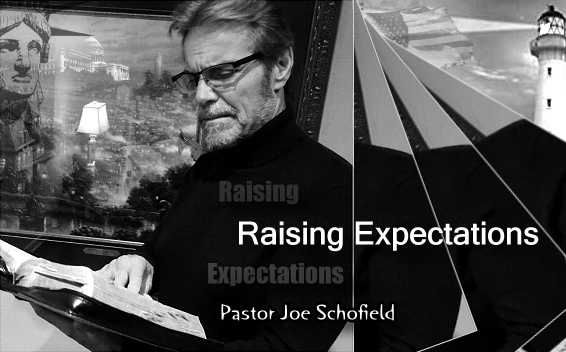
Raising Expectations with Pastor Joe Schofield
Guest, Teri Werner, part 2, Healing the Residue: Faith, Forgiveness, Trauma, and the Road to Restoration
https://trainwrecktotriumph.com/
Healing the Residue
Terry Warner centers the episode on what she calls “residual remnant realities,” meaning the emotional, physical, relational, and spiritual residue people can carry from one season of life into the next. She illustrates the idea with a pair of new sandals that still had adhesive on the sole, unknowingly collecting hair, jewelry pieces, and debris. For her, the image becomes a spiritual metaphor for unintended burdens carried forward from past experiences. She asks listeners to consider recurring patterns, pain, relationships, jobs, or circumstances that may reveal unresolved residue. Her central premise is that people often continue to experience what they have not released. From there, the discussion turns toward healing, restoration, and hope.
COVID, Trauma, and Lingering Effects
A major portion of the conversation focuses on the speakers’ experiences and interpretations of COVID and its aftermath. Terry recounts severe illness, isolation, medical treatment, and the prayers she remembers receiving while hospitalized. She says she later experienced a spiritual moment in which she believed God was releasing the lingering effects of COVID from her mind and body. Ron Greer broadens the discussion by comparing lingering COVID-related effects with residual trauma seen among veterans, firefighters, police officers, and other first responders. He describes brain fog, memory lapses, emotional instability, and other aftereffects that may remain after the most obvious symptoms have subsided. The speakers consistently frame these observations as personal, pastoral, and spiritual perspectives rather than as clinical conclusions.
Faith, Medicine, and the Question of Healing
Dr. Craig Thayer contributes a surgeon’s perspective, saying that although physicians cut, remove, repair, and reconnect tissue, he regards God as the ultimate healer. Dr. Paul Hall then raises one of the episode’s central questions: what should be said to people who sincerely pray, read Scripture, seek counsel, and still do not experience the healing they desire? Terry responds that healing may look different from person to person and may come through doctors, surgeons, personal spiritual work, or other paths. Pastor Joe adds that sometimes the answer may not be physical recovery in the form requested, but rather the “peace that passes understanding.” He recounts ministering to people facing death who found spiritual peace even when their illness remained. The panel therefore treats healing as a complex subject that includes physical, emotional, relational, and spiritual dimensions.
Forgiveness, Bitterness, and Spiritual Growth
Forgiveness becomes one of the strongest recurring themes in the episode. Terry says people seeking healing may need to examine unresolved resentment toward others, themselves, or even God. Stephanie Thayer expands on the point, describing anger, bitterness, false beliefs, and long-held wounds as possible barriers to freedom and spiritual growth. She encourages listeners to ask how God sees them rather than continuing to live under damaging messages they may have accepted earlier in life. The speakers also emphasize community, prayer, accountability, and what Stephanie calls “doing life with other people.” Terry later applies forgiveness to divisions that arose during the COVID era, urging people who spoke wrongly about others or helped divide relationships to take responsibility and ask forgiveness.
Seeking Intimacy Rather Than a Formula
Terry describes a period in which her devotional life felt dry and Scripture no longer drew her with the same intensity. Instead of looking primarily for physical healing, she says she deliberately immersed herself in Bible teaching because she was seeking renewed intimacy with God. She listened before bed, in the morning, took notes, and intentionally “fed” herself the Word until spiritual hunger returned. She emphasizes that she was not searching for a formula but for reconnection. That experience becomes part of her larger argument that healing cannot always be reduced to a single technique or explanation. Across the panel, the speakers repeatedly return to dependence on God, willingness, forgiveness, trust, and surrender rather than presenting a guaranteed process.
Veterans, First Responders, and Practical Compassion
The closing portion turns toward veterans, first responders, homelessness, trauma, and practical ministry. Terry describes her affinity for veterans and first responders and discusses work connected with an organization she calls Rise for Veterans. She says the group seeks to meet immediate physical needs by providing items such as socks, underwear, snacks, water, rain gear, and other essentials, while also offering prayer and personal support. She stresses that meeting practical needs can be part of spiritual care, pointing to Jesus’ concern for people’s physical needs as well as their spiritual condition. The conversation closes with Ron’s Scripture-centered reflections on God being close to the brokenhearted and with the idea that unresolved suffering can deepen dependence on God. Pastor Joe then thanks the audience and the production team, invites listeners back the following week, and closes with the show’s theme of continuing to raise expectations through faith and hope.
SEO Keywords / Key Phrases
spiritual healing, trauma recovery, forgiveness and healing, post-COVID recovery, residual trauma, PTSD and PTS, faith and restoration, veterans and first responders, healing through prayer, peace that passes understanding
Raising Expectations
Donation-Gift procedure: Raising Expectations
1. Go to website: bbsradio.com/RaisingExpectations and click on the donation button
2. Fill in CARD ONLY - Billing Address
3. Do not create a PayPal account ( turn OFF )
4. It will then slide in a DONATE NOW button
5. Will send you a receipt!
Raising Expectations is a that looks at the past, giving greater insight into the present, and may produce authentic anticipation, raising expectations for the future! Joe will discuss major issues that confront us on national, political, and worldwide events, to the simple things that we think about and make unconscious personal decisions every day!
Freedom, Family, Finances, Faith, along with a myriad of other topics and all the intricacies involved in each of them...from a personal community perspective, that makes up what we call "Your Life in America Today!"
Informative, inclusive, intentional, interesting, and always encouraging. Each program will raise our expectations individually. We may begin looking at the future in a positive way, happy to try new ideas and methods with clear hopes of how things can change for the better in the future. Feeling more content, one topic at a time! So, let not your hearts be troubled...we can go from good, to better, to best in the future TOGETHER!
Healing the Residue: Faith, Forgiveness, Trauma, and the Road to Restoration
Speaker Identification
Speaker 1 – Pastor Joe Scofield – Host. The transcript identifies Pastor Joe in the opening and closing theme and he conducts the introductions, transitions, and closing remarks.
Speaker 2 – Terry Warner – Guest. She is introduced by name as the returning guest and delivers the principal discussion on “residual remnant realities,” COVID, healing, forgiveness, and her work with veterans and first responders.
Speaker 3 – Dr. Paul Hall – Panelist. He is introduced as a retired pastor and author on the West Coast and later asks a theological question about people who pray for healing but do not experience it in the way they hoped.
Speaker 4 – Dr. Craig Thayer – Panelist. He is introduced as a surgeon and author. His response about cutting, removing, and reconnecting things in surgery identifies his medical perspective.
Speaker 5 – Stephanie Thayer – Panelist. She is introduced with Dr. Craig Thayer and later discusses forgiveness, bitterness, spiritual warfare, prayer, and experiences of healing.
Speaker 6 – Ron Greer – Panelist. He is introduced as a retired pastor in McKinney, Texas, and later discusses trauma, PTSD/PTS, first responders, veterans, Scripture, and dependence on God.
Speaker 7 – Melba Scofield – Co-host / panel member. She is introduced as Pastor Joe’s wife and part of the Raising Expectations team. She does not have a clearly separable extended speaking segment in the automated transcript.
Speaker 8 – Prerecorded Theme / Announcer Voice – Opening and closing theme material.
........................
Speaker 8 – Prerecorded Theme / Announcer Voice:
Wake up the heart, wake up the dream. There’s more to the story than what we have seen. Faith in the fire, hope in the fight. Family’s rising, stepping into the light.
Raising Expectations. Lift your eyes, lift your voice. Raising Expectations. Faith and freedom still have a choice.
Here’s Pastor Joe and Melba Scofield, with wisdom clear and strong, with Stephanie Thayer and Dr. Craig. They’re helping move the hope along. Dr. Paul Hall [unclear lyric], standing for truth and grace. This is your life in America today, with courage in this place.
Raising Expectations. Good to better, best together. Raising Expectations. Faith that carries on forever.
Speaker 1 – Pastor Joe Scofield:
Hey, ladies and gentlemen, it’s Monday night, and thanks for tuning in to your show, Raising Expectations. It’s been our prayer that, all through this weekend and as you get ready for this week, you’ve been talking to the Lord about good things in your life and that those expectations will be raised all through the week. He uses people around you who are friends to give you direction and help.
It’s great to be with you. We look forward to seeing you every Monday night. Actually, we don’t see you, but you see us, so you’re at a disadvantage. In any event, we’re sure glad that you’re with us every Monday night.
We do want you to know—and you’ve already figured this out—we are all born-again believers. We believe Jesus Christ is the Son of God, and we believe He came to this earth to die on the cross to pay the price for our sins. What a joy that brings to us, because each and every day He walks with us, He talks with us, and He gives direction in our lives. When we really need to know what’s happening, He’s only a prayer away.
We’re excited to think and pray and hope, and we look forward to you all knowing that. I know most of you do now, and it’s a real privilege.
Remember this week, as you’re praying, our special little engineer we’ve told you all about, TJ Newsom. He’s going in a different direction. I believe he’s going on in school, but he’s just a brilliant young man. We know that you love him and you’re praying for him each and every day, so remember to pray for TJ. We’ll get reports later and see how he’s doing.
And we get to have his uncle. You know, BBS Radio TV is worldwide, and his uncle and his dad, Don and Doug, have done a tremendous job with this radio-TV network. Doug is going to be with us, and our engineer is working and helping us in all the ways that he can so we can be with you each and every week. It’s great to have Doug back, so be praying for Doug each and every week also as he follows down his life’s path.
We want to get started tonight because we’ve got a great show. We’ve got part two. We had part one before, so we’re going to go to part two tonight. Before we begin, we want to make sure that, if you are tuning in for the first time—as many of you have shared with me—you know our team. We’re all here tonight. Sometimes we get spread out a little bit with so many things and possibilities people have.
By the way, our website is BBSradio.com/raisingexpectations. On this site, which we’ll show you again a little later at the end of the show, you’ll be able to find all the people who are part of our team. As we scroll down that page, you’ll see the men and women who make up your Raising Expectations team. You can read about them, hopefully get to know them, contact them, send them a note, let them know what you’re praying about, and ask them to pray for you. They love the Lord, and they’re thankful, as we are, for each and every one of you.
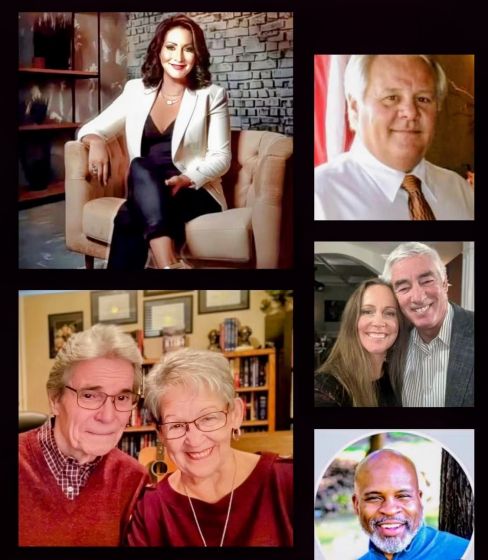
I want to start introducing our team. We’ll start on my right. This is my best team member of the whole group. This is my new wife as of last October. I went to Texas to get her, and this is Melba. You can imagine the most wonderful, godly, loving Christian lady. You can’t even imagine how special she is.
Now we’ll go to the West Coast. Right there in “Lombe,” California, just above Santa Barbara, you’ll find Dr. Paul Hall. Dr. Paul Hall is a retired pastor and a wonderful man of God. He’s been in the ministry many, many years. He’s a writer, he’s an author, and he’s located there on the West Coast.
There he is. He’s just a great guy we’ve known for many, many years. Paul and I go back a long time, so I hope you’ll get to know him as I do, because he’s been a blessing in my life and to all of us on the team. There he is with the Raising Expectations sign. Is that cool or what? I really like that.
Paul, how are you doing out there?
Speaker 3 – Dr. Paul Hall:
I’m good. Thanks. Good to see you all.
Speaker 1 – Pastor Joe Scofield:
All right. Great to see you, man.
Now we’re going to the East Coast—the southern side of it, actually—and there in Dalton, Georgia, you’ll find two of the most wonderful people you can imagine: Dr. Craig and Stephanie Thayer.
Dr. Craig is a surgeon, and he is also a book writer. You’ll find his book on our website, transcribed here as “Sage: Finding God in the Ordinary Things of Life.” It talks about what God has done in his life. It’s really incredible. Once you get to know Dr. Thayer and read the story, you realize what a special guy he is.
And his lovely wife, Stephanie, is a great mom. She’s a business graduate, and they have two of the greatest sons you can imagine. Stephanie, didn’t they get down to that big Bulldog country at UGA?
Speaker 5 – Stephanie Thayer:
Yes, they are doing very well. I only hear from them when they need to order something or need help.
Speaker 1 – Pastor Joe Scofield:
Well, that’s okay, Mom. They’re getting back to you. They’re going to do a lot of great things there, right, Craig? And they have my high school football colors, so I’m really impressed. I’m always rooting for those Dogs.
Stephanie also does a lot of writing, counseling, and helping. You can check her out on the website. She helps a lot of ladies with a lot of questions, and she’s a source of great encouragement—a great encourager. Zig Ziglar used to tell us everybody needs great encouragers in their lives. She’s one, and I hope all of us will be in your lives as she is.
Dr. Craig is very special. The two of them have done medical mission work together. They’ve been in the Caribbean and Africa. He’s done different things helping people with his medical skills. He has God-given gifts that he developed under the Lord’s leadership and calling in his life. You’ll really appreciate getting to know this couple.
Craig, did you have a great day yesterday?
Speaker 4 – Dr. Craig Thayer:
That was good. That was exciting. That was a good piece of time in Georgia. Yeah, there we go.
Speaker 1 – Pastor Joe Scofield:
All right. Good to see you, Doc.
Now we’ll make our way back across Alabama, Mississippi, Louisiana, and into the north side of Texas. If we land there, we’ll be in McKinney, Texas, just above Dallas, and there you’ll find Ron Greer.
Ron’s a very special man of God—a retired pastor. He ran for Congress. He’s done all kinds of things in his life, always under the leadership of the Lord. He helps people right now with an organization called Man in the Mirror, which is located in Florida, but he works with the area in Texas. You can see his picture and website and find the things Ron has done.
Ron is a real brother in Christ, and he’s definitely not shy. Somebody said to me, “Ron is not shy, is he?” I wrote back and said, “Well, he’s working real hard on it.” I thought the rest of you would like knowing that tonight. Ron, you’re making the art, brother.
Speaker 6 – Ron Greer:
Absolutely. I’m very shy. I’m working on it.
Speaker 1 – Pastor Joe Scofield:
There you go. You’re doing a good job, brother.
Anyway, we make up your Raising Expectations team, and we thank God. I appreciate every one of you.
Tonight we’ve got a special guest. As you know, Terry Warner is part of our family. We’re different from a lot of shows because on this show we all come together. We pick certain people who have been on the program and who we know have impacted your lives—people you’ve written to me about and told me you really love and appreciate. We make up an extended Raising Expectations family, and we go back to that group of people once a quarter along with new ones.
We want you to know we’ve got what’s called the “Golden Ticket” coming up pretty soon for Republican conservatives running for governor, lieutenant governor, and controller in the state of California, so you’re going to want to be praying for them.
Also coming up pretty soon, we’ve got a great all-state-winning football coach from the great state of Texas. You’re going to join me and Steve Greek and his wife, Daisy. We’ve had their sons on once.
But tonight we have back with us Terry Warner. Terry hails from Texas too. She and her husband, Dave, live in the Dallas area. She does an incredible job as an encourager and a builder, inspiring others to achieve all they can achieve as God works in their lives. God gives the gifts, God is ready to bless, and she inspires you to listen to what He’s saying.
It’s great to have Terry with us. Let’s give her the famous round of applause and bring her on. There she is, ladies and gentlemen. Let’s do that round of applause again. And while we’re doing this, let’s thank Doug. Thanks, Doug. You’re doing a great job. We appreciate you, brother. Thanks so much for working with us tonight.
Terry, we are all here tonight, everybody, and we’re excited to hear the things the Lord is putting in your heart. As you shared with me, they’re pretty powerful thoughts, and I think they’ll bless all of us and everybody listening and watching. Thanks, Terry.
Speaker 2 – Terry Warner:
Well, thank you very much for being here, and I’m glad we’re all together.
You know, we schedule these Zooms and then sometimes we reschedule them, which is fine. Life gets in the way of everything. Tonight I really had thought about something else, and the Lord just brought me back to a place of discussing something I feel is very timely. Some of it is a little tenacious, but that’s just the way it happens.
Ron and I have had some conversations. And no, I was not the one who said that, by the way. If I had thought about it, I might have, but I haven’t done it.
We’re right now at a convergence, commemorating the debacle called COVID and commemorating the tragedy and chaos of 9/11. One has been quite a while, and hopefully neither occurs again. The challenge is this: the residual remnant realities.
In my book, Trainwreck to Triumph, I bring up things that I felt like the Lord gave me coined phrases for. One was “residual remnant realities.” What remnants do we take into the next season, the next phase of life, the next relationship, the next situation? Many times there is a residual remnant—the residue that continues. Residual is something we do once and it keeps on giving: the gift that keeps on giving, or the tragedy that keeps on giving.
I may have said this before. We’ve now been doing this together for about a year, so I could be repeating myself. I’m not going to walk out on that bridge.
Speaker 6 – Ron Greer:
Right. Definitely.
Speaker 2 – Terry Warner:
Are you sure of it?
Speaker 6 – Ron Greer:
Oh, I’m positive.
Speaker 2 – Terry Warner:
I’m not sure of a lot of things, but trust me.
The analogy the Lord showed me is what often happens to me: He shows me spiritual lessons in a physical reality or a physical experience.
I had these brand-new sandals that I loved, and I was walking on the tile in my bathroom. The house cleaner had been there, but that doesn’t necessarily mean everything is taken care of. I noticed I was walking unevenly. Something wasn’t working.
I took my shoe off and looked at the bottom. There had been a little bit of adhesive left from a price tag or label I had tried to remove. I did not think that adhesive was still on the shoe. It was not my intention, but it was collecting everything: the back of an earring, a little bead from a necklace, hair—all that stuff. None of it was my intention to collect. None of it was something I wanted to happen, but it happened anyway.
When I looked at that, the Holy Spirit said to me, “What is the residue left on you?”
I thought, “Well, that’s probably just a crazy thought that came into my head. That’s probably not really meant for me. That’s meant for somebody else. I’ll probably talk about that someday”—which I am.
Unintended residue that I thought was off my shoe picked up the good, the bad, and the ugly. Here I was walking into the next appointment with things from the past that I did not intend to have with me.
Does that remind you of anything? What does that bring up in your life? To the listeners and watchers—the audience—I would say you might want to make a note. What are the things this brings up for you on a deeper level? Is it pain from the past? Is it an experience where the pattern keeps repeating? You’re with different people, different relationships, different jobs, different careers, different locations, but something similar is happening.
I think we experience everything we don’t release.
Today I really wanted to talk about healing. I wanted to talk about restoration and hope.
Let’s talk first about COVID. I want to talk about the Scripture, Colossians 3:25. It says, “But he that doeth wrong shall receive for the wrong which he hath done: and there is no respect of persons.” To me, that is like a period, not a comma.
I’m looking at the situation with COVID. The last time I was on, a couple of weeks ago, we talked about the fact that even though we weren’t with our loved ones, our loved ones were not alone.
During COVID, I was isolated. I was put in a room with doctors in hazmat outfits, and it was pretty gruesome. But I still knew the angels were with me. I still knew God’s presence was there. I still knew and heard God’s angels. He would send people in. I call them my angels; they were His servants.
There was a repeated prayer over me—[garbled wording]—“She will live and not die.” To have that done by ten, twelve, fifteen people during a period when the doctors had given up on you, that’s a big thing. So we know that took place. I just wanted to reiterate that.
We have this situation with COVID, and some of this will be a little redundant. My husband is in [unclear] construction, and we went to an Airbnb. He negotiated for us to stay there while he was repairing the outside area. That was great—me and the dogs.
I decided this was a timely thing. I made an appointment, literally, with the Holy Spirit. I said, “This is not a freakish time. This is the right time. This is the right situation.” I was doing a particular group of Bible trainings. I isolated. I removed distractions. I made it like what Habakkuk talks about: setting myself apart, asking of Him, and waiting for Him to answer. That’s how we work with God. We choose to set ourselves aside, we ask of Him, and then He answers.
He met me in a unique and very special way.
This was also right at the time when, in my view, the debacle and deception connected with Dr. Fauci was being exposed. Having experienced so much of that situation in our lives, and then experiencing the Bible training at the same time, with the anointing that was taking place—all those things together—I did not believe the timing was an accident. I believed it was an appointment.
I was hearing things on television, watching, and really immersing myself, choosing to be present to the work of God in my life. It is a choice. Sometimes it is willingness, and it’s a choice.
I was sitting there, and the Holy Spirit ministered to me so profoundly. He said, “Now that the deception is being exposed, I am lifting, I am releasing, the ravages—the residual of COVID—off of your mind, body, every part of your cells.”
It was boom.
I know it was God because I believe He is the one who heals. I know it was God because I know His voice. Immediately my spirit bore witness with that statement, and boom, I have not felt the same.
For five years after COVID—six years after COVID—I felt like part of me was still going through it, no matter what I did. I’m very nutritionally oriented. I’m very health oriented. I’ve sold nutritional products since the 1970s, for you people parading as young people.
More important than knowing His voice, I knew His power.
I have not felt as well as I have felt since that moment. Five years prior to COVID I went through a lot of stress and different things like that. Bless you, Paul.
I now feel differently than I felt five years before. I will be 73 on January 8—Elvis’s birthday—and I celebrate every year. Leave my blue suede shoes alone. Stay away from my shoes.
But the thing is, it is real.
Today I looked at Facebook, and there’s an author I know very well who has written a lot of books. He said that suddenly, after five years following COVID, he had his blood work done and it looked like whole new blood work. He had been on a ventilator and nearly died. He’s feeling the same kind of thing. He said, “Out of the blue, my blood work is different. It’s not like I’ve ever had. It’s not like I had for years before COVID.”
So I’m hearing this happening.
I believe that whoever will attach to this and immerse themselves in what God is doing—I believe God, across our world, if you’re willing to have faith and believe, is rewarding those people.
There were some evil things done, no question, in my opinion. Whether you took the vax or you didn’t, whether you did all that—I’m a very purist person, so I had my own feelings about that. I did not take the vax, but some did. That’s okay.
But I believe God is doing a thing. God is doing a thing.
I believe He is lifting the damages of COVID off people and releasing it. If something is tied to deception that is being exposed, it’s almost like a key in the lock.
I want to throw that out. And I want to say this: if you’re a member of the audience and this is resonating with you, we’re here on behalf of God. We’re here for you. Without you, we don’t show up. There’s no point, at least for me.
I’m saying now is the time to access the healing that is being provided in this moment, in this time frame—not that it isn’t always there. I’m just saying that in this time frame there is a specific move of healing, I believe, in a lot of areas.
If you’re in the audience and this is something you’re still battling with, or something a loved one is battling with, I’m encouraging you to reach out with your faith, because God is not doing something just for me and not everyone else.
I want you guys to speak to that.
Speaker 4 – Dr. Craig Thayer:
You said something profound, which I totally agree with, and that is that God is the healer.
I look at my job as actually hurting people. I cut them, I take things out, I reconnect things. If I cut a person and the body heals itself, what made that happen? To me, it’s God.
Speaker 2 – Terry Warner:
Amen. God is a healer.
Speaker 1 – Pastor Joe Scofield:
Anyone else?
Speaker 6 – Ron Greer:
I kind of identify with some of the things you’re saying. Can you hear me?
Speaker 1 – Pastor Joe Scofield:
Yes.
Speaker 6 – Ron Greer:
Okay.
One of the things we dealt with back in the day involved veterans coming back from war zones and firefighters who had been involved in a number of traumatic incidents—something that happened to some guys more than others. What we pretty much called PTSD was something firefighters and police officers were dealing with as well.
One of the things you mentioned brings back those memories, because we talked about residual trauma—the residual effects or symptoms of something.
There is this lingering thing that takes place. The difficulty was, and I think still is, that when it comes to treatment, you have doctors and therapists who deal with the very prominent indicators of trauma. But what they can miss is what’s underlying, what’s below the surface.
I experienced some of that myself. I was involved in an incident and then, right after that, was held up at gunpoint. You go through this process of slowly working it out, but you can’t figure out the brain fog, the memory lapses, the emotional back-and-forth, and all those residual things that can fall outside the purview of counseling and psychiatry.
I think those things can be there because there is a spiritual component to trauma. When that spiritual component isn’t addressed and dealt with, the therapy can go well and the prominent things may be gone, but you still may not feel like you can get back to normal.
I find that same thing among people I know who experienced traumatic situations with COVID. That’s one side: the people who physically experienced it. Then there are people who experienced the trauma of the culture of COVID and still haven’t recovered from that.
Just as there is a mental and psychological component, I think there is also a spiritual, underlying part. I think the same thing happened with what I consider that dark period of COVID. A lot of people are still suffering and still dealing with it. If you’re not willing to address the spiritual nature of it, there can be lingering effects that go on for decades.
Speaker 2 – Terry Warner:
Let me speak to that and then open it back up to Paul and everybody.
Scientific data, even as recent as this year, is showing, in my understanding, that two major components connected with healing symptoms of PTS are forgiveness and sleep—getting deep REM sleep—and forgiveness is number one. So there’s very much a spiritual component, and also the willingness to release. Some of it is what we do, and then there is the touch of God making a difference.
I refer to PTSD because I work in an environment where PTS is now being used more often, moving the idea from a dysfunction toward an injury. But everything has not changed in government terminology. There is still a lot of sensitivity around it.
In some communications, because of governmental and FTC-related considerations, I refer to symptoms of unrelenting stress and trauma with recurring and residual experiences.
I am seeing some amazing things happen in my own work as a coach. My book, Trainwreck to Triumph, is used a lot and endorsed by some high-level people who work with PTS, first responders, and veterans.
And really, PTS can touch people who have been through a bad divorce, a situation where they are now homeless, or many other kinds of trauma. It began to be noticed very specifically in veterans and first responders. I just wanted to mention that.
Paul and Joe and Melba, I’ll let you chime in.
Speaker 3 – Dr. Paul Hall:
I’ll chime in.
The spiritual dimension is obviously something Christians have a perspective on, based on experience and education. If I understand what you’re saying, Terry—and you can help me unfog my brain—when you made the statement that God is doing something and He’s lifting the residue, am I hearing you say that He is making that available for all who will receive it?
Speaker 2 – Terry Warner:
That’s what I believe. Yes, that’s what I believe, because He’s not a respecter of persons.
Speaker 3 – Dr. Paul Hall:
As I’ve talked to people over a span of years who desperately wanted healing, desired healing, and prayed to God every day that it would happen, maybe sometimes they wanted it to happen the way they wanted rather than the way God wanted. I can understand those kinds of things.
But there is a longing and a yearning in my own heart to see those healings come—not just to bolster my faith, but because I’d like to see that openness to God bring wholeness in a noticeable and remarkable way.
My question is this: when people desperately desire to be healed and they’re doing everything they know to do—they pray, they read Scripture, they talk to wise people, they ask for the Holy Spirit—and it doesn’t happen, what happens then? What do we say to them?
Do we say it’s a matter of forgiveness? Obviously there are situations where people haven’t forgiven. Do we say it is simply residue that sticks because that is the nature of a broken world? How do we handle that? I’m looking for ways to communicate it to other people.
Speaker 2 – Terry Warner:
I would say it happens differently for different people. Healing is not always experienced in the same way.
For me, it was experienced in this way, but for the five years before that, it wasn’t experienced that way. I came to a place in my own soul and spirit where I was releasing things I had held on to personally.
Healing could come through a doctor or a surgeon. There are different ways things happen, and some of it is the level of participation in doing the work.
I’m not saying that everyone who is not healed has issues or spiritual challenges. I’m not saying that at all. But I am saying that, if you’re asking for healing and not seeing physical healing to the level you’re wanting, one thing to do is ask deeper questions.
Jesus is healing. The work was done on the cross. There was a completion of it on the cross.
My suggestion is to look at ourselves and say: Is there anything I’m not forgiving? Have I forgiven God? Now, preachers—including people I’m very close to—have challenged me when I say that. But some people, deep down, hold resentment against God’s choices, against God. Then there’s forgiving ourselves.
There is a path of healing.
My path of healing the day after COVID was sitting in a wheelchair, not remembering the book I wrote, and being on oxygen. Barely a year ago, when I was with you, I was not the sharpest cookie in the jar at all. I wasn’t feeling connected.
I don’t know the answer for every person. That’s between God and them. But people often look for answers from others when the answer is ultimately from God. The healing is from God.
Speaker 1 – Pastor Joe Scofield:
That really resonates with something I’m thinking. This is going to be so simplistic that at first you’re probably going to say, “What?”
In my later years in ministry, every time I got up to preach, I would walk to the pulpit with my Bible. As I opened it, I would say this simple prayer: “Lord, get all of me out of the way and all of You in the way, so that all they see is You, not me.”
Sometimes I’ve been with people dying of cancer and other things, people who, like Paul was saying, prayed, “Why not? Why not?”
Sometimes I’ve simply had to ask, “Have you prayed for the peace that passes understanding?” The peace that means God knows your greatest joy may not be in what you’re asking for in this direction until you see all that He has for you in another direction.
That’s one of the reasons I think of Dr. Thayer. He said to me, “I always take my hands and pray God uses my hands.” He has head knowledge and heart knowledge because he loves people, and he has gifted hands as a surgeon. But, as he says, it’s God who uses the hands.
As long as there’s anything in the way between me and God, whatever it is, I need to listen.
People may need to say, “Lord, if You’re not going to heal me, will You give me a peace that lets me accept that?”
I had one lady grab my tie and pull my head right down to her face and say, “Don’t you cry for me, Pastor Joe. I’ve seen Jesus, and I don’t need to be healed here. My healing is forever.”
I don’t know exactly what that is, but that’s one piece of the puzzle. Sometimes you can’t explain something. You can’t explain that peace inside. No matter how much you read, write, or hear, that peace only comes from Him.
Speaker 5 – Stephanie Thayer:
I’m going to jump into this. I saw Ron has his Bible out, so I can’t wait to hear what verse he’s going to use. And I realize I’m in an audience of men who have been to seminary, so I’m putting my toes in.
I moved to the South five and a half years ago, and the things I have experienced and seen are nothing short of wild. There is no other way to describe them. At first I was shocked and a little uncomfortable. Now every week I’m like, “Lord, what are You going to do? What are You going to show me? What is going to happen?”
I have seen what I consider miraculous healing over and over in front of me.
There isn’t a formula. Paul, I hear your question and I agree with it. There are those who come and yearn and ask.
A few things I started scribbling down are things Terry has also said. I think a lot of it comes down to forgiveness and bitterness. Oftentimes, when people come wanting prayer, healing, or freedom, they are very angry. A lot of times they won’t admit how furious they are at the Lord or at themselves.
Guess what? God already knows. Lay it out and tell Him.
There is a lot of hurt that happens, and we don’t understand it. How could a good God allow X, Y, or Z? The reality is that we have choices, those around us have choices, and the generations above us have choices. There are consequences for those choices.
You may be completely innocent and yet here you are. Like COVID: you didn’t pick to get COVID.
There are agreements we make and beliefs we accept that are false. The enemy is a deceiver. Someone close to you when you were young may have said something to you, and you started believing it was true when it wasn’t. You may have lived it out your whole life and become very small.
But you’re not small in the spirit.
How does the Lord see you? Have you ever asked Him, “Lord, what do You call me? Lord, how do You see me?” I think you’d be shocked.
Then there are attacks. We should never be so shortsighted as to think everything is sweet and lovey-dovey here. This is a war. We are under attack. You may be under attack from generational things. You may be under attack because you’re on the radar and the enemy does not want you free.
This goes back to constantly being in relationship with the Lord and doing church, which means doing life with other people and having accountability.
If you don’t know how to do it, do you know anybody around you who can help you pray or say, “Hey, I see this. Can we give this to the Lord? Can we ask Him what else He has for you?”
You’re not actually bitter. You’re not actually stubborn. Those are my thoughts.
All I can say is that being open and willing to the Lord—it’s amazing what happens.
And there’s that Scripture where the father says, “I believe; help my unbelief.” Isn’t that relatable? It’s like saying, “I know I don’t believe enough. How do I get there?” Because we actually can’t get there on our own.
Speaker 2 – Terry Warner:
From a personal testimony, I’ll say this is what made a difference for me.
In full transparency to the audience, I’m very tactical. If something needs to be done, I’m going to go do it and let you know how it went. Boom, boom, boom. That’s my whole thing.
The negative thing I battle with is trusting God enough to do it and trusting myself enough to shut up and not do it. I was born ready to give you a strategy: five-point plan, let’s make it happen.
I had gotten to a place in my own life, and in working with so many other people, where some of my devotional time felt dry. I felt dry and didn’t know how to prime that pump.
It wasn’t that I didn’t want to read Scripture, but it wasn’t pulling me. There’s a difference between craving something and just eating what is in front of you.
I knew enough to find a teacher who taught the Word in a way I could relate to. I found someone who literally quoted the Word, read the Word, and taught the Word.
We listened to it thirty minutes before bed. I listened in the morning. I listened throughout the day. I took notes. I put effort into really getting the Word on faith and healing.
And I wasn’t seeking healing. I wasn’t really seeking healing. I was seeking intimacy.
I had become conditioned to accommodating and putting up with whatever the thing was, because I didn’t think there was going to be a release or an answer.
I knew one thing: I missed who I was when I felt connected to God. I missed who I was. I missed me. I missed how I felt, how I loved, and the feeling of being present to the Word.
So I started force-feeding myself the Word, almost like water. If you don’t drink water, sometimes you stop feeling thirsty. I forced myself to get thirsty for the Word by feeding myself with the Word in whatever way I could, through whatever sermon I could.
What these people were speaking about became additional support for what I had already been doing.
Sometimes we have enough of the Word, but we don’t have all of the Word. “Enough” is not a place to live. Enough is not a place to exist in God.
One reason I wanted to speak on this is that there is a need for unity among our people.
It also goes into the people we need to forgive—people who treated us like criminals because we believed in ivermectin, or because we didn’t do the vax, or whatever. There was a lot of sifting and shifting in relationships that took place, and in my view it was divisive. It divided families and people.
I believe we have to come together on forgiveness.
If you’ve held something against someone, or if you defamed somebody, go to that person and go to the people you talked to about that person. Be a grown-up. Say, “I thought this was the situation. I thought I had the right to speak. I did not. I’m asking your forgiveness for speaking, and I’m asking their forgiveness for talking in the first place and dividing families.”
Be a big person. Immaturity is at epidemic proportions. If you want to talk about a pandemic, immaturity is large and living strong in relationships.
That’s part of it too.
I also write articles for magazines, and I wrote an article about what I understand as the complete work of the cross. I see a progression in the atonement: iniquity addressed, sin addressed, the chastisement of our peace—reconciliation—and then healing.
I believe we can pray for God to restore us and bring us into alignment with Christ. We are His body. We have communion. We take in His body. We are one.
To really take in the understanding of the completed work of the cross, in my belief, has to do with healing.
I’ll leave that there—not leave the show, just leave that thought there and let you all talk.
Speaker 1 – Pastor Joe Scofield:
Ron, go ahead.
Speaker 6 – Ron Greer:
I have my Bible here. I was looking for Psalm 147:3. It says God heals the brokenhearted. Psalm 34 says He is close to the brokenhearted. In Isaiah 61 we’re told that He binds up the brokenhearted. Then in Revelation we’re assured that, on that day, He’ll make all things right and new.
I go back to some traumatic days and incidents that led to those initial traumas. I have to admit I didn’t suffer as much as a lot of guys I knew.
Somehow God gave me a gift where I was able to emotionally disconnect no matter how tragic the situation was. I don’t know how that happened, but it became natural to me.
The Scriptures are clear: God is close to the brokenhearted. He heals broken hearts. Jesus binds them up.
Then I go back to Paul and ask whether there is a contradiction between Paul’s situation and what Scripture says. I say no.
Paul says he had a thorn in the flesh and asked three times, and God said, “My grace is sufficient for you.” Later, he talks about all the things he endured—the beatings and on and on—and he says that if he is to boast, he will boast in the things that show his weakness.
Why boast in the things that show weakness? Because God the Father and the Lord Jesus Christ get the praise.
So in my suffering and in the residual things I have left from trauma, those things may still be with me. If I pray and God doesn’t take them away, He is still sovereign and is for my good.
As long as I have that residual thing there, it can cause me to focus on my need for the Lord and my dependence on Him. The more I’m dependent on Him, the more I trust Him; the more I become like Him, the more pride and self disappear.
Will God heal? Is He close to the brokenhearted? Yes. How is He close? Because He continues to assure me: “I am with you. I am with you, no matter what is happening.”
Speaker 1 – Pastor Joe Scofield:
Terry, you’ve got a special group you work with that lines up with what Ron is saying. Mention a quick word about that as we watch our time.
Speaker 2 – Terry Warner:
Sure.
One thing I have found is that I have a great affinity for veterans and first responders. I didn’t know why at first, but I’ve realized that my heart is with veterans and first responders.
I’ve sought out organizations that do things for veterans, first responders, and anyone who has a situation of need.
I also come from a family with a generational history of Alzheimer’s and dementia. My mother had Alzheimer’s and died at 96. I don’t say she died of Alzheimer’s; she had Alzheimer’s and she died.
That made me very tenacious about asking what is available naturally. I am not saying we cure Alzheimer’s. I’m asking what is available naturally that can help people with trauma and residual symptoms of trauma.
I’ve sought out some situations, and there’s an organization with a foundation run by a faith-based couple. It seeks out situations where there are homeless veterans or other people who are homeless, goes into those situations, prays with them, works with them, and takes them a bucket of essential needs.
I’m talking about socks, underwear, snacks, water, shower items, raincoats, and other things they need if they are on the street.
Then they pray with them and work with them. They also provide nutritional products intended to help support the body. Sometimes how you feel about your life is part of what holds people back.
The organization is Rise for Veterans. The website is transcribed as riseforveterans.com. As you scroll down, there are questions answered for people in need, and there are also places where people can go to the foundation and find information.
We’re asking people who are in need to let us know. We meet people where they are. We pray with them, help fulfill some of their immediate needs, and we’re seeing amazing things happen.
To me, a miracle may be meeting someone at the place they are, at the time they’re ready to talk and pray. Jesus met physical needs too. If He hadn’t fed people, I don’t know how long they would have sat there listening while they were hungry.
You can reach me at what is later stated more clearly as riseforveterans@gmail.com. You can talk to me personally about what you need or what you’re looking for, and I can share how we help. Or, if you’re wanting to help, you can reach me there. You can also go to riseforveterans.com and look into what is available.
I have worked with first responders and coached people around PTS using my book and other resources. I have received phone calls from people with serious trauma-related symptoms, challenges with focus, stress management, and other lingering effects.
One man called and said, “It’s been two days since you gave me something that would help, and I’m feeling a difference. I’m sleeping.” I’m not talking about injections or medications.
And let me give sixty seconds to a Scripture idea. You brought up the peace that passes understanding. A preacher I heard said this the other day: “When you have the peace that passes understanding, you no longer seek to understand.”
I’ll leave you with that.
Speaker 1 – Pastor Joe Scofield:
That’s a good one.
Everybody has that information there. Stephanie, can you take thirty seconds and share with the folks?
Speaker 5 – Stephanie Thayer:
I love you guys. Thanks for hanging out with us. You can always go to BBSradio.com/raisingexpectations. All the goodies are there. Find out what’s going on with everybody.
Speaker 1 – Pastor Joe Scofield:
Ladies and gentlemen, go to BBSradio.com and see the good things that are happening there.
We want to thank Doug Newsom again. Great to have you with us and helping us tonight. God bless you, brother.
We will be praying for all of you this week.
Ladies and gentlemen, thanks for tuning in. We count it a privilege and an honor to call you family, and we’ll get Terry back on that rotation pretty quickly. Great things are coming in the fall.
Mark the calendar. Pray each week. Leave us a note. Let us know you were listening.
And pray for some of our guys and gals who are going to be involved in different things happening in the next couple of weeks or three weeks. Be praying for them too as they venture into some things.
God’s good. He’s on the throne, and most of all He lives in my heart.
We’ll see you all the same time next week. Listen to the words of our song. They tell you how we feel.
God bless and keep you.
Speaker 8 – Prerecorded Theme / Announcer Voice:
From Pastor Joe and Melba Scofield and the voices gathered here—Stephanie Thayer, Dr. Craig Thayer, Dr. Paul Hall, and Ron Greer—keep raising expectations in your home and in your heart.
Keep raising expectations. Let faith become the start. For family, freedom, faith, the future; for wisdom, courage, truth, and grace. We go from good to better to best together, with a brighter road to face.
Keep raising expectations in your home and in your heart. Keep raising expectations. Let faith become the start. For family, freedom, faith, the future; for wisdom, courage, truth, and grace. We go from good to better to best together, with a brighter road to face.
Raising Expectations. Rise with faith today. Raising Expectations. Hope is on the way. Raising Expectations. We’ll see you on the way.
6. Six-Paragraph Summary
Healing the Residue
Terry Warner centers the episode on what she calls “residual remnant realities,” meaning the emotional, physical, relational, and spiritual residue people can carry from one season of life into the next. She illustrates the idea with a pair of new sandals that still had adhesive on the sole, unknowingly collecting hair, jewelry pieces, and debris. For her, the image becomes a spiritual metaphor for unintended burdens carried forward from past experiences. She asks listeners to consider recurring patterns, pain, relationships, jobs, or circumstances that may reveal unresolved residue. Her central premise is that people often continue to experience what they have not released. From there, the discussion turns toward healing, restoration, and hope.
COVID, Trauma, and Lingering Effects
A major portion of the conversation focuses on the speakers’ experiences and interpretations of COVID and its aftermath. Terry recounts severe illness, isolation, medical treatment, and the prayers she remembers receiving while hospitalized. She says she later experienced a spiritual moment in which she believed God was releasing the lingering effects of COVID from her mind and body. Ron Greer broadens the discussion by comparing lingering COVID-related effects with residual trauma seen among veterans, firefighters, police officers, and other first responders. He describes brain fog, memory lapses, emotional instability, and other aftereffects that may remain after the most obvious symptoms have subsided. The speakers consistently frame these observations as personal, pastoral, and spiritual perspectives rather than as clinical conclusions.
Faith, Medicine, and the Question of Healing
Dr. Craig Thayer contributes a surgeon’s perspective, saying that although physicians cut, remove, repair, and reconnect tissue, he regards God as the ultimate healer. Dr. Paul Hall then raises one of the episode’s central questions: what should be said to people who sincerely pray, read Scripture, seek counsel, and still do not experience the healing they desire? Terry responds that healing may look different from person to person and may come through doctors, surgeons, personal spiritual work, or other paths. Pastor Joe adds that sometimes the answer may not be physical recovery in the form requested, but rather the “peace that passes understanding.” He recounts ministering to people facing death who found spiritual peace even when their illness remained. The panel therefore treats healing as a complex subject that includes physical, emotional, relational, and spiritual dimensions.
Forgiveness, Bitterness, and Spiritual Growth
Forgiveness becomes one of the strongest recurring themes in the episode. Terry says people seeking healing may need to examine unresolved resentment toward others, themselves, or even God. Stephanie Thayer expands on the point, describing anger, bitterness, false beliefs, and long-held wounds as possible barriers to freedom and spiritual growth. She encourages listeners to ask how God sees them rather than continuing to live under damaging messages they may have accepted earlier in life. The speakers also emphasize community, prayer, accountability, and what Stephanie calls “doing life with other people.” Terry later applies forgiveness to divisions that arose during the COVID era, urging people who spoke wrongly about others or helped divide relationships to take responsibility and ask forgiveness.
Seeking Intimacy Rather Than a Formula
Terry describes a period in which her devotional life felt dry and Scripture no longer drew her with the same intensity. Instead of looking primarily for physical healing, she says she deliberately immersed herself in Bible teaching because she was seeking renewed intimacy with God. She listened before bed, in the morning, took notes, and intentionally “fed” herself the Word until spiritual hunger returned. She emphasizes that she was not searching for a formula but for reconnection. That experience becomes part of her larger argument that healing cannot always be reduced to a single technique or explanation. Across the panel, the speakers repeatedly return to dependence on God, willingness, forgiveness, trust, and surrender rather than presenting a guaranteed process.
Veterans, First Responders, and Practical Compassion
The closing portion turns toward veterans, first responders, homelessness, trauma, and practical ministry. Terry describes her affinity for veterans and first responders and discusses work connected with an organization she calls Rise for Veterans. She says the group seeks to meet immediate physical needs by providing items such as socks, underwear, snacks, water, rain gear, and other essentials, while also offering prayer and personal support. She stresses that meeting practical needs can be part of spiritual care, pointing to Jesus’ concern for people’s physical needs as well as their spiritual condition. The conversation closes with Ron’s Scripture-centered reflections on God being close to the brokenhearted and with the idea that unresolved suffering can deepen dependence on God. Pastor Joe then thanks the audience and the production team, invites listeners back the following week, and closes with the show’s theme of continuing to raise expectations through faith and hope.
SEO Keywords / Key Phrases
spiritual healing, trauma recovery, forgiveness and healing, post-COVID recovery, residual trauma, PTSD and PTS, faith and restoration, veterans and first responders, healing through prayer, peace that passes understanding