
The Laughing Heart, June 7, 2026
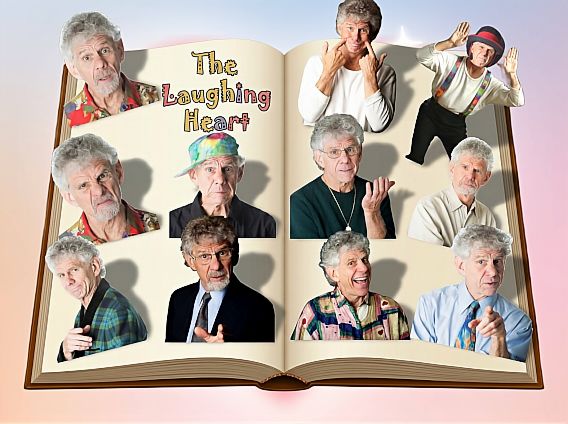

The Laughing Heart with Errol Strider
The Wisdom of Duh, the Obvious, Resistance and Innocence
Errol Strider Opens The Laughing Heart
In this episode of The Laughing Heart, host Errol Strider explains that the show will take a departure from its usual format by featuring an older episode of Insight Out, The Naked Truth, the radio program he hosted with his longtime partner Rochelle Alicia Strider. Errol says he revisited one of those programs from 2016 and found it still useful, amusing, and relevant. The chosen theme is the word “duh,” used as a playful doorway into what is obvious, essential, absurd, and spiritually revealing.
“Duh” and the Beginning of Wisdom
Errol and Rochelle begin by asking what makes something obvious. Rochelle jokes that “duh” is obvious because it is obvious, while Errol reflects on the idea that the beginning of wisdom is a firm grasp of the obvious. They explore how a “duh” may not be obvious to everyone at first, because what seems self-evident often depends on perception, experience, maturity, and willingness to see. The program uses humor to suggest that wisdom often begins not with something complicated, but with finally recognizing what has been right in front of us all along.
Resistance Adds to Pain
One of the main “duhs” of the episode is the recurring Insight Out teaching that resistance is what people add to pain to make it last longer and hurt more. Errol and Rochelle explain that this may sound obvious once a person has experienced it, but until then resistance often feels normal and protective. Rochelle describes how embracing pain, fear, wind, cold, or emotional difficulty can reduce its intensity and reveal what to do next. Errol adds that when he stops resisting cold after swimming, the experience becomes easier to accept.
Humor, Characters, and the Search for Meaning
The episode includes several of Errol’s recurring comic-spiritual characters, including Professor Umbridge, a rabbi, a senator, and Father O’Malley. Through these characters, Errol and Rochelle playfully examine certainty, letting go, service, the universe’s response to human questions, national debt, spiritual communion, and love. The humor keeps the discussion light, but the underlying point remains serious: life offers repeated chances to recognize what is true, release unnecessary struggle, and return to breath, presence, and love.
Maturity, Emotion, and Human Infancy
Errol and Rochelle discuss human immaturity by comparing destructive adult behavior to infants throwing things on the floor. Rochelle suggests that much of the world’s trouble comes from people who do not yet know how to master fear, anger, and virulent emotions. The rabbi character frames maturity as learning to meet fear or anger and transform it into another “duh.” Rochelle offers her own approach: instead of fighting fear, she imagines putting her arms around it until it melts into nothingness.
Innocence, Forgiveness, and Returning to the Moment
The conversation turns toward innocence as something people may lose but can regain by returning to the present moment without judgment. Errol suggests that innocence is one of the qualities needed to become available to the “juicy reality” of life. He also offers reflections on forgiveness, describing it as what happens when a wall appears between a person and love and one casts love upon it. Rochelle adds that while it can sometimes be easier to forgive others, people must also learn to open their hearts toward themselves when they fall short of their own ideals.
Love, Service, and Heart-Opening
Another central theme is heart-opening. Errol says the work is to open the heart so God, or the ever-present origin of being, can “dump a bunch of love” into the soul. He and Rochelle connect this to service, partnership, non-resistance, and the willingness to embrace what is abrasive until something softer is found within it. They suggest that life’s obvious spiritual truths are not always easy, but they become clearer when people stop fighting reality and begin participating more fully in the moment.
Closing with the Final “Duh”
The episode closes by returning to the core reminder: resistance adds to pain and makes it last longer. Errol encourages listeners to notice how many “duhs” they can discover in daily life, not merely as jokes, but as recognitions of truth. Rochelle repeats the familiar closing teaching, and Errol answers it with the perfect final word: “duh.” The result is a playful, philosophical, and tender episode about seeing clearly, softening resistance, and letting the laughing heart meet life as it is.
The Laughing Heart
Be kind - Support this WONDERFUL show
- and laugh a lot -
$5.99/mo or $9.99/mo
Click HERE
SUBSCRIBE TO TALK SHOW
The Laughing Heart--a podcast
Humor, story, and spoken word for insight, inspiration, and connection
Hosted by Errol Strider, poet, performer, and non-prophet.
Welcome to The Laughing Heart. This is Errol Strider. Thank you for joining me as we probe
into that which is most essential and often that which is, well, most absurd. Tonight
we're going to take a little departure from our normal approach. Rochelle and I, that's
my partner of 50 years, did a radio program for almost four years every Sunday and it was
called Insight Out, the Naked Truth. Well, I was visiting one of those yesterday and I
thought, you know, this is still interesting stuff. So tonight I'm going to feature one
of those episodes. Often we picked a phrase like, you don't say or imagine that or on
second hand, this particular phrase was, well, actually a word, duh. So we're going
to focus on duh and what you're going to hear is a program we did in, well, 2016. I
hope you appreciate it and find it useful and amusing.
And this is Insight Out, the Naked Truth, coming to you live from Luppen Lodge in the Santa Cruz
Mountains of California where clothing is optional, but the truth is always naked and I'm
Errol Strider and I am Rochelle Alicia Strider. We welcome you to our home at Luppen Lodge. We
invited you over tonight for some conversation about the human condition and what to make of it.
Tonight, duh is the focus of our program and why is that Rochelle? Because it's obvious.
duh. I read a line or heard a line once that said, the beginning of wisdom is a firm grasp of the
obvious. duh. And as a bona fide beginner in the wisdom sphere, I consider myself to be that.
I'm happy to start with what I would call the distinctly evident, the duh. But what is obvious?
That's a good question. What is obvious? It's so apparent. So in your face, so undeniable,
but then it raises the other question based upon what? Your perceptions, your thoughts about it,
how it impacts you, can there really be a true duh?
I love the fact that we can take something that takes two words like that's obvious and turn it
into three letters. Do you know how many word definitions there were for the word duh, like
apparent and right on and clear? Bunch is more of them. duh was really in the dictionary.
No, that's not correct. What I just said, no, none of that is true. Those are all synonyms for the
word obvious. That was the word that came to mind. So that was. But let's just kind of accept the
fact that what comes at us in your face is obvious, is a duh, without getting into, well, what's really
real in all of that. Oh, but that's so much fun. And that could lead to several duh's.
I'm willing to take your journey for a little while, then you can take mine.
Well, let's start with the duh. Every week, we end our show with resistance as well.
Just let you add to pain to make it last longer and hurt more. Now, you'd think that would be a duh,
but for most people, resistance is a way of life because it saves their little butts.
So it's a novice, a duh, wannabe then. He becomes obvious when you begin to experience
that resistance is painful. I mean, that it adds to the pain and it hurts longer.
When you begin to realize that, then that description of what you're going through is a duh. But until
you reach that point, it's not obvious. It's normal. Why wouldn't you resist this and this and this?
Definitely a duh because it's coming at you and it looks mean and it might hurt and probably hurt.
Keep it away. Duh, that which we close our show with and leads to so much of our own personal work,
which is non-resistance, is not obvious except to those who have experience.
How much it hurts resistance.
So as we expand and grow in our life, there are more and more does, actually.
So we're accumulating does as we go, wouldn't you say? And each duh is like...
With you, if you accumulate too many does, you'll start selling it on the internet.
Why would you say that? I don't sell things from the internet.
If you have too many of them, you have to get rid of them.
So it's not an obvious duh, but what makes you think it's true? Let's go back to that.
Me? Yeah, resistance. If you had it to paint it, it'd last longer.
I've experienced how it becomes more painful and when I don't resist it, when I put my arms around it and embrace it,
it gets less hurty. It gets less painful. It gets less intense.
Intense. The intensity of the experience and my feelings around it start to dissipate when I don't resist it.
And the other thing that happens that's really marvelous is that when I don't resist it, I know what to do.
So in other words, if a big... well, not a bear because I think I would be eaten too quickly to have to go through anything.
Let's say it's a wind. There's wind coming at me and I'm resisting it.
I'm pushing back and it's very painful, but the wind doesn't stop.
But then I go, oh, there's a lot of wind and the wind is coming at me and I don't resist it and I hold the wind.
I something to dance with to do something with because it is painful.
And all of a sudden I realize I can pick my shirt up over my face and it hurts less
because it's the most exposed is my eyes and my nose. But I didn't think of that when I was resisting it.
I have a similar experience when I go swimming and sometimes when I get out of the pool,
I swim regularly. Some would say I swim irregularly.
If you looked at some of the weird strokes that I do, when I get out of the pool, it's really cold.
Like if it's in the 40s or 50s and I've noticed that when I resist, it's colder.
And when I just allow it to hit me, it's not colder, not colder. It's just an experience that I'm having
and it becomes much more easy to accept. Speaking of duh, I want to invite Professor Umbridge.
You got some stuff about duh. Do you ever run into duh?
Of course, young man, doves all around me. There's little doves and there's big doves and there's as you pointed out, there's no one of these.
And ideally as you progress through your experience and you're engaging with dilemmas.
And as you're able to finesse the dilemma into something to your benefit and hopefully even beyond your benefit to the benefit of everything else.
Or at least a couple other things.
Then what happens?
Then you'll begin to go, aha, that's a duh.
You just reminded me of Professor, I'm sorry to interrupt, but when I was a car hop in St. Louis, Missouri in the 1960s, one of those places where they called in their orders and then we went out and gave it to them.
Of course, I'm not going to talk about the time I put the tray on the guy's car and had two chocolate milkshakes and it slipped.
And they fell into his lap.
This is the beginning of your doofism.
One night I was in a specially good mood and I was walking by this guy as I was going back to the restaurant to get another order.
And I just felt very outgoing and I said, can I do anything for you?
How are you?
Wasn't part of my job at all normally.
To be gregarious.
More than that?
Boy, if I didn't get the biggest tip that night.
And I realized, service, wow, that's a good thing.
So more and more I do serve.
Service is the capital S that leads to two lines down it.
I'm sorry, professor, you had something else you wanted to say about it.
But as a matter of fact, when people seek and yearn form arrive at some level of certainty, it's a big stress valve is released.
And the gas of all that inner pressure, some would call it the ego since it's just kind of a constant spasm is released.
And there's such a sense of breath.
Breath has come back into your life.
So does the way we like to make them available is offer them with a free breath?
There you have it.
Thank you.
I love that.
Duh plus free breath.
That's a good thing.
What do you think?
I think that having that exhalation, the sigh of relief, somebody was talking about that just recently.
I was allowed myself to sigh because something had ended and it ended finally after so much preparation.
I could sigh.
That's a great thing for one of our shows.
We'll do a sigh one night instead of having a word.
We'll just sigh.
For an hour.
We'll sigh in different pitches.
Different characters.
Here's a line by Tejardis Chardin.
I've been back into reading his hymn of the universe, which is just so souffly delicious.
He has his comment.
What you saw gliding past like a world behind the song and behind the color and behind the eyes glance does not exist just here or there, but is a presence.
Existing equally everywhere.
A presence which though it now seems vague to your feeble sight will grow in clarity and depth.
In this presence, all diversities and all impurities yearn to be melted away.
That's a dove for me.
My own personal dove.
It has a little little to it.
You are a dove.
They have a little.
How about you listeners out there?
Are you getting to have some does?
Are you appreciating the does?
The obvious.
We have the rabbi here tonight who wanted to jump in here and talk about his version of the good evening.
It's like so many people that come to me and say rabbi, can it be better, a little better than it is?
And I go, duh, of course it can be better.
It depends on how much you want to hold on to and how much you want to let go.
The let go of your criteria.
Of course I understand you've got pain, you've got pleasure.
There are good criteria for what's going on.
But as you mature, sometimes you find there's other criteria that you put in place that will give you different kinds of does.
And that's the that that you say when you have the moment when a light interfaces with your person, your soul, and your saying to the universe, is it a good place?
And the universe is saying back to you, duh.
That's really good rabbi.
The universe is responding to our question.
I think I get it about is this a good place to be and the universe is basically going duh.
But I do have a question though.
What about all the really problematic and painful and disruptive phenomena that continue to plague us?
duh?
We're not in duh yet.
We're trying to find out.
Are you asking me a question?
I thought you were asking the question of the rabbi.
Maybe you could both answer.
What would be your answer?
I was talking to someone yesterday and I said, when you know you're dealing with infants, you expect them to do a lot of things that they wouldn't do when they get grown up.
Like they pound something, but they throw something on the floor.
Our granddaughter likes to throw books on the floor and she gets a fud.
I don't know what pleasure she gets from it, but she does it a lot.
I have to say I like it too.
I throw books on the floor and get a thud and I think it's genetic.
Go ahead.
Well, the problematic thing is that when we don't consider others wanting to be considered for ourselves,
feel good to feel that we have purpose, that we are really important or special or whatever.
And we take that away from another person.
It's because we don't really believe it.
That is a sign of immaturity.
So when I think of these people on this planet creating all these problems, I think of them as infants that are going amuck.
And now if we had an infant that was going amuck, we'd put it in a corner.
We'd make sure it was contained in a nice little crib so it wouldn't get out and throw books all over the floor or do whatever they do when you're in an infant.
But we don't know how to do that.
We can kill people really good, but we don't know how to contain our virulent emotions.
That's right.
We don't because it's not an easy thing to do.
You have these emotions.
They are big energies.
They rise up inside you and they take you over.
And part of the challenge of living and becoming a character of real substance, a mensch, if I could use that term, is to learn to master the emotions.
That's part of the job of maturing and giving the oldest of them at a certain point.
To the emotion of fear or the emotion of anger that starts to raise its cute little head.
You say, okay, I'm going to turn you into a dah.
And you know how I'm going to do that?
You say that if you're you are nothing, then you say dah.
And that's what you learn to think about the fear.
I have a way of doing that, Rabbi.
It comes to the same result, but it's my method.
I just put my arms around the fear and it melts into nothingness.
That's how it becomes nothing for me.
Now you just don't know and things change and you think one thing is going to be this way and your enemies become your friends.
Speaking of being a car hop, they had an inside section with a few tables.
This place called Schneider's suburb of St. Louis.
One night I'm serving this guy's food and he's being real persnickety.
And we start to get into a little rough exchange.
Persnickety.
That's certainly not a word you're here to own.
It hasn't passed into the dah world.
Anyway, they started getting threatening and I said,
okay, you want to do something about this?
Typical stupid male kind of thing.
And he said, yeah, I said, well, why don't you meet me after work?
And then he said, okay, what time to get off work?
And then he stood up and he was about three times my height.
I get off at work at one, but I said to him, two, dah.
What ended up being interesting about the story where the surprise came in.
He ended up working there as a car.
We got along just fine.
We were just friends.
That's a funny story.
Well, listen, I've got something I wrote many years ago.
I want to run in Bayou and see if it gets a dah.
Whether painful or pleasurable, no moment is any more significant than any other.
It's just a question of your level of commitment to the moment you're in.
In other words, how embracing are you of the moment?
How committed are you?
Since that's it and the moment's only going to be the moment and it's just...
Got it.
So it's a dah.
Okay, we have one dah. We're going for two.
Do I hear two dahs out there from you studio listeners?
Yeah, I hear two.
I saw my granddaughter high-fiving her other grandmother.
She said, give me five and this little hand reaches out to this grown-up's hand.
It hits it and laughs and it's so adorable.
We had an amazing conversation.
She and I the other night.
She... I guess I wanted to kind of wagged her head.
Would that be the way to describe it?
You kind of shake it back and forth from her side to side?
Yeah.
And then I would shake mine back and forth from side to side and she'd laugh.
Yeah, she loved watching you do it.
Of course, with the baby, that's the best audience in the world because you just keep doing it and they keep laughing.
It's like, perfect.
Babies aren't hecklers, generally speaking. They're innocent still.
They're not conceptualizing anything. They're just right there having a good time.
I want to invite the senator in.
He hasn't been here for a couple of weeks and I know you've got some dust to tell us about a senator.
Well, thank you, Errol. It is just good to be here.
Mr. Senator, ball regard.
Well, I have a dub.
As a matter of fact, one of the does that I like was what you posted on your email announcement about this here program here.
You have a picture of the two of you standing.
I was very funny, very cute.
You've got a very serious face and your face is, well, whatever your face is when it's being, it's weird, your face.
The little caption above her head says, the US can never pay off the $18 trillion it owes.
We're in a deep doo-doo.
And Errol character in the photos says, duh.
Duh.
Duh.
That's something that y'all learned to reckon with.
I was talking to someone the other day who reminded me, there is no way that we can possibly keep going by piling up this debt.
For one thing, it could come due.
The old universe master visa people or whomever that has your debt.
China, for example.
Mastercard visa in China.
All holding our debt.
That's why I believe very strongly that people need to prepare.
And of course, as you pointed out last week in your program, Rochelle, you said, we're not good at preparing.
Till the thing hits us in the face, we just go about our business of avoiding pain and seeking pleasure.
But for what it's worth, I would like to recommend, as I have before on this program, that we get back in touch with our mission statement in this here world.
And our mission is, of course, I mean, the United States.
And our mission is to become a more perfect union.
The more we do that, the more the debt's going to come down.
Because I would like to go on record as saying, the debt represents a compiled fear mixed with our unbridled desire combined with inability and unwillingness to take responsibility for what we are doing in choosing.
Does that get a duh?
I had to think about it for a long time before it could come to a duh.
It's a slow growing duh, there.
Is it applicable? Is it true? I mean, I don't know.
It seems obvious, but I mean, I've been in the same place that this country has been in.
I have lost money and had to borrow it that I couldn't pay back.
And the carpet was pulled on me as a result of it.
Lost our home, lost a lot of things.
That's what happened, and we are someplace else living a serviceable life.
But I'm aware that there is the carpet pulling on debt.
Of that, I am certain, and I can say duh to debt that can't be paid back.
Listeners, this is inside out the naked truth.
To speak a little more about the duh, how about you, Father O'Malley?
What can you tell us about the duh?
I'm sure to have confronted a lot of duh's there.
When I'm serving the communion there, I look into people's faces.
And there are duh's are more of a question mark.
Yeah, it's like duh, duh.
And they're kind of looking for me and for the Eucharist there to provide them with some kind of suck-or.
Which it does.
But people need to remember that.
It's a symbolic rendezvous.
We all agree to acknowledge this moment is a time where we partake of that which is most essential there.
The proverbial duh.
The duh that the universe is constantly looking at and saying, this is so there.
This is reality.
And it is love.
You want to get to the place where someone will say to you, darling,
this is all love here.
No matter what it looks or feels like.
And you'll say, duh.
That's what we try to get to.
And it's not an easy path there and it's not for the faint of heart.
It's for people who want to really step up and transcend as the word I'd use there.
Integrate and transcend.
That's really the integral philosophy as you integrate and you transcend.
You engage, you hold together.
And at the same time, it's a springboard to a greater level of expansiveness, which includes many more.
Does.
That, for me, is such a reality that when I don't resist something and I come into union with it, there is more.
And that more, of course, transcend is what was.
Otherwise, it couldn't become more.
So I've had so many experiences of that in my life that I can say for certainty.
Duh.
Okay, here's one for the question.
Is this a duh?
Innocence is one of the top three things you need to cultivate in order to make yourself available to the juicy reality that's come in your way.
Innocence is something that we think we lose never to get again.
We may lose it, but we can get it again.
Because when you're right in the moment and you're not judging anything, you begin to return to innocence.
It's a nice feeling to it.
It's not that I have it 100% of the time.
And I'm working towards that, of course.
But it happened enough to know that it's so much better than resistance.
It's so much better than being all over the place with my mind.
Here's one wrote this few years ago. See what you can do with this.
Forgiveness is everywhere you find a wall between you and love and you just cast love upon it.
Oh, I like that.
Okay, well, here's another one.
The quickest way to get from can't do to do is to do it together.
Well, we did that with opening our bed.
We sleep on a futon in the daytime. It's a couch and nighttime. It's a bed.
But we have to make it into the couch in the morning and Errol was doing it by himself and straining.
And all of a sudden it gets this idea that would be like if we did it together.
And it really became easier for him.
Because we had to pick Rochelle off the floor and throw water all over her face and slap her silly to get her to come back.
But hey, here's another one.
Our job is to get our hearts open so that God can dump a bunch of love into our souls.
Oh, that's a sweet duck.
How about some bitter does? Like my father said to me, don't trust people.
I was told to don't trust people because trusting people is sort of like trusting a child with matches.
But I was told you don't have to trust people. All you have to do is love them because people are infantile.
You love stressing that.
And she always looks at me when she's dead.
He thinks that no matter which way she's looking, it could be looking like across the street.
And she says people that she turns to me are infantile.
Not true. So I'm not going to say about that.
Because there are moments when he's not infantile.
I want to go back to this sentence about getting your our hearts open so that God can dump a bunch of love into our souls.
Because it's a partnership.
We and the ever present origin as it's sometimes called.
It's holding the space of being so that we can be as we develop consciousness.
As we develop the capacity for choice and recognizing the distinction between values.
Our job is through this heart opening.
No matter what happens, that's the innocence as we move through life to keep opening the heart.
Because that's the entry point for the substance of existence to validate or allow to impress your experience into it.
So that it becomes a permanent part of who you are becoming.
Oh man, that was a lot of words.
I know I was like, I did brain damage to myself.
I know those words together.
You know what I realized?
We want this and we want to embrace that which is abrasive, let's say.
And then feel it the softness between the abrasions.
But we don't always do it with ourselves.
Sometimes it's easier to do it toward another.
To forgive them and to be open to love them no matter what they do.
To look at ourselves and realize, we're not perfect.
We're not living up to our ideals or our philosophy or anything every second of the day.
There's a lot of times we fall into what a friend of mine used to call pattles.
When you're in the pattle, it's so easy to go into.
Oh, why didn't I see the pattles? What's wrong with me?
I'm not okay.
And we don't open our hearts to ourselves.
We are in sight out the Naked Truth.
Next week I encourage you to see how many does you can come up with.
Through the week, not just next week.
From now until next week.
You can do this and we'd be proud of you.
We'd be able to say about that person out there.
That's a fine person.
So without having been said, Rochelle, what do we need to be reminded of?
We talked about it earlier. What you got?
Resistance is what you add to pain to make it last longer and hurt more.
So don't resist, baby.
Duh.