
Breaking the Silence, August 16, 2026
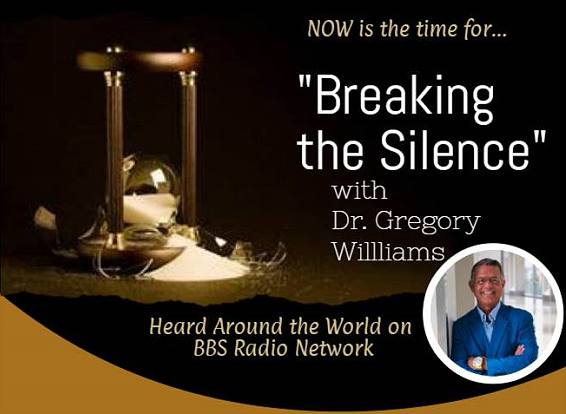

Breaking The Silence with Dr Gregory Williams
This week's guest is Chief Matt Antkowiak. Chief Matt is the Co-Founder of Team Unconquerable and the Invictus Foundation. U.S. Army veteran, firefighter, career law enforcement leader. He is the author of, "Unconquerable."
From Pain to Purpose: Faith, Trauma, Training, and the Courage to Speak
Faith at the Center of Recovery
The episode begins with Dr. Gregory Williams celebrating nearly seven years on the air and introducing a returning guest he addresses as Chief Matt. Rather than following a prepared interview sheet, Williams chooses objects around his room to spark conversation, beginning with a cross. Matt describes his Christian faith as the central organizing force in his life and explains that he views his recovery from childhood abuse through the lens of Jesus, free will, redemption, and purpose. He says he spent years angry with God but eventually came to believe that his pain could be transformed into a platform for helping others.
Turning Pain Into Purpose
Matt recounts how disclosing his own abuse has encouraged other survivors to speak. He describes an 18-year-old former martial arts student who told him that hearing Matt share his story gave him the courage to disclose his own sexual abuse publicly. That encounter becomes a vivid example of what Matt calls the transformation of pain into purpose, purpose into platform, and platform into legacy. He credits Williams as a mentor who has encouraged him spiritually and professionally while he develops his own survivor-advocacy work and forthcoming memoir.
Breathing, Truth, and Crisis Training
Using an oxygen bottle as the next conversational prompt, Williams asks how Matt handles anxiety, physiological stress, and dangerous situations. Matt describes breathing as his first response and says he follows it by asking himself what is actually true in the immediate moment rather than what fear is telling him. Drawing on military, firefighting, law-enforcement, SWAT, and martial arts experience, he argues that people do not “rise to the occasion” in crisis but fall back on their training. He emphasizes repeated preparation, mindset, and the idea that courage requires fear rather than the absence of it.
Forgiveness, Justice, and Difficult Encounters
The conversation moves into forgiveness and evangelism when Williams asks what Matt would say to a condemned man he once pursued as a police officer. Matt says he would speak to him about Jesus and pray for his soul, and he describes wanting a similar face-to-face encounter with the man who abused him. He says he wants his abuser to see that he is no longer broken and that he also wants to speak to him about Christ. For Matt, forgiveness does not erase justice or minimize harm; instead, he frames it as a way to refuse continued emotional poisoning while still recognizing accountability.
Writing Trauma Into Order
A Bible and journal become the next prompts, leading to an extended discussion of writing as a tool for trauma recovery. Matt says journaling and writing his book help him bring “order to disorder” by placing painful memories into words that he can revisit and understand. Williams describes giving trauma survivors a writing exercise focused on sensory details such as colors, fabrics, smells, sounds, time of day, and surroundings. Both men say that putting memories into language can uncover details, clarify patterns, and provide a way to process experiences that had remained buried or disconnected for years.
Therapy, Communication, and Hope
The final portion of the episode centers on counseling, honest communication, and ending the stigma around therapy. Matt says therapy has helped him understand anger, shutdown responses, family relationships, abuse-related guilt, and the difference between responsibility and blame. He describes deliberately seeking a male Christian therapist with experience in PTSD and sexual trauma and encourages other survivors to enter therapy and tell the truth about what they are experiencing. Williams closes by urging listeners to write, talk to someone, lean into faith, and remember that even in the darkest moments there is still hope.
SEO Keywords / Key Phrases
faith-based trauma healing, child sexual abuse recovery, survivor advocacy, Christian counseling, PTSD therapy, journaling for trauma, forgiveness after abuse, crisis mindset training, trauma survivor testimony, purpose after pain
Breaking the Silence
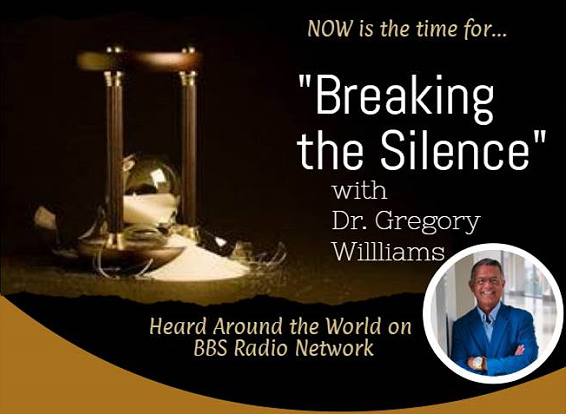

“Breaking the Silence with Dr. Gregory Williams”
Now is the time for you to step out of your own personal darkness and break the silence that has been hidden and closed up inside of you.
“Breaking the Silence with Dr. Gregory Williams” radio program will offer the listeners a Road Map to Hope each and every week with keys to discover within yourself that ray of light to make your day better and brighter. Dr. Williams will not only discuss his own personal journey of overcoming the darkness of years of horrific sexual child abuse in the hands of his father and his father’s friends, but Dr. Williams will also feature special guests that have their own personal stories of overcoming obstacles in their lives and becoming victors instead of victims.
“Breaking the Silence” will also feature information from the professional and medical field that will dive into the important research involving Adverse Childhood Experiences (ACEs) and how to build Resiliency in yourself and in your children. Along with this information will be special guests from greatest minds in the United States to share their expert research and thoughts on this very important subject that each person needs to be aware of.
Now is the time to invest a few minutes each week with some awesome information to give you steps to HOPE and keys to HAPPINESS and PEACE. NOW is the time to Break YOUR Silence and breakout into a NEW and BETTER YOU! Join us each week beginning August 13, 2019 for “Breaking the Silence with Dr. Gregory Williams”. You won’t want to miss a single program. Heard around the world on the best radio network on the airwaves, BSS Radio Network available on iTunes, Google Play, iHeart Radio, Facebook Radio, Spotify and over 100 other high quality digital radio stations.
From Pain to Purpose: Faith, Trauma, Training, and the Courage to Speak
Speaker Identification
Speaker 1 – Announcer / Prerecorded Intro and Outro Voice
The opening and closing program identifications are separate from the interview and present Dr. Gregory Williams, his background, the call-in information, and the program schedule.
Speaker 2 – Host, Dr. Gregory Williams
The announcer explicitly introduces Dr. Gregory Williams as the host. He welcomes listeners from Houston, reflects on the program’s seventh anniversary, asks the interview questions, shares his own trauma-recovery practices, and closes the episode.
Speaker 3 – Guest, Chief Matt
The host repeatedly addresses the guest as “Chief” and “Matt.” The guest discusses his career as a police chief, first responder, military veteran, firefighter, martial arts instructor, survivor of childhood sexual and physical abuse, Christian, and author of the forthcoming book Unconquerable. The guest’s surname is not clearly recoverable from the transcript, so no surname has been assigned.
...................
Speaker 1 – Announcer / Prerecorded Intro Voice:
Welcome to Breaking the Silence with Dr. Gregory Williams.
Dr. Williams is the author of the acclaimed book Shattered by the Darkness: Putting the Pieces Back Together After Child Abuse.
Dr. Williams is on the senior leadership team at Baylor College of Medicine in Houston, Texas. He travels the United States speaking to and training professionals, parents, and victims about the importance of dealing with abuse and personal trauma head-on and not being afraid to break the silence of your own personal pain.
Feel free to call in to tonight’s show at 888-627-6008 and speak with Dr. Williams and his guests live on air.
And now, your host, Dr. Williams.
Speaker 2 – Host, Dr. Gregory Williams:
Hey, good evening. Welcome.
I’m trying to get my life situated here. Welcome to Houston, Texas. Here we are. I’m right in front of the Texas Medical Center. Welcome to my home.
We’re going to have a good night tonight.
I really believe Houston is one of the most awesome cities in the world because of the diversity and the food. Just the food is worth coming to Houston for.
Anyway, welcome to the program.
We’re going to have another awesome program over about the next 53 minutes that I think will give you some information, inspire you, and also help you with something you’re going to be dealing with—or somebody you’re going to be dealing with—this coming week.
We’ve said that ever since we’ve been on the air.
I think next week—or is it this week, TJ?—is our anniversary. I’m looking for the radio staff to feed me answers here.
He’s looking it up.
Anyway, welcome to the program tonight.
We’re going to do a couple of things a little differently this evening. I have a sheet here that I was going to use to give all my wisdom, but here shortly I’m going to bring the guest in, and I’m going to do something I’ve never done before.
I trust that he has the wisdom and that between the two of us we’ll be able to have fun with this.
I haven’t even told him about it. He’s over there freaking out on the sideline, wondering, “What is he going to do to me tonight?”
So all this information I took time to write, I’m just going to throw off to the side.
I thought about this about two and a half minutes ago. I thought it might be fun. I just looked around the room to see if we could pull it off.
Anyway, welcome to the program.
We’d love to have you involved. Very rarely do we ever get a phone call, but I would love somebody who knows our guest to call in and give us some scoop on him.
That’s 888-627-6008.
I’m looking at my little chat box here to see what TJ tells me.
It’s our seventh-year anniversary on the 18th of August.
Oh, Tuesday. Okay, we’re there.
Happy anniversary. We’ve been here seven years on the radio. That’s absolutely awesome.
Maybe next week we’ll do a little recap of some of the best moments over the years.
One of my favorites—I just heard the TV off in the other room. I Love Lucy was on, and Little Ricky was there playing the drums. When he was on the show about a year ago, Little Ricky from I Love Lucy was one of my highlights.
Of course, also Dr. Bruce Perry. Dr. Perry was on a couple of times, and I absolutely loved that because his wisdom just gushed out of him.
Micah LeCert is one of my favorite people in this world as far as being a guest, an author, and an advocate, along with his wife.
And our guest tonight is becoming one of my only friends that I really trust in this field, because this field can be very—don’t be offended by this—self-gratifying.
If you have an ego, it can get blown out of proportion pretty darn quick. People will run over other people who are victims just to make sure they’re at the front of the line to take the limelight.
I like humbleness.
I like people who just come on and say, “Hey, this is what happened to me. This is how I got through it. This is what I want to do to try to help change the world with the time that I have.”
Those are the kinds of people I strive to draw close to. They’re like a magnet for me.
If you want to get involved, 888-627-6008.
And next week you can all sing “Happy Anniversary” to the program. We’ll talk about that in more detail.
If you want to also chat, the text number is right here. I’ve been getting a lot of texts.
I spoke to over 800 doctors in the Texas Children’s pediatric department Thursday and Friday, I believe, and that went awesome.
Yesterday I was about four and a half miles away at the University of Houston, talking to some doctors over there in the medical school.
It’s just been a great weekend.
This coming week I have another plethora of places to go and talk, and I just enjoy doing that.
As long as I have breath, I want to do that.
But first of all, as long as I have breath, I want to praise the Lord. The rest comes second after that.
We have a good guest tonight. This is our trifecta.
TJ, go ahead and bring this good-looking young man in.
I want my hair to look like his. I can’t get it.
Chief Matt, it’s good to have you with us live.
Speaker 3 – Guest, Chief Matt:
I was all cool and collected, Doc, until the intro. Now all of a sudden my blood pressure and my heart rate are up.
I have a lot of friends in this world. Doc, you’re one of my dear friends.
We’ve shared some really horrific stuff together, and you have me nervous. I feel like I’m in therapy all of a sudden again.
Speaker 2 – Host, Dr. Gregory Williams:
Oh, no. We’re not throwing anything at you.
You’ve got a book coming out, and we’re going to talk about that.
We just said we’re going to have you back on the week before it comes out.
Unconquerable: A Survivor’s Journey Through Abuse, Justice and Redemption.
You can get on the website right now and find out about it. I think you can probably pre-order it, or at least get on the list so you can pre-order it when that becomes available.
I think you’re still working on some chapters. We’ll talk about that a little bit later.
I want to do something different. I’ve never done this in the seven years, and TJ will attest to that.
I want to look around my room here—and my room is a mess—and find some things. I want those things to relate to something or bring up some wisdom.
I may say, “Hey, what does that mean to you?”
I’m looking over my shoulder, and I knew this was the first one I was going to hit.
So I want to go ahead and grab it.
In your life, what would it be without the cross?
How important is it for everybody listening tonight to deal with faith in their life?
There’s your cross.
Speaker 3 – Guest, Chief Matt:
Okay. I’ll put mine down since you’ve got one.
Speaker 2 – Host, Dr. Gregory Williams:
Tell me, in your world right now—and this is going to be all the intro, and then we’ll get into what you want to talk about later—how important is faith to you?
How important is it in helping you through the hurt, pain, abuse, shame, and guilt?
Speaker 3 – Guest, Chief Matt:
It’s everything.
It’s the most important thing in my life.
My relationship with Jesus—there’s nothing even close in the sphere of my life.
I love my wife. I love my children. I love my grandchildren.
But Jesus first. Jesus foremost.
What I want to do is get closer to each other if we’re both pursuing Christ.
If my kids are pursuing Christ and my grandkids are pursuing Christ, we’re going to get closer together if we’re all pursuing Christ.
It’s interesting that you bring this up. I spend a lot of time in the editorial process for my book trying to find the right passages to put into my book, because you have to be careful with that.
The most important thing I do is evangelize who Jesus is.
It doesn’t matter what place I’m in.
I wish I could go back over the last 40 years and have the relationship I have today with Jesus back then, because of all the evangelism opportunities I had that I missed.
Here’s what I believe.
You asked what it means to me: heaven and hell are real.
Anyone who really looks at the intelligent design of our universe has to ask how the astronomical chances of any of this happening without God the Creator, Jesus the Savior, and the Holy Spirit make sense.
I just don’t know how it happens without God.
I could talk about Jesus this whole time, and you’d make my night.
So Jesus is, without question, number one.
If I’m not pursuing Him in everything I do, then I need not be pursuing what I’m doing.
Speaker 2 – Host, Dr. Gregory Williams:
You just did your first keynote the other day and probably got a standing ovation and all that.
When people come up to you and say, “How can you talk about God and be pro-God when He let this happen to you? What God? He didn’t protect you.”
What’s your response?
Speaker 3 – Guest, Chief Matt:
They should read my book.
Speaker 2 – Host, Dr. Gregory Williams:
Always go for the sale. Good job, man.
Always go for the close.
Speaker 3 – Guest, Chief Matt:
But they should read it.
The reason I say they should read my book is because I’m really transparent.
I grew up Catholic. I went to Catholic school. I had nuns and priests.
I grew up a very Roman Catholic young boy, and that led up into my abuse.
Now, I wasn’t abused by the church. Let me be really clear in the traditional sense of child abuse.
But my relationship with God was so ingrained in who I was that when I was going through my abuse, there wasn’t a question: was there a God?
There wasn’t a question: was there the devil?
I had now been introduced to him through sexual abuse.
There wasn’t a question of heaven and hell.
In fact, I would be in prison today if I didn’t have faith in God during my abuse, because I stood over him with a gun.
I had all the power on New Year’s Day in 1987 to kill him with his own gun, and I couldn’t reconcile it at that age to make the decision to pull the trigger.
I didn’t understand the Word of God like I do now.
I’m not saying it would have been justified. I’m saying the way I understand the Word of God now is different than back then, obviously.
What I tell people is, look, God was there with me.
You can’t have a God who gives you free will if He doesn’t provide the opportunity for evil to exist.
If God wants a genuine relationship—not robots, not an ant farm—but wants to create something with the potential for relationship with Him, He has to provide free will in that.
When you open the door for free will—and God knew this, He knows all these things—He knew that by doing that some would choose not to love Him.
Some would choose to blame Him.
For a lot of years of my life—I refer to those as the dark years—I was not in church.
I was hating God, cussing God, screaming at God.
Good news: God can handle all that. He’s big enough for all that.
What I realized is God created free will so we could have a genuine relationship, a free relationship with Him.
We can choose Him.
He didn’t choose my abuse, but He created free will.
And if there’s going to be justice, there has to be the possibility of injustice.
I wrestled for years with this idea that God let that happen to me.
Here’s what I’ll tell you: the unbelieving me would have never had the purpose for my pain that I now have.
Without the purpose for my pain, I wouldn’t have the platform I have today.
That platform provides me the opportunity to share the love of Jesus with people, especially when they’re dealing with hard things.
Here’s what I know: growth happens in the valley, not at the top of the mountain.
When we’re up on top of the mountain, that’s not where growth happens.
If you look at a mountain, it’s in the valley, that low point, where your real growth is going to happen.
My therapist asked me three or four sessions ago, “Matt, if you could wave a wand and make it go away, would you make your abuse go away?”
Then I did what I always like to do—I answered a question with a question.
I said, “Which abuse? Are you talking about the physical abuse or the sexual abuse?”
He said, “Yes.”
Adam always seems to do a pretty good job exploring with me.
I told him, “No, Adam. Neither one of them. I would not give my journey up.”
I wouldn’t.
I have been able to touch lives.
After my keynote, I’m going to cry—and I’m not a crying guy—but I’m going to try to tell you this without crying.
A young man came up to me who had just spoken on the stage before me. He had graduated from the school district. He was 18 years old, and he had told the audience about his sexual abuse before I got up to speak.
Afterward, he came toward me.
This is a guy who, when he was in high school, trained at my martial arts school. I had no idea.
Speaker 2 – Host, Dr. Gregory Williams:
Wow.
Speaker 3 – Guest, Chief Matt:
He tells me, “Chief, it’s because of you.”
I’m like, “Whoa. What? What’s because of me?”
He said, “Because of your courage up there, I could tell my story because you told yours.”
He’s 18 years old.
Speaker 2 – Host, Dr. Gregory Williams:
Now you found your purpose.
Speaker 3 – Guest, Chief Matt:
There it is right there.
Oh, my God.
I’m sitting there thinking, Jesus and this kid.
I watched this kid worship. This is a kid who lays prostrate on the floor, face down, praising and worshiping God.
This is a kid who speaks the Word of God in a way most adults never get the opportunity to.
He loves the Lord.
Here’s what I know: Jesus didn’t cause my abuse, but He redeemed me through it.
My pain became a purpose.
My purpose is now a platform.
And that platform will be my legacy someday.
Just like you have a legacy, Doc, quite frankly I’m part of your legacy.
It’s such an honor to know you, watch you, and study you.
You’ve been in this space way before I’ve been in this space, and you’ve encouraged me and spoken life over me.
You spoke Jesus over me.
I know you pray for me. I know these things.
What a great mentor in the faith.
What a great—I’m going to call you older—older brother in the faith.
Speaker 2 – Host, Dr. Gregory Williams:
I know, right?
Speaker 3 – Guest, Chief Matt:
We can fight about that later.
But that’s what it’s about.
For the people out there who don’t know Jesus, I’m so sorry if you don’t know Jesus, or if you’ve turned your back away from Him because you’ve been through something tough.
Hear me clearly: pursue Him.
Give Him a chance.
Turn around and give Him an opportunity.
I tried everything.
I tried alcohol. I tried fighting. I tried accomplishment. I tried pursuing everything you can think of that, in the world’s eyes, would be positive and might fill this hole.
None of it filled it.
It’s a God-shaped hole in my heart that was wounded when innocence was stolen from me, when the abuse happened.
The really cool thing is God was there, so He knew how to fill it.
When I turned back to Christ in 2008 and started pursuing Him very aggressively, all of a sudden I started finding healing in a lot of the mundane silliness of the world.
This was before I made my outcry.
Now, man, I don’t want to wake up without Him. I don’t want to do anything without Him.
My martial arts school is fully about Jesus.
My work is fully about Jesus.
My story is a Jesus story, because I did nothing to redeem myself.
Christ worked on the cross.
He said, “It is finished.”
And what that means is all of it.
When He said it was finished, He was talking about my sexual abuse. He was talking about the wounds I carried.
So, yeah, Jesus is everything in my life.
When it comes down to “God let it happen,” in a way He did because He created free will, which allowed the devil, in pride, to want to be like God.
The devil has two weapons: question the Word of God and make it all about you.
Those are the two weapons you can see through Scripture.
Make it about you. Challenge the Word of God.
Jesus demonstrated the perfect example of how to combat the devil.
First, know the Word of God.
Jesus never got into a debate with him when He was tempted. Jesus simply stood in His position and the Word of God.
Jesus’ position over Satan doesn’t change.
Jesus’ authority in the Word of God doesn’t change.
So if you’re going to combat the devil with the weapon of the Word of God, you have to know the Word of God.
That’s what I would challenge readers to do.
Know the Word of God.
If you just think He’s a great teacher or prophet, cool. Read the Word, because if He’s a great teacher, you should want to read what He taught.
If you think He’s a great prophet, then you want to see what’s coming. Read the Word.
Read it even from a perspective of not believing He’s the Son of God. That’s fine. Start there.
But start by reading.
Here’s what I know: the Holy Spirit is going to work on you.
That’s not some voodoo weird stuff.
Everybody has that voice inside them telling them, “Go left or right.”
At the intersection of left and right is God’s will.
You can either choose His will and go right, or not choose His will and go left.
I tell my martial arts students this all the time: there are two ways to learn lessons, the easy way or the hard way.
Either way, you’re going to learn that lesson.
Life’s hard, y’all.
You’re not supposed to do it by yourself.
And praise God, I’ve got Jesus with me.
Speaker 2 – Host, Dr. Gregory Williams:
Man.
I tell you what, that took up half the show right there.
Speaker 3 – Guest, Chief Matt:
I know.
You asked me about Jesus. I’m going to go.
Speaker 2 – Host, Dr. Gregory Williams:
I’m playing with you. You opened that door.
I’m looking for something else.
How about this?
Every now and then I get winded going down the hallway. It doesn’t take much to get me winded anymore.
What’s going on?
This little bottle of oxygen.
What do you do when you start getting tensed up? How do you get that breathing back under control?
How do you get everything to come back down when your blood pressure is going up?
When things in life pile up on you, what do you reach for?
Besides God and the Word of God, what are some of the techniques you can share with folks tonight and say, “Hey, this helps me”?
Speaker 3 – Guest, Chief Matt:
I’ve been through some crazy stuff in my life.
Through my military experiences, jumping out of aircraft, facing down bad guys who are trying to kill you, moments as a firefighter crawling into a fully involved structure, shooting situations, threat situations.
I teach combatives for a living. It’s one of the things I do.
I have a martial arts school, and I tell my students all the time: what I always do is breathe.
Here’s what I know.
The first thing you’re going to do in life is breathe, and the last thing you’re going to do in life is breathe.
God’s name itself is breath: Yahweh.
It’s breathing in and breathing out.
When I fight and I get hit, I breathe before I hit back.
And that’s sparring in the gym. I think we fought 14 rounds Friday night.
When I’m doing anything, it starts with recentering with my breath.
Speaker 2 – Host, Dr. Gregory Williams:
Explain it to me like I’m a third grader.
Speaker 3 – Guest, Chief Matt:
Okay.
I struggle with great anxiety.
It’s a doom anxiety. I’m waiting for the proverbial shoe to drop.
When I feel that, it often makes no sense. There may be nothing necessarily going on.
I’m learning that things in my environment can trigger things that are really deep and suppressed in me, and I don’t recognize it yet.
I’m trying to recognize those things.
So I feel that pressure, that overwhelming sense that something bad is about to happen.
Then I ask myself a couple of questions.
What’s true about the moment?
If I’m walking in on a call, what’s true?
What do I know I’m walking into—not what is my mind spinning off to?
I will tell you, it’s a one-two punch with me: spiritual warfare and physical warfare.
My wife does incredible work teaching the Word of God on spiritual warfare.
For me, I have a deep understanding that the battlefield of my mind affects the spirit.
No physical fight can happen without a spiritual fight.
But you can have spiritual fights without physical fights.
FBI statistics—one in three Americans will be faced with violent crime in their life.
And 100 percent of the people hearing my voice will have a spiritual attack.
Those are the doubts, thoughts, and questions in your mind.
You’ll have them before you go to bed. You’ll have them in your dreams.
When I’m faced with that anxiety, the first thing I do is breathe, and then I ask myself, “What’s true?”
Not what do I perceive?
Not what do I think?
What’s true?
Once I know what’s true, I can work the real problem.
Because the devil, in my belief, is the master of lies and falsehoods.
Whereas Jesus cannot lie.
No word from Jesus’ mouth will hit the floor. All of those things will be true.
When I’m faced with real danger—when I’m in fight-or-flight, in the center of that part of my brain where what’s about to happen is going to either send me home or let me come home—it’s breathing and realizing what’s true.
It doesn’t matter whether it was a SWAT callout, a warrant service, a domestic violence call, or an interview box with a predator.
Many times I will breathe and ask myself, “What do I know to be true in this moment?”
Not what do I think?
What do I perceive?
What do I know to be true?
Then I can go from there.
Speaker 2 – Host, Dr. Gregory Williams:
How important is mindset?
I don’t think we comprehend it.
People like me—I’m kind of a wimp. I’m not much of a man type of thing.
If a building’s on fire, I run the other way.
If somebody’s shooting a gun in a crowd, I run as fast as I can the other way.
But you, in both of your careers and some of the other things you’ve done all of your professional life, when that stuff happens, you run toward it.
Here it is. Game on. Boom.
And you’re telling me, you breathe?
Speaker 3 – Guest, Chief Matt:
Yeah.
It sounds crazy, but here’s where that confidence comes from.
I train on crisis management for leaders.
As a police chief, I’ve managed many crises and investigations.
You’re never going to rise to the occasion.
That is such a lie from the pit of hell.
No one rises to the occasion.
That’s not true.
I’ve never seen it.
Thirty-five years as a first responder dealing with crazy stuff—South Dallas, Panama City, Panama, dangerous places—it doesn’t matter where I’ve been.
I’ve never seen someone rise to the occasion.
Here’s what happens: you fall to your training.
You fall to your training.
For me, I breathe because that settles everything down.
There’s the psychology of the fight and the physiological aspects of the fight, and you have to control both.
Your mindset is absolutely going to determine that.
As a first responder, I’ve always told my wife, “I’m either going to come home or go home.”
I’m not reckless.
When I strapped a rifle on and went into the woods after a guy who had murdered his kids and nobody else would do it, somebody had to go in and get him.
Here’s what I knew.
I was trained in the infantry.
I was trained by the best military and the best fighting instructors on the planet, in the jungle and in the woods.
I was trained as a SWAT operator and a top marksman.
So I knew going into those woods against this man, whose last name was Muhammad, that I had the advantage.
He had murdered his children and had already tried to kill me. He is now facing execution.
I knew the terrain better than he did.
That’s the truth.
I knew I was better trained than he was. I was better equipped than he was.
Those are truths.
When you know a truth that gives you the advantage, it starts settling you down.
Second, I knew what I was looking for.
I knew what danger was in front of me.
There was no guessing.
It was a guy with a gun in the woods who had already tried to kill me and had killed his children.
It really came down to this: right before I went into the woods, I put my rifle in my hands and went in because I knew somebody had to go get the guy.
I’m secure in the fact that I train not just to get it right.
Great trainers train people to get it right.
But if you want to be elite, you train until you cannot get it wrong.
You do the extra reps.
You’re not satisfied with good.
You’re not satisfied with great.
You say, “I’ve got to do this so that no matter the environment, no matter the stressors, no matter the stimuli, I can perform the task without fear that I’m going to fail in the task.”
When I know those truths, it comes down to: breathe.
Know what you know.
But let me be really clear.
There is no courage without fear.
Anybody who tells you, “I ran into those woods, yahoo, my guns were blazing, without fear,” is not telling you the truth.
I had fear.
But my fear wasn’t where I would end up if it went wrong.
My fear was: what if I didn’t get it right?
Speaker 2 – Host, Dr. Gregory Williams:
We’re about a minute and a half away from a commercial.
You mentioned this gentleman you ran into the woods to get after he killed his children.
What was his first name?
Speaker 3 – Guest, Chief Matt:
His last name was Muhammad.
Speaker 2 – Host, Dr. Gregory Williams:
Muhammad. Okay.
And he’s getting ready to be executed?
Speaker 3 – Guest, Chief Matt:
Yeah, in Texas. He’s coming up on execution.
Speaker 2 – Host, Dr. Gregory Williams:
In the minute before we take a break, this just came to me while you were saying that.
Right before his execution, if they say, “Hey, anybody you want to talk to?” and he says, “Chief Matt,” what would you say to him?
Speaker 3 – Guest, Chief Matt:
He’s already invited me.
Speaker 2 – Host, Dr. Gregory Williams:
Wow.
And you’ll go?
Speaker 3 – Guest, Chief Matt:
One hundred percent.
Speaker 2 – Host, Dr. Gregory Williams:
What would you say to him when he knows he’s going to be dead within moments?
Speaker 3 – Guest, Chief Matt:
I would say, “Muhammad, I’m going to die too. Do you know where you’re going?”
Think about the thief on the cross next to Jesus.
You have to think about this.
Here he was on the cross next to Jesus.
One man was ridiculing Jesus and cussing Jesus, and another recognized who Jesus was.
And Jesus said, in essence, “Because you recognize who I am, you’ll be in paradise with Me today.”
I’m paraphrasing that. I’m not quoting the Bible verbatim.
But here’s the point.
I can imagine what happens next.
There’s a great sermon out there about this.
The man pops up in heaven, and I’m sure St. Peter’s like, “Wait, what did you do to get here? Do you know His Word?”
He’s like, “No. The guy on the cross next to me said I could come here with Him.”
He didn’t go to Sunday school.
He didn’t put money in the plate.
He didn’t evangelize Jesus.
He didn’t go through the sacraments if you’re Catholic.
He didn’t know any of that stuff.
He just proclaimed Jesus as Lord and Savior, and he gets to go to heaven.
So, yeah, if I get the chance, absolutely I’ll go.
I’ll go sit in the seats with his family.
If he’ll spend five minutes with me, let me tell him about Jesus.
Because here’s the deal.
We are not given an “if you have time, if you would like to” order from God.
God’s pretty darn clear.
He says, “Go.”
That’s a commander telling you to do something.
He’s not saying, “If you’d like to.”
He says, “Go tell the world about Me. Baptize them in the name of the Father, the Son, and the Holy Spirit, and make disciples.”
He didn’t say, “If you want to do that.”
So I don’t have a choice.
If this guy invites me, I’ll go.
And I’m going to tell you right now, we can pick it up after the break, but I’m also going to be in front of my abuser.
It’s going to happen.
I’m working that process very aggressively.
I’ve written some letters.
I’m trying to get the governor of Oklahoma to order it.
One of my old partners is now in charge of the Department of Corrections in Oklahoma.
I want to be face-to-face with my abuser.
I want to sit across from him.
There are two reasons.
I want him to see an unbroken man, on purpose, with a platform, securing my legacy in Christ Jesus.
And I want to tell him who Jesus is.
Because here’s the thing: if I’m not willing to do that for this guy who murdered his kids, or this guy who raped me for three years and abused other kids, then what I’m doing is weighing sin.
If Jesus said it’s all finished, then I have to forgive people.
Because all unforgiveness does is act like drinking poison every day.
If I get the chance to go down and sit with this man before his execution, I’m going to bring the Word of God with me.
During that execution, there is going to be one person in there praying for his soul.
Just like I pray for my abuser to know Christ.
Because if Christ will redeem him, then I’ve got a chance.
Life is like striking a match.
You crack the match, it burns, then you blow it out and there’s just a whisper of smoke.
That’s how long life is in the scale of eternity.
For me, that larger understanding of creation and God has driven most of my life.
Yes, I turned my back on God. I cussed God. I yelled at God.
I still have hard conversations with God.
But here’s the key: I have conversations with God.
He can handle your anger.
He can handle your fear.
He can handle your questions.
Anybody who says they’re a believer and they never question their faith or where they’re going is not being honest.
There are two types of people who believe in Jesus: those who are going to tell you they never question, and those who tell you they do question.
Because you can’t go through life and not be human.
Our brains can’t really conceive all of it.
But what I know that I know is that I made a decision that everything in that book I read is true.
They’re not stories to me.
They’re accounts—historical accounts of things that occurred and prophecies of what’s going to occur.
Every major religion in the world, in some way, recognizes Jesus of Nazareth as an important figure.
The way I understand it, He appears across religious traditions.
But Christianity is different to me because Christ’s tomb is empty.
I’ve sat in His tomb for 45 minutes in Israel.
And that tomb is empty.
Speaker 2 – Host, Dr. Gregory Williams:
Amen.
Tell you what, let’s take a breath.
We’re not taking a break.
This will allow TJ, when he edits this and sends it out to the podcast world, to give us a clean spot.
So we’ll both take a nice, simple breath.
Speaker 3 – Guest, Chief Matt:
Yeah.
Man, you got me excited now.
Speaker 2 – Host, Dr. Gregory Williams:
You got me up there on the boat, boy.
We’re going around the room for ideas to talk about.
Okay. We’re back after that “commercial break.”
Let’s see what else I’ve got.
Oh, this is one I live by.
This is the Bible.
This is my journal.
Speaker 3 – Guest, Chief Matt:
Okay.
Speaker 2 – Host, Dr. Gregory Williams:
The Bible.
How important is it for you to get out of yourself and bleed onto something emotionally, mentally, physically, and spiritually?
Because if you hold it in—is that the reason your hair turned white?
Speaker 3 – Guest, Chief Matt:
You came at me on that one.
Speaker 2 – Host, Dr. Gregory Williams:
But how important is it?
You beat me on the record. I have to call Guinness and say, “Wait, I don’t know the record now.”
Matt does, with about 37 years of holding it in.
How important is it to find something you can actually write down, expel, get out of your system, so we don’t hold it in?
Lord knows we both held it in way too long.
Let’s talk about that.
We’ve got another 25 minutes.
Speaker 3 – Guest, Chief Matt:
We’re both physical and spiritual beings.
There’s more than just the mind. We’re physical beings, and we’re also spiritual beings.
There are connections there that we have to handle.
If something happens in the physical and we don’t physically heal, we have a problem.
You get a cut, you put a Band-Aid on it, maybe some Neosporin. You do something physical to help it heal.
The problem with mental health and spiritual health is we often say, “Oh, no, that’s not physical. Just give it to Jesus.”
That is such a bunch of crap when religious people say, “Just give it to Jesus,” and never tell me how to give it to Jesus.
Because if you can tell me how, I’m in. Let’s go.
Here’s what I’ve learned.
I can give it to Jesus a couple of different ways.
You can’t just say, “Here you go, Jesus. I’m good. I’m healed.”
That’s not how it works.
As a physical person, writing—and this is so established in education—creates a connection.
In fact, I would even encourage cursive writing about your trauma over print writing, and print writing over typing.
I do a lot of typing because that’s what I like.
But I would tell you that writing is a physical action that helps address a spiritual burden that was caused by a physical action.
I’m convinced of this.
I can’t give you qualitative data to prove it. I’m talking about my belief and my interaction with hundreds of victims.
When you can connect a physical thing—walking into a courtroom, for example—I have watched people get bigger.
I’ve watched people walk into the courtroom and physically change as they interact with justice.
I can’t get justice for my situation.
So I write it down.
A couple of things happen when I write it down.
Number one, it puts order to disorder.
That’s first.
It puts order to disorder.
What happened to me was not order.
You got me on the Bible stuff, so I’m going to stay on it.
In the Garden of Eden, everything was ordered as God wanted it, and then the devil entered with a lie that broke the order.
That’s why, in my belief, our world is in chaos.
Something of disorder entered a life that was in order.
I have to put it back in order somehow.
When I physically write, what I’m doing is bringing order to my thoughts and to the disorder of my abuse.
It allows me to put it into the four corners of a piece of paper, in time, so I can now reread it.
I’ve read my book four times.
Every time I read it, it’s a little bit lighter for me.
So I know there’s action there.
In fact, this last time I’ve been reading it out loud, which is crazy too.
I absolutely believe journaling is critical.
I took investigative notes throughout my career—volumes of them.
As a martial artist, I have volumes of notes from training.
In all my military and police training, I took volumes of notes.
I didn’t start journaling until Scoop Jefferson at WFA said, “Hey, I think you should do a couple of things.”
I said, “Okay, what’s that?”
This was after my outcry.
He said, “You should journal. You should get into therapy. And you need to write a book.”
That process took about a year and a half, and it’s still ongoing.
One more chapter to go back and forth with the editor and we’re good.
Legal review is done. All the headaches are done now.
I’m almost there.
That journey has been such a journey of healing for me because it required me to order the disorder.
So I think journaling is critical, Doc.
Speaker 2 – Host, Dr. Gregory Williams:
That’s true.
I remember I told my mom that I wasn’t going to write about my story until she passed.
When I was driving her car back from Orlando after she died, around July 24 or 25, close to my birthday, I started writing the book in my head.
When you start doing that, it starts opening up things you thought were gone, and they’re still there.
Speaker 3 – Guest, Chief Matt:
I think it’s a matter of getting clarity too.
I’ve gotten some unfortunate clarity through the process of the last year.
I’m going to say something on here that I haven’t said very often.
My mother was a monster to me.
A lot of people are going to hate that I’ve said that.
I’ve got relatives who think I’m on this bent to ruin lives.
But what I’ve come to terms with is that there’s so much about my abuse that I share in my book and have talked about in therapy that there’s no way they didn’t know.
There’s no way my brother didn’t know.
There’s no way things were happening in the house and people were completely unaware.
I know my brother had to know because there was an incident in Lawton, Oklahoma, where we were camping.
My brother was feet away from us in a different tent.
It was the first time I was crying out loud for my abuser to stop.
It was the first time I was not just dissociating from the abuse as it was going on.
It was the first time I was begging him to stop, begging for my brother to come help me.
There’s no way he didn’t hear.
Now, was he frozen, not knowing what to do? Maybe.
But I’ve had to wrestle with comments by my dad and my mom that don’t reconcile with normal.
So I’m wrestling through: were they in some way involved in what was happening?
I don’t know.
But what I do know is that writing this down and chewing through it has brought clarity.
It has brought a lot of stuff back out of my brain that I had never put two and two together.
Hear me clearly for anybody listening to this: there’s nothing I can do to change what happened.
But I can do two things.
I can bring order to the disorder for my personal health.
Second, I can study what happened to me, because I know it intimately, so that I can talk with moms and dads and educators and other people and help them become the one adult I never had.
Speaker 2 – Host, Dr. Gregory Williams:
That’s good.
When someone calls me for counseling, the first assignment I give them is homework.
I’ll talk to them for an hour and say, “Before the next time we talk, I want you to do some homework.”
And they say, “Oh, no, I don’t like homework.”
No, no.
I tell them, “Get a piece of paper. Write down everything about the worst event that happened to you in your life.”
They say, “Well, I don’t want to do that.”
But I say, “Wait. I want you to write down the color of the paint on the wall, the type of fabric that was on the couch or the bed or the carpet, the smells, the color of the drapes. Was there music playing? What time of year was it? What time of day was it?”
I start pulling out 12 or 15 of those things.
When you start doing that, it can become vivid.
I literally started creating in my head, “Wow, I was in red flannel check pajamas.”
It started becoming vivid to me.
And that helped me.
That brought clarity to me.
Speaker 3 – Guest, Chief Matt:
I use that very thing as an investigator.
Details matter.
By the way, I have exonerated a lot of people from false accusations too.
Yes, I’m on a mission to stop child sexual abuse, but there are a lot of cases I’ve investigated where things were not true.
Details were not consistent.
Not just because of my situation, but because of over a thousand victims I’ve interacted with myself—in one case, 950.
So I’ve got a legitimate backstory of investigations that I can look back to and know.
When I’m dealing with predators, I go back to the source of their abuse.
When I’m dealing with victims, I go back to the source of their pain.
What I start with is the environment.
I start with details that are going to do one of two things.
They’re either going to confirm where it happened and that it happened, or they’re going to confirm that we need more time before we proceed with a prosecution.
It’s a tough area of crime to work in because you hear horrific stuff, but also because you often don’t have good witnesses and you don’t have good victims in the traditional investigative sense.
They’re all bad witnesses because trauma affects memory, behavior, and disclosure.
I would have been a horrible victim for an investigator at first.
I learned things.
In fact, in the book I talk about how, as an investigator, I had some “superpowers” that came from my abuse.
I didn’t know where they came from, but now I look back and go, “Oh, my gosh, that’s where it came from.”
Sitting down with a victim and getting them comfortable before we go into the horrific stuff is critical.
Unfortunately, as an investigator, you have to walk through the elements of the offense and what actually occurred.
We’ve gotten so much better at it in law enforcement over the years, but it’s tough.
Likewise, with a suspect, I have to get them comfortable too.
No one confesses when they’re uncomfortable.
No one outcries when they don’t trust you.
There are real methods I’ve used in my own personal healing over the last year.
My therapist actually told me to do something one time, and this is what brought me to the realization that my mother was not good to me.
She was as good as she had been trained to be by her mother, who was a monster to her.
My therapist said, “I need you to take off the victim hat, the survivor hat, and put on the police-investigator hat for me for a minute.”
We were talking about some very specific horrific events—physical abuse that occurred, not the sexual abuse.
He said, “I’m going to read you what I just wrote down that you told me. But I want you to tell me, from an investigator standpoint, what you would do.”
It was a moment when I came to the realization: I would go get a warrant for arrest.
Speaker 2 – Host, Dr. Gregory Williams:
Wow.
Speaker 3 – Guest, Chief Matt:
And he said, “Okay. That doesn’t change your today. That doesn’t change your tomorrow. But it does give you the right to not be in relationship without guilt.”
I love my mom.
I love her to death.
I pray for her.
I have forgiven her for all of it.
But I have the right to be away from her.
And it’s sad.
No son should be without his mother when she’s alive.
But I’ve had to be, because she’s not well when she interacts with me.
It probably goes back to the fact that she wanted a big family and I’m the youngest of two, and my birth was so difficult that it tragically ended her ability to have other kids.
I think a lot of what went on in my childhood went back to that fully uncontrollable thing by me.
But what I’ve come to learn in my healing process is my sexual abuse is fully not my fault too.
Speaker 2 – Host, Dr. Gregory Williams:
Absolutely.
Speaker 3 – Guest, Chief Matt:
I participated for my safety, even when I was actively involved in sexual acts during the abuse.
It wasn’t because a child can consent.
It wasn’t because I wanted that.
I wanted it to end as quickly and safely as possible, especially when he got really violent.
I knew my behavior impacted his violence and his level of anger toward me.
Because he was abused terribly.
And I’ve heard you say this: “Every abuser has been abused.”
You don’t know how much that sentence has affected me.
I’m going to have it tattooed on me because I learned that from you.
It’s a fascinating sentence.
It caused empathy for me.
And this is why a lot of detectives have asked me over the years for my perspective in tough cases, specifically with sexual abusers.
They’re like, “You just walk in there and relate to them. How? Don’t you want to go take a shower?”
I’m like, “Man, I want to kill them.”
But justice doesn’t happen that way.
What I do know is that because there’s free will, we have a just God, and justice is coming.
Speaker 2 – Host, Dr. Gregory Williams:
Yeah.
Speaker 3 – Guest, Chief Matt:
You can’t have goodness, in my belief, without justice.
When I walk into those interview rooms and I’m dealing with a predator, I’m on a mission to get the facts.
Call balls and strikes.
I don’t have to create anything.
I don’t create the strike zone.
I don’t move the strike zone.
I just call balls and strikes.
I go into those interviews and need them to be as honest as possible.
Honesty only comes from trust.
So I’ve got to build a bridge with them.
I start with the source of their abuse—what made them the monster they’ve become.
It doesn’t justify what they’re doing or have done.
It explains it.
More importantly, in my role, it allows me to interact with them on a level that is judgment-free.
For the first time in their life, perhaps someone in authority sees them and hears them in their abuse.
I spend a lot of time on that.
My interviews are not short.
I used to make my partners mad all the time because I’d be in there with stuff they’d say we didn’t need.
And I’d say, “I don’t lose in court.”
I don’t lose because I want to spend the time it takes to get to the core of what made them who they are.
Understanding the psychology of a predator is critical.
You can’t prepare people to fight the devil if you don’t know the devil.
You have to know his schemes, devices, methods, and means so you can combat them.
You close the gaps that need to be closed.
Our society needs to close the gaps in big ways.
Institutional abuses are a failure to close gaps.
Speaker 2 – Host, Dr. Gregory Williams:
Yeah. That’s good, man.
We have time for one more.
You’ve mentioned this 25 times tonight—your therapist, your therapist.
I’ve got a cell phone here. This reminds me of communication.
How important is it for people listening to this program who have been hurt, who have never talked to anybody, and who have held it in all these years?
Maybe they’re trying to break the record we’ve talked about.
Speaker 3 – Guest, Chief Matt:
Don’t do that.
Speaker 2 – Host, Dr. Gregory Williams:
No, don’t do that.
How important is actual honesty—even with your wife, with your kids—when you’re having a bad day, when you’re having flashbacks, when you’re having off days?
How important is it to honestly and authentically communicate?
Speaker 3 – Guest, Chief Matt:
That’s a great thought.
My wife has made comments, and friends of mine have made comments.
I shut down.
I get pretty pissed off and angry.
I don’t blow up or anything, but I get very short with people.
People who know me well have said, “There’s something different about Matt.”
In fact, they’ve gone to my wife and said, “Hey, what’s going on with him? Something’s different.”
What’s different is I manage my life better now because I talk about the things I never talked about.
I used to have this stigma about therapy that was terrible.
I’ll tell you right now: anybody who has been sexually abused, physically abused, or has mommy or daddy issues—get into therapy.
Get into therapy.
Be honest in your therapy.
Tell the truth.
My counselor is Adam.
I make no secret about it. I’ve put him on Facebook.
He’s really young—way younger than I thought my therapist would be—but he asks and challenges me to see not right or left, but in between.
It’s changing a lot about how I share the love of Christ with people too.
More importantly, it has opened up conversations.
I am more comfortable talking about my messes because I’ve had a safe place to do it.
I get to set the terms in my meetings with Adam every Friday.
I can say, “I’m done talking about it.”
And I have.
I’ve said, “I don’t want to talk about that right now.”
He says, “Okay, let’s move on.”
I’ve also been able to go in there and say, “I want to talk about this.”
And it’s great.
I brought my wife into counseling, by the way, for the first time.
That was mind-boggling.
She was like, “Oh, my God, you’re squirming.”
She said, “You didn’t move, but I know you. I could see into your head. You were squirming the whole time.”
She said, “I loved it.”
What she really said she loved was the fact that I’m stepping into courage with therapy to work on me.
I’ve had young people tell me that it inspires them that, quote, “the old dude” is willing to go get therapy.
Everybody should get therapy.
You have to talk about this.
It’s not a weakness.
It’s equipping me.
I don’t have all the really cool therapeutic terms.
I can’t give you all the therapy language.
But here’s what I do know.
Therapy works.
It’s helping me understand why I’m wired the way I’m wired.
Abuse teaches me that everything is my fault.
That’s what abuse teaches me.
Therapy has taught me, “Not so fast.”
My abuse has a foundation of lies underneath it.
I go to a Christian therapist who is giving me a foundation of the truth of the Word of God in light of my therapy.
Psalm 10 has been one of the greatest healing moments of my journey—going through that Psalm with him and understanding that I’m not alone.
And, oh, by the way, there is an owner’s manual for life, and it is called the Word of God.
My healing journey is faith-based, 100 percent.
I sought out a person who knew PTSD, knew sexual trauma, counseled men only, was a man—I thought that was critical for me—and was going to approach it from the truth of the Word of God.
I wanted God involved in my healing because I believe I’m going to be with Him.
So we might as well work on it now.
I may not be completely healed on this Earth, but Revelation says every tear will be wiped away.
Which means there is hope.
Even if you’re in the darkest moment of your life and you haven’t spoken about it, there’s hope.
You have to talk about it.
Speaker 2 – Host, Dr. Gregory Williams:
Fantastic.
We’re out of time.
But be watching for this book, Unconquerable: A Survivor’s Journey Through Abuse, Justice and Redemption.
We promise to have Matt on the Sunday before it hits the worldwide charts.
Hopefully it’ll be around the second week of September, after Labor Day.
Speaker 3 – Guest, Chief Matt:
That would be great.
Speaker 2 – Host, Dr. Gregory Williams:
Thanks again, Chief.
Speaker 3 – Guest, Chief Matt:
Doc, I love what you’re doing.
I love you, brother.
You are making an impact—seven years of impact.
Thank you for letting me join your journey and be part of this.
Speaker 2 – Host, Dr. Gregory Williams:
This was a different program.
But I knew we could do it.
I thought, “Let’s just pick up some stuff and have fun.”
I had about ten more things I could have found.
Speaker 3 – Guest, Chief Matt:
Well, hey, I’ll do that. I’ll do that.
Speaker 2 – Host, Dr. Gregory Williams:
We did it.
I want to put you in the hot seat.
Speaker 3 – Guest, Chief Matt:
I’d like to come back and put you in the hot seat.
Speaker 2 – Host, Dr. Gregory Williams:
We’ll do it. We’ll let you do that.
Thank you, Chief. I appreciate you.
God bless you all.
Thank you so much.
We’ll be praying that everything goes well with this final chapter, that everything gets rolling, and that the press starts publishing this thing as quickly as it’s supposed to.
Speaker 3 – Guest, Chief Matt:
I’m supposed to have my author copies in two weeks.
I can’t wait.
You’re going to get a signed personal copy. I’m going to hand it to you.
Speaker 2 – Host, Dr. Gregory Williams:
That’d be fantastic.
I’m looking forward to it.
Love you, brother.
See you.
Like we do each and every week, I always like to end the program.
This was one of the strangest ways to handle an interview, but I knew he could handle it and I knew we could do it together.
We would find something.
I can talk to a doorknob. Matt can talk to a doorknob too.
That’s who we are.
But I think when you have the freedom of understanding that we have been quiet so long, now you look for opportunities to share.
I know why I’m waking up in the morning.
I know what I have to do.
It’s to help one more person.
He has that same heart.
If you need help, if you need something, I think you learned tonight: write it out.
Get it out of your system.
Find somebody to talk to.
Most of all, lean into God.
Give Him a shot.
And if you need to talk about that, text me. We’ll work out a time to get with you and share.
And I know if I have too many, I’ll pass some on to Matt, and he’ll be glad to talk to you about Jesus Christ too.
Thank you so much.
No matter what you’re going to experience this week, no matter how dark it’s going to get outside, there’s always hope.
There’s always hope.
Thank you, Matt, for being with us tonight.
See you next week for another edition, right here from Houston, Texas, of Breaking the Silence.
God bless you.
Have an awesome week.
Good night.
Speaker 1 – Announcer / Prerecorded Outro Voice:
Thank you for listening to Breaking the Silence with Dr. Gregory Williams.
To contact Dr. Williams, dial 832-396-6525 or email shatteredbythedarkness@gmail.com.
And don’t forget to join us each Sunday night at 8 p.m. Central Time, 6 p.m. Pacific, on BBS Radio Station One for the next episode of Breaking the Silence.


