As promised on our last show, here are a couple of easy fermentation recipes for sauerkraut and fermented cashew cheese. If you have any questions, comments, or ideas for future shows, please feel free to reach out and email us at bbsradio.com/downanddirty.
The following recipe is from https://panaceaspantryblog.com. Jade is a naturopath turned foodie (in her own words) and has a plethora of delicious recipes with a focus on whole food ingredients and allergy free and specific diets- gluten free, dairy free, refined sugar free, vegan, nut free and more. From breakfast to snacks; from chocolate to cheese, Jade has my mouth watering just looking at the photos on her website.
Although I’m not vegan… I am dairy intolerant. I found a great tasting cashew cheese at my favorite natural food store but dang, is it ever pricey… Then I got to work (as I often do… as I embody a “Hey, I can make that myself” attitude) and I researched how to make this delicious cheese/spread/dip. After experimenting with a few recipes, I decided that this was my fav and so I’m now sharing it with our listeners. I hope you enjoy.
Oh, non-vegan folks love this recipe as well, so much so, it’s hard to keep stocked in your fridge. Just ask my daughter.
Fermented Cashew Cheese
Ingredient notes
- Raw cashews make up the body of this vegan cheese- make sure they are raw and unsalted. (I prefer organic)
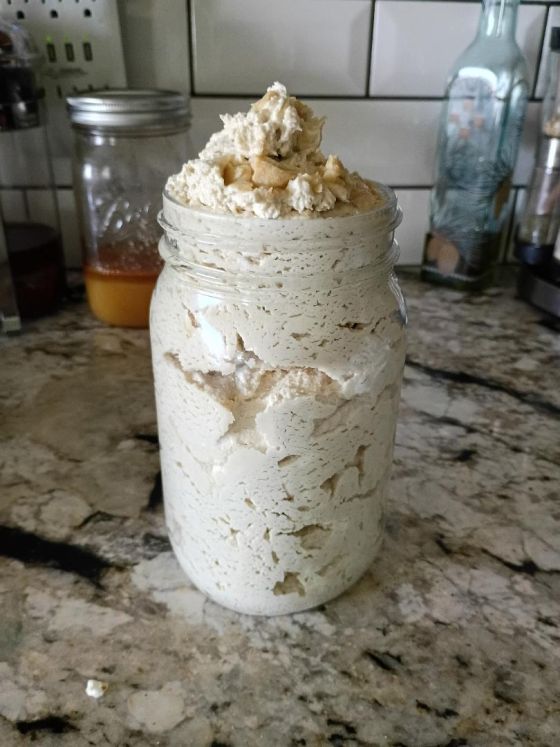
- Sauerkraut brine (my preferred choice), homemade kombucha (or probiotic capsules), brine of any unpasteurized cultured vegetables (for example kimchi) or apple cider vinegar with the mother (last option) (Bo’s side note: I have only ever used sauerkraut brine and have had success every time. I also make a single batch at a time and have great success at the cheese rising… you know, just like bread dough does. It’s a beautiful thing.)
- Filtered/spring water. (no chlorine please)
- A glass bowl with a airtight lid (Bo’s note: I ferment my cheese in a quart sized mason jar and top with cheesecloth and a rubber band to hold in place)
How to make fermented cashew cheese
- SOAK your cashews in water with salt for 4 hours. Drain and rinse. (Bo again: I’ve never rinsed after soaking. Call me loco, but I feel that the salt and water actually start the fermentation process and I don’t want to wash any of that ‘goodness’ away)
- BLEND your cashews with remaining salt and sauerkraut brine.
- POUR your mixture into a glass jar with an airtight lid. Find a warm spot out of direct sunlight and leave to ferment. (it’s me, Bo again: Everything I ferment, except kombucha, goes into my oven with the oven light on. Do not heat your oven as you will kill the good yeast and bacteria that are working so hard to ferment your goodies. Why the oven ? The light keeps an even, consistent temperature of about 75 to 85 degrees F which is best for many fermented foods.
- Once lots of bubbles have formed, TASTE your cheese to see if you’d like to leave it to ferment for longer.
- ADD in optional flavoring.
- STORE in a glass jar, in the fridge for up to 3 months.
Homemade easy fermented cashew cheese
- Author: Jade Wood
- Prep Time: 4 hours (soaking time) 15 minutes prep time
- Cook Time: 12-36 hours (48 max) fermenting time
- Total Time: 59 minutes
- Yield: 12 serves
- Category: Fermented foods. Spreads.
- Method: Fermented
- Cuisine: American
- Diet: Vegan, Dairy-free
Description
Homemade fermented cashew cheese. 2 ingredients (because water and salt don’t count, right?), quick to throw together (if you don’t count soaking/fermenting time), gluten and grain free, refined sugar free and gut friendly.
Ingredients
- 3 cups raw, cashews
- 2 tsps good quality salt, divided. ½ for soak other for blending
- 3 Tbsp unpasteurized sauerkraut brine (see notes)
- 1/3 – 1/2 cup filtered water (or spring water) for blending (see notes)
- Optional extras- chopped herbs, salt, black pepper, roasted garlic, lemon juice or any other flavors you want.
Instructions
- Soak your cashews in filtered water and 1 tsp salt for 4-12 hours
- Drain and rinse the nuts and add into your blender with the remaining salt and Sauerkraut brine and water. (your choice, but remember, I don’t rinse and always get great results).
- Blend until completely smooth- this can take quite a while and you should ensure your mixture doesn’t get hot, you might need to blend in 1-minute increments. Take the time to make sure it’s super smooth and don’t be afraid to use your tamper to get things going. (Vita mix lingo)
- Put the blended mixture into a sterilized, clean glass jar. Be careful to make a neat layer. Clean off any mixture that sits on the rim or sides of the jar (to prevent mold from growing). Secure the lid. If you don’t have a jar with an airtight lid, you can cover with a cheesecloth. NOTE: Do NOT use an ‘olive oil seal’.
Make sure you leave enough room at the top of the jar (at least 5 cm/2 inch) for the cheese to grow. As it ferments, lots of bubbles will form and the cheese will expand upwards. - Leave your mixture to ferment in a warm spot (out of direct sunlight) for 12-36 hours. Fermentation time will vary depending on the weather (the warmer the quicker), as well as what you want your finished product to taste like. The longer the fermenting process, the sourer your cheese will be. The ideal temperature to ferment is around 24C (75F) so if you are fermenting in winter it can take considerably longer! (Try my oven light trick. You’ll be glad you did. BTW, this method is perfect for making sourdough bread too)
- Your cheese is ready when you see lots of small air bubbles throughout. Use a clean spoon to taste your cheese- if the flavor is too mild, leave it for longer.
- You may find the top of the cheese has formed a skin- just stir it in as you transfer the cashew to a bowl. (Bo’s quip: I eat the top before anyone else can, lol.) Add in any optional flavors, mixing through. (Bo says: If I want to add flavors, I do individually per serving. Sometimes I may want chipotle powder & dill (thanks Karin & Donnie), sometimes I want it straight… like when I use it for my gluten-free sourdough discard veggie pizza. Oooo, I’m getting hungry!)
- Store in a glass jar in the fridge for up to 3 months.
Notes
- If you don’t have access to sauerkraut brine, you can use other fermented starters. The flavor will vary, but homemade kombucha starter OR unpasteurized apple cider vinegar (ACV), with ‘the mother (please see blog notes if using ACV) can be used. Coconut kefir works very well. (Bo: I just made my own fermented sauerkraut, but when I don’t have my own to take the brine from, I use Bubbie’s brand, it’s delish!)
Sauerkraut Recipe (reposted from our article “Why I Ferment” on May 27, 2025)
Fermentation for Beginners: Start with Sauerkraut
Ready to dive in? Fermentation is easier than you think—experts like Kirsten and Christopher Shockey (authors of Fermented Vegetables) call it forgiving and fun. Here’s a simple sauerkraut recipe to get you started, inspired by their hands-on approach:
What You’ll Need
- 1 medium cabbage (about 2 lbs)
- 1.5 tbsp sea salt (non-iodized, about 2% of cabbage weight)
- A clean 1-quart Mason jar
- A weight (like a smaller jar or fermentation weight)
- Here’s a link to find fermentation kits: https://www.amazon.com/s?k=fermentation+kit (disclosure: I am not an Amazon affiliate, this link is only to show you what is available on the market)
Steps
- Prep: Remove cabbage’s outer leaves, core, and shred finely.
- Salt: Mix cabbage with salt in a bowl. Massage for 5-10 minutes until it releases enough liquid to form a brine.
- Pack: Stuff cabbage tightly into the jar, pressing down so the brine covers the cabbage. Leave 1 inch of headspace.
- Brine: If you do not have enough brine to cover your kraut after the massage, you can whip some up on the stove top… it is a 2% salt solution. For every 4 cups of water, you dissolve 1 tablespoon of salt. Or for a smaller batch, 1 heaping teaspoon of salt to 1 cup of water. Make sure your cabbage is completely covered with brine.
- Weigh Down: Place a weight to keep cabbage submerged. Cover with a cloth or airlock lid.
- Ferment: Let sit at room temperature (60-75°F) for 7-14 days, a dark pantry or cupboard is best. After a week or so, taste daily to find your perfect tang.
- Store: When it’s just right, pop it in the fridge to slow fermentation.
Tips
- Keep equipment clean to avoid bad bacteria.
- If mold forms on the surface, skim it off—submerged cabbage is safe.
- Experiment with flavors: add garlic, dill, or caraway seeds.
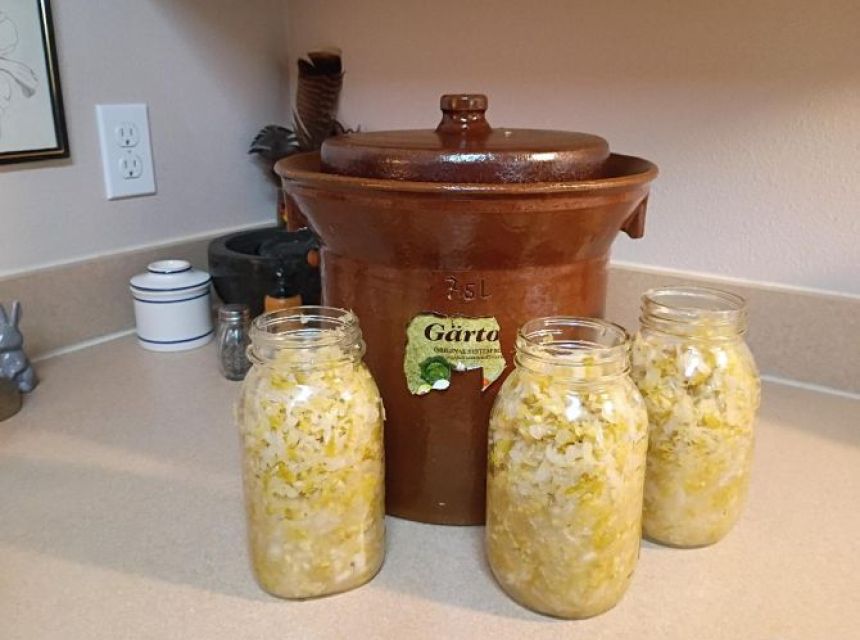
- I use a fermenting crock that my sister & I picked up at a garage sale a couple of years ago, but have great success fermenting in jars (although, I’ve always fermented sauerkraut in large vessels). Here’s a link for a fermentation kit that is complete with weights and gas exchange lids.
https://www.masontops.com/products/complete-mason-jar-fermentation-kit-product-information
(by the way, I am not affiliated with any companies, this is just a great product).
BTW, I just fermented 4 medium, organic cabbages in my crock, which yields 3 quart mason jars of delicious, fermented goodness. I did not use the oven method mentioned above for the fermented cheese recipe. Another tip: Vicki is fortunate to has a gas stove & oven, she does put her ferments into her oven withOUT the oven light as the pilot light seems to do the trick.
I feel that once you are successful with the fermentation process and discover how easy it really is, not to mention tasty and oh-so-good for you, you will gain confidence to explore the wonderful world of fermented foods. You and your family will be glad you did.
Stay tuned to Down and Dirty as we will bring more tips and recommendations from our kitchens and gardens to yours.
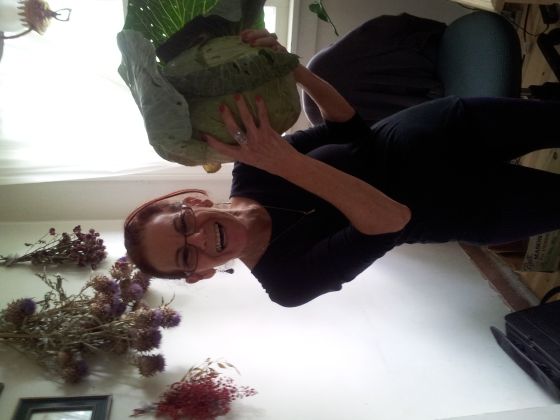
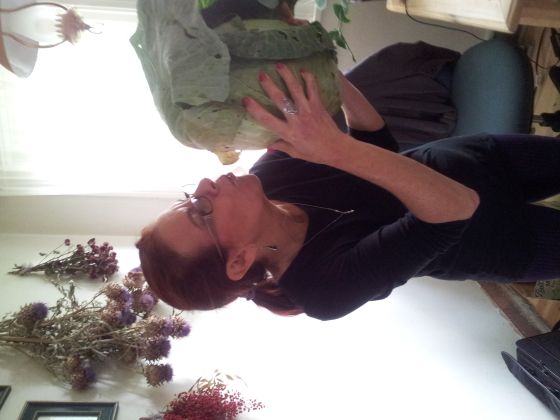
One more thing... I don't know why the photos of me making kraut below are shown leaning to the left (lol), I can't seem to edit them and they do not appear as such in my gallery. Oh well... you get the jest.
Until we meet again, get Down and Dirty with Vic and Bo every other Sunday (fortnight) at 4 pm Central time on BBSradio.com,.. happy, sustainable eating and growing trails to All :-)