
SOS Coming Home, August 26, 2026

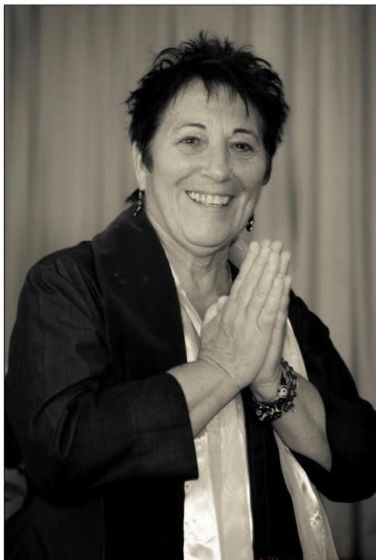

SOS Coming Home with Jennifer Elizabeth Masters
Happy Anyway: Grief, Joy, Boundaries, and the Journey Home to Yourself
A Tribute to Randy and a Life Oriented Toward Joy
Jennifer Elizabeth Masters dedicates the episode to her friend Randee, whom she describes as a devoted listener, spiritual teacher, minister, astrologer, and one of her strongest supporters. She remembers Randee as someone who consistently looked for love and joy even after a major stroke, impaired vision, mobility problems, dementia, and increasing dependence. Masters recalls concerts, pool parties, volleyball, “parking angels,” and Randy’s repeated belief that “things are getting better and better.” The tribute becomes a reflection on how joy can remain available even when circumstances are painful or deteriorating. Masters presents Randy’s life as an example of choosing to notice what is still good without denying what is difficult.
Grief, Caregiving, and Holding More Than One Truth
Masters speaks candidly about the emotional complexity of caring for someone whose needs are increasing. She acknowledges that she loved Randy deeply while also sometimes feeling tired, irritated, frustrated, and overwhelmed by the caregiving demands. Rather than treating those feelings as evidence of insufficient love, she argues that devotion and exhaustion can coexist. She says grief is teaching her that difficult moments do not cancel love and that love does not require rewriting the hard parts of a relationship. The episode repeatedly returns to the idea that the heart can hold grief, gratitude, frustration, tenderness, laughter, and love at the same time.
Dolly Parton, Transformation, and the Power of Boundaries
Masters connects Randee’s story with her discussion of Dolly Parton, emphasizing what she sees as a shared capacity to remain open to joy. She recounts Parton’s family background and describes the Imagination Library as an example of transforming a painful family experience into something constructive for others. Masters then tells the story of Parton declining an arrangement connected to Elvis Presley recording “I Will Always Love You” because of publishing-rights demands. She uses that story to frame boundaries as an expression of self-worth, especially when saying no means giving up something deeply desired. From there, she challenges listeners to examine where they may be overgiving, tolerating disrespect, seeking approval, or surrendering pieces of themselves in order to be chosen.
Coming Home Through Self-Trust
A central theme of the episode is that many women become highly skilled at reading other people while losing touch with their own needs, desires, and internal guidance. Masters describes this outward focus as an intelligent response that may once have helped someone anticipate anger, criticism, distance, or unpredictability. The problem, she says, comes when the pattern continues and a woman can identify everyone else’s needs but struggles to answer what she herself wants. Coming home to oneself is presented as a series of small choices: pausing before answering, noticing bodily responses, speaking honestly, honoring a no, and allowing one’s own needs to matter. Masters emphasizes that self-trust is rebuilt through repeated evidence that a person can listen to herself and respond with respect.
From Awareness to Healing
Masters distinguishes understanding a pattern from actually changing it. She describes her work as going beneath the conscious story to examine beliefs, subconscious messages, emotional material, self-doubt, relationship patterns, and fears of being wrong, blamed, abandoned, or unloved. She references shadow work, hypnosis, NLP, Kundalini yoga, breathwork, intuitive and energetic practices as parts of her broader approach, while saying the methods themselves are not the heart of the work. The deeper aim, as she describes it, is to uncover the belief underneath the words, release what is ready to be released, and create a more authentic relationship with oneself. She pairs new internal language such as “I am whole” and “I am deeply loved” with concrete actions that provide evidence of self-trust rather than using affirmations to cover unresolved wounds.
Happiness as a Capacity and an Invitation to Choose Yourself
In the closing portion, Masters defines “happy anyway” not as constant cheerfulness or denial, but as the capacity to remain open to beauty while something painful is also true. She says people can grieve and laugh, miss someone and remember difficult moments, feel anger and return to peace, and love others without abandoning themselves. Returning to Randee’s example, she remembers her continued willingness to attend concerts, play volleyball, laugh with friends, and encourage others despite her declining abilities. Masters then invites listeners who recognize these patterns in themselves to consider deeper transformational work with her and to make one small self-honoring choice immediately. She closes by urging listeners to stop living as though they must become worthy, to remember the person beneath old expectations and fear, and to trust that their past is part of their story without allowing it to define what comes next.
SEO Keywords / Key Phrases
grief and joy, self-love and boundaries, trusting yourself, healing past patterns, coming home to yourself, women’s personal transformation, caregiver grief, shadow work, subconscious beliefs, Dolly Parton self-worth
SOS Coming Home


Subscribe via BBS Radio TV to support this show
$5.99/mo or $9.99/mo
Click HERE
SUBSCRIBE TO TALK SHOW
SOS Coming Home with Jennifer Elizabeth Masters
SOS Coming Home is more than a show — it’s a space for reflection, renewal, and awakening. Jennifer Elizabeth Masters brings decades of life experience, intuitive insight, and grounded wisdom to conversations that uplift, inspire, and illuminate what’s possible for your life. Through meaningful dialogue, powerful stories, and transformative perspectives, listeners are invited to release limitations, rediscover their inner strength, and live with clarity, vitality, and purpose at any stage of life.
SOS Coming Home is an uplifting, truth-centered talk show devoted to awakening, healing, and living fully — emotionally, spiritually, and physically.
Hosted by motivational speaker and author Jennifer Elizabeth Masters, each episode explores how to release old patterns, reclaim your power, and return to your authentic self. Through candid conversations, personal insight, and inspiring guests, the show brings light to topics many people struggle to understand but deeply want clarity about.
Listeners can expect meaningful discussions on:
-
emotional healing and self-awareness
-
overcoming trauma and reclaiming self-worth
-
staying vibrant, youthful, and energized at any age
-
the mindset behind longevity and vitality
-
navigating judgment, criticism, and social pressure
-
faith, meaning, and making sense of life’s challenges
-
real stories of transformation and resilience
Jennifer brings both lived experience and intuitive insight to these conversations. At 71, she embodies the message she shares — vibrant, engaged, and continually evolving. Inspired by her 103-year-old mother’s philosophy of staying active, curious, and mentally young, she explores what it truly means to age consciously rather than fear aging.
Upcoming guests include spiritual leaders, experts, and individuals whose stories illuminate courage, growth, and awakening — including Rev. Katie, who will share her experience navigating judgment, authenticity, and acceptance within faith communities.
This show does not dwell in darkness. It brings light, understanding, and a higher perspective to even the most difficult human questions — because clarity dissolves fear, and truth restores peace.
If you’ve ever felt lost, overwhelmed, or ready for something deeper, this show is your invitation to come home — to yourself.
Happy Anyway: Grief, Joy, Boundaries, and the Journey Home to Yourself
Speaker Identification
Speaker 1 – Jennifer Elizabeth Masters – Host and sole primary speaker. Identification is explicit in both the opening and closing of the transcript, where she states her name and describes herself as a catalyst coach for women who are ready to come home to themselves. Quoted remarks from Randee, Dolly Parton, the host's son David, the host's mother, and the host's guide are presented within Speaker 1's narration and are not treated as separately recorded speakers.
-----------------------
Speaker 1 – Jennifer Elizabeth Masters:
Welcome to SOS for the Soul: Coming Home. I'm Jennifer Elizabeth Masters. I am a catalyst coach for women who are ready to come home to themselves.
Tonight's show is not the one I expected I would do. Sometimes plans change, and I am dedicating this show to my friend Randy Vasylakis—I may be mispronouncing Vasylakis—who left the planet one day before Dolly Parton. As I'm listening to my theme, I remember that Randy was in the car with me when I played that theme song for the first time. She burst into tears and said, "That's the one. That's the one."
Randee has been an avid listener of this podcast ever since I began it again, and I want to talk to you a little bit about who she was and the lovely legacy she left behind, as well as a little bit about Dolly Parton. So welcome. I'm so glad you're here. And as I said, I'm dedicating this show to Randy.
She was not quite as famous as Dolly Parton, but these two beautiful women lived very different lives and shared something: joy. They both chose to look for joy, not because their lives were perfect, but because they remained open to what was still good. Neither of them complained or whined about their circumstances, and I have to say, that's a huge part of being happy.
So we're going to talk a little bit more about that. How do we remain open to joy when life does not go as planned? How do we learn from our past without allowing it to control our future? And how do we return to the person we were before we learned to doubt ourselves?
This is where my work has always led me: guiding women back to themselves, not focusing endlessly on what is wrong, but discovering what is already whole, wise, and beautiful within you.
Let me tell you a little bit about Randee. I met her, I think, about eight years ago. She was one of those people who seemed to carry light and love with her. She was a minister at Agape in Los Angeles, a spiritual teacher, and an astrologer. Those titles don't really tell you who she was, but she embodied love. She laughed easily, laughed out loud, and looked for the good in people—not sometimes, but always. She wasn't critical or judgmental. She was accepting and kind, and her focus was always on love.
She was one of my greatest cheerleaders. She listened to the show every week. She would tell me how she could barely see after she had a stroke three years ago. She had fallen while crossing the road as she was having the stroke, broke her leg, and had surgery, leaving her with one leg considerably shorter than the other. I saw that it was extremely challenging.
It's not like she didn't have problems, but she just kept going anyway, always focusing on love and having fun living. It didn't seem to matter what kind of show I did. According to Randy, it was wonderful. She believed in me.
This is something that we all need. Not only do we need someone to believe in us, but we need to believe in ourselves. That's something I hear Dolly saying in her videos: she believes in you. You are enough, and you are already loved. All those things are true.
There's something special about having someone in your life who sees the best in you and isn't afraid to tell you. Some people make us feel that we have to earn their approval, but Randee gave encouragement freely. She reminded me that sometimes the most loving thing we can do is say what we see in another person. Tell someone that we believe in them. Tell them that their work matters. Tell them that their presence has made a difference.
We often imagine love is some dramatic act, but sometimes love is simply being the voice that says, "Keep going. I see you. What you're doing matters." Randy was that voice for me.
Like I said, about three years ago she had a terrible, major stroke. When I returned to California, I saw a huge change in her, but she was still going. We went to concerts together. I would offer her my arm, and we would make our way slowly to our seats. I helped her read menus and order drinks because she could barely see. She did not complain.
We went to pool parties. She played volleyball. Even if she couldn't see the ball, she had fun doing it. And I want to be honest about that part too. Sometimes it was difficult. Sometimes I was tired. Sometimes her increasing dependence, through the dementia and everything else, frustrated me.
Love is not always neat and pretty. You can love someone deeply and still find caring for them difficult. I want to bring this to the surface. You can be devoted and tired at the same time. You can be compassionate and overwhelmed. Those things can both be true at the same time.
I think many women need permission to admit that. We've been taught that if we really love someone, we should never be irritated, depleted, or conflicted. But pretending does not make us more loving. It only makes us less honest.
Grief is teaching me that the difficult moments do not cancel the love, and the love does not require me to rewrite the difficult moments. The whole truth can be held with tenderness.
Now that Randee is gone, I keep remembering the little things. Whenever we needed a parking space, she would call out, "Parking angels!" And somehow a space would appear. We started doing it together. Even when Randy wasn't in the car, Lynn and I were calling on the parking angels and finding parking spots.
No matter what was happening, no matter what her body was doing, no matter what she was losing, Randee would always say, "Things are getting better and better. Things are getting better and better."
By the world's definition, things were not necessarily getting better. Her eyesight wasn't getting better. Her mobility was not getting better. Her dementia was not getting better. And yet Randy's ability to find something good was always there. Her circumstances had changed, but her capacity for joy and love remained.
There's some teaching there. I'm certainly learning through her. Maybe joy is not something life gives us when everything finally works out. Maybe joy is the reward we receive even while we're challenged by difficult problems. Maybe joy is something we remain available for while life is happening.
Randee did not teach me that from a book. She did not teach it from a pulpit. She showed me in the way she lived.
While I grieve the woman most of you never knew, the world is grieving another woman almost everyone knew. Their lives were different, but they shared something remarkable.
I know you know so much about Dolly's story, especially from the news of the last couple of days, so I'm not going to retell her whole life tonight. But there is a little bit that belongs here.
Most of you know Dolly Parton's story. She grew up in a family of 12 children with very little money. Her dad was intelligent and hardworking, but he couldn't read or write. Years later, Dolly took something that had affected her own family and turned it into something extraordinary. She created the Imagination Library, which has now put hundreds of millions of books into the hands of children.
Think about that. She couldn't change her father's past. She could not go back and give him literacy as a little boy, but she could decide what she would make of that experience. And that, my friends, is transformation.
Transformation does not mean the painful thing was secretly good. It does not mean her father should have been denied an education so that a great program could someday exist. It means the past did not get the final word.
Many of us keep waiting for the past to become fair before we let ourselves move forward. We imagine we cannot be free until someone apologizes, understands, changes, or gives back what was taken.
Sometimes freedom begins with a different question: not, "Why did this happen to me?" but, "What will I create from this place?" That question does not excuse the harm. It restores your power.
And with Dolly, there's another story I love about self-worth and boundaries. Elvis Presley wanted to record "I Will Always Love You," the song that Whitney Houston sang so brilliantly. It would have been an enormous opportunity for Dolly. But Elvis's manager wanted all or half of the publishing rights. Dolly wanted Elvis to sing her song, and she was heartbroken about it. But you know what? She said no.
She knew her worth. Her worth was a boundary, and she said no.
Sometimes saying no is difficult. Sometimes loving yourself means saying no to something you desperately want because getting it would require you to give away something too valuable.
Most of us are not deciding whether Elvis Presley gets to record our song, but women give pieces of themselves away every day. You say yes when you mean no. You apologize when you've done nothing wrong. You allow someone to speak disrespectfully to you or take advantage of you, and you stay silent because you're afraid someone will leave or judge you. You tolerate criticism disguised as humor.
I still hear my mother saying, "There's some meat on your bones. Boy, you're fat. Don't be fat like your aunts."
We overgive. We rescue. We keep explaining ourselves. We accept crumbs because some part of us believes crumbs are better than being alone. Every time you do that, you're negotiating away a little piece of yourself.
So ask yourself: What price am I paying to be chosen? What am I surrendering to keep the peace? What have I called love that actually requires me to disappear? Because that's not love.
Self-love is not simply taking a bath, getting your nails done, or buying yourself flowers. Sometimes self-love is the trembling voice that says, "No, that does not work for me," and then remains standing.
Randee and Dolly lived very different lives, but both remained open to joy. That does not mean they ignored difficulty. It means difficulty was not the only thing they noticed.
So here's the gentle question for you: What are you practicing noticing?
Our minds become very good at finding what we expect to find. If we expect to be criticized, we notice the disapproving look: "Oh, she doesn't like me. He doesn't like me." If we expect disappointment, we prepare for it before anything has happened.
But we can also begin noticing what is kind, supportive, beautiful, and true. This is not about pretending that everything is wonderful. It's about remembering that one difficult part of life is not the whole thing. It's not the whole enchilada.
Many women learn to pay close attention to the people around them. If someone at home was angry, critical, distant, or unpredictable, you may have learned to notice every change in the room. Is everyone okay? Is someone upset? What do I need to do? How do I fix this?
This is a very intelligent response. Paying attention helped you prepare and maybe stay safe. But over time, you became so focused on everyone else that you stopped listening to and trusting yourself.
You may know what everyone else needs while struggling to answer the simple questions: What do I need? What do I want? What feels right for me?
There's nothing wrong with you. Hear me now. If these questions are difficult, you simply learned to look outside yourself for answers. The beautiful news is that you can learn to listen to yourself again.
Coming home to yourself happens through small, loving choices. You pause before saying yes or no. You notice how something feels. You speak honestly and kindly. And you allow your needs to matter too.
You may look confident on the outside while questioning yourself on the inside. Every time you listen to your own voice, you're rebuilding trust in yourself. This isn't selfish. It's a healthy relationship with yourself. You can care deeply about other people without leaving yourself out.
Sometimes we carry beliefs we didn't consciously choose. You may have learned that you had to be perfect to be loved. Were you like me? You may have learned that you must keep everyone happy, or that your needs are less important than everyone else's.
These beliefs are often ways we learned to belong or feel safe. Rather than judging yourself, become curious. Ask yourself: When did I first learn this? How was it protecting me back then? Is it still protecting me now?
You cannot hate yourself into becoming whole. Healing begins when you lovingly accept every part of yourself, including the parts that need understanding and compassion.
I remember I used to try to excise the parts of myself I didn't like. When I finally embraced all of me, that is when I began to feel whole.
Understanding your past is valuable. It gives you language and compassion for what you experience. But awareness and healing are not the same thing.
You may struggle to understand why you doubt yourself or struggle to trust your decisions. Or maybe you do understand yourself, but you still put everyone else first and still feel guilty when you choose yourself. Awareness shows the pattern. Healing helps you change it.
This is where my expertise comes in. In doing shadow work, I guide women beyond simply understanding their past. Together, we work with the deeper beliefs, emotions, and patterns that are still affecting their lives.
I do not want you to spend the rest of your life only understanding why you became this way. I want you to be free to know yourself, trust yourself, and become more fully who you are—the beautiful you inside of you.
This is where my work goes deeper. I listen for the belief underneath the words. I hear your subconscious talking: the pattern underneath the pattern, the internal message you're repeating without realizing you're even repeating it, the emotional and energetic material you're still carrying, the self-doubt that says, "I'm not enough. I am broken," or whatever it is you're saying to yourself.
When a woman says, "I cannot make a decision," I'm curious about what a decision represents. Is she afraid of being wrong, being blamed, or losing love? Was certainty once demanded of her while her own knowing was dismissed?
When she says, "I keep choosing the same relationship," I'm not interested in calling her foolish. Of course not. I want to know what feels familiar, what she is trying to resolve, and what part of her still believes love must be earned.
My work draws from decades of transformational, subconscious, intuitive, spiritual, and energetic work. I have written about relationships, self-love, healing, and personal transformation. I've trained in hypnosis, NLP, Kundalini yoga, breathwork, conscious work, and energetic practices, and I've spent years listening closely to women.
But the list of methods is not the heart of it. The heart is this: I listen for what is not always being said aloud. Together, we uncover the deeper pattern. We work with the beliefs and internal messages underneath. We release what is ready to be released. And then we begin creating something new—not a better mask, but a truer life, with more integrity, more authenticity, and more self-acceptance.
Once we uncover what you've been telling yourself, the mind needs something different to practice. Instead of "I am broken," we begin practicing, "I am whole." Instead of "Nobody loves me," we begin practicing, "I am deeply loved."
Let that one reverberate, and say it a few more times in front of the mirror.
This is not about saying pretty affirmations over a wound and pretending the wound is not there. We address what is underneath first, and then the new language becomes part of a new relationship with yourself.
You reinforce it with action. If you say, "I trust myself," then you pause before answering. Notice: What is my body feeling? Honor the no. Keep a promise to yourself. Make one decision without polling five people for their opinions.
Trust is built through evidence. Every time you listen to yourself and respond with respect, you create evidence that you are safe with yourself.
Every time you recover after making a mistake instead of saying, "Oh my God, I made another mistake," you learn from it. You create evidence that imperfection will not lead to abandonment. We all make mistakes. Believe me, I've made plenty of them.
Every time you set a boundary, you're choosing not to abandon yourself. Every time you make an honest choice, you're showing yourself that your feelings and needs matter. Every time you listen to yourself and trust your guidance, you end up trusting yourself more the next time.
You begin responding as the woman you are today, making small choices every day rather than reacting as a frightened child or the hurt woman who was only trying to survive.
The old patterns may still knock at the door. You simply no longer have to give them the keys.
And this is my mission. I guide women who have spent years being strong for everyone else and have lost touch with who they are.
Many have read the books. They may have tried therapy, coaching, healing work, or personal development. They understand a great deal, but they still question themselves.
I help guide women beyond simply understanding their past so they can change the patterns that keep them from trusting themselves. My work helps women know themselves, love themselves, speak their truth, and make choices that are right for them instead of doubting their decisions.
I help you open your heart without losing yourself and experience peace and joy that do not depend on another's approval.
Coming home to yourself does not mean becoming selfish. It means including yourself among the people whose needs matter. Imagine that. It means you care for others without giving yourself away. It means your "yes" is honest because you know you are allowed to say "no". It means you can love deeply while remaining present in your own life.
That is the transformation I guide you through. That's the work. That's the mission. That's coming home.
So what does "happy anyway" mean? It does not mean pretending that the difficult things never happened. Like with Randee, like with Dolly, difficult things happened. It means remembering that what happened is only one part of the story. Your experiences are woven into the rich tapestry of who you are, but they do not define you.
Happiness does not mean being cheerful all the time. I've shed some tears the last few days. It can mean trusting yourself and knowing who you are. It can mean saying no without feeling that you have to explain yourself.
You can grieve and still notice something beautiful. You can feel anger and still return to peace. You can love someone without losing yourself. You can enjoy today even when something in your life is unresolved. You do not have to wait until everything is perfect.
That's what I hear: "I'll love myself when I have this much money. I'll love myself when I have this job. I'll love myself when I have this person in my life." No. Don't put your happiness on hold and wait for it. You do not have to wait until everything is perfect to love yourself fully.
Your past is only part of the story, but it does not get to write the ending.
Happiness is a capacity. We often think happiness means the absence of sadness, as though one emotion invalidates the other. It doesn't.
We are deep-feeling beings, and a human heart is capable of holding more than one truth. You can love someone and grieve their absence. You can feel grateful that you knew them. You can miss them and remember the times when the relationship was challenging. You can cry over the loss and still laugh when you remember something they used to say.
Emotions move through you. You can feel sadness in one moment and then remember something funny about your lives together and experience joy. The laughter does not disrespect the grief. The grief does not erase the love.
Happiness is not a perfect emotional climate. Perhaps it's a capacity. Happiness is the ability to remain open to beauty while you are living through something difficult. It is allowing yourself to receive love even though love cannot promise that you will never experience loss or sadness.
My son David once told me, "Mom, you cannot love fully without risking everything." Although it may be scary to risk everything if you have had your heart broken—I think most of us have—he was right.
Living with an open heart means taking that risk. It means allowing yourself to feel pain without believing that pain is all that life has to offer.
That's not denial. Denial says, "Nothing hurts." This says, "This hurts, and there's more too."
There's a breath. There's sunlight on the wall. There's a dog calling us back to the present, a cat that needs petting or is purring beside us. There's music. There's a friend who once believed in us. There's a choice we can make today that honors the person we are becoming.
Joy doesn't always arrive as a celebration. Sometimes it arrives quietly as willingness. It is being willing to be here now and fully present with your life: to sit quietly, to notice what is around you, and to allow one good thing to simply be good without worrying that it might disappear around the next corner or waiting for the next shoe to drop.
That is a practice, and it is available even in seasons when life is tender.
Which brings me back to Randee. I cannot change Monday. I cannot bring her back.
But my guidance came through because there was a little irritation and frustration with caring for Randy at times. My guide said, "Be kind to Randy. She's not going to be here for too much longer." Two weeks later, that truth was a reality.
Now, I do not need to pretend I'm not sad in order to be a woman who believes in joy. I can grieve her and be grateful for her at the same time. I can remember the difficult moments and treasure the beautiful ones.
And I can hear her voice saying, "Things are getting better and better. Things are getting better and better."
My hypnotherapy teacher, Dr. Charles Skillis, used to say, "Life is getting better and better every day. Life is getting better and better every day." I think we need to say this more frequently today than ever before.
Perhaps happiness is not about creating a perfect life. Perhaps it's about remaining open to joy while life is still unfolding.
Randee's body was losing abilities. Her world was becoming smaller in certain ways. But somehow, she kept reaching for life: concerts, playing volleyball in the pool, going to pool parties, sharing laughter, calling on the parking angels, being with her friends, and encouraging all of us.
She didn't wait for life to be perfect before enjoying the day in front of her. That's what I want to remember.
I want to remember all of Randy—not only the easy parts: her light, her independence, and, at the end, her dependence; the moments of frustration; her tenderness; her laughter; and now the loss.
We can't get back the moments when someone is gone, right? So if there's anything I can share with you, it is this: if you're caring for a loved one, someone older who has become more dependent, I do see that we leave this world the way we came in, being more dependent in some ways.
Most of all, I want to remember Randee's loving words, the way she loved my little dog and called him Yodie, and the way she said, "Life is getting better and better."
She'd remind me when I was beating myself up in the pool for playing terrible volleyball, "We're just here to have fun. We're not here to win. We're here to have fun. We're not here to win."
Love can hold the whole person, and I want to remember the way she believed in me. Perhaps one way I can honor her is by believing in the work she encouraged and offering that belief to other women.
Let me say this: I see you. I believe in you. There's so much beauty, wisdom, and possibility within you. You are enough. You are loved. Things are getting better and better because we are becoming more fully ourselves.
If you've been listening tonight and recognizing yourself in any of this, and you've done the work, read the books, perhaps spent years understanding your past, gone to therapy, and yet you know something deeper still has not shifted, I want to invite you into a conversation with me.
I do not work with everyone. I work with women who are ready for meaningful change and are willing to look beneath the story, like Sonia, Ashley, Jackie, and Rosemary, who is now a therapist in Costa Rica. These are all women I've worked with who have transformed their lives.
If you're ready to play fully in your transformation, if you're ready to invest in yourself, and if that is you, go to jenniferalisabethmasters.com. Click "Work With Jennifer" and choose "Transformation Conversation."
It's completely complimentary. It's a 20-minute private conversation. We'll talk about where you are, what's keeping you stuck, where you want to go, and whether working together is the right next step for you.
This is not a complimentary healing session. It's a clear, focused conversation for women exploring deeper work. You don't need to know what is keeping you stuck before you arrive. That's part of what we'll uncover together.
You only need to be willing to begin choosing yourself. You can understand your past without continuing to live from it. You are allowed to want more than survival. You are allowed to know yourself, trust yourself, take up more space, and experience love without losing who you are.
And yes, you are allowed to be happy anyway.
Before we close tonight, I invite you to think about this: Where are you saying yes when you really want to say, "Hell no"? And what is one small way you can choose yourself today?
Perhaps it's pausing before you answer, taking a breath, gently speaking your truth, allowing yourself to rest, or simply noticing something beautiful about yourself. Perhaps it is softening your gaze—not looking at yourself with such harshness, criticism, or a mean voice.
You do not need to solve your entire life tonight. You only need to take one small step toward yourself.
Coming home happens one choice at a time: one step forward, one boundary, one breath, one promise kept, one moment of listening inward instead of searching outside for permission or polling all your friends before you decide.
The woman you were taught to be may have helped you survive. Honor her. Love her. And then make room for the woman you actually are.
She's not gone. She's been waiting underneath the expectations, the fear, the roles, and the old conclusions. She doesn't need to be reinvented. She needs to be remembered.
Your work is not to become worthy. Your work is to stop living as though you are not. Your work is to come home to the beautiful you that you are.
And so, to Randee, thank you. Thank you for helping me recognize that we're not here to win. We're here to play games. We're here to have some fun. We're here to have laughter together. Thank you for the parking angels and for being a dedicated listener.
And thank you for reminding me: things are always getting better and better, every day.
Your past is a part of your rich history, your tapestry of life, and your story, but it doesn't define you. You are creating what comes next.
I'm Jennifer Elizabeth Masters, catalyst coach for women who are ready to come home to themselves. And you've been listening to SOS for the Soul: Coming Home.
May your days be filled with wonder and light. May your nights be peaceful. And may you always find your way home to yourself.
I love you. Thank you for being here.