The Power of Synergy, May 4, 2026


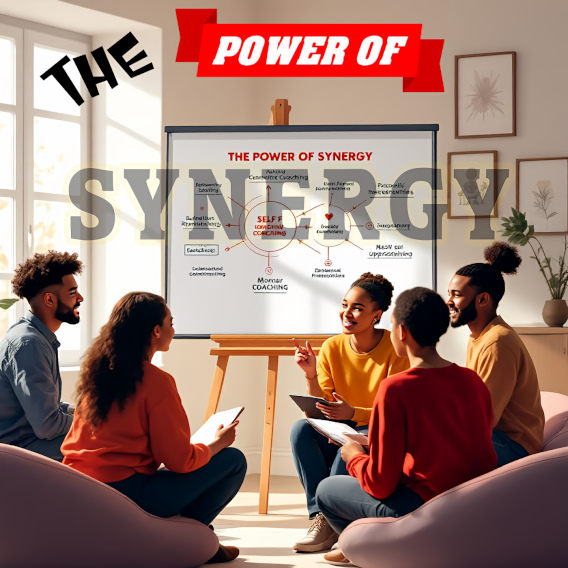
The Power Of Synergy with Gabrielle Cardona
The Power of Self-Care, Personality, and Positive Synergy
Positive Synergy: How Self-Care and Understanding Others Create Stronger Relationships
Synergy as Shared Energy and Responsibility
In this episode of The Power of Synergy, host Gabrielle Cardona opens by explaining that synergy is created when people come together with shared purpose, direction, and energy. Despite having technical difficulties and broadcasting by phone, she emphasizes that the day’s topic is too important to miss. She reminds listeners of her core principles: there is no neutral energy, there is no inertia, and personal power comes with responsibility. According to Cardona, every person affects others either positively or negatively, and even indifference counts as negative energy because it still impacts the people around us.
Self-Care as a Relationship Skill
The central theme of the episode is how to take good, quality care of yourself so you can bring something healthier into your relationships. Cardona explains that many people are skilled at caring for others but neglect themselves, while others focus only on themselves and struggle to respond to others’ needs. She frames self-care not as selfishness, but as a way of improving the quality and quantity of what a person can give. In her view, taking care of yourself properly allows you to enter relationships with stronger energy, clearer intention, and a more constructive attitude.
Knowing Your Strengths and Weaknesses
Cardona then moves into personality, functionality, and the importance of understanding what comes naturally to each person. She explains that people have different gifts, talents, strengths, and abilities, and that frustration in one area may point to strength in the opposite area. Rather than labeling people as failures because something is hard for them, she encourages listeners to see difficulty as useful information. When people understand what they are naturally good at, what drains them, and what kind of support they need, they become better able to contribute to others and form healthier connections.
Personality, MBTI, and Compassionate Understanding
During a call-in conversation with Nick, Cardona discusses MBTI concepts such as dominant, auxiliary, tertiary, and inferior functions, describing them as a way to understand what is easiest or hardest for someone to do. She explains that introversion and extroversion do not simply mean being social or antisocial, but relate to how people gather information, make decisions, and interact with the world. Nick notes that Cardona’s approach stands out because it includes compassion and self-compassion, and she responds by introducing her acronym ART: appreciation, respect, and trust. She says healthy connection requires appreciating, respecting, and trusting people’s AIM: their abilities, intentions, and motives.
Practical Tools for Energy, Motivation, and Focus
The episode becomes more practical as Cardona discusses daily self-care challenges such as low energy, lack of motivation, forgetfulness, and negative thoughts. She recommends identifying activities that restore energy based on personality, such as puzzles, walking, or hands-on coordination tasks. She also suggests using goals, milestones, rewards, checklists, affirmations, and journaling to stay focused and positive. Her point is that people can train their thoughts and habits in a healthier direction by consistently giving their minds constructive, believable, and purposeful messages.
The Philosophy of Success in Relationships
Cardona closes by presenting what she calls a philosophy of success: perform your dominant function for a significant portion of the day, be honest with people, and give more than you take. She uses the image of “recentering,” drawn from dance class, to explain that sometimes a person must step away, rebalance, and return in a better state. The episode concludes with the idea that relationships last when people approach one another honestly, without judgment, and with a willingness to understand both themselves and others. For Cardona, people are the greatest return on investment when they are approached in the right way, with positive energy and genuine synergy.
The Power of Synergy

"Is relationship coaching right for me?"
Unlike conventional counseling, relationship coaching is about insightful education and listening more than talking.
Connection, communication, and accountability are the 3 elements to a successful relationship. All 3 are vital and perpetual. Relationships are about knowing yourself and understanding others so that what you share is healthy and beneficial--to you both.
Some questions to ask yourself:
- Are you truly ready for healthy change?
- Can you handle homework?
- How honest are you with yourself?
- How much support do you provide to others?
- Are you qualified for a relationship?
Only YOU know the answers!
Do you know what the things people say mean? How do you interpret their actions? Try taking a look at their personality! There are 16 different personalities, and one statement from one person can mean something completely different when coming from someone else.
Learn about what's behind behavior. Information from "experts" can confuse people. It is inaccurate. If you attend an MBTI seminar, you'll walk away knowing AND understanding what people do, how they do it, and why they do it. You'll also understand yourself.
"Relationship Coaching"
What's the formula to success? How can you reach your goals? Want some practical advice on how to get what you want out of life, without making it painful or complicated?
The Relationship Coaching program provides information, tools, resources, and support to set you up for success in every area of your life. Define your goals, know where you are, and create the path in life that YOU want to take. Check it out and take the Workbook that comes with it home with you for free!
[00:00] Speaker 1: We are more than what we see. Every voice, every story holds the key. Together, we rise in synergy. Different faces, different pain. Different story, same refrain. Trying to find a place to stand. Trying to feel a guiding hand. What you say and what you mean. Life's somewhere in between. Every action has a cause. Every heart behind the walls is listening. We can hear it if we look around.
[00:38] Speaker 2: Welcome to The Power of Synergy on BBS Radio. I'm your host, Gabrielle Cardona. Today, I'm having some technical difficulties, so I had to go to the library and the Wi-Fi wasn't working. Ladies and gentlemen, you're hearing me on my phone today, but this is an important day, so we're gonna go ahead and open the phone lines to people. This is very, very important themes and topics that I'm gonna be discussing. That's why I couldn't afford to miss this show today. And so, if you have questions that you wanna ask a relationship coach, you can call 888-627-6008, BBS Radio. Now, usually when I start my show, I just explain what synergy is. It's what we create when we come together with people, and there's principles. There's functional dynamics of coming together with people, actually uniting with them, getting the same purpose, the same goal, the same mindset. Yeah, there's a lot of power that that comes with, and that's the capacity to do good or bad.
[01:46] Speaker 2: You need to choose what you are going to do, but sometimes it can be confusing. What kind of relationship do you create when you come together with people? I tell people the basic principles. Number one, there's no neutral energy. You are either positive or you are negative. Number two, there's no inertia. You are either moving towards them, away from them, or with them. And number three, your power comes with responsibility. Who do you believe in your life you are responsible to, to the point where you're going to change, you're willing to change what you do to become a better version, a better quality version of yourself? Because if you know that there's no neutral energy and there's no inertia, you are going to impact the people around you, whether you want to or not. Now, just for the record, ladies and gentlemen, indifference is negative energy. Some people think they can get out of jail free when they say, "I just don't care.
[02:53] Speaker 2: I don't have a vestment in either side, uh, whatever is going on here, so I'm not accountable for what I say and what I do and what I think and what I feel." Well, you're wrong, because you do impact people. When you don't care, when you are indifferent, that is negative energy. People don't understand that, because technology now has made us so detached from each other and disconnected from ourselves. We don't even know who we are anymore most of the time when we're communicating with people, when we're trying to connect with people, because if the people aren't physically with us, that's a huge element missing in that process. So, what I have been telling people just as a relationship coach for over 20 years is, do you believe that you have the power to be amazing? You do. You have a lot of potential. You just might not know what it is. In fact, my son, (laughs) my oldest son, I just love him so much.
[04:04] Speaker 2: He used to tell people, he was a, a very young, young boy when I started doing this. He would tell people that I was a shrink. I'd say, "Honey, I'm not a shrink. You've got to stop telling people that." Shrinks, they, they label people as mentally ill, and they try to fix things that they never really, um, specify. They never teach people good practical information about the problems that they have. All they do is focus on the problems and, and label them and give them drugs and all of the things that make them feel worse about themselves. A coach is someone who gives them equipment and strategy and support and encouragement to score in the game of life. One day, he turned around and just said, "Mom, you're the worst kind of shrink. You're a shrink in denial." (laughs) And, and I thought, "You know what?
[04:57] Speaker 2: Mental illness is a very real dynamic." It is a very real condition, and it's certainly a part of the society that we live in, the modern-day society, but that's because there are, so many people are depressed. They are anxious. They are confused. And they have problems that they don't have the answer, the solutions to. And that makes them very frustrated and it makes them overwhelmed. And so, they start displaying behaviors that are harmful not only to themselves, but to the people around them. And that's when I realized that I really wanted to focus on helping people get back together. When COVID-19 hit and we had to take steps back from each other, we literally had to make space, physical distance between ourselves, and we covered ourselves, our, our mouths, our faces. We had to go to places on our technology instead of in-person, that really did damage to us, because we have to be together in order to get that synergy with each other.Synergy gives us energy.
[06:18] Speaker 2: It's good, positive energy. If you know that you have the capacity to do amazingly good things for people, but you just don't know how to do it, that's what a coach is for. When you have things that you want to do in life, you're just not quite sure how to do them, a few words of advice would be very helpful. You don't have to fix a mental illness in order to merit some good, practical advice. Now, today, what I'm gonna be talking about throughout the show, just in different themes and topics, is how to take good, quality care of yourself. A lot of people are good at taking care of others. Some people, that's just their nature to take care of others, but they don't really know how to take good, quality care of themselves. Other people, all they care about is themselves. (laughs) Some people just genuinely don't naturally have a sense, an extra sense of, um, responsibility to other people to give them what they need, when they need it, how they need it.
[07:32] Speaker 2: So, for them to take the focus off of whatever it is that they're doing at that time, to shift it over onto someone else who genuinely needs them can be exhausting. So, when you're thinking about how you want to get together with people to actually synergize with them to do something healthy and positive and constructive, you need to ask yourself about the principles, the very basic principles, because every situation is different. You cannot have universal laws that work in every single situation. You have to accept that there are going to be general concepts and consistent principles that can be applied in many different ways, in many different situations, with a diverse number of people. Okay, so the principles that I already explained about, there's no neutral energy and there's no inertia, that's, that's pretty, pretty powerful, but when we're talking about groups, the dynamic changes. Now, maybe you've heard of this, um, uh, the chain is only as strong as its weakest link.
[08:51] Speaker 2: How do you know what peoples' strengths are? That's what we'll start with. Yes, because people are everywhere around us, they're just not interacting with us. How do we get people to interact with us? Knowing who they are, knowing what they have, knowing what they will do (laughs) in the situation before the situation even happens creates good, positive energy because it's a proactive mindset. And when people do feel confident that they have good, accurate information that they can put to practical, good use, their attitude changes, and when they have that good, positive energy, then they attract people. I always tell people, people, um, positive is more powerful than negative. When the people around them can feel their positive energy, they are going to respond in one of two ways. They are either going to align with that energy and unite or they're gonna be annoyed by it and irritated by it, and they're gonna wanna move away.
[10:02] Speaker 2: So yeah, when you have negative energy, you hurt people around you. When you have positive energy, you help them. Ask yourself, how often throughout the day, just in general, in your daily modus operandi lifestyle currently, how often are you positive in your energy and how often are you negative in your energy? You have people in your life that could potentially unite with you, synchronize with you in what you're doing, and participate proactively in what you are doing. They can empower you to be exponentially better than what you would have been if you were doing it alone. And as people know, especially leaders know, that the best way to conquer a group is to divide it, because when they are divided, they become weak. So, when you have people in your life that you know are good, quality potential connections for you, how do you approach them? You know how? Very individually.
[11:15] Speaker 2: You have to know not only their gifts and talents and their strengths and abilities, but also, counterintuitively, what, what are their weaknesses? What are their hard frustrations that are okay? It's okay for them to have a hard time doing the opposite of what's easy. Yeah, you don't have to make them feel bad for, for struggling with a particular topic or issue or problem, because you know what? The fact that they're, they're frustrated about this one thing is simply a manifestation of them being really, really good at the opposite. Yes, that means that any frustration or any challenge or any problem that they may have, it could be the potential of something amazing that just has not been released.Now, if you think about this, really think about it, sometimes it's hard to see the forest for the trees when you are looking at yourself. You, you can't always see objectively, (laughs) what's going on, but take time first just to start out with yourself.
[12:37] Speaker 2: What really and truly are you good at, and what potentially might you be good at that you don't know about? Yeah. This is gonna be fun. We're gonna take a quick break, and when I come back, we're gonna do a once-over inventory. How can you find out what you're potentially amazing at and how will that affect the way you approach the people in your life? This is The Power of Synergy on BBS. I'm Gabriel Cardona. We'll be right back.
[13:12] Speaker 3: ... in the soul. Every piece can make us wholesome. Oh, the power, the power of synergy. Understanding you and me. Every difference, every truth leads us back to something new. It's the power we can be when we see what's underneath. Not just words, but energy. That's the power of synergy. Sixteen ways to see the world. Every mind a flag unfurled. What you think is black and white.
[13:52] Speaker 2: Welcome back to The Power of Synergy on BBS. Okay, so usually, when I explain people's personalities to them, or their functionality, or their disposition, whatever it is about their personality, I usually explain the dichotomies, which are the different activities that they would be doing, and I ask them, "What would be the easiest thing for you to do?" Well, you know what? Sometimes it's hard for them to even answer that question. (laughs) Because they have become so accustomed to doing things that are not easy for them, that are not pleasurable to them, that they're not good at, so being able to say, "Yeah, I, I really know who I am," that alone is a challenge. And again, the number to call in for the station is 888-627-6008.
[14:48] Speaker 2: If you have questions about what I'm saying, as I'm saying it, please don't hesitate to call in, because if you have this question, there might be someone else out there who also has this, the same question, and I don't mind answering it while I'm explaining these general concepts. Okay, so when you're talking about things in life that are your personality, what is naturally easiest for you to do? What is naturally the most pleasurable thing for you to do? Yeah, what are you really good at naturally? You might not have never been given that opportunity to discover those things, but when you find out really what other people might not approve of, but you're really amazing at it, you have the opportunity to maximize that gift or talent or strength. You just need to know how to, uh, share it with the world, really.
[15:46] Speaker 2: Uh, for lack of a better word, I, I can think of how you can display it, how you can disperse it, how you can dispense it, but the fact is, you have to know what those things are. And so, when I say there are four levels of functionality, everybody has to do everything. Whatever your personality is doesn't mean that's exclusively what you will do. What your personality is is an indication of with each thing in life that you will inevitably have to do, no matter what your personality is. How easy is it for you, how pleasurable is it for you, and how good are you at it without ever having to be taught? We are all given gifts and talents and strengths and abilities because the world needs a wide variety of those things. And so, when you're born with a talent, you have the opportunity to maximize it, and you can employ it in many different ways. You just need to know what the world wants and needs in a situation that you can say, "Yeah, I have that skill. I have that ability.
[16:55] Speaker 2: I'm going to share with the world what it needs in this way, in this time, and it's gonna be very organic for me. It's going to be completely natural for me, because this is, by nature, who I am. So, all I'm doing is allowing it to manifest itself." If you say that, not only to yourself, but to the people around you, that only affords you the opportunity to, to form those bonds, to create those connections with people, but to sustain. Wow. Yeah. We can actually keep it going past this initial, um, interaction that we have, to potentially more and better together in the future. Whoa. That's a resource.
[17:45] Speaker 2: So, the dominant function, the auxiliary function, the tertiary function-
[17:50] Speaker 3: Sorry.
[17:51] Speaker 4: Mic checked.
[17:51] Speaker 2: Okay? Hi, Nick. How are you today?
[17:58] Speaker 4: Good. Do you want to finish that sentence, Gabriel? I'm captivated.
[18:02] Speaker 2: (laughs) Yes. The dominant, auxiliary, tertiary, and inferior levels of functionality means just what's easiest to what's hardest. So, there are gonna be things in life that are gonna be hard for you and things that are gonna be easy, and that's okay. Most people just get confused when something is hard for them. They either think it's a bad thing to do or they're a bad person for not being able to do it, but everybody has just as much good potential, struggle with everything, (laughs) as, as they do with the ease.... in their performance with each activity based on their personality. Did you have a question about something I said just now, or was it, um, a different topic?
[18:48] Speaker 2: (laughs) Because I've- I've actually-
[18:51] Speaker 4: Wh-
[18:51] Speaker 2: ... gone over a lot of different things in the last 10 minutes. (laughs)
[18:55] Speaker 4: You sure have, and I've been going over even more, uh, just reviewing, uh, the- the observations in your book. I'm- I- I- It's probably a question for later, but I can't wait to, uh, find out how you figured out the- the math behind the principles of functionality and how the different letters, uh, give you the answers to the other letters within the four. I- I just- I'm just fascinated-
[19:17] Speaker 2: Oh, yes.
[19:18] Speaker 4: ... that you- you figured that out. So I don't- but I have-
[19:20] Speaker 2: Well, yes.
[19:21] Speaker 4: ... a simpler question to start with if you wanna warm up. What- what's your preference? (laughs)
[19:26] Speaker 2: Well, okay. (laughs) When it comes to the- the order of the dominant, auxiliary, tertiary, and inferior, I can tell you just really quick, it is a formula and it is very simple. You just have to know what the letters are. The last letter of your personality is either a P or a J. If the last letter of your personality is a P, that means the second letter of your personality is extroverted. If your- the last letter of your personality is a J, it means the third level- or third letter of your personality is extroverted. So if you're an introvert, that means those letters are not gonna be your favorite things to do. The other letters that are introverted are going to be your preference. That's gonna be your dominant function.
[20:16] Speaker 2: So of the letters that your personality consists of, one of the middle letters will be introverted and one of them will be extroverted, whatever your first level- or your first letter, excuse me, is, whether you're an introvert or an extrovert, that'll be an indication of which one you like to do more.
[20:35] Speaker 4: Yeah, well, and I get that. It took me a few times just rereading it to understand that. Uh, but it definitely makes sense. I guess my question is, how did you figure that out?
[20:47] Speaker 2: Oh, I read it. (laughs)
[20:49] Speaker 4: (laughs)
[20:49] Speaker 2: It was actually, um, the Myers-Briggs Type Indicator. Um, and so it was- it was created a long time ago by several different people. Um, oh- oh, sorry. Did I do that or did you? I'm on the phone right now, I'm not on Zoom. (laughs) Um, the- the way that they determined that was that the second letter, which would be your general focus, is your perceptive activity. The third letter of your personality, the T or the F, is where you make a judgment call. So, the judgment, the J letter of how you do things in life is going to be an indication of what you're going to want to include people in. When you're doing things, carrying out the decisions that you have made with the third letter of your personality, you're either gonna wanna be with people in your perceptions or in your judgment. 'Cause the other one, you're gonna need to be alone. Everything in nature, Nick, you need to remember, is about balance.
[22:03] Speaker 2: So if you're- if you're to the right in one direction, you're to the left in the other, and that's also very normal. So, the perception activity is how you gather information. That's the- the second letter of your personality profile, 'cause your personality has four letters. And when people think they're an introvert, it means that they don't know how to be social. That's not true. You do things in an extroverted way even when you're an introvert, and you do things in, um, an introverted way even when you're an extrovert. They- they did a lot of research and a lot of study on behavior patterns, and so Carl Jung and, um, Isabel... Sorry, I have their names in front of me. (laughs) Um, um, Briggs, um... Yes, and all the- (laughs) all the stuff that I have written in my book. Um, they- they did a lot of research studying behavior patterns, not of the mentally ill, of the- the very mentally healthy, to make that determination.
[23:16] Speaker 4: Wow. Yeah, well, it- it- it's- Uh, it's absolutely- it's fascinating and I- I, uh, I- I'd like to relive, uh, my decades, uh, knowing this. Maybe I can give that gift to my children and give them that chance. (laughs)
[23:28] Speaker 2: (laughs) Yes.
[23:28] Speaker 4: Um, just more in alignment-
[23:29] Speaker 2: Yes.
[23:29] Speaker 4: ... with the, uh... And I- and I was also thinking of the old ge- uh, George Thorogood song when you were talking about that, because it sounds like I like to think alone, too. I don't think that's the word he used in his song, but anyway. Um, but yeah, I- uh, along the lines of what you were just talking about, though, um, I- one of the things that's remarkable to me about you in this space that's, you know, as you've said many times, getting really crowded, for better or worse, is that you really spend a lot of time showing compassion for- teaching self-compassion and compassion for other people-
[24:05] Speaker 2: Yeah.
[24:05] Speaker 4: ... in the process of finding out-
[24:07] Speaker 2: Yes.
[24:07] Speaker 4: ... who we are and who the people are around us.
[24:10] Speaker 2: Yes, exactly.
[24:10] Speaker 4: And I just wanted to ask you, how much- how much do you, um, feel that the, uh, um, a le- a level of, I'll say, uh, tolerance or regard that other people have around us for diversities and personality influence how we see ourselves and what we do and how we even answer these questions?
[24:33] Speaker 2: Well, when- Yeah, no, the fact is, I call it an ART, A-R-T. I love acronyms. The ART, right? (laughs) Uh, Appreciation, Respect, and Trust...... of people's AIM, A-I-M, their abilities, their intentions, and their motives. It is, it is a discipline, Nick. When you are talking about getting together with another person, you have to appreciate their intentions, respect their intentions, and trust their motives. It is the, the backbone of what we are when we come together, and it is a, it is a definite, um, sacrifice to say, "I'm going to spend this amount of time with you to appreciate you and respect you and trust you." And I'll tell you, one of my favorite words in Spanish is conocer. They don't say saber. Saber is about information, knowing information. Conocer is knowing a person. That means you need to understand them. You need to not only, um, memorize facts about what they do, but you need to understand why and how they do it.
[25:47] Speaker 2: And so, when you are going through your life, but trying to understand people, appreciating and respecting them and trusting the differences of their personalities is the, the, uh, foundation for the connection that you ultimately will have with them when you synchronize and you synergize.
[26:10] Speaker 4: That's fantastic. Thank you so much for allowing my extended questions. Appreciate it.
[26:14] Speaker 2: (laughs) That's okay. Thank you so much for calling in, and have a great rest of your day.
[26:20] Speaker 4: You too. Thanks, Gabrielle.
[26:21] Speaker 2: Yep. Bye, Nick. Okay, so we're gonna take a real quick break, another break, and when I come back, I'm actually gonna be very specific now about how personal self-care in different situations can be applied. Okay, so we're gonna take a, a quick break. This is BBS Radio. I'm Gabrielle Cardona. You're listening to The Power of Synergy.
[26:44] Speaker 3: Strength inside the weak. Not just who we show outside. There's a deeper truth inside. If we learn to understand. We can finally take a stand. Not against but side by side. With awareness as our guide. The power, the power of synergy. Understanding you and me. Every difference, every truth leads us back to something new. It's the power we can be when we see what's underneath. Not just words but energy. That's the power of synergy.
[27:26] Speaker 2: Welcome back to The Power of Synergy on BBS. I'm Gabrielle Cardona. I'm a relationship coach and MBTI practitioner. When I teach people about how to create healthy relationships, it's always based on the quality of what you bring to that dynamic. Now, since there's no neutral energy, you have to ask yourself when you come together with people, are you positive or negative in the way that you interact with them? And if anybody else has a question, please feel free to call in, 888-627-6008. Now, when you get together with people, if you know who they are, conocer, that means really understand them, get to know them, you can say to them, like, for example, if there were body parts, "This is a femur. A femur is a bone." I'm not gonna go to a bone to do math, okay? Or, you know what? This happens to be a heart. I'm not gonna ask a heart to lift 500 pounds. (laughs) That's for a muscle. Or, you know what? This is a brain.
[28:39] Speaker 2: I'm not gonna ask them to pump blood to all of the different parts of the body. They are the ones telling the heart to do that. (laughs) So, what's the most important? Your heart, your brain, your bones, your muscles, they're all dependent on each other. Okay, so when you are with the people in your life and you can say, "I know that this person is good at tertiary extroverted sensing. I'm gonna make sure that I only go to them for that activity for a certain amount of time in a certain situation, because anything outside of that would be too difficult for them." Now, you have to be able to say to yourself, "This is who I truly am, so when I'm coming together with other people, I can share them, I can share with them who I am, the gifts and talents and strengths and abilities I have." Let me ask you this. Ask yourself this question. What do you think is more harmful, not doing what you are, not being who you are, or doing what you're not, being what you're not?
[29:51] Speaker 2: They're happening at the same time. When you are not true to yourself, you're doing two things. First of all, you're stifling yourself, but you're also depriving the world around you. You have the opportunity to be a lot of really great things for people, with people. Yeah, you need to know who is good in your life at what. That means understanding that, yeah, they're, they're gonna have a certain frustration, and if you can say to yourself, "It's okay for them to have those," and it doesn't mean they need to be labeled in any way. It just means that, "They could be my resources in the different activities of my daily life, I'm only gonna go to a bone for support, firm, stable, steady support. I'm gonna go to a muscle for a lot of activity. I'm gonna go to a brain to solve a problem, and I'm gonna go to a heart for inspiration and motivation." If you say to the people in your life-You make my life better.
[30:57] Speaker 2: The quality of my life has improved (laughs) because of who you are when you participate with me in my activities. That is an amazing gift. There's more joy in giving. Do you believe that when you take from people what is high quality from them, yeah, that you're making the- their life better? Not everybody believes that, and some people have a hard time accepting other people's gifts, number one, because they don't ever wanna- they don't want help. They don't want to admit that they need help, and- and sometimes, it's because they don't wanna feel selfish. You're not being selfish if you have the insight to say to people, "I know that this is who you truly are, and allowing you to be who you truly are in my life makes my life better, and it makes your life better.
[31:55] Speaker 2: We are both making the world a better place by doing this together." Then it's okay for you to say to people, "I need help, and you're the person who is going to help me in the best possible way in this situation." You are doing a good thing for yourself, for the person that you're with, and for the environment that you are in with them.
[32:21] Speaker 3: Mm-hmm.
[32:21] Speaker 2: Okay. Well, there's different challenges that we face throughout the day. How about just low energy? Yeah, you know what? You need a shot in the arm. That's okay. You can say to the people around you, "I need a- a dose of- of extra energy, because I don't like how I am being right now with you and to you, so let me take a step out of this situation, a step away from you to improve the quality and increase the quantity of what I am able to give to you." Then you can say, "I feel good about taking care of myself." My mother was a flight attendant, and people love to use the illustration, the example of when you're traveling with a small child, you put the mask on yourself before you help anybody else, because obviously, if you're dead, you're not gonna be able to help anybody. Put the mask on yourself first, even though the baby is in greater need, logistically.
[33:25] Speaker 2: But what happened in the '80s and '90s was a lot of people just really wanted to make it entirely about them, to the exclusion of other people and to the detriment and harm of other people. When I say to people, "You have to get yourself into a high-quality state. If you have low energy, give yourself some energy, make sure that when you are away from the people that need you, that you- you can say you're taking quality, good care of yourself, so that not only the amount that you are able to give them has increased, but the- the value of what you give- of what you will give them has improved." Now, there's different things that you can do for yourself, again, based on your personality. Some things, like for me, Sudoku puzzles. For my daughter, going out for a walk. For my son, my ISTP son, he wants something with hand-eye coordination.
[34:34] Speaker 2: If you know what is good for you to give you that good energy, positive energy, and healthy amount of volition, I guess, for lack of a better word, good willpower and motivation to perform what you physically are capable of, that's what matters most. Now, if you have that positive momentum, you have to get that started with that activity. That's when you bring other people in, because the two activities that you have that are extroverted are going to need the other people around you, even if you're an introvert, and when you're an extrovert, you're still gonna do certain things in an introverted way. And so, if you have that awareness of not only what you're doing, but then also that understanding of the people in your life who want to participate in each of those different activities, then you're more willing and able to say to them, "Hey, by the way, guess what? I have this activity.
[35:44] Speaker 2: Do you want to join me?" You're giving them the opportunity to have a very good experience in their own life. We're gonna take another quick break, and when I come back, I'm gonna talk about other things that might not be as easy to understand, 'cause they are very individual for the people that are experiencing them. So, um, again, the- the number to the station is 888-627-6008. This is The Power of Synergy on PBS. I'm Gabrielle Cardona.
[36:22] Speaker 3: In chaos, there's a meaning. Oh, every soul is speaking loud. If we only slow it down. No more guessing who we are. We've been brilliant from the start. When we see with open eyes. We don't divide, we unify. It's the power, the power of synergy. Breaking walls and setting free. Every voice and every mind. Finally seen, finally free.
[37:04] Speaker 2: Welcome back to Power of Synergy on VBS. I'm Gabrielle Cardona. Okay, so different challenges that people face in their life, in just the daily activities, that is life, (laughs) can be overwhelming from time to time, because we don't always have the ability to see a big picture in a particular situation. Well, you know what? Sometimes just staying motivated to keep going to the next day, to the next project, to the next, um, job that we have to do, that could be anything from a housewife having to cook the next meal, to, um, an executive signing, uh, a document, a contract that's gonna change the outcome of the company, okay? Those are very, very different things, but they're still of the same value to that situation. When you have something like people's lives in your hands, that, that's a pretty heavy responsibility, it can be overwhelming.
[38:17] Speaker 2: That could be from anything, um, anything from the food that they're going to eat, (laughs) to, um, the ex- bank account that they're gonna use to pay for a particular expense. If you know what your goal is for the day, and you can say, "I am focused on something with purpose," that takes away a lot of stress. Most people, it's almost because the general ambiguity of life, if, if you're not on a particular path or a track to a very specific goal, then you can get easily distracted or confused. So what I ****** ****** is milestones and rewards. If you have, in mind every single day, a very particular goal that you want to reach, that's great. But if you don't have the steps, the smaller steps of how to get there, you can lose focus on that, because it may seem like it's too far away.
[39:30] Speaker 2: So, if you have the goals in mind, but you also have the mini goals along the way that you can reward yourself for accomplishing, that will keep you motivated, not only with the energy, but with the positive attitude. And again, that's what's really important ladies and gentlemen, keeping your energy positive, and your attitude optimistic. That's what's going to impact your performance and encourage people to work with you. But it's very important to remember that you have to pace yourself, and move your, or indicate, your movement towards each of those goals with a reward in mind. Now, it can't be excessively expensive, it can't be, um, with food, um... I'm thinking in Spanish now, um, something unhealthy obviously, and when you're talking about just your daily life activities, it can't hurt other people. If you have good, healthy rewards for different accomplishments, like if you were gonna lose 20 pounds, then make five pound milestones, four of them.
[40:52] Speaker 2: Yeah, try and keep it between where you are and where you wanna go, four milestones. If you know that there are going to be challenges that you will face in between those, you might even wanna put other milestones, but try not to keep them, um, too close together, because you still need to have it far enough away to keep you motivated, right? To, to give you that focus, but at the same time, close enough to where it doesn't feel like it's impossible. And so, when you have those very specific mini goals en route to the ultimate destination, then you have the, um, the focus, but also the hope and the optimism in the process of reaching that ultimate goal. Okay, but then what about, "You know what? I just, I can't seem to keep things in, in mind." (laughs) "I, I keep forgetting things." Well, you know what? Checklists. When you have checklists, that's something that you can periodically revert back to throughout the day and say, "Which of these activities have I accomplished?
[42:11] Speaker 2: Which things have I participated in? And which ones do I still, ugh, I'm, I'm having a hard time with this for some reason." Figuring out which activities you have a hard time with, then you can say, "Maybe these activities either aren't healthy for me, or I, I need a support. I need some kind of help or assistance in accomplishing this." That's when you can bring other people in and say, "You know what? This is something that I am struggling with right now.
[42:44] Speaker 2: Can you either be someone that I am accountable to, or someone who just reminds me, someone who inspires me, and encourages me to keep going, when I otherwise either wouldn't remember to do it, because I really don't think it's that important, or I would fail?"Genuinely fail and not-
[43:08] Speaker 5: Yeah.
[43:09] Speaker 2: Yeah. Then you have a checklist to say, these are the things that I know I have accomplished. It, it might not feel like I've done anything really impressive, but the fact that I've gone through my checklist by the end of the day, I can feel fulfilled and satisfied knowing that what I did, even if it didn't look impressive today, it's contributing to the manifestation of something ultimately much better than this. Okay. Well, how about negative thoughts? Just negative thoughts really and truly do come up all day, every day, especially the world that we live in. Everybody knows that. How about affirmation? Yeah. When we have affirmations, what we're basically doing is brainwashing ourselves. Ladies and gentlemen, our brain doesn't know what's true and what's not. All it knows is what we tell it. And when we tell it in an out loud, right, our voice, our actual voice, it gets to our brain in a different place than when we're only thinking it.
[44:19] Speaker 2: So when we have these affirmations that we repeat to ourselves, we can brainwash ourselves into, back into something positive and constructive and healthy. If you know what things you're tending more to lean towards in the negative or destructive thought pattern, then you need to make sure that every time you say the affirmations, you truly believe them. Now that could, that could be a list of 20 affirmations that when you're saying them out loud only take about a minute, maybe two minutes to read. If you believe 19 of them, but one of them still isn't, hmm, quite there, go through the entire list again and read them out loud. It's very important. You can never read them too many times. So as long as you are completely convinced of the truth and validity of every one of your affirmations by the time you finish, you put the list down, you may need to read the list several times a day, and that's okay too. Do you know what things you struggle with most in your thoughts?
[45:35] Speaker 2: That may require you actually getting a journal and figuring out what thoughts you have that you might not have paid attention to before. That's how you'll know what affirmations to create for yourself to either neutralize the negative thoughts or stimulate positive new beliefs. You can do that, and your brain will absolutely accept whatever you give it as long as you give it to your brain consistently and wholeheartedly. As long as you believe what you're saying and you know that having that information for yourself is going to benefit not only yourself, but the people around you, that will be the unselfish motivation that keeps you going where you might otherwise have given up. Do you believe that the people in your life deserve to have a good quality version of you that will make their life better? Do you believe that you can make other people's lives better in that way?
[46:46] Speaker 2: It might be just time to have a, a session with yourself, an inventory, and ask yourself what you truly believe on a profound level, not what you say and not what you have created habits of doing, but what you believe in your heart. And if you need to rewire your thinking, your thought patterns and processes, then it's okay. It's okay to say, "I need to take a step away from what I'm doing right now to recenter." Now, before I take another break, I'm gonna explain to my listeners how being in a, a dance class, I took ballet and modern jazz and tap classes when I was a little girl. I had a very British teacher.
[47:39] Speaker 5: (laughs)
[47:40] Speaker 2: Yeah. Not, not the nicest lady you'll ever meet, but she was very good at what she taught. Um, she would always say, "You need to recenter." She would literally tell us, because whenever she would give us a routine, we would go in groups of two to four girls. If we were all doing the routine, but one was just throwing the other girls off by the things she was doing, my teacher would literally say, "You need to take a step out and recenter." That meant getting your alignment, the way that you were distributing your weight throughout your whole body, around the center, the core of your center, so that when you came back, everything that you did was balanced. That meant sometimes you needed to stop dancing altogether and find out where your weight was to redistribute it back to the core of your center, and then your arms and legs would be just fine.
[48:45] Speaker 2: And then you could come back in and go with the next group who was doing the routine to the music, because again, there were eight or nine groups of three or four girls at a time. So we're gonna take another, one last quick break, and when I come back, explaining the principles of self-care, that's the key. Um, so if you have any other questions, um, the number is 888-627-6008.Um, but this is, this is the really, really important part, the one to pay extra close attention to. So, this is The Power of Synergy on BBS Radio. I'm your host, Gabrielle Cardona.
[49:28] Speaker 3: Trying to find a place to stand. Trying to feel a guiding hand. What you say and what you mean. Lies somewhere in between. Every action has a cause. Every heart behind the walls. If we listen, we can hear it. If we look, we can see it. There's a pattern in us all. Every piece can make us whole. It's the power. The power of synergy. Understanding you and me. Every difference, every truth leads back to something new. It's the power we can be when we see what's underneath. Not just words, but energy...
[50:07] Speaker 2: Welcome back to The Power of Synergy. I'm Gabrielle Cardona. So, there are just gonna be things in life that will be difficult to do. They will be a struggle for you to deal with, but you will succeed if you maintain the philosophy of success. And what I tell people that that consists of is your motives and your intentions and ability. The first one is always perform your dominant function for 50% of the day. You have got to make sure that you stay in a high-quality state doing what is organic for you. Number two, always be honest with the people in your life. You have got to be able to tell them not only what the truth is, but in a way that doesn't hurt them. You have to understand that if they don't know the truth from you, they're gonna have to still find it out from someone or something else, and it's always better to forge those relationships with the honesty. And then, number three, give more than you take. If you say to people, "This is what I need.
[51:28] Speaker 2: I'm going to take care of myself. I'm gonna step out of the class to recenter. I'm going to, um, give myself a shot in the arm just to keep going," you have to make sure that whatever you take from other people, you are returning to them either in quality or quantity. If you know what their needs are, and you know for a fact that you don't have what they need, be honest with them and say, "You know what? There's someone else out there who has exactly what you need and exactly the way that you need it. Go out and find them while I figure out what's going on with me, and I'll get back to you." Yeah, you have to always have that, that positive attitude and that very honest approach and that very willing attitude to find out things that you might not have wanted to know before, and accept the truth about yourself and others without judging them. That is what makes a solid relationship last to synergize through time.
[52:40] Speaker 2: All of your connections are going to be on that level if that is your priority, and people are the greatest return on your investment, your time, your energy, your money. Everything that you can put into people, just find the right ones in the right way. Thank you so much for listening to The Power of Synergy on BBS Radio. I'm your host, Gabrielle Cardona.
[53:08] Speaker 3: Finally alive. It's the power of the truth we couldn't see. Now, it's right in front of me. Not just people, destiny. That's the power of synergy. Every story. Every sound. Every loss can still be found. When we choose to truly see. We become synergy.