The Laughing Heart, June 28, 2026
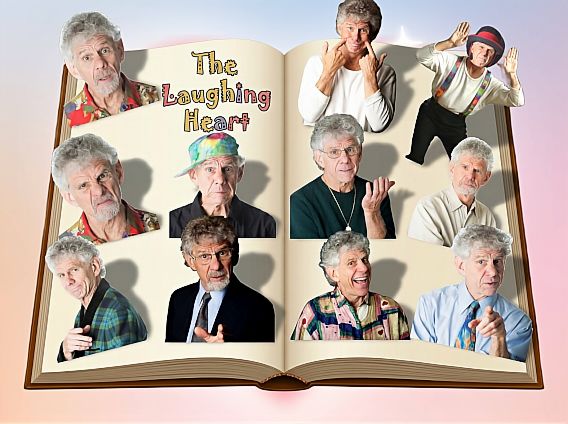

The Laughing Heart with Errol Strider
Money, Matter, and the Sacred Shift From Having to Being
Money as Promise, Illusion, and Temptation
In this episode of The Laughing Heart, host Errol Strider explores money as both a practical necessity and a psychological illusion. He begins by questioning the familiar phrase that money is the root of all evil, suggesting instead that greed may be the deeper problem. For Errol, greed is not only about money, but about trying again and again to satisfy a need in a way that never truly works. The episode examines the assumptions people place on money: that it will provide security, pleasure, protection, freedom, prestige, amusement, or liberation.
“Money Talks” and the Bargain With More
Errol introduces a live performance piece titled “Money Talks,” in which his wife personifies money as Mora Money, while Errol plays a man named Henry Simpson who comes seeking security, pleasure, prestige, power, freedom, and protection from death. Through comic dialogue, Mora offers only partial guarantees: limited security, limited pleasure, the illusion of self-worth, the appearance of power, mobility instead of true freedom, and no help after death. The piece humorously exposes how money can seduce people with numbers, promises, and contracts while quietly excluding joy, love, service, presence, true worth, happiness, and spiritual freedom.
Measurable Value Versus Immeasurable Love
After the performance, Errol reflects on the difference between what money promises and what love offers. He shares one of his “wisdom nuggets,” contrasting money as the promise of measurable value with love as that which carries immeasurable value. He then tells a comic story about his cat being hospitalized and worrying over the bill, using the absurdity of a cat fretting about costs to highlight how deeply financial anxiety can shape human perception. Even life-and-death situations can become filtered through expense, debt, and what things cost.
Matter, Money, and What Really Matters
The episode continues with another performed piece titled “Matter and Money,” featuring two British characters, Lord and Lady Umbridge. Their dialogue plays with the circular logic of whether money matters because it buys matter, whether matter matters because it exists before money, and whether people matter more when they have money. The comic wordplay ultimately points toward a deeper question: if neither money nor possessions can fully define worth, what truly matters? The answer, gently offered through the piece, is relationship, presence, and the recognition that a person matters beyond money or material things.
Errol’s Personal Struggle With Money
Errol then turns inward and speaks candidly about his own lifelong tension around money. As an artist, he says he has rarely had the security of a guaranteed paycheck, which has contributed to tightness and caution around spending. He also reflects on childhood memories of waking up to his parents arguing about money, wondering whether that early conflict shaped his own stress and pain around finances. While he does not minimize the real importance of money, especially for people living in poverty or financial uncertainty, he presents his own struggle as part of the broader human challenge of learning how not to be ruled by money.
Things, Possession, and Seeing Beyond Need
Errol reads a poem titled “Things,” a dense poetic meditation on objects, perception, attachment, desire, and the possibility of seeing the world without possessiveness. The poem reframes things as more than utilities or possessions; they become “vibrant vagabonds,” partners in experience, and participants in a creative reality beyond old categories. Rather than treating objects as extensions of need, fear, or ownership, Errol invites listeners to see things freshly, with innocence and imagination, as part of a larger creative field.
From “It” to “Thou”
The episode closes by moving from money and matter into relationship. Errol reminds listeners that human beings are not things, but “whos,” and he draws on Martin Buber’s I and Thou to describe the difference between treating people as objects or means to an end and meeting them as sacred, personal beings. He suggests that joy and richness come from seeing others in the present moment as beautiful souls rather than as instruments of use. The episode ends with an invitation to continue exploring the mysteries of human experience through The Laughing Heart and Errol’s wider creative work.
The Laughing Heart
Be kind - Support this WONDERFUL show
- and laugh a lot -
$5.99/mo or $9.99/mo
Click HERE
SUBSCRIBE TO TALK SHOW
The Laughing Heart--a podcast
Humor, story, and spoken word for insight, inspiration, and connection
Hosted by Errol Strider, poet, performer, and non-prophet.
Good day to you, my friend.
This is Errol Strider in The Laughing Heart, probing into the mystery what's most essential
and sometimes what's most absurd.
Tonight we're going to focus on something that's dear and precious to, well, most everybody.
And that's money.
I read once that as we've often heard money is the root of all evil, but I read once that actually
greed is the root of all evil.
We certainly live in a world where greed is often dominant.
We tend to think of greed as just about money and we're going to look into that, but greed
is actually continuing to look for something that can't satisfy a need that doesn't really
work, which is why we continue to try and satisfy it in that greedy way.
We have a lot of assumptions about money, what we think it will get us and how it will
satisfy, protect, or amuse us, or even liberate us.
This is a piece that I wrote called Money Talks, where my dear wife personifies money.
Her character is in fact called Mora Money, and I play a typical bloke who goes to see
money to see if it can get that which it will satisfy it and resolve some of its earthly
problems.
This is from a live performance we did in Marin County some years ago, and I hope you find
it enlightening and not too discouraging, but honest and real.
So without any adieu, here it is.
Money Talks.
Is this Mora Money limited?
Am I in the right place?
Oh yeah, it's welcome.
It's good to have you here.
Are you, uh, are you Ms. Money?
Oh yes, I am Mora Money.
Whoa.
Mora, huh?
You can call me Mora.
Mora, I like that.
Oh, tell me your name again.
Henry, Henry Simpson.
Oh, have a seat, Harry.
Henry.
Of course, I've been expecting you.
I'm going to sooner or later, you come to see me, most everybody does.
Well, the whole human race is in love with you.
That should make you feel pretty special.
Oh, it's nice to be wanted.
Mora, that's kind of an understatement, I'd say, wouldn't you?
Perhaps we can get right down to it.
Yes.
And start with you telling me what it is you want from me.
Oh, okay.
Well, oh, I guess the first thing I want is more security.
I guess security.
That is first time most people's lists, and I must say I do excel in that area.
You do?
Oh good, good, good, good, good.
Well, what exactly can you provide me with then?
Oh, I can provide you with a 75% guarantee that you will have 50% security up to 25% of your life.
I thought you could provide like 100% security.
Oh, nothing can guarantee against every inevitability, dear Horace.
Life does have a little surprises, but I can more than provide adequate security if you are willing to make the necessary sacrifices.
Sacrifices?
What sacrifices?
Well, the present, of course.
The present?
Well, you can't expect to live in the future in the present too now, can you?
Well, I guess I always thought I could have both.
Oh, live in the present and have future security.
Oh, no, no, no, no, my dear Horace.
Those things are too, too, too exclusive of each other.
Yes.
But I can give you a wonderful compensation for your sacrifice.
Yeah, what's that?
Pleasure.
Pleasure.
Pleasure.
Of course, yeah, pleasure.
Pleasure.
That's one of the main reasons I'm here.
Pleasure.
Yes, and I can give you an 80% guarantee that you will have pleasure up to 5% to 15% of your life.
5% to 15%?
Well, you will have to commit 33% of your life for sleeping.
And if you subtract 33% for working, I mean, that leaves roughly 33% for your left over life.
Did up half of that for dealing with the necessities that these 15% for pleasure, then you minus 5% or 10% for dealing with unexpected demands.
And of course, having to wait in lines, still is a pretty good deal, wouldn't you say?
Well, yeah, as long as it makes me happy.
I don't offer happiness, Howard.
I offer pleasure.
But I thought happiness is what people strive for.
No, no, no, no, don't forget that idea.
People don't strive for happiness.
If they did, they'd have it.
You don't see too many happy people running around now, do you?
No, I guess not.
Oh, John looks so despondent Arnold.
And really?
Because I do offer additional benefits.
Oh, yes?
Like what?
Prestige.
Really?
Prestige.
Of course, yeah, like the feeling that I'm important.
Yeah, my life is meaningful and I'm worth while.
Close.
Now I can't really offer you real meaning or self-worth, but I can offer you a way in which you can have the illusion of self-worth.
The illusion?
I want the real thing, not an illusion.
Don't get testy now, Earl.
Ha ha ha.
The illusion of self-worth is better than no self-worth at all, wouldn't you say?
Yeah, it is so, huh?
And do you know what other fantastic thing I have to offer you?
No, what, what?
Power.
Power?
Oh, God.
Power.
Yeah, now you're talking real power.
Close.
The appearance of power and appearance is everything, everything, wouldn't you say?
Yeah, that's true.
So there you have it.
Security.
Pleasure.
Prestige.
Power.
Oh, and lest I forget, things.
Lots and lots of things.
Pretty impressive, wouldn't you say?
Yeah, it's good.
It's good.
Security and power.
Oh, what about freedom?
Freedom.
Oh, you mean mobility?
Of course I offer that.
Mobility?
Yes, the ability to go the way you want when you can get out of your obligations and the
more you sacrifice, the more you can get away.
Oh, maybe more sacrifice?
Yes.
But what about the freedom?
Freedom is not caring whether you get there or not.
Yeah, but I don't know.
Oh, no, no, no, no.
Listen, life is very short.
You'll be dead soon enough, so why worry?
Oh, my God.
Dad.
She's dead.
Well, do you offer anything to take care of Dad?
Of course.
Yeah.
I can offer you the fancy that if you are important and powerful enough,
you can even escape dead.
Oh, not bad.
So it's not permanent security coverage then?
Oh, come now.
Whatever your name is.
Don't tell me.
Don't tell me.
You can't really expect me to cover you after death.
Frankly, my dear, at that point you are out of my hands.
But the meter is ticking.
And I want you to be able to take advantage of me as soon as possible.
Huh.
I'm a little bit too.
But first, there is this little agreement.
Agreement?
Yes, people must agree to my terms if I am to offer them quality service.
Your terms?
Okay, well, what about my terms?
Whose terms?
Well, mine.
Oh, that is so sweet, your boy.
If you don't have any terms, I dictate all the terms of reading.
But it's all small print.
Well, I don't want to confuse you.
Well, of course, of course.
I agree that more money limited is not responsible for providing the following.
Things, joy in my work, love of neighbors, service to mankind,
living in the present meaningful existence, true self-worth, survival after death,
freedom or happiness.
Oh, in return, money limited will provide me with 50% security, BD.
What's BD stand for?
Before death.
Of course.
Okay, 15% pleasure, BD, 25% self-esteem limited to when I'm in a position to acquire more.
If you're in a position to acquire more assets, 50% power diminishing to 5% BD,
an 8% mobility, B-O-A or BD, whichever comes first.
What's B-O-A?
Oh, before old age, you know, I can't offer you power and mobility when your old senile and decrepit.
Can I?
No, I guess not.
So that's all there is to it.
You may sign it now.
Well, you know, it's a good...
You're fabulous.
You know, I love you.
I do love you and it's a great deal, but I'd kind of like to see if I could get a little more security and some freedom and happiness.
Would you mind if I investigated some other options?
Oh, of course not.
Investigate just by all means.
Investigate.
Investigate.
But you'll be back.
I'm sure of it.
You're sure?
I mean, don't people check out their other options?
Not many you'd be surprised.
But it's all an illusion.
I mean, you said so yourself.
Yes, but everyone agrees to that illusion.
That's what makes it so effective.
Almost life-like.
Yeah.
And I...
Life-like.
And I can fill you up.
Yes?
Where it comes.
Oh, yes.
Oh.
Doesn't that feel good?
Oh, yes.
Doesn't that feel good?
Mm-hmm.
And remember Henry Sipson?
Oh, yes.
I did get that right, didn't I?
Oh, me.
I have numbers on my side.
Oh, yes.
Lots and lots of numbers.
And that's what really counts, wouldn't you agree?
Yes.
So come with me, Henry.
Okay.
Oh.
Oh, me.
Oh, me.
Oh, me.
Oh, me.
Oh, me.
Oh, me.
Oh, me.
Oh, me.
So I hope you found that enlightening,
provocative, and funny.
The things we look for money to do.
Prestige, power, security.
Hmm.
Not going to do much for us on that level.
Up to a point, of course, now.
If you're one of the 1% billionaires,
maybe you can count on it.
But for a lot of us, it's an illusion.
But let's keep going on our search for the meaning of money
and what it actually provides.
I've written a lot of what I call wisdom nuggets,
little short sayings that try and identify certain
universe or human phenomena.
And this is one nugget that I picked up recently.
There are two promises made by two aspects of life.
The first is money and the second one is love.
Money offers the promise of value that can be measured.
Love offers that which is of immeasurable value.
Money always seems to be an issue.
Even for my cat.
He found himself in the hospital with no blue cross.
He got stuck in there for five days at $125 per damn.
He just couldn't see laying out that much bread to have his
bladder squeezed and be stuck in a little cage.
Oh, folks in there were nice enough.
They'd turn him every two hours.
But he just kept on thinking with every turn it would mean
another dollar.
His legs had gotten stiff with tetanus.
Pretty unusual for a cat.
He wouldn't have minded that so much if they had just had
stuck him for this $25 shot for a distemper.
Yeah, he was pretty angry when I went to pick him up,
kept bitching about that hospital bill and the fact that
they shaved his front paws.
Figured he was going to have to borrow it from some rich cat
or use his master charge.
Of course, he didn't realize that he might have died in there.
We didn't want to frighten him so he's remained blissfully
ignorant of his life and death dilemma and just keeps
scraping about the extra $25 they charged him for those
horrible little pills.
Now, here's another way of looking at money and what it may
represent and it has to do with, well, what is the difference
between money and matter?
And appropriately, this piece is called matter and money.
And it is performed by two wonderful British actors during
the time of COVID.
They play the characters of Lord and Lady Umbridge.
Matter and money.
Here you go.
There's such an awful lot of emphasis on making money, isn't there, my dear?
Yeah.
But why on the fuss? Why does it matter so much?
Well, because it takes money to get matter. Matter isn't free.
Therefore, money matters.
But money isn't free. It takes matter to get money.
Making matter matter.
Now, now, are you suggesting that with no matter, there is no money?
Yeah, it's hard to say, sir.
So money doesn't really matter then?
No. Is he not?
Money doesn't matter without matter then.
But how can we have money without matter?
It covers money depends on matter.
And besides, money is made of matter. Yes, that's it.
But does matter matter without money?
Or does it only matter when money matters?
No. Matter matters because matter came first.
First came the matter, then the money.
Oh. So money doesn't really matter then?
Only when it stands for matter.
So get to the matter first if you want the money.
But money is a sign of matter. And a sign of you matter.
But if you have money, you matter.
But if you have what matters, what do you need money for?
Money won't matter.
But do we matter without money?
After all, as most people would agree, isn't money really the only thing that matters?
Not at all, my dear. You can matter without money.
I care.
Of course. You matter to me.
So, am I only matter to you then?
In a Debbie City.
Would I matter to you without matter then?
Of course.
Mattering needs more than just being matter.
Doesn't seem so. Because those with the money seem to hold all the matter.
It appears you have to have money to really matter.
But my dear, do you matter more than money or matter?
I do. But how can I matter without money if you have to have money to matter?
Well, I don't have any money.
Oh, my. You're rather stuck in the matter, aren't you, my dear?
Well, not if I get some money.
Then I go get out of the matter, since money frees you from matter.
Yes, that's it. Jolly good.
No, it doesn't.
No. Why not? What's the matter?
Well, that won't mean that money matters and you'll start back in the matter.
But if matter comes before money, then money doesn't really matter.
But if you need money to get matter, then matter doesn't matter as much as money matters.
So neither money nor matter really matter.
Ah! So what does matter?
Just you, my dear. A smattering of matter without money for matter.
Now, that's what really matters.
You don't say.
Of course, this exploration of money wouldn't be complete if I didn't share some of my own issues,
which have been quite extreme, really.
Being an artist, of course, there's never a guaranteed paycheck,
which has motivated me to be kind of stingy.
Well, maybe not stingy, but tight with money because I never know when it's going to show up again.
If you've not been an artist and you've had a regular paycheck,
might not be able to relate to this so much.
On the other hand, there are a lot of people who have been displaced or fired or gotten too old
and they're not getting that regular money check.
And this, in fact, may be getting worse for many people in America
and other people around the world have noticed this all along.
They've never had money.
People who maybe get a dollar a day.
I don't want to minimize the significance of money.
The other thing that happened to me was when I was a child,
my parents were always arguing about money.
I would often wake up in the morning to the sound of them arguing about money.
This may or may not be true, but I've kind of come to the conclusion that,
indeed, it was my parents' conflict about money that has created this conflict in myself.
That's speculation.
The bottom line is, it's been a source of challenge for me if not pain and stress.
One of the areas where I'm particularly tight about money is when I buy anything.
I'm always asking the price of it, except for the couple of times in my life
where I felt like I had some money to spend.
So that's also a source of difficulty and stress.
Having said that, I continue to work on my issues around money,
trusting that as time passes, of course, there's not much left of that for me being 82 years old,
that I will resolve this dilemma and be able to be at ease about it.
So there you have it.
One of the things we all can agree on is that if we are to get matter in the form of things,
well, money's quite the help.
So I wrote this poem many years ago, and it's appropriately called things,
kind of mind poetic exploration and reframing of the whole notion of things and how we feel about them.
So here you have it.
Things.
Things.
I see many things now that have been disguised as guilty meanings, ghostly perceptions,
and the brittle forms of fear.
Things that have undergone transformation by the utilitarian agendas of streamlined man.
I see many things now, standing naked juxtaposed one against the other,
like unburnt trees begging for new names, for fear the old ones would keep them from innocent perception.
I see many things now, like animals at an empty watering hole,
tongues hanging out for confirmation, and sweat glands dried up from being used for storage instead of release.
Things.
Wanting to jump out at me to break me out of familiarity and lead me down the winding,
unknown path to hybridization, vibrant embryos with new design implants.
All these many things, inversely propped up against the always archaic aromas of civilization,
away from diversity, back towards sameness, screaming, for effervescence.
I see so many things now, like orphans waiting for new parents to reunite them into meaning,
or like siblings scrambling for individuation without losing love.
Oh, these so many things that I see coated over with the appearance of need and the charms of desire,
not allowing them to express their purity to be as they are, vibrant vagabonds eager for departure
and the thrill of locomotion.
I see so many things now, free from attachment, but willing to be embraced, to be partners in succulents.
I see many things now, twisting through my synapses, rebounding through the interior of my mind,
smashing against my neurologically stale impressions of the world of things,
missing the who of things for this and that that.
These so many things in their perfect identity, standing free,
unencumbered by the need to possess by parentheses in reality,
but willing to be joined, helping me break through conceptuality,
leading me out and beyond into a universe of hallowed things.
I see many things now, enabled by some unusual light beams,
shot through an artist's prism, displaying the front-tiered rays of experience to my monotonic mind.
Thank you, many things, for transposing reality in such a way that I am caught off guard,
unable to cage you in my old neighborhoods.
Thank you, many things, for transposing reality in such a way that I am caught off guard,
unable to cage you in my old perceptions, or to deny you and me access to the creative impulse
that gave birth to you in the first place.
So how shall we end our exploration of things?
The first thing to remember is that we aren't things.
We're not a what, we're whose.
We are, in fact, the who of reality and not its things.
I am reminded of Martin Boober and his wonderful book called,
I and Thou.
I ponder this for many years and finally realize that we're making a shift from being with each other as I and it,
as if we are means to an end, which is the idness that we see each other,
and that the opportunity is to recognize our each other as Thou,
personal, wonderful beings who are not means to an end, who are not its.
And as I can make that transition and be with people as they are in the now,
life opens up all kinds of possibilities for me.
And you may want to consider that in your own journey.
And perhaps look at your life and see it to the extent to which you relate to people as things, as its,
as means to an end and discover the joy in experiencing each person as an end in itself.
I read a line once that said, every true relationship is an end in itself.
But other than that, there just means to an end.
And as we move through our maturation process, we realize that life, joy, and richness comes from seeing each other in the now,
as the beautiful souls we all are.
This is Errol Strider with the Laughing Heart.
And if you'd like to see more of the kind of work I put together with my spouse, Rochelle, go to our website, TheLaughingHeart.org,
where you'll find all kinds of wonderful things, videos, poems, commentaries, cartoons even.
And also you can go to our YouTube channel to see videos that channel is Strider Entertainment.
I hope to be with you next time so we can continue to delve in the deep mystery of human experience.