
The Laughing Heart, July 26, 2026
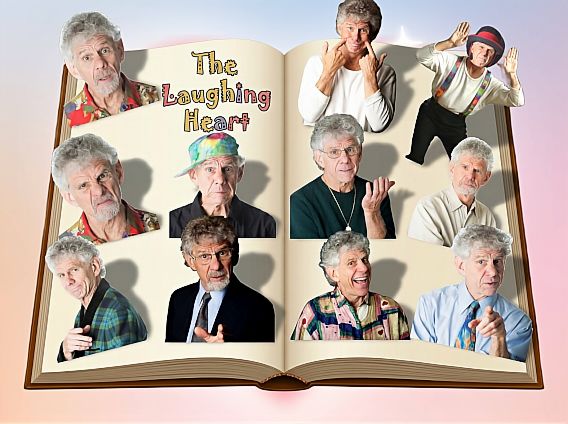

The Laughing Heart with Errol Strider
Hope, Unity, and the Relationships That Hold the World Together
Errol Strider reflects on hope, personal integrity, community, and love as responses to global uncertainty, using poetry, spiritual teaching, recurring characters, and comic dialogue to explore how relationship can heal separation.
Hope as the Doorway to Possibility
In this episode of The Laughing Heart, host Errol Strider opens with a meditation on hope, describing it as something that can lead to disappointment but also keeps possibility alive. He connects hope to faith and love, saying that hope opens the door, faith walks through it, and love embraces whatever is on the other side. From the beginning, the episode frames hope not as naïve optimism, but as a necessary force for resisting cynicism and staying open in a difficult world.
Recognition, Realization, and Expression
Errol then turns toward the crises of the present moment, including climate change, division, war, disease, and the personal and collective sense of powerlessness many people feel. He proposes three steps for responding: recognition, realization, and expression. Recognition means honestly seeing what is happening in the world and within oneself. Realization means feeling that truth deeply enough to take responsibility. Expression means discovering what each person can contribute, not by rushing into action blindly, but by understanding one’s inner obstacles, values, and capacity to participate in positive change.
Yeshua, Love Without End, and the Four Anchors
A central spiritual reference in the episode is Errol’s discussion of Yeshua, or Jesus, through the book Love Without End by Glenda Green. Errol explains that the book’s account of Yeshua’s appearance and conversations has deeply influenced his thinking over the past fifteen years. He focuses on one teaching in particular: that humanity can move through extraordinary future challenges only by honoring life, love, personal integrity, and community. These four anchors become the moral and spiritual foundation for the rest of the episode’s reflection.
Unity Beyond Surface Differences
Errol introduces his poem “Unity” to ask what truly binds people together when beliefs, appearances, locations, interests, and social identities shift or fall away. The poem questions whether humanity is united by blood, belief, proximity, taste, or something deeper. It points toward an unseen spiritual bond, a divine energy or “spiritual magnet” that can draw people together despite difference. Through the poem, Errol expands the episode’s core question: if separation is one of civilization’s deepest problems, what kind of unity is strong enough to survive change?
Bernie and Professor Umbridge on Integrity and Relationship
The episode then brings in recurring conversational characters to explore the issue from different angles. Bernie reflects on how ordinary people are often preoccupied with survival needs such as groceries and medical bills, and wonders what it would take for people to gather around love rather than fear or hatred. He emphasizes personal integrity as inner congruence, where the different parts of a person are no longer divided against each other. Professor Umbridge expands the discussion by arguing that powerful community should be built not merely around personalities, causes, or belief systems, but around relationships themselves.
Buckminster Fuller, Synergy, and Comic Wisdom
Professor Umbridge draws on Buckminster Fuller and the example of the geodesic dome to explain that strength comes from the way parts relate to one another, not merely from the strength of individual parts. This leads to the idea of synergy, where “one plus one is three” and something new is born when people truly connect. The episode then shifts into a comic dialogue between Lord and Lady Umbridge, who humorously debate whether “this is it,” whether there is more to come, and whether the whole can become greater, better, or more complete through its parts. The comedy lightens the philosophical weight while still reinforcing the theme of hope, relationship, and unfinished possibility.
Trust, Love, and the Seamless Whole
In closing, Errol returns to the need for integrity, trust, justice, and love as building blocks of a healthier society. He argues that the belief in separation undermines civilization, while recognizing existence as one integrated whole opens the way toward relationship, spirituality, creativity, and love. He encourages listeners to expand love through the relationships directly in front of them, because love is what can steer society away from divisiveness, anger, hate, and fear. The episode ends with information about TheLaughingHeart.org and the Strider Entertainment YouTube channel, where Errol continues exploring these themes through characters, stories, scripts, poems, music, and humor.
The Laughing Heart
Be kind - Support this WONDERFUL show
- and laugh a lot -
$5.99/mo or $9.99/mo
Click HERE
SUBSCRIBE TO TALK SHOW
The Laughing Heart--a podcast
Humor, story, and spoken word for insight, inspiration, and connection
Hosted by Errol Strider, poet, performer, and non-prophet.
Speaker Identification
Speaker 1 - Host: Errol Strider
Speaker 2 - Bernie, a recurring conversational character/consultant
Speaker 3 - Professor Umbridge, a recurring conversational character
Speaker 4 - Lord and Lady Umbridge, comic-dialogue/performance voices
Speaker 1 - Host (Errol Strider)
Hello, partner. Welcome to the Now. This is Errol Strider of The Laughing Heart. I'm delighted that you can join me because today we're going to probe into something that's very essential to our experience. One has many different dimensions, and that is the subject of hope. I was thinking a lot about it, and on one hand, hope can lead into disappointment. This is in reference to the line where it says, hope, faith, and charity. And charity is the greatest. So without hope, possibility slows down and can even close. On the other hand, this is what I came up with. Hope opens the door of possibility and keeps it open. Faith walks through that door, and love embraces whatever is on the other side. We want to keep that door open, even though we suspect our hope might be betrayed by circumstances
that shut down our hope. That can often lead to cynicism. Indeed, cynicism is often the response of an idealist, someone in fact, that has had his hope betrayed. To set the stage for our examination, this is a poem I wrote about hope, and it comes at it from a very different perspective. Good day, fellow Earth traveler. This is Errol Strider of The Laughing Heart. Welcome to the Now. This particular Now that we are all living has some unique challenges, not the least of which potential breakdown of civilization as we know it. I know this may seem extreme, but if you're paying attention to what's going on in the world and how people are dealing with it and the various challenges to our lives, ranging from global climate change to the divisiveness and the wars and disease and everything else,
pretty much like what's been going on all the time with some variations on the theme. Of course, no matter what the issue is, all of us face our demise, but that's another issue. What I'd like to deal with today with you is, what is our response to these global and personal changes? Many people feel impotent in the face of these crises. What I would suggest as we move together through this dynamic, that there are three steps that we can follow in order to address these issues and frankly improve the quality of our lives. The first step is recognition. The second step is realization. And the third step is expression. Let's start with recognition. We have to recognize what's going on, not just what media dishes out, but in terms of our own life, and not just the externals of our life, but the insides of our life, as
well as what's going on in community, in nations, in families, all of the above. Recognizing what's going on. The next step I call realization. It's one thing to recognize it. It's something else to realize it in your gut, enough where you're moved to take action, where you're challenged enough to even consider your assumptions, habits, beliefs, and behaviors. realization. That's taking responsibility for it and making what otherwise might be global or society issues and making them your own. The next step is expression. Many of us ask ourselves, well, what do I do? And often in the face of these circumstances, we ask, what do I do? Well, I'm not sure the doing is one, the necessary next step, but also it is definitely not the first step. The first step, as I said, an honest recognition of what is happening and who we are in the
face of it. And the next part of recognition is ask ourselves, well, what can I bring to this? How can I contribute? What obstacles do I face within myself and others that might inhibit or prohibit taking action that has some real positive impact? The other thing is to recognize the values and the structures upon which our society is operating. For those of you who are familiar with integral philosophy, you'll notice that there are different paradigms or memes in which people operate and they have different value systems. So another part of our recognition is to begin to understand those and to see how we might respond to those frames of reference if we have any intention of being a part of the facilitation of global consciousness as a way of affecting what's going on and how we set the stage for a more productive and positive future, which, as I said, welcome
to the now, anything of any value, actually all creation emerges out of the now. So where we need to go and where we need to operate from is this now. Many of us are caught up in the parts, which we haven't let go of and which we continue to reference for who we are and what we're about, or the future, progression of possibilities that exist in what is, in fact, the unknown. Now, we can make some predictions. Some have greater possibility of coming to fruition, but on the other hand, what we imagine for the future cannot be counted on, but what can be counted on is the now. That's where we reside. So the question I want to put to you is, how involved are you in the community of the world in which we live? How much commitment have you made to your own capacities for expression and making those viable contributions?
Where are you in your development? What's triggering your actions? What pains are you relating to both within yourself and with others? And how much do you actually care? And if there's not much caring, what would it take to awaken more caring so that might lead to more expression? Over the years, I've had the great privilege of being exposed to some amazing teachings. I've also had many life experiences that have taken me into various contexts where I had to deal with a variety of humanity. I won't go into all of that later, although it's quite extraordinary. I've been thrust into these situations in order to have a better understanding of humanity. But I want to focus on one of these teachings that has come to me and that I've studied pretty intensely in the last 15 years, and that is the teachings of Yeshua, otherwise
known as Jesus. I'm not referring to what we know about Yeshua from the Bible. I'm referring to an extraordinary incident that happened in 1991 that has led to these amazing perspectives that I have learned and which has changed my thinking, my life, and which has motivated me to move in some different directions. From the book Love Without End, written by Glenda Green. She talks about an amazing event that happened to her around 1991. Now I know this is hard to believe, but she had an experience where Yeshua appeared to her and ostensibly to create his portrait. Whether that part of it is true or not, she did in fact create a portrait, but more importantly, she had these amazing conversations with him. So if you can imagine Yeshua, Jesus, showing up in our culture at this time of the development
of consciousness, not the Jesus we know of from the Bible, I should reframe that, the Jesus we know of from the Bible, but what he might say to us in this time under these current events. And he says a lot. But one thing I want to focus on with regard to our question and our challenge, he describes the many variables that are going to affect us as we move into the quote unquote future. And of course, they are going to be extraordinary. We're already experiencing many of them with the divisiveness, as I said, climate change, relocation of large segments of the population, challenges to survive, food shortages, all of the above, which we're just beginning to experience. This is what he says. The only way we can get through all this is to honor life, love, personal integrity, and community. Life, love, personal integrity, and community.
But I'd like to take a few minutes to explore these challenges and ask ourselves a deep question with this poem I wrote called Unity. I seek to know the basis for interacting with you. Do we find ourselves together because of a common bond? If there is a family of men and we're not blood related, what does unify us and keep us bound for glory? If a common belief holds us as one, what happens if your beliefs change? Will you go apart from me and break our bond asunder? What if we look differently from each other? Does that make us aliens? Will our unique appearance and our diversity provide the soil for respect or disrespect, denial or distaste? If proximity of space unifies us, what if I move away from you? Will you be lost to me as kin? Do common interests consolidate us so that we must be drawn to similar tastes in order
to be as one? Or is there a commonality that transcends our differences in spite of space, race, time, and taste? A communal point of reference that remains when all surface ties break down. What is that mysterious element that adheres and binds us as one? Unseen, subtle, and evanescent? Is there a spiritual magnet that pulls us towards each other? A reality-based adhesive that maintains our eternal union? Can we feel that polar energy uniting our various extremes, pulling us into loving embrace by the power of divine energy? At this point, I'd like to bring on one of my consultants to see if he can provide another perspective on our dilemma.
Speaker 1 - Host (Errol Strider)
Welcome, Bernie.
Speaker 2 - Bernie
Hi, Errol, it's great to be here today.
I'm always happy to be a part of this deep discussion. I don't have a lot of friends who want to probe into these things. I've always felt like kind of an outsider, so I was happy and delighted to meet with you. I think about this stuff a lot. I wonder what I can do. Most of the people I meet, Errol, are just trying to get by paying for groceries and hospital bills and all kinds of things that are just immediate and personal. There's not a lot of people thinking about this stuff. So I wonder what would it take to get people to consider all this, considering, if I may stay that, what they're preoccupied with. People are often pulled together by a common enemy, and often it's not the fears of what pulled people together. The fears can solidify into hatred and eventually into war. You can argue that this is what's going on right now in the world.
Seems to me, Errol, that people need to come into some kind of union around love.
Yes, of course, but man, that's a big thing.
I don't even know where to begin.
Well, Errol, obviously the first place you begin is with yourself.
You mentioned personal integrity. So what I think you mean by that is that people have to be all together inside themselves. There's no part of them that's resisting other parts. How can I make action if they're all totally divided? Where was that term you used to use that I like? Being congruent and all the parts inside us are equal. Now, that's to me personal integrity. There's no split in our person, our being. You get what I'm saying? Yes, I do get that and can't argue with that. And that does seem to be the challenge.
Speaker 1 - Host (Errol Strider)
Thanks for your contribution, Bernie.
It was really insightful.
Speaker 2 - Bernie
You welcome Errol.
Any time, always happy to contribute. I don't have an opportunity to have these kind of conversations very often, so I really appreciate it. We'll talk to you next time. Hello, Errol.
Speaker 1 - Host (Errol Strider)
Well, hi, it's Professor Umbridge.
Speaker 1 - Host (Errol Strider)
What brings you here?
Speaker 3 - Professor Umbridge
Well, I always listen to a podcast and I couldn't help but hear what Bernie has to say. One of the things I've looked at over the years is, what does it take to build a collective that is capable of responding to the challenges that we all face? So many times that collective is built around a personality or a cause or particular belief system. But I rather think the collective should be built around relationships. It seems to me that relationships form the very essence of life experience, whether it's material or whether it's spiritual. You could almost argue that each of us is, in fact, a relationship, a relationship between ourselves and the whole of things. I've given some thought to us and one of the things I've come up with, the only way we can build that kind of powerful community is by moving out and connecting to by two.
Speaker 3 - Professor Umbridge
As we've shared many times, Errol, the impact and the understanding that Buckminster Fuller gave us. Fuller discovered something much bigger than a new kind of dome, for which he is famous. He discovered that strength doesn't come primarily from making the individual part stronger. It comes from the way the parts relate to one another. I remember that his geodesic dome became one of the strongest and most efficient structures ever built. Of course, you don't see many of those, so like many great things, we don't take it to heart, but not because its pieces were unusual because the patterns they formed together. That insight has stayed with me, too, because I think it applies to life as well. Oh, I'd like to say, one plus one is three. When two people truly connect, something new comes into being.
A relationship is born. Neither person could have created it alone. I think what you're saying here is that whole is greater than the sum of its parts. Maybe that's how transformation happens. We spend so much time trying to change ourselves as individuals, perhaps the real miracle occurs in relationship. Love, trust, understanding, creativity, even healing often emerged between people rather than from one person alone. Yes, indeed. Oh, Mr. Fuller, called this synergy. As you said, oh, it becomes greater than the sum of its parts. I think that's more than just an architectural principle. I believe it's one of the great spiritual principles as well. I think you're right, Professor. Maybe our future depends less on building stronger individuals, as important that may be, but more on creating stronger relationships, because when the relationships change, everything
changes.
Speaker 3 - Professor Umbridge
Indeed, Errol, which reminds me of a conversation I had recently with Lady Umbridge, which I
would like to share with you. And I think it throws a different light, perhaps with a little humor and realization that I have so much to learn from Lady Umbridge, and this is the question we asked ourselves.
Speaker 4 - Lord and Lady Umbridge (Comic Dialogue)
Is this it?
Is there something more?
Speaker 4 - Lord and Lady Umbridge (Comic Dialogue)
Is this it?
I think it's all right. Is this all there is?
What?
Have we arrived?
Arrive!
Where are we going?
I don't know.
Where are we going?
I don't know.
That's why I asked the question.
What question?
Speaker 4 - Lord and Lady Umbridge (Comic Dialogue)
Is this it?
It's as far as it's gotten like as a whole. It's difficult to say. I suppose it depends on your quality. No point of view. Wait, it would look quite different than if you were down. If you were in the middle, it would look all together different. So where are you? I can't tell unless I know if this is it. If this is all there is going off you speak up, at most it's easier to come and down. And this is her halfway I'm in the middle.
So which is it?
I rather think we're in the middle. What makes you say so? Because I can study lots below. I think we're in the middle. What makes you say so? Because I can study lots below and lots of other... I can see lots below, all right? But what makes you think there's an in-more? A bath. That's it.
What?
More. There must be a more to come. What makes you think so? Well, it might have needed this, is it? And why shouldn't this be it? Well, we could be dreadful that's all if this were all there was. If this size has always been more than 4, why shouldn't there be more happiness? That's rather optimistic I'd say. Besides, how do they make you think more? Is it a habit? Just because there's always been more or before, or there's necessarily a mean there'll be more after. Thanks for the change, little bit. No, we'd have to put on more or could not change.
Why?
Why?
Why won't more change? Because it always has been more. But someone could shut the whole bloody thing down. Press the button button, give her a fuck the call. Why, do they want to do that? I don't know why, what thing they do. Bunch of weirders, if you ask me. That's why I don't think you can be sure that's going to be more. And must remain more weirders. You headed this way. Even the beginning, there was a tiny thing to write. And write? And there got to be a letter, right? Then there was a small bunch. Then a bunch. Then a goodly amount. Then a lot. Then a whole fake bunch, right? Crowded, I said. That's why I don't think you can say that more and be more. Often it's just taking up everything already. You know, how will it appear to more? Besides, who want more? Do you? Yes, I would want more.
What?
Why do I wouldn't want it to end here? Besides, if they want more, things might get better? What makes you think more is better? Bigger hasn't been better, why should more be better? Because the whole is greater than the sum of its parts. I beg upon. I said. The whole is greater than the sum of its parts. It's so good to do it, do you see. What do you do with greed, does? I suppose so. It's always so... Boy, thin that way, I presume. But there's a minute all this would be that way. You'll be in the whole. That parts might degrade it in the whole. Another doubt. But what does that have to do with that being more? But it just proves that if the whole is greater than the sum of their parts, if there are more parts than the whole, would it break us still? That's true. It is a proof that the whole is greater.
More is greater. Excuse me, I don't need to know what I'm talking. Greater, eh, eh, eh, but is it better?
Yes.
Because if the whole is greater, there's more chance for the parts to be better, it is their part of the whole. Oh my god! Yes! Now look, look, that more is greater.
What?
Why?
Why?
Because it's always been that way and because the parts is never as big as the whole. That's fine. If you put some of the parts, it's never bigger than the whole, they can always get more holy candic. More holy, eh? Yes, more holy, it means that things can get better, Catherine. Better? Bigger, you mean, but what makes you think they'll get better? I don't think they'll get better at all. It's alright. Decised. What if they shut it all down? Hey! Yes, the parts, the parts. I can't do that, but they ain't fine not. Well, because the whole is greater than the sum of the parts, at best they don't need a few paths trying to shut the whole thing down. And obviously they could shut the whole thing up because the whole is greater. That's close your eyes. So, this can't be all rivets.
No, may not.
Of course not. We're still going away then.
Of course.
I don't.
And are you, er, heading my way? Adomately so. How could I catch a ride with you then? Can you seem to know where it is from? I am not my own person, you know. So I help baby goings up a different road than you look? But I'll eat you when we get there.
There.
When they arrive? They can arrive then. Of course I do. I expect it. I hope so. We'll have to see you there.
There.
You wouldn't be there coming up then, you say?
Of course we are.
Oh, poor, jolly good. Well, thanks to the ask. Okay, welcome. Well, thank you both, Lord and Lady Umbridge.
Speaker 1 - Host (Errol Strider)
That was fun and insightful.
Speaker 1 - Host (Errol Strider)
So as we bring this podcast to a close, let's summarize and see where we are.
We've talked about relationship and Buckminster Fuller and the necessity of becoming more integrous. As Yeshua said, to get through these challenging times, we need to honor love, life, personal integrity, and community. Let me just add this one note. As a theater director, whose job it is to help the actors become authentic, which is another way of saying congruent, which is believable. And so by becoming more congruent, more integrated, having more personal integrity, we do in fact become more believable. And people are more inclined to trust us. And let's face it, trust is one of the great building blocks of human experience. Without trust, well, there is no justice. And without justice, we find ourselves careening toward destruction. So in order to help our society and civilization, we need to really take these things seriously,
because otherwise we're in big trouble. And once again, as I've said before, the big issue that undermines the quality of life in our civilization is the belief in separation, that I'm over here and everything else is over there. So part of this process is recognizing that we are part of one system, one integrated whole, that as Yeshua says, existence is seamless. So as we expand our sense of self to include more and more, which is facilitated by adapting, which is in fact, including that which we are inclined to keep separate from ourselves, we become more and more. And that brings us greater and closer to understanding and enacting the great principles of relationship, spirituality, creativity, and Yes, love. So what we need is more love. And love starts simply with the relationship of those with whom we come in contact.
So I encourage you to extend and expand the love, because ultimately that's what it's going to take to steer ourselves away from divisiveness, anger, hate, and fear into a more authentic, healthy society. So this is Errol Strider. I'm so glad we have been able to explore these things together. Our website is the laughingheart.org, which I hope you'll check out. We also have a YouTube channel, Strider Entertainment. Go over there and see our videos where we explore these kinds of issues with characters, stories, scripts, poems, music, audio, etc. I know you'll find something in there that touches your heart and tickles your funny bone and may even give you some insight about yourselves and we in this culture. With that said, I'll talk to you soon. Hope you can join me. This is Errol Strider.