
LaGrave Live, May 31, 2026
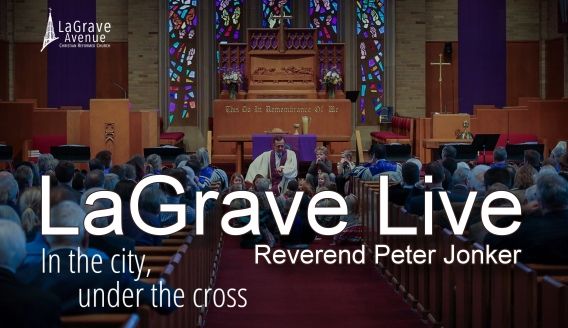

LaGrave Live
LIVE Evening Worship Service - Paul and the Agnostics
About The Service:
Pastor Jonker will preach on Acts 17:16-34
Order of Worship:
https://lagrave.org/wp-content/upload...
About Us:
We are a traditional CRC church in the middle of Downtown Grand Rapids, MI, worshipping at 8:40am, 11:00am, and 6:00pm. (10:00am and 6:00pm during the summer months)
We'd love to hear from you:
Connection: https://www.lagrave.org/contact
Let us pray for you:
Prayer: https://www.lagrave.org/prayerrequest/
Listen on the go:
Amazon Music: https://bit.ly/LGPodAmazonMusic
Apple Podcast: https://apple.co/3tuOdwQ
Google Podcast: https://bit.ly/LGPodGoogle
Soundcloud: / lagravecrc
Spotify: https://spoti.fi/3yXDFaT
Follow us!
Facebook: / lagravecrc
Instagram: / lagravecrc
Website: https://www.lagrave.org
#LaGrave #LaGraveCRC
The Known God in an Age of Uncertainty: Paul, Athens, and the Truth Found in Christ
Reverend Peter Jonker Opens the Evening Worship Service
In this evening worship service from LaGrave Avenue Christian Reformed Church, the primary speaker, Reverend Peter Jonker, welcomes the congregation and begins with a brief correction to the bulletin regarding the opening hymn. The call to worship comes from Psalm 61, where the psalmist cries out to God for refuge, shelter, and stability when the heart grows faint. This sets the tone for the service: a worship gathering centered on finding spiritual shelter, clarity, and confidence in God amid uncertainty.
Faith, Shelter, and Ancient Words of Truth
After the opening worship, Reverend Jonker introduces the theme of truth and how Christians can find truth in a world filled with opinion and confusion. He reads from 1 Peter 1:3–9, describing the early church as an “exile church” surrounded by people who thought differently from them. He explains that Peter’s words helped anchor believers in living hope, resurrection, inheritance, faith, joy, and salvation even during trials. The congregation then recites the Nicene Creed, which Jonker frames as ancient words that have anchored Christian faith for more than 1,700 years.
Prayer Beneath the Shadow of God’s Wings
The service includes a pastoral prayer built around the image of living and singing beneath the shadow of God’s wings. Reverend Jonker prays for shelter amid global conflicts, including wars in Sudan, Iran, and Ukraine, as well as conflict and cynicism within the nation. He asks God to help the congregation become people of faith, hope, love, and truth rather than fear, anger, and cynicism. The prayer also lifts up church members facing surgery, recovery, hospice care, cancer, mission work, and grief, including the sudden loss of Lori Vanderhardt.
Paul in Athens and the Marketplace of Ideas
The sermon text is Acts 17:16–34, where Paul arrives in Athens and sees a city full of idols. Reverend Jonker imagines the Athenian marketplace as both a literal market and a “marketplace of ideas,” filled with philosophers debating, gesturing, criticizing, and chasing the latest intellectual trends. He describes Athens as the Cambridge, Oxford, or Harvard of its day, but also as a place marked by intellectual boredom and weariness. The people were always looking for something new, not necessarily because they were open-hearted, but because they were tired of hearing the same old arguments.
Epicureans, Stoics, and Modern Echoes
Reverend Jonker explains that Paul encountered Epicurean and Stoic philosophers. He describes the Epicureans as materialists who believed the gods had created the world but no longer cared much about it, leaving people to pursue modest happiness and avoid excess. Jonker compares this to many modern Americans who may vaguely believe in God but mostly seek comfort, amusement, and personal happiness. He describes the Stoics as more pantheistic, believing in a divine life force within and urging people to go inward to find truth and stability. He connects this to modern self-focused spiritual language such as “live your truth” or “follow your dreams.”
The Altar to the Unknown God
A central image in the sermon is the Athenian altar “to an unknown God,” or agnosto theo, from which Jonker notes we get the word agnostic. He considers several possible meanings: perhaps the Athenians sensed their gods were insufficient, perhaps the altar was a kind of religious insurance policy, or perhaps it represented an altar to unknowability itself. Jonker leans toward the third possibility, describing the altar as a philosophical shoulder shrug from educated people who had heard every argument and no longer knew what to believe.
Modern Idols to Agnosticism
Jonker then connects Athens to the present day, arguing that modern people still build idols to agnosticism. He points to the rise of the religious “nones,” the influence of postmodernism, and the belief that truth is unknowable or merely a power game. He also uses popular culture examples, including Seinfeld as a “show about nothing” and the song “Some Nights” by the band Fun, whose lyrics ask, “What do I stand for?” For Jonker, these examples reveal a culture that often shrugs at truth, meaning, and conviction.
Paul Proclaims the Known God
Into this weary and cynical environment, Paul announces that the God they call unknown can be made known. Reverend Jonker explains that Paul’s speech is brilliant because it speaks to both Epicureans and Stoics. Paul agrees that God does not live in temples made by human hands and does not need human service, which would appeal to Epicureans. But Paul also says God is not far from anyone, and that in Him “we live and move and have our being,” which would resonate with Stoic thought. Yet Paul ultimately moves beyond both systems by proclaiming repentance, judgment, resurrection, and the man God raised from the dead: Jesus Christ.
Truth Is Not Merely an Idea, but a Person
The heart of the sermon is Jonker’s claim that Paul does not simply offer the Athenians another teaching or philosophy. Instead, he points them to a person. Jonker connects this with John 1, explaining that the Greek word logos had meaning within Stoic philosophy as an organizing principle of the universe, but John declares that the Logos became flesh and dwelt among us. Truth, Jonker says, is ultimately found not in winning arguments, mastering systems, or collecting ideas, but in Jesus Christ, the living Lord who calls people into relationship.
Three Responses to the Gospel
Jonker notes that Acts 17 records three responses to Paul’s message. Some people sneer and dismiss him as a babbler. Others say they would like to hear more, though Jonker wonders whether they still want to keep the conversation at the level of ideas rather than surrender to Christ. A few believe, including Dionysius, a member of the Areopagus, and Damaris, along with others. Jonker presents this as the choice before hearers today as well: cynicism, endless debate, or faith in the risen Christ.
Closing Prayer and Blessing
The sermon closes with Reverend Jonker acknowledging that believers will always face gaps in understanding, disagreement, uncertainty, and fog because human beings are fallen and limited. Yet when he feels overwhelmed by uncertainty, he says he turns not first to ideas, but to the person of Jesus Christ, the one who shelters him and knows his name. He closes in prayer, thanking Christ for the shelter of His wings and asking that believers become truth-seeking people who point others to relationship with Him. The service ends with a blessing: that the Lord would bless, keep, shine upon, be gracious to, and fill His people with peace.
LaGrave Live

If you’re looking for a warm church that commits to an intensely pertinent Gospel in the Reformed tradition of the Christian faith, we invite you to worship with us. Our 1,800 members come from across West Michigan and gather weekly in our sanctuary for relevant Biblical preaching, beautiful music, and inspiring worship. We expand our worship through intentional outreach in our community and world, attentive care for our members, and plenty of spiritual enrichment and social opportunities for everyone.
We focus on a living Savior who provides genuine solutions to the deep needs of a hurting world. We are committed to need-meeting ministry in His name, and we are committed to being real people who enjoy real life and who cry real tears. Because we are a fairly large and diverse group in terms of age, occupation, marital status, lifestyle, and physical ability; our members create many accessible opportunities for community service, Bible study, and small social groups.
We worship God, the Almighty Creator of heaven and earth, and we enjoy expressing our vision of His holiness through traditional music and formal liturgy.
Music plays an integral part of our weekly worship gatherings. Congregational singing—of both traditional hymns and newer ones—is typically supported by our pipe organ. Vocal choirs, handbell choirs, small ensembles, instrumentalists, and vocal soloists provide additional music offerings.
Led by the Holy Spirit, we seek to worship and serve God in all of life, transforming His world and being transformed to reflect the character of Christ.
Founded by 36 Dutch immigrants on February 24, 1887, LaGrave Avenue Christian Reformed Church has always been deeply committed to both this local community and worldwide missions. God has seen fit to guide and bless these commitments with sustained growth, spiritual gifting, and a continual stream of new work for our members.
dissonance
Before I give you the call to worship, just a little editorial mistake that I
made in the bulletin, the opening hymn is actually number 773, not 772, so don't
let that confuse you. And we will also be singing, not the tune that's in the
red, we'll be singing the old tune, which I think you will all know. Our call to
worship this evening is from Psalm 61, and these are words of the psalmist as a
man who is trying to find center and shelter when he's surrounded by uncertainty.
Hear my cry, O God, listen to my prayer. From the ends of the earth I call to you,
I call as my heart grows faint, lead me to the rock who is higher than I. For you've
been my refuge, a strong tower against the foe, along to dwell in your tent forever,
and take refuge in the shelter of your wings. For you, God, have heard my vows,
you've given me the heritage of those who fear your name. Thanks be to God.
For you've been my refuge, lead me to the rock who is higher than I. For you've been my refuge, lead me to the rock who is higher than I.
And he greets us, saying, grace, mercy, and peace to you
from God the Father, from Christ his Son,
through the mighty and powerful work of his Holy Spirit.
Amen.
Welcome, everyone, to our worship service
at La Grave Avenue Christian Reform Church.
On this evening, welcome to those of you who are visitors
in our midst.
I see some of you here.
Welcome to all you members.
Today, we will gather in the shelter of God's wings.
We will hear His word.
We will pray together.
We will sing together.
And God will restore our spirits.
This morning, this evening, my sermon
is focused a lot on truth and figuring out truth
and how to find truth in the middle of a lot of opinion
and confusion.
And that's why, for my reading, I
chose 1 Peter 1, verse 3 through 9.
1 Peter was written to a church that was an exile church,
exiles, metaphor, meaning they were Christians living
in, surrounded by, people who thought very differently
from them, and yet somehow survived.
And it was their faith, as expressed in these words,
that kept them centered.
Listen.
Prays be to the God and Father of our Lord Jesus Christ.
In His great mercy, He has given us
new birth into a living hope through the resurrection
of Jesus Christ from the dead, and into an inheritance that
can never perish, spoil, or fade an inheritance that
is kept in heaven for you, who through faith
are shielded by God's power until the coming of His salvation
ready to be revealed at the last time.
In all this, you greatly rejoice.
Though for a little while now, you
have had to suffer all kinds of trials.
These have come so that the proven genuineness
of your faith, of greater worth than gold, which
perishes even though it may be refined by fire,
may result in praise, glory, and honor
when Jesus Christ is revealed.
Though you have not seen Him, you love Him.
And even though you do not see Him now, you believe in Him,
and are filled with an inexpressible and glorious joy,
for you are receiving the end results of your faith,
the salvation of your souls.
Thanks be to God.
First Peter's words that I read earlier
anchored that church in their faith,
in their difficult situation.
As Christians, we have other ancient words
that have anchored our faith for more than 1,700 years.
Last year was the 1,700th anniversary of the Nicene Creed,
created all the way back in 325 AD.
So we're now on 1,701 years that Christians
in the midst of their perplexity and uncertainty
have been saying these words of truth.
Let's rise and say these words
that express what we believe.
We believe in one God,
the Father, the light,
maker of heaven and earth,
of all things visible and invisible.
And in one Lord Jesus Christ,
the only Son of God,
who got from the Father before all ages,
God from God,
light from light,
true God from true God,
who got from not made,
of the same essence as the Father,
through Him all things were made.
For us and for our salvation,
He came down from heaven.
He became incarnate by the Holy Spirit
in the Virgin Mary and was made human.
He was crucified for us under Pontius Pilate.
He suffered and was buried in the third day
and rose again according to the scriptures.
He ascended to heaven and is seated
at the right hand of the Father.
He will come again with glory
to judge the living and the dead.
His kingdom will never end.
And we believe in the Holy Spirit,
the Lord, the giver of life.
He proceeds from the Father and the Son
and with the Father and the Son
is glorified and glorified.
He spoke through the prophets.
We believe in one Holy Catholic and apostolic church.
We affirm one baptism for the forgiveness of sins.
We look forward to the resurrection of the dead
and the life of the world of town.
Amen.
Before we go to God in prayer,
I just have to say,
when we sing that song and I'm standing up here,
it's funny.
There's something about the rhythm of that song.
There's way more swaying in the congregation.
There's so many, it's almost liturgical dance, almost.
At the end of this evening's prayer,
we'll sing two stanzas from the hymn that is printed in your liturgies.
We'll sing that together after the prayer.
Let's gather our hearts and go to God in prayer.
Almighty God, in your book, we hear the psalmist promise you,
I will sing beneath the shadow of your wings.
Father, we join that promise.
We want our whole lives to be a song of joy that comes from under the shadow of your wings.
And we need your wings to shadow us, Father.
We need that protection.
Because without that protection, sometimes it's hard for us to sing.
Because we worry about a lot of things.
We are worried about the world and its conflicts.
We're worried about war that we see in Sudan and in Iran and still in Ukraine.
We worry about these wars, not just because of what they're doing to the people involved,
but we're worried about what they're doing to our world.
We need the shelter of your wings because we worry about conflicts in our own nation,
in the political realm and in the personal realm.
In some ways, Father, we have such a good life right now.
There's so many blessings in our life, and yet we look around and everyone seems unhappy
and cynical and angry.
This is not how things are supposed to be.
Father, in the midst of that, help us to be people of faith and hope and love and truth
instead of fear and anger and cynicism.
Father, we need to be covered by your wings because we're worried about people in our
lives, people whom we love.
Each of us has concerns that weigh in our hearts.
And these concerns are about all sorts of things.
Sometimes it's finances, sometimes it's our health, sometimes it's our jobs, much of
the time it's things going on in our families.
And Father, sometimes these words grow large in our minds and they take too much space
and they keep us from singing and hoping.
Father, cover under your wings the people in our bulletin this week.
For undergoing difficult trials, I pray for Jim Bock, Ed Hooksomah, Marlene Padding,
Joy Winkle and Steve Gibson, who are all recovering from surgeries, bring them healing.
We pray for Mary Lou Riefer as she gets ready for surgery in this coming week.
And I pray for Matt Bonzo as he continues his mission work in Africa, keep him safe and
keep him healthy.
We pray for Ray Pader and Dorothy Andersma who've recently entered hospice.
We pray that their journey through their last days may be free from pain and worry and I
pray for their family as they sit around Ray and Dorothy and love them.
Father, I pray for Dave Vanderhardt tonight in the sudden loss of Lori.
Lori, this seems to have gone so fast and Lori was dearly loved by so many in this
congregation and she is so suddenly gone.
Lord, you are our only comfort in life and in death and we cling to you and we shelter
under your wings in her loss.
I pray for those walking through the valley of shadow of cancer.
Joanne Ornois, Dan Beemer's, Jolene Dehere, Marcia Hahn, Jim Crowell, Steve Paolo,
Renee Kuiper, Lloyd Tenholt, Sharon Van Houten and so many others.
Father, you've heard our concerns and they're very real.
So spread your wings over us and let you know that these concerns in your time will give
way to grace and mercy and new creation.
Help us every day to know that your promise and your presence are very real.
Give us eyes to see the blessings that are around us every single day and to also see
the grace that shelters us so that we every day may sing beneath the shadow of your rings.
Amen.
Lord, hear my air.
Tonight is from the Book of Acts, Acts 17.
I'll be reading verses 16 through 34.
We're in the middle of one of Paul's missionary journeys and Paul has arrived in Athens.
And this is what happened.
While Paul was waiting for them in Athens, he's waiting for his colleagues to join him,
he was greatly distressed to see that the city was full of idols.
So he reasoned in the synagogue with both Jews and God-fearing Greeks as well as in
the marketplace day by day with those who happened to be there.
A group of Epicurean and Stoic philosophers began to debate with him.
Some of them asked, what is this Babler trying to say?
Others remarked, he seems to be advocating foreign gods.
And they said this because Paul was preaching the good news about Jesus and the resurrection.
And they took him and brought him to a meeting of the Ariapagos where they said to him, may
we know what this new teaching is that you're presenting.
You're bringing some strange ideas to our ears and we would like to know what they mean.
All the Athenians and foreigners who lived there spent their time doing nothing but talking
about and listening to the latest ideas.
Paul then stood up in the meeting of the Ariapagos and said, people of Athens, I see
that you are very religious for as I walked around and look carefully at your objects
of worship I even found an altar with this inscription to an unknown God.
So you are ignorant of the very thing you worship and this is what I'm going to proclaim
to you.
The God who made the world and everything in it is the Lord of heaven and earth and he
does not live in temples built by human hands.
And he's not served by human hands as if he needed anything.
Rather he himself gives everyone life and breath and everything else.
From one man he made all the nations that they should inhabit the whole earth and he
marked out their appointed times in history and the boundaries of their lands.
God did this so that they would seek him and perhaps reach out to him and find him,
though he is not far from any one of us.
For in him we live and move and have our being.
As some of your own poets have said, we are his offspring.
Therefore since we are God's offspring we should not think that the divine being is
like gold or silver or stone, an image made by human design and skill.
In the past God overlooked such ignorance but now he commands all people everywhere to repent.
For he has said a day when he will judge the world with justice by the man he has appointed
and he's given proof of this to everyone by raising him from the dead.
When they'd heard about the resurrection of the dead some of them sneered.
But the other said, we want to hear you again on this subject.
At that Paul left the council.
Some of the people became followers of Paul and believed.
Among them was Dionysius, a member of the Ariapagos and also a woman named Demerus and
a number of others.
This is the word of the Lord.
Let's imagine the Athenian market that Paul visited in Acts 17.
It says that Paul when he got to Athens went to the synagogue but he also, which is less
common for him, went to the market.
Imagine a big marketplace in the middle of Athens and in my imagination I see a little
cafe in the corner of that market and that's where the philosophers come.
And they come in the morning and they get their newspapers under their arms or I guess
it would be a scroll under their arm and they got their coffee in their other hand and they
sit down at the tables and the talk is polite and civil and friendly at first.
But then someone always says something to set them off.
Someone makes a comment about politics in Athens or someone says, you know, I don't like what
Plato said in his Republic and then they go at it.
It's hammer and tongs.
They start into the debate.
They start going back and forth.
They start to bait.
They start gesturing.
They wave their fingers at each other.
They make dismissive gestures.
There are cat calls in jeers.
People goes down to the marketplace every day and it seems that in Athens there are
two kinds of markets in the marketplace.
There's the market where you can get your food for your evening dinner but there's also
the marketplace of ideas and the marketplace of ideas is the main event in Athens.
As I think you know in those days, Athens was the center of academia, the center of
thinking it was the Cambridge, the Oxford, the Harvard of its day.
And you can sense that from our text but you can also sense that in this academic realm,
in this learned city, perhaps the people were getting a little jaded, a little weary.
You get a sense that they're intellectually bored.
Now all the Athenians and foreigners living there would spend their time in nothing but
talking about the latest ideas.
When it says the latest ideas, the word in the Greek is kynotaron.
And that means things that are fresh, things that are new.
They're looking for something new.
They're desperate for anything to break the boredom of the old ideas that they've heard
over and over and over again.
They are seeking novelty.
You get a sense of that even with the fact and the way that they engage Paul.
Who is this babbler?
Well, he seems to be bringing some new ideas.
All right, bring him in.
Let's hear from him anything but hearing the same old stuff over and over.
Years ago I heard N.T.
Wright talk about this passage and he helped me maybe get this feeling, this sense of this
intellectual boredom.
I was in Chicago on continuing education and he talked about the Epicureans and the Stoics.
You heard those two philosophical schools were named in our passage.
Those are the two people who were arguing with the two groups that were arguing with Paul.
And what Wright said is that those two groups have been the main groups in Athens in terms
of ideology for years and years and years and years.
Sort of like Republicans and Democrats.
The same two ideologies crashing into each other over and over and over and over again
for years and years and years.
And what Wright said is that the Epicurean and Stoic philosophies, they're still in the
philosophical schools of today.
There's still manifestations of those beliefs that are crashing into each other.
So what are these two worldviews and what do they believe?
The Epicureans had a materialist view of the universe.
They believed in the gods and they believed that the gods created the world but they basically
believed it.
The ones that the gods created the world they stopped carrying.
So the gods created the world and then went off and got distracted with other things.
So they had nothing to do with what was happening in the world and they paid no attention to
human beings and we ought not to pay any attention to them.
For Epicureans, what life was about was this pursuit of happiness.
You want to find a little happiness in life.
You don't want to go to access with pleasures because that's foolish.
But just find some happiness.
An ideal society was one where you were able to pursue your happiness in your way over
here and your neighbor could pursue her happiness in her way over there.
Don't judge each other.
Don't bother each other.
Just live and let live and have a little fun.
I would argue that a high percentage of modern Americans are basically Epicureans.
They don't really think about God being active in their life much.
Maybe they say there is a God but they don't really think that he moves too much in their
life and what are they doing?
They're trying to find a little fun, a little amusement.
Not too much.
They don't want to go in access but just have good time week after week after week.
The Stoics on the other hand were more like pantheists.
They did believe in God.
They believed that there was a divine life force inside of you.
They did not believe that this God was personal but they did believe that this God was active.
And so what the Stoics believed is that when you were in the middle of trouble and when
everything was getting crazy what you needed to do is you needed to go inward.
Inside you would find your truth.
Inside you would find your anchor.
That divine life force within you, that could center you.
That could keep you going in the midst of all the craziness.
It's very different belief than the Epicureans but that belief is around too.
When you hear some new age philosophies, when you hear about Oprah or something, you know,
anchoring yourself within yourself, look into yourself, follow your dreams, live your own
truth.
It's modern manifestations of a stoic mentality.
Right says the sides are still there and they're still present today, these two philosophies.
The same old arguments that were there in the square.
When Paul got there they're still going back and forth in schools today, round and round
and round and round.
We hear them from pundits.
We hear them from thinkers.
We've heard them our whole life and it gets a little wearying.
It reminds me of the words that the teacher says in Ecclesiastes.
I, the teacher, applied my mind to search out wisdom by all that is done under heaven,
to find the correct philosophy.
He says it's all vanity, chasing after the wind.
Which brings us to the idol of the unknown God.
The Athenians, as Paul noticed, had idols all over the city and stumbled across this
idol to the unknown God, in Greek agnosto theo, agnosto theo from which we get the
word agnostic to an unknown God.
That's a remarkable thing that they would do that in Athens.
If someone would spend time, take a big block of marble and spend a whole lot of time and
probably a lot of money making this idol do something unknown.
What is going on there?
What on earth compelled the Greeks and Athens to make an altar to an unknown God?
I think there's three possible answers to that.
When I was younger, I thought the idol to the unknown God was maybe an expression of
the fact that the Greeks kind of knew that their gods weren't real and that there was
something else out there and they were reaching for it.
I wish that were true.
I don't think that's what it is.
Two, you could imagine that perhaps this is a kind of divine insurance policy, right?
Look, we're not sure what God's going to be standing at the gate of heaven at the end
of all this.
We're not sure which God's going to be judging us.
So if we can just have an all-purpose altar to all of the gods, we'll cover our basis.
It's sort of religious general liability coverage.
Maybe, maybe.
But I wonder, thinking about the sort of the world weariness of the Athenians, and as I
thought about what NT Wright said, I wonder if the altar to the unknown God was actually
an altar to agnosticism.
It was not just an author to an unknown God.
It was not just an idol to an unknown God.
It was an idol to the unknowability of God.
This altar was a kind of a shoulder shrug.
Like, I know, we've been talking about this for ages.
Who knows what's true?
That's a perfect altar for the world where he highly educated Athenians.
I think they've heard every argument there is to hear.
They think they've heard every religion there is to know, and they throw up their shoulders
and say, who knows?
And then they build an altar to it.
Now, if that sounds implausible to you, I put it to you that people are building idols
to agnosticism today, idols to an unknown God.
Agnosticism is very popular these days, right?
The rise of the nuns.
More and more people are sort of saying, I don't know what's true.
I don't know.
People say everything.
I don't know what's true.
And especially the more you study, I think, the more you sort of get weary of all the
arguments that you hear.
There's a whole philosophy that you can argue is based on agnosticism.
Postmodernism, if you let me get a little technical here.
Postmodernism is a belief that there really isn't truth, or if there's truth, it's hopelessly
unknowable.
And when we pretend to be arguing about truth, what we're doing is we're playing truth games.
Philosophy is just a truth game.
It's not really about finding what's real.
It's about winning.
You argue so that you can beat your opponent and show that you're better than them.
There's no truth.
It's just power.
That's what people like Foucault and Derrida say.
They've given up.
They're cynical.
Very cynical philosophy.
Very dominant.
Very influential.
Or in a more pop culture place, think of a sitcom like Seinfeld, which was a very funny
sitcom, but so profoundly different than ones that come before.
Before Seinfeld came around, almost every sitcom would try to send a message.
Right?
You know?
Come on.
Opie and Andy.
Mayberry.
There we go.
Thank you.
There would always be a message at the end of the show.
Right?
Cosby show.
There's a message or some sort of message you're trying to get across.
Even a show like All in the Family, which had a cynical, there was still like some sort
of agenda, some sort of thing that they believed to be true, that they were trying to communicate
to you.
Seinfeld wasn't trying to do that.
It was self-consciously a show about nothing.
It wasn't trying to teach you anything.
It was a gnasto-theo.
It's like an idol to an unknown god.
Or how about this?
You know, 15 years ago, I ran a video and posted on social media some girls from one
of our local Christian high schools.
And they were on a bus and they were driving and as high school girls would do, they were
singing a song, some pop song that had been on the radio.
And the name of the pop song was a song called Some Nights by a Group Named Fun.
This group was famous for about 15 minutes back in 2012.
But they were, you know, the song was very popular.
So they're on the bus and they're singing and they're swinging and they're singing
it with heart and soul.
And the song that they're singing is essentially an anthem to the unknown god.
Listen.
Some nights I stay up, cashing in my bad luck.
Some nights I call it a draw.
Some nights I wish that my lips could build a castle.
Some nights I wish they'd just fall off.
But I still wake up, I still see your ghost.
Oh Lord, I'm not sure what I stand for.
Oh, what do I stand for?
What do I stand for?
Most nights I don't know anymore.
And these little covenant children sang that song.
I hope they weren't paying attention to the words because it's a song.
It's an anthem to the unknown god.
So into this cynicism comes Paul.
Into this centuries of debate.
Into this chasing after the wind that goes round and round comes Paul.
And his speech is aimed at breaking the kind of cynicism and agnosticism the world we're
in as he sees around him.
And he says, what you call unknown, I am going to make known to you.
And then he gives his speech, which is a brilliant speech.
And he shows he knows his philosophy.
And he speaks to both the Epicureans and the Stoics in this speech.
So first he says in his speech, God made the earth and he does not live in shrines built
by human hands.
And God does not need anything from us.
He says, well the Epicureans would hear that.
They're the ones who thought the gods were distanced and they say, oh yeah, he's going
to agree with us.
He's going to be on our side.
So they're all nodding their heads at this point.
Then he flips.
This God is not far from us.
In fact, he's very close in him.
We live and move and have our being.
We are his offspring.
And now the Stoics are saying, yeah, that's our guy.
And he actually when he quotes, he says one of your poets, that's a stoic poet that he
quotes.
So he's going back and forth.
But finally, Paul moves on to his point and he does something completely different.
In the past, God has overlooked the times of human ignorance.
But now he calls us to repent.
Because he has fixed a day of judgment by a man.
He has appointed a man who he sent to this world and raised from the dead.
The whole speech moves from this idea of unknowingness and the unknown God and world
weariness and then points to a specific person who lived in a specific place, who did a specific
thing, who had a face.
Paul says, you want to know the truth?
You guys are looking for the truth.
You're going round and round about the truth.
Let me tell you the truth.
Let me introduce you to someone.
Let me tell you the story of a man who was God and was raised from the dead.
And the Athenians invite him to speak.
They want to hear his teaching.
They want to hear his ideas.
Go look at what he says.
Let us show us your teaching.
Show us your ideas.
Paul is not going to show him teaching or ideas.
Paul shows him a person.
You want to know the truth?
Let me tell you about Jesus.
And truth is opening your life to him, submitting to him, giving yourself to him.
Paul, this here is the same thing that John does at the beginning of John in John 1.
You all know John 1.
In the beginning was the word, right?
Those are the first words of the gospel of John.
Maybe you even know that the word for word is logos.
In the beginning was the logos.
What maybe you don't know is that logos is a term from Stoic philosophy.
It was the organizing principle of the universe.
When the Stoics talked about these ideas that would somehow bind the universe together,
they talked about the logos.
John comes along and he says, in the beginning was the word and the word was made flesh.
He became a person and dwelt among us full of grace and truth.
Truth is a person standing among you, a Lord who takes hold of you to whom you bow the
knee.
It's the same way it works with Jesus in his disciples, right?
When Jesus calls his disciples, he doesn't try to convince them of ideas.
He doesn't say, here's what I'm about.
If you agree, come on, let's follow.
No, he says, follow me.
I'll teach you later.
Follow me.
Starts with the relationship.
Don't get me wrong.
I'm not saying that philosophy and learning and thinking.
I love philosophy.
I love thinking about these things.
I'm just saying they're second order.
Philosophy is a song, sung beneath the shadow of Jesus' wings.
You're a Christian.
Philosophy thinking doctrine.
These are songs that we sing from beneath Jesus' wings.
In Athens, there are three reactions to Paul's words.
Most of the people in Athens go, he's a babbler, forget it, we're out of here.
A few people say, we would like to hear you more on this matter.
And I can't be sure, but it sounds to me like, well, I don't want to embrace this Jesus
person, but I'd like to talk about ideas still, right?
So they still don't quite get what Paul's trying to do.
But a few people believe they put down their agnosticism and pick up the cross of Jesus
Christ and follow.
When it comes to understanding God and knowing the truth as a system, there will always be
gaps and there will always be uncertainty in our minds.
There will always be disagreements because we are fallen humans.
But when I feel the fog of uncertainty, when I feel overwhelmed by not being sure if I'm
right about something, wondering how to find the way through things, I always turn my face
back, not to ideas, but to the person, to the one who shelters me.
I may not understand everything, but I know the name of my Savior, and He knows my name,
and that's enough to get me through.
And maybe you too.
Amen.
Lord Jesus, here we are tonight, people singing beneath the shelter of your wings.
Thank you, Lord, that you have touched us with your gospel.
Thank you, Lord, that you've sent your Son to give your life for us.
Thank you, Lord, that we know that nothing in all creation can take us out of your hand.
Father, may the shelter of your promises give us strength to go and be truth-seeking people
as best we can to proclaim your truth, to learn your teaching, but most of all, to point
people to a relationship with you.
In your name we pray at Jesus, amen.
Proceed from the blessing of your Lord.
May the Lord bless you and keep you.
Lord lift His face to shine upon you and be gracious to you.
The Lord turn His face towards you, smile upon you, and fill you with His peace both
now and forevermore.
Amen.


