
LaGrave Live, May 17, 2026
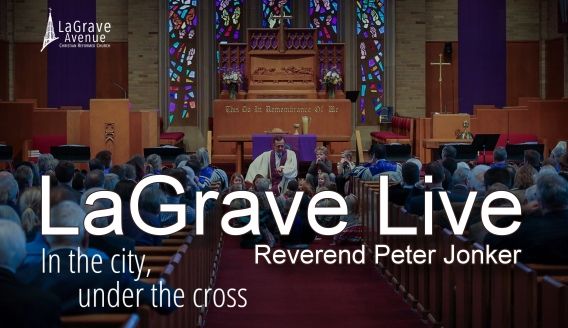

LaGrave Live
LIVE Evening Worship Service - The Renovation of Simon Peter
About The Service:
Pastor Jonker will preach on John 21:15-19.
Order of Worship:
https://lagrave.org/wp-content/upload...
About Us:
We are a traditional CRC church in the middle of Downtown Grand Rapids, MI, worshipping at 8:40am, 11:00am, and 6:00pm. (10:00am and 6:00pm during the summer months)
We'd love to hear from you:
Connection: https://www.lagrave.org/contact
Let us pray for you:
Prayer: https://www.lagrave.org/prayerrequest/
Listen on the go:
Amazon Music: https://bit.ly/LGPodAmazonMusic
Apple Podcast: https://apple.co/3tuOdwQ
Google Podcast: https://bit.ly/LGPodGoogle
Soundcloud: / lagravecrc
Spotify: https://spoti.fi/3yXDFaT
Follow us!
Facebook: / lagravecrc
Instagram: / lagravecrc
Website: https://www.lagrave.org
#LaGrave #LaGraveCRC
The Renovation of Simon Peter: From Self-Reliance to Grace-Filled Service
Worship Centered on God’s Renovating Grace
In this evening worship service from LaGrave Live at LaGrave Avenue Christian Reformed Church, the congregation gathers around the theme of change, repentance, and spiritual renovation. The service opens with words from Psalm 30 about God turning mourning into dancing and replacing sorrow with joy. Psalm 116 is also read, emphasizing the Lord’s compassion, deliverance, and ability to rescue those who cry out in distress. The minister introduces the sermon theme, “The Renovation of Simon Peter,” by explaining that renovation is one of God’s repeated works throughout Scripture and in the lives of believers.
Repentance, New Life, and Prayer for Healing
The congregation participates in a responsive reading about gratitude, good works, and genuine repentance, describing conversion as the dying of the old self and the rising to life of the new. In the pastoral prayer, the minister thanks God for the beauty of human life while acknowledging the mixture of sin, sorrow, illness, anxiety, grief, addiction, persecution, and spiritual struggle that people carry. He asks Jesus to have mercy and “renovate” the hearts of leaders, children, the sick, the imprisoned, those nearing death, and those mourning losses. The prayer presents sanctification as a process that may feel slow or confusing to people but remains clear within God’s timing and grace.
Peter’s Failure and the Empty Nets
The sermon is based on John 21:15–19, where the risen Jesus speaks with Simon Peter after the miraculous catch of fish and asks him three times, “Do you love me?” The minister imagines Peter fishing in the darkness with empty nets, feeling that his failure as a fisherman mirrors his failure as a disciple. Earlier in the Gospel, Peter had been energetic, confident, and eager to act for Jesus. He declared loyalty, resisted having his feet washed, promised to lay down his life for Christ, and drew a sword in the garden. Yet when confronted during Jesus’ arrest, Peter denied knowing him three times and was left broken by his own failure.
Two Versions of Peter with the Same Spiritual Problem
The minister explains that Peter’s confident stage and his broken stage may appear opposite, but both are centered on Peter himself. When he was bold, Peter focused on his performance, achievements, and ability to succeed for Jesus. After his denial, he remained focused on his performance, but now through disappointment, shame, and emptiness. In both conditions, Peter’s spiritual problem was self-reliance and preoccupation with how he measured up. The sermon suggests that believers can likewise make even good works about personal success, usefulness, failure, or reputation rather than about dependence on Christ.
Jesus Confronts, Restores, and Reassigns Peter
The heart of the sermon identifies three ways Jesus renovates Peter. First, Jesus confronts him gently but pointedly by asking three times whether he loves him, echoing Peter’s three denials and bringing his failure into the open. Second, Jesus restores Peter with the words, “Follow me,” repeating the call with which their relationship began and showing that Peter’s failure has not removed him from grace. Third, Jesus gives Peter a new task: “Feed my lambs” and “Feed my sheep.” Rather than offering Peter the heroic role he once seemed to desire, Jesus gives him a humble calling of faithful care and service.
Empty Hands Made Ready for God’s Work
The sermon closes by applying Peter’s renovation to the congregation. The minister says some people may be eager to do impressive things for God, while many others may feel discouraged, inadequate, or emptied by failure and disappointment. Yet emptiness may be exactly the place where God is ready to plant something new. Through a humorous imagined pastoral search committee evaluating flawed biblical figures such as Noah, Moses, David, Jeremiah, Jonah, Paul, and Judas, he illustrates that people often misjudge what true spiritual strength looks like. God regularly works through weakness, humility, and dependence. The final prayer asks Christ to uproot pride, fill believers with the Holy Spirit, and lead them by their empty hands wherever he wants them to serve.
LaGrave Live
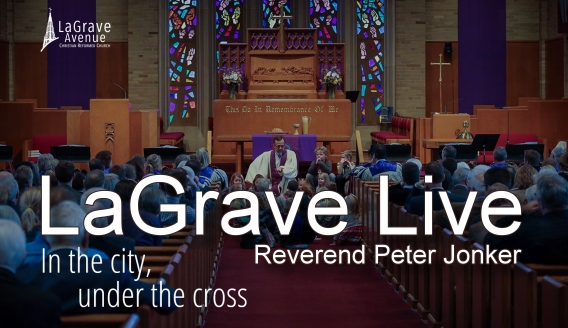

If you’re looking for a warm church that commits to an intensely pertinent Gospel in the Reformed tradition of the Christian faith, we invite you to worship with us. Our 1,800 members come from across West Michigan and gather weekly in our sanctuary for relevant Biblical preaching, beautiful music, and inspiring worship. We expand our worship through intentional outreach in our community and world, attentive care for our members, and plenty of spiritual enrichment and social opportunities for everyone.
We focus on a living Savior who provides genuine solutions to the deep needs of a hurting world. We are committed to need-meeting ministry in His name, and we are committed to being real people who enjoy real life and who cry real tears. Because we are a fairly large and diverse group in terms of age, occupation, marital status, lifestyle, and physical ability; our members create many accessible opportunities for community service, Bible study, and small social groups.
We worship God, the Almighty Creator of heaven and earth, and we enjoy expressing our vision of His holiness through traditional music and formal liturgy.
Music plays an integral part of our weekly worship gatherings. Congregational singing—of both traditional hymns and newer ones—is typically supported by our pipe organ. Vocal choirs, handbell choirs, small ensembles, instrumentalists, and vocal soloists provide additional music offerings.
Led by the Holy Spirit, we seek to worship and serve God in all of life, transforming His world and being transformed to reflect the character of Christ.
Founded by 36 Dutch immigrants on February 24, 1887, LaGrave Avenue Christian Reformed Church has always been deeply committed to both this local community and worldwide missions. God has seen fit to guide and bless these commitments with sustained growth, spiritual gifting, and a continual stream of new work for our members.
Our call to worship are these words from Psalm 30 words from a person whose life has been changed by God.
Sing the praises of the Lord, O you, his faithful people. Praise his holy name. For his anger lasts only a moment, but his favorite lasts a moment.
Weeping may stay for the night, but rejoicing comes in the morning.
When I felt secure, I said I will never be shaken.
Lord, when you favored me, you made my royal mountain stand firm. When you hid your face, I was dismayed.
To you, Lord, I called. To the Lord, I cried for mercy. What is gained if I am silenced if I go down to the pit?
Will the dust praise you? Will it proclaim your faithfulness? Hear, Lord, and be merciful to me. Lord, be my help.
You turn my wailing into dancing. You remove my sackcloth and clothe me with joy, that my heart may sing your praises and not be silent, or my God I will praise you forever. Thanks be to God.
Thank you.
Thank you.
Congregation, in all the chances and changes of life, where does our help come from? Our help is in the name of the Lord who made the heavens and the earth.
And he greets us, saying grace, mercy, and peace to you from God the Father, from Christ his Son through the mighty and powerful work of his Holy Spirit.
Amen.
Welcome, everyone, to our worship service tonight at LaGrave Avenue Christian Reform Church. Welcome to all of you who are visitors here this evening.
It is good to see you here in this place at the end of a beautiful day. We will gather around God's Word. We will pray together. We will sing together and the Spirit will move among us.
And we will be blessed by our Lord's grace and changed.
The theme of this service focuses a lot around change, around renovation. You notice that the title of my sermon is the renovation of Simon Peter.
And renovation is one of God's things. It's something he does all through Scripture.
Psalm 116 is another one of the Psalms which talks about God's renovating power in the life and situation of a person. I'm going to read it for our reading tonight.
The Psalmist says, I love the Lord, for he heard my voice. He heard my cry for mercy.
Because he turned his ear to me, I will call on him as long as I live.
The cords of death entangled me. The anguish of the grave came over me.
I was overcome by distress and sorrow.
Then I called on the name of the Lord.
Lord, save me.
The Lord is gracious and righteous. Our God is full of compassion.
The Lord protects the unwary. When I was brought low, he saved me.
Return to your rest, my soul, for the Lord has been good to you.
For you, Lord, have delivered me from death. My eyes from tears, my feet from stumbling, that I may be walked before the Lord in the land of the living. Thanks be to God.
This is my last name, to my life, the way you came.
So where I came, always to end, I love every new land.
I love every new land of the living.
The Bible teaches us about how God works in our lives to change us and to sanctify us.
The idea of how to work in our lives is to change.
Some of these questions and answers are about repentance and change.
Let's rise together and say these words.
I'm sorry, I noticed in the first one, the bold.
I'm going to say the bold and you say the un-bold.
I know you can.
Since we have been delivered from our misery by grace through Christ without any merit of our own,
why then should we do good works?
We are living the Christ and we believe in Christ's love.
It's also restoring us by this spirit into this image.
So that our whole lives, we can show that we are thankful to God for His benefits,
so that we can be grace through us, so that we can be assured of our faith in Christ's truth.
So that our God will live in our neighbors to be one over to Christ.
What is involved in genuine repentance or conversion?
To the things, the dying of the way that we will self and the rising to life of the new.
What is the dying of the old self?
To be the gen, to the heart of the sin and the more and more are the age and the way to go in.
And what is the rising to the life of the new self?
The bold and joy in God through Christ and the love that we think might be to live in,
or end to the build of God by continuing every time and good work.
O, will our sweet glory be my home?
Tonight's pastoral prayer will conclude with us singing the two verses of Spirit of the Living God.
Those words are printed in your liturgies.
Let's go to God in prayer tonight.
Lord Jesus, we are fearfully and wonderfully made.
Our life, the life you created is a beautiful thing.
It's rich, textured, and surprising.
We thank you for the wonder of our bodies, for minds that are able to explore the intricacies of your world
and the mystery of your ways, for imaginations that allow us to share in your creativity,
for the strength of our hands that allow us to share your work,
and for the depths of our heart, which opens up to one another in love and opens up to you in love too.
Lord, there's so much about the way you created, so much about our life that is wonderful and good.
But there's much that is broken too.
There's much in our life that is not the way it's supposed to be.
Father, you know we all carry around in us a mixture of sin and misery.
There are sins. There are things in our past and our present that are not according to your will,
and we know it. We know these things. We want to change these things. We just sang about that.
There are also miseries, though, that we carry.
Wounds from our past and wounds from our presence.
We've experienced loss. Someone's hurt us.
We're struggling with anxiety or depression.
We're carrying the malignancy of a cancer.
Lord God, we know that these miseries are not your intent for us. Your intent for us. Your ultimate intent is wholeness.
And so while we thank You for what is good and beautiful in our lives,
we confess what is sinful and we live up to You what is broken.
Lord Jesus, Son of David, have mercy on us and renovate us.
Renovate the hearts of our leaders, all of them, political leaders,
educational leaders, business leaders, leaders in every sphere of life.
Strengthen them. Let their vision be shaped by your priorities
and your Holy Spirit and your truth.
Renovate the hearts of our children. We thank You for our children and our youth.
Thank You for another year of education that most of them are about to complete.
They're so delighted by our young people and encouraged by them, but we worry about them too.
Holy Spirit, work in the hearts of our children, be an active presence in their minds, in their souls and in their hands.
Father, we pray that You would renovate the bodies of all those who are sick and afflicted.
We pray for those with dementia and those who take care of them.
We pray for those struggling with addiction and those who love them.
We pray for those in prison.
We pray for those suffering persecution because of their faith.
We pray for those who are having a hard time holding on to their faith and having a hard time feel your presence.
We pray for those in hospice and those who are walking with them through the valley of the shadow of death.
I pray for Lori Vanderarc, Sylvia Hugen, Pev Van Ambosh, George Zant,
and Lord, I pray for Cecil from our neighborhood too.
I pray for those who are feeling loss, especially the Patterson family in the loss of Hattie,
the DeWinter family in the loss of Ruth.
I pray for Bevan Peak Clover in the loss of Bev's brother.
We pray for those anticipating procedures for Steve Gibson, Jack Van Sledright, and Joy Winkle.
May those procedures be uncomplicated and may they bring healing.
We pray for our brother Ray Pader and for Marsha as she sits beside him.
Please relieve him from his severe pain.
Lord, we admit that from our perspective, the path to sanctification, the path you put us on is sometimes slow and confusing.
But we know that from your perspective, the path is clear and your timing is exactly right.
So help us to have faith in your timing and in your plan.
Help us always to take refuge in your grace.
Give us a clear vision of that day where we will be new and you will rule over everything.
Until that day, keep us faithful.
Through Jesus Christ our Lord, we pray. Amen.
Amen.
Our Bible reading this evening is from the Gospel of John.
John chapter 20, I'll read verses 15 through 19.
And even though all the disciples are here at this scene, this is right after Peter, you may be remembered the scene, Peter goes fishing after the resurrection.
It doesn't know where Jesus is. He goes fishing.
There's trouble catching anything.
Then Jesus comes.
There's a miraculous catch and they have a fire on the beach.
And after that's over, Jesus Peter has a little conversation.
And this is that conversation.
When they had finished eating, Jesus said to Simon Peter, Simon, Son of John, do you love me more than these?
Yes, Lord. He said, you know that I love you.
Jesus said feed my lambs.
Again Jesus said, Simon, Son of John, do you love me?
He answered, yes Lord, you know that I love you.
Jesus said, take care of my sheep.
The third time He said to them, Simon, Son of John, do you love me?
Peter was hurt because Jesus asked him the third time, do you love me?
And he said, Lord, you know all things. You know that I love you.
Jesus said feed my sheep.
Very truly I tell you when you were younger you dressed yourself and went where you wanted.
But when you are old, you will stretch out your hand and someone else will dress you and lead you where you do not want to go.
Jesus said this to indicate the kind of death by which Peter would glorify God.
And then He said to Peter, follow me. This is the word of the Lord.
Amen.
I think this scene is the culmination of Jesus' relationship with Simon Peter through the Gospel of John.
And if you really want to get the full meaning of it, you've got to see Peter through the whole Gospel.
You've got to see Peter and Jesus and where he's been and how he arrives at this place to see what it means.
So to do that, let's just imagine Peter's state of mind before he sees Jesus that night, before the miraculous catch.
It's three in the morning. It's pitch dark.
Peter's out in the boat and he's fishing.
He's pulling up the nets for the third time that night and he can tell because his hands are so well trained that once again they are absolutely empty.
No fish whatsoever.
And Peter can feel the frustration rising in his chest.
Peter is not a patient person at the best of time and all this disappointment is starting to weigh him down.
And he starts muttering to himself.
Empty again. Empty like my life.
I failed as a disciple. Now here I am failing as a fisherman. Empty nets. Empty life.
Peter's not exactly on the top of the world.
But he hadn't always been this way. I mean Peter used to be the opposite of this.
Peter used to have an optimistic spirit. Peter used to be the first one out of the gate. Peter was the can-do disciple.
Jesus asked a question. Peter was the first one in the class to raise his hand and give the answer.
If Jesus wanted to volunteer, Peter was the first one to step forward and say, here I am. Send me.
That's all through John.
In John chapter 6, when following Jesus is starting to get controversial and all kinds of people are leaving him.
Maybe you remember this scene. Jesus turns to his disciples and says to him, are you going to leave me to?
And Peter is the first one to respond. Remember what he said?
Where else will we go Lord? You have the words of eternal life. It's a great response. Peter stepped up.
And on the night when Jesus was betrayed and he told the disciples, I'm going to leave you. I'm not going to be here anymore.
Peter was the one who said, no, I will never abandon you Lord. I will never leave you. I'll lay down my life for you.
And when he said it at the time, he felt like he meant it.
At the last supper in John, when Jesus knelt down at his feet to wash Peter's feet, Peter was the one who said, oh Lord, you shall never wash my feet.
And then, oh Lord, wash all of me. Very much unbrand.
And then in the garden of Gethsemane, when the soldiers show up and all the other disciples are shrinking back,
you remember what Peter did? He takes the sword and he cuts off the high priest's ear, which Jesus has to put right back.
That's Peter. You know that. That's Peter. It's in all the gospels, but it's very clearly in John.
The portrait of Peter and John is very much the can-do disciple.
Remember that book Wild at Heart published in the 90s by John Eldridge that was about, you know, sort of like going out and having an adventure for Jesus?
If that book were published in Peter's day, that would be Peter's favorite book, right?
He was ready to do something great for God. He was going to hit a home run for Jesus. He was going to get a gold star for Jesus.
But then, and you know this, when his moment came, he did not hit a home run for Jesus. He struck out.
He struck out looking. He didn't even get the bat off his shoulder.
Didn't I see you with the Galilean? Were you with Jesus? Are you one of those people?
No, I'm not. I don't even know the man. Then the cock crows. And Peter wept bitterly.
And in that moment, for the first time, you can imagine Peter saw himself for who he really was.
And all that hand-raising and all that stepping forward and all that volunteerism, it was just a big show.
He was a windbag. Empty talk. Empty like these nets.
That's Peter's life as presented in the Gospel of John up to this point.
And if you break down what John shows, you can say that there are sort of two stages.
Before is denial, there's a stage I described of can do Peter, right?
Peter wants to hit a home run. Peter wants a gold star. Peter who is stepping out.
That's stage I. Stage II of his life is broken and disappointed Peter. Peter who knows his failure, Peter who feels empty.
And here's what we need to see. While it looks like on the outside, those two things are opposite.
At their heart, they're exactly the same. Peter's spiritual problem in both of those seasons is exactly the same.
Whether he's making rash promises or weeping bitterly about his emptiness, in both cases it's pretty clear that Peter's central concern is Peter.
His performance, his achievements, his accomplishments.
In the first season, he's focused on his achievements and feeling proud of his successes.
In the second season, he's focused on his achievements and he's feeling miserable about his failures.
But in both seasons, Peter's depending on himself, looking at himself, thinking about how he is being evaluated by others.
In our passage now, at the end, we see Jesus taking care of that spiritual problem, which is at the heart of both stage I and stage II of Peter's life.
He's teaching Peter a new way of following Jesus. How does Jesus do that? He does three things.
First, he confronts Peter. And he confronts Peter in a way that's both gentle but also very pointed.
So he doesn't come to Peter. This is the first time he's seen Peter since the denial. He doesn't come to Peter and go, Peter, you let me down.
No, he asks questions. But these questions are plenty pointed, right? And especially when he asks that question three times, it's very clear to Peter what Jesus is talking about.
Those three questions are meant to parallel Peter's three denials. So Jesus might as well have walked up to Peter and said, Peter, we need to talk about what happened in the High Priest court.
So Jesus begins by reminding Peter of his weakness and his brokenness. And he does that to uproot Peter's sense of self-sufficiency, to uproot Peter's sense of performance and his focus on himself and what he can accomplish.
That's the first thing Jesus does. The second thing Jesus does is that he restores Peter.
At the end of the passage, the last two words that I read were follow me. Those are words of restoration, right? Jesus repeats the words he used for Peter when he first called him at the very beginning.
And so when Peter hears those words, he realizes, okay, I'm in again.
It's as if when Jesus has followed me, he's saying, I know what you did. Yes, it hurt me. It was terrible.
But that's why I died in the cross for you. Your sins are forgiven. Let's start again. Follow me.
It's an imperative sentence, but never has an imperative sentence sounded like so much grace to Peter. It's a command, but it must have felt like Peter, like he was being washed clean by that command.
So he confronts Peter, uproots his self-sufficiency. He restores Peter with those words, follow me. And then third, he gives Peter a new task. Feed my sheep, feed my lambs.
Such an interesting task for Peter, because the old Peter was full of grander, right? Wanted to hit a home run. Wanted to do something great. Wanted a gold star. Wanted to be the hero.
But now that he has tasted failure, what kind of a job does Jesus give Peter? Gives him the simplest of jobs. Peter, you don't have to change the world. You don't have to be MVP. Feed my sheep. Feed my lambs.
The lowest job in the stable. The job that the daily work hands do, right? And Peter takes it.
The old Peter might have balked at a job like that. The old Peter didn't want to do something, meaning it was the old Peter wanted to be CEO of the whole farm and run things.
But the new Peter, the wounded Peter, the broken Peter, he is able to open up his heart and say, okay Lord, yes Lord.
The old Peter wanted to dress himself like a man and go wherever he wanted. The new Peter is learning and will continue to learn to stretch out his hand and let the Lord lead him, sometimes where he does not want to go.
What I want you to see is that this change in Peter is because of his failure and because of his weakness. God is using Peter's failure in weakness and emptiness to change him.
I don't know, I'm not saying that God causes the failure or God causes the weakness. Most of what happens to Peter to make him empty is Peter's fault.
But God is certainly coming around that weakness and using it to change him, to make him into a person who before was saying charge and is now saying, Lord, here I am, where do you want me to go today? It's not about Peter anymore.
We all need to learn to make this transition in our lives. It is so hard for us to make this transition in our lives. It's so hard for us, even when we're doing good things, and maybe especially when we're doing good things, to not make it about us.
And in this congregation, there are people at all three of Peter's stages. There are a few people who are like Peter at the beginning, right? Ready to do something great for God, ready to go out there and charge. It's probably the young ones here, and I know there are not many of you tonight.
There are far more of us, I think the majority of us here, who are more like Peter in his second stage, that you've experienced enough failure and frustration in your life, and you see how big the problems out there are that you think, I don't know. I don't know how I'm trying stuff. I don't know if it's doing anything.
In my experience, the reason I say, I think most of you are closer to this second stage, you see that when we ask people to do something in the church, very few people say, oh, yes, here I am. I'm ready to charge. Most people say, I don't know. I'm not sure. Can I? I don't think I have the skills for that.
What I want you to see is that if you're at that place where you're saying, I don't know, I don't know if I have the strength, I don't know if I have the skill, that maybe you're exactly in the place where God's ready to do something new with you. Your emptiness might be the place where God is ready to plant something there.
Years ago, someone sent me something, a kind of thing you get in the Internet. Oh, this was so long ago, I don't think I got it on the Internet. I think I got it by snail mail.
It was a supposed report, an internal report from a search committee. Search committee looking for a new pastor of the church, and they send an internal memo around.
And here's what it says. It was an evaluation of all the candidates. Here's what it said.
Candidate one, Noah. Lots of experience here, but has shown a tendency towards unrealistic building projects, which is not good for a church.
Also some allegations of alcohol problems.
Candidate two, Moses. A modest man, but not much of a public speaker, even stutters sometimes, and he has temper control issues.
Some say he left an earlier church over a murder charge.
Candidate three, David. Amazing leader. It would be a great candidate if not for the assault allegation on his neighbor's wife.
Candidate four, Jeremiah. Emotionally unstable, alarmist, negative, always complaining, has trouble dealing with people, alienates bigger donors. That's a problem.
Candidate five, Jonah.
Ran away from the last call he received and had to be forced into service. Had some story about being swallowed by a fish. We hung up on him in mid conversation.
Candidate six, Paul. Brilliant man, but impossible to deal with. Hard on younger staff members, long complicated sermons that have been known to put people to sleep.
Candidate seven, the last one. Judas. Solid references. A steady plotter. Conservative. Good connections. Knows how to handle money.
Inviting him to preach this Sunday. Possibilities here.
That's meant to be funny, of course, and you laugh, so good for you.
But it's making the point that we think we know what strength is. We think we know what competence is. We think we know what will bring fruitfulness. And so often we are wrong.
And that is through weakness. That God does some of his best work. And that's not just here. That is a consistent biblical pattern.
In his parable, it's not the full of himself Pharisee that gets God's favor. It's the broken tax collector.
In the story of Jacob, it's not Jacob of his early life, who's a conniver and is trying to manipulate everything, who finally gets it. It's the Jacob at the end of his life after he's wrestled with God and been broken.
It's not bold. Peter swinging his sword in the garden who understands the work of Jesus. It's broken Peter in this passage who understands that he needs to hold out an empty hand and be led where maybe he does not want to go.
How do we get to this stage? What does it feel like for us?
Maybe it's a little like Psalm 121, which I cited earlier in this service. I lift up to my eyes to the mountains. Where does my help come from? It's not for me. My help is in the name of the Lord who made the heavens and the earth.
When you've really made this transition in your heart, those words are not just a psalm that you memorized years ago as a kid, as a kind of accomplishment. You've got a gold star for.
And you remember it maybe by heart and you're hoping that that impresses people.
This psalm has now come for you the spirit of your life, the thing that you hold in your heart, the way you walk out the front door each day.
And when that change happens in your heart, you haven't learned a new skill. You've become a new creation.
May Christ's power be working in us to renovate us. May the risen Jesus take us all by our empty hands and lead us wherever he wants us to go. Amen.
Lord, we hold out our empty hands to you tonight. You know how pride sticks with us.
And you know how it makes us miserable in the end. Lord, you know your children so well.
So we ask, Lord, that you would uproot any pride that is in us.
Lord, whatever that takes, Lord, we stand ready to be changed to have that uprooted.
And that instead in that place, you would put your Holy Spirit, a love for you, a love for our neighbor, and a joy to serve you in wherever you want us to serve.
That is our prayer, Lord, as we go into this week. We pray it in Jesus' name. Amen.
Receive the Lord's blessing as you go out into another week. Lord, bless you and keep you.
Lord, lift up his face to shine upon you and be gracious to you. Lord, turn his face towards you, smile upon you and fill you with his peace both now and forevermore.
Amen.