
LaGrave Live, June 7, 2026
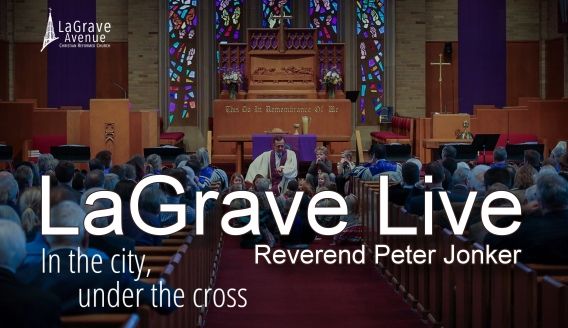

LaGrave Live
LIVE Evening Worship Service - Follow Me
About The Service:
Rev. Manion will preach from Matthew 9.
Order of Worship:
https://lagrave.org/wp-content/upload...
About Us:
We are a traditional CRC church in the middle of Downtown Grand Rapids, MI, worshipping at 8:40am, 11:00am, and 6:00pm. (10:00am and 6:00pm during the summer months)
We'd love to hear from you:
Connection: https://www.lagrave.org/contact
Let us pray for you:
Prayer: https://www.lagrave.org/prayerrequest/
Giving: https://www.elexiogiving.com/App/Givi...
The June special offering is for Pine Rest Patient Assistance Fund: Part of Pine Rest Foundation Fund offering financial assistance for individuals, families and children who need care.
Listen on the go:
Amazon Music: https://bit.ly/LGPodAmazonMusic
Apple Podcast: https://apple.co/3tuOdwQ
Google Podcast: https://bit.ly/LGPodGoogle
Soundcloud: / lagravecrc
Spotify: https://spoti.fi/3yXDFaT
Follow us!
Facebook: / lagravecrc
Instagram: / lagravecrc
Website: https://www.lagrave.org
#LaGrave #LaGraveCRC
Follow Me: Reverend Kristy Manion on Mercy, Discipleship, and Jesus’ Call to Matthew
LaGrave Live Opens with Worship
This LaGrave Live worship service, titled “Follow Me,” begins with music, a call to worship, and a greeting of grace and peace. The congregation is invited to worship God as light, salvation, and the stronghold of life. The service frames worship as a time to seek God’s ways, gather in community, and listen for the Lord’s guidance. Reverend Kristy Manion welcomes those gathered in person and those joining by livestream, noting the gift of worshiping together in the warmth of the evening.
Deuteronomy 30 and the Choice of Life
The first Scripture reading comes from Deuteronomy 30:11–20, where Moses speaks to Israel before they enter the promised land. The passage presents God’s command as near, not unreachable, and sets before the people life and prosperity, death and destruction, blessings and curses. The reading emphasizes that a good life is found in loving the Lord, listening to His voice, holding fast to Him, and walking in obedience. This theme prepares the congregation for the sermon’s later question: what does it mean to follow Jesus into a life shaped by mercy?
Confession and Prayer for the Church and World
The congregation then joins in a confession that salvation comes by God’s grace through Christ, while good works flow from gratitude, renewal, assurance of faith, and witness to neighbors. Reverend Manion leads a pastoral prayer thanking God for creation, community, and worship, while also confessing fear, impatience, self-centeredness, and the tendency to focus on what is wrong. The prayer includes intercession for people suffering from war, displacement, illness, grief, hospice care, surgery recovery, new babies, baptisms, church leaders, and the upcoming Christian Reformed Church Synod.
Matthew’s Call and Jesus’ Table Fellowship
The sermon Scripture comes from Matthew 9:9–13, with additional verses from Matthew 9:35–10:4. Jesus sees Matthew sitting at the tax collector’s booth and says, “Follow me.” Matthew gets up and follows Him. Jesus then eats at Matthew’s house with tax collectors and sinners, which leads the Pharisees to question why He would share a table with such people. Jesus answers that the sick, not the healthy, need a doctor, and quotes the words, “I desire mercy, not sacrifice.”
Why Matthew’s Profession Matters
Reverend Manion highlights that Matthew stands out among the disciples because he is identified by his day job: Matthew the tax collector. She explains that tax collectors were despised because they often made money by overcharging others and were associated with corruption, dishonesty, and exploitation. Matthew may have had money, but his profession also meant loneliness, social rejection, and moral suspicion. Naming him as a tax collector shows the kind of person Jesus deliberately called and welcomed.
The Pharisees’ Concern and the Tension of Jesus’ Ministry
The sermon carefully explores the Pharisees’ question. Their concern was not random; Scripture warns against walking with the wicked or sitting with sinners, and parents often give similar advice to children about choosing good companions. Reverend Manion acknowledges that this tension is real. The question becomes how faithful people discern when Jesus is calling them toward “Matthew’s house,” into complicated spaces where wisdom, mercy, and holiness must all be held together.
Piety, Doctrine, and Transformation
Reverend Manion introduces three Reformed emphases for engaging the world: the pietist, doctrinalist, and transformationalist accents. The pietist emphasis focuses on the heart’s devotion to God through prayer, worship, reflection, and service. The doctrinalist emphasis focuses on right understanding, Scripture, and truth. The transformationalist emphasis focuses on participating in Christ’s redeeming work in creation and culture. She explains that healthy Christian faith needs all three: heart, head, and hands working together as believers follow Jesus into the world.
Mercy, Not Sacrifice
At the center of the sermon is Jesus’ response: “I desire mercy, not sacrifice.” Reverend Manion explains that Jesus sees Matthew not only as a sinner or social outcast, but as someone who could become different under the mercy of Christ. Jesus does not catch Matthew’s corruption; rather, Jesus becomes the cure. The sermon emphasizes that both Matthew and the Pharisees need mercy, though they may differ in how aware they are of that need. Jesus’ goodness spreads to sinners, and His call creates a new story for Matthew’s life.
Darryl Davis and the Practice of Costly Mercy
To illustrate this kind of mercy, Reverend Manion tells the story of jazz pianist Darryl Davis, an African American Christian musician who spent decades speaking with members of the Ku Klux Klan. His approach was kind, respectful, persistent, and often dangerous. He asked how people could hate him without knowing him and built relationships that eventually led many Klan members to give him their robes. Reverend Manion uses Davis’s story as an example of costly, person-to-person engagement that some might call foolish, but others might recognize as grace.
Following Jesus with Wisdom and Courage
The sermon closes by calling the congregation to follow Jesus into the places and relationships God brings before them, with curiosity, respect, kindness, wisdom, and mercy. Reverend Manion reminds listeners that Jesus called Matthew just as surely as He called the more respectable disciples, and that if Jesus could use Matthew, He can use ordinary believers too. The service ends with prayer, blessing, and the reminder to go into the week under the Lord’s peace, ready to encounter the people God places in their path.
LaGrave Live
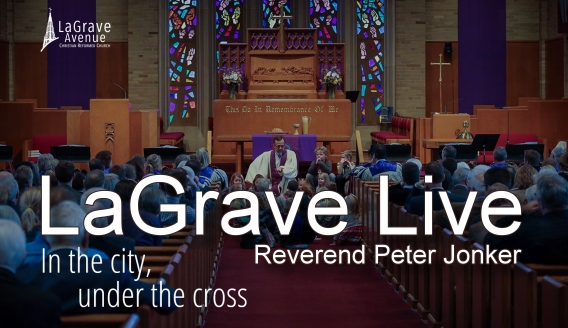

If you’re looking for a warm church that commits to an intensely pertinent Gospel in the Reformed tradition of the Christian faith, we invite you to worship with us. Our 1,800 members come from across West Michigan and gather weekly in our sanctuary for relevant Biblical preaching, beautiful music, and inspiring worship. We expand our worship through intentional outreach in our community and world, attentive care for our members, and plenty of spiritual enrichment and social opportunities for everyone.
We focus on a living Savior who provides genuine solutions to the deep needs of a hurting world. We are committed to need-meeting ministry in His name, and we are committed to being real people who enjoy real life and who cry real tears. Because we are a fairly large and diverse group in terms of age, occupation, marital status, lifestyle, and physical ability; our members create many accessible opportunities for community service, Bible study, and small social groups.
We worship God, the Almighty Creator of heaven and earth, and we enjoy expressing our vision of His holiness through traditional music and formal liturgy.
Music plays an integral part of our weekly worship gatherings. Congregational singing—of both traditional hymns and newer ones—is typically supported by our pipe organ. Vocal choirs, handbell choirs, small ensembles, instrumentalists, and vocal soloists provide additional music offerings.
Led by the Holy Spirit, we seek to worship and serve God in all of life, transforming His world and being transformed to reflect the character of Christ.
Founded by 36 Dutch immigrants on February 24, 1887, LaGrave Avenue Christian Reformed Church has always been deeply committed to both this local community and worldwide missions. God has seen fit to guide and bless these commitments with sustained growth, spiritual gifting, and a continual stream of new work for our members.
(Music)
Let's join our hearts and voices in our call to worship printed in your order of service.
Let us worship God our light and our salvation.
The Lord is the stronghold of our lives.
We desire to live in God's house and to seek God in His holy temple.
We have come with shouts of joy to sing and make music to the Lord.
Let us worship God in spirit and in truth.
Teach us your ways and make straight our house in this hour of worship and all ways.
Let us worship God in spirit and make straight our house in spirit.
Let us worship God in spirit.
The God whose love is from everlasting to everlasting gathers and greets us in this space tonight.
So receive his greeting.
Grace to you and peace from God the Father
and the Lord Jesus Christ through the mighty
and present work of God's Holy Spirit.
Amen.
Welcome to evening worship at Legrave.
It's an incredible day outside warm and sunny
and it's a gift to gather in the glow of each other's company
and the Lord's presence.
We're grateful to be with you tonight.
And glad you decided to make this a part of your evening.
Time to hear from our Lord together.
If you're worshiping with us on live stream,
I welcome to you as well.
We're glad that you're out there
and joining us in spirit tonight.
Our reading is from Deuteronomy chapter 30
verses 11 to 20 tonight.
And this is part of Moses speech to the people of Israel
before they enter into the promised land.
Moses is talking with them about what makes for a good life.
And that's a question that will be on the mind of the Pharisees.
We're going to read from the book of Matthew in just a little while.
So hear this word about what makes a good life.
Listen.
Now what I am commanding you today
is not too difficult for you or beyond your reach.
It is not up in heaven so that you have to ask
who will ascend into heaven and get it and proclaim it to us
so that we may obey it, nor is it beyond the sea
so that you have to ask who will cross the sea to get it
and proclaim it to us so that we may obey it.
No.
The word is very near you.
It is in your mouth and in your heart
so that you may obey it.
See, I set before you today life in prosperity,
death, and destruction.
For I command you today to love the Lord your God
to walk in obedience to him,
to keep his commands, his decrees, and his laws,
then you will live an increase, and the Lord your God will bless you
in the land you are entering to possess.
But if your heart turns away and you are not obedient,
if you are drawn away to bow down to other gods and worship them,
I declare to you this day
that you will certainly be destroyed.
You will not live long in the land the Lord your God is giving you
to possess across the Jordan.
This day I call the heavens and the earth as witnesses against you
that I have set before you life and death, blessings and curses.
Now choose life so that you and your children may live,
that you may love the Lord your God, listen to his voice
and hold fast to him.
For the Lord is your life, and he will give you many years
in the land he's toward to give to your fathers,
Abraham, Isaac, and Jacob.
And the Lord is your life, and you will never be alone.
And you will never be alone.
And you will never be alone.
We say so.
We say so.
We say so.
Let's stand and join our hearts and voices in our confession,
continuing on the theme of a good life.
We have been delivered from our misery by God's grace alone
through Christ and not because we have earned it.
Why then must we still do good?
To be sure Christ has redeemed us by his blood,
but we do good because Christ by his spirit is also renewing us
to be like himself so that in all our living
we may show that we are thankful to God for all he has done for us,
and so he may be praised through us.
And we do good so that we may be assured of our faith by its fruits,
and so that by our godly living our neighbors may be won over to Christ.
We are our hearts and we are our hearts and we are our hearts and we are our hearts.
In our church, we are our hearts and we are our hearts and we are our hearts.
In our church, we are our hearts and we are our hearts.
In our church, we are our hearts and we are our hearts.
Let's join our hearts in prayer.
Holy and loving God, we do pray that you would be glorified in us.
Your glory fills the heavens, and yet you've asked us to reflect that.
We thank you for this day with sunshine that has warmed our faces,
boosts our vitamin D, and lets us enjoy your good gifts of creation.
We thank you for this evening, for this time in a community that reminds us of your enfolding grace
and your daily nearness.
Thank you for giving us hearts to love you, minds to know you, and hands to serve you.
Tonight, along with our thankful hearts, we also name before you our sins and our points of pain.
We confess there are parts of us that we hold back from you,
afraid that we will be the losers if we turn things over into your hands.
We confess that very often we want what we want, that we usually seem right in our own eyes,
that we get impatient when other people don't see the things that we do.
We confess our tendency to dwell on what is going wrong rather than also seeing what is going right.
So Jesus, change our outlook, and your mercy. Do so.
You know that our hearts are always wandering until they rest in you, so show us and draw us
and persuade us to respond to your amazing love by opening our hands.
Jesus, you know the points of pain and conflict and violence and disease in our world.
And holy God, because you are also sovereign over all things, tonight we especially pray for the world,
for people who live under the shadow of war in many places, but including Ukraine, Sudan, Iraq, the Middle East.
We pray for those separated from their families, for those who are living in refugee camps,
for those who seek to make the best of intolerable living conditions,
for those who wonder in these circumstances if you have forgotten about them.
Help us Lord to pick up what our hearts and hands can hold as we encounter struggle and pain in your world
around the world and right nearby.
Give leaders in our country and everywhere wisdom and courage and compassion as they make policies and seek peace.
We rejoice Lord in the gifts of this church with the people who rejoice.
We rejoice with the Southerlands, the Scots, the Vanisias who celebrated baptisms last week,
the Van Airdons who recently welcomed a new baby.
Give each of those families strength as they seek to raise their kids to know and love and serve you.
We also lament with those who are grieving Lord, for Dave Vanderarc, for Jan Hearspink,
and their extended family as they said goodbye for this life to Lori late last week.
Whisper also your love to those who are receiving hospice care today.
Sylvia, Cecil, Dorothy, Ray, Bev, and George.
We pray for all who are sicker hurting and we believe that your ministry of healing
paved the way for these things to be no more in the kingdom we yet expect to come.
Encourage and bring strength to Ed Hooksima, Mary Lou Riefer, and Joy Winkle as each of them recovers after surgeries.
We thank you for Christian leaders locally and abroad who are teaching about you and other places,
especially tonight we lift up Matt Bonzo from our church as he's teaching in Southern Africa.
And we pray for delegates of the Christian Reformed Church's annual Synod as they will start meeting later this week.
Grant them Holy Spirited Insight for their deliberations and their engagement with one another.
May their decisions be grounded in the way, the truth, and the life of Jesus.
Lord tonight we borrow the words of Paul, make our love abound.
More and more in knowledge and depth of insight.
Help us to discern what is best, make us pure and blameless for the day of Christ.
Fill us with the fruit of righteousness that comes through Jesus Christ to your glory and praise.
Amen.
The scripture reading for our sermon tonight is from the Book of Matthew.
And a turn pretty far over in our Bibles from Deuteronomy, page 15, 13, and your Pew Bibles.
And we're going to turn selected verses here in chapter 9.
And then some verses at the end of chapter 9 and the beginning of chapter 10.
Listen to these words.
As Jesus went on from there after healing up someone who was paralyzed,
he saw a man named Matthew sitting at the tax collector's booth.
Follow me, he told him.
And Matthew got up and followed him.
While Jesus was having dinner at Matthew's house, many tax collectors and sinners came and eat with him and with his disciples.
When the Pharisees saw this, they asked the disciples,
why does your teacher eat with tax collectors and sinners?
On hearing this, Jesus said, it is not the healthy who need a doctor, but the sick.
Go and learn what this means.
I desire mercy, not sacrifice, for I have not come to call the righteous, but sinners.
Then down to verse 35 on the next page, Jesus went through all the towns and villages teaching in their synagogues,
proclaiming the good news of the kingdom, healing, every disease, and sickness.
When he saw the crowds, he had compassion on them because they were harassed and helpless, like sheep without a shepherd.
Then he said to his disciples, the harvest is plentiful, but the workers are few.
Ask the Lord of the harvest, therefore, to send out workers into his harvest field.
And just one verse later, those disciples become the answer to their own prayers.
Jesus called those twelve disciples to him and gave them authority to drive out impure spirits and to heal every disease and sickness.
These are the names of the twelve apostles.
First, Simon, who's called Peter and his brother Andrew,
James the son of Zebedee and his brother John,
Philip and Bartholomew, Thomas, and Matthew the tax collector,
James, son of Alpheus and Thaddeus,
Simon the zealot and Judas Iscariot who betrayed him.
This is the word of the Lord. Thanks be to God.
The passage we started with in chapter nine marks the second time in the book of Matthew when Jesus calls specific individuals to follow me,
to become part of his group of disciples, to learn from him, to walk with him, to live with him, to learn his way of life.
The first time Jesus does that is in Matthew chapter four where he calls the fisherman, Peter and Andrew and James and John.
He tells them to leave their nets and come with him.
Learn how to fish for people.
The chapter that we read tonight Jesus calls another specific disciple, Matthew the tax collector.
Matthew stands out in the roster of disciples we just read from chapter ten.
He's the only one in that list, maybe you noticed, who's identified by his day job.
The writer seems to particularly want to highlight Matthew's role.
Why?
Well, if early tradition is right and Matthew himself is the author of this gospel, it's possible that by listing his day job right there, Matthew's being a little bit self-deprecating.
It's reminding everybody of where he came from.
But more importantly, perhaps Matthew's profession is listed in that roster because it says something that we need to see about Jesus
and about what he has come to do.
So tonight we're going to press on that a little bit.
We're going to look at some of the dynamics that are taking place as Jesus encounters both the devout Pharisees
and Capernaum's less respectable citizens too.
So Jesus comes up to Matthew's toll booth in his ministry headquarters in Capernaum right in the middle of his healing ministry.
He's already given the Sermon on the Mount, Matthew 5 through 7, and now in the gospel he's shifting his ministry from teaching to showing through his healings that the kingdom of heaven has come in him.
He's shown what that kingdom is like by healing, healing the illness of Jewish insiders like Peter's mother-in-law.
He's shown what that kingdom is like for Gentile outsiders as he heals the centurion's servant.
He has shown what that kingdom is like by speaking powerfully into forces both natural and supernatural, calming the storm, casting out demons.
Jesus' work has both delighted and unsettled people.
Whether they liked his ministry or they didn't, people could hardly avoid hearing about it.
She hear about that whole herd of pigs that went down into the lake last week?
Two thousand of them drowned.
I ran into a man who couldn't get out of bed and he was at the market.
Jesus forgave him and healed him.
So Matthew at his tollboos couldn't probably have avoided also hearing something about Jesus.
And every day as he got up and went to work and endured disparaging comments and dirty looks reserved for tax collectors like him.
Is it possible that he wondered whether this man's ministry would have something for him too?
As much as we might grumble about paying taxes in the 21st century for us, the tax rates are at least published and consistently applied.
Our ambivalence cannot compare to the hatred the average Jew bore toward the tax collector because they made their livelihoods by overcharging people and pocketing the difference.
They stood for corruption and exploitation.
They weren't even allowed to testify in court because they were seen as so dishonest.
They were not the kind of people you want your children to emulate.
So being a tax collector might have gotten Matthew some money for a decent set of clothes and a hot meal, but it also consigned him to a life of loneliness and socially sanctioned scorn.
Devout Jews like the Pharisees don't want anything to do with Matthew's kind of life.
They know Psalm 1. They know Deuteronomy 30. A hundred other passages like them.
Blessed is the person who doesn't walk in the Council of the wicked or stand in the way of sinners or sit in the seat of mockers.
Devout Jews like the Pharisees don't want anything to do with Matthew's kind of person.
And Scripture seems to be on their side.
Is it any wonder the Pharisees approach Jesus' disciples and say to them,
why does your teacher do this?
Why does he eat with tax collectors and with sinners?
Jesus, if you're trying to start a credible religious movement, can I just give you a tip?
Maybe don't invite the swindlers to the Bible study.
It offends the other people, the people who want to learn about God.
If you want to have the greatest impact, Jesus hears a thought.
Why not spend your time and your dinner with respectable people?
People who have similar values.
Then, as you're building this group of disciples, you won't have to start from the very bottom and build up to build some common ground.
You won't have to teach these people how to like each other before they have to work together.
But Jesus seems to see things differently.
If you read the Gospels regularly, you know how often the Pharisees seem to be cast on the wrong side of what Jesus is about.
So spend knowing that for just a minute.
Do you see the tension in the story between who Jesus is and how he conducts his ministry
and how the respectable religious folks understood God worked?
Do you see the tension with what Jesus seems to do as he spends time with Matthew?
Doesn't the Pharisees question, why does your teacher eat with tax collectors and sinners?
Sounds like the advice we'd give to our kids and our grandkids as they're choosing friends.
Kids, stay away from the bullies.
Look for the people who love God. Look for trustworthiness and kindness and helpful language.
Look for diligence and good behavior.
Spend time with the kind of people who bring out your best.
Not the sorts of people that bring out your worst.
It's good advice, right?
So how do you know when and how and where to follow Jesus as it were to Matthew's house?
Well, my guess is that if we took a survey in this room, there would be as many different answers to that question from faithful people as there are folks in this room.
All of the answers any one of us would give would be at least partly based on our own experience and history, sociological factors just as much as theological factors.
And that's not so surprising.
Among people who call Reformed Christianity their branch of faith.
There have been three different emphases identified in how we engage with the world.
So see which emphasis that I go through here resonates the most with how you are formed and framed to engage.
These three different emphases are known as the piatist and doctrinalist and transformationalist accents.
Big words.
Some of these are very familiar to you and for others of you, this might be new.
You can read about these emphases in a booklet on the internet from the Christian Reformed Church and I can point you to it later if you'd like.
Spending a little time thinking about these three minds might help you see which emphasis most speaks to you, how you might be most likely to respond to Matthew in your own time.
So here's a very oversimplified sketch.
The piatist emphasis stresses the engagement of our hearts with God.
Are we devoted to Jesus?
Are we nurturing our life with God through prayer, service, worship, reflection, community?
The doctrinalist emphasis, number two as you might expect, is concerned with right thinking, our heads.
How do we know how we're understanding the scriptures is correct?
Are we interpreting it properly?
Are our minds getting to know God as he really is?
Or are our hearts getting ahead of us there?
The transformationalist emphasis reminds us that Jesus came not only to save our souls, but to redeem all of creation.
And so people whose accent is transformationalist are pretty hopeful about Jesus Kingdom on Earth.
They're the hands people.
Get their hands dirty in the soil of God's good world and try to make something good with it.
They're available for Jesus' youth to participate in making something of this creation and the culture.
When Reformed Christians are at our best, we've got all three of those ways of approaching God in our orbit.
All three of those things are informing and interacting and engaging with each other.
They're healthy and functioning.
Doctrine keeps our individual hearts from veering too far off course.
Hearts in touch with the gospel of God and the way of Jesus keep our doctrinal principles in service to that good news
and a connection with our Lord.
Hands, hearts that are aware of human sinfulness in everybody keeps the transformationalist folks sober.
Keeps them from painting too rosy a picture about what we can do with our own efforts before Jesus returns.
But do you know how few of us can keep all three of those things in good order by ourselves?
Individually, we have our own preferences the ways we see things most readily.
We have different levels of hopefulness and skill and comfort as we interact with Matthews in our own time.
So we need each other.
We need each other's gifts, perspectives as we seek to follow Jesus to Matthew's house,
to offer welcome to regard others with dignity and grace in the times in which we live.
But I also think that if Jesus our Lord is our example,
He invites us to engage with Matthew.
Like the other disciples, we're asked to follow Him to that house with wisdom in the stickier spaces of this world.
Because, of course, Jesus sees things a little differently than the Pharisees do.
The sole corruption that the Pharisees are worried about rightly is not a danger for Jesus.
Far from being at risk of catching Matthew's disease, Jesus is the cure for that disease.
So when He overhears the Pharisees question to the disciples, why does your teacher eat with tax collectors and sinners?
Jesus saves them from having to fumble for an answer.
It's not the healthy who need a doctor, but the sick, he says.
Go and learn what this means.
I desire mercy, not sacrifice.
I have not come to call the righteous, but sinners, which, of course, equally applies to everyone at the dinner.
In Matthew, Jesus sees something.
Besides cheating and stealing and living on the margins, Jesus sees Matthew not as he is, but as he could be with mercy spoken over his life.
To Matthew, Jesus addresses, follow me, an opportunity for Matthew to turn away from the life he has lived towards something more hopeful, something better.
To live into a different story about who he is and who he can be, a story that's a miracle.
And in the Pharisees, Jesus sees something else.
People devoted to God, people who can never save themselves, no matter how many sacrifices they make.
So to them, Jesus addresses first a word of common sense.
It's not the healthy who need a doctor, but the sick.
And then he speaks their language, the language of Scripture.
I desire mercy, not sacrifice.
Both sets of people need the mercy of Jesus.
They just have greater and lesser awareness of their need.
In his commentary on the Gospels, John Calvin says that Matthew is an example of Christ's undeserved goodness, that he might show in Matthew that the calling of all of us depends, not on the merits of our righteousness, but on Jesus' pure kindness.
Exactly because he's a tax collector, Matthew is patient zero of the disciples healed by Jesus' word.
The kind of kingdom Jesus has come to begin includes sinners and mockers and swindlers and cheats, and it calls them apostles instead.
Instead of their badness spreading to him, Jesus' goodness spreads to them.
God's powerful goodness heals the root cause of sin and the outer symptoms and gives them a job.
Jesus incarnate mercy, unconditional regard, softens hearts.
Only Jesus can take somebody like Matthew and let him share the good news of Jesus with other people.
And if Jesus can use somebody like Matthew, well, goodness, maybe he can use people like us too.
This week, as I was thinking about Jesus' approach with Matthew, I stumbled upon the story of a jazz pianist named Darryl Davis.
About ten years ago, there was a documentary out called Accidental Courtesy, and that came out about his life.
Maybe you have seen it. I have not, but I read about him this week.
Davis is African American, and he spent 30 years touring as a jazz pianist, and he met other musicians.
In the course of that, he met some other musicians who were card-carrying members of the Ku Klux Klan.
Alongside their shared interest in music, there were some dissonance here as they met and began to get to know each other.
So Davis began striking up conversations with these other musicians about their worldview.
He wanted them to answer the question, how can you hate me when you don't even know me?
Davis's approach to the Klan members was relentlessly kind, respectful and thoughtful, probably exhausting, sometimes dangerous.
It wasn't for everybody. Some of the members of the Black community said to Davis, why are you doing it that way?
Why are you being nice to these people who hate you? You're giving them a platform. We shouldn't do that.
Why indeed would Davis sit down with people who could be considered oppressive to him in his own time?
People who hated his ethnic group, people who would exploit him if they could.
But it was Davis's way. His particular approach as a Christian, doing what he could to disrupt hate one person at a time.
A Christianity Today review about the documentary says this. Davis goes to Klan rallies.
He has invited Klansman to his home. He has visited them. He calls some of them his friend, even as they call him, inferior.
The film tells how Davis met the daughters of an incarcerated Klan member at the airport.
He drove them to the prison so they could visit their father.
Eventually the family noticed that none of the man's Klan colleagues were doing that, serving or loving them as much as Davis was.
Their ideology of hate collapsed in the face of undeserved compassion.
Some people would call Davis's approach crazy. Some people would call it grace.
Davis's life is a reminder to me that while person-to-person transformation isn't inevitable, it's also not impossible.
More than 200 KKK members turned over their robes to Davis as a result of those 30 years of intentional work, one by one.
So we try to follow Jesus in the place where God asks us to show up.
We choose curiosity and respect and kindness and exploration and wisdom.
We look for good information. We steep ourselves in Scripture and the biblical community, people of God.
We try to say so reminded about the limits and abilities and liabilities of our own selves.
Jesus is the incorruptible cure, and we are the people with the mercy compress.
So when I am prone to impatience or when I feel despairing about the pace of change or healing in other people that I'm getting to know,
I hope I can remember Jesus calls Matthew no less than he called disciples from respectable Jewish homes.
I hope I think about D.R.L. Davis answering his own particular call to interact with people both hated and hating.
I need Jesus to whisper again to my heart every single day that his way with me is a way of mercy and sacrifice.
I need him to give me the wisdom and courage to follow him. Amen.
Lord our God, we would offer you our lives in answer for your goodness to us.
We pray that you will help us learn how to show within this community and beyond it individually and as a church to show your goodness through us as well.
Shape us after the image of Jesus. In his name we pray. Amen.
Amen.
So you go out into your week and encounter the people that God brings your way. Go with a blessing of your Lord.
May the Lord bless you and keep you. May he make his face shine on you and be gracious to you.
May he lift up the light of his face upon you and give you his peace now and forever.
Amen.