
LaGrave Live, June 21, 2026
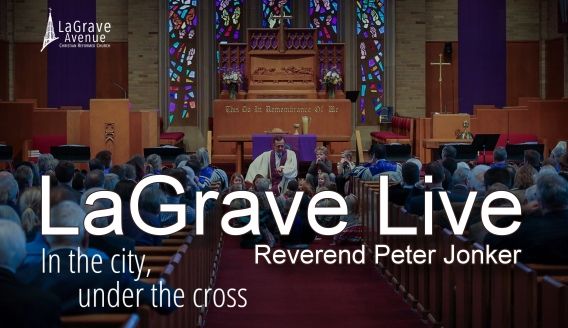

LaGrave Live
LIVE Evening Worship Service - Amos and Amaziah
About The Service:
Pastor Jonker will preach on Amos 7.
Order of Worship:
https://lagrave.org/wp-content/upload...
About Us:
We are a traditional CRC church in the middle of Downtown Grand Rapids, MI, worshipping at 8:40am, 11:00am, and 6:00pm. (10:00am and 6:00pm during the summer months)
We'd love to hear from you:
Connection: https://www.lagrave.org/contact
Let us pray for you:
Prayer: https://www.lagrave.org/prayerrequest/
Giving: https://www.elexiogiving.com/App/Givi...
The June special offering is for Pine Rest Patient Assistance Fund: Part of Pine Rest Foundation Fund offering financial assistance for individuals, families and children who need care.
Listen on the go:
Amazon Music: https://bit.ly/LGPodAmazonMusic
Apple Podcast: https://apple.co/3tuOdwQ
Google Podcast: https://bit.ly/LGPodGoogle
Soundcloud: / lagravecrc
Spotify: https://spoti.fi/3yXDFaT
Follow us!
Facebook: / lagravecrc
Instagram: / lagravecrc
Website: https://www.lagrave.org
#LaGrave #LaGraveCRC
Amos, Amaziah, and the Holy Affliction of God’s Justice
Evening Worship at LaGrave Church
This live evening worship service from LaGrave Avenue Christian Reformed Church is led by Reverend Peter Jonker and centers on the encounter between the prophet Amos, the priest Amaziah, and King Jeroboam II. The service opens with Scripture, worship, and a reflection on Psalm 146, emphasizing that believers should not put ultimate trust in princes or human rulers, but in the Lord who upholds the oppressed, feeds the hungry, frees prisoners, watches over foreigners, and sustains the fatherless and widow. Reverend Jonker frames the evening as a meditation on how church and state interact in Scripture, especially when God’s justice confronts political and religious power.
Prayer for the World’s Large and Small Histories
The pastoral prayer names God as King of kings, Lord of lords, and ruler over both the “big history” of nations and the smaller histories of ordinary lives. Reverend Jonker prays for places marked by war, suffering, and violence, including Sudan, Ukraine, Iran, Gaza, Lebanon, and Israel. He also prays against the bitterness that violence plants across generations and asks God to make His people peacemakers. The prayer then turns close to home, lifting up LaGrave’s neighbors, people struggling with addiction, trauma, and mental illness, and members of the congregation facing illness, surgery, recovery, hospice, and personal burdens.
Amos 7 - A Prophet Confronts Power
The central Scripture reading is Amos 7:10–17, where Amaziah, the priest of Bethel, reports Amos to King Jeroboam and accuses him of raising a conspiracy in Israel. Amaziah tells Amos to leave, return to Judah, and stop prophesying at Bethel because it is “the king’s sanctuary” and “the temple of the kingdom.” Amos responds that he was not a professional prophet or the son of a prophet, but a shepherd and dresser of sycamore fig trees whom the Lord called to prophesy to Israel. Reverend Jonker notes that Amos is a difficult figure, blunt and unsettling, more committed to God’s righteousness and justice than to popularity or social comfort.
Prosperity, Injustice, and the Unwanted Word
Reverend Jonker explains that Amos prophesied during the reign of Jeroboam II, a time of outward prosperity, national stability, and economic success for Israel. By conventional standards, Jeroboam looked like a successful ruler: the borders expanded, enemies were defeated, the economy was strong, and the nation appeared secure. But the biblical assessment was different: Jeroboam did evil in the eyes of the Lord. Into that prosperous world, Amos spoke against injustice, warning that the wealthy lounged in comfort while trampling the poor and ignoring the needy. Jonker stresses that Amos’s words were not pleasant, but they were necessary because God’s measure of a nation is not merely prosperity, but justice and righteousness.
The Holy Affliction of the Prophet
A key phrase in the sermon is “holy affliction.” Reverend Jonker says Amos was not simply an angry man; he was someone unsettled by the Spirit of God. Even Amos himself seems disturbed by the severity of the visions and prophecies he receives, pleading for mercy because Israel is small. Yet he cannot go back to ordinary life because God has given him eyes to see injustice and a heart that cannot ignore it. Jonker describes this kind of prophetic restlessness as a gift of the Holy Spirit, though not always a comfortable one. It is the burden that prevents God’s people from becoming merely a social club or a “going to heaven club.”
Francis, Dorothy Day, Martin Luther King Jr., and the Prophetic Stream
Reverend Jonker connects Amos to later figures in Christian history who carried a similar holy affliction. He names St. Francis of Assisi, whose compassion for the poor disrupted the expectations of his wealthy family; Dorothy Day, whose Christian faith led her away from literary celebrity into advocacy for the poor and the Catholic Worker Movement; and Martin Luther King Jr., who refused to remain silent in the face of racial injustice and echoed Amos’s cry that justice should roll down like waters. These examples show how the Spirit continues to raise up people who disturb complacency, confront injustice, and remind the church that God is transforming creation, not merely saving isolated souls.
A Prayer for Holy Agitation
The sermon closes by turning the message back toward the congregation. Reverend Jonker prays that LaGrave will always have a few “ornery prophets” and a few people like Amos, but also that every believer will receive at least a little of that holy affliction. He asks that the suffering of neighbors, the plight of the poor, and the injustices of the world would continue to pierce the church’s heart rather than become background noise. He connects this prophetic agitation to Jesus, who came to preach good news to the poor, freedom for prisoners, sight for the blind, and release for the oppressed. The service ends with prayer that God would unsettle whatever needs unsettling, uproot what needs uprooting, and send the congregation out under the Lord’s blessing and peace.
LaGrave Live

If you’re looking for a warm church that commits to an intensely pertinent Gospel in the Reformed tradition of the Christian faith, we invite you to worship with us. Our 1,800 members come from across West Michigan and gather weekly in our sanctuary for relevant Biblical preaching, beautiful music, and inspiring worship. We expand our worship through intentional outreach in our community and world, attentive care for our members, and plenty of spiritual enrichment and social opportunities for everyone.
We focus on a living Savior who provides genuine solutions to the deep needs of a hurting world. We are committed to need-meeting ministry in His name, and we are committed to being real people who enjoy real life and who cry real tears. Because we are a fairly large and diverse group in terms of age, occupation, marital status, lifestyle, and physical ability; our members create many accessible opportunities for community service, Bible study, and small social groups.
We worship God, the Almighty Creator of heaven and earth, and we enjoy expressing our vision of His holiness through traditional music and formal liturgy.
Music plays an integral part of our weekly worship gatherings. Congregational singing—of both traditional hymns and newer ones—is typically supported by our pipe organ. Vocal choirs, handbell choirs, small ensembles, instrumentalists, and vocal soloists provide additional music offerings.
Led by the Holy Spirit, we seek to worship and serve God in all of life, transforming His world and being transformed to reflect the character of Christ.
Founded by 36 Dutch immigrants on February 24, 1887, LaGrave Avenue Christian Reformed Church has always been deeply committed to both this local community and worldwide missions. God has seen fit to guide and bless these commitments with sustained growth, spiritual gifting, and a continual stream of new work for our members.
One who is the one of the
servant whom I uphold, my chosen one in whom I delight, I will put my spirit on him, and he will
bring justice to the nations. He will not shout or cry out or raise his voice in the streets. A
bruised reed, he will not break. Smoldering wick, he will not snuff out. In faithfulness, he will
bring forth justice. He will not falter or be discouraged until he establishes justice on the
earth. In his teaching, the islands will put their hope. Thanks be to God.
Lord of lords, he is the creator of the comets and the nebulae. He's the one who made all the big
things, but he's also the one who sees the sparrow fall, who hears the cry of the poor, and who knows
our name. And he greets us, saying, Grace, mercy, am peace to you from God the Father, from Christ
his Son, through the mighty and powerful work of his Holy Spirit. Welcome one and all to our worship
service this evening at La Grave Avenue Christian Reform Church on this, what I think is the longest
day of the year. It is good that we should gather in the evening and give praise to our Lord and our
God. Tonight's service, I should say welcome to all you visitors. I see a few of you out here. We're
always glad to see you and welcome to you members too and for those of you watching online. Tonight's
service will be an encounter between Amos, the prophet whom you know and I am Aziah and Jeroboam
who are sort of representatives of the state. And it's an interesting conflict and puts us in mind
of how church and state sometimes interact in Scripture. And that's why I chose Psalm 146 for
our reading tonight because the psalmist has something to say about the place of princes and
kings in our life. Listen, praise the Lord, praise the Lord my soul. I will praise the Lord all my
life. I will sing praise to my God as long as I live. Do not put your trust in princes and human
beings who cannot save. When their spirit departs they return to the ground. On that very day
their plans come to nothing. Blessed are those who help us the God of Jacob, whose hope is in the
Lord their God. He is the maker of heaven and earth, the sea and everything in them. And he
remains faithful forever. And here's his policies. He upholds the cause of the oppressed. He gives
food to the hungry. The Lord sets the prisoners free. The Lord gives sight to the blind. The Lord
lifts up those who are bowed down. The Lord loves the righteous. The Lord watches over the foreigner.
He sustains the fatherless and the widow, but he frustrates the ways of the wicked.
The Lord reigns forever. Your God, O Zion, for all generations, praise the Lord.
O Zion, for all generations, thank the Lord.
One of the clearest statements of how we as a church relate to governmental authorities is
found in the contemporary testimony our world belongs to God. In these two paragraphs let's rise and
say them together responsibly. The testimony says, we obey God first. We respect the authorities
that rule for they are established by God. We pray for our rulers and we work to influence
governments resisting them only when Christ in conscience demand.
And all the Koreans enjoy the existence of any violence. We really will also live under our
passion and receive the land of the liberty to live without fear.
We call on all just by all governments to do public justice and to protect the rights and
freedoms of individuals, groups, and institutions so that each may do their tasks.
We are governments and let ourselves to save our children and the elderly from the views and
Creator and gain to bring justice to the board and the rest and to receive
worship and associate.
Our pastoral prayer this evening will end with the singing of O Lord, hear my prayer,
the words for that are printed in your liturgies.
Let's pray together.
Mighty God, Father, Son, and Holy Spirit, King of Kings and Lord of Lords, Ruler of
rulers, President of Presidents, Leader of Leaders, we turn to you tonight with our hearts
open in our hands ready.
Lord, yours are the hands that are steering history.
Whether that's the big history of this world, with all its political conflicts and its dramas
and its wars, or whether it's the smaller histories of our lives, the smaller stories
we live out in our kitchens and in our relationships.
In both these places, Father, the big and the small, you are Lord, you pay close attention
and you show mercy and you give guidance and you give grace.
We pray, Lord, that you would show your rule and guidance on the large stage of history
right now.
You know about all our wars, and you know about all the places where your will and your justice
are not being done.
You know the suffering that brings.
You know how the ambitions of the powerful can bring misery to the weak.
I pray, we pray tonight for the people of Sudan, for the people of Ukraine, for all
the innocents who are still suffering from the war in Iran.
We pray for those who are trying to piece their lives back together in Gaza.
We pray for families in Lebanon and Israel who live in fear because of conflict and violence
there.
And Father, we pray not only against the violence, but against the deep angers and the bitterness
that the violence sows, bitterness that can be carried from one generation to the next.
Father, this bitterness is not your purpose for the world.
Make us peacemakers.
Trust the peacemakers.
Bring your peace quickly to this world, and Father, if the only way to do that is to send
your son to return, may he come quickly.
We pray too for your rule in the smaller histories of our regular lives.
I pray for the lives of the people in our neighborhood.
In the summertime, we see more and more of them in the streets outside our church.
Each one of these folks has a story, and some of their stories have been very hard.
We don't know those individual stories, but we do know they are people made in your image,
Lord.
So, Lord, give grace to every one of our neighbors.
That's our prayer.
Help us to be good neighbors to them and to love them well.
Pray for those who struggle with addiction, with trauma, with mental illness.
Lord God, it's our prayer that you would make each and every one of those lives whole.
We pray that you would remake them body and soul.
I pray for the stories of our members and our people here tonight and all the people in
our congregation.
Either each one of us is carrying hard things.
Each one of us have things in our histories that bring pain and guilt.
Send your spirit upon those things.
Make what is broken whole and hopeful.
And I pray specifically for those who are going through hard things right now.
I pray for Rodge Rott's, Shafer as he recovers from his surgery.
Pray for Ron's shoemaker and Shar Jousstra also recovering.
As Mary Clostra, she recovers from the first part of her deep brain stimulation survey.
May this surgery give her relief.
Pray for Bill Stroe in hospice coming to the end of his life.
Father, I pray fervently and deeply for an ache hyper in their family this week as she
faces a long and really important surgery.
I pray that that surgery may go well.
I pray that that surgery may bring relief and some hope for the family and stability.
Father when it comes to our needs, this is the tip of the iceberg.
You know all these needs already and you know how best to answer them.
So Lord, hear our prayer.
We've called out to you.
Answer us.
Answer us in your mercy and in your grace.
Answer us through Jesus Christ our Lord.
We pray.
Amen.
Our Bible reading tonight is from the Book of Amos.
The Prophet Amos will spend some time in the Minor Prophets, Amos chapter 7.
And I'll read verses 10 through 17.
I will wager that most of you have never heard a sermon on this passage.
But it's a really interesting passage and I hope we'll be blessed by looking at it
together.
This is Amos coming into contact with Amaziah, the high priest of Israel and also with Jerobo
in the second, who was King of Israel back then.
So Amos has been making lots of prophecies, most of them pretty dire and this is what
happens.
And Amaziah, the priest of Bethel, sent a message to Jeroboam, King of Israel.
Amos is raising a conspiracy against you in the very heart of Israel.
The land cannot bear his words.
For this is what Amos is saying.
Jeroboam will die by the sword and Israel will surely go into exile away from their
native land.
And Amaziah said to Amos, get out you see her.
Go back to the land of Judah.
Turn your bread there and do your prophesying there.
Don't prophesy any more in Bethel because this is the king's sanctuary and the temple
of the kingdom.
Amos answered, Amaziah, I was neither a prophet nor the son of a prophet.
I was a shepherd and I also took care of sycamore fig trees.
But the Lord took me from tending the flock and said to me, go prophesy to my people
Israel.
Now then hear the word of the Lord.
You say do not prophesy against Israel and stop preaching against the descendants of
Isaac.
Therefore this is what the Lord says.
Your wife will become a prostitute in the city and your sons and daughters will fall
by the sword.
Your land will be measured and divided up and you yourself will die in a pagan country
and Israel will surely go into exile away from their native land.
This is the word of the Lord.
That Amos sees a real charmer isn't he?
I don't think Amos ever read the book How to Win Friends and Influence People.
If he did, he certainly didn't take its advice.
And that's because I think it's pretty clear that winning friends and influencing people
was not the top of Amos' agenda.
The top of Amos' agenda was the righteousness of God.
The top of Amos' agenda was the justice of God.
Amos was mostly concerned that justice would roll like a river and righteousness like an
ever living stream, right?
That's his own words.
Amos 5, verse 24.
And because he was concerned about that primarily, he was always easy to be with.
He could be a difficult guy.
Amos was the kind of guy if you invited him to preach at your church.
You knew you weren't going to get a sermon about the comforting love of God and eternal
life.
You were going to get a sermon about your iniquities and the injustices of this world.
He was going to hit you between the eyes.
If you invited Amos to dinner, you knew the subject matter was not going to stay on the
weather and family vacations.
He was going to bring up the injustices of this world, the sins of the king.
You ask him to pass the potatoes and you'll get a long diatribe about the plight of the
potato pickers in northern Judea.
Before you knew it, your nice polite dinner was full of conflict.
Amos, could you please pass the guilt?
I don't think I've had enough of it.
I don't think Amos is very popular in his time, almost certainly not because, and this
is part of Amos's problem, he prophesied during the reign of Jeroboam II.
And by most measures, most conventional measures, that was a time of deep prosperity
for Israel.
Israel is doing really, really well.
If you go to 2 Kings 14, you can sense it.
You can read it.
Jeroboam reigns for 41 years, a 41 years of stability.
Says that he enlarges the boundaries of Israel out to the place essentially where Solomon
had them.
He covers all this land.
He defeats his enemies.
He makes peace with the southern tribes, with Judah.
If your measure of a successful administration is the economy stupid, that whole way of measuring
what's good, Jeroboam is absolutely successful as a leader because the markets are full.
Everyone's prospering.
The cities are strong.
All the leading economic indicators are up.
The shekel is strong against the neighboring currencies.
His pole numbers are fantastic.
But as I hope you know, the Bible's measure of things is not leading economic indicators.
And the Holy Spirit, despite all his prosperity, has a very different assessment of Jeroboam
in the second.
This is what the Spirit says in 2 Kings 14.
Jeroboam did evil in the eyes of the Lord and did not turn away from any of the sins
of his forebearers.
So in the middle of all this prosperity, despite all the good news and economic happiness,
the Lord sends a prophet, the Lord sends Amos, this farmer from Tacoa, this dresser of Sycamore
trees, and he walks the streets and he proclaims destruction.
You guys are taking care of national security and you're taking care of economic interest,
but you're forgetting the poor.
And now these are some quotes, these are things that he actually says.
Woe to those who lie on beds of ivory and lounge on their couches.
Woe to those who sing idle songs on the heart.
Woe to those who drink wine from bowls and anoint themselves with the finest of oils
at their spa weekends.
He doesn't say spa weekends.
You trample the poor, he says.
You push aside the needy at the gate.
You don't share your prosperity with those at the bottom.
Some of you are doing fantastic, but you're forgetting the poor.
This is a message that consistently appears throughout the prophet Amos.
And if that's all he said, that would make him unpopular enough.
But he adds to those prophecies and those accusations, promises that God is going to
bring severe punishment, all kinds of pictures of terrible doom.
Locusts will come and they will strip the fields bare.
Fire will come from heaven in your cities will burn.
Your summer houses will be destroyed.
I will rise against the house of Jeroboam with a sword, Seth the Lord.
Amos's words got enough attention and caused enough kerfuffle that finally Amaziah had
enough.
He brought attention to the king, what Amos was saying, and he summoned Amos in for a
meeting, a conference.
Amaziah was the high priest, the highest religious figure in the land.
He calls in Amos and you can kind of imagine the scene.
Amos comes into Amaziah's office, his corner office.
He's got a beautiful view of this city.
He's got a long cherry desk on the desk or several pictures and a frame as his graduation
certificate, summa cum laude, of course.
And the picture of his kids, all of them in matching shirts down at the seaside.
The picture of him and the king with their arms around each other when they went on a
charter trip last year and caught that big swordfish in the Mediterranean.
Signed by the king, do my friend Amaziah, love Jeroboam.
Amaziah sits Amos down, look Amos, enough is enough.
We are in midst of good times in this country.
The king is working so hard.
I am working so hard to bring stability to this country.
And when you walk the streets and you bring this message, it's treasonous.
You are destabilizing this country.
People are becoming afraid.
People are becoming anxious and they don't need to become anxious.
You are no friend of Israel.
This is the king's sanctuary and it is a temple of his kingdom, which is equivalent to saying,
do not touch the Lord's anointed.
You are unpatriotic.
You should leave this country, you Judean.
And then you heard how Amos responded very gently and delicately, right?
He responds with his terrible prophecy, which is frankly hard to read about Amaziah and
his whole family being killed, his daughters falling to the sword, his wife humiliated.
Amos is not an easy guy.
And here's the interesting thing, and I didn't read this and maybe I should, but if you read
the beginning of chapter 7, what you find is even Amos is unsettled by his own prophecy.
Even Amos gets sick of his own prophecy.
If you read the first like six or seven verses of chapter 7, you'll see Amos, the Lord puts
on Amos's heart another one of these prophecies.
He alerts him to the wickedness of Israel and a prophecy is given to him and it's about
the locust stripping the land and fire burning the cities.
And Amos says, Lord, please, not another prophecy.
Jacob is so small.
Forgive.
Have mercy.
Lord, not another prophecy of doom.
I don't think my heart could take it.
I don't think I can take any more of these words that you keep giving to me.
Why do you put these words in my heart and in my mouth?
Amos is human.
There's undoubtedly part of him that would just like to go back to Koa and farm.
You know, get in on the prosperity.
Make a buck or two.
Paint the white picket fence.
Go on a vacation with his wife and his kids, but Amos can't do it.
God had given him eyes to see the plight of the needy.
God has given him a heart that when he sees injustice, he just cannot sit still.
He did not have the talent of walking by a beggar in a street and ignoring him.
Amos could not rest with society as it was, and that was something the Holy Spirit had
done to him put in his heart.
For Amos, having the Holy Spirit stir in you was not peace and comfort and security.
It was a holy affliction.
Spirit does that sometimes.
Amos might be difficult, but the Holy Spirit has created many people like Amos, moved
in their hearts to create a holy affliction.
In the history of God's people, there have been a whole stream of people like Amos who
cannot abide in justice, who cannot abide on righteousness, who simply have to speak
up.
And they're not always the easiest people to be around.
They're maybe not the people you want for dinner, but the church needs those folks.
They keep the church from being a social club, from being a going to heaven club.
They remind the church that God is in the business not only of saving souls, but transforming
creation, making it good.
Who are some of these people in history upon whom the Holy Spirit has put this holy affliction?
St. Francis of Assisi, born into a rich family, lots and lots of money.
He was born with a heart for the poor, something the Holy Spirit put in him.
He came to the stories we hear about him even when he was a young man.
He would go out carousing with his friends, partying with his friends, and he'd come
home if he passed a beggar in his streets.
All his friends could easily walk by, but not Francis.
He would stop and he would give everything he had on his person to this beggar.
And he'd get home and his dad would be furious with him and his friends would laugh at him.
But he couldn't help it because he had the holy affliction.
There's also Dorothy Day.
Dorothy Day was a young star in the world of writing in the early 20th century in New
York.
If you're someone who grew up an early… if you're a literary person in the 20th century,
if you were New York and you're hanging out with Eugene O'Neill and going to Solon's,
man, that was like the dream.
That's what Dorothy Day was doing, but she could not be happy there.
She was restless.
She became a Christian.
She started advocating for the poor.
She started the Catholic Workers Movement.
Did that make her popular?
No.
She was her throne in jail, but she couldn't help herself because she had the holy affliction.
And then of course there was Martin Luther King Jr., who couldn't just take a normal
pulpit and preach sermons about the salvation of souls.
When he saw the injustices in his society, he had to speak out and he had to travel and
he had to go around and try to open people's eyes.
People said to him exactly what Amaziah said to Amos, why are you coming to our place
to talk about this?
Go home.
But he didn't go home.
Instead, he stood up at the Capitol and spoke the same words that Amos had spoken to
1,700 years earlier.
But justice rolled down like a river and righteousness like an ever-flowing stream.
He too had the holy affliction.
God him killed.
Clearly having a holy affliction is not a pleasant thing, but it is a gift to the holy
spirit.
It is something that the spirit does.
And part of being a healthy church and part of even being a healthy human being is having
a little of this in you.
So I pray for every single person here that you will be afflicted with a little bit of
what Amos had.
I don't have the courage to pray for you that you'll be afflicted with all of what
Amos had, but I pray that you'll be afflicted with a little of it.
I pray that when you read about the injustices of this world or see them on the news that
you will not be able to just tune them out, that your heart will stir.
I pray that when you go on a nice vacation in a developing country and you're at one
of these all-inclusive resorts where everything is pristine and somehow you see outside and
you see the poverty on the other side of the gate, that that will not sit well with you.
I pray that the plight of the people in our own neighborhood will never cease to pierce
your heart.
It's easy after you've been here for so long, thirteen years to just sort of look right
past it, right?
Come into the parking lot.
You're so used to seeing people on the street after a while.
I pray that that will not happen to you.
I pray that you'll be restless when you see their plight.
I know it's strange to pray for agitation.
We'd rather all pray for a good night's sleep.
But I pray for these things for you because I want you to be like Jesus, right?
And we all want to be like Jesus.
We want the heart of Jesus to live in us.
And this is in Jesus' heart.
Jesus had this holy ad- this holy agitation, this holy affliction.
Remember the first sermon he gave in the gospel of Luke and Nazareth?
He'd been out doing some miracles in other parts of Galilee, right, in Capernaum and
his reputation had been made.
And he then came in Luke 4, he comes to Nazareth and he preaches and everyone's so excited
to have them.
They're saying, you know, Jesus, we've heard about those miracles you did in Capernaum.
You hear what you did in Capernaum.
Settle down here.
You know, we'll build you a parsonage, we'll give you a nice salary.
Yeah.
Stick with your tribe.
It'll be a blessing for you.
It'll be a blessing for us.
Instead Jesus preaches a sermon that agitates them.
I've come to preach good news to the poor, to proclaim freedom for the prisoners.
I've come to give recovery of slight to the blind.
I've come to set the oppressed free, says Jesus.
And I didn't just come to do it for you.
I didn't even just come for Israelites.
I came to do it for the whole world.
People far away.
You remember how they react, right?
They want to kill them.
They take them to the top of the hill and try to throw them off.
He gets away.
This time, later they'll get them.
They'll take them to another hill, just outside Jerusalem.
And they'll name them up and they'll spit on them and then they'll throw them in a grave
and they'll put a big rock in front of it just so that his message will be gone forever.
But the river of God's justice that flows down is not stopped so easily because God
will raise him from the dead.
That river will blow that stone away from the front door of the tomb.
And Jesus will walk out stronger than ever before.
And the river of God's justice will flow until the earth is full of the knowledge of God
as the waters cover the sea.
I pray that there will always be a few ornery prophets at La Grave.
I pray that there will always be a few amuses in our crowd.
And even if you're not full amuses, I pray that all of us will have a little of that
holy affliction so that God's justice may roll like a river and his righteousness like
a living stream.
Amen.
Thank you, Lord, for your word we thank you for it even when it unsettles us as this passage
most certainly does.
And so we pray, fearfully, unsettle whatever needs unsettling in us, Lord.
Bind whatever needs binding, but unsettle whatever needs unsettling.
What needs rooting, uproot what needs uprooting so that we may be your children fully in every
part of our lives.
Amen.
Receive the blessing of your Lord as you go from this place.
And Lord bless you and keep you.
And Lord lift up his face to shine upon you, me gracious to you.
May the Lord turn his face towards you, smile upon you, and fill you with his peace both
now and forevermore.
Amen.