
LaGrave Live, July 5, 2026
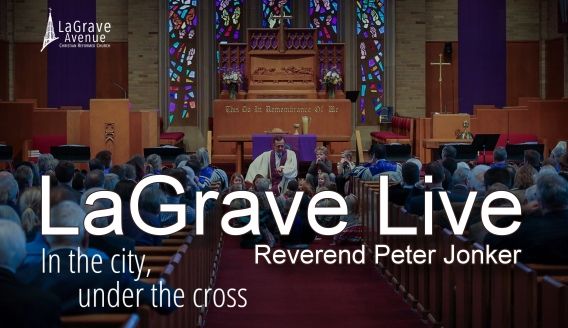


LaGrave Live
LIVE Morning Worship Service 07-05-2026
The Way of Wisdom: A Teachable Spirit
About The Service:
We will continue our summer sermon series called The Way of Wisdom. Pastor Manion will be focusing on Proverbs that show us the value of learning and receiving feedback from others. Her sermon is entitled "A Teachable Spirit."
Order of Worship:
https://lagrave.org/wp-content/uploads/2026-7-5-AM-Order-of-Worship.pdf
About the Church:
We are a traditional CRC church in the middle of Downtown Grand Rapids, MI, worshipping at 8:40am, 11:00am, and 6:00pm. (10:00am and 6:00pm during the summer months)
We'd love to hear from you:
Connection: https://www.lagrave.org/contact
Let us pray for you:
Prayer: https://www.lagrave.org/prayerrequest/
Giving: https://www.elexiogiving.com/App/Giving/lagr107178
The June special offering is for Pine Rest Patient Assistance Fund: Part of Pine Rest Foundation Fund offering financial assistance for individuals, families and children who need care.
Listen on the go:
Amazon Music: https://bit.ly/LGPodAmazonMusic
Apple Podcast: https://apple.co/3tuOdwQ
Google Podcast: https://bit.ly/LGPodGoogle
Soundcloud: / lagravecrc https://soundcloud.com/lagravecrc
Spotify: https://spoti.fi/3yXDFaT
Follow us!
Facebook: / lagravecrc https://www.facebook.com/lagravecrc
Instagram: / lagravecrc https://www.instagram.com/lagravecrc
Website: https://www.lagrave.org
#LaGrave #LaGraveCRC
Learning to Love Correction: Wisdom, Humility, and the Teachable Spirit
Summary
A Service Framed by Wisdom and Grace
The service at LaGrave Avenue Christian Reformed Church opens with worship, welcome, and a reminder that the God who raised Jesus from the dead is present with the congregation. The morning centers on wisdom, correction, humility, and the grace of being restored when one has wandered. The call to confession draws from Matthew 18 and James 5, emphasizing that correction is not meant for shame or exclusion but for reclaiming one another in love.
Confession That Breaks Pride Open
The confession acknowledges the ways people resist wise correction, ignore the community God provides, and cling to pride. The assurance of pardon from Ezekiel 11 promises a new heart and new spirit, replacing hearts of stone with hearts of flesh. The worship language presents repentance not as humiliation but as an opening to God's mercy and transforming work.
Prayer for a Church and Nation in Need of Holiness
The pastoral prayer reflects on creation, sin, national life, and the need for God to purify and remake his people. The congregation prays for those recovering from surgery, those receiving treatment, those in nursing care, and families grieving recent deaths. The prayer also recognizes the nation's anniversary while placing ultimate trust not in earthly governments but in God's sovereignty.
A Children's Lesson from the Recipe for a Sweet Life
The children's message uses cake ingredients as a picture of instruction. Some ingredients taste sweet by themselves, while others are bitter, yet all can work together in a recipe. In the same way, children are told that parental guidance can feel pleasant or unpleasant, but loving instruction helps shape a good life that honors God and blesses others.
The Sermon: Receiving Correction Without Fear
The sermon explores Proverbs on rebuke, discipline, and teachability. It contrasts wounded responses to correction with a wiser posture that sees every Christian as a lifelong learner. The preacher names the damage caused when abuse is mislabeled as discipline, while also challenging the opposite tendency to resist apology, accountability, and change.
Three Pathways Toward a Teachable Spirit
The sermon offers three pathways: see yourself first as a learner, seek trustworthy people who can offer wise feedback, and receive God's correction as an expected expression of divine love. Correction is compared to gold when it comes from a wise and loving source. The message closes by grounding human change not in self-improvement or shame but in Jesus, who loves people enough to redeem and transform them.
LaGrave Live
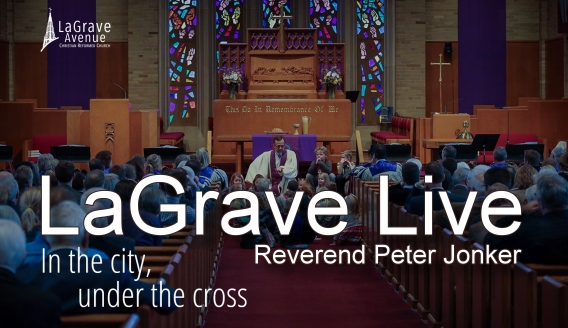

If you’re looking for a warm church that commits to an intensely pertinent Gospel in the Reformed tradition of the Christian faith, we invite you to worship with us. Our 1,800 members come from across West Michigan and gather weekly in our sanctuary for relevant Biblical preaching, beautiful music, and inspiring worship. We expand our worship through intentional outreach in our community and world, attentive care for our members, and plenty of spiritual enrichment and social opportunities for everyone.
We focus on a living Savior who provides genuine solutions to the deep needs of a hurting world. We are committed to need-meeting ministry in His name, and we are committed to being real people who enjoy real life and who cry real tears. Because we are a fairly large and diverse group in terms of age, occupation, marital status, lifestyle, and physical ability; our members create many accessible opportunities for community service, Bible study, and small social groups.
We worship God, the Almighty Creator of heaven and earth, and we enjoy expressing our vision of His holiness through traditional music and formal liturgy.
Music plays an integral part of our weekly worship gatherings. Congregational singing—of both traditional hymns and newer ones—is typically supported by our pipe organ. Vocal choirs, handbell choirs, small ensembles, instrumentalists, and vocal soloists provide additional music offerings.
Led by the Holy Spirit, we seek to worship and serve God in all of life, transforming His world and being transformed to reflect the character of Christ.
Founded by 36 Dutch immigrants on February 24, 1887, LaGrave Avenue Christian Reformed Church has always been deeply committed to both this local community and worldwide missions. God has seen fit to guide and bless these commitments with sustained growth, spiritual gifting, and a continual stream of new work for our members.
Speaker Identification
Speaker 1: Worship leader / liturgist
Speaker 2: Pastoral prayer leader
Speaker 3: Children's message leader
Speaker 4: Preacher / sermon speaker
Speaker 5: Congregation
Speaker 6: Soloist / music leader
[Opening music and congregational singing. The first portion of the recording contains repeated machine-generated fragments and non-substantive garble. The recognizable service begins below.]
Speaker 1: The God who raised Jesus from the dead, having before raised Israel from Egypt, who was present to them in fire and water, is present to us now and welcomes you to this place, saying, grace and peace to you from God our Father and the Lord Jesus Christ. Amen.
It is good to worship with you on this Sunday morning at LaGrave Avenue Christian Reformed Church. Welcome to this place. Welcome also to those worshiping with us online through our livestream. After this service, there will be a time of fellowship in the multipurpose room, a time to meet a few new faces and drink coffee together. You can find that room by going down the hallway behind you and entering the room on the right.
Our sermons these last weeks have focused on God's word from the books of wisdom. This morning we will meditate on the wisdom found in correction, both in receiving it with humility and in extending it with great grace to those who have strayed.
Our call to confession this morning comes from Matthew 18:15-17 and James 5:19-20:
"If your brother or sister sins, go and point out their fault, just between the two of you. If they listen to you, you have won them over. But if they will not listen, take one or two others along, so that every matter may be established by the testimony of two or three witnesses. If they still refuse to listen, tell it to the church. And if they refuse to listen even to the church, treat them as you would a pagan or a tax collector.
"Brothers and sisters, if one of you should wander from the truth and someone should bring that person back, remember this: whoever turns a sinner from the error of their ways will save them from death and cover over a multitude of sins."
Let us together confess our sins to God.
Speaker 5: Almighty Father, we confess the many ways we turn from you. You have given us a wise community to call us from our sin, yet we ignore their calls and hold firm in our pride. Break our proud hearts, Lord. Make us ready to listen and quick to repent. Use the voice of the wise to reclaim us from our wandering and bring us always nearer to you. Amen.
Speaker 1: Our Lord Jesus Christ, who hears our confession and has mercy on us, does not desire that we should stay in our sin, but desires that we should correct our wrongs and become holy as he is holy. Hear God's assurance of your pardon from Ezekiel 11:
"I will give them an undivided heart and put a new spirit in them. I will remove from them their heart of stone and give them a heart of flesh. Then they will follow my decrees and be careful to keep my laws. They will be my people, and I will be their God."
[Congregational singing. Portions of the hymn text were not clearly captured in the raw transcript.]
Speaker 2: Before we go to God in prayer this morning, I have three updates to share with you that are not listed in your bulletin.
Dorothy Andersma passed away last Thursday. Visitation will be on Wednesday from 6:00 to 8:00 at Zaagman Memorial Chapel, and a funeral service will be held on Thursday at 2:30 in our sanctuary. We will keep the Andersmas in our prayers as they mourn the loss of Dorothy.
Oren Gilder-Los has been transferred to Mary Free Bed for therapy following his spinal fusion surgery. We will keep Oren in our prayers as well.
Finally, Cecil Lawson passed away last night after a short time receiving hospice care. Cecil was a Heartside neighbor and a regular at LaGrave Spa Day. He also participated in the men's Bible study and served us each week by stocking and tidying our pews. We will pray for Cecil's community as they mourn his passing.
We will close our prayer this morning with the Lord's Prayer, sung by our soloist. So if you do not hear an amen from me, that is why. Let's go to God in prayer.
Father, Son, and Holy Spirit, we are in awe of your holiness. In you there is no wrong or bad thing. In the great excess of your love, you formed us and all around us out of nothing, and all of it you made good and perfect, flawless in every respect. You gave us every gift imaginable: a rich and fruitful land, a place to till and tend, animals to dwell with and name. We were not only your partners in creation, but its crowning jewel.
We confess that it was our sin, our disobedience, that introduced impurity into your creation. In our pride, we sought to be your equal, and in so doing broke the whole thing. What was made perfect, we made flawed. In our shame, we ran from our mess and sought to cover it up, as we still do when we are confronted with our sin.
Through the correction of our brothers and sisters, catch us in our tracks, Lord. Do not let us dissemble, rationalize, or minimize our sin. Open us to the fire of your love. Test our hearts and purify us, judging God. Melt us and recast our hearts, that they would seek only after you.
King of kings, we recognize that we pray to you now one day after the 250th anniversary of the birth of this nation. We thank you that you have allowed your church to grow and flourish within this nation, to enjoy the bounty of its land and the peace of its rule. To the extent that we have worked within this nation for its good, help us to make it better. To the extent that we have worked toward the evil and sinful ends that all people and their governments cannot help but create, correct our sin and help us to repent of it. You are sovereign over all things, all nations, and all governments. We trust in your sovereignty and not in the rule of men.
We pray for those members of this community who need your presence especially now: for Orrin Gilder-Los and Shar Joustra, who both face long recoveries following spinal fusion surgery; for Peter Gordon and Renee Kuiper, who are recovering from their own recent surgeries; for the Andersmas as they mourn the passing of Dorothy; and for Cecil Lawson's community and all who were touched by his life as they mourn his passing. We pray also for Steve Palazzolo as he begins a round of inpatient chemotherapy, and for Edna Venlet as she returns to Raybrook Nursing Home.
Be present to the many others in this church who suffer pains unknown to us or suffer in grieved pains that we have forgotten. You have not forgotten them, Lord, and you know their hurts. Be with all of these, Lord, in the ways that they need you, and help us to be with them also.
Triune God, remake us in your image. Make us shine with the holiness of your presence. Correct us in our sinful ways and keep us open to each other's correction. Give us the strength to correct each other well. In all things, let us trust in your power, knowing that you are remaking all things to be holy as they once were.
And now we close our prayer with the words you taught us to pray.
Speaker 6: Our Father, who art in heaven, hallowed be thy name. Thy kingdom come; thy will be done on earth as it is in heaven. Give us this day our daily bread, and forgive us our debts as we forgive our debtors. And lead us not into temptation, but deliver us from evil. For thine is the kingdom and the power and the glory forever. Amen.
[Musical response: "Jesus, the Very Thought of Thee." Portions were partially captured in the raw transcript and are not reproduced as a full lyric sheet.]
Speaker 3: I would like to invite my youngest brothers and sisters to come on up here and join me on the step. I hope there are a few of you here. Yes, Ava and Owen. Yay. Good morning. Good morning.
All right, you guys are coming. So I am going to tell you something: this time together might ask you to be a little bit brave, because there are only a couple of you and I have some questions for you. If you do not want to talk, you can listen to me talk a lot, and I will do that. But if you want to talk back, that would be amazing.
Here we are today. It is good to see you. I hope you are having a good summer. I brought a basket of things with me today, and I am going to ask you to help me determine what we could make with these things in my basket. I will give you a little hint. Yesterday was what?
Speaker 5: The Fourth of July.
Speaker 3: Amazing. And that is the birthday of our country, right? We had a really big birthday this year.
The things in this basket are things you might use around a birthday. I have baking cocoa, vanilla, butter, flour, sugar, salt, and I was not brave, so I did not bring a whole package of eggs, just the carton. What do you think we could make if we used all these ingredients together? Do you have a guess? No idea? Okay, we have to get you baking more.
We could make a cake. We could make a birthday cake with these things. If you have ever been around a kitchen where a grandparent or a parent has been baking something yummy, you know that the kitchen can smell amazing when somebody is baking something. But I wonder if you have ever been in the kitchen and tried tasting one of the ingredients all by itself. Have you ever sneaked a little bit of sugar when somebody was baking? You might not admit it, but maybe. How does sugar taste?
Speaker 5: Good.
Speaker 3: Yes, it tastes good. It is really sweet.
What about baking soda? Have you ever had a pancake or a muffin and got a bite of something that tasted a little bitter? Baking soda does not taste very good by itself.
How about cocoa? Is cocoa like hot chocolate cocoa? Maybe. Cocoa like this smells pretty good, but if you tasted it all by itself, it would be pretty bitter. It does not have any sugar in it to make it taste good.
So if we did not really know what we were doing and we said, "Well, we have all of the ingredients right here to make a cake, and we are just going to pour things into a bowl, mix it up, and pop it in the oven," would we get a very good cake?
Speaker 5: No.
Speaker 3: What do you need? What do you have to follow if you are going to make a good cake? The ingredients, yes. You have to follow a recipe, right?
Just like if you are going to make a good cake, you have to follow the ingredients and put them in order. My husband is laughing if he is out there because he knows I like to dump stuff in and see what comes out. But when you are baking especially, you follow the recipe, and you can make a really good cake.
There are people in your life who have the recipe for a good life. Those people are your moms and dads, maybe your grandpas or aunties, people who know how life tastes the sweetest. Their instructions are like a recipe for a good life, a life that honors God and helps you love other people really well.
I bet sometimes some of the ingredients in that recipe do not taste so sweet to you. Sometimes a mom or dad has to say, "You hit your brother, so you cannot go outside and ride your bike right now. It is time to take a rest." Or maybe they tell you to eat your broccoli, and you do not love broccoli. Or they ask you to clean up your toys, and you would rather go do something else. Those ingredients in your life are like the bitter baking soda or the bitter baking cocoa. They do not taste so great.
But other times, maybe even just this week, some of the instructions from your moms and dads tasted really sweet. Things like, "Go find your bathing suit. We are going to go to the pool for a while," or, "We are going to go out and do some sparklers for the Fourth of July. Better find your shoes so you do not burn your feet." Those are instructions, too, and those things are really sweet. All of those things together go into making a good, healthy, sweet life for you.
Psalm 19:8 and 10 say these words: "The Lord's precepts, the Lord's rules, are right. They make someone joyful. The Lord's commands are pure. They tell you how life works best. They are of greater value than gold. They bring greater delight than honey, than sugar. They are sweeter than honey from the honeycomb."
So the next time your parents tell you to start doing something or stop doing something, picture this: picture biting into a piece of cake that is perfectly sweet and perfectly chocolatey and perfectly baked, because parents who love God and love you are trying to help you have the sweetest possible life. That is what I wanted to share with you today.
You will go back to your seats with your parents rather than going to children's worship today. Congregation, what is our prayer for these children?
Speaker 5: The Lord be with you.
Speaker 3: And also with you. Go in peace.
Speaker 4: Good morning. We are continuing in our Way of Wisdom series this morning with a sermon based in the book of Proverbs, and all of the verses that we will refer to today are printed in your bulletins.
The Proverbs today are on giving and receiving correction, which you probably gathered from Levi's liturgy earlier. They are close cousins with the message from last Sunday about wisdom and speech. We are looking at the question of becoming people who are wise, not just smart, but skillful in the way we receive and offer correction.
There are a lot of Proverbs that speak to this, and the ones we will focus on today read this way:
"Do not rebuke mockers or they will hate you; rebuke the wise and they will love you. Instruct the wise and they will be wiser still; teach the righteous and they will add to their learning.
"Whoever loves discipline loves knowledge, but whoever hates correction is stupid.
"The way of fools seems right to them, but the wise listen to advice.
"Like an earring of gold or an ornament of fine gold is the rebuke of a wise judge to a listening ear.
"Better is open rebuke than hidden love. Wounds from a friend can be trusted, but an enemy multiplies kisses."
This is the word of the Lord.
Speaker 5: Thanks be to God.
Speaker 4: I know you are all wondering if I drew the short straw to get to speak on discipline this morning.
I wonder what happens for you when you hear the word correction. Come down memory lane with me, and I will tell you the first memory I have of receiving correction, although it is undoubtedly not actually the first.
The first memory I have is from when I was very young, in kindergarten. I had just finished coloring in, I think, a Precious Moments paper early in the year. I was proud of it. I brought it up to the teacher's desk, and I do not remember whether I asked for feedback or whether she offered it without being asked. But she looked at my page, a proud page, nicely colored inside all the lines, but the pastel colors were so light they were barely visible at all. So innocently, she said to me, "Why don't you color it in just a little bit darker?"
Well, I will tell you what happened then. My five-year-old face flushed. I know the blood was pounding in my ears. Tears sprang to my eyes. Little tender soul, five years old. This very lightly colored crayon art was how I made art with my grandma. How could my teacher not know this was how it was beautiful?
I remember going back to my table and getting a dark crayon with my fist. "You want dark? I can do dark."
I look back on that early experience of correction with a mixture of humor and embarrassment and disbelief. What a reasonable thing for a teacher to suggest. What a small thing for a student to get upset about. What a toddlerish response to criticism. And what an insightful moment for me to go back to when I think about delivering and receiving feedback with the people in my life.
We write on the soul when we offer our feedback.
How about you? Do you hear positive or neutral connotations when you hear the word correction? If you grew up in a home where discipline was practiced with a lot of love and gentle correction long before anything got too amped up and punitive, if that kind of discipline brought life and growth and health to you, you probably hear that pretty neutrally.
But if you hear the word correction or discipline and immediately the portcullis of your soul comes down and your guard comes down, it is possible that your ideas about discipline need some tweaking, or that your experience of discipline did some damage in your life.
So it bears saying that sometimes abusive behavior has been mischaracterized as discipline. If that is what you think of, if that is what you lived through, we have to remember: God is love. God is powerful. God's love shapes his power. God, in love, does not use power to dominate or threaten or coerce. So if your experience of discipline or correction included punishment disproportionate to the crime, or if you bore the undeserved brunt of somebody else's anger, it can take a lot of healing to reclaim the word discipline as a good thing. I hope that today, for some of you, that might be a little part of reclaiming that word.
On the far other end, sometimes we do not think we need correction at all. Our time, our culture, and some of our work cultures reward stepping into our own power, going alone, asserting ourselves, not needing anyone. In my reading this week, I stumbled on a 2017 article that was critical of people who are evangelical Christians. It was entitled, "#ItsNotUs: Being Evangelical Means Never Having to Say You're Sorry." Whether that judgment is warranted or wise is not something we will talk about today, but the title of that article caught me.
It is worth knowing that out there in culture, there may be folks who have a view that we are not easily approachable or correctable, that we do not seek forgiveness very quickly. If we hope to become a local body of Christ in a way that speaks of his grace, it is a good thing for us to know what might be out there. We hope to be a place where forgiveness is sought, where grace is received, where there are opportunities for course correction and restoration.
So if we do not think we ever need to apologize, if problems in our lives always seem to be somebody else's fault, if we are never asked to change our behavior, we might need to pray the scary prayer that asks God for a teachable spirit. If you think you are standing firm, Paul says to the Corinthian believers, thinking about sin, be careful that you are not falling.
So how do we enter this very delicate place, this dance of feedback in our families, our church, and our work, in a way that raises our odds of hearing each other without reacting in anger, shutting down, or walking away? All of those are options when we receive feedback. This morning I would like to explore three avenues, three pathways, that can help us cultivate teachable spirits.
Pathway to teachability number one: start to think of yourself as a learner first and a teacher or expert second.
One of the roadblocks to teachability is how we see ourselves. Do you see yourself primarily as a learner, or more as someone who is qualified to teach, more of an expert? Experts are good. We need you. If you have innate confidence and you were born with that and you can lead people, if you are an expert in a field of study or have the opportunity to speak into something that you really know a lot about, that is wonderful. We need you to keep being an expert. Use that confidence. Apply your hard-earned learning in ways that bless others and glorify God.
But sometimes the mantle of being a teacher or expert gets heavy. If being an expert means you cannot say what you do not know, or you cannot apologize, or you cannot change course because you might be seen as weak or unreliable, that is a tough place to be. That is not a gracious spot.
In the school of life, all of us are learners all across life. Proverbs 12:1 says, "Whoever loves discipline loves knowledge." Setting our hearts as learners, people who will submit to discipline, helps us grow.
Jesus' first followers are called by a name that is a close cousin to that word discipline. The first followers are called disciples: students, learners. Us too. When you are a student, it is expected and anticipated that you might make mistakes. It is expected and anticipated that you will not get it right the first time. It is expected and anticipated that you will need feedback and correction.
So to be a disciple, a learner, is to start to put down the mantle of having to know better. Starting to pick up Jesus' yoke, light and easy, is what he says, is to learn from him, our gentle and humble Lord. We are lifelong learners in the classroom of Christ.
As disciples, we can wear humility as our uniform. We can know that our calling as people made in God's image, chosen to reflect Jesus, the beauty of his love, and the ways of holiness, is always in process as we grow in our skills and character for God's glory. So cultivate a heart that sees itself as a learner.
Pathway number two: people in process need trustworthy travel partners.
We know we are not complete. So pathway number two is this: identify godly people you are willing to learn from. Invite their feedback and listen to what they have to say.
Proverbs 25:12 says, "Like an earring of gold or an ornament of fine gold is the rebuke of a wise judge to a listening ear." Gold? A wise rebuke is gold? Really? Is that how you think of it?
Through every era of history, gold is treasured, precious, intrinsically valuable. So this proverb is saying: a wise rebuke is worth a whole heap of a lot. Hearing and heeding wise direction, wise redirection, is like putting on gold jewelry. It completes your outfit. It adorns the character of the person who accepts it.
Notice with me, though, that the proverb does not call just any rebuke valuable. A wise rebuke does. A wise judge can hear a case, reflect, and issue a decision that redirects, repairs, and restores. That voice is worth listening to. Someone with sound judgment can offer healthy corrective insight, and those words are gold.
So who are the wise people who can set a broken bone in your character? Who can help you redirect your way when you need it? It might seem counterintuitive to us to seek out those people, but your Christian friends, your family, and sometimes colleagues or siblings might be really good folks to ask for feedback. They see you at your best and at your worst.
We need to reclaim the role of other people in our discipleship, our formation in Jesus, a little bit. "Wounds from a friend can be trusted, but an enemy multiplies kisses." Proverbs 27:5 says people who love you, who know you well, love you enough to offer you correction when you need it.
What would it be like to nurture relationships both in our church and in our wider Christian communities, not where everybody and everything floods into the floodgates of your soul, but where you have relationships strong enough to support feedback and help you grow? That kind of discipling is one of the marks of being a true church.
From time to time, ask these trusted people, "What do you see in me that I need to work on?" Ask them, "Are you telling me the truth about myself as you see it, or are you telling me what you think I want to hear?" Oh, those are brave questions. And those people have to be trustworthy.
It takes discernment and restraint on the part of people offering feedback not to nitpick, but to major in the majors. It takes wise reflection to speak in the best interest of the other person, and it takes courage from the person providing feedback too, because if you are offering feedback, you are opening yourself up to receiving it also.
Pathway to teachability number three: seek to receive correction from God as expected.
This is normal. This is normal stuff. This is like telling a child, "Do not run out into the road; you might get hit by a car." There are things for our safety that are reasons for correction. Not a big deal.
I think when we get anxious, when I get the most anxious about correction, it is when it is really deep, harder stuff, and we are working hard to sort it through. The book of Proverbs and the wider testimony of the Bible show us that God's love and God's correction go hand in hand. Correction is not the only way God expresses his love, any more than correction is the only way a parent expresses love. But like the loving parent that God is, love includes correction.
Proverbs 3:11-12 says, "My son, do not despise the Lord's discipline, and do not resent his rebuke, because the Lord disciplines those he loves, as a father the son he delights in."
You are loved. So from time to time, you will be corrected.
The New Testament writer of Hebrews echoes that idea in chapter 12: "If you are not disciplined - and everyone undergoes discipline - then you are not legitimate, not true sons and daughters at all. No discipline seems pleasant at the time, but painful. Later on, however, it produces a harvest of righteousness and peace for those who have been trained by it."
As people, we will be flawed teachers. We will be flawed dispensers of correction to the people we love. But not God. God is perfectly loving and perfectly right, both in what he corrects and in the way he does it. That is amazing. That balance is so hard for us to get right.
Sometimes he teaches us things that our human teachers never even intended or considered in a moment of correction. That was certainly true back in my kindergarten classroom all those years ago. I am not sure my teacher ever thought she was loving me by instructing me in the art of coloring. I am not sure she thought about shaping my character through that feedback. Probably not. But strangely enough, in retrospect, in the hand of a God who loves me, that teacher's words and that experience and that memory set off something deeper in my life, something more substantial. In the wisdom of a God who loves me, the Spirit worked that feedback into my soul for my good. Nothing to do with coloring, but an awful lot to do with discipleship.
Here is what I mean. Inside of me, inside of you, inside of all of us, there is a child born with a nature that, left to itself, leans away from God and leans away from reliance on him or reliance on neighbor. Our inborn nature has a fatal flaw. It tells us we can be self-made. It told me I could do things the right way the first time, without needing instructions or consulting anyone else, thank you very much. It told me that I am more valuable or more worthy of love if I can make something of myself all by myself.
That fatal flaw lies. It is called deadly pride. It keeps me from being receptive to change. My inability to master sin or overcome mistakes all by myself can also keep me looking at me. It can keep me from thinking I could be loved in the process toward my transformation. That flaw goes by the name killer shame.
Those things deal death. They keep us looking at us. They keep us from looking to our Savior, our Lord, our teacher.
Jesus came to us as people slogging through a soul-sucking bog of trying to do better and be better on our own, and never quite getting it right. Our divine-human Lord loved us then. He loved us enough to come and redeem us. He loves us still, enough now to be about the work of making us new.
So lift up your heads, people. Jesus loves enough to change. We all, the apostle Paul says, with unveiled faces are reflecting the glory of the Lord. And he is transforming us into his image with ever-increasing glory through the work of his Spirit in our lives.
Thanks be to God. Amen.
Let's pray.
God, we admit that our ability to receive criticism and to offer it is tricky for us. We ask you to shape us because you are good and holy and loving. Shape us to be receptacles of your teaching and to help offer that teaching and life to the people in our lives. Help us to do it for our good and for your glory. In Jesus' name. Amen.
[Congregational response and closing music. Extended repeated "amen" fragments and music were present in the raw transcript.]
Speaker 4: Family of God, receive God's blessing as you go out into your week.
The Lord bless you and keep you. The Lord make his face shine on you and be gracious to you. The Lord turn up his face, his countenance, upon you, smile on you, be pleased and delighted in you, and give you peace.
Speaker 5: Amen.
[Closing music. The final raw transcript includes indistinct audio and non-substantive fragments.]