
LaGrave Live, July 19, 2026
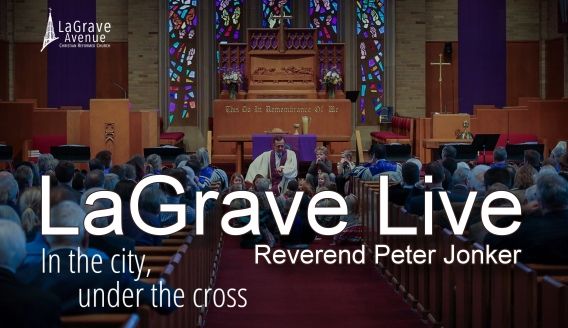

LaGrave Live
LIVE Evening Worship Service - Lament Unleashed
About The Service:
We will delve into the last chapter of the book of Lamentations with the message, "Lament Unleashed." Chad Boorsma will preach.
Order of Worship:
https://lagrave.org/wp-content/upload...
About Us:
We are a traditional CRC church in the middle of Downtown Grand Rapids, MI, worshipping at 8:40am, 11:00am, and 6:00pm. (10:00am and 6:00pm during the summer months)
We'd love to hear from you:
Connection: https://www.lagrave.org/contact
Let us pray for you:
Prayer: https://www.lagrave.org/prayerrequest/
Giving: https://www.elexiogiving.com/App/Givi...
The July special offering is for Westminster Food Pantry. The downtown food pantry provides an emergency supply of food and personal care items to people in need while also promoting self-sufficiency through referrals and education.
Listen on the go:
Amazon Music: https://bit.ly/LGPodAmazonMusic
Apple Podcast: https://apple.co/3tuOdwQ
Google Podcast: https://bit.ly/LGPodGoogle
Soundcloud: / lagravecrc
Spotify: https://spoti.fi/3yXDFaT
Follow us!
Facebook: / lagravecrc
Instagram: / lagravecrc
Website: https://www.lagrave.org
#LaGrave #LaGraveCRC
When the Journey Hurts: Lament, Suffering, and the God Who Hears
Evening Worship Framed Around Lament
This LaGrave Live evening worship service at LaGrave Avenue Church is led by Chad Boorsma and centers on a service of lament. After opening music that includes recognizable words from Psalm 46, the service leader welcomes both in-person and livestream worshipers, offers a greeting of grace, mercy, and peace, and prepares the congregation through words from Psalm 9. The opening frames God as the one who reigns forever, judges with righteousness, remembers the afflicted, and remains a refuge for the oppressed.
Psalm 9, Prayer for Illumination, and Lamentations 5
The service continues with additional readings from Psalm 9, emphasizing God’s justice, the hope of the afflicted, and the prayer that the nations recognize their mortality before the Lord. After a musical response, the congregation joins in a responsive prayer of illumination based on Psalm 119, asking God to open eyes, minds, and hearts to His Word. The central Scripture reading is Lamentations 5, a chapter that cries out to God over disgrace, loss of inheritance, hunger, exhaustion, violence, mourning, desolation, and the unresolved plea for restoration.
Lament as a Biblical Way to Come Before God
In the sermon, Chad contrasts the joyful call of Psalm 100 with the grief-filled voice of Lamentations. He explains that while worship can include gladness, Scripture also gives God’s people permission to come before Him with sorrow, complaint, confession, and pain. The sermon places Lamentations in the aftermath of Babylon’s siege and destruction of Jerusalem in 587 B.C., explaining how the book’s poetic structure reflects the attempt to bring order to chaos, while chapter 5 breaks the acrostic rhythm as grief erupts into prayer.
Naming the Pain Without Pretending
The sermon walks through the suffering named in Lamentations 5: fatherless children, widows, violated women, disrespected elders, burdened boys, hunger, exhaustion, danger, slavery, lost music, vanished joy, and a desolate Mount Zion. Chad then connects that ancient grief to modern suffering through the story of a woman forced to retire from preschool teaching because of a medical condition, later losing income, mobility, independence, and support from some friends. The point is not to equate every suffering with Jerusalem’s devastation, but to show that all people eventually face grief, illness, loss, broken relationships, or burdens they do not know how to carry.
Recovering Lament in a Culture of Denial
The sermon challenges a culture, and at times a church culture, that often practices denial or amnesia around suffering. Chad references the book When the Journey Hurts: Finding Meaning in Suffering for Heart, Mind, and Soul, noting its concern that lament has quietly disappeared from contemporary American Christianity. He describes lament as a process of crying out to God, complaining honestly, making requests, and remembering God’s works. Scripture, especially the Psalms and Lamentations, shows that suffering in silence is not the only faithful response; truthful prayer before God is also faithful.
Remembering God While Asking Hard Questions
Chad emphasizes that Lamentations 5 both pleads for God to remember and models the worshiper remembering who God is. Even in the middle of sorrow, verse 19 declares that the Lord reigns forever and His throne endures from generation to generation. The sermon also affirms that prayers of lament can include frustration over what feels like God’s silence, as verse 20 asks why God seems to forget and forsake His people for so long. Lament does not always explain suffering or promise an immediate change in circumstances, but it gives people a faithful structure for telling the truth about pain in the presence of the God who hears the cries of the afflicted.
Prayers of Lament and Benediction of Peace
The service closes by putting the sermon into practice through four guided prayers of lament, each followed by silent prayer and congregational response. The prayers lift grief over death, illness and failing bodies, strained relationships and loved ones wandering from faith, and the world’s warfare, injustice, displacement, and persecution. The congregation repeatedly responds, “Lord, in your mercy, hear our prayer.” After a closing musical response, the service leader sends worshipers into the week with a benediction, assuring them that the kind-hearted Lord goes with them and blessing them with God’s keeping, gracious face, presence, and peace.
LaGrave Live
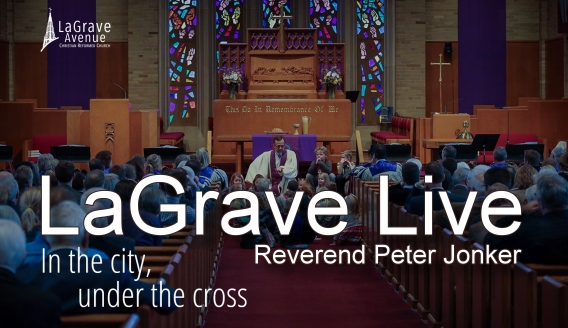

If you’re looking for a warm church that commits to an intensely pertinent Gospel in the Reformed tradition of the Christian faith, we invite you to worship with us. Our 1,800 members come from across West Michigan and gather weekly in our sanctuary for relevant Biblical preaching, beautiful music, and inspiring worship. We expand our worship through intentional outreach in our community and world, attentive care for our members, and plenty of spiritual enrichment and social opportunities for everyone.
We focus on a living Savior who provides genuine solutions to the deep needs of a hurting world. We are committed to need-meeting ministry in His name, and we are committed to being real people who enjoy real life and who cry real tears. Because we are a fairly large and diverse group in terms of age, occupation, marital status, lifestyle, and physical ability; our members create many accessible opportunities for community service, Bible study, and small social groups.
We worship God, the Almighty Creator of heaven and earth, and we enjoy expressing our vision of His holiness through traditional music and formal liturgy.
Music plays an integral part of our weekly worship gatherings. Congregational singing—of both traditional hymns and newer ones—is typically supported by our pipe organ. Vocal choirs, handbell choirs, small ensembles, instrumentalists, and vocal soloists provide additional music offerings.
Led by the Holy Spirit, we seek to worship and serve God in all of life, transforming His world and being transformed to reflect the character of Christ.
Founded by 36 Dutch immigrants on February 24, 1887, LaGrave Avenue Christian Reformed Church has always been deeply committed to both this local community and worldwide missions. God has seen fit to guide and bless these commitments with sustained growth, spiritual gifting, and a continual stream of new work for our members.
Speaker Identification
Speaker 1 - Service Leader: Chad Boorsma, leading the evening worship service, welcoming the congregation, reading Scripture, preaching the sermon, leading the prayer of illumination and prayers of lament, and giving the benediction.
Speaker 2 - Congregation: Congregational responses, sung responses, and spoken liturgical replies.
Speaker 3 - Music/Choir/Instrumental: Musical, choral, and congregational singing portions where the automated transcript did not provide reliable words.
Speaker 3 - Music/Choir/Instrumental:
[Opening music and choral worship plays. The automated transcript contains long repeated syllables and nonverbal fragments during this portion, so the music is summarized here rather than reproduced as garbled text. Some recognizable words from Psalm 46 appear during the opening: “Kingdoms fall; he lifts his voice; the earth melts. Come and see what the Lord has done. He makes wars cease to the ends of the earth. He says, ‘Be still and know that I am God. I will be exalted among the nations. I will be exalted in the earth.’”]
Speaker 1 - Service Leader:
The Lord, who endures forever and reigns in our midst this evening, greets you with these words: grace, mercy, and peace be unto you from God our Father and the Lord Jesus Christ, through the mighty and transforming work of the Holy Spirit.
We welcome all of you to worship here this evening at LaGrave Avenue Christian Reformed Church, whether you are here in the sanctuary or joining us by livestream. We are so glad you have joined us for worship. If you are a visitor in our midst this evening, we are especially glad that you have chosen to worship with us tonight.
We are also glad that Chad Boorsma is assisting us in worship again this evening, doing double duty today. We are grateful that he is willing to use his gifts to help lead us in worship tonight.
As we prepare our hearts and minds for tonight's service of lament, hear these words of David from Psalm 9:
“I will give thanks to you, Lord, with all my heart. I will tell of all your wonderful deeds. I will be glad and rejoice in you. I will sing the praises of your name, O Most High.
“My enemies turn back; they stumble and perish before you. For you have upheld my right and my cause, sitting enthroned as the righteous judge. You have rebuked the nations and destroyed the wicked; you have blotted out their name forever and ever. Endless ruin has overtaken my enemies. You have uprooted their cities; even the memory of them has perished.
“The Lord reigns forever; he has established his throne for judgment. He rules the world in righteousness and judges the peoples with equity. The Lord is a refuge for the oppressed, a stronghold in times of trouble. Those who know your name trust in you, for you, Lord, have never forsaken those who seek you.”
Speaker 3 - Music/Choir/Instrumental:
[Musical response. The automated transcript contains repeated and unreadable syllables during this portion.]
Speaker 1 - Service Leader:
Psalm 9 concludes by saying:
“Sing the praises of the Lord, enthroned in Zion; proclaim among the nations what he has done. For he who avenges blood remembers; he does not ignore the cries of the afflicted.
“Lord, see how my enemies persecute me. Have mercy and lift me up from the gates of death, that I may declare your praises in the gates of Daughter Zion and there rejoice in your salvation.
“The nations have fallen into the pit they have dug; their feet are caught in the net they have hidden. The Lord is known by his acts of justice; the wicked are ensnared by the work of their own hands. The wicked go down to the realm of the dead, all the nations that forget God. But God will never forget the needy; the hope of the afflicted will never perish.
“Arise, Lord. Do not let mortals triumph. Let the nations be judged in your presence. Strike them with terror, Lord; let the nations know they are only mortal.”
Speaker 3 - Music/Choir/Instrumental:
[Additional music and choral response. The automated transcript is not reliable enough to reconstruct the text.]
Speaker 1 - Service Leader:
As we prepare to hear God's word tonight, would you join me in the prayer of illumination that is responsive in your order of worship, based on words from Psalm 119?
Eternal God, open our eyes to your word. Open our minds to your truth. Open our hearts to your promises.
Speaker 2 - Congregation:
May your word, O Lord, be our delight as you lead us by your Holy Spirit.
Speaker 1 - Service Leader:
Our Scripture reading this evening comes from the book of Lamentations, chapter 5, the last chapter of the book. If you are using the pew Bible, it is found on page 1286. As we go to the sermon tonight, if you like to look back at the passage, I encourage you to keep your Bible open. We will do a deep dive through portions of Lamentations 5.
“Remember, Lord, what has happened to us. Look and see our disgrace. Our inheritance has been turned over to strangers, our homes to foreigners.
“We have become fatherless; our mothers are widows. We must buy the water we drink. Our wood can be had only at a price. Those who pursue us are at our heels. We are weary and find no rest.
“We submitted to Egypt and Assyria to get enough bread. Our ancestors sinned and are no more, and we bear their punishment.
“Slaves rule over us, and there is no one to free us from their hands. We get our bread at the risk of our lives because of the sword in the desert.
“Our skin is hot as an oven, feverish from hunger. Women have been violated in Zion and virgins in the towns of Judah. Princes have been hung up by their hands; elders are shown no respect. Young men toil at the millstones; boys stagger under loads of wood.
“The elders are gone from the city gate. The young men have stopped their music. Joy is gone from our hearts; our dancing has turned to mourning. The crown has fallen from our head. Woe to us, for we have sinned.
“Because of this our hearts are faint. Because of these things our eyes grow dim, for Mount Zion, which lies desolate, with jackals prowling over it.
“You, Lord, reign forever. Your throne endures from generation to generation. Why do you always forget us? Why do you forsake us so long? Restore us to yourself, Lord, that we may return. Renew our days as of old, unless you have utterly rejected us and are angry with us beyond measure.”
This is the word of the Lord.
Speaker 2 - Congregation:
Thanks be to God.
Speaker 1 - Service Leader:
“Shout for joy to the Lord. Worship the Lord with gladness. Come before him with joyful songs.” Many of us are familiar with these instructions from the psalmist. Found as the opening of Psalm 100, they are good words that call us to worship with a jubilant spirit.
But is a jubilant spirit always a requirement for coming into God's presence? The writer of Lamentations might very well disagree with that. As a survivor of Babylon's siege of Jerusalem and the destruction and exile that followed, the author - tradition says it was Jeremiah, though many modern scholars disagree - reflects on and laments about the events in five poems in this book.
After 500 years of rich history, including David's victory that made Jerusalem the capital and Solomon's building of the temple there, the city fell to Babylon in the summer of 587 B.C., and everything was lost.
The design of these poems is perhaps part of the book's message: to bring some order to the disorder and chaos the Israelites were experiencing. Chapters 1 through 4 are organized as acrostic, or alphabet, poems in which each verse begins with a new letter of the Hebrew alphabet. The only exception in these four chapters is found in chapter 3, where there are three verses for each letter instead of just one.
The final poem is chapter 5, which we just read. It is unique because it completely breaks the rhythm found in the rest of the book. The length is the same as chapters 1, 2, and 4, but the acrostic pattern is gone. As the writers of the BibleProject so appropriately describe it, it is as if the poet cannot hold it together anymore and the grief has exploded into chaos.
Here we find a prayer that does not approach God with joyful songs or with shouts of gladness. Rather, we find a prayer where lament is unleashed. It is a prayer that both confesses the sins of their ancestors, and perhaps their own, as a probable cause of the heartache, as we see in verse 7 of the text. It is also a prayer written on behalf of others.
For example, the author laments in verse 3 about those who have been affected by the death of men, including fatherless children and women who are widowed. He also remembers, in verse 11, women who have been raped; princes who have been hanged by their thumbs in verse 12; and, in verse 13, boys who are staggering under the heavy loads they must carry.
The Israelites, as we read in verse 8, are being treated like slaves. In verse 5, we see that they are completely exhausted. The author also laments the struggle to find what they need to survive. Verse 4 tells us they have to pay for both water to drink and wood to start a fire. Verse 6 tells us they tried to get help from other countries to no avail. Verse 9 tells us that even hunting for food is a risk because so much violence is prevalent in the land. Apparently, all those efforts to find food were not successful, because famine, as we read in verse 10, is causing their skin to show signs of starvation.
If that were not enough, the author reflects on the joys they once enjoyed before this time of captivity: elders gathering at the gates, young people enjoying their music, times of dancing. Then he laments that all of it is gone and mourning has taken its place, as we see in verses 14 and 15. The city where they once found happiness is empty and desolate, and as we read in verses 17 and 18, when they think about it, their hearts are sick and their eyes grow dim with tears.
Tears were also common for a woman whose life was turned upside down. Just prior to her 50th birthday, she was forced to retire from her much-loved job as a preschool teacher due to a medical condition that made her unable to fulfill her duties in the classroom. She lost her salary and eventually had to go on disability. Eventually, she also lost her ability to drive.
She coped with the situation as best she could, but her physical health continued to decline. As she sat in her small condo with no family and no way to get around, she cried out again and again. Many of her friends kept their distance, and others told her it was time just to accept the new normal and move on. She tried to maintain her trust in God, but at the same time she felt the crushing weight of all the problems pressing down upon her.
Perhaps our suffering is not as severe or extreme as what the Israelites experienced at the hands of the Babylonians, or perhaps even what that woman experienced. But at times we can all relate to being overwhelmed by the challenges we experience in life, or by the challenges we see being experienced by those we know and love.
Think about that for a moment. Think about someone who has been through a lot: perhaps a friend, a fellow member at church, a neighbor, a family member, or maybe even yourself. Think about the experiences they have been through. Is it the death of loved ones, perhaps some at a young age? Is it health issues that seem to increase in severity and frequency without showing signs of letting up? Is it abuse or the breakdown of relationships? Is it the wandering away of loved ones from their faith?
As we know, situations like this often weigh not only on those who are experiencing them, but also on those who seek to walk by their side. As we walk through these hard times, we may wonder what we should do.
Sometimes, in a culture like ours that practices denial and amnesia when it comes to sorrow and suffering, we think we should just stay quiet, keep our chins up, and reply, “I'm fine,” when someone asks how we are doing.
Three professors, two from Biola University and one from Covenant College, have researched this topic and recently released a book entitled When the Journey Hurts: Finding Meaning in Suffering for Heart, Mind, and Soul. In the book, they explore, among other topics, the topic of lament. They acknowledge the lack of lament not only in our culture but also in the church.
They write that the process of lament - crying out to God, complaining, requesting, and remembering God's works - has quietly disappeared from contemporary American Christianity. Their research suggests that the costs are both deeper and wider than most churches realize, as people struggle with ways to deal with grief and pain.
One way to address this issue is to turn to examples of lament found in Scripture, especially in the Psalms, as we did tonight in Psalm 9, and to the book of Lamentations. These examples show us first and foremost that it is okay to unleash our lament, just as the ancient people of God did. When you read this book, you see that suffering in silence was not treated as a virtue. Instead, the text encourages truth-telling.
We see a clear example of this throughout the reflections found in the first four chapters of Lamentations, and also in chapter 5, our passage for tonight, when we see the lament shift to a time of prayer. It is a prayer to the Lord that shows us it is okay to voice our sorrow to God and pour it out before him.
“Remember, Lord, what happened to us,” the author cries out in verse 1. “Look upon us and see our disgrace.” While the author pleads for God to remember, he also, ironically, does some remembering himself. That is another lesson for us as we pray our prayers of lament.
We see this in verse 19, when suddenly, in the midst of all the crying out, he says, “You, Lord, reign forever; your throne endures from generation to generation.” In other words: Lord, you have been around forever, you will be around forever, and you are entirely faithful. It is important, even when feeling weighed down by troubles, to remember the one to whom we are praying.
Another lesson that can be gleaned from our text tonight is that prayers of lament are acceptable even when frustrations rise due to what we perceive as God's silent treatment. “Why do you continue to forget us?” the writer asks in verse 20. “Why have you abandoned us for so long?” When God's response to our prayers does not come when we desire or in the way we would like, we can keep praying while also recalling, as we heard in those powerful words from Psalm 9 tonight, that he never forsakes those who seek him and those who trust in his name.
The power of lament was certainly felt by God's ancient people, and it can be felt by us today as well. The authors of that book found this to be true while doing their research over the course of ten years. For many of their studies, they worked with people who were struggling with physical, emotional, and relational struggles, much like the woman's story we heard tonight. They had them use an app where they would pray prayers of lament, usually from the Psalms, each day for four weeks.
At the end of the study, participants reported that they were more satisfied with their lives and that they had more meaning and purpose. One participant, who described herself as being in a very angry place, found that lament gave her someplace for the anger to go. She said the Psalms became a jumping-off point, praying someone else's words until they became her own.
Another participant, reflecting on a moment of emotional breakthrough during the program, said, “I just burst into tears and cried throughout the whole thing, but it was good. It helped me get the feelings out, and it was a turning point for me.”
This is the power of lament. While it does not offer an explanation for suffering, nor does it promise that circumstances will change, it does offer something more basic: a structure for telling the truth about pain in the presence of a God who, as we also heard from Psalm 9, does not despise nor ignore the cry of the afflicted.
The final verses of the book of Lamentations end with unresolved tension: “Restore us, O Lord, and bring us back to you again. Give us back the joy we once had, unless you have utterly rejected us and are angry with us still for our sins.”
The poet does not offer a nice, neat conclusion, just as there is not always a nice, neat conclusion to our pain either. It is almost like when you are reading a book to a child and stop right at a good part, a cliffhanger. “No, don't stop there,” she cries out. “Keep reading. I want to know what happens next and how the story ends.”
Well, we do know how the story ends, and it is not with the book of Lamentations. The entirety of Scripture is God's grand redemption story from cover to cover, and it ends with the Lamb on the throne, the one who will eventually come again and set all things right.
He is the one who, as we read in verse 19 of our text, reigns forever and ever. He reigns in a place where his followers will eventually dwell, a place where the curse and darkness, and where pain and suffering, will be no more.
In the meantime, dear friends, may the Holy Spirit empower us to keep unleashing our joys and our sorrows to the Lord. As the catechism reminds us, Jesus, the one who understands and bore our suffering, and who also prayed prayers of lament in the garden and on the cross, has opened to us the way to the Father. The Father is attentive to all types of prayers, including our prayers of lament.
Thanks be to God.
As we come to our time of prayer tonight, we will do what Scripture calls us to do: pray prayers of lament. We will pray in four parts tonight. At the end of each part, we will offer a time of silence for you to pray silently and offer your own lament, perhaps related to the topic we have prayed, or perhaps something else the Spirit calls you to pray. Then we will close each section in song with the words listed in your order of worship.
Let us pray.
Father, we come to you tonight acknowledging that you are the one who is sovereign and who watches over our ways. We also lift our voices for mercy for those who are grieving the death of those they love. Father, some have experienced much death in their families, and we wonder why. Some are grieving the death of their spouses, and they feel a significant void in their lives. Some have watched the death of people who are relatively young, and we struggle to make sense of it all.
Father, for these and for other times of grief, we come to you now in a time of silent prayer as we pour out our hearts before you and tell you our troubles.
[Silent prayer.]
Lord, in your mercy, hear our prayer.
Speaker 2 - Congregation:
Lord, in your mercy, hear our prayer.
Speaker 1 - Service Leader:
Father, we come to you now as beings who cannot comprehend the necessity of illness. Why, O Lord, does affliction through illness hone in so strongly on individual lives and families? We love, and we know you too love these people, so when does it end? Why does it even have to start?
Hearts stop beating, cancer keeps spreading, memories keep fading, and all for what? Why, O Lord, must our own bodies or the bodies of those we love fail when there are children and grandchildren to play with, kids who still need loving parents, and so many stories of life yet to be shared or written?
We know, O Lord, that those affected by states of illness long to live in bodily restoration. Yet at times we struggle to see the light of your restoration work through the clouds of bodily destruction. Hear us now as we, both bystanders and beholders, lift up all questions and the cloudiness of illness to you in silent prayer.
[Silent prayer.]
Lord, in your mercy, hear our prayer.
Speaker 2 - Congregation:
Hear our prayer.
Speaker 1 - Service Leader:
Merciful God, we thank you that you are our refuge, the one who provides for our needs. Still, we also lament strained or broken relationships in our lives - relationships with family, friends, or fellow church members - and the way this makes our spirits grow faint.
We also grieve those who have a strained relationship with you: those who have left the faith, those who are wandering, and those who have never surrendered their lives to you. Father, these people weigh heavy on our hearts, and at times we wonder if they weigh heavy on yours as well. We plead for you to act, Lord, in powerful ways in their lives.
Hear us now as we bring our laments to you for difficult relationships.
[Silent prayer.]
Lord, in your mercy, hear our prayer.
Speaker 2 - Congregation:
Lord, in your mercy, hear our prayer.
Speaker 1 - Service Leader:
Father, we come to you now with hearts that are broken by our world's state of warfare. Innocent lives are being displaced and lost every day due to mankind's lust for power and influence. Influence no longer seems to come from grace, mercy, peace, or truth, but from intentional acts of injustice and deliberate persecution.
Because of that arrogance, families and communities are being forced to separate and scatter around our world. Too often, instead of victims of man-made warfare being met with hearts and minds set on loving hospitality, they are met with injustice through persecution and exploitation.
Would you hear us now, Jehovah Shalom, Lord of Peace, as we lift up any and all victims of warfare, injustice, and persecution to you?
[Silent prayer.]
Lord, in your mercy, hear our prayer.
Speaker 2 - Congregation:
Lord, in your mercy, hear our prayer.
Speaker 1 - Service Leader:
Lord, in your mercy, we give you thanks and praise because you are the God who hears our prayers. We ask this all in Jesus our Savior's name and by the power of the Holy Spirit. Amen.
Speaker 3 - Music/Choir/Instrumental:
[Closing musical response. The automated transcript contains repeated lines and unclear words during this section, including repeated lines resembling “Lord, in your mercy, we give you thanks and praise, because you are the God who hears our prayers.”]
Speaker 1 - Service Leader:
As you go from this place tonight into another week, know that the one whose heart is kind beyond all measure goes with you, no matter what you may face. Go with his blessing.
May the Lord bless you and keep you. May the Lord cause his face to shine upon you and be gracious to you. May the Lord turn his face toward you and show you his presence, so that you may experience his peace both now and forever.
Speaker 3 - Music/Choir/Instrumental:
[Closing music continues. The automated transcript repeats the benediction phrase several times and then ends.]