Cathy Durant Show, August 4, 2026

Cathy Durant Show with Cathy Irby Durant
S3EP1, Dr. Steven Nia, a true visionary and entrepreneur with over 20 years of experience in the entertainment and technology industries
Reinventing Film: AI Production, Micro-Dramas, and the Future of Distribution
From Entertainment Law to a Technology-Driven Studio
Cathy Durant welcomes Dr. Steven Nia, founder of Wardour Studios, for a wide-ranging conversation about the changing film and entertainment business. Nia traces the studio’s name to a childhood visit to Wardour Street in London, where he says he briefly met Alfred Hitchcock. He explains that the W1 symbol used by the company is connected to that London district and carries personal meaning for him. The discussion then moves to the studio’s first decade, its origins, and the partnership between Nia and chief operating officer Angelina Leo. Nia credits Leo’s media experience, discipline, and daily operational leadership as essential to the company’s development.
Visual Effects, Full Production, and AI-Assisted Filmmaking
Nia describes Wardour Studios as a company that began with an emphasis on technology, post-production, and visual effects. He explains that visual effects require creators to use imagination and technology to produce images and environments that often do not exist in real life. The studio has since expanded into full film and series production, production services, and location-based filmmaking. During the last three years, the company has also focused heavily on artificial-intelligence research and proprietary production tools. Nia argues that AI is changing cost, execution, creativity, monetization, and distribution more fundamentally than earlier transitions from film to digital production.
Partnerships, Intellectual Property, and Creative Control
The interview explores how creators can approach the studio and how projects are developed. Nia says that, although producers once needed a pitch deck and finished script, the studio can now begin with a simple idea and use its tools to develop scripts, scene breakdowns, and production roadmaps in a matter of days. He explains that Wardour generally avoids conventional work-for-hire arrangements when it is creatively involved and instead seeks an intellectual-property stake, often as an equal partner. According to Nia, the creator remains central while the studio adds creative, technical, and production value. He emphasizes that human beings still originate the imagination and own the intellectual property, while AI functions as a powerful assisting tool.
A New Model for Direct Content Distribution
Nia outlines a platform under development that is internally called W1, although he says that will not be its final public name. The proposed system would allow producers to upload completed content, establish pricing, subscriptions, territorial limits, age restrictions, and other distribution parameters, and then receive automated payments when the content is streamed. He presents the platform as an additional distribution channel rather than a replacement for theaters, broadcasters, established streaming services, film markets, or festivals. The underlying technology would also track intellectual-property ownership and distribute revenue among eligible participants, potentially including producers, directors, distributors, cast, and crew. Nia believes the model could make distribution and monetization accessible even to very small production companies.
Music Rights, Micro-Dramas, and Changing Viewing Habits
The conversation turns to music licensing and the growth of micro-dramas. Nia contrasts the older album-sales model with today’s mix of concerts, merchandising, streaming services, and licensed music libraries. He says the planned platform could eventually support music creators by preserving ownership while allowing licensing for films, series, and standalone listening. Nia also describes short-form dramatic series as a rapidly expanding global business and discusses Invincible, an 81-episode micro-series that he says was created as a showcase for 100 percent AI-generated content. He and Durant agree that short-form viewing, feature films, theaters, and television can coexist rather than forcing audiences to choose only one format.
Production Economics and the Wardour Filming Location
Nia estimates that an average short-drama production may cost around $100,000, depending on whether it is made traditionally, through a hybrid process, or with extensive AI assistance. He compares the total running time of 30 or 40 short episodes with that of a feature film and argues that the new production model can sharply reduce costs, including below-the-line expenses. The interview closes with a description of Wardour Studios’ Los Angeles County property, including a historic castle, a large backlot, a lake, helicopter pads, seasonal scenery, and a private aircraft landing strip under development. Nia says the location attracts filmmakers and helps create long-term creative relationships. Durant ends the program by inviting him to return for a future conversation.
SEO Keywords / Key Phrases
AI-assisted film production, independent film financing, film distribution platform, micro-drama production, intellectual property rights, post-production studios, visual effects technology, music licensing and monetization, film production costs, Hollywood filming locations
Headlined Show, Cathy Durant Show August 4, 2026
STEVEN NIA
Chairman
Wardour Studios
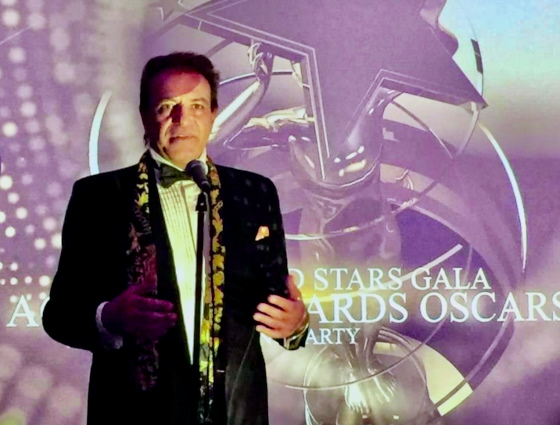
Dr. Steven Nia is a true visionary and entrepreneur with over 20 years of experience in the entertainment and technology industries. Originally as an entertainment and technology attorney, and then as the Chairman and Founder of Wardour Studios, Mr. Nia commands a wide range of business, creative and strategic resources, resulting in expert leadership. Though his vision and strategy, Mr. Nia has brought Wardour Studios www.WardourStudio.com into a leading global entertainment company with a fast growing and diversified presence in motion picture production and distribution, television programming and syndication, home entertainment, family entertainment, digital distribution, streaming platform and international distribution and sales.
Simultaneously, Mr. Nia serves as the Chairman of World Film Institute (WFI), a nonprofit organization supporting the advancement and recognition of the arts and the motion picture industry worldwide. WFI offers a vast resource of services, including film studies, scholarships, motion picture industry seminars, advanced technological support, networking opportunities as well as exclusive entertainment and fashion industry events.
Mr. Nia also is the founder and Chairman of the first decentralized entertainment streaming platform, W1 Platform - The Hollywood Blockchain, www.W1Platform.org where he led the team to create a highly advanced decentralized entertainment ecosystem for film finance, production and distribution, based on blockchain technology, and built on the Smart Web 3.0 infrastructure.
Prior to founding Wardour Studios, Mr. Nia championed the interests of the large studios and independent producers and is an advocate of the film industry, and its impact on global culture and understanding. Mr. Nia’s skills in business and technology, and his enthusiasm for Hollywood’s creativity and stars, have empowered Mr. Nia to manage and grow with changes, at a time when AI, the new Internet technologies such as web 3.0/4.0 and social media are transforming the entertainment industry. Mr. Nia’s expertise and experience in the entertainment industry dates back to 20 years. Originally, as an entertainment attorney, addressing various production and distribution agreements, as well as various aspects of IP protection.
Mr. Nia co-founded Hollywood Stars Oscars Viewing Gala, www.StarsGala.com where among other things, women in the entertainment industry have been celebrated since the inception of the Gala. The Gala has also recognized the Ronald McDonald House Charities, for its invaluable caring and love for children. Wardour Studios has also co-organized the accredited Wardour Studios Film Academy, in China, to foster and build a strong bond between the people and entertainment industries in the USA and China.
Mr. Nia is the honorary dean at Wardour Studios Academy - Haikou University, which offers bachelor’s and associate degrees in Motion Picture Arts and Sciences. The Academy is accredited by the Ministry of Education of China. Additionally, Mr. Nia has contributed extensive expertise to various productions and projects within the entertainment industry, including film finance and distribution, as well as creation and development of pioneering projects such as Cyber Challenge (aired on NBC and PBS), as well as events such as the Olympia Awards (in Development), and previously aired Family Film Awards (aired on CBS and Prime Star).
Mr. Nia is a frequent speaker in national and global conferences,on a variety of topics relating to entertainment, and the impact of AI and other emerging technologies on entertainment. Some such engagements include the American Film Market (AFM - the largest film market in the world), AI in entertainment, Blockchain impact on entertainment, as well as other professional forums, such as Sasin Forum, Peace Federation, Bermuda Entertainment & Blockchain Forum, etc.
Mr. Nia’s winning strategy is to strive for, and achieve, optimized exploitation of entertainment values, while delivering artistic and cultural excellence, with the aim that such attributes will ultimately empower positive transformation and will excel and uplift the next generations, breaking down cultural barriers and creating global harmony through motion pictures, arts,
innovations, and emerging technologies. Mr. Nia received his Juris Doctor (JD) degree from Western State University, California, and served as a member of the California State Bar until he fully engaged in business and entrepreneurship.
Mr. Nia studied Film Finance, Production and Distribution, and Entertainment Intellectual Property rights and protection, at the University of California Los Angeles (UCLA) extension. Mr. Nia received his Master’s Degree in Computers (MSCE), from the prestigious University of Michigan, and received his Bachelor’s Degree (BSEE), from Lawrence Technology University, Michigan.
Cathy Durant Show
Support my show
$5.99/mo or $9.99/mo
Click HERE
SUBSCRIBE TO TALK SHOW
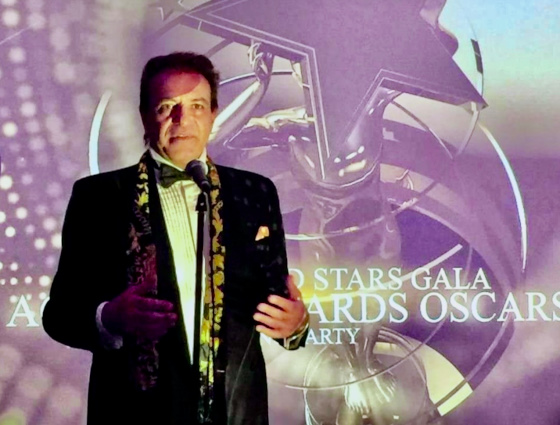
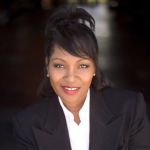
After many years of producing and directing video and film productions, Producer Director, Cathy Irby Durant returns to her roots in Radio and TV. Join Cathy and be intrigued by Special Guests, Hot Topics and Music. We welcome you, friends and family to watch the Cathy Durant Show created to make a refreshing difference in streaming media. Broadcasting on BBS Radio TV on the iHeart Network on over 150 Stations in 37 Countries. See you soon.
Reinventing Film: AI Production, Micro-Dramas, and the Future of Distribution
Speaker Identification
Speaker 1 – Host, Cathy Durant
The host identifies herself and conducts the interview throughout the program. The raw transcript renders her surname several ways, including “Dorat” and “Dorent.” “Cathy Durant” has been standardized based on the uploaded filename and the most coherent available rendering.
Speaker 2 – Guest, Dr. Steven Nia
The guest is introduced as the founder of Wardour Studios and answers questions about post-production, artificial intelligence, financing, intellectual property, distribution, micro-dramas, music rights, and the studio’s filming location. The raw transcript alternates among “Steve Van Nia,” “Steven Nia,” and “Steve Nia.” “Dr. Steven Nia” has been used consistently.
Speaker 3 – Prerecorded Promo / Public-Service-Announcement Voices
This label covers the various prerecorded advertisements and public-service announcements heard during breaks, including messages about Alzheimer’s warning signs, STEM education, veterans seeking help, and an impaired-driving or substance-use warning. Individual performers within those spots cannot be reliably identified from the transcript.
---------------------
Speaker 3 – Prerecorded Promo / Public-Service-Announcement Voices:
[Unclear stray audio:] “Yep, I was moved from fabric to skirt.”
Speaker 1 – Host, Cathy Durant:
Good evening. This is The Cathy Durant Show, broadcasting on BBS Radio TV on the iHeart Network. I’m Cathy Durant.
We have a very exciting show this evening. My guest is Dr. Steven Nia. He is the founder of Wardour Studios, based in Los Angeles, California. The company specializes in post-production. Stick around and meet Dr. Nia after the break.
Speaker 3 – Prerecorded Promo / Public-Service-Announcement Voices:
Family Member: I’m worried about Mom.
Second Family Member: Mom? She’s fine.
Family Member: These are the ones, right, Mom?
Mother: Yeah. Ground beef. Sweet potatoes.
Child: Daddy? It’s so cheap.
Announcer: Some things come with age, and some don’t. Early detection of Alzheimer’s can lead to better care for your loved one. Learn the early warning signs at 10signs.org.
Speaker 3 – Prerecorded Promo / Public-Service-Announcement Voices:
What’s up, NFL fans? Quarterback Josh Dobbs here. You may know me as the “Passtronaut.”
[Background music with indistinct lyrics.]
I’ve always loved space and football. Growing up, some people told me I had to choose. But here’s the deal: you can be great at more than one thing, and getting involved in STEM opens up your world to a universe of opportunities in life.
Space isn’t just for astronauts. It’s for all of us. It’s not just for engineers like me. It’s for teachers, students, designers, mechanics, scientists, and millions of football fans across the world.
Three, two, one. Watch out. Here I come.
Get inspired and get involved today. There are STEM programs and science centers available in your community, so be sure to check out spaceforall.us to learn more and get started. After all, there are no limits when there are footprints on the moon.
Find your place in space. Space for All.
Speaker 1 – Host, Cathy Durant:
And we’re back. This is The Cathy Durant Show, broadcasting on BBS Radio TV on the iHeart Network.
My guest tonight is Dr. Steven Nia. He is the founder of Wardour Studios, based in Los Angeles, California. They specialize in post-production and AI-assisted production, which is now becoming integrated into film production.
Dr. Nia, it is so good to have you as a guest tonight. Can you tell us about your journey from being an entertainment attorney to becoming the founder of a post-production studio? How did that all happen?
Speaker 2 – Guest, Dr. Steven Nia:
You know, that is a very interesting question, and it goes back many years.
When I was very young, I traveled to London with my father. We were visiting different places and friends, and one of the places we visited was Wardour Street in London. We were meeting friends there who were in the entertainment industry.
Wardour Street is a very iconic location for the film and entertainment business in the United Kingdom. It is where great filmmakers, including Alfred Hitchcock and many early actors and actresses, were engaged in production and artistic endeavors.
During that meeting, by the way, I briefly got to meet Alfred Hitchcock and exchange a few words with him. That experience was a real inspiration for me and ultimately inspired the name Wardour Studios.
The W1 that you sometimes see in our logo refers to the London district in which Wardour Street is located. It is very nostalgic and very dear to my heart because of the experience I had there as a young boy.
Speaker 1 – Host, Cathy Durant:
Were you born in London, or are you from the United States?
Speaker 2 – Guest, Dr. Steven Nia:
Oh, no. We were traveling to London for a visit. We used to travel there occasionally. I would not say frequently at that time, although later in life I went there frequently.
Speaker 1 – Host, Cathy Durant:
That is wonderful. You mentioned in your introduction that Wardour Studios is now 10 years old.
Speaker 2 – Guest, Dr. Steven Nia:
Yes, that is correct.
Speaker 1 – Host, Cathy Durant:
That is quite a milestone. Can you tell me about some of the highlights of reaching 10 years, how you started, and what you are doing currently?
Speaker 2 – Guest, Dr. Steven Nia:
Certainly. We started Wardour Studios a little more than 10 years ago. At the time, it was Angelina Leo, my partner, and me.
Angelina is a very special woman. She is not only one of the most beautiful women in Hollywood, in my opinion, but she is also beautiful inside. I truly mean that. She is extremely talented and loving, but she is also highly disciplined.
Sometimes that discipline drives me nuts, but when you have creativity, you also need discipline. Without discipline, you cannot advance that creativity, get things done, or monetize it. That element of discipline has been very important to the development of Wardour Studios and to our entire endeavor.
Angelina also comes from a media background. At a very young age, she was a television host for the largest satellite entertainment station in China. She is familiar with working both in front of the camera and behind the scenes on the business side.
I have been very fortunate to have her as a partner and to have built what we have today. We will talk in more detail about what we have created.
Speaker 1 – Host, Cathy Durant:
How would you describe your roles? As the founder, what does your role entail, and what is Angelina Leo’s role as chief operating officer?
Speaker 2 – Guest, Dr. Steven Nia:
Angelina is our chief operating officer. My role in the studio is to provide direction and high-level strategy, understand where the industry is going, and position us ahead of developments before a particular area becomes fully exploited.
We always try to stay a few steps ahead in terms of what is coming and how we can produce, create, and deliver high-quality Hollywood content in the most effective way we know.
Angelina’s role is the day-to-day operation of the machinery. She runs the entire business daily. She supervises and oversees every aspect of the operation. Without her, the studio would not be what it is today. Let me put it that way.
Speaker 1 – Host, Cathy Durant:
That is very interesting. If you were to describe what it is like to do business with your post-production facility, how does a job come in? Are your projects created internally and then distributed, or do clients bring projects to you?
Speaker 2 – Guest, Dr. Steven Nia:
It is interesting that you emphasized post-production. That is natural because, when we started Wardour Studios, our emphasis was technology. At the time, the highest technological aspect of production was—and probably still is—visual effects.
When you enter the domain of visual effects, you go beyond regular editing and post-production. You enter a world in which things have to be created through imagination and technology. These are often things that do not exist in real life and must be created from someone’s imagination.
That is how we entered the production business. Since then, we have grown in several dimensions. We still do visual effects, and that remains one of our core business areas.
We have also become involved in full production, including film and series production. That includes our own productions as well as services for others in the film industry, including film locations and production services for people filming at our location.
During the last three years, we have concentrated heavily on AI research, its application to the entertainment and film industry, and the development of proprietary tools that allow us to deliver consistent AI-assisted production.
This is a completely new paradigm. The entertainment industry has gone through many phases of change. We moved from film to digital cinematography. We moved from editing physical film to systems such as Avid.
The change occurring now is different from any previous change because it fundamentally alters production in terms of cost, execution, creativity, monetization, and distribution. Everything has changed, and it will continue to change even more. We will get into some of those details as we continue. That is what encompasses our business model today.
Speaker 3 – Prerecorded Promo / Public-Service-Announcement Voices:
[Opening line is unintelligible in the source transcript.]
Veteran: We went in during the first wave, and when I came back, I did not come back the same way I left. I was 11 Bravo. It is infantry. Deploying is what we sign up to do: fighting wars and protecting civilians back home. I never got to do that, so I still feel strange using the title “veteran.”
Interviewer: If you could say anything to that veteran, what would you say?
Veteran: It takes courage to say, “I need help,” and then you realize you are not alone. You deserve support because you served.
Announcer: If you are struggling with life after service, do not wait. Reach out.
Speaker 3 – Prerecorded Promo / Public-Service-Announcement Voices:
Family Member: I’m worried about Mom.
Second Family Member: Mom? She’s fine.
Family Member: These are the ones, right, Mom?
Mother: Yeah. Ground beef. Sweet potatoes.
Child: Daddy, it’s so cheap.
Announcer: Some things come with age, and some don’t. Early detection of Alzheimer’s can lead to better care for your loved one. Learn the early warning signs at 10signs.org.
Speaker 1 – Host, Cathy Durant:
When you talk about financing independent films, how would a producer approach you with a project? Can someone come to you with only a script and have you develop it, or can they say, “I would like to partner with Wardour”? What would that process look like?
Speaker 2 – Guest, Dr. Steven Nia:
It can take many different forms, depending on the situation and the proposal we are considering.
In the past, we generally required someone to give us a clear presentation, a pitch deck, and perhaps a finished script so that we could understand the person’s thinking, imagination, and what they wanted to create. We would then make proposals about how we could participate in the production.
Today, Cathy, people can come to us simply with an idea.
Of course, if they already have a treatment, color charts, patterns, or a defined mood, that is wonderful, and we will follow those materials. Ultimately, we have to create what the person imagines.
With our tools today, within a very short time—and when I say a short time, I mean days, and sometimes hours—we can develop the fundamentals of a project. To be conservative, I would say days.
We can create a full script from the concept, break down the scenes, and put together a complete roadmap from A to Z that explains how to begin, complete, and deliver the content.
This has only become possible because of our relentless research and development during the last three years in the field of AI and its application to our industry.
Speaker 1 – Host, Cathy Durant:
Let’s talk about intellectual property. Suppose someone comes to you with no money and only an idea, and you build it out. What would the IP split look like for the client? Because it is their idea, how much would they own, and how much would Wardour own?
Speaker 2 – Guest, Dr. Steven Nia:
That is a very good question. Our general philosophy is that we do not become involved on a work-for-hire basis, except when we are simply offering the studio and castle complex as a filming location. In that situation, people come to the property, do their work, and make their movies.
When we are creatively involved, however, we only participate when we have a stake in the intellectual property. Usually, we are equal partners because we do not want to take the essence away from the creator.
At the same time, the creator soon realizes, once they see what we do, that the dimensions we add to the thought, script, or treatment they bring to us have substantial value.
We add value to the content rather than merely producing it. In a work-for-hire arrangement, you follow the exact instructions of the person who hires you and do what that person wants.
In our case, we evolve and develop the concept into something grander, more interesting, more exciting, or more expansive through the capabilities we offer in visual effects, production, post-production, and especially AI-assisted production.
I keep using the phrase “AI-assisted production” because I want people to understand our approach. Some people become nervous when they hear about AI. Hollywood is still quite nervous about it. The demonstrations, strikes, and other events a couple of years ago were rooted, at least substantially, in the topics we are discussing.
When you become part of the AI-production space, however, you understand that creativity still comes from people.
Speaker 1 – Host, Cathy Durant:
That is right.
Speaker 2 – Guest, Dr. Steven Nia:
The ownership of the intellectual property still belongs to the people who imagined it, expressed it, and were able to describe it in some form.
AI is a tool, but it is a phenomenal tool. It is not just like any other tool. It has the ability to add value to the value you already bring, if that makes sense.
Speaker 1 – Host, Cathy Durant:
Let’s talk about distribution. Where do you go after post-production? Are you involved in distribution as well?
Speaker 2 – Guest, Dr. Steven Nia:
We are not a distribution company, per se, although we have participated in distribution. We have distribution partners.
Let’s talk about distribution for a moment. Distribution meant something completely different 10 years ago. It was divided according to territorial rights, the form of the content, and the type of media being used in each territory. All of those details had to be defined.
Coming from my background, I handled those matters for others and for ourselves. Technology changed that model.
When distribution became what we now call streaming, the transformation made a major difference in the way distribution models operated. I am talking about platforms such as Netflix.
Now distribution has evolved again and made a significant jump toward something that is becoming readily available to almost everybody. This is extremely important.
Some of the concepts we are currently developing for the future of distribution will allow producers to come onto our platform and define their own parameters for distributing their content. They will be able to establish what they want, how they want to monetize it, and what they expect to receive. They will give those instructions to the system, and the system will handle the rest.
Speaker 1 – Host, Cathy Durant:
That is amazing.
Speaker 2 – Guest, Dr. Steven Nia:
That is what I want to make sure I communicate clearly, because this aspect of distribution never existed before. It was never even imagined in this form.
Speaker 1 – Host, Cathy Durant:
Let’s take a break. When we come back, we will give distribution the time it deserves so that we can clearly understand where it is going.
We will be back in a moment with Dr. Steven Nia. Stay with us.
Speaker 3 – Prerecorded Promo / Public-Service-Announcement Voices:
What’s up, NFL fans? Quarterback Josh Dobbs here. You may know me as the “Passtronaut.”
[Background music with indistinct lyrics.]
I’ve always loved space and football. Growing up, some people told me I had to choose. But here’s the deal: you can be great at more than one thing, and getting involved in STEM opens up your world to a universe of opportunities in life.
Space isn’t just for astronauts. It’s for all of us. It’s not just for engineers like me. It’s for teachers, students, designers, mechanics, scientists, and millions of football fans across the world.
Three, two, one. Watch out.
Get inspired and get involved today. There are STEM programs and science centers available in your community, so be sure to check out spaceforall.us to learn more and get started. After all, there are no limits when there are footprints on the moon.
Find your place in space. Space for All.
Speaker 3 – Prerecorded Promo / Public-Service-Announcement Voices:
I was an aviation maintenance officer. The idea of me—a desk-job Marine—going to the VA and asking for anything seemed wrong. It actually felt great once I decided to ask for help.
Speaker 1 – Host, Cathy Durant:
Welcome back to The Cathy Durant Show. I have a very exciting guest tonight, Dr. Steven Nia. He is an entertainment attorney and the founder of Wardour Studios.
We have had a great conversation about post-production, AI, the tools that are now available, and how the industry has advanced. We have now crossed over into distribution.
Steven, once you finish the product, how do you get it into the marketplace?
Speaker 2 – Guest, Dr. Steven Nia:
That is a very good question. I want to spend a little time giving context to distribution.
Theaters are not going to disappear simply because we move into another dimension of distribution. They will continue in parallel with all of these other forms. Netflix did not eliminate theaters.
The new distribution models available through the internet and online platforms are revolutionizing the distribution industry and the concept of distribution. In the formal entertainment business, you still need distributors and all of the established infrastructure.
At the same time, we are reaching a point where the platform we currently have in development—and will introduce soon—would allow any producer to come onto the platform and define parameters for content they have just completed.
That goes directly to your question about what happens after the content is finished. Producers will come onto the platform and define their own parameters.
How much do they want to charge? Do they want to impose territorial limitations or geofencing? Do they want to release it to the entire world? Do they want age restrictions? All of those choices can be defined.
How much do they want to charge for each episode? How much do they want to charge for an entire stream or a subscription? Whatever formula they have in mind, they will give it to the system.
Using its AI capabilities and programmed parameters, the system will set up that formula. Any time someone streams the content through the platform anywhere in the world, the producer or rights holder will be paid.
Imagine that. The payment is automatic. It does not have to move through a clearinghouse, a conventional accounting system, and multiple additional steps.
In traditional distribution, there had to be accounting, monitoring, and many other procedures to ensure that revenues from the content were properly distributed among the producer, distributor, and other participants.
This new distribution paradigm will not eliminate the other models. Instead, it will add another option.
Speaker 1 – Host, Cathy Durant:
Are you saying that you will still approach theaters and broadcasters, or are we talking exclusively about streaming and subscription-based content?
Speaker 2 – Guest, Dr. Steven Nia:
What I am describing right now is streaming and online content delivery. It complements services such as Netflix and traditional theaters. It is another dimension of the distribution space.
Speaker 1 – Host, Cathy Durant:
So you are adding to the distribution landscape.
Speaker 2 – Guest, Dr. Steven Nia:
Exactly. We are making content distribution far more accessible to every producer.
This is very important, Cathy, because in the past, after you created content, the next battle was finding the right distributor, sales company, or representatives who could take it to the American Film Market, the Cannes Film Festival, Venice, and other venues. They would try to make deals that could place the content in theaters or different media formats around the world or within a particular territory.
That established process still exists. What I am describing now, however, would allow every producer—even a one-man or one-woman operation—to create content and then distribute and monetize it without traditional middlemen.
Speaker 1 – Host, Cathy Durant:
Who are the players in this new industry? Are you building a platform where people can bring their content?
Speaker 2 – Guest, Dr. Steven Nia:
There are not many players doing it in the way I am describing. I believe ours may be pioneering this arena.
The way we have formulated the platform is very unique. We want the front end to be extremely simple because producers are not necessarily technicians or computer scientists. It has to be something people can use through an ordinary internet browser.
Behind that simple interface, however, are complex processes and technologies, including AI and other computing technologies. Those systems allow us to manage intellectual-property rights, associate each right with its owner so that the link does not break, monetize the content, and distribute funds instantaneously to everyone involved.
Those participants could include the production company, director, producer, distributor, and, in cases involving deferred payments, even cast and crew.
It is creating a new and powerful way for people to distribute their content.
Speaker 1 – Host, Cathy Durant:
What are you going to call it? What will the platform be called?
Speaker 2 – Guest, Dr. Steven Nia:
I cannot tell you that. I cannot disclose it yet.
I will give you a hint. Our code name is the W1 platform. As I said earlier, W1 is one of the designations associated with the area where Wardour Street is located in London.
The W1 platform is intended and designed to do exactly what I have described.
We released a promotional video that is approximately four minutes long, and it is available online. If you search for “W1 platform,” it should come up. The video describes the concept behind the platform.
I cannot tell you the release name, but it will not be W1.
Speaker 1 – Host, Cathy Durant:
I have seen the work, and that is why you are on this show. I was overwhelmed by it. It was jaw-dropping. I thought, “Oh, my God, how did you do that?” It is exceptionally good-looking work.
Will you be serving both long-form and short-form content?
Speaker 2 – Guest, Dr. Steven Nia:
For us, the length of the content does not matter very much. We can deliver and stream a micro-drama—and we need to talk about micro-dramas because they are amazing and represent something very new—or a traditional television-style series, a feature film, a documentary, or another type of film.
The length is not the central issue. What matters is giving the people who control the content the ability to monetize it in the way they choose.
Speaker 1 – Host, Cathy Durant:
Let’s take another break. When we come back, we cannot leave out the music community. We need to discuss music rights and how music fits into the content.
When a producer or creator comes to you, will they know how much music they need to bring? Will you provide scoring? Would that be included in the package?
We will be right back with my very interesting guest, Dr. Steven Nia.
Speaker 3 – Prerecorded Promo / Public-Service-Announcement Voices:
Adult: Derek? Derek, go wash up and get your sister.
Child: Okay.
[Additional family dialogue is unclear.]
Adult: Where’s Grandma?
Child: Hey, Grandma.
Family Member: I’m worried about Mom.
Second Family Member: Mom? She’s fine.
Family Member: These are the ones, right, Mom?
Mother: Yeah. Ground beef. Sweet potatoes.
Child: Daddy, it’s so cheap.
Second Family Member: Grandma is just getting old.
Announcer: Some things come with age, and some don’t. Early detection of Alzheimer’s can lead to better care for your loved one. Learn the early warning signs at 10signs.org.
Speaker 3 – Prerecorded Promo / Public-Service-Announcement Voices:
Person 1: Seriously, man?
Person 2: I drive better when I’m high. If anything, I’m more careful. It just helps me focus, you know.
[The remainder of this prerecorded message is distorted in the source transcript. One repeated line sounds like, “I was in the medical program.”]
Speaker 1 – Host, Cathy Durant:
We’re back. My guest tonight is Dr. Steven Nia, founder of Wardour Studios in Los Angeles, California.
Before the break, we were talking about distribution and how creators can get their content into the marketplace. Steven explained that the company is developing a new distribution concept, although he is not ready to disclose its final name.
I also wanted to ask how music fits into this. What about music rights, Steven?
Speaker 2 – Guest, Dr. Steven Nia:
The music industry has also changed tremendously, although its monetization has evolved in a somewhat more ambiguous way.
In the past, music was very straightforward. Artists made albums and sold them. It was clear how many albums were sold and how much money came in. Artists received platinum records, and labels, publishers, and other participants flourished during that era.
Then music moved online. When it came online, it did not arrive with a fully developed monetization formula. In fact, some websites took other people’s music and delivered it for free. Those sites were eventually taken down, but that was part of the way music first entered online distribution.
As we speak, outside of concerts and streaming platforms such as Spotify, Apple, and others that have formalized monetization to some extent, basically all of the money in the music business comes from concerts and merchandising.
Merchandising plays a very large role in monetizing music content today.
As we develop our platform and give content producers the ability to monetize their work, we hope to create a similar opportunity for music producers.
Speaker 1 – Host, Cathy Durant:
I want to make the question more specific. If music is playing in the background of a series or movie, is that something the producer will have to arrange with the music creators? Or will you have a licensed library from which the producer can select music?
Speaker 2 – Guest, Dr. Steven Nia:
It would probably include all of the possibilities you mentioned.
A music creator could maintain ownership of the intellectual property while licensing the music, whether people listen to it independently or it is used as a score for a feature film, series, or other production.
At the other end of the spectrum, music libraries already exist. We would not necessarily have to create those libraries. Producers can use music from established libraries, sometimes by paying a relatively small fee for the production rights.
Speaker 1 – Host, Cathy Durant:
It sounds as though you are about to become the new kid on the block, joining the ranks of Netflix, Spotify, and Amazon, and launching a new platform. Is that what I am hearing?
Speaker 2 – Guest, Dr. Steven Nia:
Yes.
Speaker 1 – Host, Cathy Durant:
Right now, it is operating under W1. Is that correct?
Speaker 2 – Guest, Dr. Steven Nia:
That is the code name. It will not be called W1 when it launches, but W1 is our internal code name.
Speaker 1 – Host, Cathy Durant:
People are going to be seeking you out and trying to learn how to place content on the platform.
I have seen short-form series on Instagram with vivid, highly dramatic images. Are you going to create some of those?
Speaker 2 – Guest, Dr. Steven Nia:
I think you are referring to short dramas or micro-dramas. I am fascinated by the entire concept and by how quickly it is expanding.
It is not merely growing; it is exploding all over the world. In a matter of two or three years, it has become a multibillion-dollar industry. It is unbelievable.
Speaker 1 – Host, Cathy Durant:
Are they generating revenue from streams and the number of times they are viewed?
Speaker 2 – Guest, Dr. Steven Nia:
They generate revenue from streams and views, but more importantly, from the number of people watching.
Specific platforms have been developed to specialize in the distribution of short-form content. The entire concept is very interesting.
Speaker 1 – Host, Cathy Durant:
At the end of the day, are we losing or gaining something if our attention spans become so short? Are we growing mentally?
Speaker 2 – Guest, Dr. Steven Nia:
That is a very interesting question, Cathy. In my opinion, it comes back to your perspective and how you view a changing world.
It is not necessarily that young people intentionally chose to shorten their attention spans. Life has become so fast-moving that they are accustomed to a rapid, “bam, bam, bam” sequence in almost everything they do during the day.
At the same time, many of those same people will go to a movie theater, sit for two hours, and watch a beautiful cinematic creation. They still do that, and they still enjoy it.
That social experience, as human beings, will never go away.
Speaker 1 – Host, Cathy Durant:
I agree. I am happy to see theaters thriving again. Major franchise movies are returning, including Spider-Man, and the Michael Jackson biopic looks incredible.
It sounds as though there will be a place for both forms. There will be short dramatic content, people will continue going to the movies, and people will continue watching television. I think there is room for every format and genre to coexist.
Speaker 2 – Guest, Dr. Steven Nia:
Exactly.
While we are on that topic, we recently completed and released a short-drama micro-series called Invincible on July 4 of this year. It has 81 episodes.
Speaker 1 – Host, Cathy Durant:
Will you release it in the United States, China, or both?
Speaker 2 – Guest, Dr. Steven Nia:
It will be released in stages.
First, it will go onto the FlexTV platform. FlexTV partnered with us on the project from its inception and will have an initial exclusive window.
At the appropriate time, we will expand it across different social-media services and other short-drama platforms. It will be available across many social-media platforms.
That is the beauty of this system. Once it expands broadly, you have access to billions of viewers, not merely millions. Even if you capture a very small percentage of that audience, it can amount to tremendous volume.
That is why this industry grew to billions of dollars in only two or three years. Many people each pay a small amount.
Speaker 1 – Host, Cathy Durant:
Let’s talk about cost. What might the budget look like for 12 episodes of a short drama?
Speaker 2 – Guest, Dr. Steven Nia:
You generally would not make a short drama with only 12 episodes because that would not give viewers the satisfaction they are seeking. They want to follow the story.
I would say somewhere between 30 and 60 episodes is more typical for this genre.
The cost depends on how the project is produced. If it is produced traditionally with cameras, actors, and a physical production, the cost will be higher.
If we use more technology and AI to assist the production process, the cost can decrease substantially and sometimes dramatically.
It depends on the production method, but overall, the cost of producing this kind of content will continue to decrease.
At present, I would estimate that an average-length production might cost approximately $100,000.
Speaker 3 – Prerecorded Promo / Public-Service-Announcement Voices:
I was an aviation maintenance officer. The idea of me—a desk-job Marine—going to the VA and asking for anything seemed wrong. It actually felt great once I decided to ask for help.
Speaker 3 – Prerecorded Promo / Public-Service-Announcement Voices:
What’s up, NFL fans? Quarterback Josh Dobbs here. You may know me as the “Passtronaut.”
[Background music with indistinct lyrics.]
I’ve always loved space and football. Growing up, some people told me I had to choose. But here’s the deal: you can be great at more than one thing, and getting involved in STEM opens up your world to a universe of opportunities in life.
Space isn’t just for astronauts. It’s for all of us. It’s not just for engineers like me. It’s for teachers, students, designers, mechanics, scientists, and millions of football fans across the world.
Get inspired and get involved today. There are STEM programs and science centers available in your community, so be sure to check out spaceforall.us to learn more and get started. After all, there are no limits when there are footprints on the moon.
Find your place in space. Space for All.
Speaker 3 – Prerecorded Promo / Public-Service-Announcement Voices:
Family Member: I’m worried about Mom.
Second Family Member: Mom? She’s fine.
Family Member: These are the ones, right, Mom?
Mother: Yeah. Ground beef. Sweet potatoes.
Child: Daddy, it’s so cheap.
Announcer: Some things come with age, and some don’t. Early detection of Alzheimer’s can lead to better care for your loved one. Learn the early warning signs at 10signs.org.
Speaker 1 – Host, Cathy Durant:
That is remarkable. You may have people knocking on your door to make these productions.
About that $100,000 figure: would that be $100,000 per episode, or what are we talking about?
Speaker 2 – Guest, Dr. Steven Nia:
No. I am talking about approximately $100,000 for the full project.
Of course, that is the production cost, so the final price may be somewhat higher because we also have to make a profit.
Think about it this way: three minutes multiplied by 30 episodes equals 90 minutes. That is almost the length of a feature film. At 40 episodes, the total running time can be comparable to a feature film.
Under the old production paradigm, that feature film would have cost at least $1 million. At a minimum, it would have cost $1 million.
Speaker 1 – Host, Cathy Durant:
That gives us a sense of the economics of this new evolution in filmmaking.
Speaker 2 – Guest, Dr. Steven Nia:
Yes.
Speaker 1 – Host, Cathy Durant:
It still leaves room for physical production when that is what the creator wants.
Speaker 2 – Guest, Dr. Steven Nia:
I am sorry for interrupting. The output may be short-form, and we are certainly moving into a world of short-form content, but this is not only for short-form projects. We are applying the same principles to feature films as well.
Speaker 1 – Host, Cathy Durant:
Right. You can reduce costs by using AI tools and avoid physical production for every element. You can still have physical production for some portions.
Is this a hybrid model, or can it be entirely AI-generated?
Speaker 2 – Guest, Dr. Steven Nia:
We are equipped to do either. We can create content that is 100 percent AI-generated.
Invincible, which I mentioned earlier, is our showcase for demonstrating what 100 percent AI-created content can look like.
Speaker 1 – Host, Cathy Durant:
I had a chance to see a glimpse of it, and it is gripping.
Speaker 2 – Guest, Dr. Steven Nia:
Yes, you saw a glimpse of it.
Speaker 1 – Host, Cathy Durant:
It is very good.
Speaker 2 – Guest, Dr. Steven Nia:
As a result of this work, we have proposed at several conferences that we can almost guarantee a 50 percent reduction in below-the-line production costs.
Speaker 1 – Host, Cathy Durant:
Can you give us your website address and explain how someone can contact Wardour Studios if they have a project that may be suitable for your company?
Also, can you tell us what it is like to shoot on location at the castle in the background?
Speaker 2 – Guest, Dr. Steven Nia:
We are very fortunate. We are a small boutique studio, but our film location rivals those of major Hollywood studios.
We have a 500-acre backlot and an iconic castle built in 1924. The castle is stunning in terms of its value as a filming location. It creates a remarkably authentic ambience for filming.
The property sits on approximately 510 acres in Los Angeles County, about one hour to one hour and 15 minutes from the heart of Hollywood by car.
If you choose to take a helicopter to the facility, we have two helicopter landing pads. You can reach us within 10 to 15 minutes from locations in the Hollywood area, including Burbank Airport.
The facility includes a lake and sits in the High Desert north of Los Angeles. We experience distinct seasons and even receive snow. The scenery changes every month and every season.
We also have an aircraft landing strip that is currently under construction. It was a historic landing strip, and there are many stories about private airplanes that landed here and activities and filming that took place at this location.
The landing strip is approximately one mile long. It is located entirely on the private property and is now being prepared so that a private jet will eventually be able to land here.
We are blessed and fortunate to have this facility. It has become an iconic Hollywood location.
It has also served as a catalyst for meeting many artistic people. They initially come for the facility, but then they learn what we actually do. Those encounters often develop into long-lasting relationships.
From that point of view, we are blessed, very happy, and very proud of what we have developed here.
Speaker 1 – Host, Cathy Durant:
Steven, this has been such an enlightening show for me. I hope you have had as much fun as I have had hearing about what you are working on.
I want you to come back to The Cathy Durant Show.
Speaker 2 – Guest, Dr. Steven Nia:
Absolutely. It would be my pleasure, Cathy. It is always good to see you and experience your warmth, your personality, and who you are.
Thank you very much for having me. I look forward to being with you again.
Speaker 1 – Host, Cathy Durant:
This has been a great show, and I am sure the audience around the world will enjoy it. Filmmakers everywhere should be able to take something valuable from this conversation, and there is still much more to discuss.
I had a full list of questions, but I could not get to all of them because the information was so substantial.
I look forward to seeing you again soon.
To my audience, thank you so much for watching. This is The Cathy Durant Show, broadcasting on BBS Radio TV on the iHeart Network.
Until next time, good night.