LaGrave Live, May 31, 2026
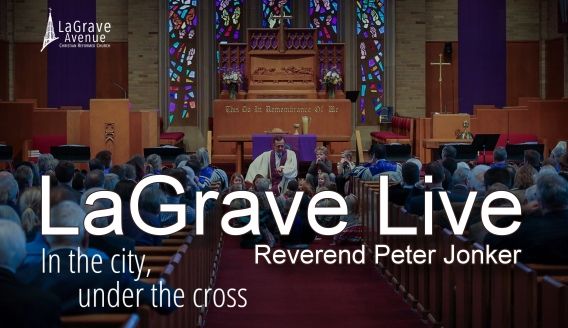


LaGrave Live
LIVE Morning Worship Service 05-31-2026
The Way of Wisdom: The Beginning of Wisdom
About The Service:
We will start our summer sermon series. This summer our sermons will all be drawn from the parts of the Bible that are considered Wisdom Literature. These are Bible books and Bible passages that address the practicalities of living in God's world. Pastor Jonker will begin the series with a sermon on Proverbs 1:1-7 where the teacher of Proverbs shares with us the place where wisdom starts.
Order of Worship:
https://lagrave.org/wp-content/upload...
About the Church:
We are a traditional CRC church in the middle of Downtown Grand Rapids, MI, worshipping at 8:40am, 11:00am, and 6:00pm. (10:00am and 6:00pm during the summer months)
We'd love to hear from you:
Connection: https://www.lagrave.org/contact
Let us pray for you:
Prayer: https://www.lagrave.org/prayerrequest/
Giving: https://www.elexiogiving.com/App/Givi...
The April special offering is for Family Promise. Family Promise partners with local congregations, individuals, families, foundations and corporations to provide emergency shelter and case management for families with children facing a housing crisis.
Listen on the go:
Amazon Music: https://bit.ly/LGPodAmazonMusic
Apple Podcast: https://apple.co/3tuOdwQ
Google Podcast: https://bit.ly/LGPodGoogle
Soundcloud: / lagravecrc https://soundcloud.com/lagravecrc
Spotify: https://spoti.fi/3yXDFaT
Follow us!
Facebook: / lagravecrc https://www.facebook.com/lagravecrc
Instagram: / lagravecrc https://www.instagram.com/lagravecrc
Website: https://www.lagrave.org
#LaGrave #LaGraveCRC
The Way of Wisdom: The Beginning of Wisdom
Opening Welcome and a New Summer Focus
The service opens with a greeting centered on Jesus Christ and the work of the Holy Spirit, followed by a warm welcome to the congregation, online worshipers, and visitors attending for the baptism service. Announcements include hospitality details, coffee fellowship, and an invitation for visitors and new members to gather in the parlor after worship. The congregation is also introduced to the church’s summer sermon series, The Way of Wisdom, which will focus on biblical wisdom literature and its guidance for life in God’s world.
Confession, Assurance, and the Theme of Wisdom
The liturgical opening turns toward confession by connecting wisdom with surrendering control to God, drawing on Proverbs 16:9 and a responsive prayer from Psalm 119. The congregation prays for understanding, delight in God’s commands, and hearts turned away from selfishness and toward God’s statutes. After this corporate confession, the congregation hears an assurance from Psalm 37, reminding worshipers to commit their way to the Lord and trust him. This moment establishes wisdom not merely as intelligence or strategy, but as a life ordered under God’s care and direction.
Baptism as Covenant, Family, and Promise
A major part of the service is devoted to the baptism of three children: Grace, Arlo, and Joni. The presiding pastor explains baptism as participation in Christ’s death and resurrection, cleansing from sin, and entry into the covenant family of God. He places baptism within the larger biblical story, moving from God’s covenant with Abraham and the sign of circumcision to baptism as the New Testament sign of belonging to God’s people. The parents make vows to raise their children in the faith, and the congregation vows to receive, pray for, and nurture them, underscoring the shared responsibility of the Christian community.
Prayer, Congregational Life, and Care for the Church Family
The pastoral prayer reflects the life of the congregation by giving thanks for the newly baptized children, milestone birthdays, missionary service, and the birth of Catherine Marie VanEerden. It also lifts up members recovering from surgery, receiving rehabilitation or hospice care, and families facing grief after the death of Lori Vanderarc. Throughout the prayer, the church’s needs are framed through the language of walking faithfully with God and asking the Holy Spirit for courage, wisdom, openness, service, and gratitude. The prayer portrays the church as a community that celebrates, intercedes, and grieves together.
Children’s Message and the Incarnation of Christ
In the children’s message, the pastor reflects on the fragile nature of babies and uses the morning’s baptisms to help children imagine the humility of Christ. He explains how carefully one must hold a baby, especially the neck and head, and then observes that Jesus, who is mighty and powerful, willingly became that small and vulnerable. This becomes a simple but powerful lesson in the incarnation: Jesus became weak in order to be with humanity and save humanity. The message emphasizes that Christ fully entered human life, from infancy onward, out of love for his people.
The Beginning of Wisdom and the Fear of the Lord
The sermon begins the new series by asking what biblical wisdom is and distinguishing it from both moral law and abstract knowledge. Wisdom is described as practical, embodied, decision-making knowledge that operates in the complexity of real life, where rules alone are often not enough. The pastor then focuses on Proverbs 1:7 and explains “the fear of the Lord” as the beginning of wisdom, distinguishing punishment-based fear from affection-based fear. He argues that the fear Scripture commends is rooted not in terror, but in love, admiration, reverence, and the desire not to disappoint God. The sermon concludes by grounding this fear in grace, especially in the saving work of Jesus Christ, and presenting biblical wisdom as something that becomes life-giving only when it begins in humble relationship with God.
LaGrave Live
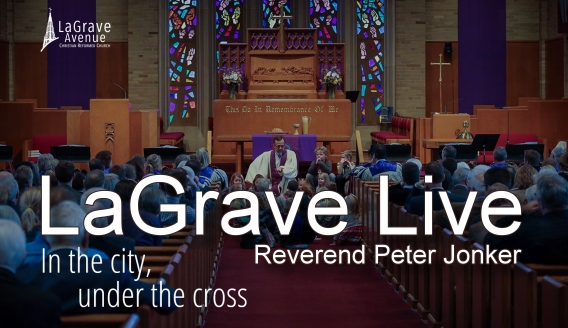

If you’re looking for a warm church that commits to an intensely pertinent Gospel in the Reformed tradition of the Christian faith, we invite you to worship with us. Our 1,800 members come from across West Michigan and gather weekly in our sanctuary for relevant Biblical preaching, beautiful music, and inspiring worship. We expand our worship through intentional outreach in our community and world, attentive care for our members, and plenty of spiritual enrichment and social opportunities for everyone.
We focus on a living Savior who provides genuine solutions to the deep needs of a hurting world. We are committed to need-meeting ministry in His name, and we are committed to being real people who enjoy real life and who cry real tears. Because we are a fairly large and diverse group in terms of age, occupation, marital status, lifestyle, and physical ability; our members create many accessible opportunities for community service, Bible study, and small social groups.
We worship God, the Almighty Creator of heaven and earth, and we enjoy expressing our vision of His holiness through traditional music and formal liturgy.
Music plays an integral part of our weekly worship gatherings. Congregational singing—of both traditional hymns and newer ones—is typically supported by our pipe organ. Vocal choirs, handbell choirs, small ensembles, instrumentalists, and vocal soloists provide additional music offerings.
Led by the Holy Spirit, we seek to worship and serve God in all of life, transforming His world and being transformed to reflect the character of Christ.
Founded by 36 Dutch immigrants on February 24, 1887, LaGrave Avenue Christian Reformed Church has always been deeply committed to both this local community and worldwide missions. God has seen fit to guide and bless these commitments with sustained growth, spiritual gifting, and a continual stream of new work for our members.
Speaker Identification
Speaker 1 – Worship Leader / Liturgist
This speaker delivers the opening greeting, welcome, announcements, call to confession, assurance, congregational prayer, and ministry updates.
Speaker 2 – Presiding Pastor / Sermon Speaker
This speaker leads the baptism, children’s message, Scripture reading, and sermon. The transcript does not clearly identify this person by name.
Speaker 3 – Congregation / Corporate Response
This label is used for responsive prayers, congregational vows, and brief spoken responses.
Speaker 4 – Music / Congregational Singing / Choir
This label is used for hymns, sung responses, and musical interludes.
Speaker 5 – Baptism Parents
This label is used collectively for the parents presenting the children for baptism. Individual names are not fully clear in every case.
Speaker 4 – Music / Congregational Singing / Choir:
[Opening music and congregational singing. The raw transcript contained heavy duplication and garbling in this section.]
Speaker 1 – Worship Leader / Liturgist:
Jesus Christ, the one whose walk was blameless, walks alongside each of us this morning, and he greets us with these words:
May grace, mercy, and peace be unto you from God our Father, the Lord Jesus Christ, and the mighty and transforming work of the Holy Spirit. Amen.
You may be seated.
Well, good morning, and welcome to LaGrave Avenue Christian Reformed Church. We are so delighted to see a packed sanctuary this morning. We are blessed by your presence, and we are delighted that you are worshiping among us, whether here in the sanctuary or online via livestream.
This morning we extend a special welcome to all of those who may be here to witness the sacrament of baptism. We are delighted by your presence, and we look forward to the celebration we will have together this morning.
As always, following this morning’s service, we will be holding a time of coffee and conversation in the multi-purpose room that is just through the narthex, down the hallway, and to your right. However, if you take a look in your bulletins, there will be a separate time of coffee and conversation held for new members, regular attendees, or any form of visitor. That will be held immediately after the service in the parlor, which is just through the narthex, down the hallway, and to your left. In either case, we would love to share some conversation and fellowship with you all following this morning’s service.
And finally, as we continue to transition into our summer schedule here at LaGrave, we recognize that you too are doing the same thing. One thing that may undergird both of those sentiments is the word busy. So we would encourage you to take some time to look in the bulletin at the upcoming events section. Please be sure to jot down any events or special services that you may be interested in attending. The further in advance we can get those on your calendars, the better, and we would love to have you at as many as possible.
This morning we will be beginning our new summer sermon series entitled The Way of Wisdom, in which we will be looking at parts of the Bible that are considered wisdom literature—Bible books and passages that address the practicalities of living in God’s world.
Now, in recognition of that, as we move together toward our call to confession, may we hold in light that which often opposes wisdom: our natural and unnatural inclination toward control. Friends, Proverbs 16:9 reminds us that in their hearts humans plan their course, but the Lord establishes their steps.
As we transition now into our prayer of confession this morning, may the psalmist’s words from Psalm 119 penetrate our hearts as we confess our shortcomings and articulate our aspirations. Would you join me now in the prayer of confession as together we pray responsively?
Speaker 3 – Congregation / Corporate Response:
Teach me, Lord, the way of your decrees, that I may follow it to the end.
Give me understanding, so that I may keep your law and obey it with all my heart.
Direct me in the path of your commands, for there I find delight.
Turn my heart toward your statutes and not toward selfish gain.
Turn my eyes away from worthless things; preserve my life according to your word.
Fulfill your promise to your servant, so that you may be feared.
Take away the disgrace I dread, for your laws are good.
How I long for your precepts! In your righteousness preserve my life.
Speaker 1 – Worship Leader / Liturgist:
Now that we have together confessed our sin and reoriented our hearts and minds toward walking the path of Christ, would you hear these words of forgiveness, understanding, and encouragement from Psalm 37. It reads:
Commit your way to the Lord; trust in him and he will do this: he will make your righteous reward shine like the dawn, your vindication like the noonday sun.
Thanks be to God.
Speaker 4 – Music / Congregational Singing / Choir:
[Congregational singing.]
Speaker 2 – Presiding Pastor / Sermon Speaker:
Before we do that, let’s read these words of Paul about baptism:
“All of us who were baptized into Christ Jesus were baptized into his death. We were therefore buried with him through baptism in order that, just as Christ was raised from the dead through the glory of the Father, we too may live a new life.”
We are privileged to witness the baptism of these three babies today. In that baptism, there are so many things happening. These three children will be washed. The Bible promises that the water of baptism washes away our sins. These children will, in a wonderful and mystical way, participate in the death and resurrection of Jesus. When they go down into the water and come up again, they participate in the death and resurrection of Jesus Christ our Lord. The power of the resurrection is already starting to work in their lives.
And of course, they will become members of this family. After this day, I mean, they have their nuclear families, but from this day forward, you will be their people. All right? This is their family.
And like every family, we have a story and a history that goes along with our family. It’s the story of a God who made the world in love and refused to give up on it when we sinned. It’s the story of Jesus, his Son, who came to this world and gave up his life so that we could be saved. And it’s the story of the Holy Spirit, who comes upon us and holds us together, sometimes in spite of ourselves, and gives us a mission to do in this world. That’s the family, and that’s the story that these three children will be joining this morning.
And as they do, they are undergirded by strong, strong promises. It is God’s action that holds them and moves them. These promises started back in the time of Abraham when God came to Abraham and made a covenant with him. He said, “I will be God to you, Abraham, and to your descendants, your children, after you. I will establish an everlasting covenant between me and you and your descendants after you, to be God to you and to them.” His promise was for children too, which is why God instituted circumcision, a sign that these children were part of the family and part of his call.
With the coming of Jesus and his death and resurrection and the coming of the Holy Spirit, circumcision is fulfilled, and it is fulfilled in baptism. Baptism is the new sign that our sons and daughters are part of the family and part of God’s plan for us and for his world.
So today, when we see the water come on them, they will be part of this family. They will join us in their journey. And from now on, from this day forward, they will learn that this is who they are. That will happen in their families when they teach them about Jesus. That will happen through us, through nursery, church school programs, all the things that churches do to help raise up children. And it will happen through the Holy Spirit, pushing them and working in their hearts. So it’s our hope that someday, just as God in a sense is standing up here today in our midst and pointing at these children and saying, “These are my kids,” it’s our hope that someday they will stand up here, or in some other church, and lift their hand to God and say, “You are my God.”
That’s what baptism is all about. You’ve heard the promises of baptism, family. I’d like to ask you to come forward and profess your vows before we do this baptism. And I would also like to ask the prayer partners to come forward, please, and stand in front of the piano. Our prayer partners—all of us are responsible for helping to raise Joni and Arlo and Grace—but the prayer partners have offered on our behalf to pray fervently for them as they go forward.
You guys can come all the way up on the stage. Come on up. Just not the prayer partners—sorry. There are just too many. It’s a happy mob here.
All right, Lauren and Bryan, Ray and Jenna, and Peyton and Sam, you’ve heard God’s promises. You’ve heard what baptism is about. I’d like to ask you to answer these questions before God and before these people.
Do you profess your faith in Jesus Christ as your Lord and Savior and affirm the promises of God made to you and to your children in his Word?
Do you promise to instruct your child by word and example, with the help of this Christian community, in the truth of God’s Word and in the way of salvation through Jesus Christ?
Do you promise to pray for your child and to teach your child to pray, and do you promise to nurture them within the body of believers as citizens of Christ’s kingdom?
Speaker 5 – Baptism Parents:
We do, God helping us.
Speaker 2 – Presiding Pastor / Sermon Speaker:
People of LaGrave, as part of this family, you have promises to make and answers to give as well.
Do you promise to receive Joni and Arlo and Grace in love here today?
Do you promise to pray for them and nurture them in the faith?
And do you promise to encourage and sustain them in this fellowship of believers?
People of LaGrave, what is your answer?
Speaker 3 – Congregation / Corporate Response:
We do, God helping us.
Speaker 2 – Presiding Pastor / Sermon Speaker:
It’s time for the baptism.
Grace Elizabeth Sutherland, I baptize you in the name of the Father, and of the Son, and of the Holy Spirit. Amen.
Arlo Vincent [surname unclear], I baptize you in the name of the Father, and of the Son, and of the Holy Spirit. Amen.
And Joni Lou Scott, I baptize you in the name of the Father, and of the Son, and of the Holy Spirit. Amen.
Oh, we’re just little. These are little babies. Sometimes they’re pretty big when they get up here. These are little babies.
Children, I didn’t ask you up here, and that was on purpose. There’s a children’s sermon later where you get to come. But you can see them from here, right? This is Joni, Arlo, and Grace. This is your new family, family of God. These are your new brothers and sisters in Christ.
And now, Joni and Arlo and Grace, may the Lord bless you and keep you. May the Lord lift his face to shine upon you every day of your life. May the Lord smile upon you and fill you with his peace, both now and forevermore. Amen.
Speaker 4 – Music / Congregational Singing / Choir:
[Congregational singing.]
Speaker 1 – Worship Leader / Liturgist:
Three announcements for you this morning before we go to prayer.
First is that Ed [surname uncertain] was released from the hospital and has returned home following the implementation of a pacemaker.
Second is that Catherine Marie VanEerden was born to Charles and Lindsey VanEerden on Sunday the 24th. Kate is eight weeks early and is staying in the NICU for now, so we will pray for her continued healthy development.
And finally, we received news this morning that Lori Vanderarc passed away last night. Funeral arrangements are yet pending, but we’ll be sure to hold her husband Dave and the rest of the family in our prayers.
Let’s go to prayer.
Heavenly Father, we come to you this morning as beings who aspire to walk the path of life faithfully with you. Yet, Father, we admit that there are steps on our paths that at times feel unclear, unbalanced, painful, or lonesome. Amidst the ebb and flow of our lives of faith, instill in us avenues of confidence, steadfastness, peace, and perseverance. And as we walk, arm us, Holy Spirit, with souls oriented toward courage, minds toward wisdom, hearts toward openness, hands toward service, and eyes toward gratitude.
Father, there is so much to be grateful for in the life of this church. Hear us now as we lift but a few of them up to you.
This morning we are especially grateful for the lives of Joni Scott, Grace Sutherland, and Arlo [surname uncertain]. Father, although they do not know it yet, they have been marked by the promise of your love. Help us now, as we have promised, to raise them up in that same love.
We also praise you for the faithfulness you have exhibited in the lives of Connie Boss, George DeVries, and Joyce Youngsma, as each of them celebrates milestone birthdays. Thank you for your continued work in their lives and for the ways that they have enriched this community.
Be with Matt Bonzo as he serves to enrich communities in Southern Africa with his ministerial teachings. Grant him effectiveness, preserved health, and a safe return following his work.
Lord, we also praise you for enriching our community with the life of Catherine Marie VanEerden. Extend your hand of strength over her in this time as she stays in the NICU, and grant her continued healthy development.
Lord, we also lift up praise to you that Ed [surname uncertain] has been released from the hospital and has returned home following his pacemaker installation. Continue to hold your hand of peace and healing over him in this time of recovery.
And Lord, there are many others in this church community who are seeking your hand of healing as well. We think of Jim Balk, Steve Gibson, Marilu Riefer, and Joy Winkle as each of them recovers from or anticipates surgery. Walk with them in this time.
And be too with Marlene Padding as she is at [facility name uncertain] of Wyoming for rehab following a recent fall. Grant each of these individuals swift recovery so that they might rejoin this community soon.
With that sentiment, we also lift up to you the many homebound individuals in this church who long to be in this community yet cannot. Penetrate their hearts with presence, both ours and yours, so that they might feel the love of Christ and the passion of the Holy Spirit.
Lord, we lift up to you Ray Pader as he has returned home for hospice care. Fill him with this same love and passion, and grant him peace, knowing that he has walked faithfully.
And finally, we extend our sympathy to Dave Vanderarc and the Vanderarc family given the passing of Lori. Surround them with peace and love in this time of immense grief. Shelter them with the comfort and the presence that only you can provide.
Lord, in all of these things, both good and hard, easy and heavy, we lift them all up in faith to you and to your name. And it’s in your name that we pray it all. Amen.
All right, children, it’s finally your turn. Come on up. It’s time for the children’s message. I will talk with you. Come on down. Oh, there’s more than last week. I’m so happy about that. A lot more than last week. Wow.
Come on down, everyone. How are we doing in the balcony? Pretty good? Pretty well? I think I see one more person. Hello, everyone. It’s so good to see you here. Thank you for being patient.
So maybe you noticed—oh, hold on. I still have a couple more. Hang on a second. I’m so happy. They’re almost here. Okay, come on down, guys. You can do it.
All right. You noticed I got to hold a baby this morning, right? You saw that there were a lot of babies up here, and they were little babies. I like holding babies.
Raise your hand—how many of you have held a baby before? A really little baby? Yeah, quite a few of you.
What does the mom of the baby say to you? What? I thought this was an easy one. Come on. What does the mom say?
Be careful, right? Be careful. That’s something you should remember. If you didn’t know before, you should know it now. Be careful, because babies, especially little ones, are pretty frail, right? So you have to hold their necks. Did you know that? You can’t just let a baby’s neck flop because the muscles in their neck are so weak and their head is so heavy. Yeah, you have to hold their head. If their head falls, they could hurt their neck.
And the other thing is, on the top of my head it’s all hard, but did you know that on the top of a baby, there’s a soft spot? It takes a long time for the skull to close completely. So they’re really, really—you’ve got to be careful because that’s a very sensitive spot up there, right? Be careful with the baby, moms say.
I always think it’s amazing that Jesus became a baby. Jesus is strong, right? Mighty. He did miracles. He made the storms stop and made mountains. Jesus became so small that you had to hold up his head so that it wouldn’t flop. And Jesus too had a little space where his skull hadn’t closed up. He was so small, and he was so frail.
Why would Jesus, who was so strong, become so weak? Because he wanted to be with us. Because he wanted to help us and save us. Jesus knows exactly what it’s like to be a baby. Jesus knows what it’s like to be a little kid like you guys, right? Because he grew up and was a little kid too. And Jesus came to save us, right? To die on the cross to save us. That’s why he’s willing to become a little baby. I am so happy that Jesus was willing to become just like these little kids for us.
Congregation, what is our prayer for these children?
Speaker 3 – Congregation / Corporate Response:
[Congregational response; wording unclear in transcript.]
Speaker 2 – Presiding Pastor / Sermon Speaker:
This is a hymn about wisdom, and we’re going to sing this hymn every week in this position as a kind of prayer for illumination as we go through this series about wisdom. So take out your bulletins, and let’s sing.
Speaker 4 – Music / Congregational Singing / Choir:
[Congregational singing.]
Speaker 2 – Presiding Pastor / Sermon Speaker:
Today’s Bible reading is from the book of Proverbs. As we start a wisdom series, it’s fitting that we should begin in Proverbs because Proverbs is sort of the quintessential wisdom book of the Old Testament. Not the only wisdom book of the Old Testament—we will be in other books—but this is a great place to begin, and the first seven verses of Proverbs is a great place to start.
Let’s read them together, found on page 984 in your pew Bibles.
“The proverbs of Solomon son of David, king of Israel:
for gaining wisdom and instruction;
for understanding words of insight;
for receiving instruction in prudent behavior,
doing what is right and just and fair;
for giving prudence to those who are simple,
knowledge and discretion to the young—
let the wise listen and add to their learning,
and let the discerning get guidance—
for understanding proverbs and parables,
the sayings and riddles of the wise.
The fear of the Lord is the beginning of knowledge,
but fools despise wisdom and instruction.”
This is the word of the Lord.
Speaker 3 – Congregation / Corporate Response:
Thanks be to God.
Speaker 2 – Presiding Pastor / Sermon Speaker:
So this is the first sermon in our summer wisdom series. For the rest of the summer, we will be going to different wisdom passages and wisdom books in Scripture and seeing what the Holy Spirit has to teach us from these unique and wonderful books.
Before I get into today’s text, though, I want to spend a little bit of time setting up the series and just answering the question: What is wisdom? What are we talking about when we talk about wisdom literature in the Bible?
To do that, I want to contrast biblical wisdom with two things that it is not quite the same as. Biblical wisdom is not the same as biblical laws and commandments. It’s a little different than those. And biblical wisdom is different than knowledge. So: different than commandments and rules, and different than knowledge.
I’m going to take those one at a time.
Wisdom is different than biblical laws. You all know that Scripture gives us biblical laws. The Lord teaches us a path, right? There’s a moral law in Scripture. There are do’s and don’ts, and we are called to follow in those things. An example of moral law would be the Ten Commandments—really important stuff.
Wisdom is different than God’s law. It’s not opposed to God’s law, obviously, but I think a good way to think of it is that wisdom is built on the foundation of God’s law. And you need to build on that foundation because there are all sorts of critical decisions that we face in life where simply knowing the rules is not enough.
There are all kinds of critical decisions that you make in life where knowing God’s moral law is not going to help you make a good decision. Tim Keller says somewhere that 80 percent of life situations and decisions, the moral laws are of limited help. Now that sounds like—well, first of all, it’s probably a made-up stat, because I don’t know how you get data on that. And maybe it sounds a little radical to say the law doesn’t help you, but if you think about it, there’s nothing against the law. It’s just simply true.
So, for example, imagine you’re a high school or college student. You’re getting to the end of college, and you’ve been dating a young woman, or you’ve been dating a guy for a year. And you’re at the point where you’re trying to say, “Is this a long-term thing, or do I need to cut my losses here?” Right? And on some days you’re with this person and it seems like, “Oh, yeah, this is it. He’s the one.” And on another day, stuff happens and you’re like, “I don’t know if this is the…” What?
Moral law is not necessarily going to help you make that decision, right? Because it’s not like breaking up is a sin or staying with them is a sin. The skill you need in that time is to sort of look at all the options and weigh them and try to figure out what’s best. The skill you need in that kind of decision is wisdom. The law’s at the base of that, but you need wisdom on top of it.
So many of life’s decisions have this character. If you’re deciding whether or not to go to college, if you’re deciding what college to go to, if you’re deciding what to major in when you get to college, all these are the kinds of decisions where you have to see all the factors, right? And there are so many factors in a decision like that. What are your passions? What are your skills? What’s going on in your family? What are your finances? Where are your friends going? Are you romantically entangled? And there are probably ten more things.
Wisdom is the ability to see all of those factors and then give them their proper weight so that you can make a good decision. In the passage, wisdom is the main category. You heard that it also uses the words prudence and insight. Prudence and insight are like subsets of wisdom. Insight is the ability in a decision like that to see all the factors quickly, to see all the things that go into the decision. And prudence is the ability to give each one of these things its proper weight and then be able to move forward.
So wisdom is different than the moral law—built on the foundation of moral law, but different, more.
Wisdom is also different than knowledge. Wisdom is applied knowledge. Wisdom is know-how. So wisdom is not knowledge taught by a preacher in a sermon or by a teacher in a classroom. Wisdom is knowledge that you learn and experience out there in the world, in the grit of life.
For example, when I was young and I had swimming lessons, I remember that my teacher—I don’t know if they still do this; I’ll bet they do—sat me down on the pool deck with all the other students and said, “Okay, we’re going to learn the breaststroke today, and we’re all going to practice moving our hands.” So you’d sit and do, “Okay, this is how you do it.” And you’d do that over and over again. And that was good, but it’s no substitute, right, for getting in the pool and actually doing the stuff. Wisdom is whatever you’re learning in the pool. When that abstract knowledge meets reality, that’s where wisdom is. Wisdom is a kind of full-bodied knowledge. Wisdom isn’t just held in the brain; wisdom is held in the body.
Does that make sense? Wisdom is like your intuitions and your emotions and all these things that are shaped. Wisdom is all these things coming together at the moment when you need to make a big decision.
If that’s what wisdom is, it’s no wonder that Proverbs values it so highly. This knowledge to be able to make good choices at the forks in the road in your life. This knowledge to be able to say the right thing in a tense situation. This knowledge that allows you to deal with people who are very different from you. So many times a day, we need that kind of knowledge to navigate our way through relationships and through life.
If that’s what wisdom is, it’s no wonder that Proverbs says in chapter 3 that wisdom is more profitable than silver and yields better returns than gold. She is more precious than rubies, and nothing you desire can compare with her. That’s wisdom.
And so today, as we start our summer series and we start to think about wisdom, let us begin thinking about wisdom where the text tells us to begin thinking about wisdom. It’s very clear what the text says, verse 7: “The fear of the Lord is the beginning of knowledge.” And that’s not just something said in our passage. That’s something repeated multiple times in Scripture. Proverbs 9:10: “The fear of the Lord is the beginning of wisdom.” Psalm 111: “The fear of the Lord is the beginning of wisdom.” Job 28:28: “The fear of the Lord—that is wisdom.”
What does that mean? How can wisdom begin with fear? How can fear be the foundation of wisdom? I thought fear was a bad thing. Doesn’t the Bible tell us, “Do not be afraid”? Doesn’t it say that quite a bit? It absolutely does. The Bible has many commandments. As we said earlier, there is no commandment in Scripture that God gives more than, “Do not be afraid.” It is the most common imperative statement in Scripture. “Do not be afraid.” More than 300 times.
So on the one hand, Scripture says, “Do not be afraid.” On the other hand, the Bible says, “The fear of the Lord is the beginning of wisdom.” How can both these things be true? How do we sort this out?
To understand this, you have to understand that fear is like the wind. Let me explain. The word wind in English, we use it to apply to a whole bunch of different things. A gentle summer breeze, like we’re feeling this morning—that’s wind. But so is a devastating hurricane. That is also wind. We use the same word for both these things, even though they’re very different.
The same is true with fear as it’s used in Scripture. There are at least two different kinds of fear in Scripture, and they’re very different from each other, even though we use the same word for them. They’re as different as a gentle breeze is different from a hurricane.
What are these two kinds of fear? The medieval theologian Thomas Aquinas helps us here. He first, I think, made this distinction between these two types of fear. He talked about filial fear and fear based on punishment. I want to update his language a little bit. I want to say these two kinds of fear are affection-based fear and punishment-based fear.
Fear based on punishment is when you worry about crossing someone or getting on their wrong side because you’re afraid of what they will do to you. So people in the 1950s in Russia were afraid of Joseph Stalin. Why? Because if you got on Stalin’s bad side, he would kill you. That is punishment-based fear.
There are lots of people, maybe some of you here today, who are working in a job that you don’t particularly like. You don’t like your job at all, but you keep doing it. Why do you keep doing it? You keep doing it well because you are afraid of getting fired. You’re afraid of losing income. You need that income, right? All of us at one time or another in our life often do obedient things or make decisions based on the fear of punishment. It’s inevitable.
But when verse 7 talks about the fear of the Lord, verse 7 is not talking about punishment-based fear. Verse 7 is talking about something very different. There’s another kind of fear based on affection.
What is that like? When I went to college, I wrote so many papers, okay? I was an English major. I was in the humanities. Then I went to seminary. Oh my goodness, so many papers. Some of you know what I’m feeling here. For the vast majority of those papers, they were in classes that were good classes and written for professors who I enjoyed. But when I wrote the papers, I was just trying to get them done, right? I wanted to get them done. I wanted to get it over with. I wanted to get to vacation. I wanted to do them reasonably well. I wanted to get a good grade. But I was just trying to bang them out.
But then, in seminary, there was a professor who I really admired. His lectures were so good, his classes were so good, I enrolled in absolutely everything he taught. I remember the first paper I wrote for this professor. I worked so hard on that paper. I did twice the amount of research. I worked on the prose so that it would sound like poetry, man. I think I got a B-plus. That’s the truth. I think I overthought it.
But I worked so hard on it. Why did I do that? Because I had affection for him. Because I was afraid of disappointing him. I was afraid of letting him down. I wanted him to see that I really liked his class. I wanted him to write in the comments at the bottom, “Well done, good and faithful student.”
So there’s fear in that, right? There’s fear in that. But it’s so different than punishment-based fear. It’s not a negative thing. It’s a positive thing. I’m drawn toward something positive.
When the Bible tells us that the fear of the Lord is the beginning of wisdom, that’s the kind of fear it’s talking about. Our fear of God is based on our deep love for him and for his character and for his goodness and for his will and for his ways and for all of these things. We fall in love with all these things of God, and we don’t want to let him down. We want to please him. And so we fear him in that way.
Maybe you’re saying, “Hold on a second. I’ve read the Bible, and there’s punishment-based fear all through Scripture, right? God often warns that if you break this rule or do this thing, you’re going to pay for it.”
That’s exactly right. There is punishment-based fear, and that punishment-based fear is real and very important. But it’s not the center of his program with us. It’s like this: you sometimes punish your kids or threaten punishment depending on their behavior. You use punishment-based fear. “If you do this, young lady, you will be grounded for a week,” right? That’s punishment-based fear. Totally appropriate. Parents need to do that sometimes to keep their kids on track. We all do it. I did it.
But it’s not the heart of your program, right? A parent-child relationship where punishment-based fear is the only reason the kid obeys—that’s toxic. But if a child obeys because she loves her parents and admires them and doesn’t want to disappoint them and doesn’t want to let them down, that’s not such a bad thing, right?
Fear of the Lord that leads to wisdom is rooted in a deep love for God and for all of his things. It’s rooted in the desire for us to hear from our Lord, “Well done, good and faithful servant.” Affection-based fear.
And when you look at fear of the Lord that way, you realize that fear is actually rooted in grace. Who would have thought? Fear is actually rooted in grace. Why? Because if the reason that you follow God and want to obey him is because you love him so much and you love his works and you love his ways, what is the best of God’s ways? It’s sending Jesus to us, right? And Jesus sharing our life. And Jesus dying on the cross while we were still sinners. And Jesus being raised to life.
That’s why I want to give my life to him. That’s why you want to give your life to him, right? It’s for fear of letting him down. It’s for fear of disappointing him. It’s the grace of Jesus Christ that draws you to him. It’s affection-based fear.
Incidentally, just one more point to support this. This helps explain a verse that I always thought was weird: Psalm 130, verse 4. Psalm 130 is a famous psalm: “Out of the depths I cry to you, O Lord.” You’ve all heard that. Verse 4 says, “With you there is forgiveness; therefore you are feared.”
Do you remember that verse? Did it ever sound confusing to you? Because if you think of that fear as punishment-based fear, that doesn’t make any sense. Why would you be afraid of someone who forgives you? But if you think of it as affection-based fear, all of a sudden it makes perfect sense.
When you read through the book of Proverbs—and we will get into many of them as we go—it can seem like just a big random collection of advice, right? It’s almost like an advice column, a really long advice column, full of helpful hints. And maybe you say to yourself, “How are all these proverbs different than any advice book you’d find on the shelves at Schuler Books?” There is some truth to that. You could be a total unbeliever, and if you went into some of these proverbs and applied them to your life, they would benefit you. You would flourish. You would maybe have more success in your business. Maybe you’d make more money.
But what you would not find is life.
If you want this wisdom to be life to you, if you want this wisdom to help you find the way, the truth, and the life, that only happens when it starts on your knees with God, united to Jesus Christ in his death and resurrection, with the Holy Spirit working in your heart. When the God who made the ways of this world and who founded wisdom is in you, only then will it be the way of full life. Because when that happens, wisdom isn’t just useful. It’s a fountain that will bring healing to you and renewal to the world. Amen.
Thank you, Lord, that this summer we get to walk this journey with you, that we get to follow this path, that we will together try to find your way of wisdom. Thank you, Lord, that we begin that journey on our knees before you.
Lord, we praise you for who you are. We thank you for your grace and your mercy to us. We thank you for all your moral laws. We thank you for the story of your grace to us in Jesus Christ. For these reasons, Lord, we give ourselves to you—our life, our soul, our all—and we ask that you would help us find wisdom’s way. In Christ’s name we pray it. Amen.
Speaker 4 – Music / Congregational Singing / Choir:
[Congregational singing.]
Speaker 2 – Presiding Pastor / Sermon Speaker:
Receive the blessing of your Lord.
The grace of our Lord Jesus Christ, the love of God, and the fellowship of the Holy Spirit be and abide with you all. Amen.
Speaker 4 – Music / Congregational Singing / Choir:
[Closing song and postlude. The remaining raw transcript contains extensive duplicated and garbled musical artifacts.]