
LaGrave Live, August 16, 2026
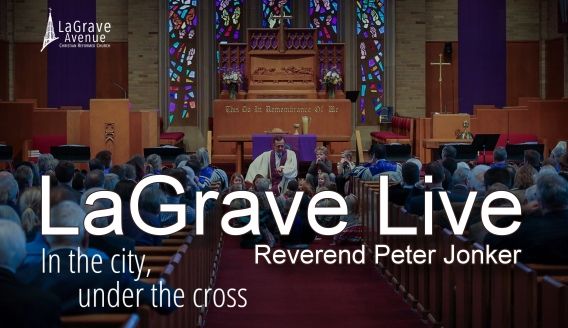

LaGrave Live
LIVE Morning Worship Service 08-16-2026
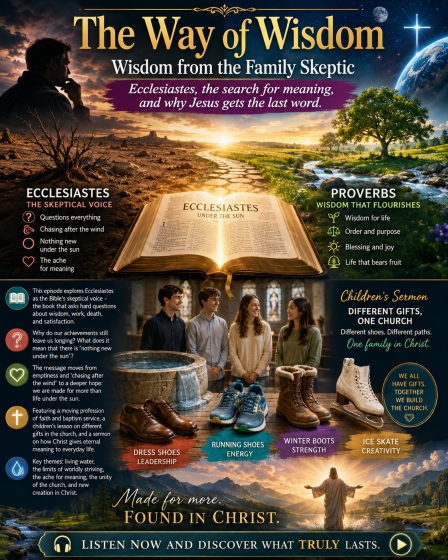
The Way of Wisdom: Wisdom from the Family Skeptic
About The Service:
We will continue our Way of Wisdom sermon series, a series which looks at some of the wisdom literature in the Bible. Next week we will leave the book of Proverbs. Pastor Jonker will preach on the remarkable book of Ecclesiates.
Order of Worship:
https://lagrave.org/wp-content/uploads/2026-8-16-AM-Order-of-Worship.pdf
About the Church:
We are a traditional CRC church in the middle of Downtown Grand Rapids, MI, worshipping at 8:40am, 11:00am, and 6:00pm. (10:00am and 6:00pm during the summer months)
We'd love to hear from you:
Connection: https://www.lagrave.org/contact
Let us pray for you:
Prayer: https://www.lagrave.org/prayerrequest/
Giving: https://www.elexiogiving.com/App/Giving/lagr107178
The August special offering is for Covenant House. Covenant House Michigan (CHMI) provides shelter and hope to young people aged 18-24 who are experiencing homelessness or victims of trafficking in Grand Rapids and Detroit. Their mission is to serve all youth who come to their doors with unconditional love, absolute respect, and relentless support.
Listen on the go:
Amazon Music: https://bit.ly/LGPodAmazonMusic
Apple Podcast: https://apple.co/3tuOdwQ
Google Podcast: https://bit.ly/LGPodGoogle
Soundcloud: / lagravecrc https://soundcloud.com/lagravecrc
Spotify: https://spoti.fi/3yXDFaT
Follow us!
Facebook: / lagravecrc https://www.facebook.com/lagravecrc
Instagram: / lagravecrc https://www.instagram.com/lagravecrc
Website: https://www.lagrave.org
#LaGrave #LaGraveCRC
When Wisdom Questions Everything: Ecclesiastes and the Search for What Lasts
Rooted in What Lasts
The service opens by contrasting life rooted in the ways of the world with life rooted in Christ, using the imagery of wastelands and streams of living water. The congregation is invited to confess the ways it has turned from God and to trust again in God’s mercy, patience, and love. This theme of rootedness becomes an important foundation for everything that follows. The opening also introduces the continuation of The Way of Wisdom sermon series and its move from Proverbs into Ecclesiastes. The service frames Ecclesiastes as a book that questions what has lasting value when God is not at the center. That tension between temporary pursuits and enduring meaning becomes the central concern of the sermon.
Faith Publicly Claimed
A major portion of the service centers on Callan, Philip, Victoria, and Ashley as they publicly profess their faith. The pastor explains that although all four are making the same basic commitment to follow Jesus, their paths to that moment have been different. Philip, Victoria, and Ashley are described as having grown up in the church and returning to the baptismal font where they were baptized as children. Callan’s path is described differently: he sought out faith, studied the Reformed tradition, joined the congregation, and is baptized during the service. The pastor presents profession of faith as a decision to root one’s life in Jesus and to make Christ’s story one’s own. The participants are welcomed into the full fellowship of the church with the reminder that a faithful life includes both joy and difficulty.
Different People, One Church
The children’s sermon uses different kinds of footwear to explain why differences within the church are valuable. Dress shoes, running shoes, winter boots, and an ice skate each have different purposes, and none is ideal for every task. The pastor applies that illustration to the church, where preaching, singing, playing the organ, repairing things, and many other forms of service require different gifts. Rather than wishing everyone were the same, the children are encouraged to see diversity as useful and necessary. The Holy Spirit is described as bringing different people together into one church. The illustration reinforces the broader service theme that people can have different roles and journeys while still being united in Jesus.
The Skeptic Beside the Sage
The sermon emphasizes the sharp contrast between Proverbs 31 and Ecclesiastes 1. Proverbs ends with a picture of the wife of noble character, who embodies wisdom, flourishing, competence, and honor. Ecclesiastes then opens with the Teacher declaring that everything is meaningless and describing life as a repetitive cycle under the sun. The pastor calls this contrast “biblical whiplash” and compares Ecclesiastes to a skeptical, curmudgeonly uncle at a family reunion who refuses easy optimism. In that illustration, the cheerful advice of Aunt Gladys and Aunt Agnes is interrupted by Uncle Hank, who insists that life is harder than their encouraging sayings suggest. The preacher argues that Scripture intentionally includes both voices and that believers need to listen to both the hopeful wisdom of Proverbs and the difficult questions raised by Ecclesiastes.
Death, Dissatisfaction, and the Empty Cathedral
The preacher identifies death and dissatisfaction as two major sources of the Teacher’s skepticism. Death can interrupt even a disciplined, wise, hardworking life, as illustrated by the story of two ministers who retired after decades of work and died soon afterward. Dissatisfaction presents another problem because wisdom, pleasure, power, wealth, and achievement may fail to provide the deep fulfillment people expect. The sermon compares this pursuit to racing dogs chasing a mechanical rabbit that always stays just out of reach, then suggests an even greater disappointment would come from finally catching it and discovering that it is fake. The Teacher’s grief is interpreted as evidence of a deeper human need for meaning, pictured as an empty cathedral inside the heart. Ecclesiastes, in the preacher’s view, strips away idols and false sources of satisfaction so that people can feel the longing for something more.
Beyond the Sun
The sermon ultimately interprets that longing as a sign that human beings are made for eternity and fellowship with God. The preacher argues that “under the sun” is not the whole of reality and that death is not the final ceiling over human existence. A spaceflight story is used to illustrate a person confronting awe, fragility, and a longing for spiritual language after seeing Earth from space, with the cross becoming a powerful symbol in that moment. The sermon then turns decisively to Jesus, presenting Christ as the one who breaks the closed circle of death and gives lasting significance to faithful acts of love, hope, and service. The Teacher asks whether anything is truly new under the sun, and the sermon answers with the New Testament image of a person in Christ becoming a new creation. The final message is that Ecclesiastes’ skepticism is worth hearing, but Jesus is given the last word: people are beloved, their lives matter, and they belong to an eternal story.
LaGrave Live
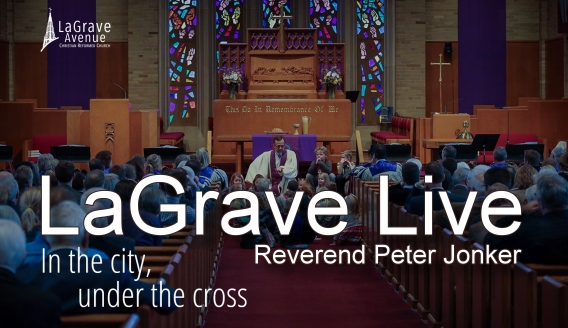

If you’re looking for a warm church that commits to an intensely pertinent Gospel in the Reformed tradition of the Christian faith, we invite you to worship with us. Our 1,800 members come from across West Michigan and gather weekly in our sanctuary for relevant Biblical preaching, beautiful music, and inspiring worship. We expand our worship through intentional outreach in our community and world, attentive care for our members, and plenty of spiritual enrichment and social opportunities for everyone.
We focus on a living Savior who provides genuine solutions to the deep needs of a hurting world. We are committed to need-meeting ministry in His name, and we are committed to being real people who enjoy real life and who cry real tears. Because we are a fairly large and diverse group in terms of age, occupation, marital status, lifestyle, and physical ability; our members create many accessible opportunities for community service, Bible study, and small social groups.
We worship God, the Almighty Creator of heaven and earth, and we enjoy expressing our vision of His holiness through traditional music and formal liturgy.
Music plays an integral part of our weekly worship gatherings. Congregational singing—of both traditional hymns and newer ones—is typically supported by our pipe organ. Vocal choirs, handbell choirs, small ensembles, instrumentalists, and vocal soloists provide additional music offerings.
Led by the Holy Spirit, we seek to worship and serve God in all of life, transforming His world and being transformed to reflect the character of Christ.
Founded by 36 Dutch immigrants on February 24, 1887, LaGrave Avenue Christian Reformed Church has always been deeply committed to both this local community and worldwide missions. God has seen fit to guide and bless these commitments with sustained growth, spiritual gifting, and a continual stream of new work for our members.
Speaker Identification
Speaker 1 - Worship Leader / Opening Liturgist. The later sermon explicitly refers to “Rachel” as someone who spoke earlier, so Speaker 1 is likely Rachel; the transcript does not provide a surname or enough information to establish her full identity with certainty.
Speaker 2 - Pastor / Sermon Preacher / Baptism Officiant. This speaker introduces the profession-of-faith participants, performs Callan’s baptism, gives the children’s sermon, reads Ecclesiastes 1, and delivers the main sermon. The speaker’s name is not stated in the transcript.
Speaker 3 - Congregation / Responsive Readers. Group responses are heard during the call-and-response, prayers, singing, profession-of-faith moments, and closing.
Speaker 4 - Callan James Richardson. He is explicitly named immediately before his profession-of-faith response and baptism.
Speaker 5 - Philip Blackport. He is explicitly introduced by name and later addressed during the profession of faith.
Speaker 6 - Victoria Blackport. She is explicitly introduced by name and later addressed during the profession of faith.
Speaker 7 - Ashley. Her surname is transcribed inconsistently as “Ponstine” and “Ponce Dean,” so the surname is not assigned with certainty in the transcript below.
Speaker 8 - Children. Several children answer questions during the children’s sermon; individual children are not identified.
Speaker 9 - Choir / Musicians / Congregational Singing. Several musical passages are present, but the automated transcript does not reliably distinguish choir, congregation, soloists, or individual musicians.
Pre-Service Audio
Speaker 9 - Choir / Musicians / Congregational Singing: [Pre-service audio and music. The automated transcript is highly repetitive and largely unintelligible for this portion. The final recognizable lyric is the conclusion of “The Star-Spangled Banner.”]
Speaker 9 - Choir / Musicians / Congregational Singing: “O say, does that star-spangled banner yet wave o’er the land of the free and the home of the brave?”
Welcome, Call to Worship, and Confession
Speaker 1 - Worship Leader / Opening Liturgist: Good morning, and welcome to LaGrave Avenue Christian Reformed Church. Whether you’re worshiping with us here in person or through our livestream - whether that be at home, in the chapel, or in the multipurpose room - we are glad you are here this morning.
It is truly a full house this morning, and so I hope you get the chance to say hi to someone you haven’t seen all summer or wave to a kid who’s starting school this coming week or next. We extend a special welcome to anyone who’s visiting with us, and we especially welcome friends and family who are here to witness the baptism and profession of faith of Callan, Ashley, Victoria, and Philip.
Everyone is invited to join us in our multipurpose room after the service for a time of coffee and fellowship. That room is down the hall and to the right. If you are in District 10, you have your district coffee today, and that is down the hallway in the parlor to the left.
This morning we are continuing our sermon series called The Way of Wisdom, but instead of staying in the book of Proverbs, we’re flipping to the next book of the Bible, Ecclesiastes. In the Bibles in your pews, at the start of each book of the Bible there is an introductory paragraph. In that paragraph, the writer describes the book of Ecclesiastes by saying that all the things the writer discusses have lasting value only if God is at the center of a person’s life.
Every day, we are faced with the choice of whether we’ll root ourselves in Christ or in the ways of this world. We have the choice to root ourselves in wastelands or near streams of living water. As you hear these words from Jeremiah this morning, confess those times when you have planted in wastelands and ask God to invite you back to his streams of living water.
Jeremiah writes: “This is what the Lord says: Cursed is the one who trusts in man, who draws strength from mere flesh and whose heart turns away from the Lord. That person will be like a bush in the wastelands. They will not see prosperity when it comes. They will dwell in the parched places of the desert, in a salt land where no one lives. But blessed is the one who trusts in the Lord, whose confidence is in him. They will be like a tree planted by the water that sends out its roots by the stream. It does not fear when heat comes. Its leaves are always green. It has no worries in a year of drought and never fails to bear fruit.”
Let us pray.
Dear Lord, we confess this morning how we have turned away from you. We have planted ourselves in wastelands where we mock your mercy, jeer at your patience, and show contempt for your love. We confess these things before you, Lord, and ask that you open our hearts to you. Forgive us and show us the way back to your streams of living water. In your name we pray. Amen.
Even though we may stray away from God, God never leaves us nor forsakes us. Join me in a call and response as we proclaim the good news of God’s love.
Speaker 1 - Worship Leader / Opening Liturgist: Who then is the one who condemns?
Speaker 3 - Congregation / Responsive Readers: No one.
Speaker 1 - Worship Leader / Opening Liturgist: [The remainder of this sentence is garbled in the automated transcript, but it refers to Christ Jesus, resurrection/life, and intercession before God.]
Speaker 1 - Worship Leader / Opening Liturgist: Who shall separate us from the love of Christ? Shall trouble or hardship or persecution or famine or nakedness or danger or sword?
Speaker 3 - Congregation / Responsive Readers: [Responsive text is largely unintelligible in the automated transcript; it concludes with the declaration that nothing will be able to separate God’s people from the love of God in Christ Jesus.]
Profession of Faith and Baptism
Speaker 2 - Pastor / Sermon Preacher / Baptism Officiant: Today we have the privilege of listening to these four young people make a profession of their faith and of their desire to follow Jesus in front of God and in front of all of you. Today all four of them will essentially say the same thing: that they want their lives rooted in Jesus Christ. We just heard Rachel talk about it, and they want to follow him. They want to make his priorities, his kingdom, the road of their lives.
They’re all making the same profession, but their roads to this profession are a little different. Let me explain that by introducing them.
This is Ashley [surname unclear]. She’s familiar to many of you. She grew up in this church. She’s the daughter of Joe and Kristin. Ashley is a junior at Calvin University, where she’s studying occupational therapy. She’s also one of our interns this summer, along with Tolu. They’ve been working with Kristin [surname unclear], and she’s been doing a fabulous job.
This is Victoria and Philip Blackport, brother and sister, if you can’t tell. They also grew up at this church. They are the daughter and son of John and [name unclear], and grandchildren of Phil and Wendy, who are a huge influence on their lives and on their faith.
Philip is going into his senior year at Western. He’s studying something called computer information systems, and he is working at Cascade Engineering this summer. Victoria is working at Fields Fabrics. She’s just graduated from high school. She’s going to U of M next year and is thinking maybe pre-med, but she’s not completely sure.
Callan is finishing up a stint as an EMT, and he just graduated from Lowell High School. He’s working as an EMT right now, but in about a week and a couple of days he’s starting firefighter school, which has been his lifelong dream.
Philip, Victoria, and Ashley were all baptized right here at this font because they grew up at this church. So they’re making a return trip, which is very exciting. When they were baptized, the Holy Spirit spoke to them and said, “You are my child,” and finally today they’re standing up and saying in front of you all, “You are my God.” They’re answering the call of that baptism.
Callan’s story is a little different. He has not been baptized yet. But the Holy Spirit worked in his life just as surely as it worked in these other people’s lives and started something, and Callan started following that on his own. He started studying faith. He went to churches, found himself here, and has been learning about the Reformed faith online. He knows more than a lot of people who’ve spent their whole lives in the Reformed faith because he’s been studying it. Callan and I spent some time together talking about what it means to follow Jesus. So today he will not just make a profession of faith. He will also be baptized.
We are so glad to see all four of you make this step to root your lives in Jesus and to make his story your story. So I want to ask you these four questions in front of God and in front of all these people.
First, do you believe that Jesus Christ is the Son of God, sent to redeem the world? Do you love him, trust him as the one who saves you from your sin, and do you, with repentance and joy, embrace him as the Lord of your life?
Second, do you believe that the Bible is the Word of God, revealing Christ and his redemption, and that the confessions of this church faithfully reflect that revelation?
Third, do you accept the gracious promises of God sealed to you in your baptism - or for you, Callan, that will be sealed to you in your baptism - and do you affirm your union with Christ and his church, which your baptism signifies and seals?
And finally, do you promise to do all you can, with the help of the Holy Spirit, to strengthen your love and commitment to Christ by sharing faithfully in the life of this church, honoring and submitting to its authority, and do you join with the people of God everywhere in doing the work of the Lord?
Callan Richardson, what is your answer?
Speaker 4 - Callan James Richardson: I do.
Speaker 2 - Pastor / Sermon Preacher / Baptism Officiant: Philip Blackport, what is your answer?
Speaker 5 - Philip Blackport: [Response not clearly captured in the source transcript.]
Speaker 2 - Pastor / Sermon Preacher / Baptism Officiant: Victoria Blackport, what is your answer?
Speaker 6 - Victoria Blackport: I do.
Speaker 2 - Pastor / Sermon Preacher / Baptism Officiant: [Brief indistinct remark.] And Ashley, what is your answer?
Speaker 7 - Ashley: I do.
Speaker 2 - Pastor / Sermon Preacher / Baptism Officiant: Callan, the Lord has brought you to this place, and he will continue to be with you as you go forward.
And now, Callan James Richardson, I baptize you in the name of the Father and of the Son and of the Holy Spirit. Amen.
Friends, I now welcome you to the full fellowship of this body, the full fellowship of God’s people. I don’t promise you that it will be easy. In fact, Scripture promises just the opposite. There will be wonderful, joyful times, and there will be really hard and challenging times. But this is a life of meaning. This is a life of substance. So welcome to the life of the people of God. Let’s sing.
Speaker 9 - Choir / Musicians / Congregational Singing: [Congregational singing. The lyrics are not reliably captured by the automated transcript.]
Speaker 3 - Congregation / Responsive Readers: Amen.
Congregational Prayer
Speaker 1 - Worship Leader / Opening Liturgist: One announcement before we go to God in prayer this morning is that we extend our sympathy to Anne Bunk and to Ingrid Spoolstra and her family in the death of Anne’s son and Ingrid’s brother, Ron. We will hold the family in our prayer this morning. Let us go to God in prayer.
Dear God, the author of Ecclesiastes writes how there’s a time for everything, and since you are in all and through all, you are part of all things. Thank you for being faithful in every season. Thank you for being present in every moment. And thank you for the gift of your Holy Spirit that leads and guides us as we journey through all the things this life has to offer.
Lord, the author of Ecclesiastes says there is a time to be born and a time to die. Thank you for the birth of Calvin Havelacek, and we pray that you will be with his mom, dad, and brothers as they adjust to being a family of five. And we lift up to you those who grieve the loss of loved ones and those who may be walking alongside people who are nearing the end of their life here on earth. We specifically pray for Anne, Ingrid, and the rest of their family as they grieve the loss of Ron.
The author writes how there is a time to kill and a time to heal. We pray for countries that continue to experience war, and we pray that your Spirit leads and guides our world leaders to everlasting peace. We pray, too, for healing for members of this congregation: for Carol, Grace, Ron, Norma, and Dave. Give these people strength and grant them a full recovery.
The author writes how there is a time to mourn and a time to dance. We thank you for the marriage of James and Emily last weekend and the chance their friends and family had to celebrate with them. And while parties or weddings are joyful occasions, Lord, we know joy can be hard for some. So be with those who struggle with depression and anxiety. Surround them with the care and the community they need.
The author writes how there is a time to be silent and a time to speak. We think of our missionaries who are proclaiming your good news through things spoken and unspoken, both nationally and globally. Today we pray specifically for Betsy and her work with campus ministries at U of M. Be with her and many others around our country as they welcome students back for the fall semester and join your Holy Spirit in the work of bringing people to you.
Finally, Lord, the author says there is a time to love and a time to hate. For some, our hearts may groan and be bitter as summer comes to a close. And for others, it may be a time to rejoice as the rhythms and routines of the fall restart. As we enter this fall season, Lord, help us to love the things you love and to stand against the things you hate. May your Holy Spirit guide us and give us wisdom to discern how to walk in your ways. In your name we pray. Amen.
Speaker 9 - Choir / Musicians / Congregational Singing: [Hymn or musical response. The automated transcript is too distorted to reconstruct the lyrics reliably.]
Children’s Sermon
Speaker 9 - Choir / Musicians / Congregational Singing: Praise the Lord. [Repeated as part of the musical transition.]
Speaker 2 - Pastor / Sermon Preacher / Baptism Officiant: All right, children, it’s time for the children’s sermon. Come on forward. Come and have a seat. Have a seat right beside me. I’ve got things to show you. Come on down.
[Brief announcement concerning Tolu, one of the church’s interns, and a gathering or presentation in Room 200. The exact wording is not reliably captured.]
Hello, everyone. There is a good number of you today. We are not allowed to put this behind me because it’s secret stuff, man. Okay?
All right, I think this is everybody. Great.
So, have you ever noticed that everybody in church is a little bit different? Everybody is a little bit different. There are some people who are young, like you guys - you’re all young - and there are some people like me who are old.
Speaker 8 - Children: Yes.
Speaker 2 - Pastor / Sermon Preacher / Baptism Officiant: You know. I know it too. I am kind of old.
And there are some people who have dark hair, and there are some people who have blond hair, and there are some people who have red hair, and there are some people who have no hair. That happens too, sometimes. Yeah, right?
There are people with different light-colored skin and dark-colored skin. There are people who like to talk, talk, talk, talk, talk, talk, and then there are people who are more quiet. All kinds of people.
And sometimes maybe you think, man, would it be easier if everyone was the same? Would it be easier if there were no differences between us? You’re all the same. Would that be easier?
Speaker 8 - Children: No.
Speaker 2 - Pastor / Sermon Preacher / Baptism Officiant: And I say to you, no. And here’s why. I’m going to tell you why.
Okay, look at my shoes. See my shoes? These are my dress shoes. And so they’re nice and shiny, except for those two scuffs there. Don’t look at those. But they are for when I wear a suit and a tie.
I wear these kinds of shoes, but I also have shoes like these. Okay, these are my running shoes. So if I’m going running or exercising, I wear these because they’re nice and light, and they’re stable, and they’re flexible. If I tried to run in these dress shoes, how do you think that would go?
Speaker 8 - Children: Not good.
Speaker 2 - Pastor / Sermon Preacher / Baptism Officiant: Not good. My feet would be sore. My knees would be really, really sore. Okay? So I have these shoes.
But then I also have - excuse me a second here - these shoes.
Speaker 8 - Children: Those are boots.
Speaker 2 - Pastor / Sermon Preacher / Baptism Officiant: Right? These are my winter boots. If you tried to run in these, how would that go?
Speaker 8 - Children: It would be really tiring.
Speaker 2 - Pastor / Sermon Preacher / Baptism Officiant: But you know what? They’re really good for... Yeah, all right. You know what? These are really good if it’s super cold.
Speaker 8 - Children: You don’t want super cold.
Speaker 2 - Pastor / Sermon Preacher / Baptism Officiant: I don’t either. You can go out and shovel your driveway or go for a walk in the woods, and your feet will not get cold. If I wore these running shoes while shoveling my driveway, my feet would get so cold and my shoes would be ruined. So I’m glad I have these boots too, even though they’re different.
Let me show you one more shoe. How about this one? What is this?
Speaker 8 - Children: An ice skate.
Speaker 2 - Pastor / Sermon Preacher / Baptism Officiant: You know what? This is good for when I play hockey or when I’m skating. It’s good because it goes on the ice, catches the edge, and you can go fast, and it’s so fun.
[Brief child/pastor exchange is garbled in the source.]
Yeah, it would not be good for the summer. What if I wore these instead of my dress shoes while I was preaching and came down the aisle in these? How do you think that would go?
Speaker 8 - Children: No. No. No.
Speaker 2 - Pastor / Sermon Preacher / Baptism Officiant: Okay. So you need all different kinds of shoes for all different kinds of jobs. It’s kind of like the church. There are lots of jobs in the church.
One of the jobs is preaching, and that’s what I do. But there are other jobs, like singing, and those guys are good at singing, so they’re doing that. There’s another job: playing the organ. You wouldn’t want me playing the organ. Would you like me to play the organ?
Speaker 8 - Children: No.
Speaker 2 - Pastor / Sermon Preacher / Baptism Officiant: Dr. Viscer, though, he’s really good at it. So we’re glad that he’s a different kind of shoe. Okay? He’s different - playing all the instruments.
And then there are other things, like when things break down in the church and they have to be fixed. I’m maybe not so good at that, but some of those people out there are really good at it.
So we need all kinds of people. The Holy Spirit takes all these different shoes, all these different people, and brings them together and makes them a church. Makes them all one in Jesus. And that’s one of the amazing things that Jesus does.
What is our prayer for these children?
Speaker 3 - Congregation / Responsive Readers: Go in peace.
Speaker 2 - Pastor / Sermon Preacher / Baptism Officiant: Go in peace.
Scripture Reading and Sermon Introduction
Speaker 2 - Pastor / Sermon Preacher / Baptism Officiant: Our Bible reading this morning is from Ecclesiastes chapter 1. That’s found on page 1035 in your pew Bibles. You can open that right now, and as you open it - or maybe before you open it - let’s sing the hymn of preparation printed in our bulletins.
Speaker 9 - Choir / Musicians / Congregational Singing: [Hymn of preparation. The repeated phrase “Go in peace” is captured, but the full musical text is not reliably transcribed.]
Speaker 2 - Pastor / Sermon Preacher / Baptism Officiant: So, Ecclesiastes 1, page 1035 in your pew Bibles.
As Rachel mentioned earlier today, we leave the book of Proverbs, which we’ve been in most of the summer, and we move into Ecclesiastes. And as Rachel also mentioned, those two books aren’t just next to each other in our sermon series. They’re next to each other in Scripture. They follow each other in Scripture. Both of them are the Word of the Lord, and both of them have things in them that God wants us to hear.
But now, before I read this, let’s just imagine that you are a person reading the Bible for the first time. You’ve never read it before. You’re reading it for the very first time, and you started in Genesis and you’re reading it from cover to cover.
You just finished the book of Proverbs, and you read all those nice proverbs that give you guidance for your life, to show you the way of wisdom. Then finally, you finished by reading Proverbs 31. Maybe some of you know Proverbs 31. The book of Proverbs ends with that picture of the wife of noble character.
She is a picture of a person who has totally given herself over to the way of wisdom. She has imbibed all of the Proverbs, and she is radiant. Proverbs says everywhere she goes, goodness and peace spring up. She wears fine linen and the finest of purples. They speak well of her at the city gate. All of her business transactions go well. Her children rise up and call her blessed.
She is wisdom personified, and when you read that picture of her, you think, wow, the way of wisdom is the way of life. This is so impressive.
So our first-time reader finishes Proverbs 31. She reads that story of the wife of noble character, and she thinks, wow, wisdom. That stuff is great. And she flips over the page to Ecclesiastes 1, and this is what she reads:
“The words of the Teacher, son of David, king in Jerusalem: Meaningless! Meaningless! says the Teacher. Utterly meaningless! Everything is meaningless.
“What do people gain from their labors at which they toil under the sun? Generations come and generations go, but the earth remains forever. The sun rises and the sun sets, and hurries back to where it rises. The wind blows to the south and turns to the north; round and round it goes, ever returning to its course.
“All streams flow to the sea, but the sea is never full. To the place the streams come from, there they return again. All things are wearisome, more than one can say. The eye never has enough of seeing, nor the ear its fill of hearing.
“What has been will be again, and what has been done will be done again. There is nothing new under the sun. Is there anything of which one can say, ‘Look, this is something new’? It was already here long ago; it was here before our time.
“No one remembers the former generations, and even those yet to come will not be remembered by those who follow them.
“I, the Teacher, was king over Israel in Jerusalem. I applied my mind to study and to explore wisdom by all that was done under the heavens. What a heavy burden God has laid on mankind. I have seen all the things that are done under the sun, and all of them are meaningless. They are chasing after the wind.
“What is crooked cannot be straightened; what is lacking cannot be counted.
“I said to myself, ‘Look, I have increased in wisdom more than anyone who has ruled over Jerusalem before me. I have experienced much of wisdom and knowledge.’ Then I applied myself to the understanding of wisdom and also of madness and folly, but I learned that this, too, is a chasing after the wind.
“For with much wisdom comes much sorrow; the more knowledge, the more grief.”
This, too, is the Word of the Lord.
The Skeptical Voice of Ecclesiastes
Speaker 2 - Pastor / Sermon Preacher / Baptism Officiant: Talk about biblical whiplash. Can you sort of feel it? Can you feel the sudden change?
Can there be two more different figures than the wife of noble character in Proverbs 31 and the Teacher, this skeptical, cynical Teacher of Ecclesiastes chapter 1? They are completely different. They are utterly in contrast to each other, and they are right next door in Scripture. And both of them are the Word of the Lord.
What is this like? Well, it is like you are a young man, say, on the cusp of adulthood. You finish your fourth year in college. It’s summertime. You go to a family reunion with the extended family. You are sitting under a shady tree with your hot dog and your lemonade.
Over to you come Aunt Gladys and Aunt Agnes. They are drinking iced tea, and they are in flower dresses, and they say, “Oh, honey, we are so proud of you. You are going to do just great when you go off into the working world. Just make sure you work really hard, okay? Listen to your parents now, okay? And call your mom once in a while. Remember your parents’ instruction. Learn to listen before you speak. No one likes someone who talks too much. Don’t be too quick-tempered, because a quick temper gets you in trouble. Oh, we are so proud of you, honey. Can I get you another piece of pie?”
Gladys and Agnes are making you feel so good, but now along comes Uncle Hank. Uncle Hank hasn’t shaved in a few days. He’s got an old T-shirt on, and he’s holding a Miller Lite. Uncle Hank grunts, “Are your aunts filling you up with roses and sunshine again? Just remember, they haven’t spent much time off the farm. I’ve been out there under the sun, and believe me, I’ve seen things. It isn’t that easy. I’ve seen things that will curl your hair.”
Ecclesiastes is the Uncle Hank of wisdom. Ecclesiastes is the curmudgeonly uncle of wisdom. He’s the family contrarian. He’s the skeptic.
The Teacher of Ecclesiastes is the one who asks hard questions, who pokes holes in old pieties, who won’t settle for easy answers. And if you didn’t pick that up from what I read in Ecclesiastes chapter 1, read the rest of the book later and you’ll hear much, much more of that.
If you want to hear more of that attitude: “Laughter is madness,” he says later in the book. “I hate life,” he says - hate it - because it’s just a chasing after the wind. Our days are full of darkness, with great frustration, affliction, and anger.
Proverbs gives you this nice, clear path of wisdom and shows you this picture of flourishing. Ecclesiastes comes along and says, hold on there just a second.
And both of these voices are from the Lord. Both of these books are completely inspired by the Holy Spirit. God wants you to hear both these voices. We need to hear both these voices, even though they’re so different.
What is it that we need to hear in Ecclesiastes? What can we learn from listening to the skepticism of the Teacher, our curmudgeonly uncle? Well, let’s find out.
Death and the Limits of Wisdom
Speaker 2 - Pastor / Sermon Preacher / Baptism Officiant: First of all, what is it exactly that makes Ecclesiastes a little bit skeptical of some of Proverbs’ sunshine? Two things.
The first is death.
Chapter 2, verses 15 and 16. This is what the Teacher says. He says, “What do I gain from being wise? What good is wisdom? Because the fate of the fool is going to overtake me too. Like the fool, the wise must die.”
You could spend your whole life working the path of wisdom. Death can come along and take it from you in a second. And then what have you actually gained from all your labor under the sun? says the Teacher.
When I was a younger minister, I think in my early 30s, I joined a support group for ministers. There were about seven or eight of us. I was in my early 30s, with a couple of others my age. There were a couple of guys who were more like in their late 50s.
All of us were working really hard. All of us were doing the ministry thing, which means working six days a week, burning the midnight oil, doing a lot of meetings, doing our thing, and not having any weekends. These guys had been doing it for a long time, longer than me, but they were faithful. They were still doing it. They were running this hard road.
But sometimes, because they were older, they would talk about a time when maybe retirement would come. They’d have a weekend, and they’d be able to slow down and maybe do some of the things they’d like.
I won’t tell you their names. It’s a true story. Both of them retired at 65. Both of them got sick almost immediately and were dead within a year. Brutal.
And this isn’t just a minister thing, obviously. I think we all know people who work hard their whole lives, who burn the midnight oil, who dream of a time in the future when they’d have a little more time to do the things they always wanted to do, and then death took them away.
The Teacher of Ecclesiastes would say, see, this is what I’m talking about. What do people gain from all their labors under the sun? It’s meaningless. It’s a chasing after the wind. It’s wearisome, more than one can say, because death can take it away in a heartbeat.
For the Teacher, the circle of life is not a good thing, right? You know The Lion King, “Circle of Life”? It’s supposed to be so beautiful. For the Teacher, if you’re listening, the circle of life is a trap. It’s a prison.
The sun rises and the sun sets over and over again. The rivers flow to where they’re going, to the sea, and then they come back again. Life goes on and on and on and on, and you go on this hamster wheel of life, and then you die. Chasing after the wind.
So death is one of the sources of the Teacher’s skepticism.
Dissatisfaction and the Illusion of the Chase
Speaker 2 - Pastor / Sermon Preacher / Baptism Officiant: The other is dissatisfaction.
The Teacher also says, even if death doesn’t get you early, you might find that in your long life the things that you’re chasing don’t give you the satisfaction that you expect.
If you read through the whole book of Ecclesiastes, the Teacher says, I’ve tried everything under the sun. I’ve looked for soul satisfaction in everything. I’ve tried wisdom. I’ve tried pleasure. I’ve tried power. I’ve tried wealth. And believe you me, none of these things satisfied. All of them are a chasing after the wind.
What is this like? I found myself thinking of dog races this week. Dog races.
Maybe somebody here has been to the dog races. I never have, but I’ve seen them on TV and I kind of know how they work. You have all the dogs - greyhounds and whippets - and they go into the starting gate. There’s a big oval track. Then there’s this fake rabbit that goes on a track and gets loose, and they all come out of the gate and run after this rabbit.
But, of course, the rabbit goes really fast. It goes faster than the dogs. Those poor dogs go round and round the track their whole lives, and they never, ever catch the rabbit. It’s always just out of reach.
That seems like a tragedy, doesn’t it? But you know it would be a bigger tragedy if they caught the rabbit.
Imagine a dog has been running his whole life and he finally catches that rabbit and realizes it’s fake. It’s not real. There’s no flesh. There’s no blood. There’s nothing to it. It’s an illusion. That dog would be the most cynical dog in the world.
The Teacher of Ecclesiastes caught the rabbit. The Teacher of Ecclesiastes says, I’ve caught every single rabbit that there is to catch under the sun, and none of them satisfied. You’re all chasing after the wind, he says.
Well, this is very depressing. Aren’t you glad you came to church this morning?
Where’s the gospel in this? Where’s the gospel in this? Why is this in the Bible?
Well, it’s there.
The Longing for Meaning
Speaker 2 - Pastor / Sermon Preacher / Baptism Officiant: And if we want to find it, I think we should start with the very last verse in our passage. After chasing wisdom and knowledge and pleasure and all those things, the Teacher says this: “With much wisdom comes much sorrow; the more knowledge, the more grief.”
After realizing that nothing under the sun can satisfy his longing, the Teacher hurts. The Teacher names pain. He says, I feel this pain, this grief. And he hurts because he wants meaning. He wants his life to be something.
That’s because we human beings are meaning-making creatures. We need our lives to matter. We want our lives to be significant. We don’t want to live shallow lives. We want to do things that are meaningful in this world.
Inside the heart of every human being, there’s a cathedral. And in that cathedral we want to put something that will give us meaning, that will give us satisfaction.
The Teacher of Ecclesiastes says, I put every single thing into that cathedral. None of them gives me this satisfaction. So I’ve cast all those things out, and now my cathedral is empty. And that emptiness hurts.
All I hear every day is the sound of my own voice echoing in that hollow space, saying, “Everything is meaningless. Everything is meaningless. With much knowledge comes much grief.”
I humbly put it to you that it is in this pain, this emptiness, that we find the reason why the Holy Spirit put this book in Scripture.
Two things Ecclesiastes does. First, it uproots all your idols. There is no better book in the Bible for uprooting your idols, for teaching you the vanity of pursuing the meaningless things that human beings pursue - the vanity of life’s pressures and ambitions.
Ecclesiastes tears those things out of your soul, and then it does the second thing. It makes you feel that hollow longing. It makes you want something more. It makes you feel the emptiness of the cathedral in your soul. It makes you feel the pain of that longing.
I’m not sure that the Teacher of Ecclesiastes realizes it, but that pain, that longing, is God’s gift to him. That pain is a homing beacon. That pain is the sound of God’s Holy Spirit crying out in his soul, whispering in his soul, saying to him: There is more to this life than what is under the sun.
You are not made simply to chase things under the sun. That is not your story. That is not what kind of creature you are. I have put eternity in your hearts, and you are made for eternity. You are made to have eternal fellowship with the living God.
The Teacher says everything is meaningless under the sun. But, my friends, under the sun is not all there is. Death is not a hard ceiling on the roof of the world. Physical stuff - atoms and molecules - does not fully describe what existence is. That longing in your hearts, that dissatisfaction in your souls, is a sign that you are made for something more.
The Spaceflight Illustration and the Cross
Speaker 2 - Pastor / Sermon Preacher / Baptism Officiant: Back in April, the Artemis II mission came back from space. Remember Artemis II? Those people who went around the moon and came back. Remember that mission?
After they came back, they were quarantined for a couple of days, and they held a press conference. It was a really remarkable press conference. I hope some of you had a chance to see it. If you didn’t, it is worth watching.
They were all expressing in that press conference what a mind-blowing thing it was to get up into space and to see both the beauty of the world and its incredible fragility. They were especially struck by seeing the world as they went around the moon - seeing the Earth be eclipsed by the moon and suddenly disappear from their sight for the first time in their lives.
It was just this mind-blowing experience. They had a hard time processing it.
One of the most remarkable statements came from the captain of that mission, a guy named Reed Wiseman. Wiseman - that’s an ironic name in this sermon series.
Mr. Wiseman, by his own admission, is not a Christian. He says, “I’m not a religious kind of person.” But after he saw what he saw in space, he had such trouble processing it. He didn’t know what to do with the feelings that it created.
The first thing he did when he got back was to call a chaplain. Listen. This is a quote:
“I’m not really a religious person, but there was just no other avenue for me to explain anything or to experience anything. So I asked for the NASA chaplain to come and visit us just for a minute. And when that man walked in, I’d never met him before in my life, but I saw the cross on his collar, and I broke down in tears.”
Can you hear what’s happening there, right? A man is feeling the echo of the longings of his soul. The man is feeling that there’s more to this life than just stuff, and he has no language for it. And so he calls someone whom he thinks does: a chaplain.
And I think it’s so appropriate that Mr. Wiseman broke down in tears when he saw the cross, because, of course, it is in Jesus that eternity comes through the surface of time. It is in Jesus that the living God takes up residence under the sun.
Right? And he walks with us through this life, and he shows us that life is not a chasing after the wind.
The Teacher of Ecclesiastes thinks that death makes an end of us all. Jesus comes and he says, nope, and he kicks down death’s door.
When you belong to Jesus, every single thing you do is meaningful, because you’re not in this hopeless, trapped circle. You are part of a story that goes through the end of your life and all the way into eternity.
Everything that you do in faith and hope and love - the big things and the small things - every single one of those things matters.
Let the Last Word Be Jesus
Speaker 2 - Pastor / Sermon Preacher / Baptism Officiant: In verse 10 of our passage, the Teacher laments and asks the question, “Is there anything new under the sun?”
In 2 Corinthians 5, Paul finally answers the Teacher when he says, “If anyone is in Christ, that person is a new creation. The old is gone. The new is here.”
So, profession-of-faith people, as you go into your life - and all the rest of you, as you go into your week to do whatever work is put in front of you this week - I’m so glad that you got to hear Uncle Hank’s skeptical voice this morning. It’s important.
But let the last word be Jesus.
Jesus says to you: You are beloved. I died for you. Everything you do matters. And you are part of my eternal story.
Amen.
Closing Prayer and Benediction
Speaker 2 - Pastor / Sermon Preacher / Baptism Officiant: Lord, we thank you for the diversity of voices in your Word. And we thank you for this book, which perplexes us but also, in its own way, splits us wide open so that your light can get in.
Thank you, Lord, that we could hear your gospel this morning. Thank you that we can sing it. Now help us to go out into the world and live it. In Christ’s name we pray. Amen.
Speaker 3 / Speaker 9 - Congregation / Singing: Amen. [Repeated as part of the congregational or musical response.]
Speaker 2 - Pastor / Sermon Preacher / Baptism Officiant: Congregation, as you leave this place and the Lord leads you on the next phase of your journey, go with his grace and with his peace.
The grace of our Lord Jesus Christ, the love of God, and the fellowship of the Holy Spirit be and abide with you all.
Speaker 3 / Speaker 9 - Congregation / Singing: Amen. [Repeated as part of the closing response.]


