
Chuck and Julie Show, July 6, 2026


Chuck And Julie Show with Chuck Bonniwell and Julie Hayden
Investigations, Activist Judges, and the Nancy Guthrie Disappearance Case
Guest Host, Mark Pfoff and Guest John San Agustin
Guest Hosting With a Law-Enforcement Lens
In this episode of The Chuck and Julie Show, Mark Pfoff guest-hosts while Chuck and Julie are away, bringing his background as a retired detective from the El Paso County Sheriff’s Office and current investigative consultant into the discussion. He opens with political commentary before turning to the main investigative focus of the episode: the disappearance of Nancy Guthrie in the Tucson/Pima County area. Later, he is joined by John San Agustin, and the two discuss law-enforcement process, investigative mistakes, digital evidence, task-force work, and the danger of letting major cases go cold.
Political Commentary, Candidate Controversy, and Public Integrity
Before the investigative segment begins, Pfoff comments on several political and legal stories. He criticizes a Maine political candidate referred to in the transcript as Plattner or Platner, describing allegations against him and arguing that political alignment should never excuse serious misconduct. He also criticizes Jasmine Crockett for remarks about a knife in a Texas stabbing case, using the example to explain the legal definition of a deadly weapon. Pfoff’s broader point is that public officials, candidates, and commentators should be held to standards of truth, integrity, and legal common sense regardless of party or agenda.
Judges, Immunity, and the Limits of Authority
Pfoff then turns to what he calls activist judges and discusses judicial and prosecutorial immunity. He uses the Judge Dugan case as an example of a judge allegedly acting above the law by interfering with law enforcement in a courthouse, then claiming immunity after being charged. Pfoff argues that judges and district attorneys should not be able to misuse authority without consequence. He also discusses Judge Boasberg, immigration-related rulings, and the limits of what courts can compel an administration to do, presenting these examples as part of a larger concern about judges exceeding their proper role.
The Nancy Guthrie Disappearance and Early Investigative Concerns
The core of the episode centers on the disappearance of Nancy Guthrie, described as an elderly woman who was dropped off by her son-in-law on the night of January 31 and reported missing after she failed to appear at church the next morning. Pfoff says the case has gone on for about five months without clear answers, and he compares the initial handling to other high-profile investigations that may have been damaged early. San Agustin emphasizes that the first twenty-four to forty-eight hours are critical and argues that, given Guthrie’s age, limited mobility, and circumstances, investigators should have treated the case as potentially serious from the start rather than as a routine missing-person matter.
Experience, Resources, and the Need for a Task Force
Pfoff and San Agustin focus heavily on the importance of experience and outside resources in major investigations. San Agustin says a detective with only a couple of years of experience should not be placed in charge of a possible kidnapping or homicide without strong leadership and support. They argue that Pima County should have brought in Tucson, Phoenix, state, and federal resources early, especially because the region has experience with kidnappings, cartel-related crime, and complex cases. Pfoff compares this to the response after the Tom Clements homicide, where multiple agencies gathered quickly in a task-force environment to share expertise and leads.
Digital Evidence, Timelines, and the Risk of Lost Leads
The discussion then moves into investigative methods, especially digital evidence and timeline building. San Agustin says investigators should examine geofence data, cell-tower records, Ring video, neighborhood canvassing, forensic evidence, motive, and activity in the days before the disappearance. Both men suggest the case does not appear random and may have involved prior surveillance or planning. They also discuss a reported ransom or kidnapping note, uncertainty about whether it was genuine, the importance of physical evidence from the home, and the danger of revisiting a scene multiple times after releasing it, because defense attorneys can later challenge the integrity of that evidence.
Lifelong Learning, Expert Testimony, and Technology in Court
The final section broadens into a discussion of criminal-justice expertise, teaching, and digital forensics. Pfoff and San Agustin explain that investigators, attorneys, experts, and juries must keep learning because technology changes rapidly. They describe cell phones as a kind of modern DNA because of how much information they can provide, but they also warn that law enforcement sometimes overstates what cell-tower and call-detail records can prove. Pfoff criticizes shortcuts in digital investigations, including searches without warrants and claims that phone records place someone precisely at a location when the technology was not designed for that purpose. The episode closes with Pfoff thanking San Agustin, Chuck and Julie, and the audience, while suggesting future discussions may cover additional federal cases and investigative issues.
Guest, Mark Pfoff
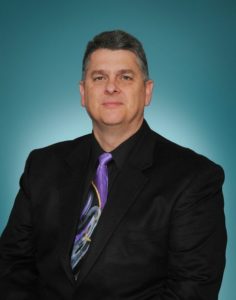
Mark Pfoff
INFORMATION / BIOGRAPHY taken from: http://markpfoff.com/
Consultant
Mark Pfoff is owner of Rocky Mountain Computer Forensics which provides consulting for civil and criminal cases throughout the United States. He has worked on projects from New York to Alaska. RMCF uses specialized software to examine computers, cell phones and cell phone records.
Mark is a court qualified expert in computer forensics, cell phone forensics, and cell phone technology. He is also an expert in police procedures and investigations; to include interviewing and interrogation techniques, proper digital evidence collection, and methods to obtain best digital evidence.
RMCF's mission statement:
"Provide forensic examinations of digital evidence using best practices; provide accurate and detailed reports of our findings; and provide expert courtroom testimony"
http://rmcomputerforensics.com/
Cattle Rancher
Mark has a herd of Black and Red Angus cattle in Eastern Colorado. His cattle graze in open pastures during the summer and are fed a combination of hay and grain during the winter. His herd expands every spring with the addition of calves. Mark's herd has grown to over 50 with more calves on the way.
http://markpfoff.com/cattle-rancher/
School Board Member
Mark was the longest serving school board member for Lewis-Palmer School District 38 since term limits were enacted. He was elected three times serving 12 years. He served twice as President and held every position during his tenure. Lewis-Palmer is a high-achieving school district with one of the highest on-time graduation rates in the state of Colorado.
During his tenure the school district maintained a balanced budget, increased reserves, and was ranked as one of the top ten school districts in Colorado.
He completed his fourth and final term in December of 2019.
Chuck and Julie Show


Support my show
$5.99/mo or $9.99/mo
Click HERE
SUBSCRIBE TO TALK SHOW
The Chuck and Julie Show are longtime radio hosts and commentators. Their program is a live Internet call-in talk show providing thought provoking information, conversation and entertainment. They are dedicated to free speech and critical thinking and any and all opinions are welcome. If you want the truth straight up and enjoy passionate debate this is the show for you.
Speaker Identification
Speaker 1 - Announcer
Speaker 2 - Mark Pfoff, guest host
Speaker 3 - John San Agustin, guest
Speaker 1 - Announcer:
Chuck and Julie, bringing you the truth straight up. An Emmy-winning former investigative reporter, a highly successful trial attorney, and the publisher of a major Denver-area newspaper, they have been partners as talk-show hosts, in marriage, and as parents for more than ten years, providing thought-provoking information, opinion, and entertainment. Live, local, and interactive, everyone’s voice is always welcome. The Chuck and Julie Show.
Speaker 2 - Mark Pfoff:
Hi. Welcome to The Chuck and Julie Show.
Chuck and Julie are out watching their kid play golf, which is always an awesome thing to do. I used to watch my boys play baseball in high school, and I loved going to their games and watching them play. I appreciate Chuck and Julie letting me guest-host this afternoon. I always love doing it from time to time, especially when I get to talk about current cases.
I am Mark Pfoff, your guest host for the day. I am a retired detective from the El Paso County Sheriff’s Office down in Colorado Springs. I worked on numerous homicide cases and other major cases. John San Agustin will be joining me at a quarter after, and we are going to talk about Nancy Guthrie and this whole fiasco down in Tucson, how that case is working out, and, obviously, how it is not working out very well. We will talk about that in a little bit.
Until then, I need to fill in for about fifteen minutes before we talk about our old-cop, detective, and investigator stuff. I always like to talk about current events. I joke with Julie whenever she sends me a text or an email asking, “Do you mind guest-hosting?” I always say, “You know what that means. Something big is going to happen.”
Well, not really anything big happened today, but I have to say, this Plattner situation out of Maine is hilarious. I consider this stuff entertaining. I consider the people who vote for this person - in my opinion - incredible. It shows the lengths people will go to for their agenda.
If somebody was that disqualified, or that unqualified, to be a senator from Maine, this is the guy. He is the gift that just keeps giving to the Republican Party. This should have been the Democrats’ chance to win the Senate, and they have just screwed the whole thing up.
I have been looking at current events, and I actually have him up here on the screen. He has kind of gone undercover for the week because, according to what I am seeing, next Monday is the last day the Democrat Party can throw another name into the hat if he resigns. It almost sounds like the old presidential election, where they are just going to throw a name in there. Talk about a lack of democracy.
Are they going to pick the person who had the next-highest number of votes, or are they still going to go with him? He has just been accused of a sexual assault from five years ago. When you actually read the article, it sounds pretty graphic. The woman said she had mixed feelings about saying anything because she agrees with his agenda.
Well, that is absolutely not how it should work. As a retired cop, I pulled over Democrats, Republicans, and probably independents for speeding. I never said, “Driver, I would like to see your driver’s license, registration, proof of insurance, and voter-registration card.” I did not care who they were. They were speeding, and they needed a ticket.
In my opinion, Plattner is a moron. He is an idiot. He is a racist. All these words that people keep trying to throw at Republicans - this guy is it. In my opinion, he is truly a Nazi. Yet they are trying to call everybody else a Nazi while still making him their nominee for Maine. That is amazing to me.
The woman should have had no hesitation just because he happened to be a Democrat like her or because the things he says match her agenda. That should be irrelevant. The response should be, “No, this guy has to go.” It will be interesting to see whether he continues to garner support for his Senate run. Everybody should be abandoning him at this point.
Republicans do not seem to have a major issue knocking out bad Republicans and getting rid of them, but the Democrats are so focused on Trump and how much they hate Trump. Talk about the ends justifying the means. This is it. This guy has no business running. His campaign should never have gotten off the ground, let alone reached this point and received the nomination.
How could any person with integrity ever cast a vote for that person? At worst, if there were a Republican and a Democrat, and I just could not vote for the Republican, I would just not vote. I would not vote and then say, “Well, I had to vote for the other guy.” No, you do not have to vote for the other guy. You just do not vote for that person, and your conscience is clear. You can say, “I did not vote for that person. I do not support that person.” I would be outspoken that I do not support that person.
This is not going to end. Like I said, he is the gift that just keeps giving. If his own arrogance does not allow him to drop out of the race by next Monday, then he needs to drop out now to give the Democrats a chance. The only thing they could do with integrity is give it to the person who had the next-highest number of votes, whoever that person is. We will see what happens. Kamala Harris will probably register in Maine now or something and try to get that Senate seat. Who knows?
But this is the same kind of stuff. When they just threw Kamala Harris in instead of opening it up and having some kind of mini-primary at their convention, they walked away from democracy and put their own person in. It will be interesting to see what happens to Plattner.
I saw something really interesting today about Jasmine Crockett. She is amazing. She is supposedly a lawyer. I cannot believe that because, in my opinion, she is an idiot too. She made a statement on a video podcast about the kid who stabbed another kid in Texas and killed him. When they were talking about the knife, she said, “This was just a little knife. This was not a big, huge knife.” Then she said, “Well, that does not even sound like a deadly weapon.”
That is about the stupidest statement she could make. I teach law at Pikes Peak College, and let me tell you what the definition of a deadly weapon is: any weapon that can cause death. If the kid used this knife, however big or small it was, and it killed someone, then obviously it is a deadly weapon. Yet here she is saying, “That does not even sound like a deadly weapon.” In my opinion, she is an idiot, and it will be good to see her go bye-bye. I am just not sure that is going to happen. She will probably come back, but she keeps me entertained with her statements.
One of the things I did want to talk about, before John jumps on, is activist judges. I have had to deal with a lot of judges. I was in law enforcement for seventeen years as a cop. Ten of those years I was a detective specializing in high-tech crimes. I worked on more than eighty homicides and all kinds of interesting cases. It was the best job I ever had.
I retired about twelve years ago and have been a consultant ever since, working predominantly for defense attorneys. I have seen the other side of the story. John and I constantly talk about cases where we have to deal with things that we just cannot believe.
Recently, I had a case that just got resolved where a cop showed a picture to an eyewitness in a homicide case. Three years earlier, in an interview, she said, “I never saw the guy’s face.” I think that should be pretty clear. Three years later, the detective brings her back into the interview room and shows her one picture - a single picture, one person, not six, not a lineup, not a photo array. It is a surveillance picture, not even very good quality. He asks, “Does that kind of look like him?” She says, “Well, yes, kind of.” Then he puts in his affidavit for arrest that she made a positive identification.
That is not how law enforcement works. In fact, that should get you fired. There are standards and best practices. You should have six pictures. The witness should pick the person out. But when someone said two hours after the homicide, “I never saw his face,” and then three years later says, “Well, I guess that kind of looks like him,” and the officer claims in the warrant that she made a positive ID, that is not good cop work.
We see all kinds of things like this, and we try to keep integrity in the system. We are all about making sure the system is fair for all who are accused.
Judges are an interesting issue. Judges have absolute immunity, and so do district attorneys. Judges have absolute immunity, so I paid attention to the Judge Dugan case in Milwaukee. When she thwarted the law and basically misled law enforcement in the courthouse, law enforcement was looking for an illegal alien who was in her courtroom and wanted to take him into custody. She led them the other way and helped sneak the guy out the back of the courthouse.
Ultimately, they got him, and everything worked out, but she felt above the law. She felt, “I have absolute immunity.” She used that when they charged her. She said, “No, I have absolute immunity.” They said, “No, you do not - not on something like this.”
That is why we have to be careful about judges having absolute immunity. District attorneys should have qualified immunity, the same as law enforcement. You cannot have district attorneys doing whatever they want. I have definitely seen district attorneys out of control, where they have gone after political rivals and enemies.
The Terry Maketa case down in El Paso County is probably one of the best examples of that in Colorado local cases. He was a sheriff. He was a great sheriff. I worked for him. He loved his people, took care of his people, and was all about law enforcement and integrity. He angered the local district attorney, and they went after him. I reviewed everything in that case. In my opinion, Terry Maketa never committed a crime - not even close - but they stretched the truth to incredible levels. If you have ever heard the statement that you can indict a ham sandwich through a grand jury, that is absolutely correct. He never committed a crime, in my opinion. That was politically motivated by the district attorney and his cronies.
So Judge Dugan went to trial. I thought it was amazing that she went to trial. I thought for sure there would be a deal cut. She was convicted of obstruction, and she is now looking at a maximum of five years in federal prison. I still cannot believe she is going to prison. She gets sentenced this Wednesday, so I am interested in what will happen.
To show the arrogance on her side, she fought the case and was convicted. The sentencing guidelines, as I understand them, are around fifteen to twenty-one months. If they treat her the same as everybody else, she should get somewhere between fifteen and twenty-one months in federal prison.
Whenever you go into a sentencing hearing, the prosecution turns in what they believe the sentence should be, and the defense turns in what they believe the sentence should be. The prosecution did not put a number of years; they basically said they believed her conduct justified a longer sentence. The defense said it should be time served. Here is what I find interesting: Judge Dugan never had any time. Normally, when people say “time served,” it means someone spent six months, eight months, or a year in jail waiting for trial. She never spent one night in jail. So “time served” is zero. The defense is basically saying she should get zero. They should not have said “time served” because there is no time served.
I find the arrogance still there. In my opinion, she needs to go to federal prison. She needs to learn that you cannot skirt the law, no matter who you are. I will be paying attention on Wednesday, and I think everybody should, to see what she actually gets.
Another one is Judge Boasberg on the federal bench. In my opinion, this is obviously an activist judge who is completely out of control. He is the one who told the Trump administration to facilitate the return of illegal aliens who had been sent out, to bring them back. These people are not citizens of the United States. The Trump administration has no power in another country. How can you compel the Trump administration to cut a deal to let people who are in this country illegally back into the country?
This stuff is crazy. These activist judges have absolute immunity, and the only way you can get rid of federal judges is by impeaching them through Congress. I just do not see that happening. Congress is so inept.
The last political thing I will say is that they have been going after Trump. I will make this prediction because I may not be hosting again until after the midterms: Republicans are probably going to lose the House. If they do, Trump will be impeached at least twice in the next two years. There is just no doubt about it. They are going to go after Trump. They are so focused on him, and they need to forget about him. Trump does not matter at this point. He is in a lame-duck session. He has only two and a half more years, and then he is gone forever. From their standpoint, they never have to worry about Trump again. They should be focusing more on J.D. Vance and Marco Rubio, who I think have been doing a great job for the last eighteen months. J.D. Vance is an excellent speaker, and I agree with about ninety percent of his views. That is who they should be focusing on. Instead, everybody running in the midterms is focused on Trump. They just cannot get over Trump.
That is enough of my political stuff. I see that John has jumped on. What we are going to talk about is the Nancy Guthrie case. I cannot imagine there are too many people unfamiliar with this case. This is the one down in Tucson. On February 1, she was dropped off, I believe by her son-in-law, the night before. She goes to church every Sunday, and Sunday morning she did not show up for church. Friends or family went over to the house, could not find her, and called police within five or ten minutes of going through her house.
This was the Pima County Sheriff’s Office. This was not inside the Tucson city limits. Out in the county, the sheriff took over. This fiasco has been going on for about five months now, and we are no closer. We do not know where she is. We do not know if she is alive. The odds are obviously not in her favor at this point. My understanding is that the Pima County Sheriff’s Office still has not given this case over to the feds or to anyone else to look into. Every week or so, we get these new things about ransom notes or kidnapping notes, and now they think they are fake. We have no clue what is going on.
I actually think, if you talk about connections, this is almost looking as bad as the JonBenet Ramsey case from my standpoint: a high-profile case where the initial investigation was mishandled. So, John, give me your thoughts on this whole investigation. I am not even sure you could probably consider it an investigation at this point.
Speaker 3 - John San Agustin:
Right. Now the feds are involved. But when you look at any investigation, time is of the essence. What we do know is that, according to public-domain information - because you and I are not privy to the specifics of the investigation - the son-in-law dropped her off sometime the night of January 31, around 10:00 p.m. Then he leaves, and she does not show up to church the next day, like you said.
It is reported within seven to ten minutes after the family gets there and discovers she is not there. From that point forward, we really have no understanding or idea of what happened to Ms. Guthrie.
When you talk about these types of investigations, and when we draw parallels to things we have done in the past, law enforcement lacks experience in some situations. In these kinds of cases, experience becomes a critical part of the investigation. I think their lead guy, who was part of this, had maybe two years as a detective. Mark, you know this and I know this: with two years, you are barely knowing north, south, east, and west as far as investigations are concerned.
Typically, in that time frame, you are doing more of the lower-level follow-up. You go talk to this neighbor. You go talk to that neighbor. You watch me do this interview. You watch this detective do that, so you can start to understand how investigations are run.
When something like this happens, some might say, “This is a missing person. Why should we treat it as anything other than that?” But you have to look at the circumstances. She was last seen the night before. She is eighty-four years old. The odds of her getting up in the middle of the night, opening her door, and going for a walk are highly unlikely. Not impossible, but highly unlikely. My understanding is that she was on medication and was not very mobile.
As an investigator, you have to look at that and say, “We really need to pour in the resources.” The leadership of Pima County should have brought in leadership and advice and said, “Look, we are not capable of running an investigation involving a popular individual, or at least someone whose daughter is well known. This can become a very big case.” If you do not take advantage of the resources available to you at the local, state, and federal levels immediately, then the case starts to go cold.
What needs to happen in those initial stages is that you have to treat it as if something really awful happened until you can rule out that something awful did not happen. Then at least you are on top of it and can conduct a thorough investigation.
It is my understanding that much of this really did not begin until days later. The first twenty-four to forty-eight hours of an investigation are probably the most critical time frame. That is when you deploy every resource. You knock on doors. You look at digital evidence. You look at forensic evidence. You look at possible motives for why somebody would want to kidnap an eighty-four-year-old woman from her own home. Had there been threats in the past? Were there problems with her daughter? Did her son or son-in-law have something going on? You are trying to find all these missing pieces of the puzzle.
An investigation like this has thousands of pieces. It is dangerous to put someone who does not know how to find those pieces in charge. When you have a two-year detective - I would not say veteran because veteran is probably not the right word - it is like a two-year-old puppy or a two-year-old child. You are just barely learning how to walk as an investigator. You have to know what needs to be done.
This is not the time to give somebody the experience of learning how to handle a kidnapping or possible homicide. Like you said, we are now more than five months into it. I do not think we are any closer than we were in the hours after she went missing. Now we are finding out that a ransom note may have been bogus. We have some Ring video, but other than that, I do not think much has been disclosed to the public.
Here is the other part of it. I can assure you that if there were something significant identifying a possible suspect, they would have released something. They have kind of a profile. I think they said a five-foot-nine or five-foot-ten man with a black beard or black mustache, but that is really it. That is why we are where we are five months later.
You hope it does not become something like the JonBenet Ramsey case, where it is thirty years later this December and we are still talking about an unsolved case. We hope we find Ms. Guthrie and can find who is responsible, whether it is an individual or a group of people.
I do not think the leadership within the Pima County Sheriff’s Office has set up the individual detectives to be successful. You need to reach out to Tucson, to Phoenix, and to other agencies. In that part of the country, they deal with a lot of kidnappings. There is a lot going on with cartels, the drug world, and border-related crime. Phoenix is a major city, and Tucson is a major city, so there are people familiar with these types of cases who know what to do.
Of all people, you and I know that digital evidence matters. Whether it is geofence data, cell-tower dumps, or anything that can give us some kind of digital footprint of who may have been there, even in the days prior, you have to look at it. This does not seem like an off-the-cuff kidnapping. It does not feel like someone woke up on January 31 or February 1 and said, “Let’s go see if we can kidnap an eighty-four-year-old woman.”
There had to be some canvassing. Somebody had eyes on that target or on the Guthrie home before deciding to do this. This does not feel like a random act, like a carjacking or a robbery at a corner store. If you dissect this with a critical mind, it does not make sense that somebody just did it randomly that particular night.
You have to look at the days leading up to it. You and I deal with cases all the time where we put together detailed timelines of what happened before, during, and after the crime. That is what needs to be done. I do not think that was done properly, because if it had been done properly, we probably would not still be talking about this five months later and wondering who possibly did it and whether a ransom note is bogus.
How do you know if a ransom note is bogus? Who is applying the science to say, with a proper level of certainty, that it is accurate or not? Who is looking at a writing and saying, “This is bogus”? It does not make much sense on its own, which is why we rely on other evidence. You and I talk about aggregate data in the digital world. Here, we are talking about all the evidence in the case. What was found at the home? What was left there? What was taken, other than Ms. Guthrie herself? The kidnappers, or killers if that is what we are dealing with, definitely left behind clues. The question is whether law enforcement was smart enough to pick up on those details.
Speaker 2 - Mark Pfoff:
There was such a delay in time. We know they went back to the house multiple times. They never should have released the house. They should have done everything right up front. If they had issues, they should have brought in resources to help.
I go back to the Tom Clements case. I do not remember if you were the inspector at that point. I think I was the inspector who ran the investigations before you ultimately became the commander. That homicide happened the night before. The next morning, we had a team meeting at headquarters in the largest room we had, the training room. We had everybody in that room. There had to have been at least forty or fifty people from different agencies. We had federal resources. I think the governor had a representative there. We had the resources provided to us.
We had experience. Like I said, I worked as a detective for ten years and worked on about eighty homicides. We had people who had been detectives or investigators for twenty years. We had the expertise, knowledge, and training to run it, but we still reached out. I remember working with FBI Agent Scott Eicher on the digital portion of that case. We worked together.
Now, we do not know everything happening in the background here. I would love for Kash Patel or someone from the FBI to come out and say, “We got them.” I think that is the only way we are going to hear that this case moved forward, if the FBI gets them. I think the odds are low.
If there is more than one person involved, though, someone typically talks. It may take time, unless someone kills the other person. That may have happened in the JonBenet case, according to one theory, where one of the guys who might have been involved was murdered and Boulder called it a suicide instead of working it as a homicide. Another example of Boulder’s poor work.
At this point, I think the only hope is the FBI taking over, but it is late. They are behind the eight ball. They need something to break loose. They need somebody to talk. A lot of times, somebody gets jammed up who is not the main player but is one of the subordinate players. They say, “Give me immunity, and I will give you the killer or the kidnapper of Ms. Guthrie.” That could happen. But the people involved may already have turned on each other, and there may only be one person left. You just do not know at this point.
Speaker 3 - John San Agustin:
You are talking about an area of the country where, in February, Arizona has cooler weather. But in the summer months, with hundred-degree-plus weather, if she is outside in the elements, her body is decomposing at a much higher rate. If there are remains, those remains will probably be even more difficult to analyze to determine what actually happened to her.
You are right. It is one thing to visit a scene multiple times because something learned in the investigation causes you to pause and ask how to reconstruct it. But if you are trying to collect evidence after the fact, after you went in, did your search warrant, and released the scene, you do not know who has been in that scene after you released it. The defense will fight that.
If they ever identify a suspect, the most critical thing right now is finding Ms. Guthrie, whether alive or deceased. Once we have found her, hopefully alive, then the question is who is responsible for the kidnapping. If she is deceased, then the question is whether she died while this kidnapping occurred, or whether she died because somebody shot her or did something heinous to this poor woman.
We do not know, and the more time that goes by, the more we are not going to know. Outside of someone confessing to what they did with her, it is going to be hard. It is not impossible. You get into this line of work hoping you can find closure for the family. But the reality is that every hour and every day that goes by, the case gets colder. People’s memories fade. Evidence gets lost. The only way to build a case is through evidence. If you do not have it and you are trying to look for it five months later, I am not saying it is impossible, but the task becomes much more difficult.
I can guarantee you that if the FBI had any inkling of who did this, there would be positive press. These agencies are political too, and somebody would want to let it out that they have the person responsible for kidnapping or killing Ms. Guthrie. The fact that we are hearing crickets in regard to this case is concerning. I do not know when the last formal press release was, but when you do not hear anything, it becomes out of sight, out of mind.
From a family perspective, how do you keep it in the limelight so efforts continue? Five months later, I can guarantee you the resources poured into it in the early stages are not being poured into it now. Agencies move on to the next crime, the next case, and the next thing that has evidence to support it.
If they have hit a wall where there is no new evidence, this is unfortunately a case that could potentially be shelved sooner than anyone would want, especially from a family perspective. You want the case on everybody’s radar so they continue looking for where she is.
The leadership is going to say, “We poured everything into it in the early stages, and we just do not know what happened.” That is not okay, because if we dissect this later, we will probably find there were a lot of things that were dropped and not done. The reason is that they did not know better. This is no knock on the detective. He was put in a precarious position. But you cannot have a person with just a couple of years of experience handle a major investigation like this. They have to bring in resources and expertise.
From what we know, it does not sound like she left voluntarily. There is a strong indication, based on the Ring video, that somebody with a mask was there shortly after the son-in-law dropped her off. What that person did, I do not know. I assume it was a man because they said black mustache, but who knows? If that is the best information you have to go on, you are in trouble. Somebody can have a mustache today and shave it tomorrow. A beard can be gone the next day.
We look for unique markings. If he had a tattoo on his face or something significant, maybe that helps. I think they described his backpack. Okay, but what does that do? Backpacks are sold everywhere. It is like saying a Jansport backpack was found at a school. How many kids use a Jansport backpack? What is unique about that? If it had an engraved name, initials, or something specific, now we have something. But if that is what the investigation is relying on, the investigation is in trouble.
Speaker 2 - Mark Pfoff:
I think it has been in trouble for a while. These are the ones that really bother you. What if she were not the mother of a famous news broadcaster? What if she were just an ordinary person who disappeared? If they cannot work this case with all the resources available to them - whether they are using them or not - then what about an average person? If something happens to them, how much effort is local law enforcement going to put into solving their case?
Speaker 3 - John San Agustin:
You bring up a good point. Sometimes the only way a case gets attention is if a crime analyst says, “We have had a slew of kidnappings of elderly women in this area.” Now, as an investigator, you can start to see whether there is a pattern. You look for the modus operandi. How did they do it? What did they do? Was it at night? Was it an individual? Was there Ring video? Do they meet the same descriptions? There are many things to look at.
You are spot-on. It is no different than child-death cases. Who would have cared about a six-year-old girl dying in a community like Boulder, Colorado, if it were not JonBenet? I worked the murder of a six-year-old little girl, Ashley Gray, who was raped and sodomized by a guy named Morris. Why did she not get the attention JonBenet Ramsey got? Why does Tom Clements’ death make headlines more than other people murdered in or near their homes? It is unfair.
What we know is that if you poured resources into every one of those cases, we might have a better clearance rate. Pima had, what, six murders the year before? I guarantee Tucson had more. I guarantee Phoenix had more. Those agencies have experience. You can create a task force. You ask their chief, “Can you have one of your detectives come work with us until we can try to identify who is responsible for this?” They do it all the time. They did it in Washington with the Green River Killer case. They deploy resources.
It is not for lack of resources. You and I are now going up against the government in a case where they have unlimited resources. We are being asked to look at a case where they have ten or eleven detectives working it, and then you or I are asked to make heads or tails of it within fifty hours. They have hundreds or thousands of hours to investigate something, and then someone says, “Mark, here is a case. Can you look at it and tell us your thoughts, but can you limit your time because we do not have funding?”
Speaker 2 - Mark Pfoff:
That is right. I actually said that in court just a couple of weeks ago when I was testifying. The prosecution was trying to make a big deal about how much I charge and all that. They basically said, “Since 2016, you have never testified for the prosecution, have you?” My response was, “Yes, and there is a reason for that.”
When I was asked what the reason was, I said, “Because I cost money.” The prosecution has all these free experts: FBI, ATF, CBI, local detectives, Secret Service, and local agencies. It does not cost them a dime.
Speaker 3 - John San Agustin:
You are talking about a true David-versus-Goliath scenario. We are trying to equalize the playing field.
Speaker 2 - Mark Pfoff:
Exactly. Yet we have been successful. On cases where we find issues, we have been able to step up, make a difference, and get more favorable outcomes.
In the Guthrie case, they should put together a task force at this point. Put more people in a room, provide them with the evidence and facts, and give them more opportunity for someone to say, “You know what? Six years ago, I saw this,” or “That reminds me of a guy I investigated up in Phoenix three years ago.” You never know. Bring in the FBI, ATF, and everybody else. Have a brainstorming session. That might help.
A lot of this goes to arrogance. I was a detective for ten years, and I felt I was about in the middle. I was not at the point where I would say, “I am an expert detective,” but I was not a baby detective either. At ten years, I felt comfortable. That is how long it takes to get to the point where you feel comfortable. At twenty years, if you are good at it, maybe you can call yourself a master detective. Some are not.
Speaker 3 - John San Agustin:
It depends on the types of cases you have worked. Some people are really good at property crime. Some are really good at sexual assaults. Some have dedicated a lot of time to attempted murders and murder cases.
The problem is that every case is a little different. To say you are a master of homicide would be a fallacy. You may understand the process and some of the things that have worked, but a cop who is a twenty-year veteran may not be using technology the way you and I are. They may rely on old-school methodologies.
If you do not continue to learn and challenge yourself on what new things exist today, how do you get better? There is a danger in saying, “I have done this for twenty or thirty years.” If you are not in tune with the way cases work today, you can fall behind. You and I work cases every day. There are all kinds of new things being developed now that were not around when we were doing homicides.
Yes, some technology still exists, like DNA, but DNA has changed completely. The way they used DNA in the early 1990s is different from how they use it now. You can get DNA from things that people never imagined years ago. In our world, with digital technology, people do not understand that phones have more information than almost anything else. For you and me, the phone is a wealth of information. I call it the modern-day DNA because it has the ability to solve so many cases.
There is a term: lifelong learner. A lifelong learner always wants to learn new things. Anyone who is a true learner understands that the more they know, the more they realize they do not know. When you hear someone say, “I know everything about this,” you have to be cautious, because they do not know it all and never will.
Think about why you and I teach. We both teach at a higher level of education. Why do we do it? Because constant teaching challenges us. New things come out every day. You often see those things in the educational system and in the classroom.
Speaker 2 - Mark Pfoff:
I definitely encourage my students constantly to challenge me. I tell them, “If you want to debate, this is a safe zone. We can have a great debate.” Numerous times, a student has brought something up and said, “What about this?” and I have said, “What is that?” It is something new.
At some point, we had to hear about TikTok for the first time. I do not know when that was, but at some point someone said, “Have you heard of this thing called TikTok?” I said, “I do not know what TikTok is.” Then you go find out, learn more, and get more experience.
I encourage that, and I think it helps us be in the classroom. I am teaching tomorrow night. It means constantly learning new stuff. The young people, the new students, and the people getting the education know the new technology.
My kids know more than I do, and they constantly tell me about things. I will never forget that I wanted to keep my son entertained and busy for the whole summer, so I bought all these pieces to a computer: the cabinet, CPU, motherboard, and everything else. I gave it to him in a package, all brand new equipment, and told him to spend the summer building a computer. It was up and running the next day. I thought, “Now what do we do for the rest of the summer?” These kids know so much more than we do.
I love being in a teaching environment. I realized I have been teaching for twenty-one years at Pikes Peak. I love it.
Speaker 3 - John San Agustin:
I am in the same boat. The other thing we constantly do is teach juries. We do not only teach students. We teach juries. We get a lot of our information on how cases are developed by reading through and understanding how cases were built. That is what keeps us updated.
There are so many things constantly evolving in the criminal-justice system. No one person can know everything. But in the position you and I have been in over the last five to ten years, we have had to know a lot of different disciplines and understand how they are used to convict somebody of a potential crime.
What better learning experience is there than understanding how they are weaponizing DNA now, or how they are using the FARO system to reconstruct a crime scene? Yes, I can still reconstruct a crime scene the old-school way, but now a lot of things are automated.
You and I just did a homicide case up in the Adams County area, and they used a FARO system. But the person using the FARO never explained what the measurements were.
Speaker 2 - Mark Pfoff:
And I do not think they were adequately qualified or trained on the device.
Speaker 3 - John San Agustin:
Right.
Speaker 2 - Mark Pfoff:
I will say this for as long as I can: local law enforcement has not received proper training on how to do a thorough digital investigation. They are taking shortcuts and overstating the facts, especially when trying to use technology to say someone was there. You cannot do that, definitely not with things like cell-phone records.
Probably once a month I read a report where they straight-up say, “The cell-phone records indicated that they were at or near the location of the shooting.” You cannot say that.
Speaker 3 - John San Agustin:
And Mark, you just did a case where it was not only at the local level. Think about the FBI analyzing a piece of digital evidence and saying, “We do not need to collect that. We are just going to go to our car, do an extraction, and give it back.” Wait - what did you just do? That ignores best practices.
A true digital forensic investigation is not only an issue at the state or local level. It is happening at the federal level too.
Speaker 2 - Mark Pfoff:
That is a great point. Even with the FBI, I have seen testimony where they made statements that are just not true. I have tried to get them to sit down with me and say, “Guys, I would be more than happy to explain to you why you are wrong on this point.”
I know they are still teaching this. It has to do with speed of light and timing advance records with call-detail records. They make a statement that the cell phone has to be inside a certain arc. I do not want to go into too much detail here at the end, but I can prove from a case up in Denver, where we know where the cell phone was located, that it was definitely outside the arc. Their statement in federal court testimony that the cell phone had to be inside that arc is absolutely wrong. I can prove them wrong and would love to explain how they are wrong. Sooner or later, our paths will cross in a courtroom, and I will lay out how I know what they are saying is not true.
Speaker 3 - John San Agustin:
The problem with that, Mark, not to bore the listeners, is that these technologies were never designed to be used in an investigation.
Speaker 2 - Mark Pfoff:
That is exactly the main point. These are engineering records that cell-phone providers use for capacity planning and network design. The government is trying to use them to get precise locations of where a cell phone is. They were never intended to do that. It is not GPS, but they are trying to play that game. If there is nobody to go in and say, “Time out, what you are saying is wrong,” the jury hears only one side and goes with it.
Maybe that is something for another day. I have had some great federal cases up in Anchorage. I had a whole case thrown out because they searched a cell phone without a warrant, and I could prove it. At first, they tried to argue, “No, we did not search it.” Then I proved it, and they said, “Well, it looks like maybe it was searched early, but not by me.” Everybody kept saying, “It was not me.” We never found out who actually did it, but the federal judge said, “That was pretty compelling testimony. It is pretty obvious you violated the Constitution. You searched something without a search warrant, and you had no exigent circumstances or anything to justify that warrantless search.” That was pretty awesome.
I think we have used up all our time. I do not know what we will talk about next time. It may be a few months before I get an opportunity to guest-host again. I always love to watch Chuck and Julie. They keep me updated on local and state politics, and I love listening to them. I appreciate them letting me come here and talk.
John, thank you for coming out and making this entertaining, because I cannot do it on my own. Maybe we will find another case one of these days. We are always working interesting cases, and we will keep informed so we can talk about them. Maybe we will talk about some of these federal cases I have worked on in the last year or two.
Everybody have a great week. I think Chuck and Julie will be back next week. Catch everybody later.